
Journal Entry Paragraph FormUp to 5 points Highlight


- Slides: 30
Journal Entry (Paragraph Form)Up to 5 points ► Highlight your break, describe the following: § Great experiences § Not so great experiences § Why did you need a break? § How do you get back in gear (motivated) for school? § What are you short term goals for the next month?
Prehistoric Georgia The first inhabitants of Georgia
Prehistoric Native Americans ► Who were they? ► When did they arrive? ► Where was their original home? ► Why did they come? ► What did they eat? ► What kind of animals did they find here? ► Where did they live?
Vocabulary Terms ► Define: § Archeologist § Anthropologist § Shale § Artifact § Culture § Tribes § Antiquities
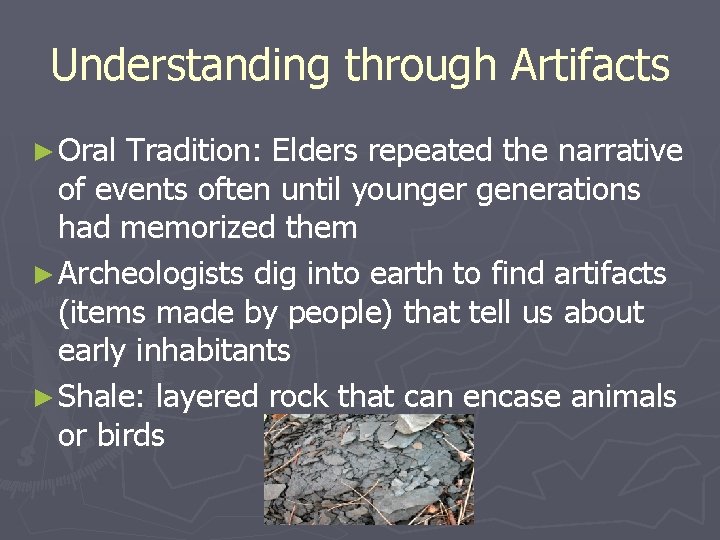
Understanding through Artifacts ► Oral Tradition: Elders repeated the narrative of events often until younger generations had memorized them ► Archeologists dig into earth to find artifacts (items made by people) that tell us about early inhabitants ► Shale: layered rock that can encase animals or birds
Understanding through Culture ► Anthropologists use artifacts, cave drawings, well-traveled pathways, and oral history to study a group’s culture ► Culture: shared beliefs, traditions, music, art, and social institutions of a group of people
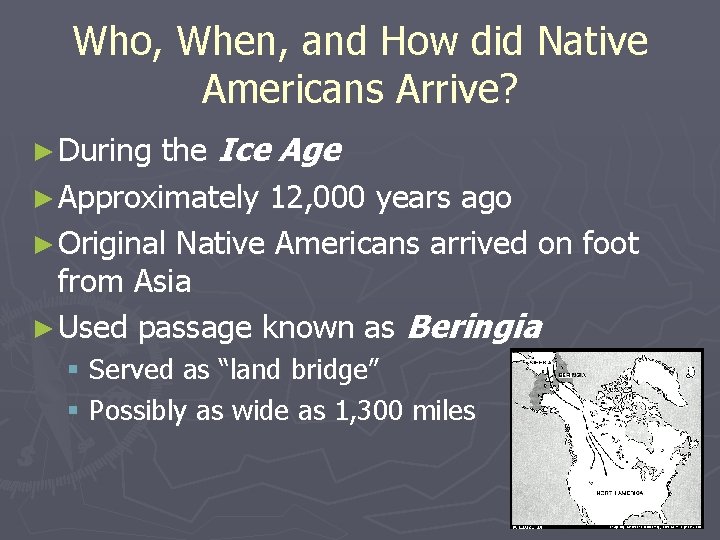
Who, When, and How did Native Americans Arrive? the Ice Age ► Approximately 12, 000 years ago ► Original Native Americans arrived on foot from Asia ► Used passage known as Beringia ► During § Served as “land bridge” § Possibly as wide as 1, 300 miles
Who, When, and How? ► Migration unplanned ► Nomads wandered looking for food § as they traveled, others followed § Climate warmer, more food § Found woolly mammoths, mastodons, ground sloths, etc. All Native Americans descended from these Nomads
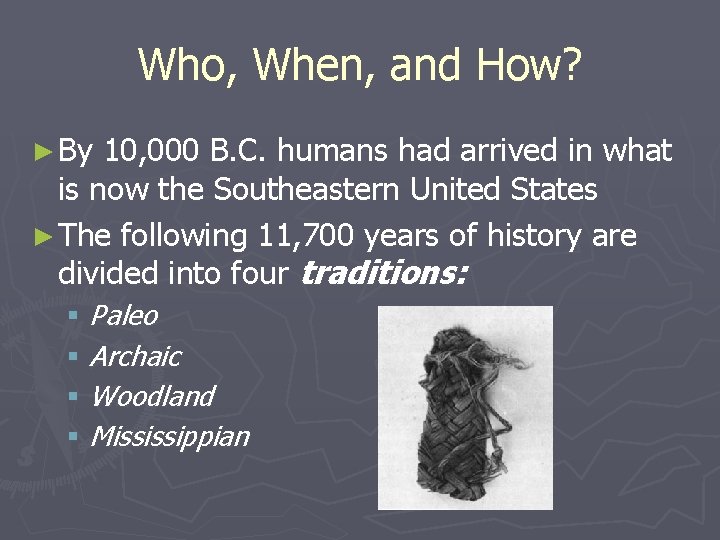
Who, When, and How? ► By 10, 000 B. C. humans had arrived in what is now the Southeastern United States ► The following 11, 700 years of history are divided into four traditions: § Paleo § Archaic § Woodland § Mississippian
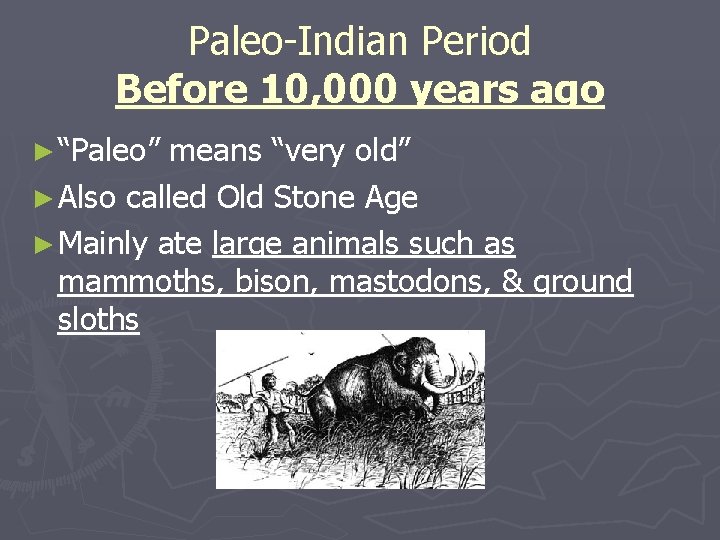
Paleo-Indian Period Before 10, 000 years ago ► “Paleo” means “very old” ► Also called Old Stone Age ► Mainly ate large animals such as mammoths, bison, mastodons, & ground sloths
Paleo-Indian Period ► Early Indians never stayed in one place for long – no evidence of fixed shelter ► Camped in the open ► Sometimes dug pits or built shelters to protect against weather ► Followed herds of large animals
Paleo Indians ► Nomadic (roaming) hunters ► Most tools and spear points made of stone
Archaic Period 8000 B. C. to 1000 B. C. ► Archaic means “old” ► Three time spans § Early (8000 B. C. -5000 B. C. ) § Middle (began around 5000 B. C. ) § Late (4000 B. C. -1000 B. C. ) ► Crude shelters; stayed in one place longer
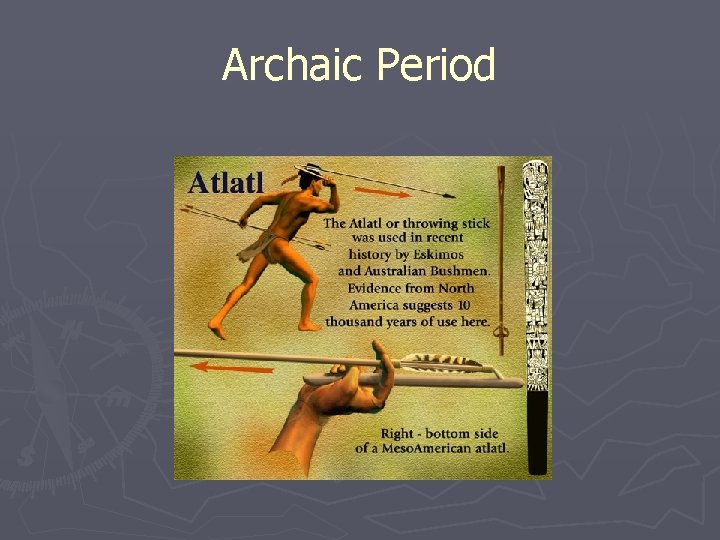
Archaic Period
Archaic ► Hunted large animals and small game ► Invented tools from deer antlers ► Moved with each season to find best food resources ► Water levels moved back along rivers & coastal areas ► People began making hooks from animal bones ► Shellfish became a more common food ► Food became easier to find and there was less movement
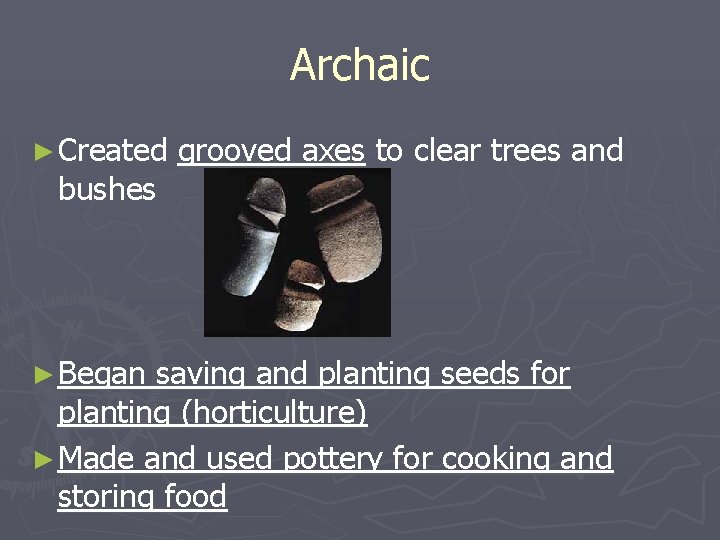
Archaic ► Created bushes ► Began grooved axes to clear trees and saving and planting seeds for planting (horticulture) ► Made and used pottery for cooking and storing food
Woodland Period 1000 B. C. to A. D. 1000 ► Tribe: group of people sharing common ancestry, name, and way of living ► Hundreds of families formed tribes ► Built domed-shaped huts with trees ► Used bow and arrows to hunt ► Held religious ceremonies
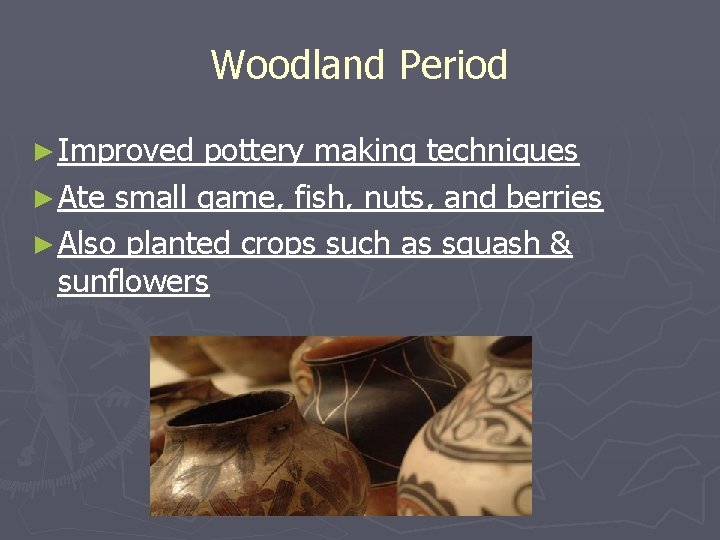
Woodland Period ► Improved pottery making techniques ► Ate small game, fish, nuts, and berries ► Also planted crops such as squash & sunflowers
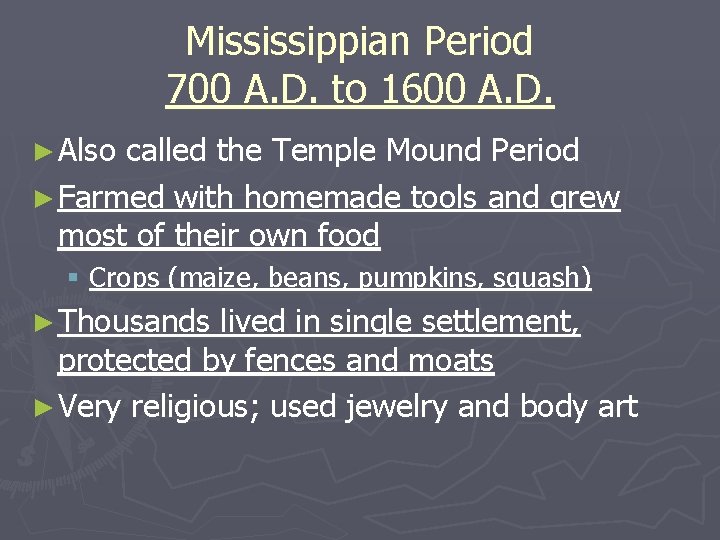
Mississippian Period 700 A. D. to 1600 A. D. ► Also called the Temple Mound Period ► Farmed with homemade tools and grew most of their own food § Crops (maize, beans, pumpkins, squash) ► Thousands lived in single settlement, protected by fences and moats ► Very religious; used jewelry and body art
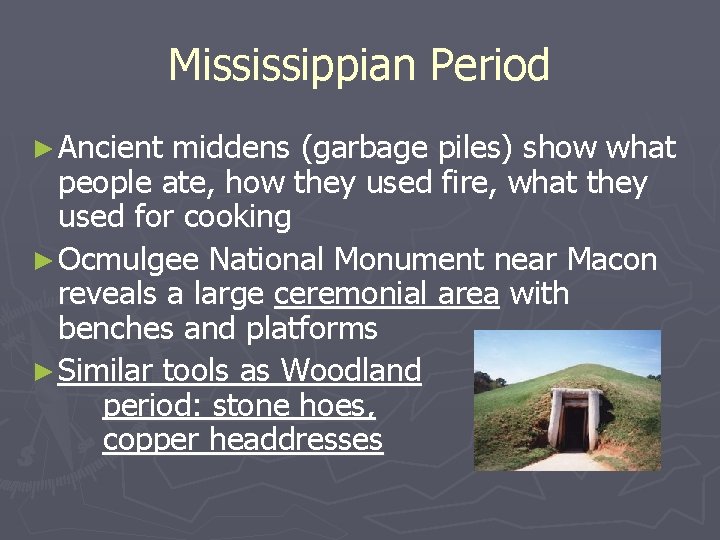
Mississippian Period ► Ancient middens (garbage piles) show what people ate, how they used fire, what they used for cooking ► Ocmulgee National Monument near Macon reveals a large ceremonial area with benches and platforms ► Similar tools as Woodland period: stone hoes, copper headdresses
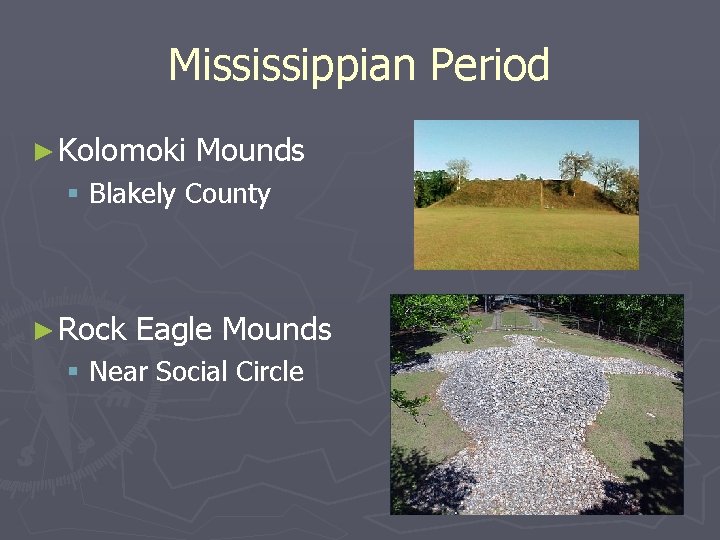
Mississippian Period ► Kolomoki Mounds § Blakely County ► Rock Eagle Mounds § Near Social Circle
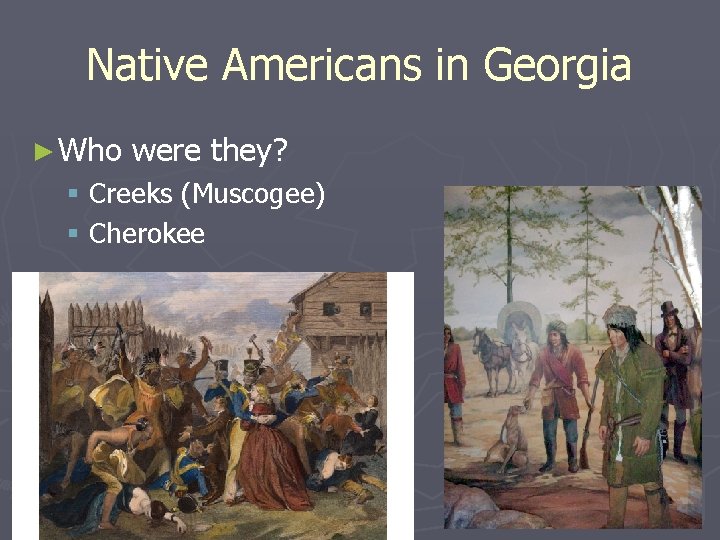
Native Americans in Georgia ► Who were they? § Creeks (Muscogee) § Cherokee
The Creek Indians ► Originally from American southwest ► Spoke Muskogean ► Discovered by European Explorers who called them Creeks ► Lived along Ocheese Creek (today’s Ocmulgee River) ► Lived in italwa and talofa (large villages surrounded by smaller villages (similar to cities & suburbs today)
Creek Lifestyle ► Village center featured plaza & rotunda ► Games & ceremonies held in plaza ► Rotunda used for council meetings ► Wooden huts or log cabins with chimneys surrounded the plaza ► Villages, split from larger villages, helped form a confederacy ► Raised livestock; were successful farmers
The Cherokee ► Lived in northwestern mountain region of the state ► Called themselves the Awi-yum-wija, which meant the “real people” or “principal people” ► Tribal clans: groups of people who believed themselves to be related by Cherokee blood ► Two tribal chiefs: one for making wartime decisions, and one for making peace time decisions ► Clans governed on the local level
The Cherokee Family ► Family lines were traced through the mother ► The mother’s brothers were responsible for raising the children ► Mothers handled most of the domestic chores, fathers often left home to hunt or trade ► Children played games that prepared them for adulthood
Cherokee Lifestyle ► Built homes on high banks or hills along rivers and streams ► Shelters were built from available materials, often plastered on the exterior to keep out rain & cold ► Log cabins built for winter living ► Fishing and raising crops including maize (corn) ► Barter: trading goods and services without exchange of money was economic system
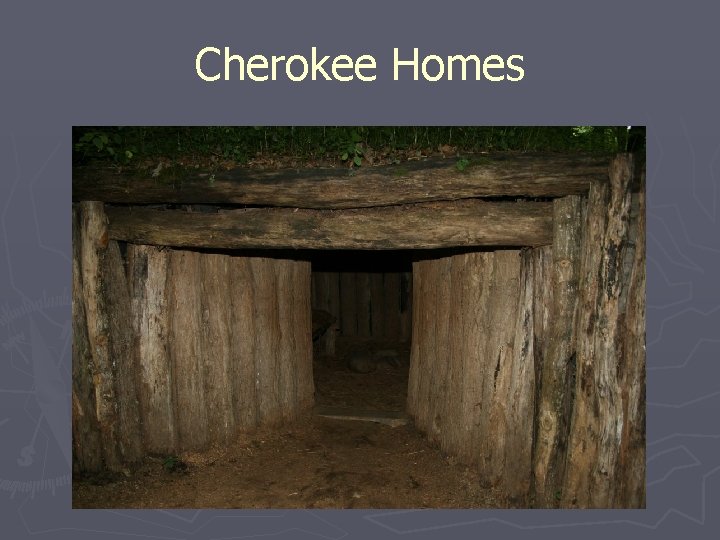
Cherokee Homes
Cherokee Religion ► Believed earth was a large island resting on water ► This World: Tribe was at center of earth ► Upper World: Clean & pure world; Sun & Moon were chief gods ► Under World: waters below this world; disorder & change ► Deer and birds were honored, bears were not
Other Cherokee Practices ► Drank ginseng to stop bleeding or shortness of breath ► Smoked tobacco during ceremonial occasions when seeking gods’ blessings ► Green Corn Ceremony held to give thanks for corn, their most important source of food ► Followed “Law of Retaliation”-took revenge to get even § This law prevented feuds within the tribes