
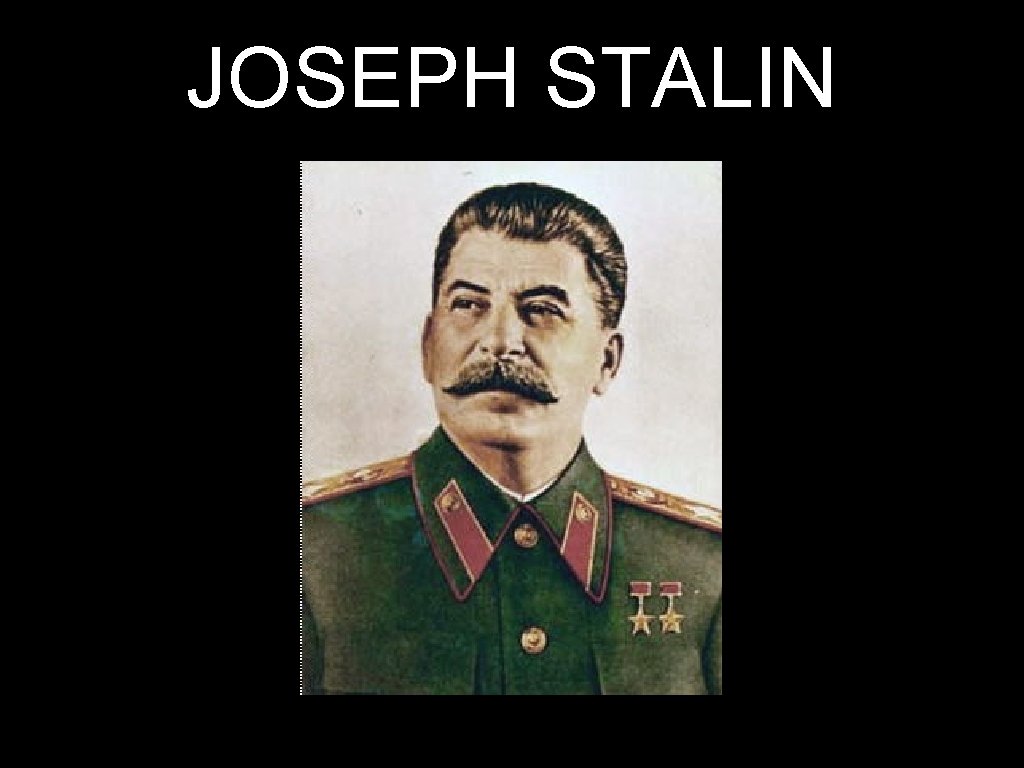
JOSEPH STALIN Joseph Stalin Man of Steel Lenin
- Slides: 13
JOSEPH STALIN
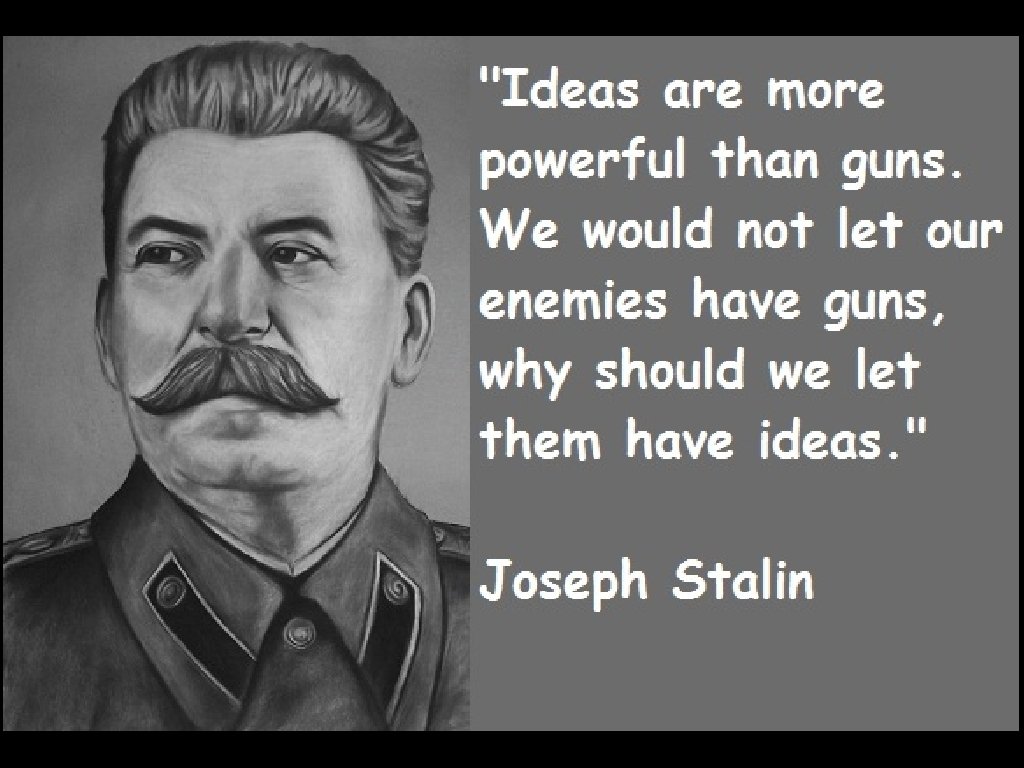
Joseph Stalin • “Man of Steel” • Lenin thought he was “dangerous” • After Lenin’s death became rival of Leon Trotsky for control of the Communist Party • General Secretary of the Communist Party • Moved his men into key positions - created and broke political alliances as needed • By 1928 Stalin was in total control of the Communist Party
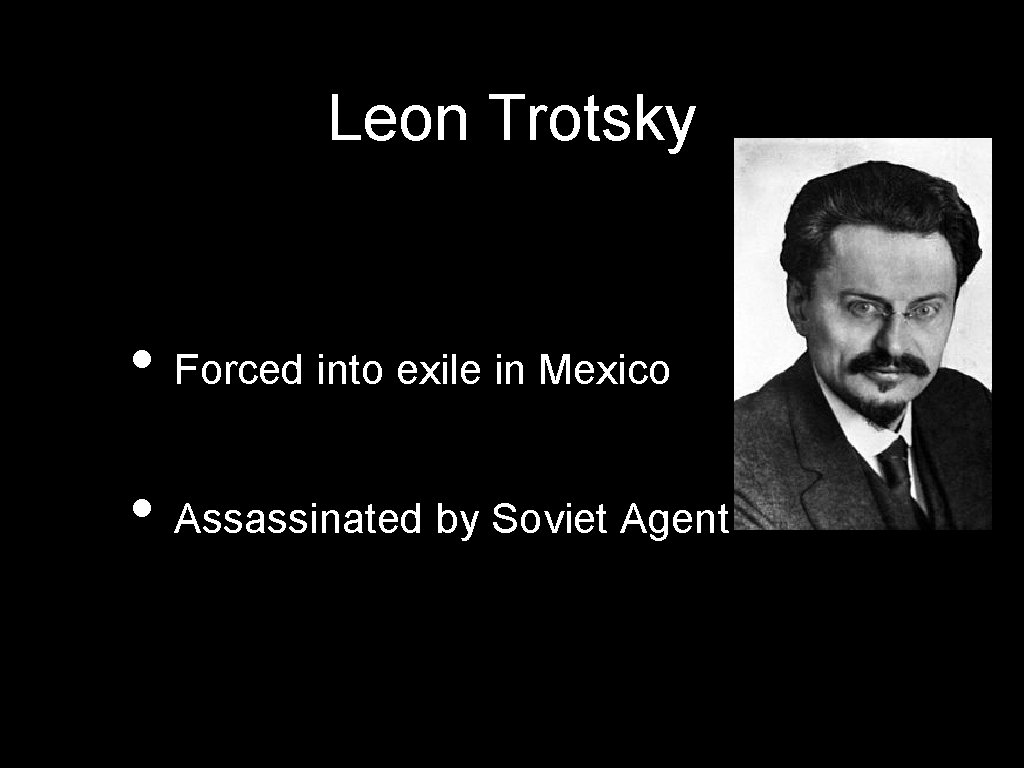
Leon Trotsky • Forced into exile in Mexico • Assassinated by Soviet Agent
TOTALITARIANISM • A government that takes, total, centralized control over every aspect of public and private life.
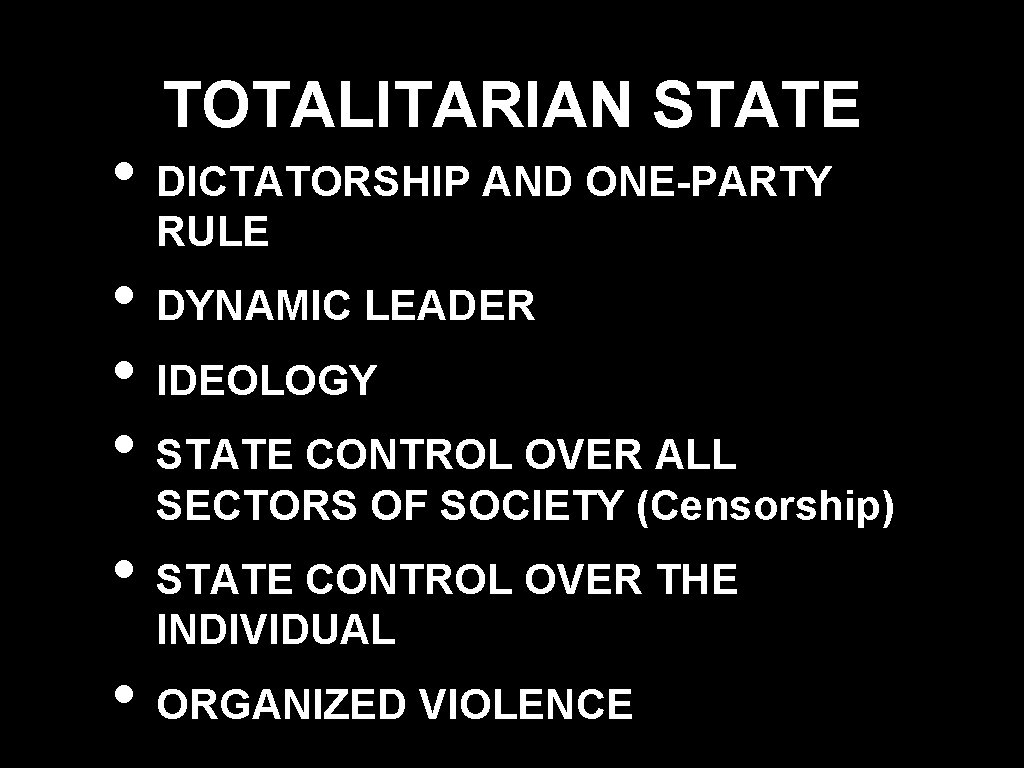
TOTALITARIAN STATE • DICTATORSHIP AND ONE-PARTY RULE • DYNAMIC LEADER • IDEOLOGY • STATE CONTROL OVER ALL SECTORS OF SOCIETY (Censorship) • STATE CONTROL OVER THE INDIVIDUAL • ORGANIZED VIOLENCE
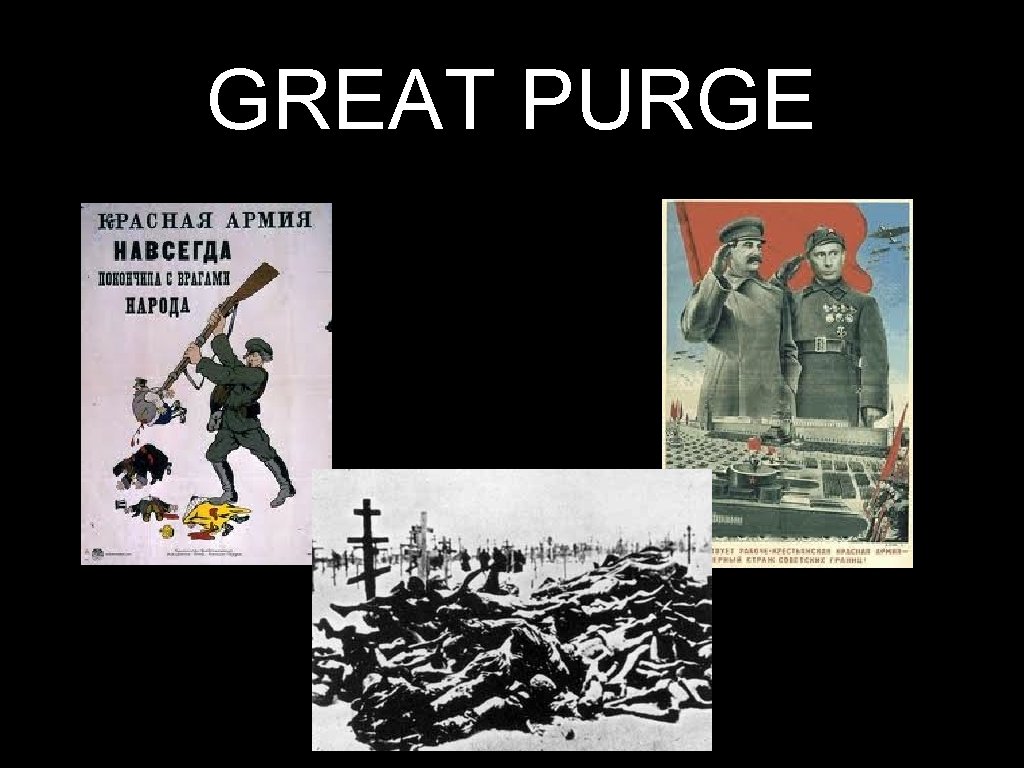
Great Purge • 1934 - 1939 • Campaign of terror directed at eliminating anyone who threatened his power • Thousands of old Bolsheviks who helped stage the Revolution in 1917 were executed • Millions of people are executed • To defeat his rivals, he created and broke political alliances as needed, imprisoning or executing his rivals.
GREAT PURGE
Command Economy • “FIVE YEAR PLAN” • Government makes all economic decisions • Industrial Revolution: rapid industrial growth in heavy industry and strengthening of military (Did so at the expense of consumer goods) • Agricultural Revolution: Government siezed all privately owned farms and organized them into large “collective farms. ”
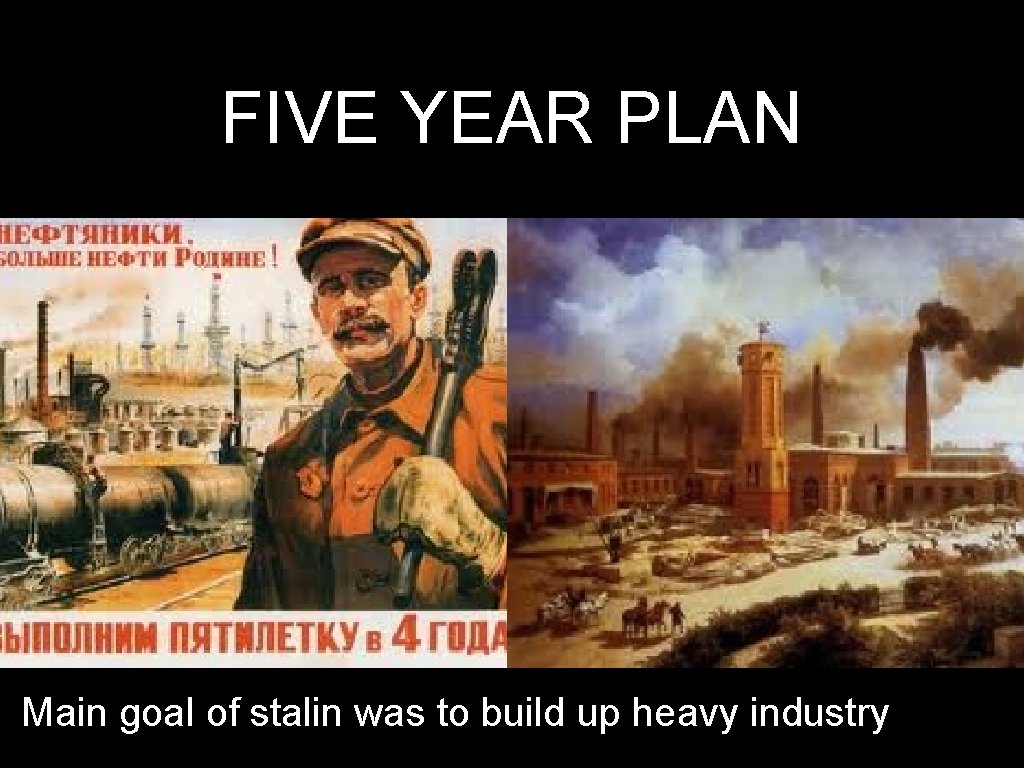
FIVE YEAR PLAN Main goal of stalin was to build up heavy industry
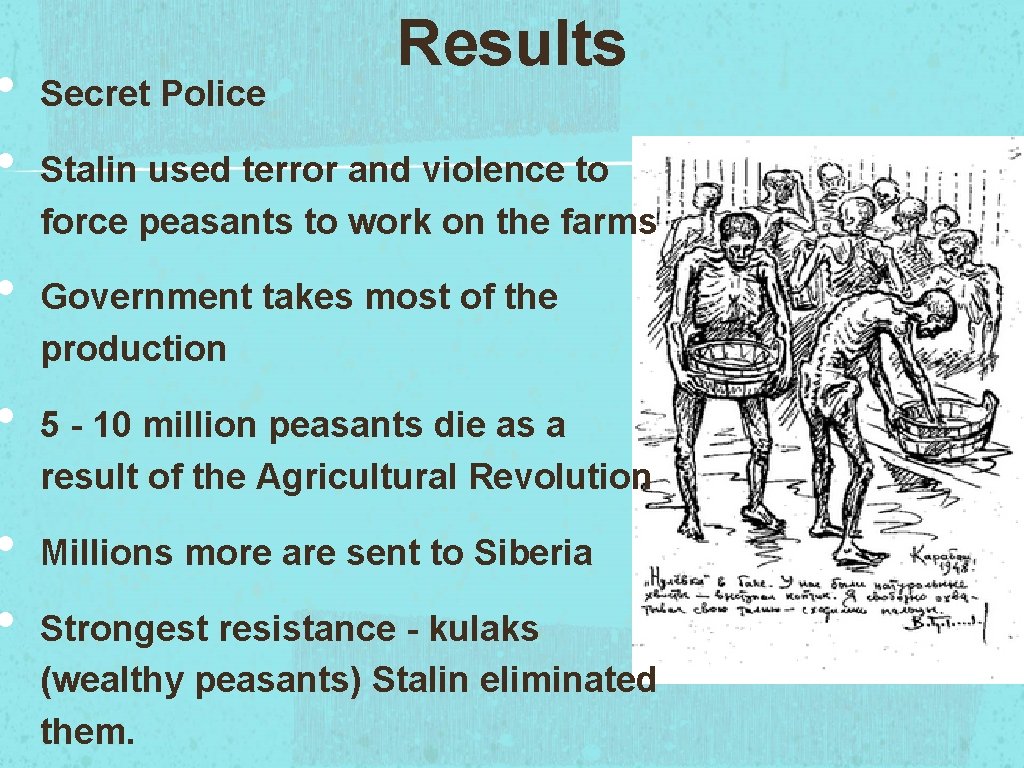
• • • Secret Police Results Stalin used terror and violence to force peasants to work on the farms Government takes most of the production 5 - 10 million peasants die as a result of the Agricultural Revolution Millions more are sent to Siberia Strongest resistance - kulaks (wealthy peasants) Stalin eliminated them.
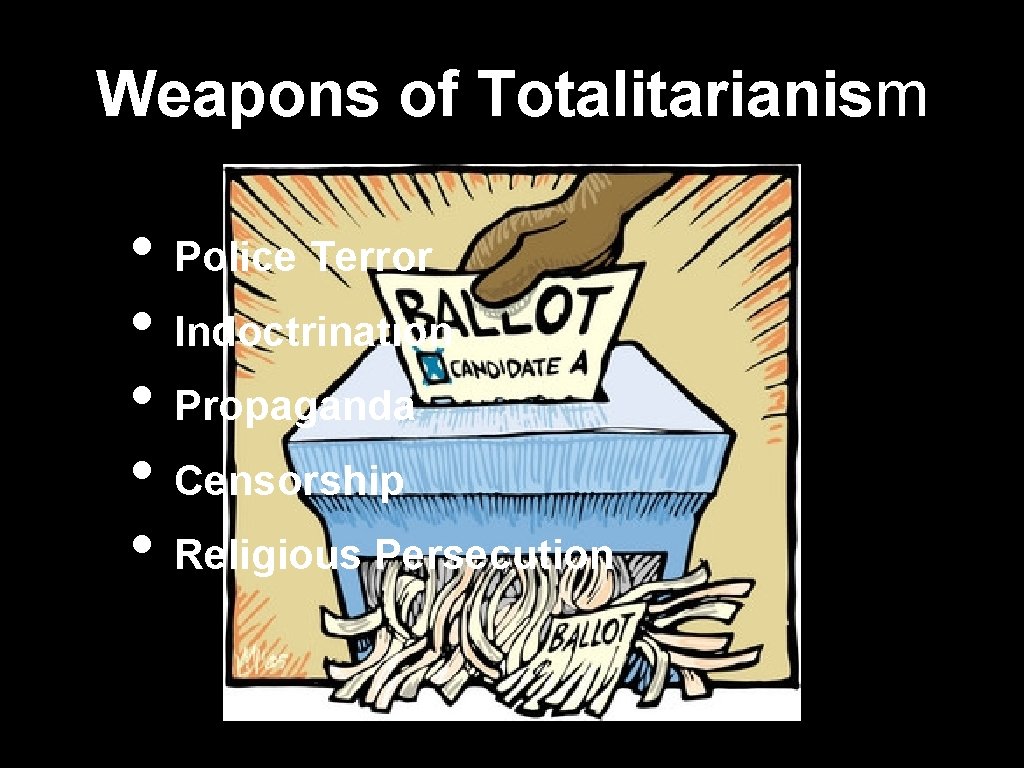
Weapons of Totalitarianism • Police Terror • Indoctrination • Propaganda • Censorship • Religious Persecution
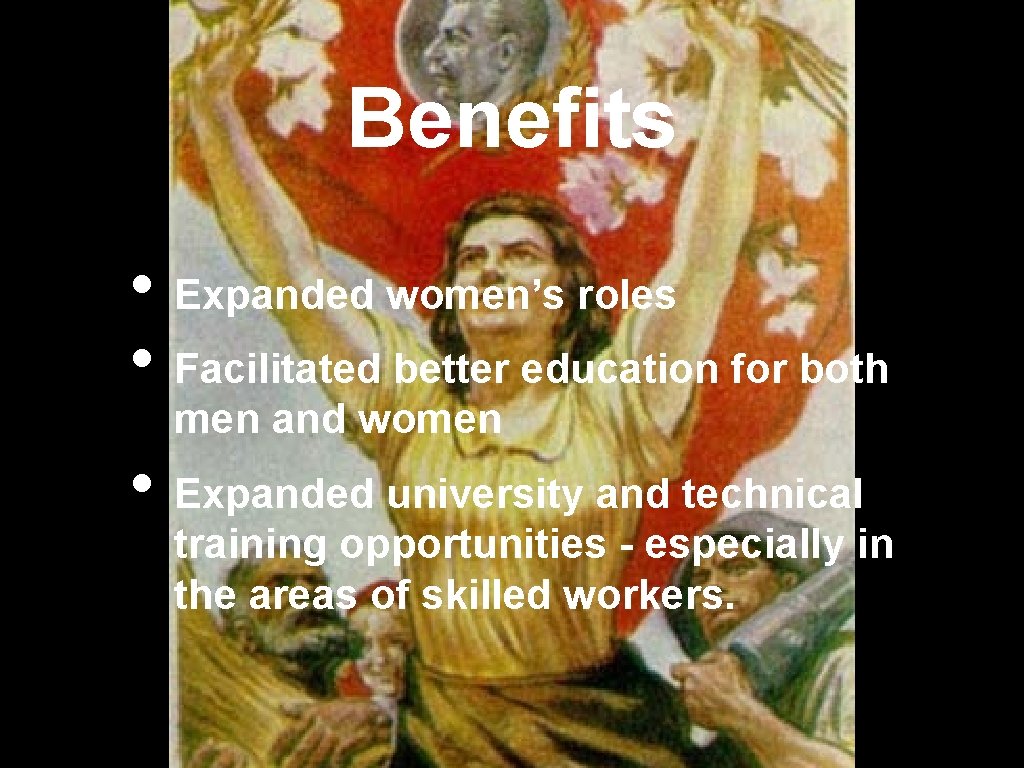
Benefits • Expanded women’s roles • Facilitated better education for both men and women • Expanded university and technical training opportunities - especially in the areas of skilled workers.