
Joseph Stalin 1879 1953 Totalitarian Government in the
- Slides: 42
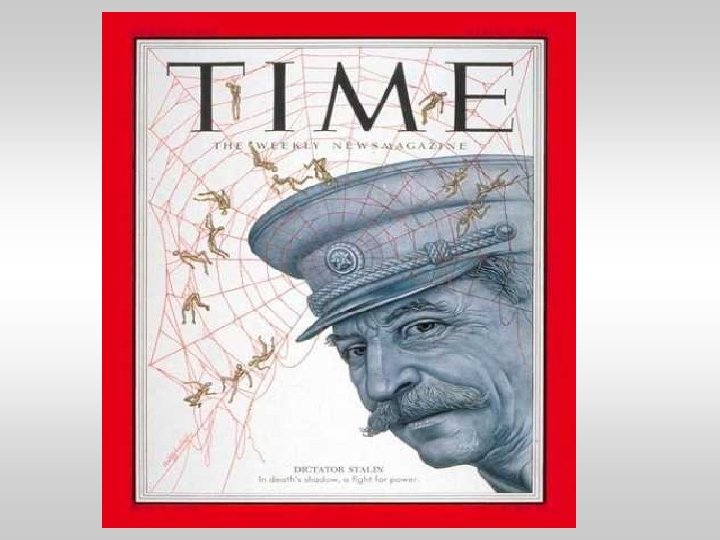
Joseph Stalin, 1879 -1953 Totalitarian Government in the Soviet Union
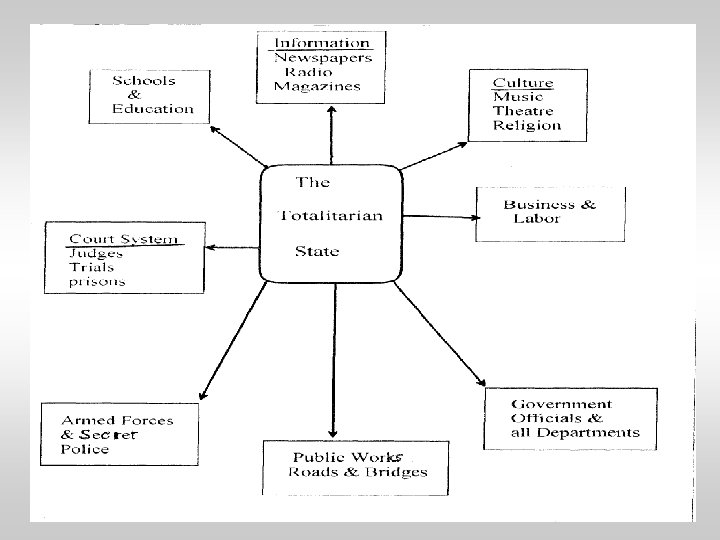
Totalitarian government is the exact opposite of liberal democracy… • • Suppress individual liberties Abolish all competing political parties Eliminate or regulate private property Use the bureaucracy and technology to impose its ideology and enforce its commands
-the ultimate goal of a totalitarian state is… • Total control of the individual- what is believed, what values are held… • There are no private moral judgements, no individual thought, no individual conscience… • People have no natural rights…, they are building blocks for a new social order. . .
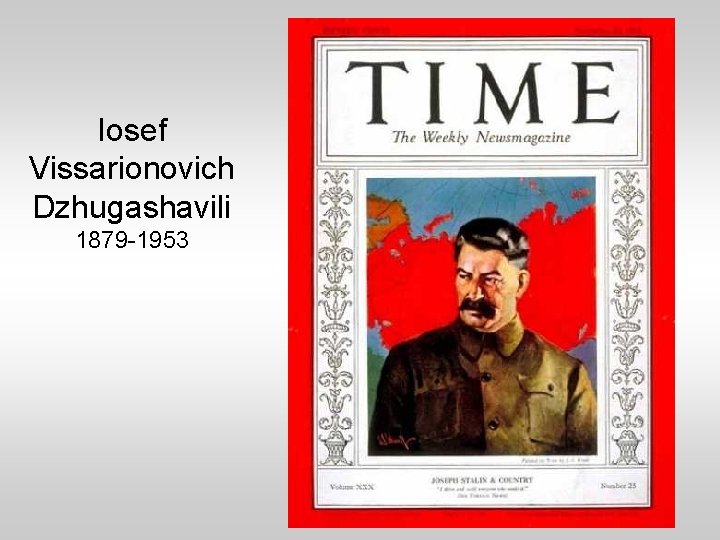
Iosef Vissarionovich Dzhugashavili 1879 -1953
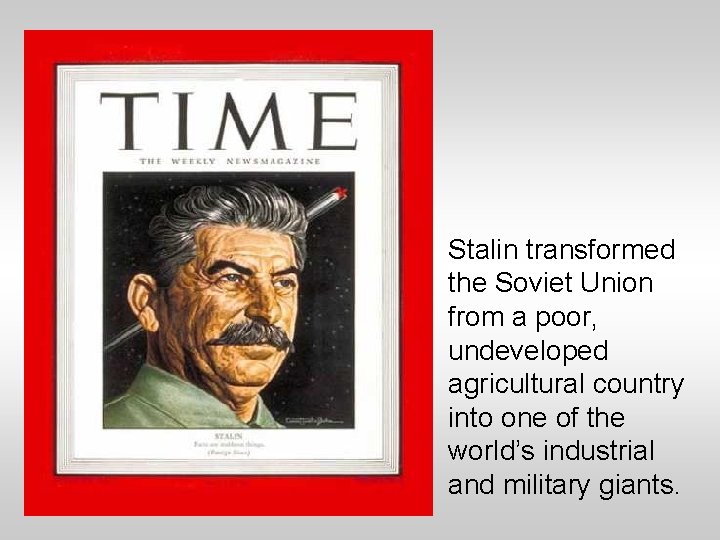
• Stalin transformed the Soviet Union from a poor, undeveloped agricultural country into one of the world’s industrial and military giants.
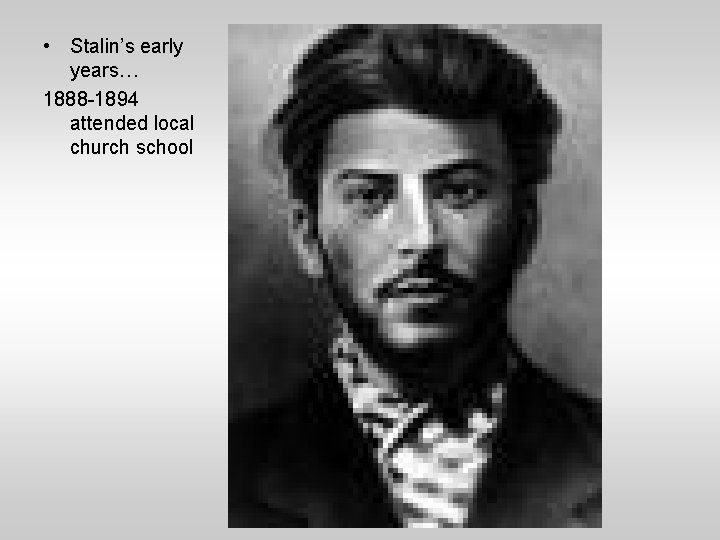
• Stalin’s early years… 1888 -1894 attended local church school
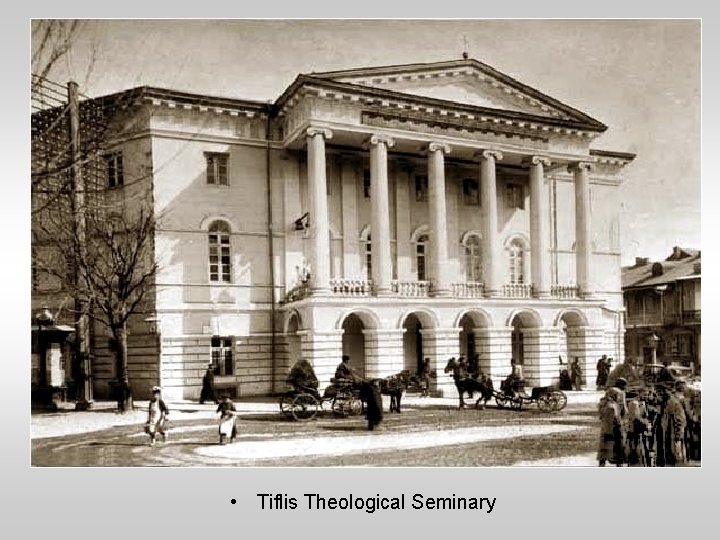
• Tiflis Theological Seminary
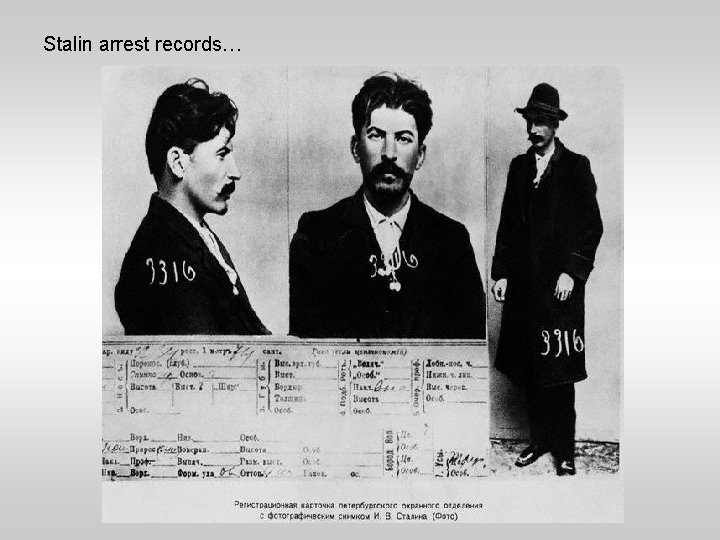
Stalin arrest records…
As a revolutionary, Stalin. … • helped organize workers’ strikes… • set up a secret press to spread Marxist ideas…distributed illegal pamphlets… • participated in train and bank robberies… • by 1912, was a member of the inner circle of the Bolshevik party.
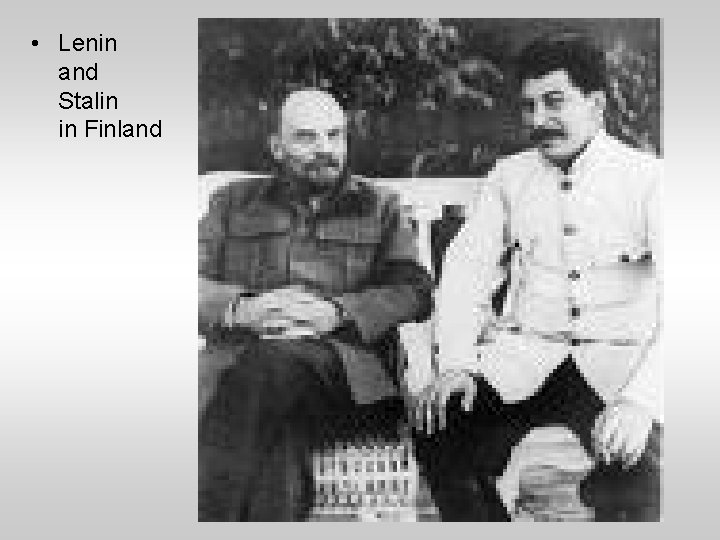
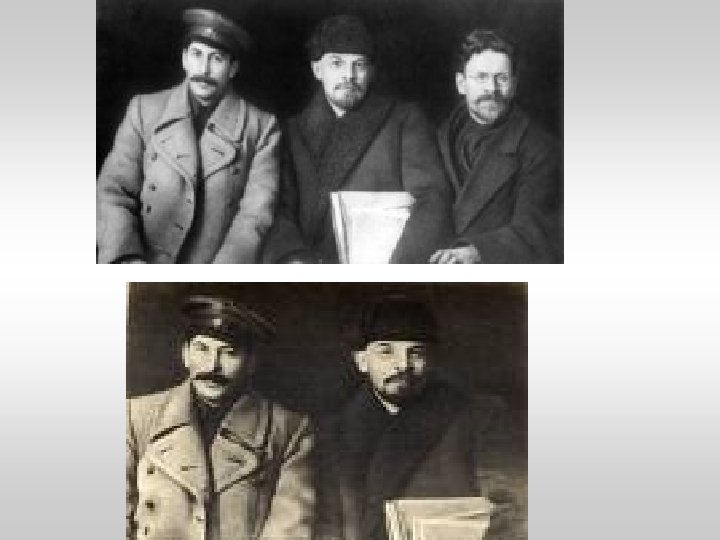
• Lenin and Stalin in Finland
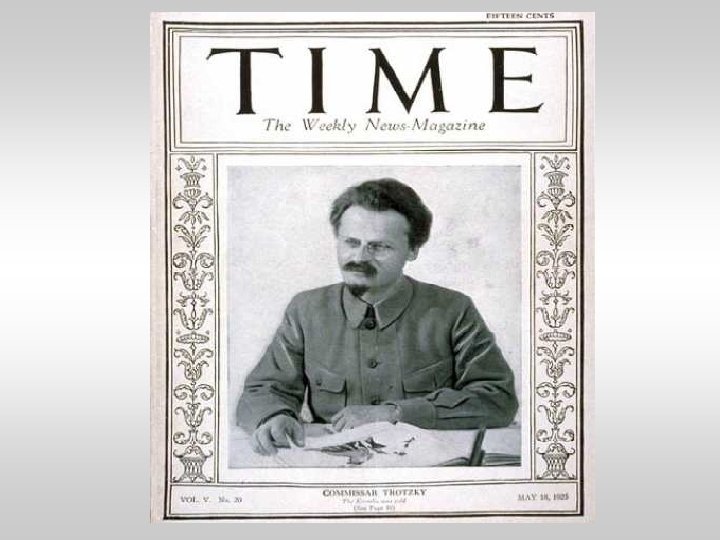
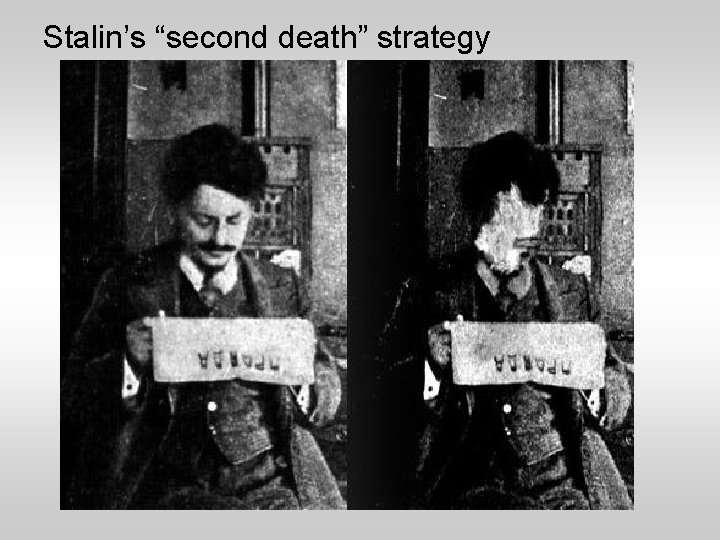
Stalin’s “second death” strategy
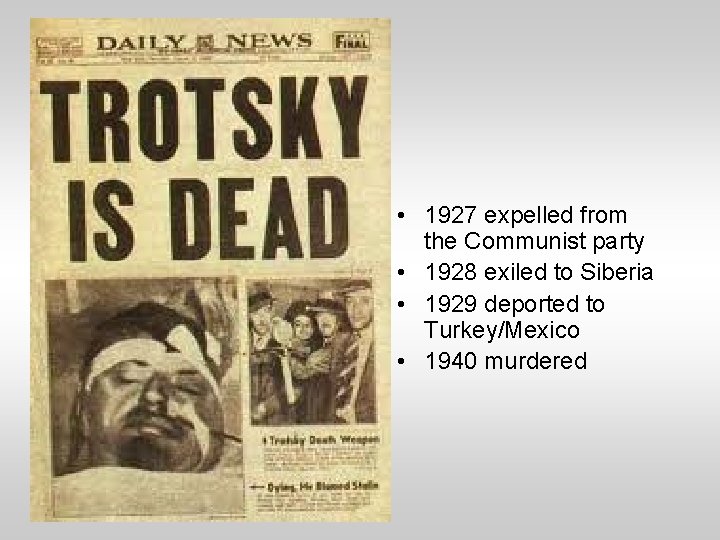
• 1927 expelled from the Communist party • 1928 exiled to Siberia • 1929 deported to Turkey/Mexico • 1940 murdered
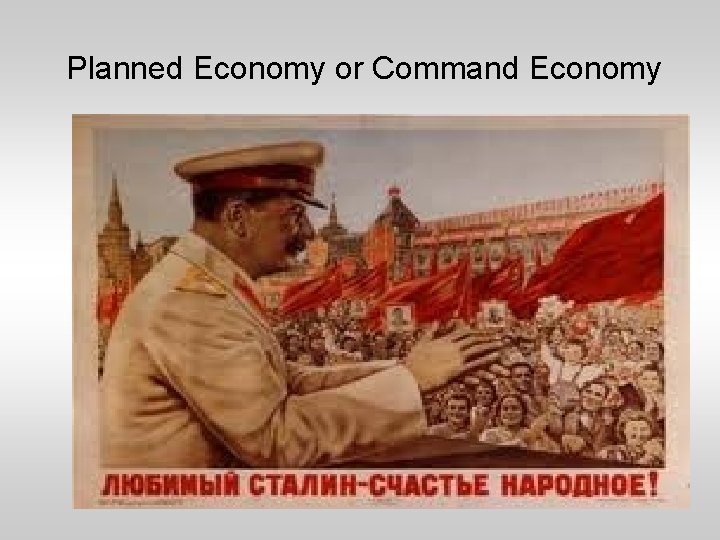
Planned Economy or Command Economy
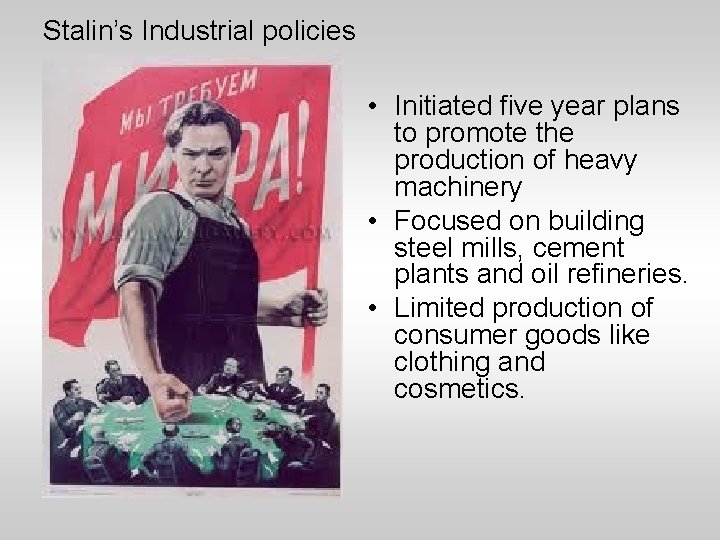
Stalin’s Industrial policies • Initiated five year plans to promote the production of heavy machinery • Focused on building steel mills, cement plants and oil refineries. • Limited production of consumer goods like clothing and cosmetics.
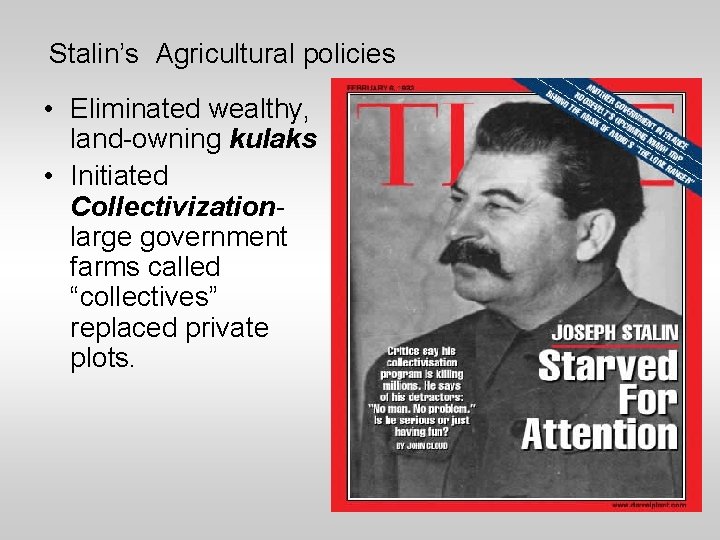
Stalin’s Agricultural policies • Eliminated wealthy, land-owning kulaks • Initiated Collectivizationlarge government farms called “collectives” replaced private plots.
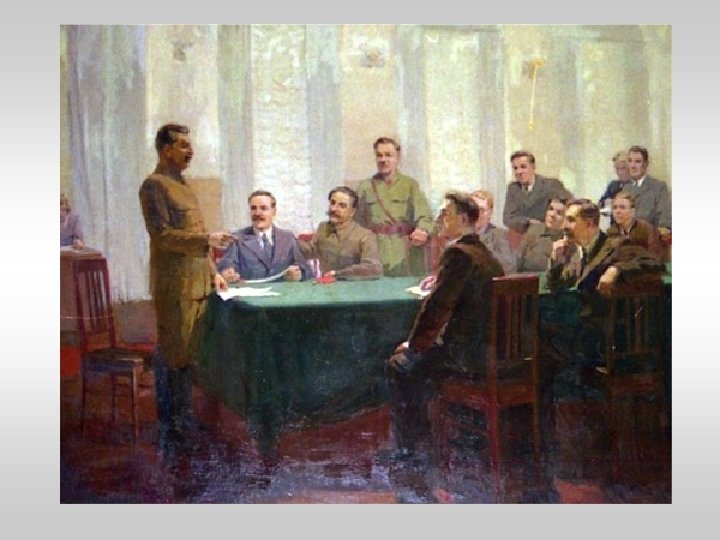
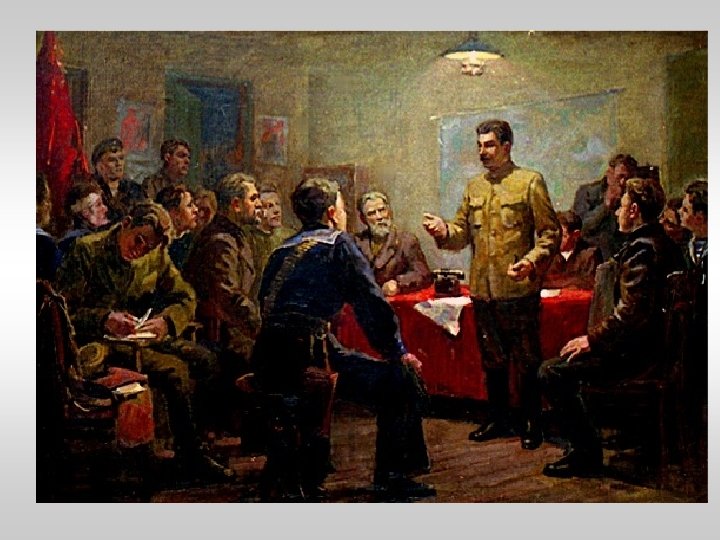
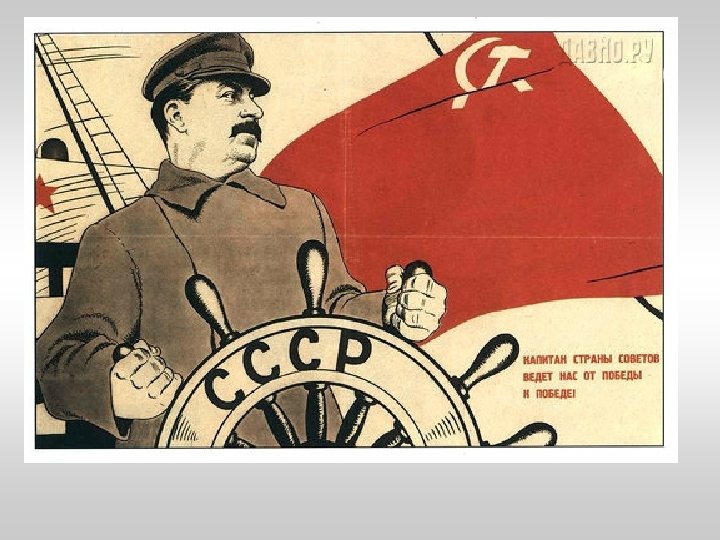
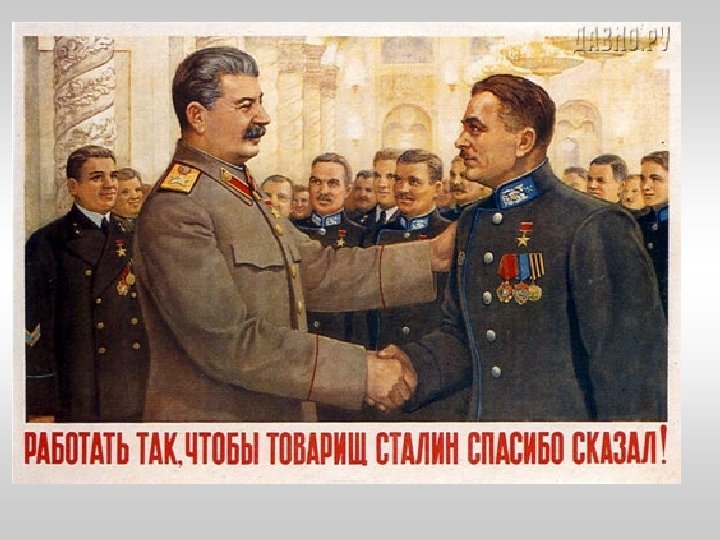
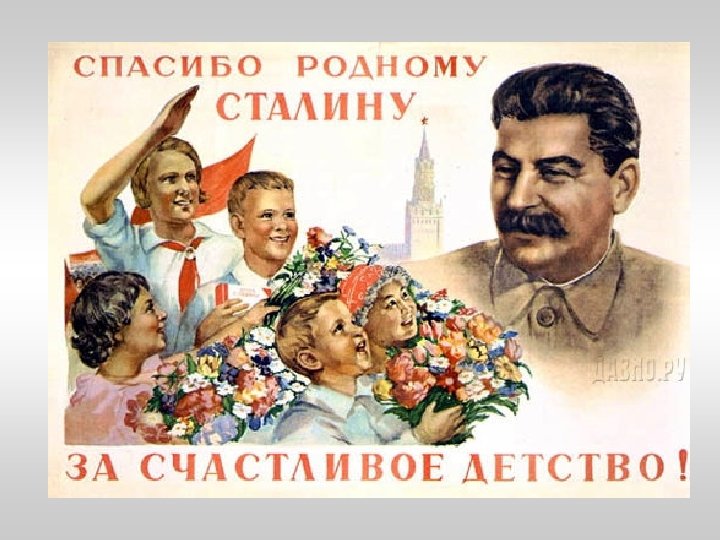
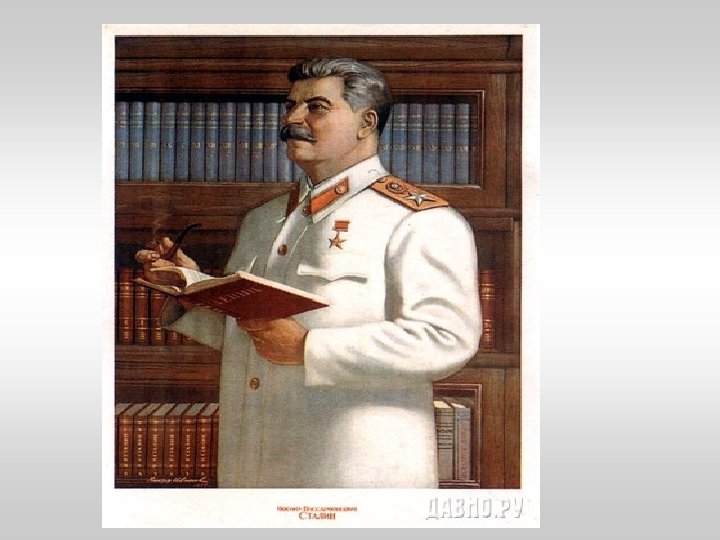
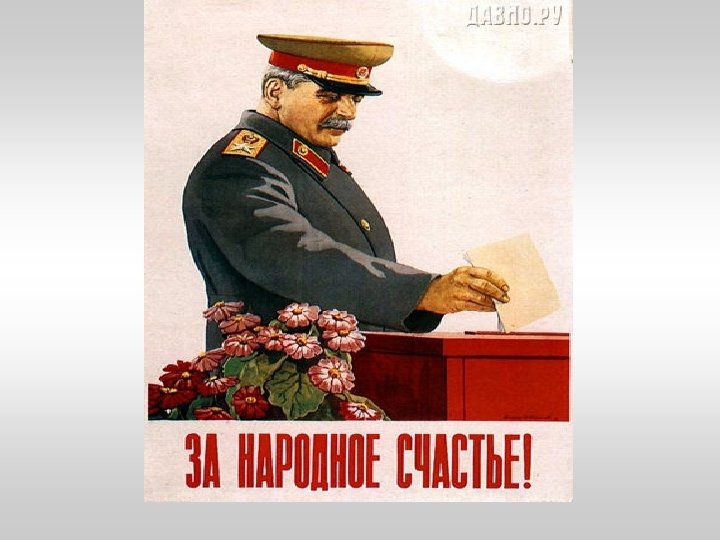
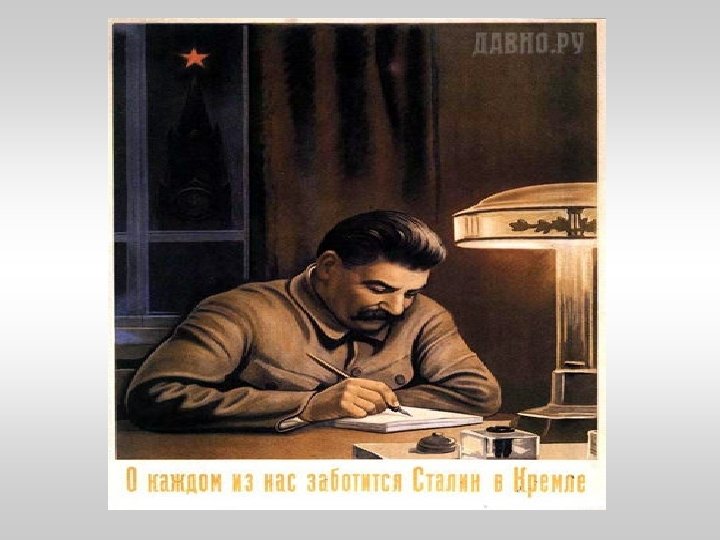
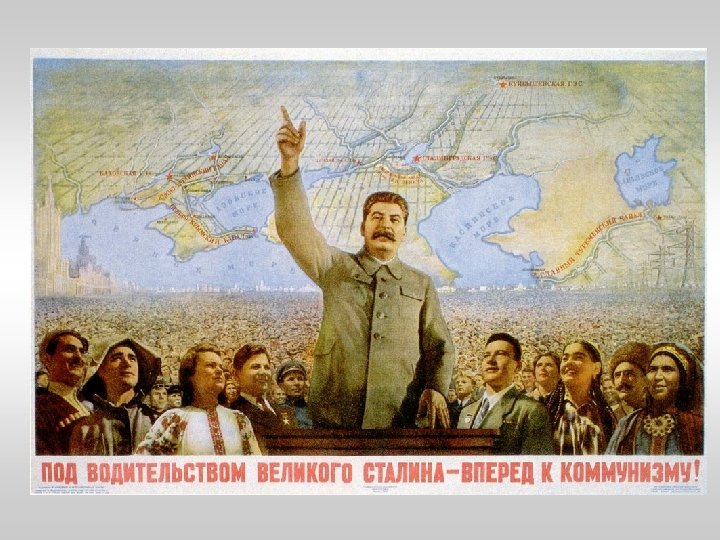
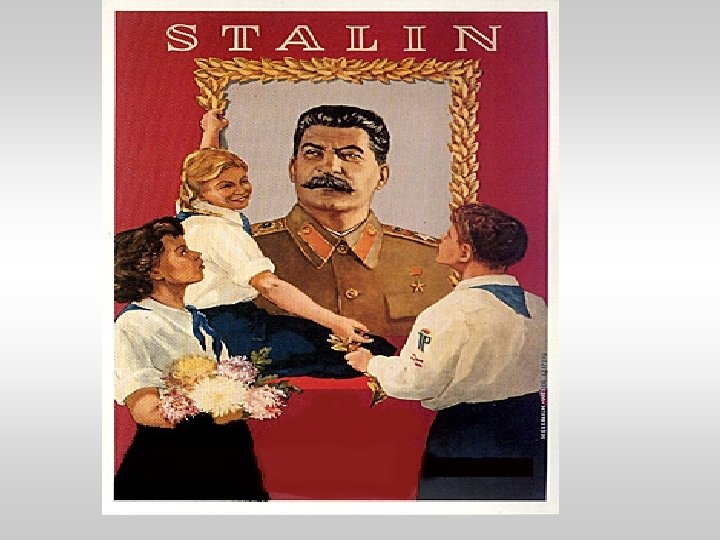
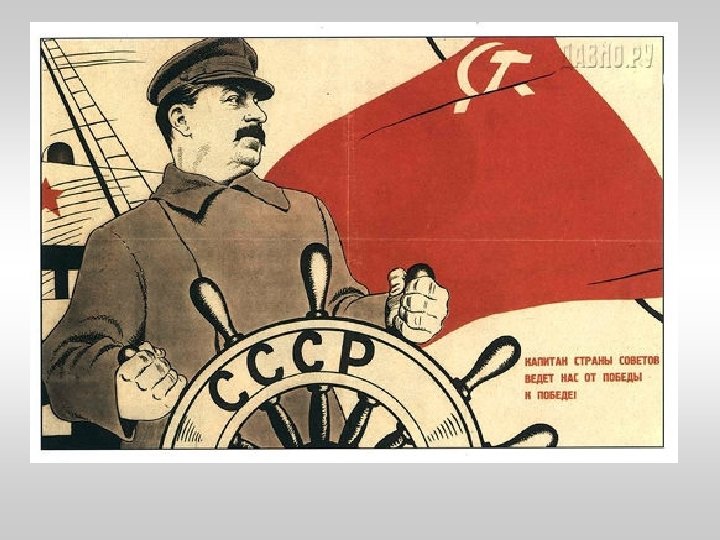
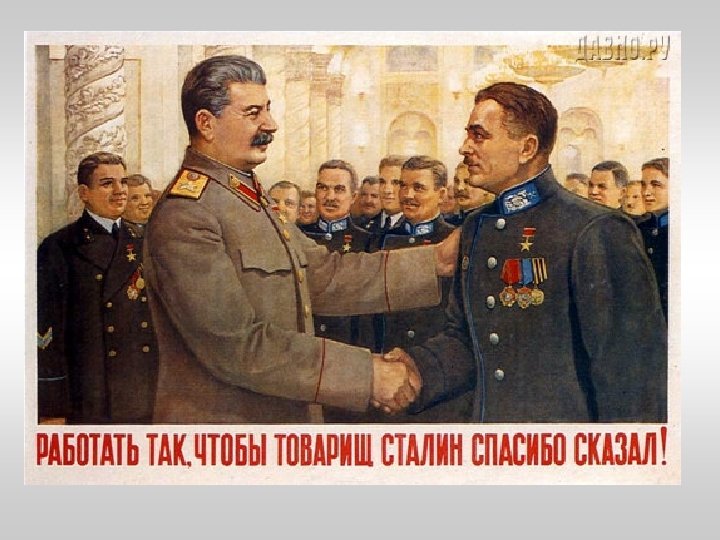
Stalin’s Political policies. Dictatorship of the Communist Party • Created a secret police with unlimited power to crush dissenters critical of Soviet life • Strictly controlled the minority nationalities • Used “show trials” to eliminate and intimidate all potential rivals • Used art & literature to glorify himself and the Communist State
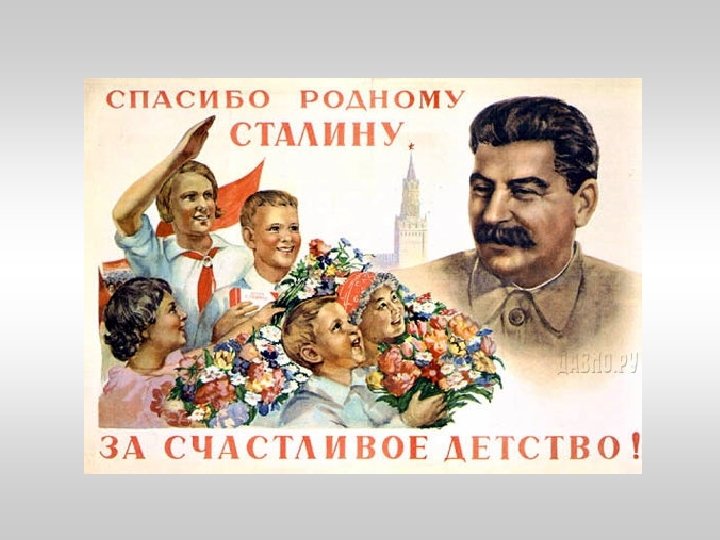
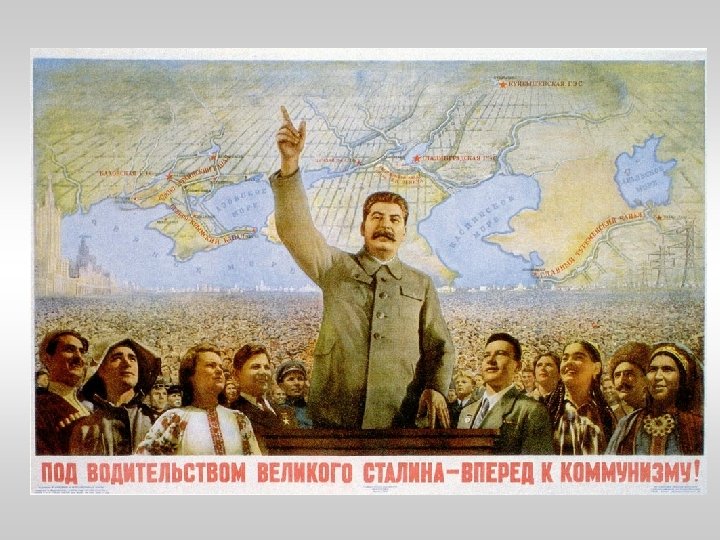
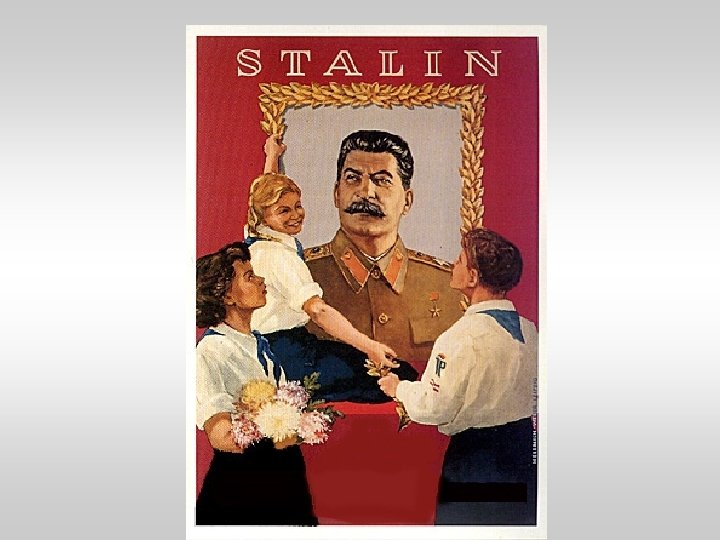
Stalin’s Social/Cultural policies… “The Cult of personality” • Mandated & expanded education at all levels • Promoted educational opportunities for women • Censored all forms of creative thinking and expression • Replaced religious teachings with Communist ideals
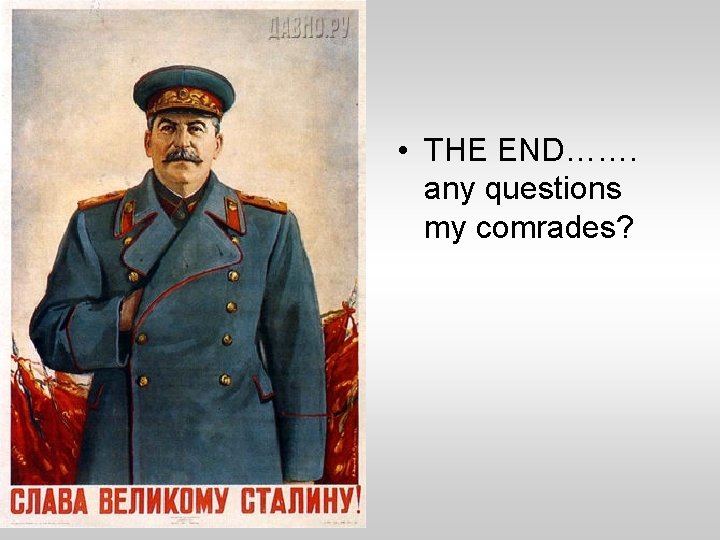
• THE END……. any questions my comrades?
Any Questions? The End
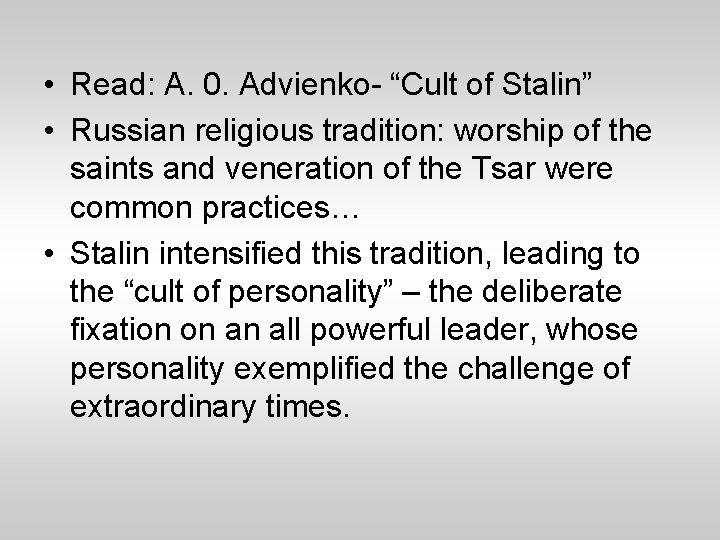
• Read: A. 0. Advienko- “Cult of Stalin” • Russian religious tradition: worship of the saints and veneration of the Tsar were common practices… • Stalin intensified this tradition, leading to the “cult of personality” – the deliberate fixation on an all powerful leader, whose personality exemplified the challenge of extraordinary times.