
Joseph Elliott is an actor well known for

- Slides: 28
Joseph Elliott is an actor well known for his acting and script work in children’s television including CBeebies series "Swashbuckle". Prior to becoming an actor, Elliott worked at a play scheme for children with special educational needs, and then spent four years teaching at Westminster Special Schools. His experience lay primarily in working with children who have ASD and Down's syndrome; he wrote stories and plays for them, and also directed them in live performances. The children he met during this time were the inspiration behind his protagonist in The Good Hawk. https: //www. thebookseller. com/news/walker-snaps-cbeebies-elliott-six-figures-755571 Interview: https: //www. readingagency. org. uk/resources/4120/
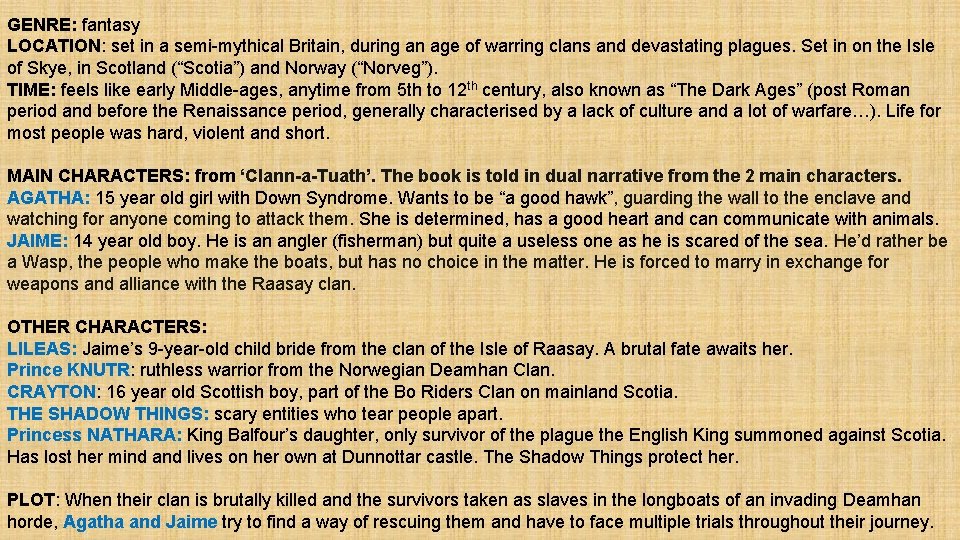
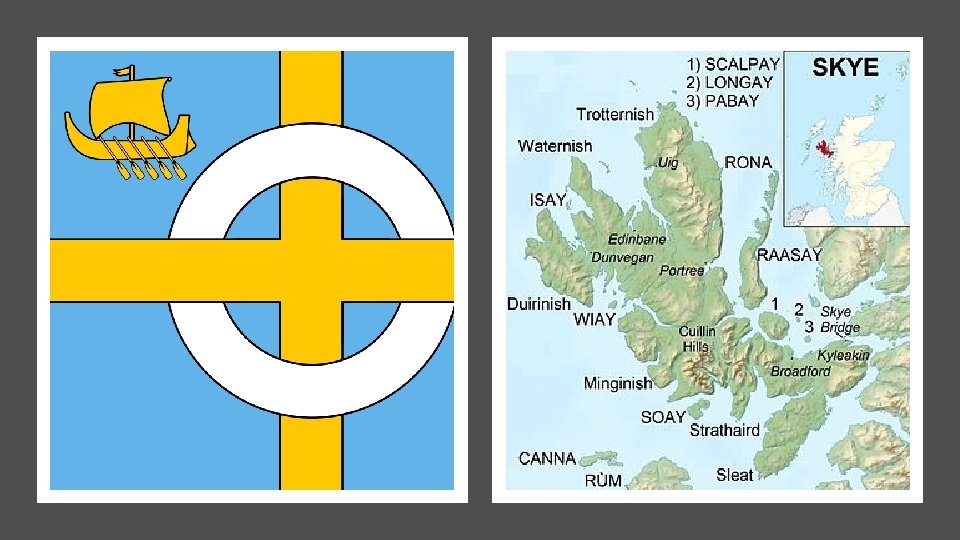
GENRE: fantasy LOCATION: set in a semi-mythical Britain, during an age of warring clans and devastating plagues. Set in on the Isle of Skye, in Scotland (“Scotia”) and Norway (“Norveg”). TIME: feels like early Middle-ages, anytime from 5 th to 12 th century, also known as “The Dark Ages” (post Roman period and before the Renaissance period, generally characterised by a lack of culture and a lot of warfare…). Life for most people was hard, violent and short. MAIN CHARACTERS: from ‘Clann-a-Tuath’. The book is told in dual narrative from the 2 main characters. AGATHA: 15 year old girl with Down Syndrome. Wants to be “a good hawk”, guarding the wall to the enclave and watching for anyone coming to attack them. She is determined, has a good heart and can communicate with animals. JAIME: 14 year old boy. He is an angler (fisherman) but quite a useless one as he is scared of the sea. He’d rather be a Wasp, the people who make the boats, but has no choice in the matter. He is forced to marry in exchange for weapons and alliance with the Raasay clan. OTHER CHARACTERS: LILEAS: Jaime’s 9 -year-old child bride from the clan of the Isle of Raasay. A brutal fate awaits her. Prince KNUTR: ruthless warrior from the Norwegian Deamhan Clan. CRAYTON: 16 year old Scottish boy, part of the Bo Riders Clan on mainland Scotia. THE SHADOW THINGS: scary entities who tear people apart. Princess NATHARA: King Balfour’s daughter, only survivor of the plague the English King summoned against Scotia. Has lost her mind and lives on her own at Dunnottar castle. The Shadow Things protect her. PLOT: When their clan is brutally killed and the survivors taken as slaves in the longboats of an invading Deamhan horde, Agatha and Jaime try to find a way of rescuing them and have to face multiple trials throughout their journey.
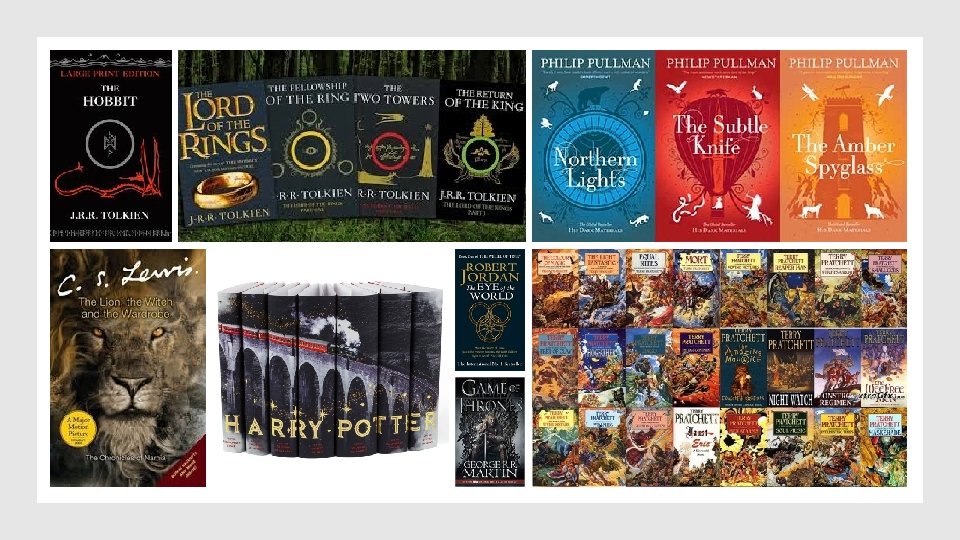
GENRE: FANTASY Can you name any fantasy books? Which is your favourite? What are the main characteristics of fantasy stories?
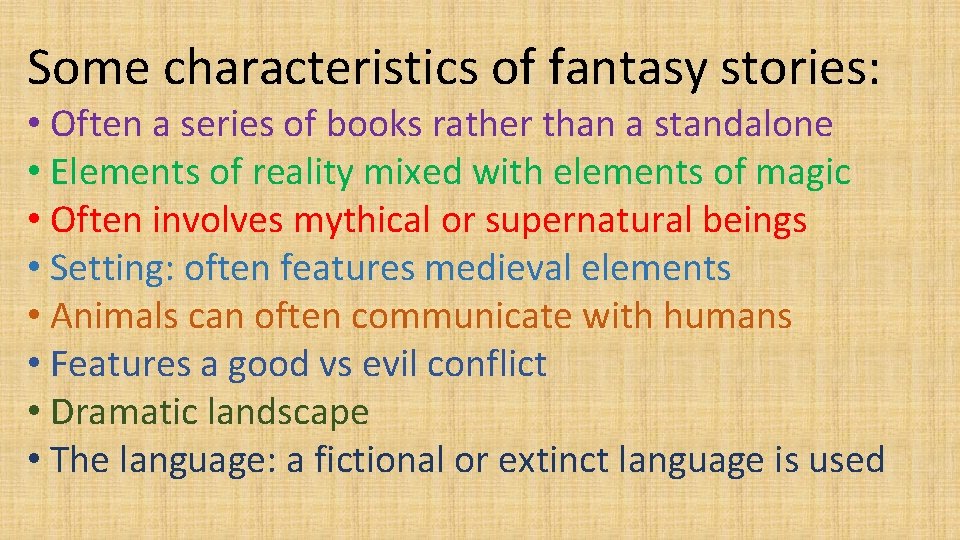
Some characteristics of fantasy stories: • Often a series of books rather than a standalone • Elements of reality mixed with elements of magic • Often involves mythical or supernatural beings • Setting: often features medieval elements • Animals can often communicate with humans • Features a good vs evil conflict • Dramatic landscape • The language: a fictional or extinct language is used
What fantasy elements are present in The Good Hawk?
• The Good Hawk is the first in a trilogy. The second book (The Broken Raven) is out in January 2021. • Elements of reality: the setting, the life people led/ mixed with elements of magic: for ex. summoning the shadow things. • Mythical or supernatural beings: Sgailean (shadow things), the terror beasts (wildwolves). • Medieval elements: the book seems to take place in a mythical version of the Dark Ages. • Communicating with animals: the Bo Riders ride highland bulls, Agatha can talk to her vole Milkwort and to the bulls. She scares the wildwolves away by screaming in their heads, etc… • Good vs Evil conflict: Jaime and Agatha vs the Deamhan clan. • Unique setting: the Scottish scenery is exceptional and dramatic! • The language: the “old language” used is Scottish Gaelic. Jaime uses some of his clan words such as “duth” (honourable/ right) on a regular basis, which Cray doesn’t understand. Same for some of Cray’s language for him. The Deamhan clan has a totally different language, inspired by Old Norse. In medieval times Gaelic, Pictish and Norse would have been spoken in these locations.
Geographical and Historical elements in The Good Hawk: Where does it take place? When does it take place?
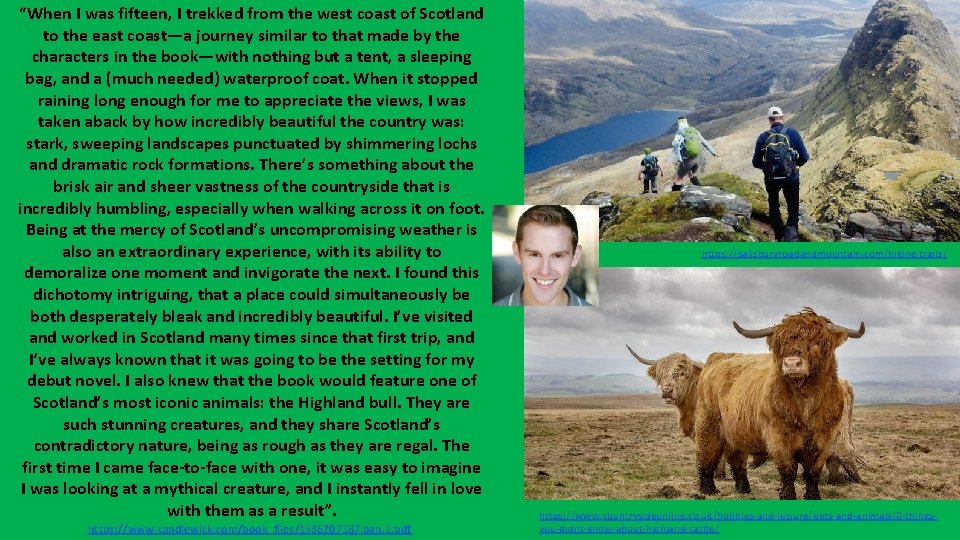
“When I was fifteen, I trekked from the west coast of Scotland to the east coast—a journey similar to that made by the characters in the book—with nothing but a tent, a sleeping bag, and a (much needed) waterproof coat. When it stopped raining long enough for me to appreciate the views, I was taken aback by how incredibly beautiful the country was: stark, sweeping landscapes punctuated by shimmering lochs and dramatic rock formations. There’s something about the brisk air and sheer vastness of the countryside that is incredibly humbling, especially when walking across it on foot. Being at the mercy of Scotland’s uncompromising weather is also an extraordinary experience, with its ability to demoralize one moment and invigorate the next. I found this dichotomy intriguing, that a place could simultaneously be both desperately bleak and incredibly beautiful. I’ve visited and worked in Scotland many times since that first trip, and I’ve always known that it was going to be the setting for my debut novel. I also knew that the book would feature one of Scotland’s most iconic animals: the Highland bull. They are such stunning creatures, and they share Scotland’s contradictory nature, being as rough as they are regal. The first time I came face-to-face with one, it was easy to imagine I was looking at a mythical creature, and I instantly fell in love with them as a result”. https: //www. candlewick. com/book_files/1536207187. ban. 1. pdf https: //salisburyroadandmountain. com/hiking-trails/ https: //www. countrysideonline. co. uk/hobbies-and-leisure/pets-and-animals/8 -thingsyou-didnt-know-about-highland-cattle/
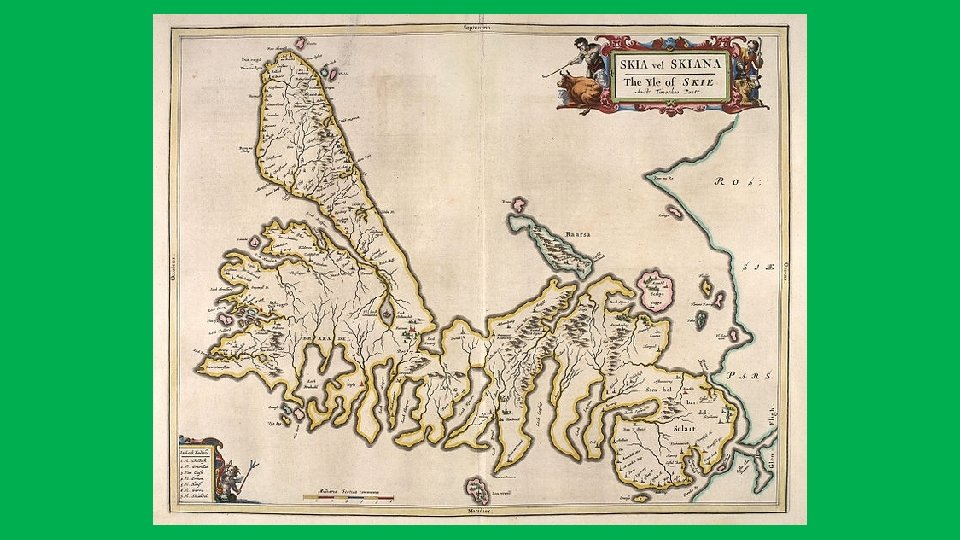
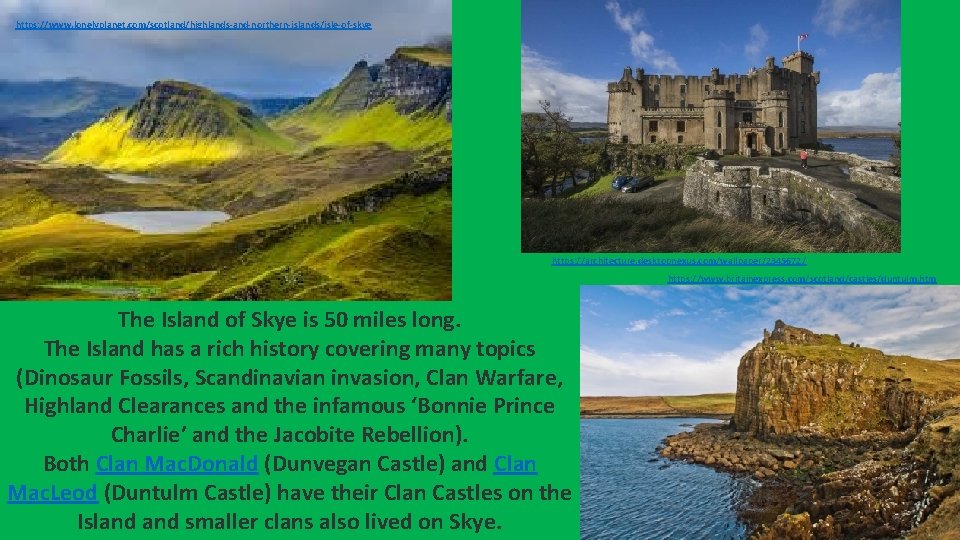
https: //www. lonelyplanet. com/scotland/highlands-and-northern-islands/isle-of-skye https: //architecture. desktopnexus. com/wallpaper/2345672/ https: //www. britainexpress. com/scotland/castles/duntulm. htm The Island of Skye is 50 miles long. The Island has a rich history covering many topics (Dinosaur Fossils, Scandinavian invasion, Clan Warfare, Highland Clearances and the infamous ‘Bonnie Prince Charlie’ and the Jacobite Rebellion). Both Clan Mac. Donald (Dunvegan Castle) and Clan Mac. Leod (Duntulm Castle) have their Clan Castles on the Island smaller clans also lived on Skye. visitscotland. com
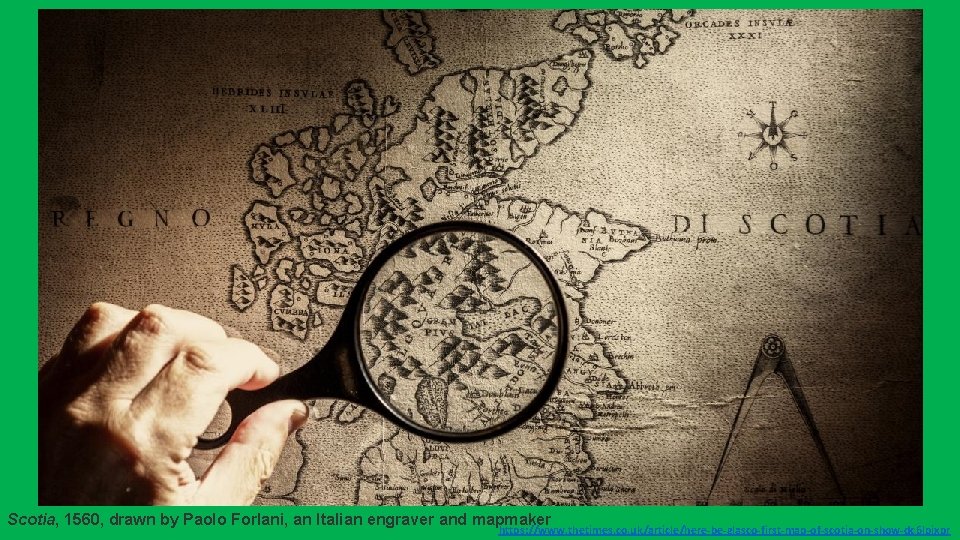
Scotia, 1560, drawn by Paolo Forlani, an Italian engraver and mapmaker https: //www. thetimes. co. uk/article/here-be-glasco-first-map-of-scotia-on-show-dc 6 lpjxpr
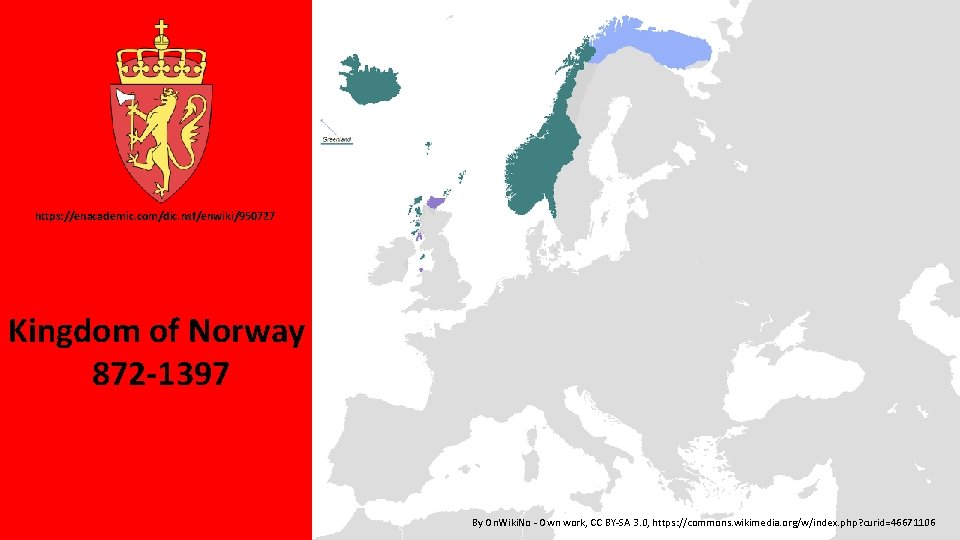
https: //enacademic. com/dic. nsf/enwiki/950727 Kingdom of Norway 872 -1397 By On. Wiki. No - Own work, CC BY-SA 3. 0, https: //commons. wikimedia. org/w/index. php? curid=46671106
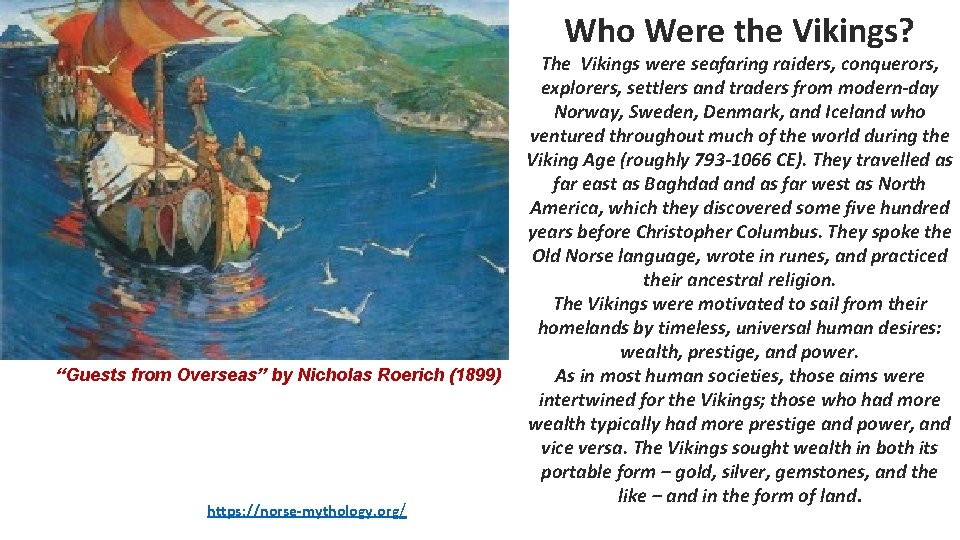
Who Were the Vikings? “Guests from Overseas” by Nicholas Roerich (1899) https: //norse-mythology. org/ The Vikings were seafaring raiders, conquerors, explorers, settlers and traders from modern-day Norway, Sweden, Denmark, and Iceland who ventured throughout much of the world during the Viking Age (roughly 793 -1066 CE). They travelled as far east as Baghdad and as far west as North America, which they discovered some five hundred years before Christopher Columbus. They spoke the Old Norse language, wrote in runes, and practiced their ancestral religion. The Vikings were motivated to sail from their homelands by timeless, universal human desires: wealth, prestige, and power. As in most human societies, those aims were intertwined for the Vikings; those who had more wealth typically had more prestige and power, and vice versa. The Vikings sought wealth in both its portable form – gold, silver, gemstones, and the like – and in the form of land.
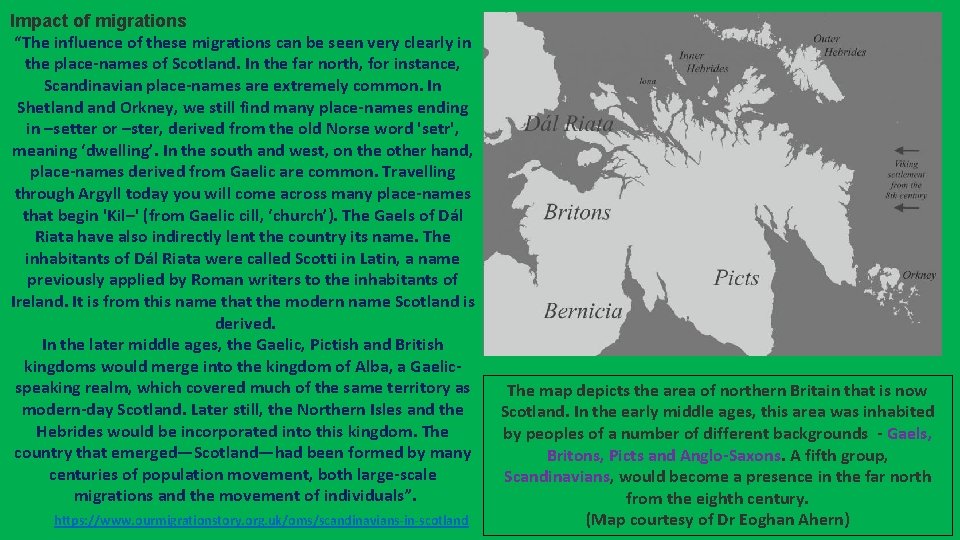
Impact of migrations “The influence of these migrations can be seen very clearly in the place-names of Scotland. In the far north, for instance, Scandinavian place-names are extremely common. In Shetland Orkney, we still find many place-names ending in –setter or –ster, derived from the old Norse word 'setr', meaning ‘dwelling’. In the south and west, on the other hand, place-names derived from Gaelic are common. Travelling through Argyll today you will come across many place-names that begin 'Kil–' (from Gaelic cill, ‘church’). The Gaels of Dál Riata have also indirectly lent the country its name. The inhabitants of Dál Riata were called Scotti in Latin, a name previously applied by Roman writers to the inhabitants of Ireland. It is from this name that the modern name Scotland is derived. In the later middle ages, the Gaelic, Pictish and British kingdoms would merge into the kingdom of Alba, a Gaelicspeaking realm, which covered much of the same territory as modern-day Scotland. Later still, the Northern Isles and the Hebrides would be incorporated into this kingdom. The country that emerged—Scotland—had been formed by many centuries of population movement, both large-scale migrations and the movement of individuals”. https: //www. ourmigrationstory. org. uk/oms/scandinavians-in-scotland The map depicts the area of northern Britain that is now Scotland. In the early middle ages, this area was inhabited by peoples of a number of different backgrounds - Gaels, Britons, Picts and Anglo-Saxons. A fifth group, Scandinavians, would become a presence in the far north from the eighth century. (Map courtesy of Dr Eoghan Ahern)
The Scandinavianisation of the far north “By about 1200, most of the far north and north-west had become entirely ‘Scandinavianised’. The local population spoke Norse, and Norse place-names had replaced those which had existed before the arrival of the Vikings. But how exactly did this Scandinavianisation come about? This is a very difficult question, as we have no written sources from the far north from before the twelfth and thirteenth centuries. Historians are still debating this question and have come up with two competing explanations for the causes of the Scandinavianisation process: 1) That the invaders completely replaced the existing population. The original inhabitants were either killed or driven out. 2) That much of the existing population remained. As was the case with Normans in 1066, only locals at the elite level were replaced. Those who had previously been Pictish, or Gaelic, now adapted to a new identity – that of the new ruling class. They learned the new language and adopted the cultural traditions of the invading group”. https: //www. ourmigrationstory. org. uk/oms/scandinavians-in-scotland
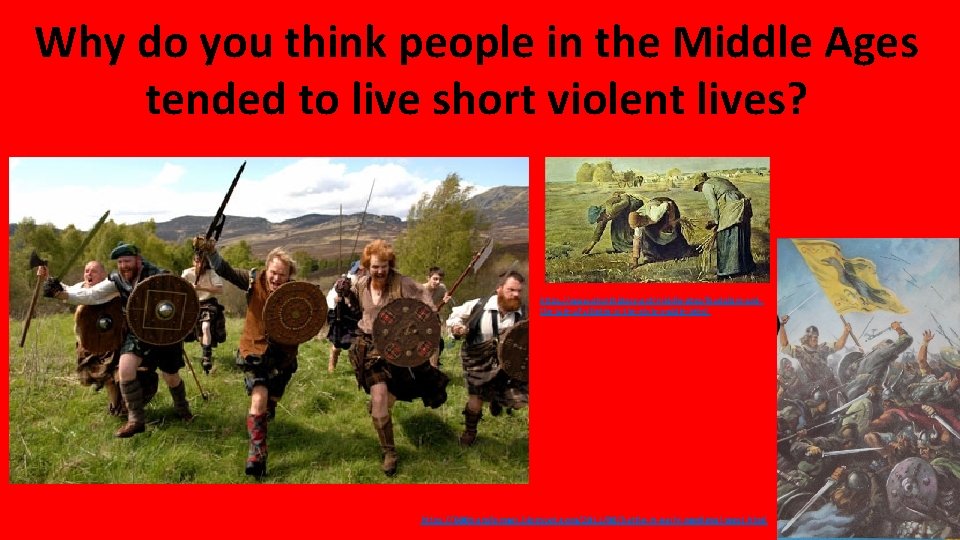
Why do you think people in the Middle Ages tended to live short violent lives? https: //www. shorthistory. org/middle-ages/feudalism-andthe-role-of-villages-in-the-early-middle-ages/ https: //600 transformer. blogspot. com/2011/08/battle-in-early-medieval-west. html
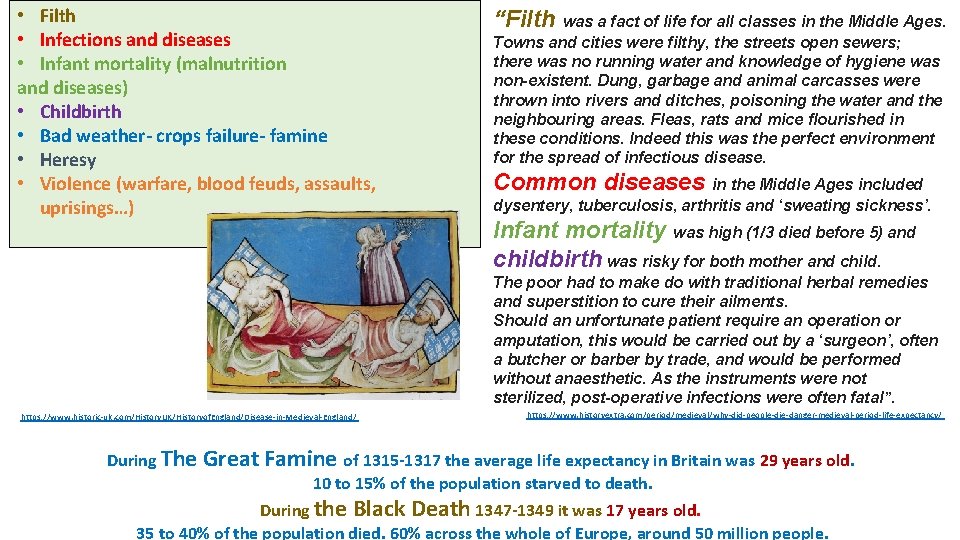
• Filth • Infections and diseases • Infant mortality (malnutrition and diseases) • Childbirth • Bad weather- crops failure- famine • Heresy • Violence (warfare, blood feuds, assaults, uprisings…) “Filth was a fact of life for all classes in the Middle Ages. Towns and cities were filthy, the streets open sewers; there was no running water and knowledge of hygiene was non-existent. Dung, garbage and animal carcasses were thrown into rivers and ditches, poisoning the water and the neighbouring areas. Fleas, rats and mice flourished in these conditions. Indeed this was the perfect environment for the spread of infectious disease. Common diseases in the Middle Ages included dysentery, tuberculosis, arthritis and ‘sweating sickness’. Infant mortality was high (1/3 died before 5) and childbirth was risky for both mother and child. The poor had to make do with traditional herbal remedies and superstition to cure their ailments. Should an unfortunate patient require an operation or amputation, this would be carried out by a ‘surgeon’, often a butcher or barber by trade, and would be performed without anaesthetic. As the instruments were not sterilized, post-operative infections were often fatal”. https: //www. historic-uk. com/History. UK/Historyof. England/Disease-in-Medieval-England/ During The https: //www. historyextra. com/period/medieval/why-did-people-die-danger-medieval-period-life-expectancy/ Great Famine of 1315 -1317 the average life expectancy in Britain was 29 years old. 10 to 15% of the population starved to death. During the Black Death 1347 -1349 it was 17 years old. 35 to 40% of the population died. 60% across the whole of Europe, around 50 million people.
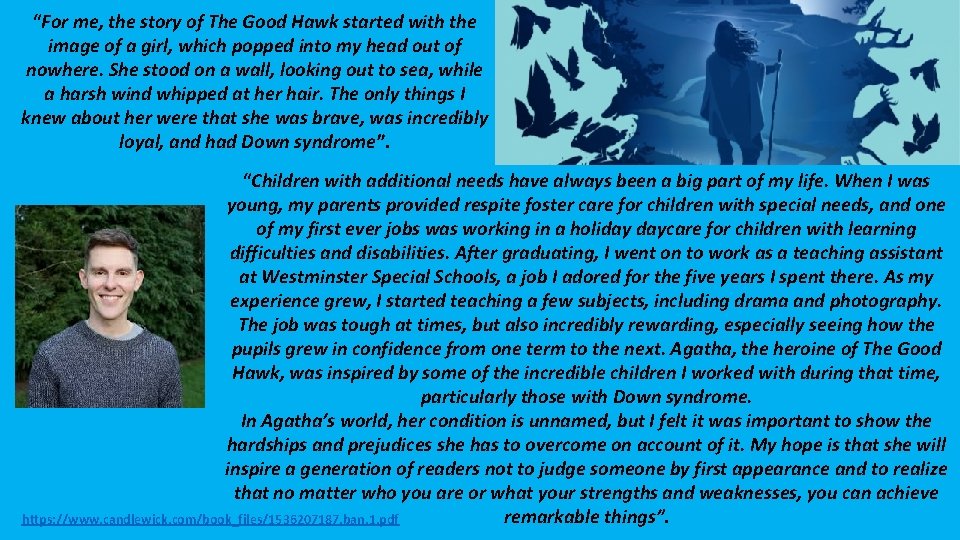
“For me, the story of The Good Hawk started with the image of a girl, which popped into my head out of nowhere. She stood on a wall, looking out to sea, while a harsh wind whipped at her hair. The only things I knew about her were that she was brave, was incredibly loyal, and had Down syndrome”. “Children with additional needs have always been a big part of my life. When I was young, my parents provided respite foster care for children with special needs, and one of my first ever jobs was working in a holiday daycare for children with learning difficulties and disabilities. After graduating, I went on to work as a teaching assistant at Westminster Special Schools, a job I adored for the five years I spent there. As my experience grew, I started teaching a few subjects, including drama and photography. The job was tough at times, but also incredibly rewarding, especially seeing how the pupils grew in confidence from one term to the next. Agatha, the heroine of The Good Hawk, was inspired by some of the incredible children I worked with during that time, particularly those with Down syndrome. In Agatha’s world, her condition is unnamed, but I felt it was important to show the hardships and prejudices she has to overcome on account of it. My hope is that she will inspire a generation of readers not to judge someone by first appearance and to realize that no matter who you are or what your strengths and weaknesses, you can achieve remarkable things”. https: //www. candlewick. com/book_files/1536207187. ban. 1. pdf
How is Agatha treated by her clan? By the Bo Riders of Scotia? By Knutr and the Deamhanan clan? See Pages 30, 57 Page 191 Page 102
What do you know about Down Syndrome, the genetic disorder that Agatha was born with? (Read out Walker Books study guide, bottom of page 2) https: //www. joseph-elliott. net/resources Do you know of any other book where a main character has Down syndrome?
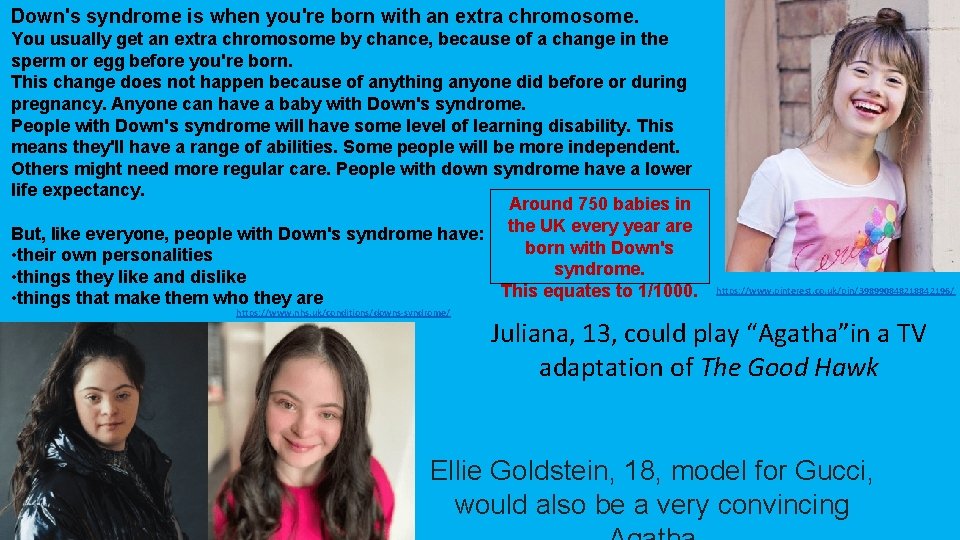
Down's syndrome is when you're born with an extra chromosome. You usually get an extra chromosome by chance, because of a change in the sperm or egg before you're born. This change does not happen because of anything anyone did before or during pregnancy. Anyone can have a baby with Down's syndrome. People with Down's syndrome will have some level of learning disability. This means they'll have a range of abilities. Some people will be more independent. Others might need more regular care. People with down syndrome have a lower life expectancy. Around 750 babies in But, like everyone, people with Down's syndrome have: the UK every year are born with Down's • their own personalities syndrome. • things they like and dislike This equates to 1/1000. • things that make them who they are https: //www. nhs. uk/conditions/downs-syndrome/ https: //www. pinterest. co. uk/pin/398990848218842196/ Juliana, 13, could play “Agatha”in a TV adaptation of The Good Hawk Ellie Goldstein, 18, model for Gucci, would also be a very convincing
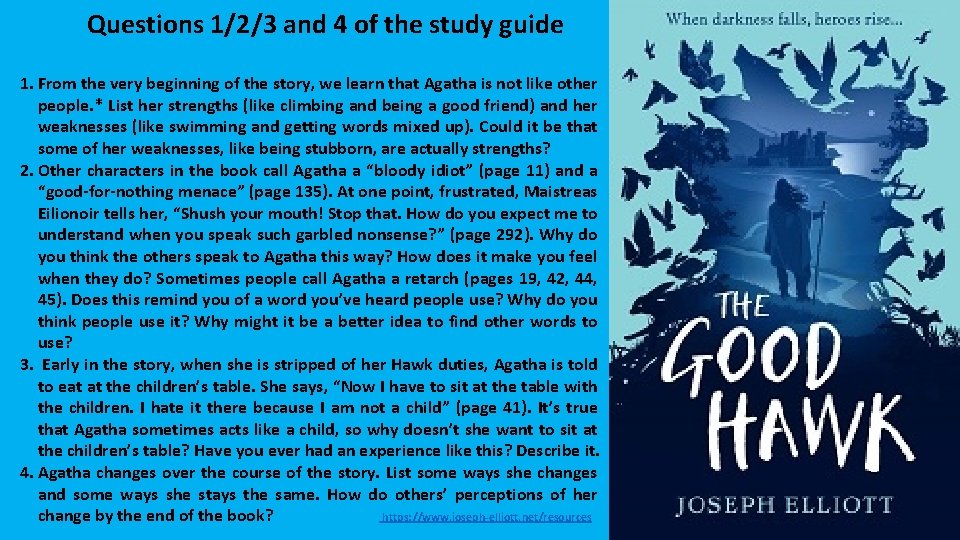
Questions 1/2/3 and 4 of the study guide 1. From the very beginning of the story, we learn that Agatha is not like other people. * List her strengths (like climbing and being a good friend) and her weaknesses (like swimming and getting words mixed up). Could it be that some of her weaknesses, like being stubborn, are actually strengths? 2. Other characters in the book call Agatha a “bloody idiot” (page 11) and a “good-for-nothing menace” (page 135). At one point, frustrated, Maistreas Eilionoir tells her, “Shush your mouth! Stop that. How do you expect me to understand when you speak such garbled nonsense? ” (page 292). Why do you think the others speak to Agatha this way? How does it make you feel when they do? Sometimes people call Agatha a retarch (pages 19, 42, 44, 45). Does this remind you of a word you’ve heard people use? Why do you think people use it? Why might it be a better idea to find other words to use? 3. Early in the story, when she is stripped of her Hawk duties, Agatha is told to eat at the children’s table. She says, “Now I have to sit at the table with the children. I hate it there because I am not a child” (page 41). It’s true that Agatha sometimes acts like a child, so why doesn’t she want to sit at the children’s table? Have you ever had an experience like this? Describe it. 4. Agatha changes over the course of the story. List some ways she changes and some ways she stays the same. How do others’ perceptions of her change by the end of the book? https: //www. joseph-elliott. net/resources
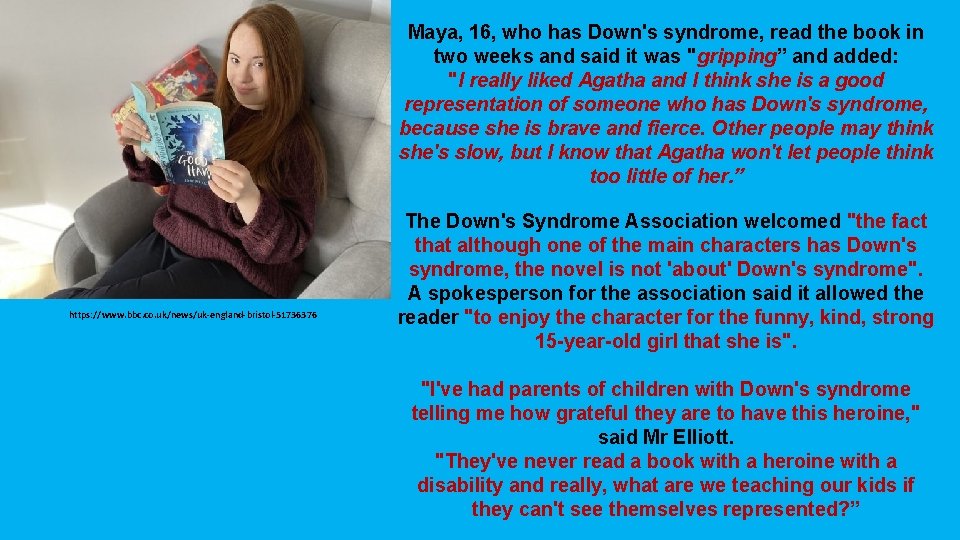
Maya, 16, who has Down's syndrome, read the book in two weeks and said it was "gripping” and added: "I really liked Agatha and I think she is a good representation of someone who has Down's syndrome, because she is brave and fierce. Other people may think she's slow, but I know that Agatha won't let people think too little of her. ” https: //www. bbc. co. uk/news/uk-england-bristol-51736376 The Down's Syndrome Association welcomed "the fact that although one of the main characters has Down's syndrome, the novel is not 'about' Down's syndrome". A spokesperson for the association said it allowed the reader "to enjoy the character for the funny, kind, strong 15 -year-old girl that she is". "I've had parents of children with Down's syndrome telling me how grateful they are to have this heroine, " said Mr Elliott. "They've never read a book with a heroine with a disability and really, what are we teaching our kids if they can't see themselves represented? ”
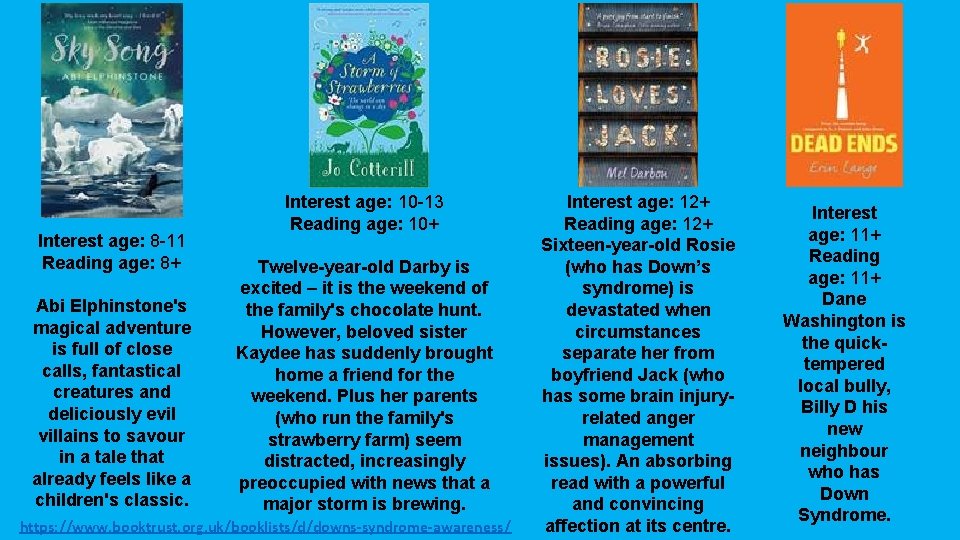
Interest age: 8 -11 Reading age: 8+ Abi Elphinstone's magical adventure is full of close calls, fantastical creatures and deliciously evil villains to savour in a tale that already feels like a children's classic. Interest age: 10 -13 Reading age: 10+ Twelve-year-old Darby is excited – it is the weekend of the family's chocolate hunt. However, beloved sister Kaydee has suddenly brought home a friend for the weekend. Plus her parents (who run the family's strawberry farm) seem distracted, increasingly preoccupied with news that a major storm is brewing. https: //www. booktrust. org. uk/booklists/d/downs-syndrome-awareness/ Interest age: 12+ Reading age: 12+ Sixteen-year-old Rosie (who has Down’s syndrome) is devastated when circumstances separate her from boyfriend Jack (who has some brain injuryrelated anger management issues). An absorbing read with a powerful and convincing affection at its centre. Interest age: 11+ Reading age: 11+ Dane Washington is the quicktempered local bully, Billy D his new neighbour who has Down Syndrome.
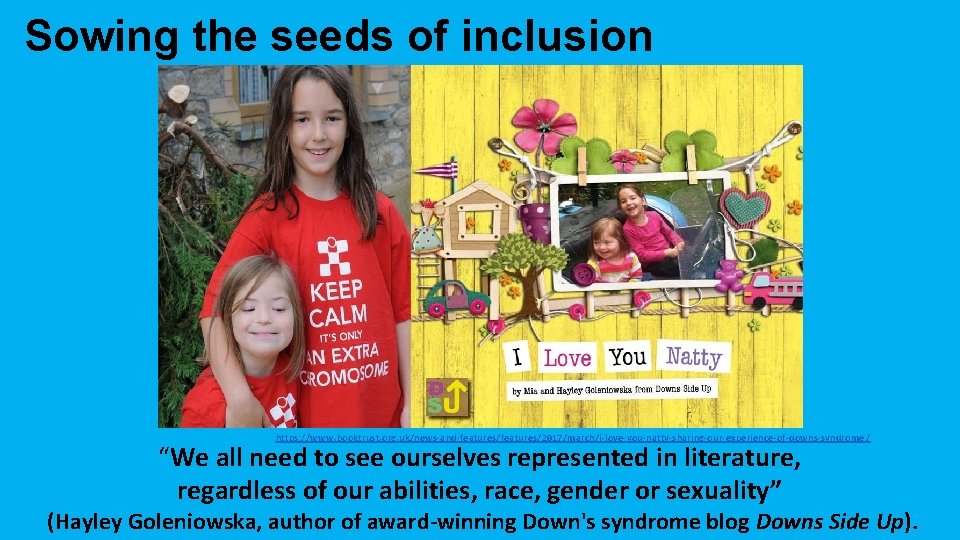
Sowing the seeds of inclusion https: //www. booktrust. org. uk/news-and-features/2017/march/i-love-you-natty-sharing-our-experience-of-downs-syndrome/ “We all need to see ourselves represented in literature, regardless of our abilities, race, gender or sexuality” (Hayley Goleniowska, author of award-winning Down's syndrome blog Downs Side Up).
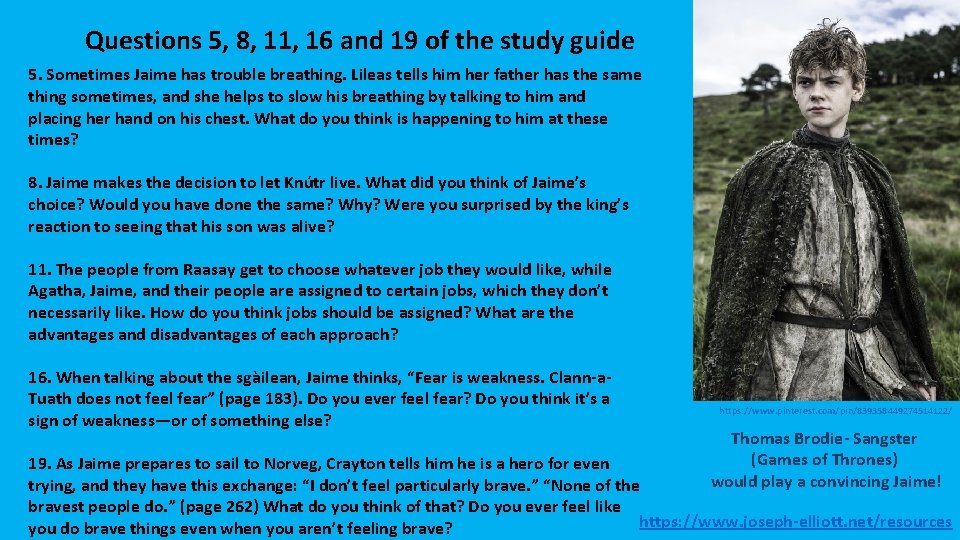
Questions 5, 8, 11, 16 and 19 of the study guide 5. Sometimes Jaime has trouble breathing. Lileas tells him her father has the same thing sometimes, and she helps to slow his breathing by talking to him and placing her hand on his chest. What do you think is happening to him at these times? 8. Jaime makes the decision to let Knútr live. What did you think of Jaime’s choice? Would you have done the same? Why? Were you surprised by the king’s reaction to seeing that his son was alive? 11. The people from Raasay get to choose whatever job they would like, while Agatha, Jaime, and their people are assigned to certain jobs, which they don’t necessarily like. How do you think jobs should be assigned? What are the advantages and disadvantages of each approach? 16. When talking about the sgàilean, Jaime thinks, “Fear is weakness. Clann-a. Tuath does not feel fear” (page 183). Do you ever feel fear? Do you think it’s a sign of weakness—or of something else? https: //www. pinterest. com/pin/839358449274514122/ Thomas Brodie- Sangster (Games of Thrones) would play a convincing Jaime! 19. As Jaime prepares to sail to Norveg, Crayton tells him he is a hero for even trying, and they have this exchange: “I don’t feel particularly brave. ” “None of the bravest people do. ” (page 262) What do you think of that? Do you ever feel like https: //www. joseph-elliott. net/resources you do brave things even when you aren’t feeling brave?