
JordanWigner Transformation and Topological characterization of quantum phase



- Slides: 33
Jordan-Wigner Transformation and Topological characterization of quantum phase transitions in the Kitaev model Guang-Ming Zhang (Tsinghua Univ) Xiaoyong Feng (ITP, CAS) T. Xiang (ITP, CAS) Cond-mat/0610626
Outline l l l Brief introduction to the Kitaev model Jordan-Wigner transformation and a novel Majorana fermion representation of spins Topological characterization of quantum phase transitions in the Kitaev model
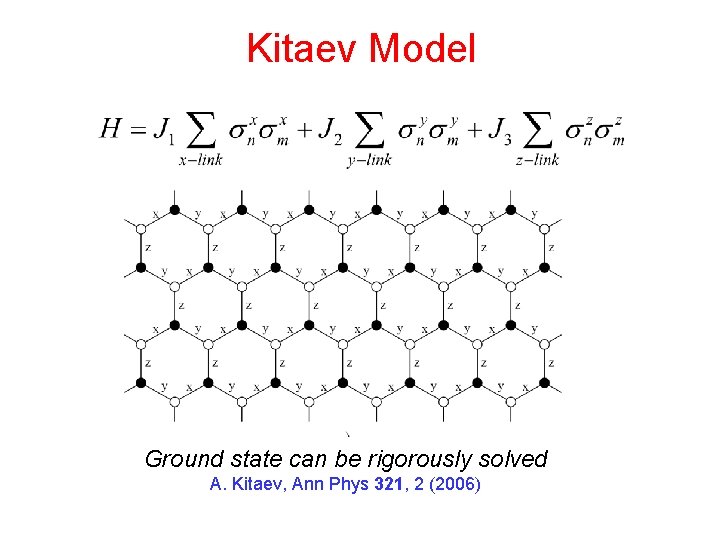
Kitaev Model Ground state can be rigorously solved A. Kitaev, Ann Phys 321, 2 (2006)
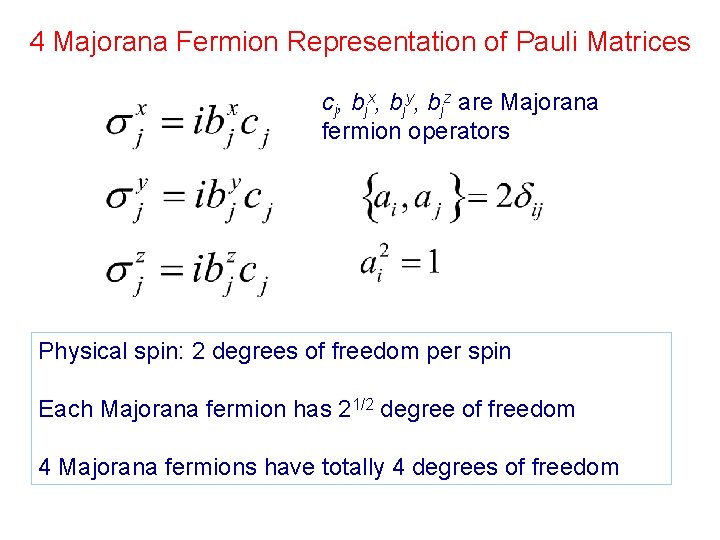
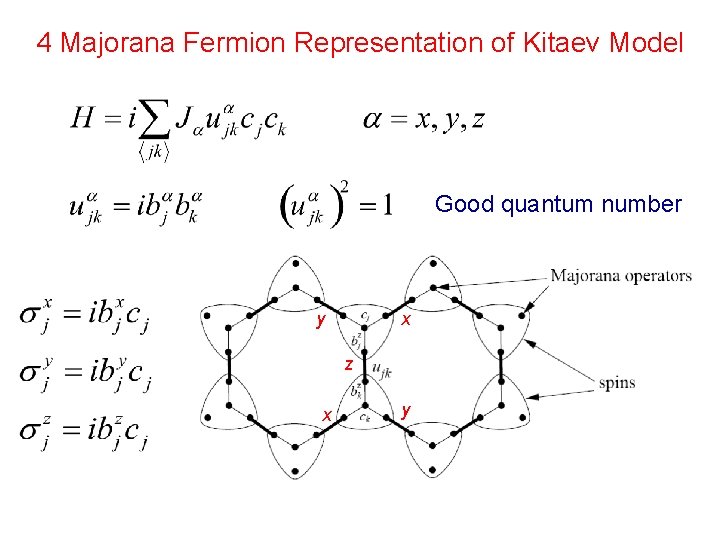
4 Majorana Fermion Representation of Pauli Matrices cj, bjx, bjy, bjz are Majorana fermion operators Physical spin: 2 degrees of freedom per spin Each Majorana fermion has 21/2 degree of freedom 4 Majorana fermions have totally 4 degrees of freedom
4 Majorana Fermion Representation of Kitaev Model Good quantum number y x z x y
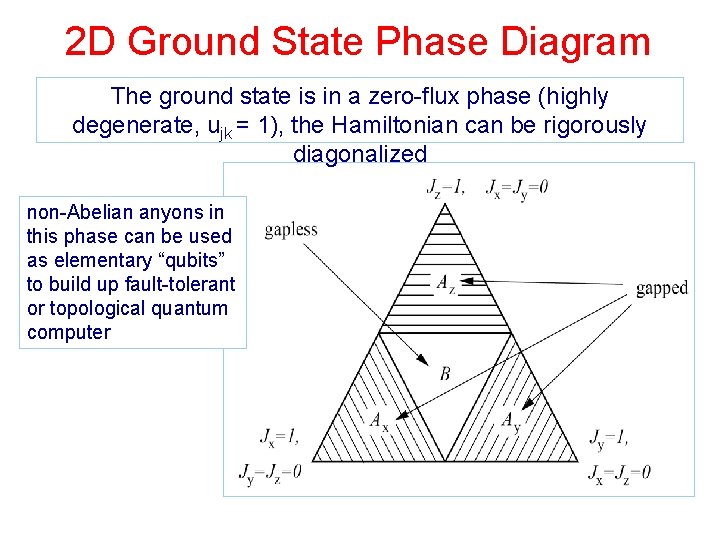
2 D Ground State Phase Diagram The ground state is in a zero-flux phase (highly degenerate, ujk = 1), the Hamiltonian can be rigorously diagonalized non-Abelian anyons in this phase can be used as elementary “qubits” to build up fault-tolerant or topological quantum computer
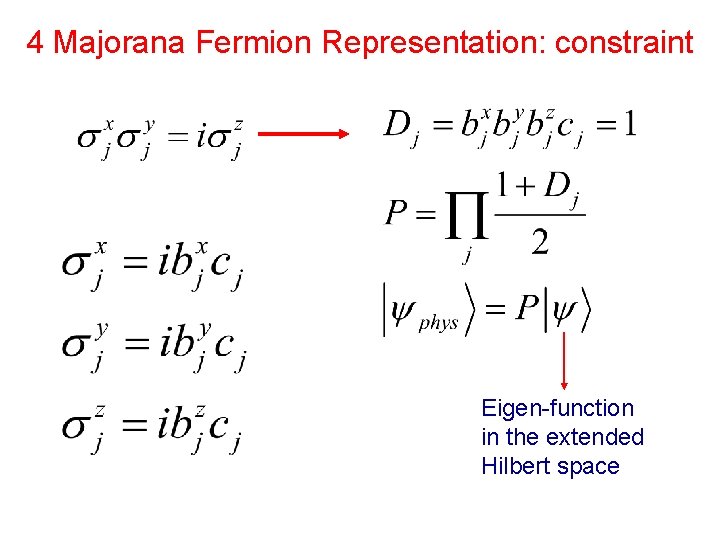
4 Majorana Fermion Representation: constraint Eigen-function in the extended Hilbert space
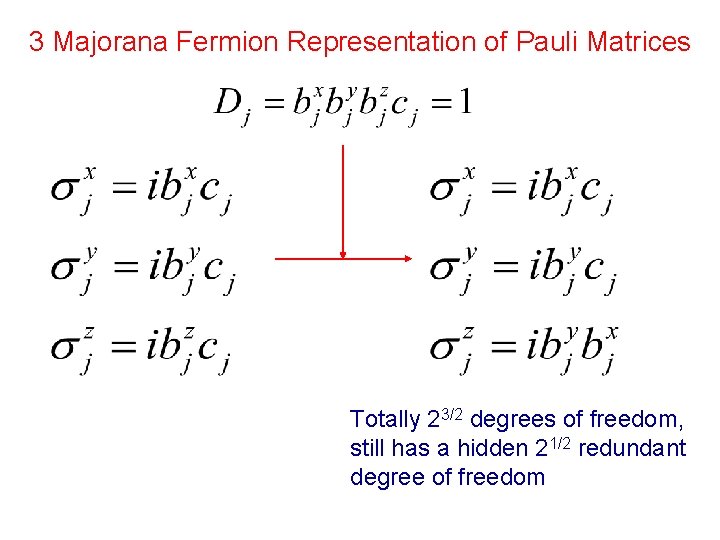
3 Majorana Fermion Representation of Pauli Matrices Totally 23/2 degrees of freedom, still has a hidden 21/2 redundant degree of freedom
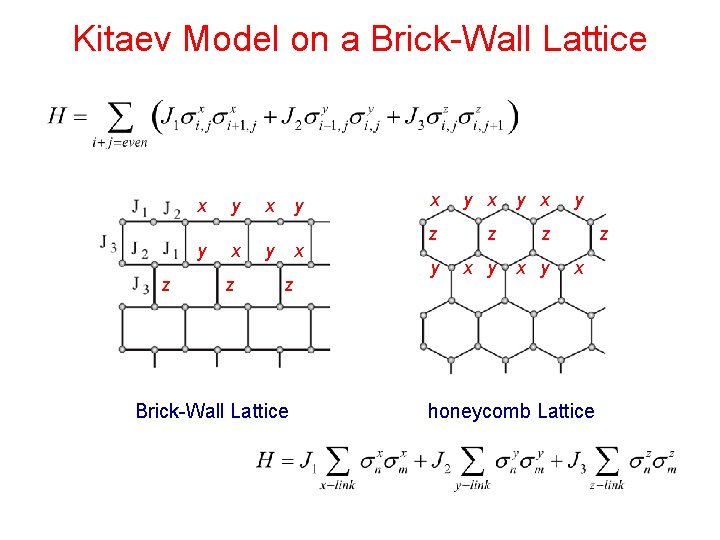
Kitaev Model on a Brick-Wall Lattice x y z y x z x y y x z Brick-Wall Lattice x y x z z z y x y y z x honeycomb Lattice
Jordan-Wigner Transformation Represent spin operators by spinless fermion operators
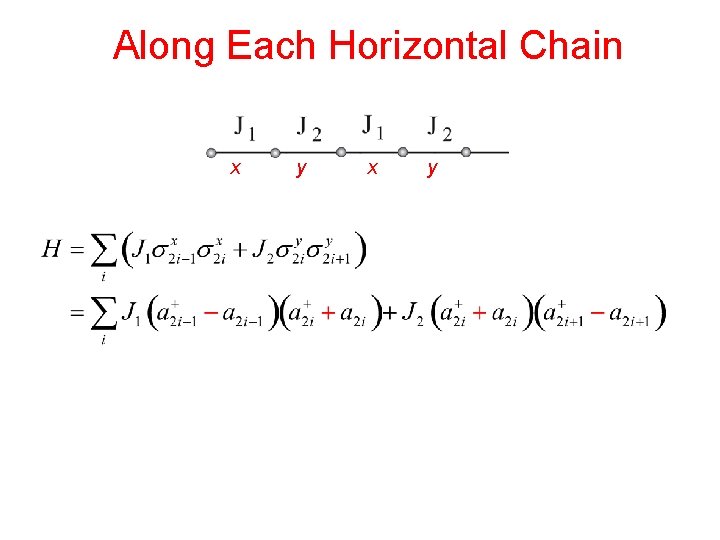
Along Each Horizontal Chain x y
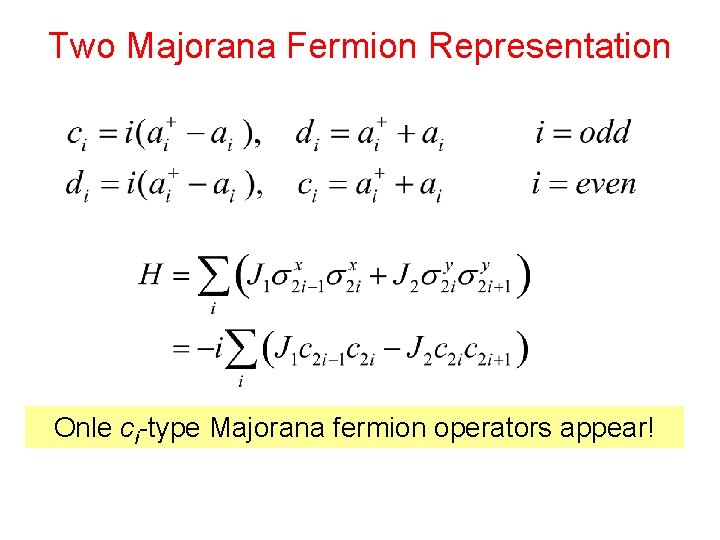
Two Majorana Fermion Representation Onle ci-type Majorana fermion operators appear!
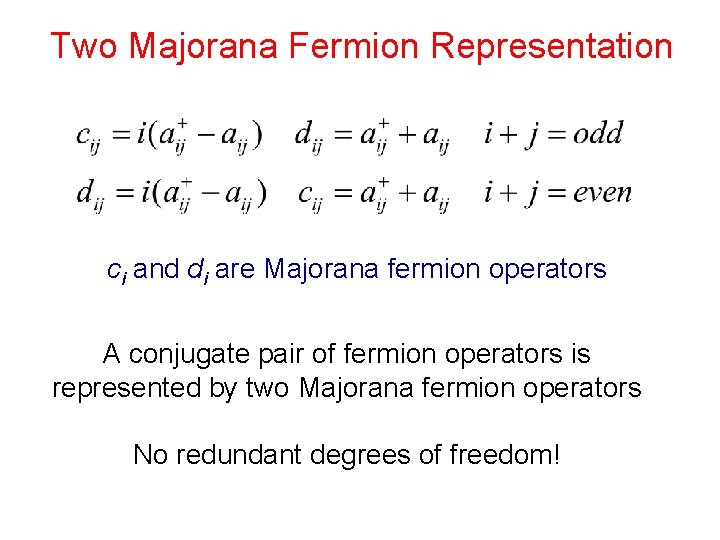
Two Majorana Fermion Representation ci and di are Majorana fermion operators A conjugate pair of fermion operators is represented by two Majorana fermion operators No redundant degrees of freedom!
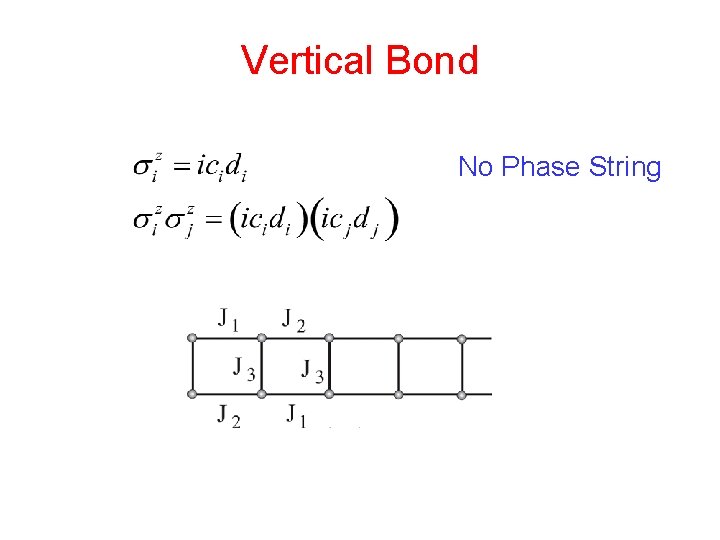
Vertical Bond No Phase String
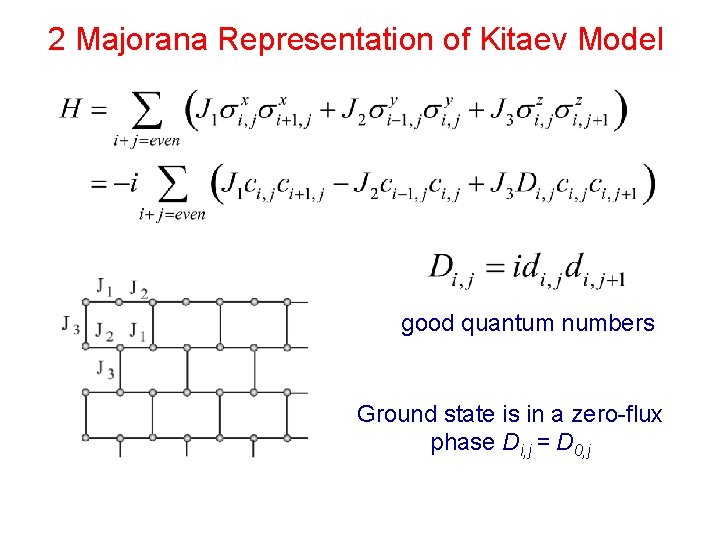
2 Majorana Representation of Kitaev Model good quantum numbers Ground state is in a zero-flux phase Di, j = D 0, j
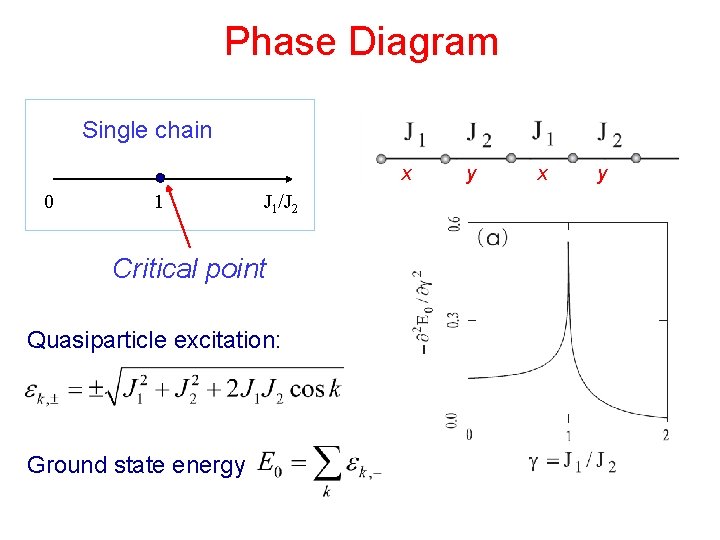
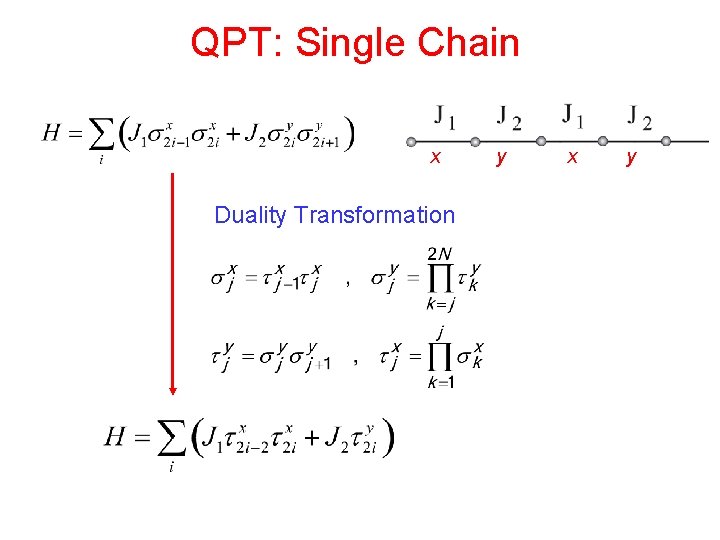
Phase Diagram Single chain x 0 1 J 1/J 2 Critical point Quasiparticle excitation: Ground state energy y x y
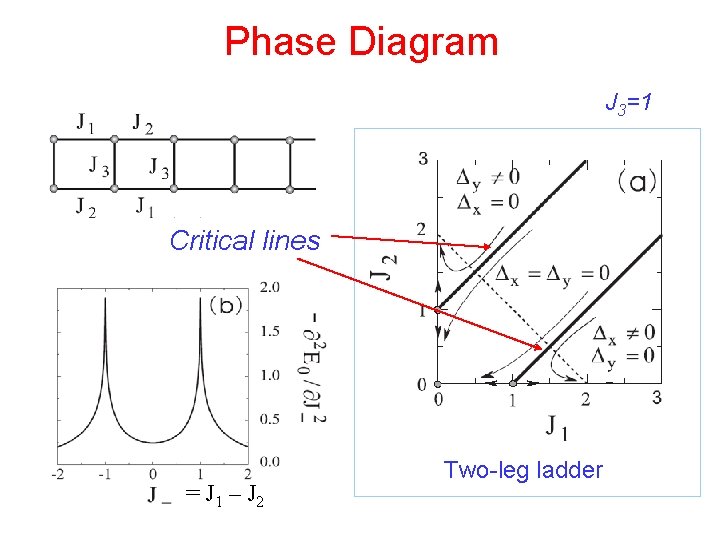
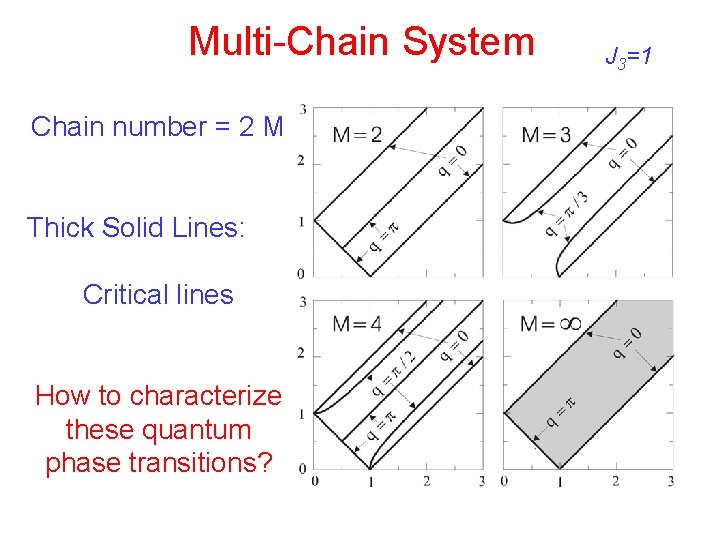
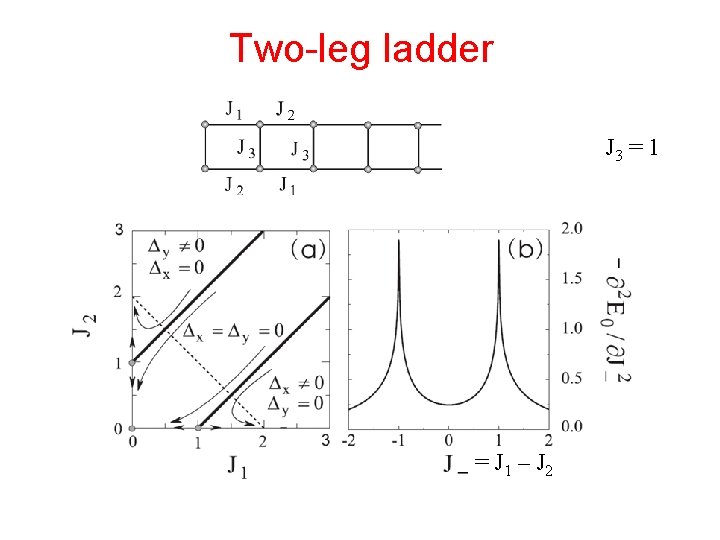
Phase Diagram J 3=1 Critical lines = J 1 – J 2 Two-leg ladder
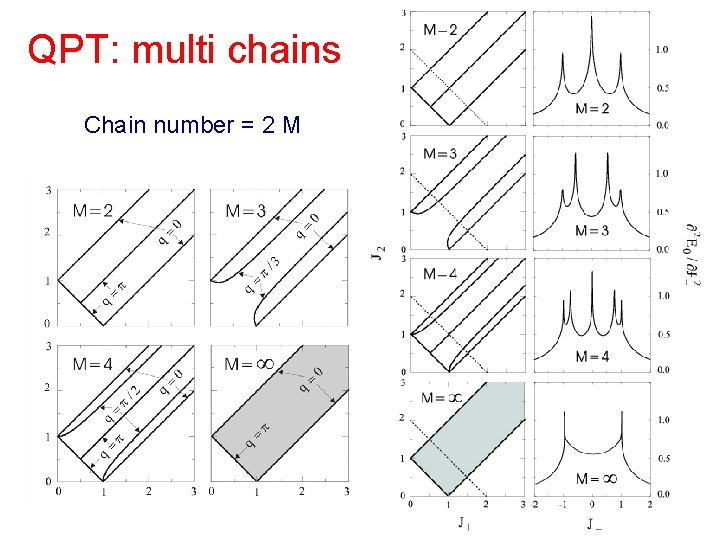
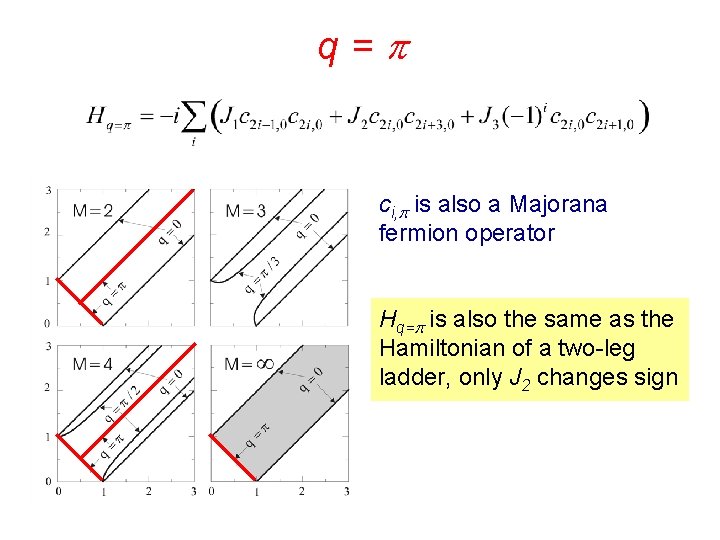
Multi-Chain System Chain number = 2 M Thick Solid Lines: Critical lines How to characterize these quantum phase transitions? J 3=1
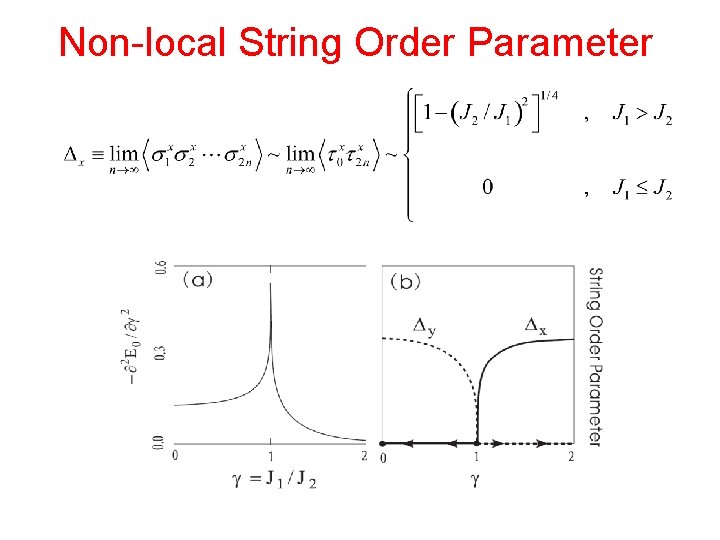
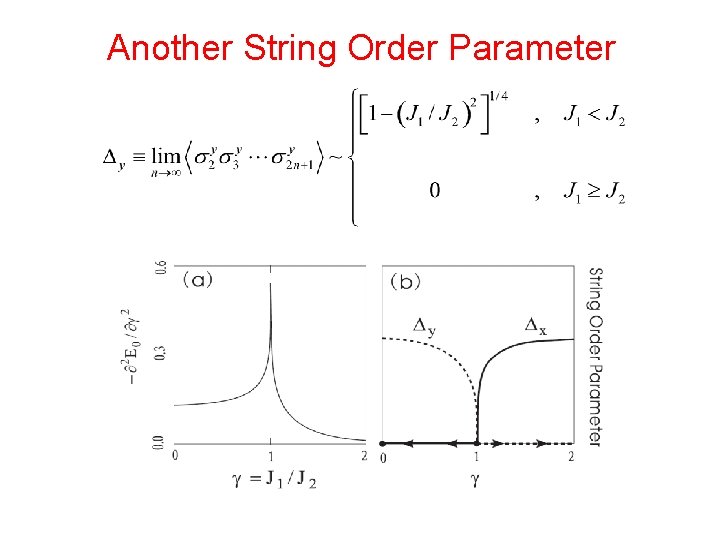
Classifications of continuous phase transitions Conventional: Landau-type • Symmetry breaking • Local order parameters Topological: • Both phases are gapped • No symmetry breaking • No local order parameters
QPT: Single Chain x Duality Transformation y x y
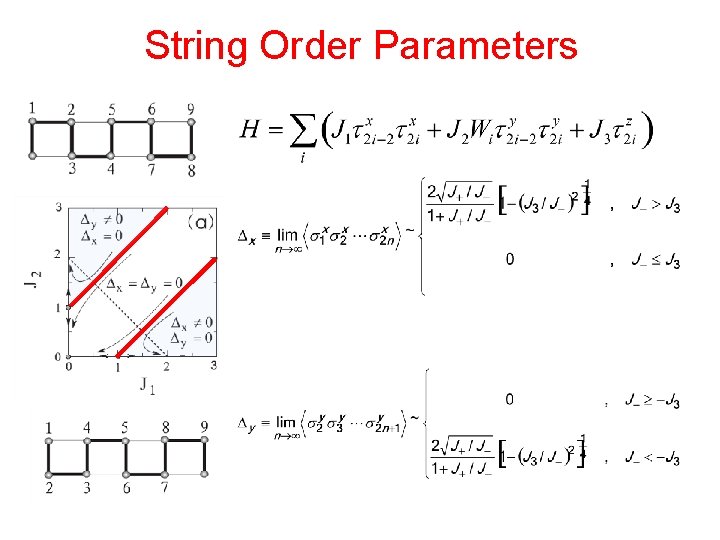
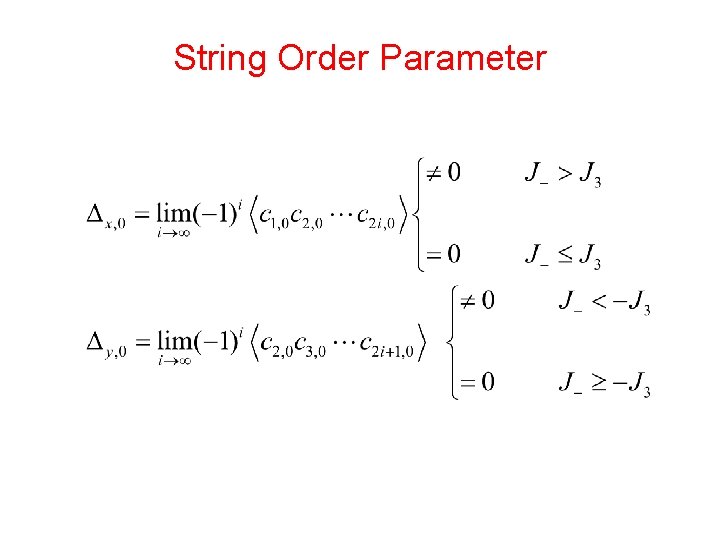
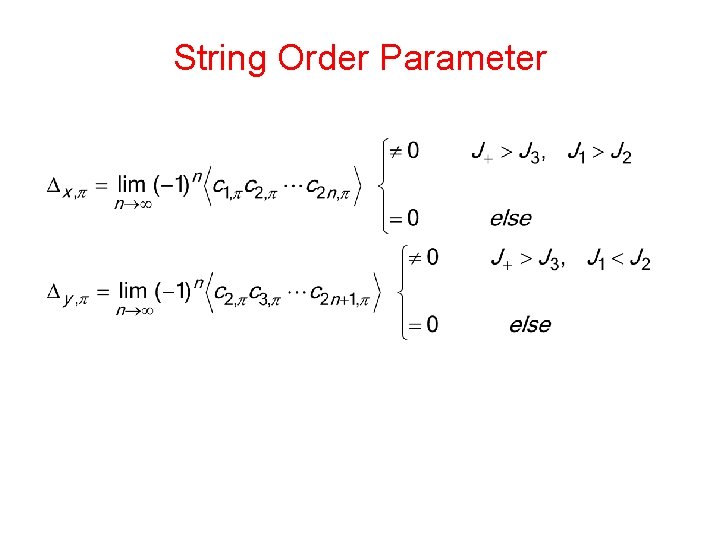
Non-local String Order Parameter
Another String Order Parameter
Two-leg ladder J 3 = 1 = J 1 – J 2
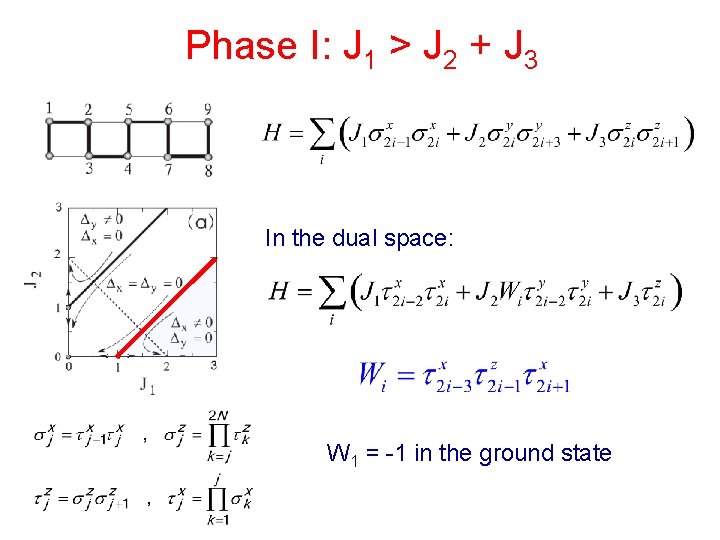
Phase I: J 1 > J 2 + J 3 In the dual space: W 1 = -1 in the ground state
String Order Parameters
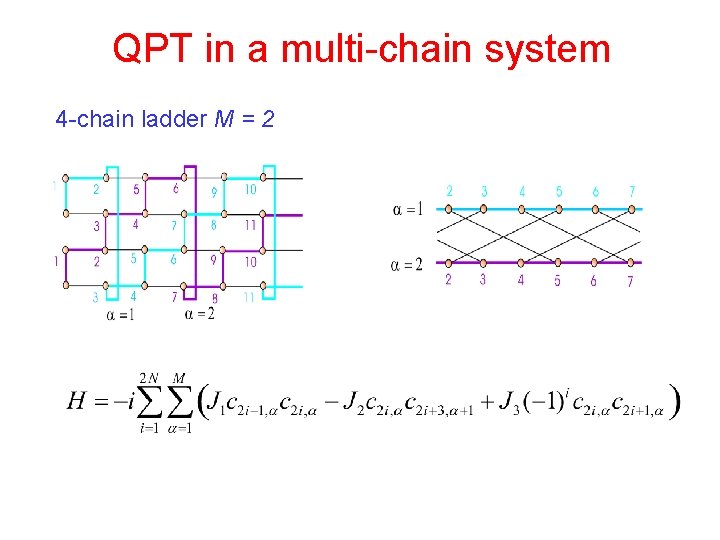
QPT: multi chains Chain number = 2 M
QPT in a multi-chain system 4 -chain ladder M = 2
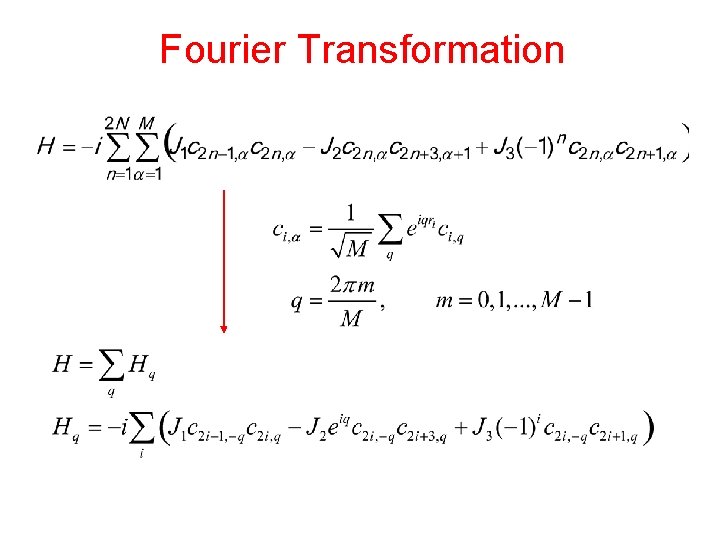
Fourier Transformation
q=0 ci, 0 is still a Majorana fermion operator Hq=0 is exactly same as the Hamiltonian of a two-leg ladder
String Order Parameter
q= ci, is also a Majorana fermion operator Hq= is also the same as the Hamiltonian of a two-leg ladder, only J 2 changes sign
String Order Parameter
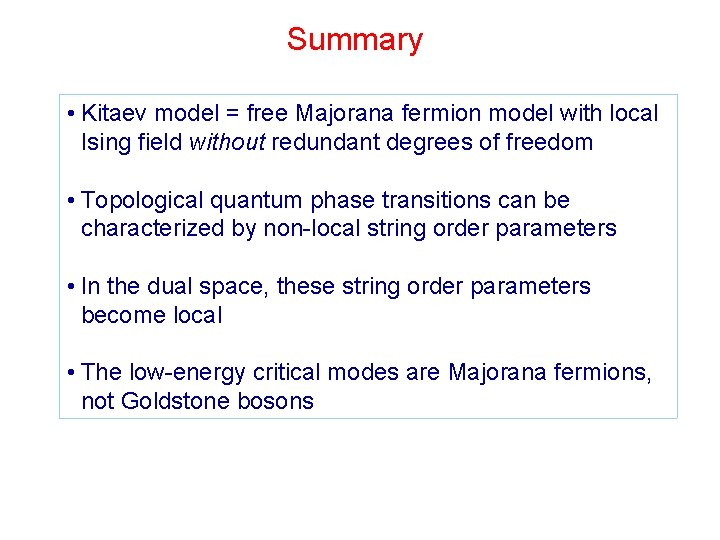
Summary • Kitaev model = free Majorana fermion model with local Ising field without redundant degrees of freedom • Topological quantum phase transitions can be characterized by non-local string order parameters • In the dual space, these string order parameters become local • The low-energy critical modes are Majorana fermions, not Goldstone bosons