
Joliffes Rhetorical Framework Design Exigence Audience Purpose Logos
- Slides: 13
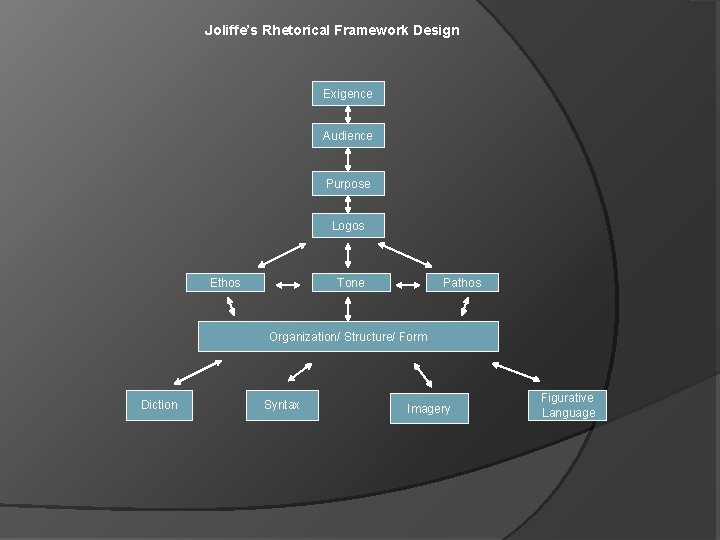
Joliffe’s Rhetorical Framework Design Exigence Audience Purpose Logos Ethos Tone Pathos Organization/ Structure/ Form Diction Syntax Imagery Figurative Language
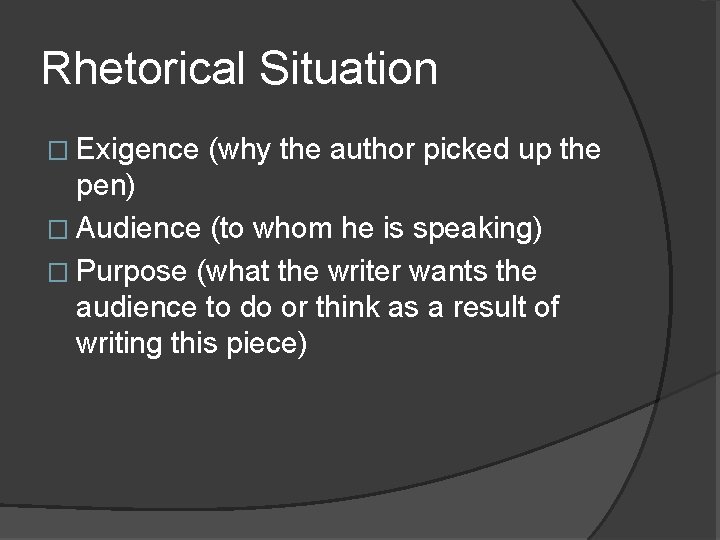
Rhetorical Situation � Exigence (why the author picked up the pen) � Audience (to whom he is speaking) � Purpose (what the writer wants the audience to do or think as a result of writing this piece)
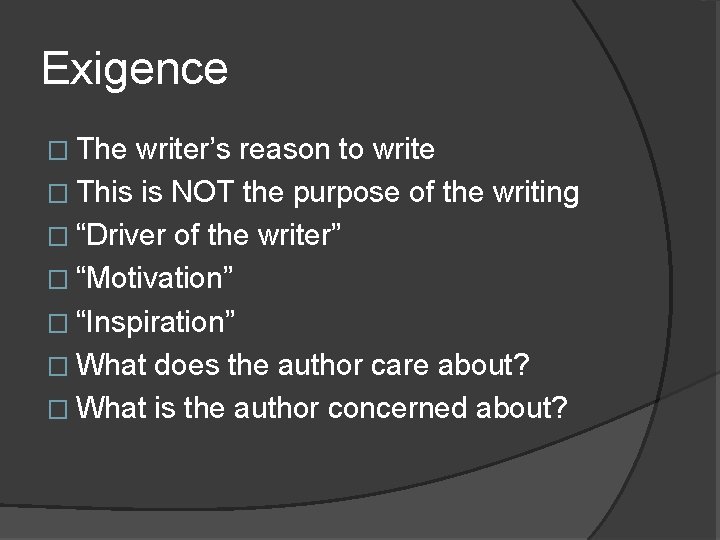
Exigence � The writer’s reason to write � This is NOT the purpose of the writing � “Driver of the writer” � “Motivation” � “Inspiration” � What does the author care about? � What is the author concerned about?
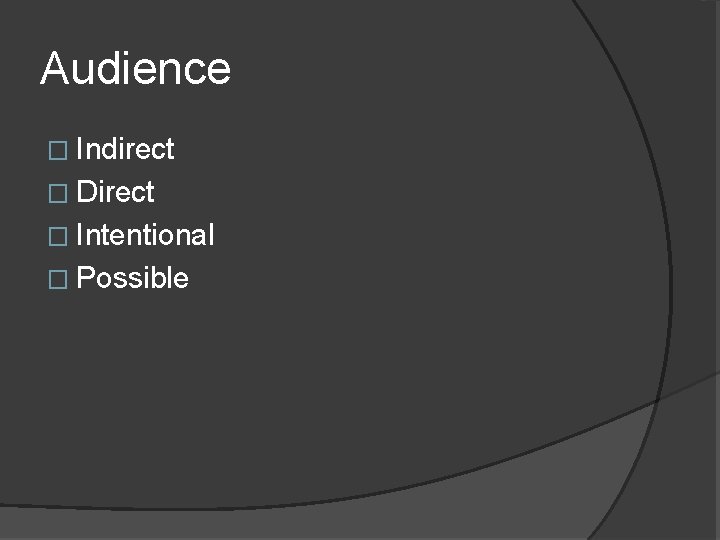
Audience � Indirect � Direct � Intentional � Possible
Purpose � Pertains to “this” text � As a result of “this” writing… � What should the audience know, do, think, etc. ?
Appeals � Logos � Ethos � Pathos
Logos � Logic � Reason � Of the mind � Synonyms?
Ethos � Credibility � Of the author, work – appeal “of” the author, rather than “to” the audience � This is not an appeal to ethics � Synonym?
Pathos � Emotion � Self interest � Character � Morality � This would be where appeal to ethics would fall - (remember, “to” vs. “of”)
Organization/Structure/Form � Order or sequencing of ideas. � The way a writer puts it all together, AND what different “it” makes. (IT = arrangement or structure. )
Surface features � Language strategies fall under: �Diction �Syntax �Imagery �Figurative Language
Examples of Language Strategies: � Repetition � Distinctive sentence structures: �Long, periodic sentence or, �Very short one-word sentence exclamation � Contrasts � Irony
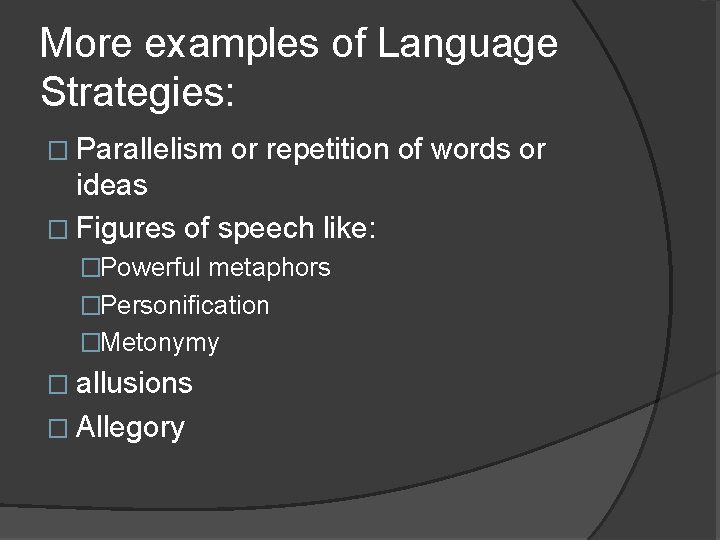
More examples of Language Strategies: � Parallelism or repetition of words or ideas � Figures of speech like: �Powerful metaphors �Personification �Metonymy � allusions � Allegory