
Joints Shear Fractures Remember Three directions of stress
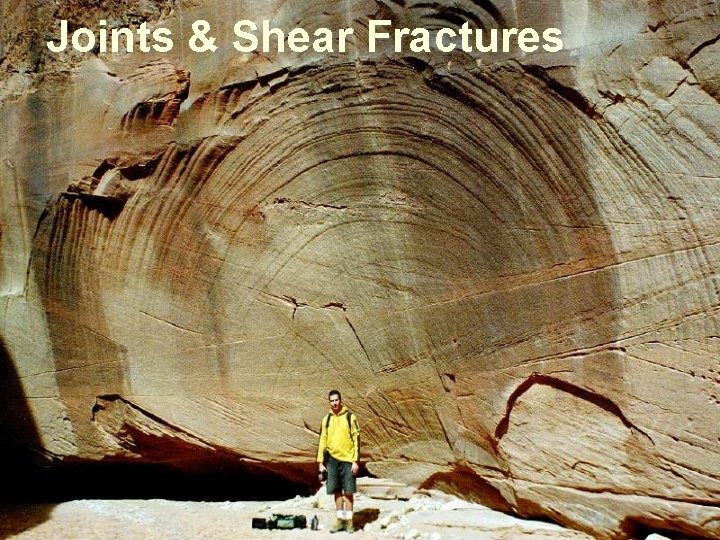
Joints & Shear Fractures
Remember: Three “directions” of stress • Compression • Extension • Shear How are these stress conditions created? What are their effects? Focus on Extension Today
Modes of Fracture - Definitions

MODE I - TENSILE FRACTURE s 1 s 3 JOINT
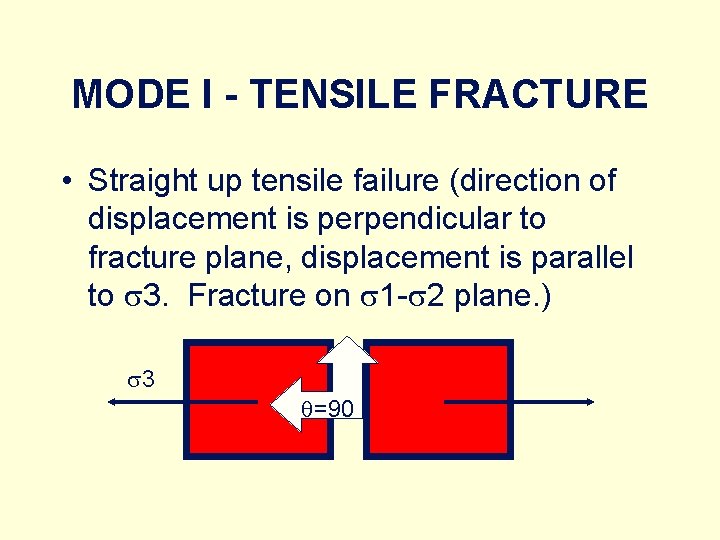
MODE I - TENSILE FRACTURE • Straight up tensile failure (direction of displacement is perpendicular to fracture plane, displacement is parallel to s 3. Fracture on s 1 -s 2 plane. ) s 3 q=90
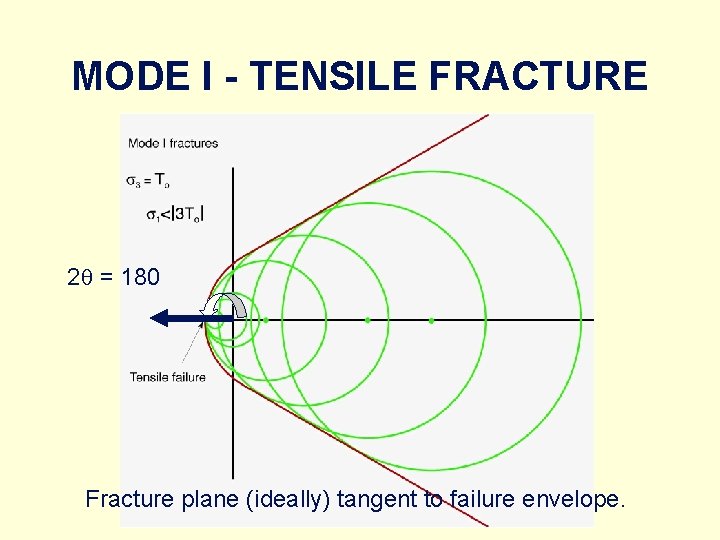
MODE I - TENSILE FRACTURE 2 q = 180 Fracture plane (ideally) tangent to failure envelope.

MODE II - SHEAR FRACTURE s 1 s 3
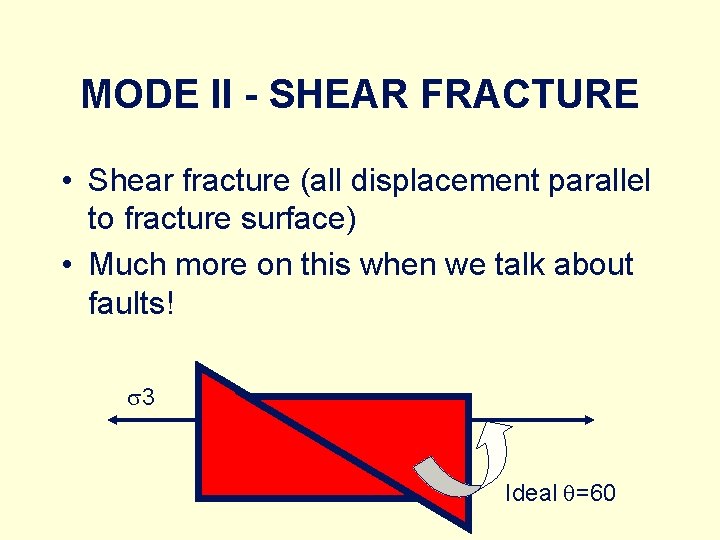
MODE II - SHEAR FRACTURE • Shear fracture (all displacement parallel to fracture surface) • Much more on this when we talk about faults! s 3 Ideal q=60
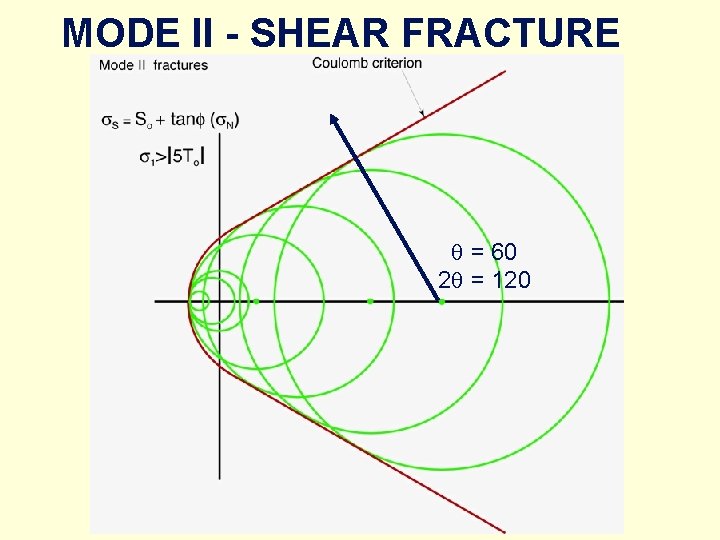
MODE II - SHEAR FRACTURE q = 60 2 q = 120
MODE I/II - TENSILE & SHEAR s 1 s 3
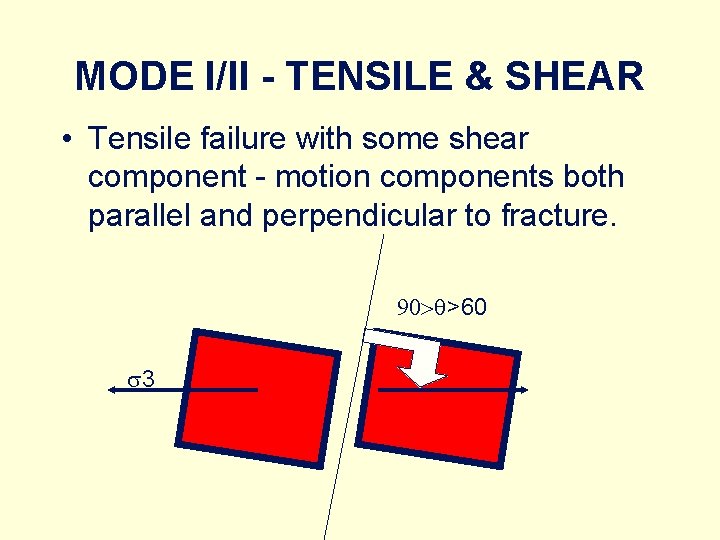
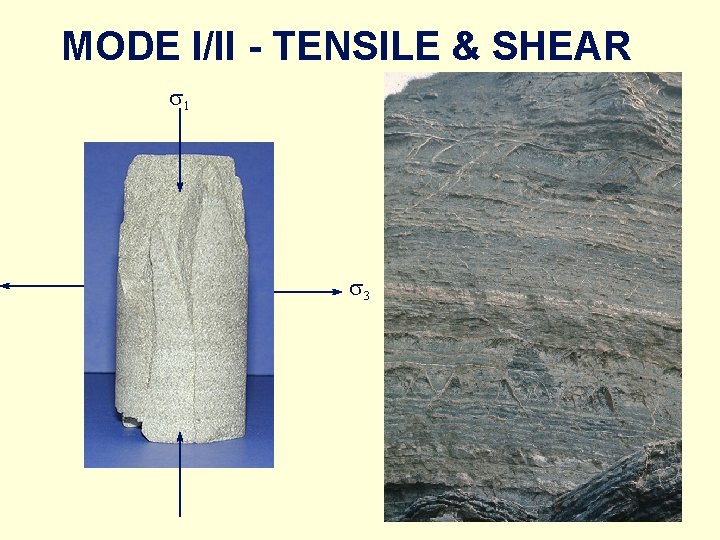
MODE I/II - TENSILE & SHEAR • Tensile failure with some shear component - motion components both parallel and perpendicular to fracture. 90>q>60 s 3
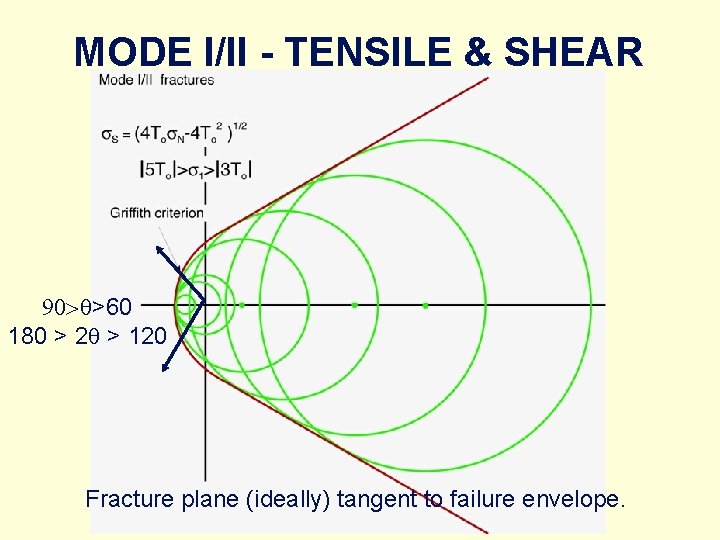
MODE I/II - TENSILE & SHEAR 90>q>60 180 > 2 q > 120 Fracture plane (ideally) tangent to failure envelope.
Focus on Joints - Mode I & I-II VEINS are just joints filled with something (either mineral cement, soft sediment, or even liquid hot magma). Veins are more common than empty joints in many environments!
Mud-filled joints in siltstone, Panther Beach (JCM)

Columnar joints, Devil’s Postpile Basalts (JCM)
Exfoliation Joints, Sierra Batholith, “onion peels”
Systematic & Asystematic Purisima Fm. at Pt. Reyes
Joint spacing controlled by layer thickness
Mud cracks - two sets - two layers
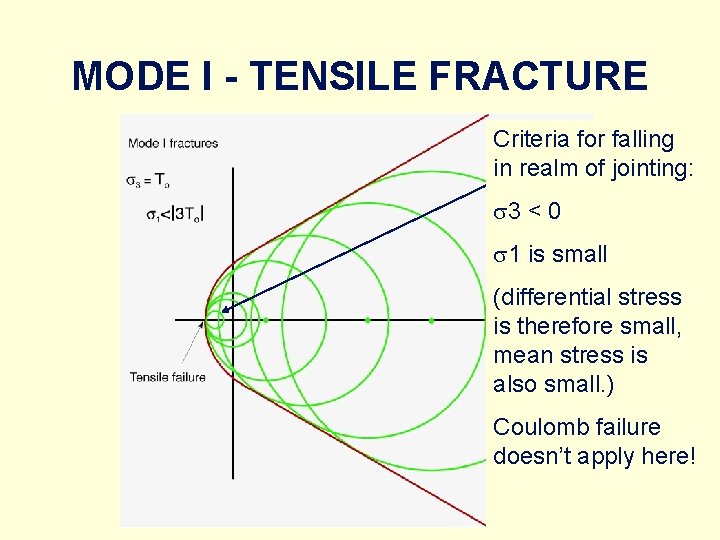
MODE I - TENSILE FRACTURE Criteria for falling in realm of jointing: s 3 < 0 s 1 is small (differential stress is therefore small, mean stress is also small. ) Coulomb failure doesn’t apply here!
How do we drive s 3 into negative values? Remember “negative” s 3 means pressure acting outward from within a body of rock. 1. Unroofing - pressure “frozen” into a pluton or metamorphic rock is released when overburden eroded away 2. Cooling/drying compaction - i. e. columnar jointing in a basalt flow or mud cracks in a puddle 3. Fluid pressure - pore pressure pushes out from inside, drives all forces more negative…
Fluid Pressure is homogeneous - Cannot support directionality!
Tectonic stresses haven’t changed - but Effective Stress (s*) is reduced! s 1* s 1
You find a fracture in the field… How can you tell whether it’s a joint (mode I), a shear fracture (mode II) or has components of both?
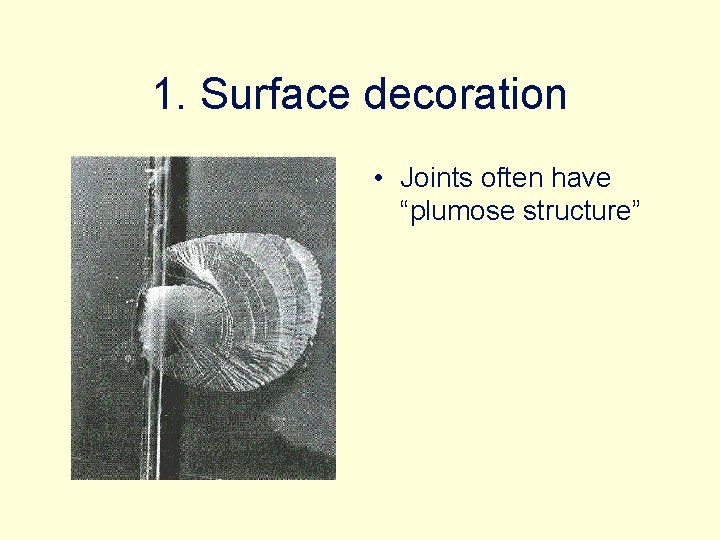
1. Surface decoration • Joints often have “plumose structure”
Anatomy of Joint Surface features
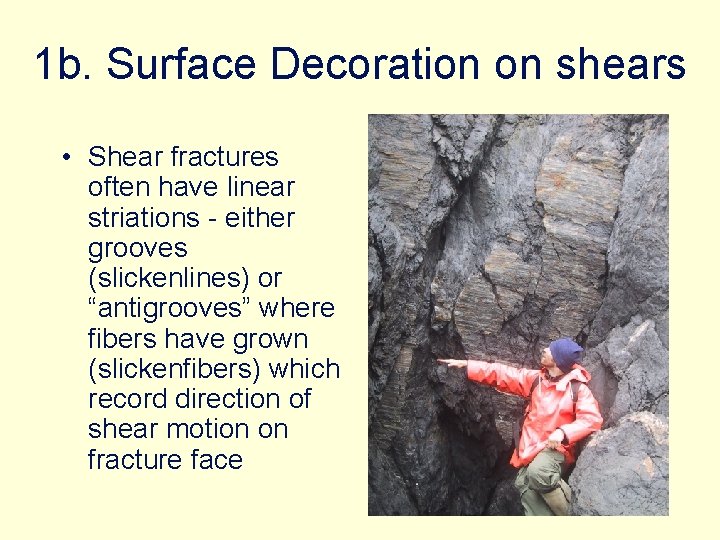
1 b. Surface Decoration on shears • Shear fractures often have linear striations - either grooves (slickenlines) or “antigrooves” where fibers have grown (slickenfibers) which record direction of shear motion on fracture face
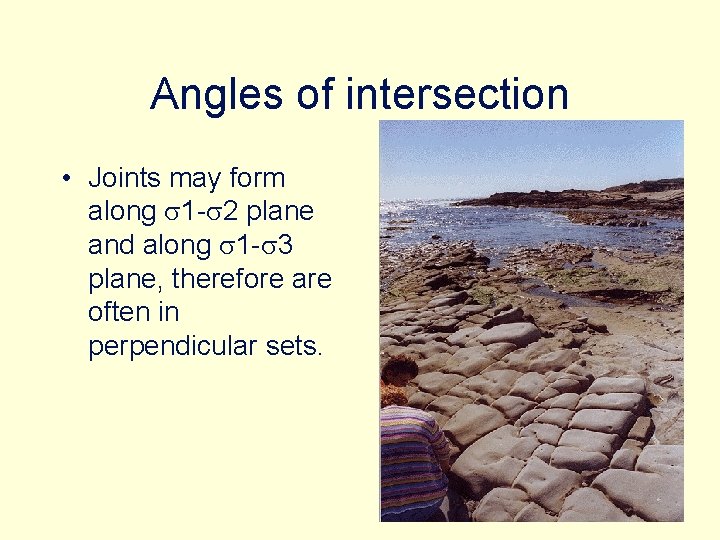
Angles of intersection • Joints may form along s 1 -s 2 plane and along s 1 -s 3 plane, therefore are often in perpendicular sets.

May be combo of systemic and non-systemic - which set came first?
Shear fractures ~60° to s 3
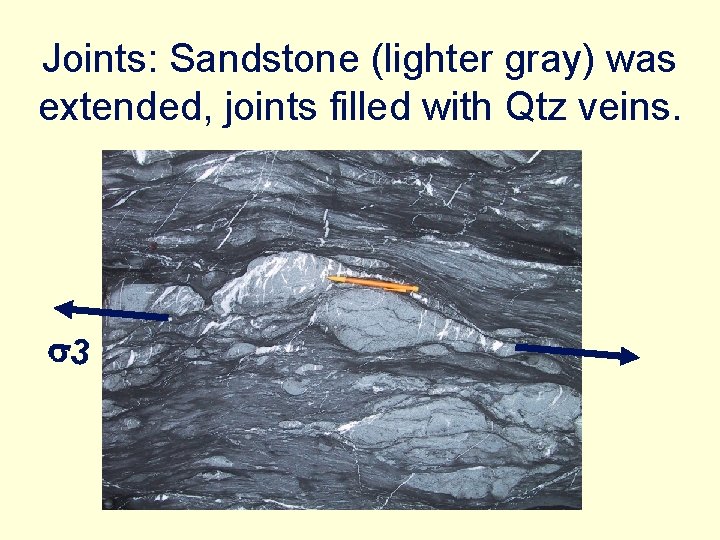
Joints: Sandstone (lighter gray) was extended, joints filled with Qtz veins. s 3

Natural Bridges Introduction Print your own for reference: es. ucsc. edu/~crowe/structure/natbridges. html
- Slides: 32