
JOINTS OF FOOT By Dr AMBER RANA JR
JOINTS OF FOOT By Dr. AMBER RANA JR 3 Department Of Anatomy KGMU
Joints of Foot • Name of bones of foot • Names of different types of joints in foot • Type of joints • Ligaments attached to the bones formin joints • Action at these joints
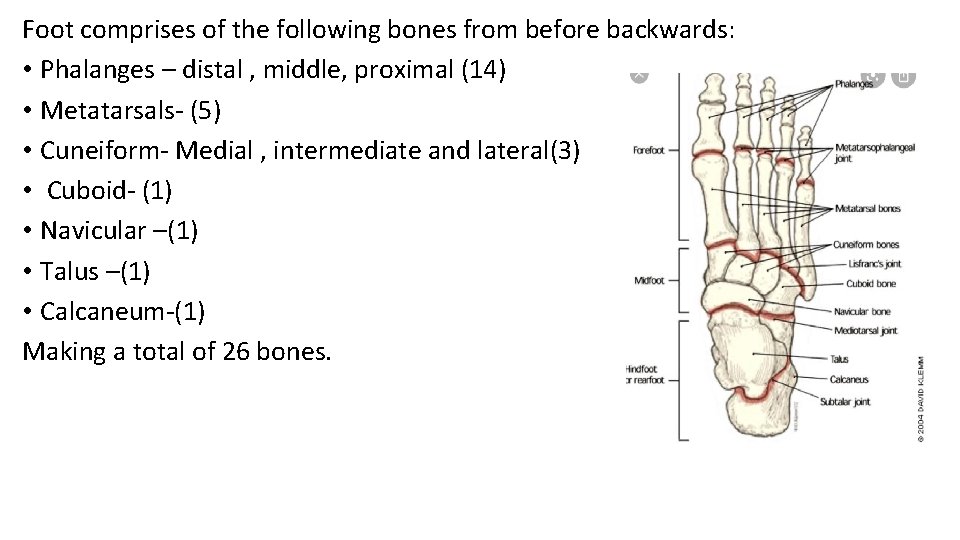
Foot comprises of the following bones from before backwards: • Phalanges – distal , middle, proximal (14) • Metatarsals- (5) • Cuneiform- Medial , intermediate and lateral(3) • Cuboid- (1) • Navicular –(1) • Talus –(1) • Calcaneum-(1) Making a total of 26 bones.
Joints that are formed by these bones from before backwards are: 1. Interphalangeal joints 2. Metatarso-phalangeal joints 3. Tarso-metatarsal joints 4. Intertarsal jointsØSubtalar ØTalo-calcaneo-navicular Ø Calcaneo-cuboid Ø Articulations of intermediate and lateral cuneiform bones with the bases of 2 nd and 3 rd metatarsal bones Ø Adjacent surfaces of the bases of 2 nd, 3 rd, and 4 th metatarsal bones ØBetween the medial cuneiform and the base of 1 st metatarsal bones ØBetween the cuboid and the bones of 4 th and 5 th metatarsal bones 5. Mid –tarsal or transverse tarsal joint 6. Talo-calcaneo-navicular joint 7. Calcaneo-cuboid joint
INTERPHALANGEAL JOINT • TYPE- type of typical hinge joints and each possesses capsular ligament and collateral ligament. • Movement- dorsi-flexion plantar flexion proximal interphalangeal joints are endowed with greater range of movement
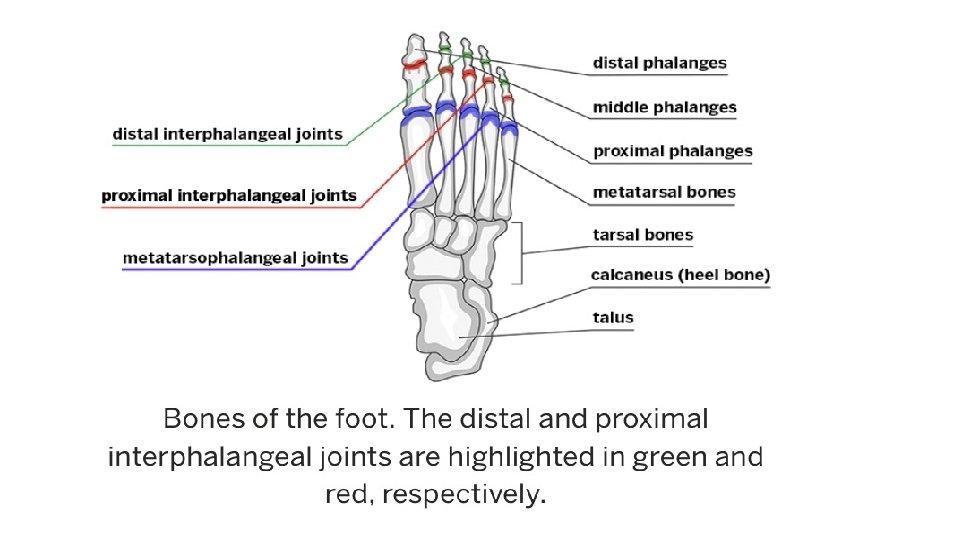
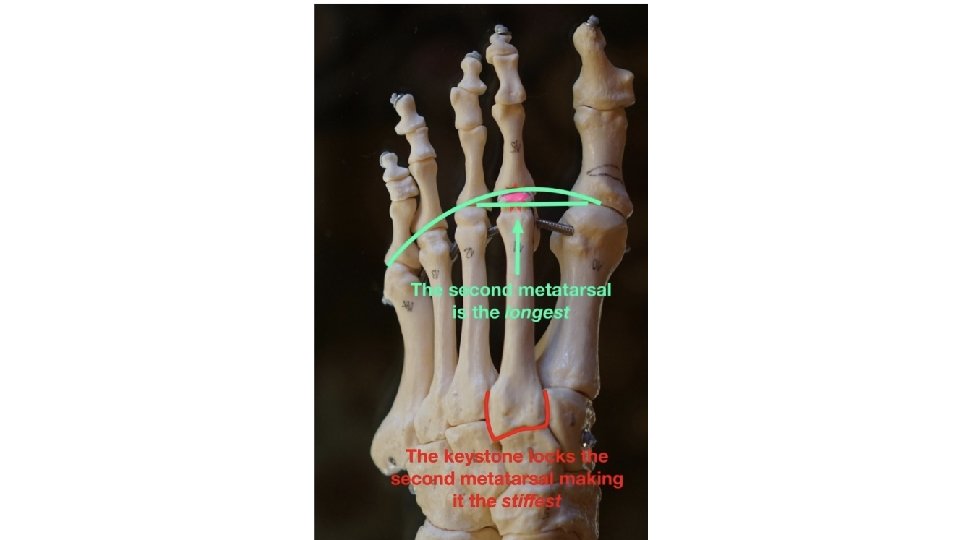
Metatarso-phalangeal joints • Type- Ellipsoid type of synovial joints • Ligaments- capsular, collateral, plantar, and deep transverse metatarsal ligament. The collateral ligament are 2 in number present on either side of each joint. Deep transverse ligament are 4 in number and connects the planter ligament of metatarso-phalangeal joint. • Articular surfaces- the head of first meta-tarsal is convex and the base of the proximal phalanx is reciprocally concave. • Movement at this joint- dorsi-flexion(50 -60 degree), planter-flexion(30 -40 degree), adduction and abduction. • Adduction and abduction are with reference to the axis passing through the 2 toe, because the 2 nd toe is the least mobile.
Tarso-meta tarsal joints Total 5 in number Type- plane synovial joint. Ligaments- Dorsal, planter and interosseous cuneo-metatarsal ligaments. 1 st tarso-metatarsal ligament is a separate joint cavity. 2 nd and 3 rd metatarsal join to form another joint cavity 4 th and 5 th again join to form a separate joint cavity. Movement- gliding movement.
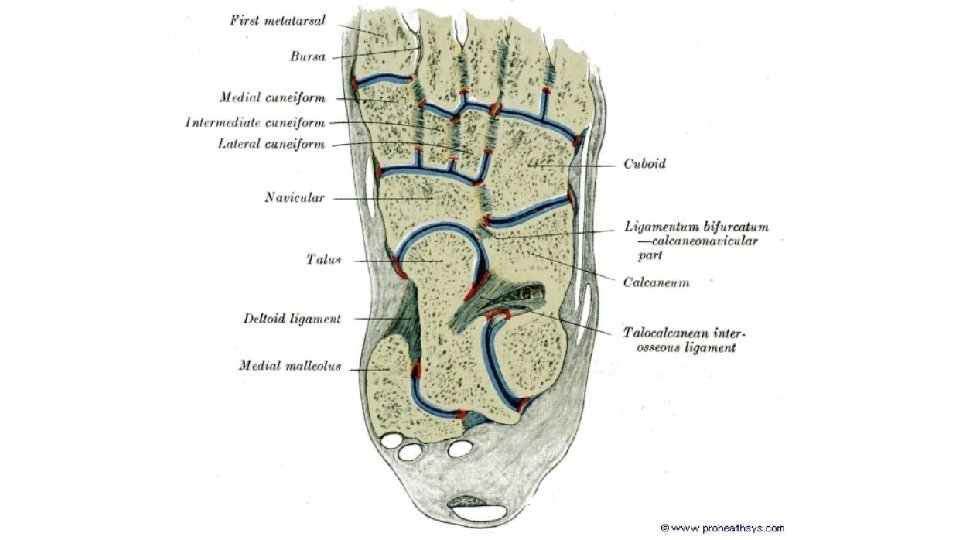
Intertarsal joint • Type- Synovial joint • Number- 6 • Formed between- 3 cuneiform bone, lateral cuneiform and cuboid Names of 6 intertarsal joints are- a) Subtalar b) talo-calcaneo-navicular c) calcaneo-cuboid d) a joint cavity comprising cuneo-navicular, inter-cuneiform, cuneio-cuboid, intermediate and lateral cuneiform bones with base of 2 nd and 3 rd meta-tarsal bones, adjacent surfaces of 2 nd , 3 rd and 4 th metatarsal bones e) medial cuneiform and base of 1 st metatarsal bones f) between cuboid and 4 th and 5 th meta- tarsal bones
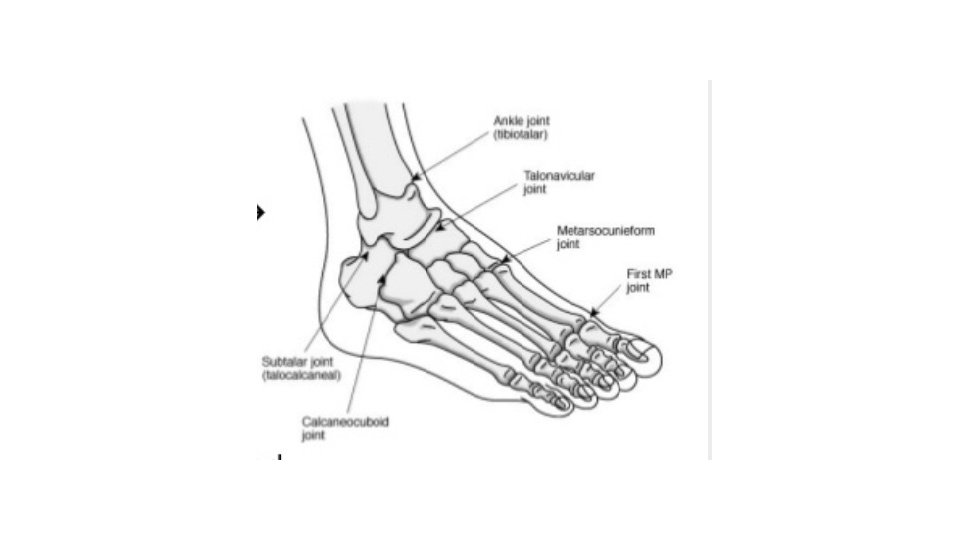

Mid-tarsal joint
Mid-tarsal joints • 2 in number • One is medial joint cavity : talo-calcaneo-navicular • 2 nd is lateral joint cavitiy: calcaneo-cuboid joint • Both components are connected by the bifurcated ligament and move as one unit during inversion and eversion of the foot Talo-calcaneo-navicular joint- Ball and socket joint. Articular surfaces- spheroidal head of talus (ball) concave posterior surface of navicular (socket) upper surface of the plantar calcaneonavicular ligament and the 2 talar facets on the upper surface of the sustentaculum tali of calcaneus
• The ligaments of this joint are- capsular ligament, talo-navicular, plantar calcaneo-navicular (spring ligament), and calcaneo-navicular part of bifurcated ligament • Capsule ligament loosely envelops the joint. • Talo- navicular ligament covers the capsule and connects the dorsal surface of navicular and neck of talus • Spring ligament- connects plantar surface of navicular with sustanteculum tali of calcaneus. Permanent stretching of the ligament produces flat foot
Calcaneo-cuboid joint • Type- saddle or sellar joint. • Articular surfaces: concavo-convex type between calcaneous and posterior surface of the cuboid. • Ligaments: articular capsule, bifurcated ligaments, short and long plantar ligaments. The capsular ligament envelopes the joint and is strengthened on its dorsal surface by the dorsal calcaneocuboid ligament.
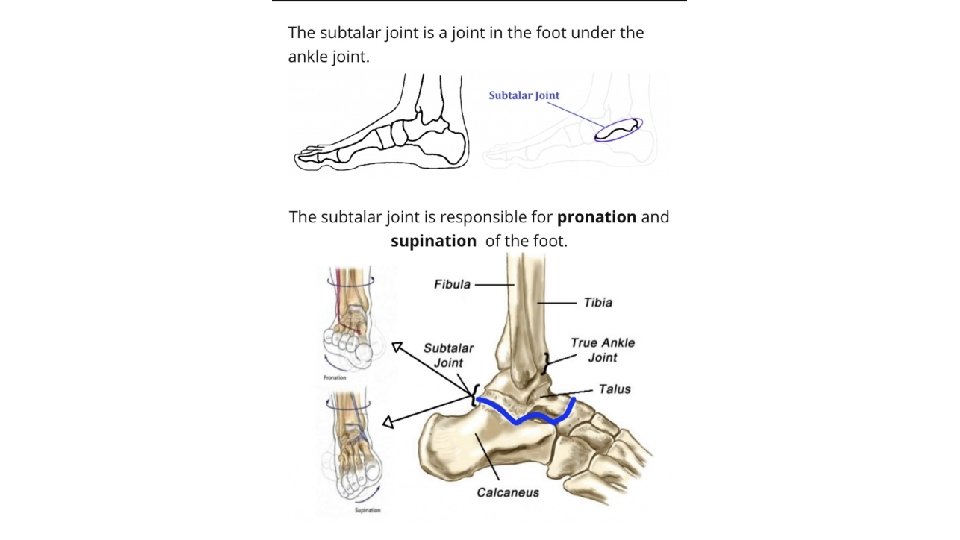
Subtalar joint • Type- modified multi-axial synovial joint • Also known as posterior talo-calcaneal joint. • Formed between the obliquely placed concave articular facet at the lower surface of body of talus and convex articular of calcaneum. • Ligaments- Capsular, medial and lateral talo-calcanean, interosseous talocalcanean, and cervical ligament. • Action- inversion and eversion of foot.

THANKYOU
- Slides: 19