
JOINTS IN CONCRETE CONSTRUCTION Matt Mettler P E
- Slides: 16
JOINTS IN CONCRETE CONSTRUCTION Matt Mettler, P. E. DOWL HKM
Joint Definition Ø Ø Isolation Joints Construction Joints Contraction Joints Expansion Joints
Joint Construction Ø Ø Ø Doweled Tied Keyed Tooled Insert (zip strips) Butt Joints
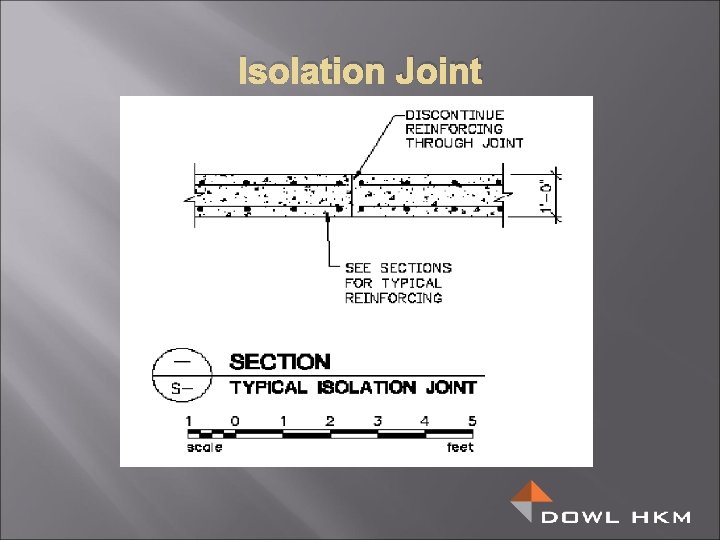
Isolation Joints Ø Ø Type of control joint Allows for drying shrinkage and other movements Provides no vertical or horizontal restraint May act as an expansion joint if needed
Isolation Joint
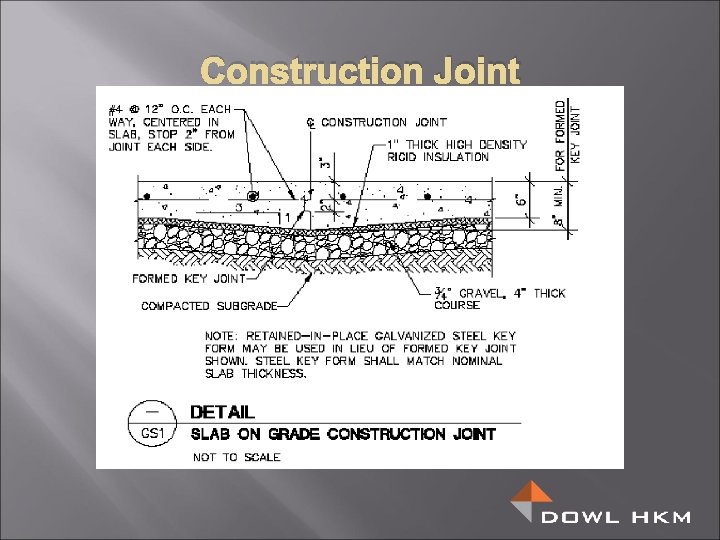
Construction Joints Ø Ø Can be constructed of multiple types of joints: �Doweled �Tied �Keyed �Butt Joint Are spaced and or located to facilitate construction �Concrete quantity limitation �Sequencing of construction tasks
Construction Joint
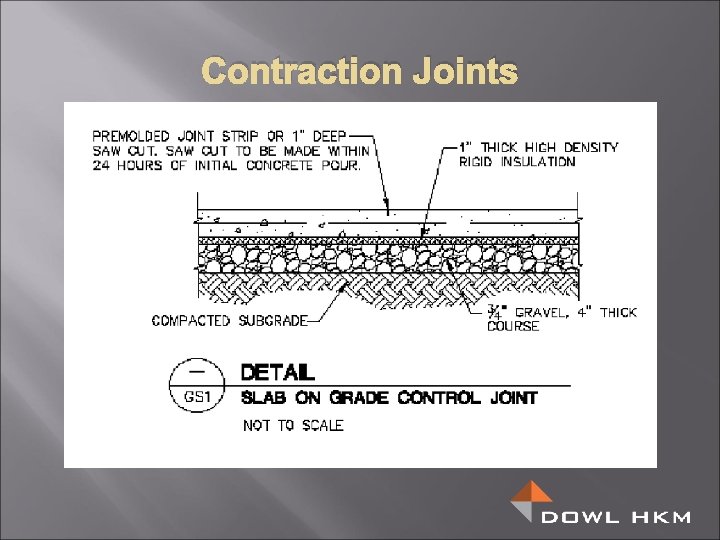
Contraction Joint Ø Ø Ø Also known as control joints Controls cracking due to drying shrinkage May be constructed from a variety of methods: �Hand tooled �Saw Cut (my preference) �Inserts
Contraction Joints
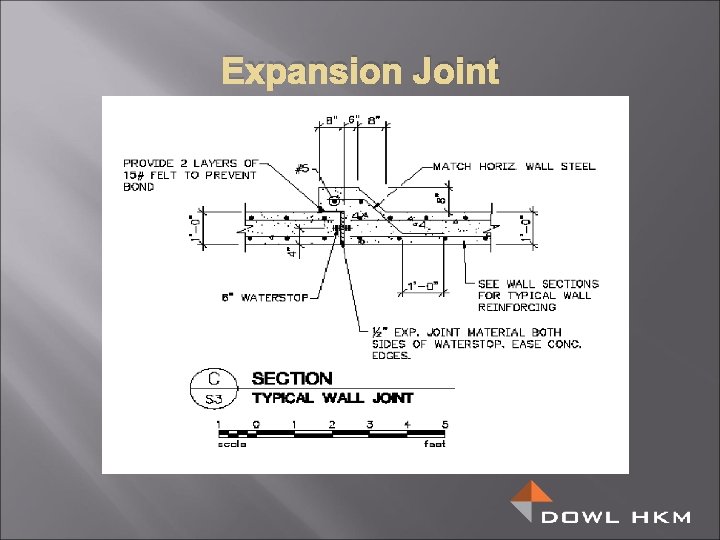
Expansion Joints Ø Ø Used primarily in exterior conditions Can be doweled but not keyed or tied Allows for un-restrained movements due to temperature gradients Can be sealed
Expansion Joint
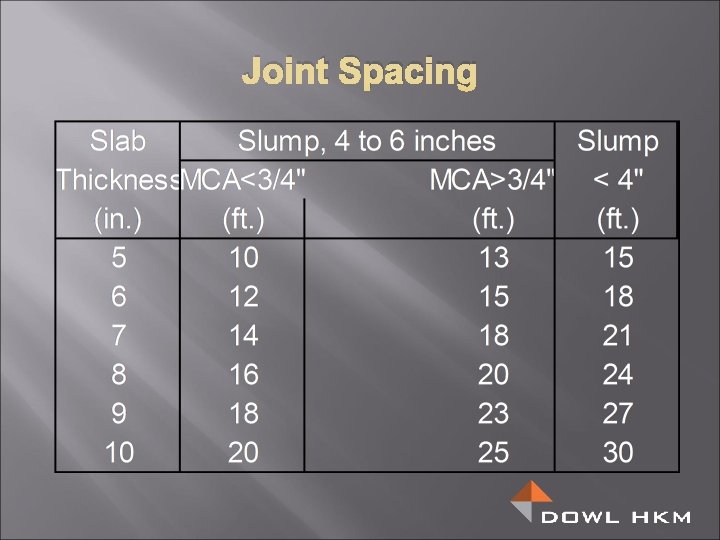
Joint Spacing Ø Ø Ø Function of concrete thickness, coarse aggregate size and concrete slump PCA recommends the joint spacing be 2 to 3 times (in feet) the concrete thickness (inches) �Example: a 5 inch slab would have joints spaced 10 to 15 feet It is good practice to maintain a square shape in so much as practical
Joint Spacing
Joint Spacing Ø Structure geometry and other elements such as interior walls, columns and piers may dictate layout.
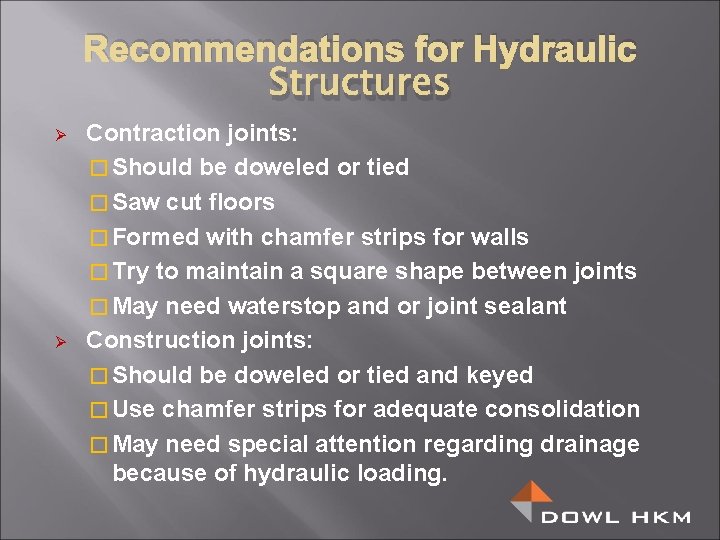
Recommendations for Hydraulic Structures Ø Ø Contraction joints: � Should be doweled or tied � Saw cut floors � Formed with chamfer strips for walls � Try to maintain a square shape between joints � May need waterstop and or joint sealant Construction joints: � Should be doweled or tied and keyed � Use chamfer strips for adequate consolidation � May need special attention regarding drainage because of hydraulic loading.
References Ø Ø Bureau of Reclamation, “Concrete Manual, ” 8 th Edition Revised, 1981 Ringo & Anderson, “Designing Floor Slabs on Grade, ” 1992 Spears & Panarese, Concrete Floors on Ground, EB 075. 2 D, Portland Cement Association, Skokie, IL, second edition 1983; revised 1990. Young & Paxson, Undermining of Spillway Chutes, Safety of Dams Conference, Seattle, WA, Fall 2010.