
JOINTS Functions of joints Hold bones together Allow

JOINTS Functions of joints • Hold bones together • Allow for mobility Ways joints are classified • Functionally (how much they can move) • Structurally (what separates the two bones that are articulated)

FUNCTIONAL CLASSIFICATION OF JOINTS Synarthrosis • Immovable Amphiarthrosis • Slightly movable Diarthrosis • Freely moveable We will not be focusing on these categories

STRUCTURAL CLASSIFICATION OF JOINTS Fibrous joints • Generally immovable Cartilaginous joints • Immovable or slightly moveable Synovial joints • Freely moveable
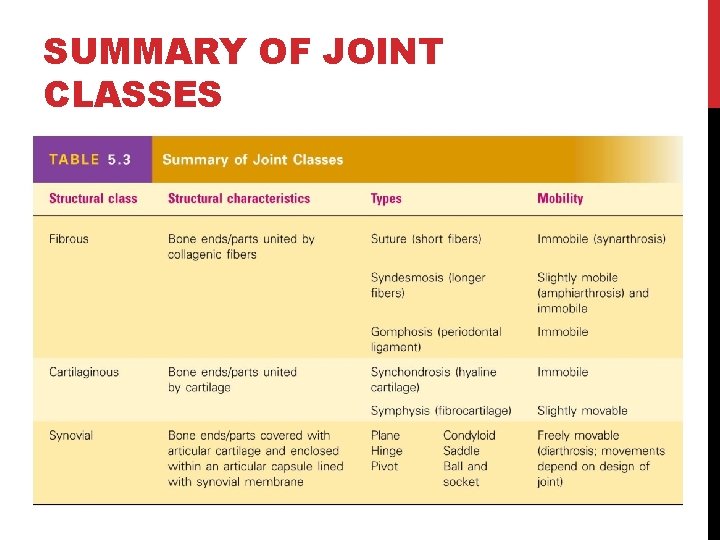
SUMMARY OF JOINT CLASSES [Insert Table 5. 3 here] Table 5. 3
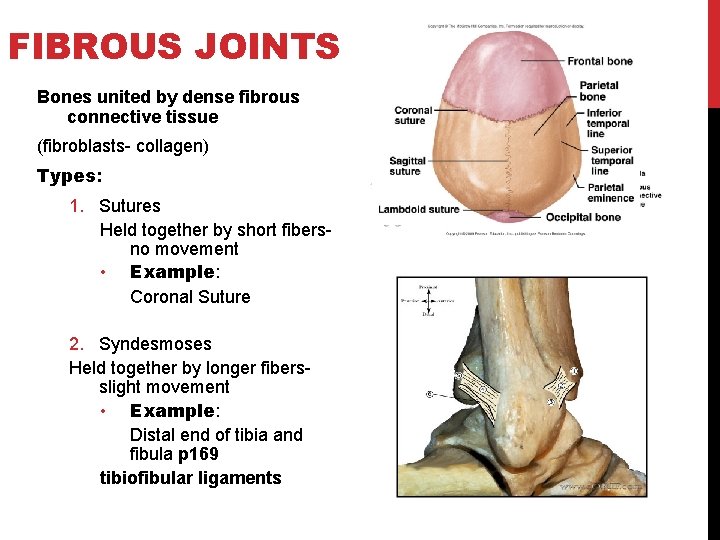
FIBROUS JOINTS Bones united by dense fibrous connective tissue (fibroblasts- collagen) Types: 1. Sutures Held together by short fibersno movement • Example: Coronal Suture 2. Syndesmoses Held together by longer fibersslight movement • Example: Distal end of tibia and fibula p 169 tibiofibular ligaments
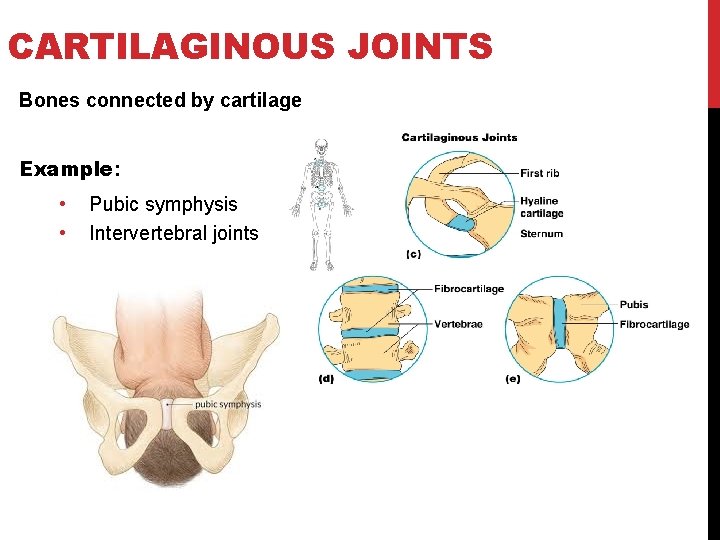
CARTILAGINOUS JOINTS Bones connected by cartilage Example: • • Pubic symphysis Intervertebral joints
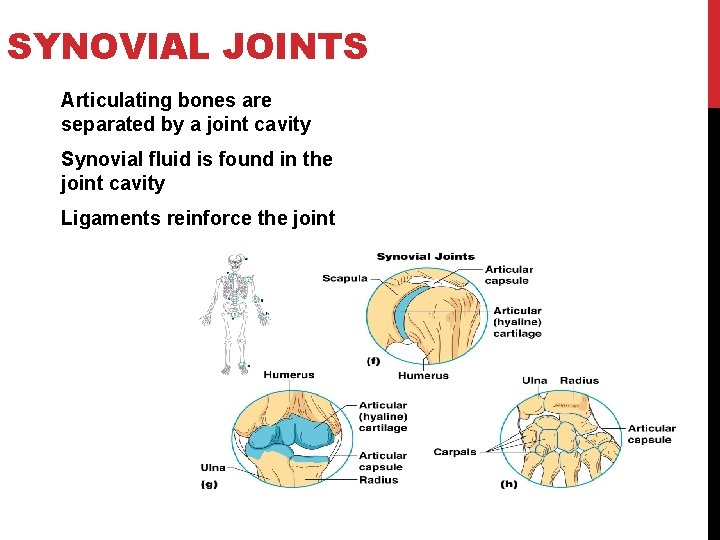
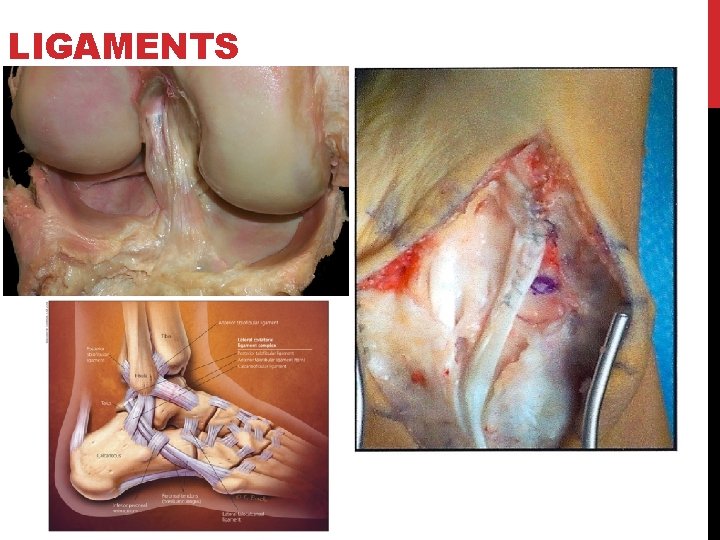
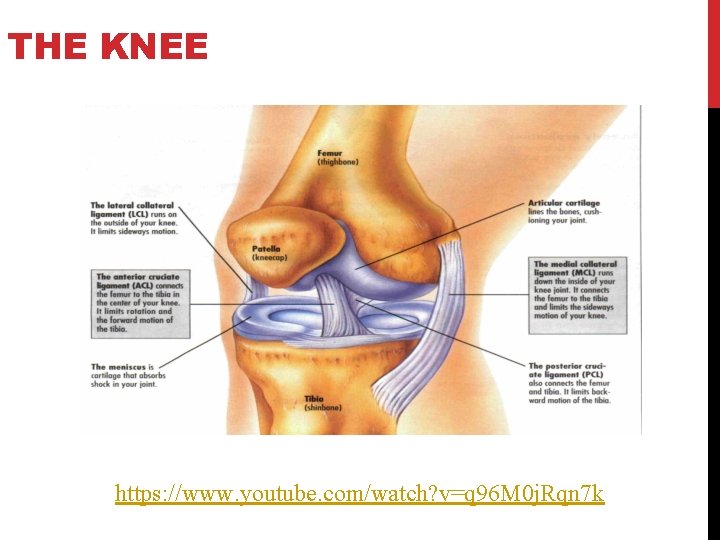
SYNOVIAL JOINTS Articulating bones are separated by a joint cavity Synovial fluid is found in the joint cavity Ligaments reinforce the joint
STRUCTURES ASSOCIATED WITH THE SYNOVIAL JOINT Bursae—flattened fibrous sacs • • Lined with synovial membranes Filled with synovial fluid Not actually part of the joint Found where muscles, ligaments and/or tendons may rub on bone Tendon sheath • Elongated bursa that wraps around a tendon
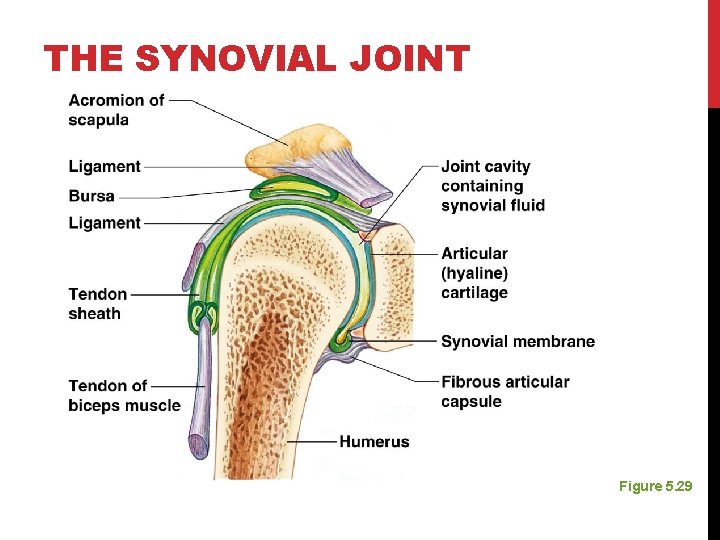
THE SYNOVIAL JOINT Figure 5. 29
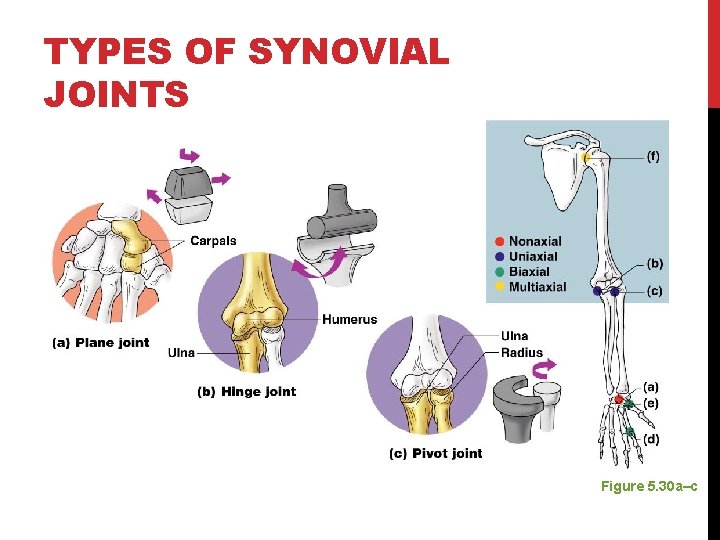
TYPES OF SYNOVIAL JOINTS Figure 5. 30 a–c
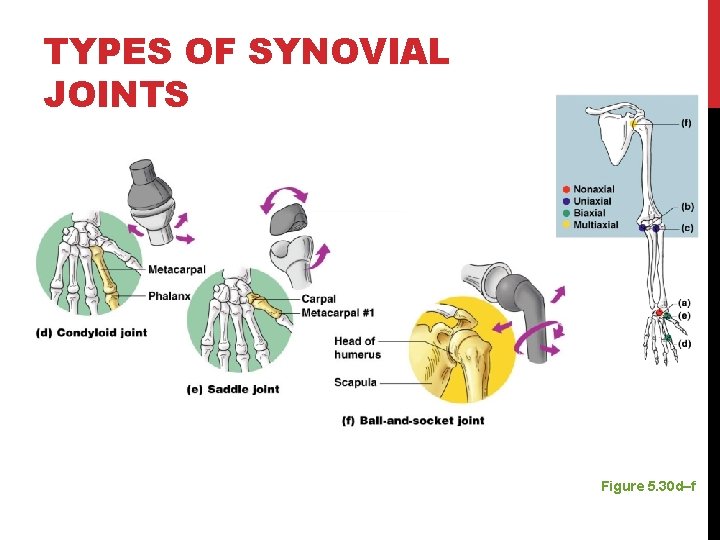
TYPES OF SYNOVIAL JOINTS Figure 5. 30 d–f
LIGAMENTS
THE KNEE https: //www. youtube. com/watch? v=q 96 M 0 j. Rqn 7 k
- Slides: 13