
Jointly Organised by Coorganised by The Chinese University

Jointly Organised by Co-organised by 香港中文大學 The Chinese University of Hong Kong 1
Exercise and Health 2
Exercise, Health and Physical Fitness 3
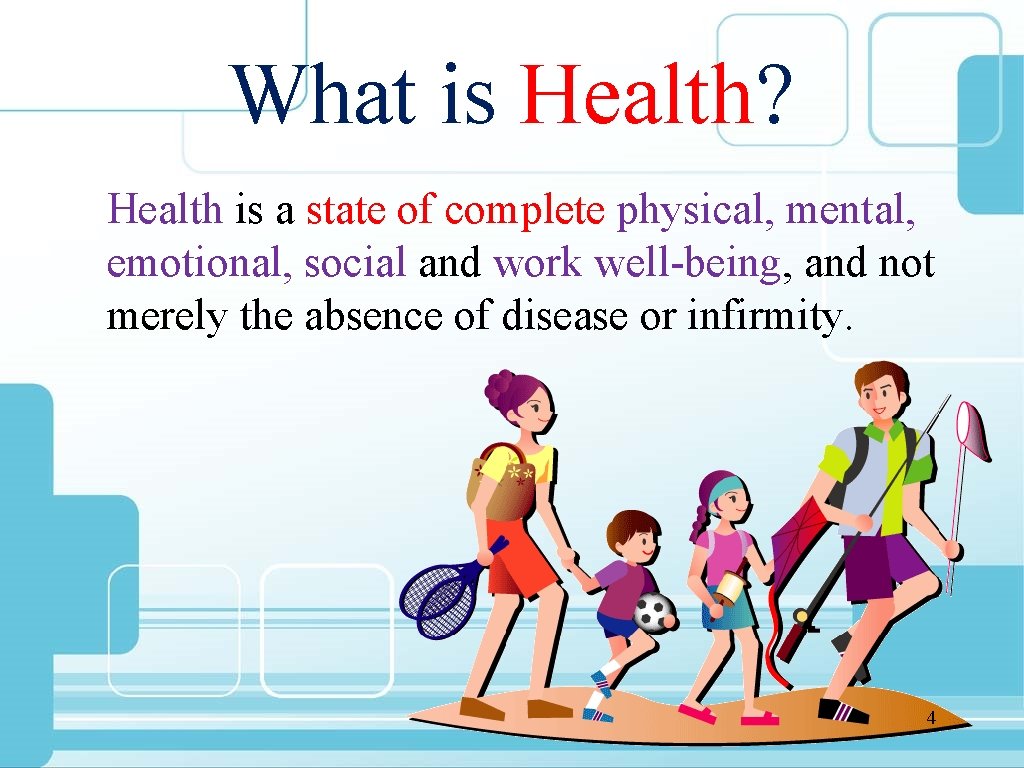
What is Health? Health is a state of complete physical, mental, emotional, social and work well-being, and not merely the absence of disease or infirmity. 4
What is Physical Fitness? Physical fitness refers to the overall ability of the body to adapt to daily activities, exercise and environment. 5
Physical fitness can be divided into: • Health-related fitness • Sports-related fitness 6
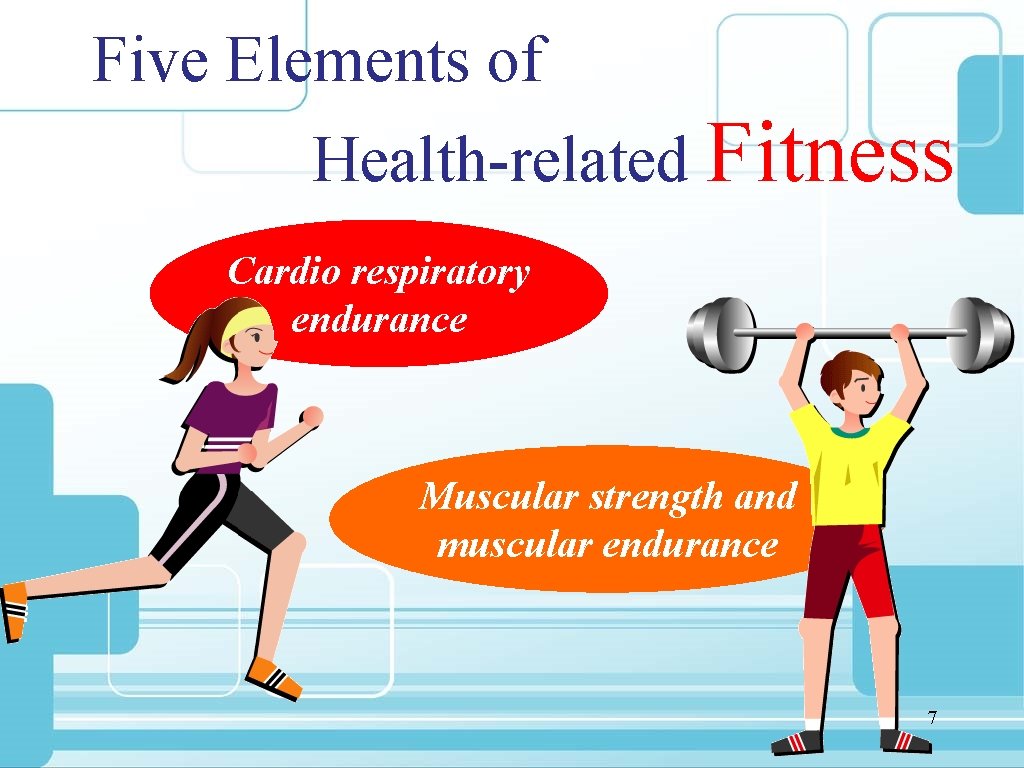
Five Elements of Health-related Fitness Cardio respiratory endurance Muscular strength and muscular endurance 7
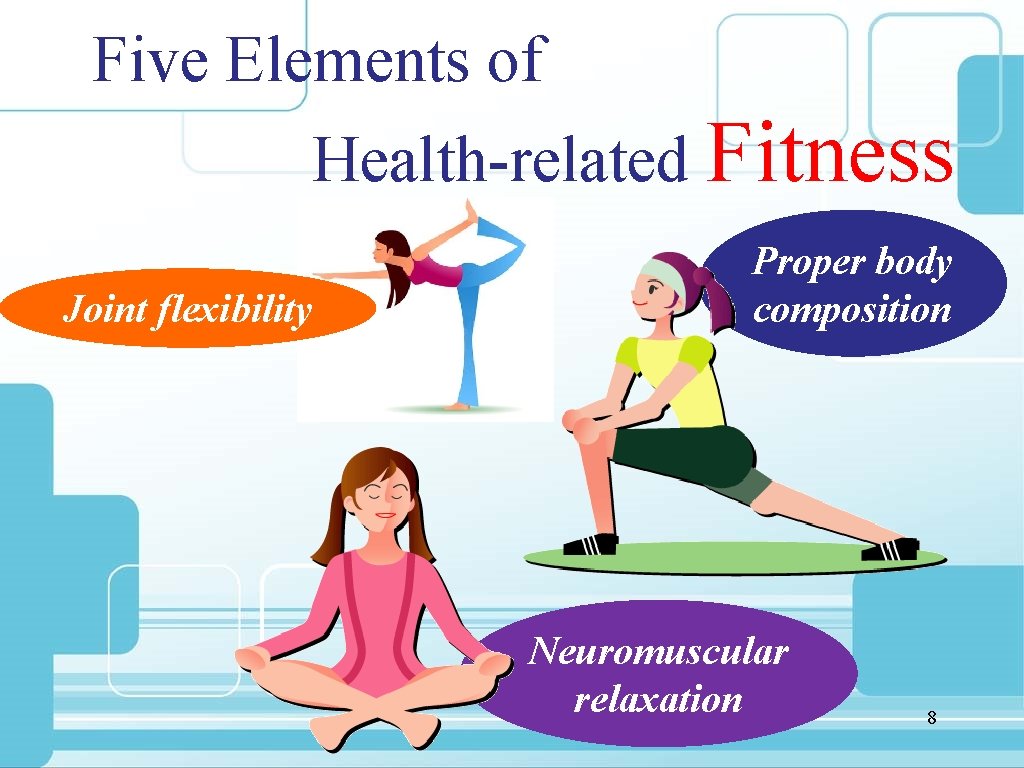
Five Elements of Health-related Fitness Joint flexibility Proper body composition Neuromuscular relaxation 8
Benefits of Exercise • Improve heart and lung functions • Strengthen muscles • Increase metabolism (weight control) • Relax the body and mind to relieve stress 9
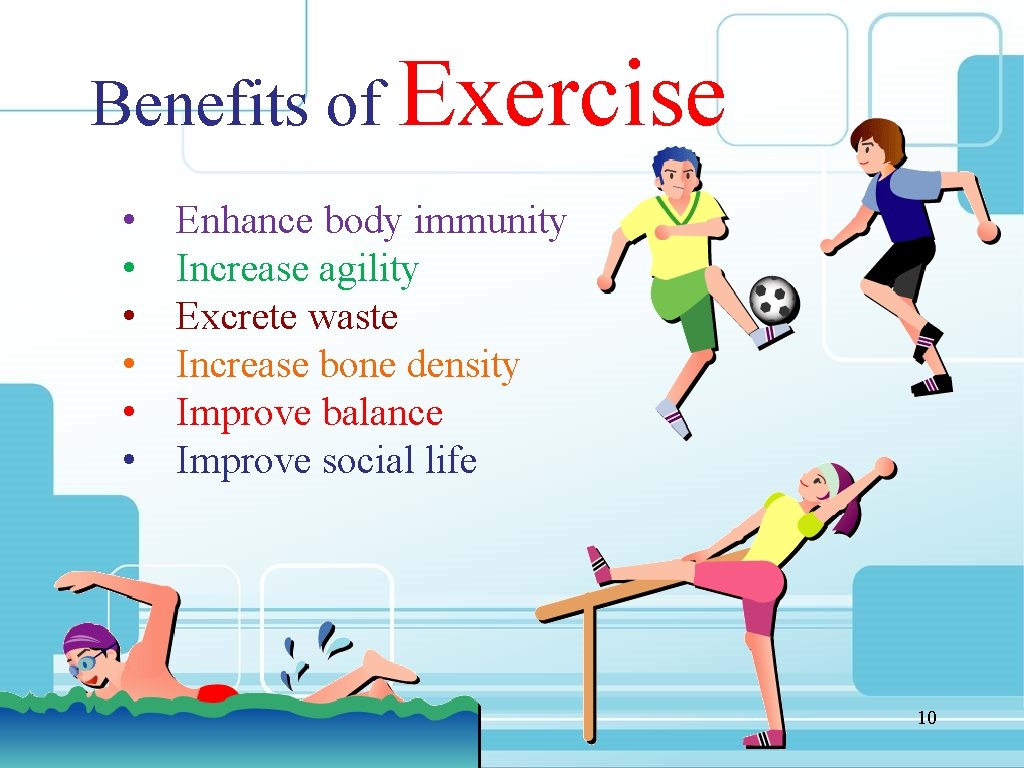
Benefits of Exercise • • • Enhance body immunity Increase agility Excrete waste Increase bone density Improve balance Improve social life 10
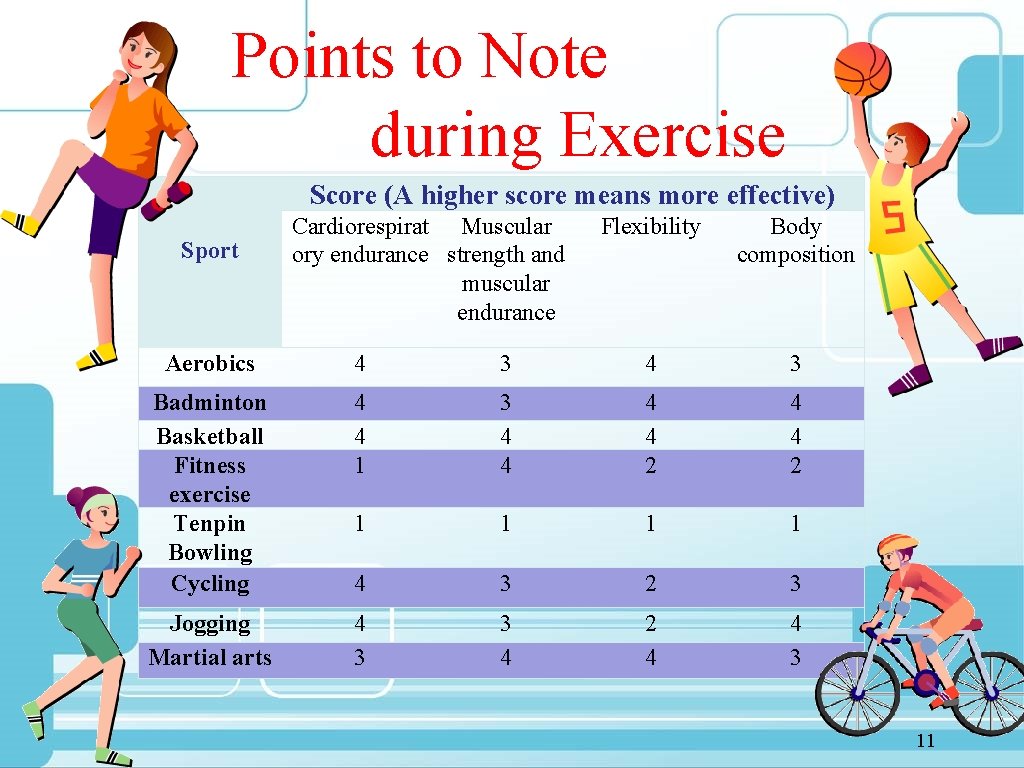
Points to Note during Exercise Score (A higher score means more effective) Sport Cardiorespirat Muscular ory endurance strength and muscular endurance Flexibility Body composition Aerobics 4 3 Badminton Basketball Fitness exercise Tenpin Bowling Cycling 4 4 1 3 4 4 2 1 1 4 3 2 3 Jogging Martial arts 4 3 3 4 2 4 4 3 11
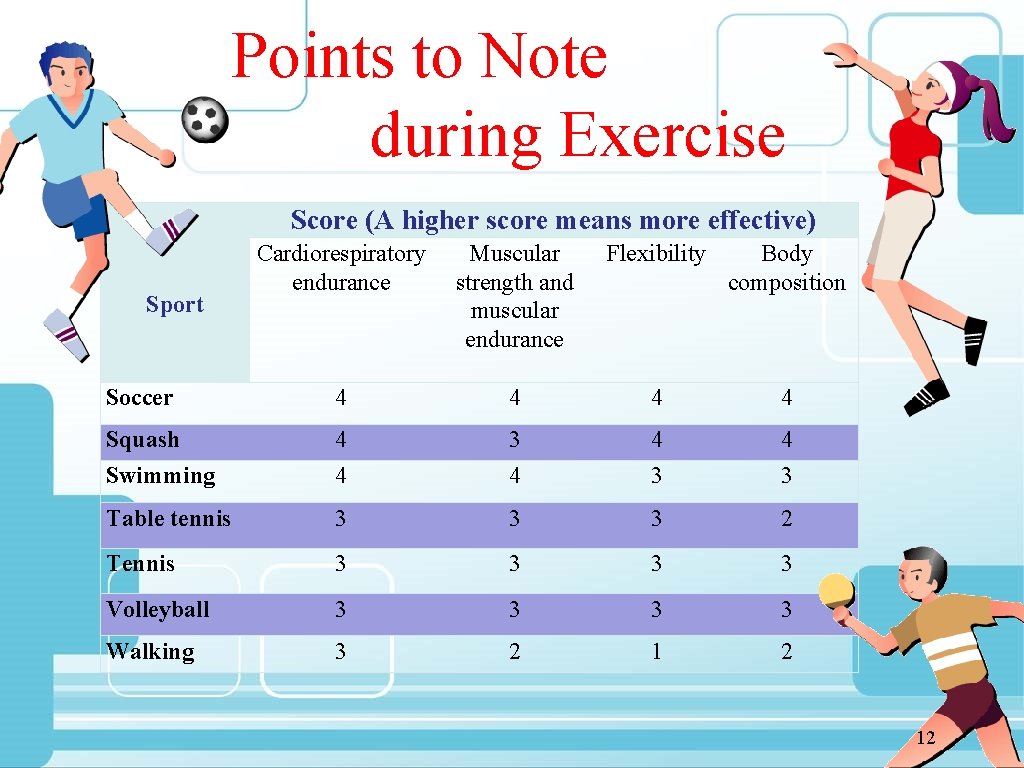
Points to Note during Exercise Score (A higher score means more effective) Cardiorespiratory endurance Muscular strength and muscular endurance Flexibility Body composition Soccer 4 4 Squash Swimming 4 4 3 4 3 Table tennis 3 3 3 2 Tennis 3 3 Volleyball 3 3 Walking 3 2 1 2 Sport 12
Differences between Aerobic Exercises and Anaerobic Exercises 13
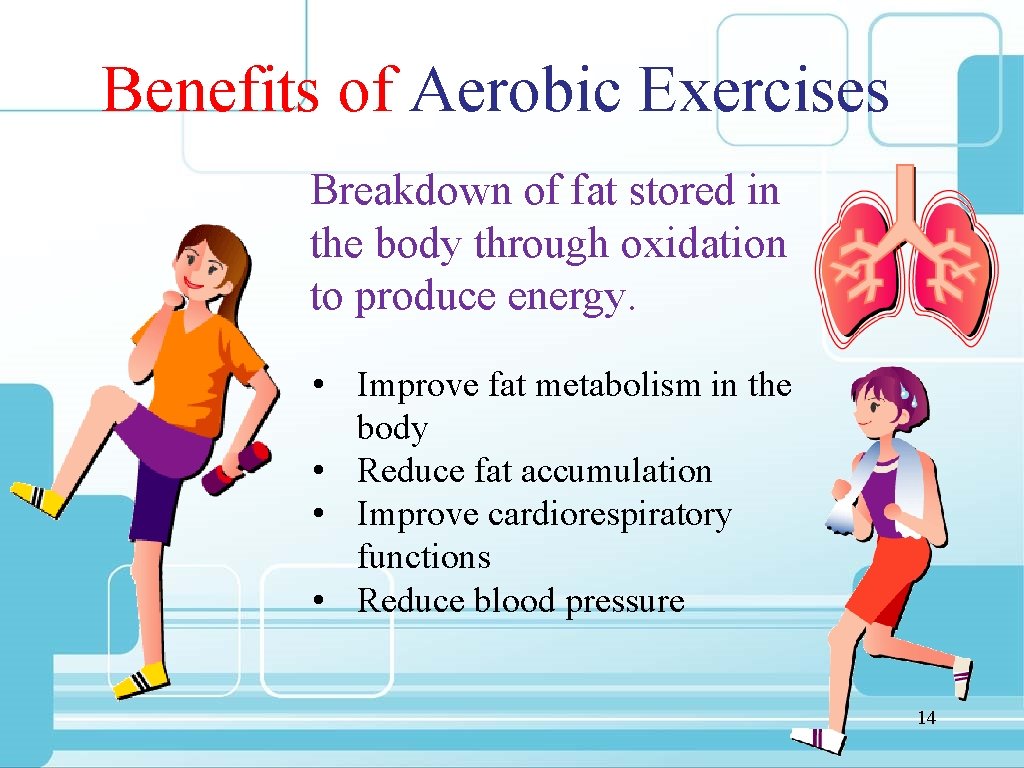
Benefits of Aerobic Exercises Breakdown of fat stored in the body through oxidation to produce energy. • Improve fat metabolism in the body • Reduce fat accumulation • Improve cardiorespiratory functions • Reduce blood pressure 14
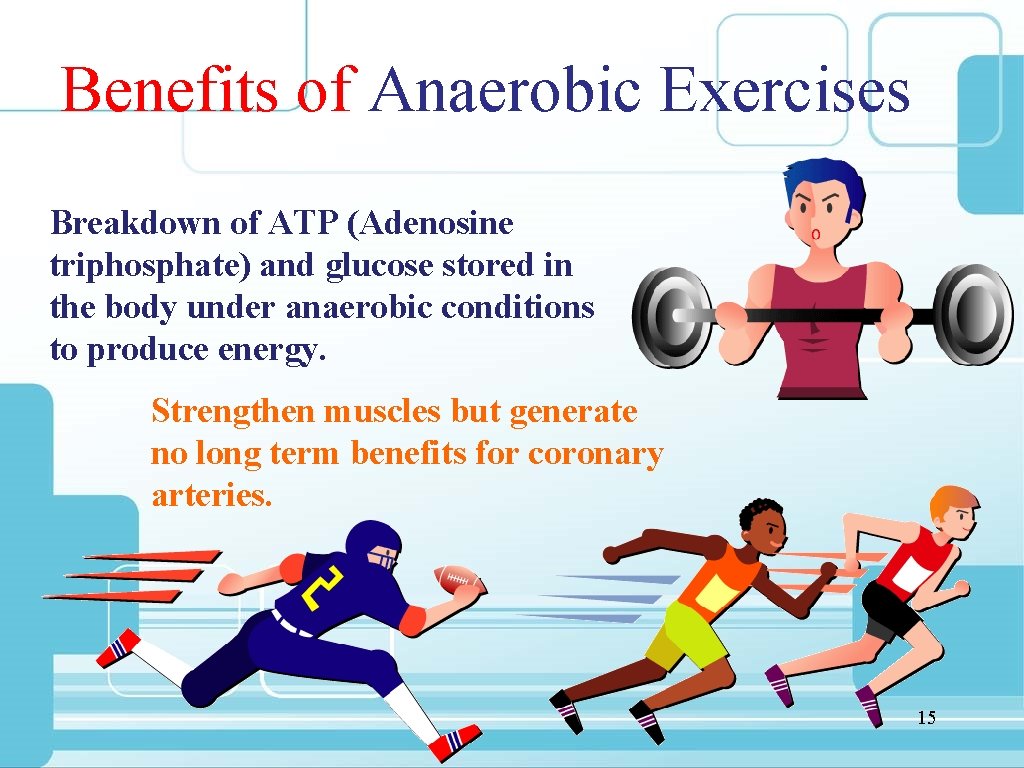
Benefits of Anaerobic Exercises Breakdown of ATP (Adenosine triphosphate) and glucose stored in the body under anaerobic conditions to produce energy. Strengthen muscles but generate no long term benefits for coronary arteries. 15
Points to Note during Exercise 16
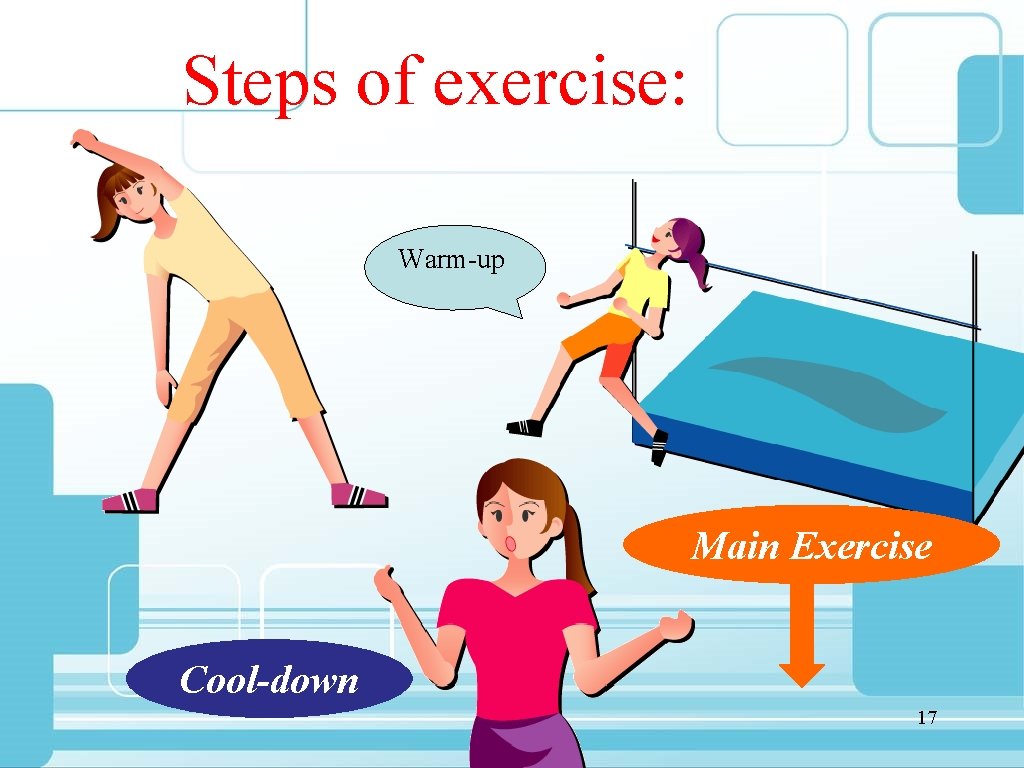
Steps of exercise: Warm-up Main Exercise Cool-down 17
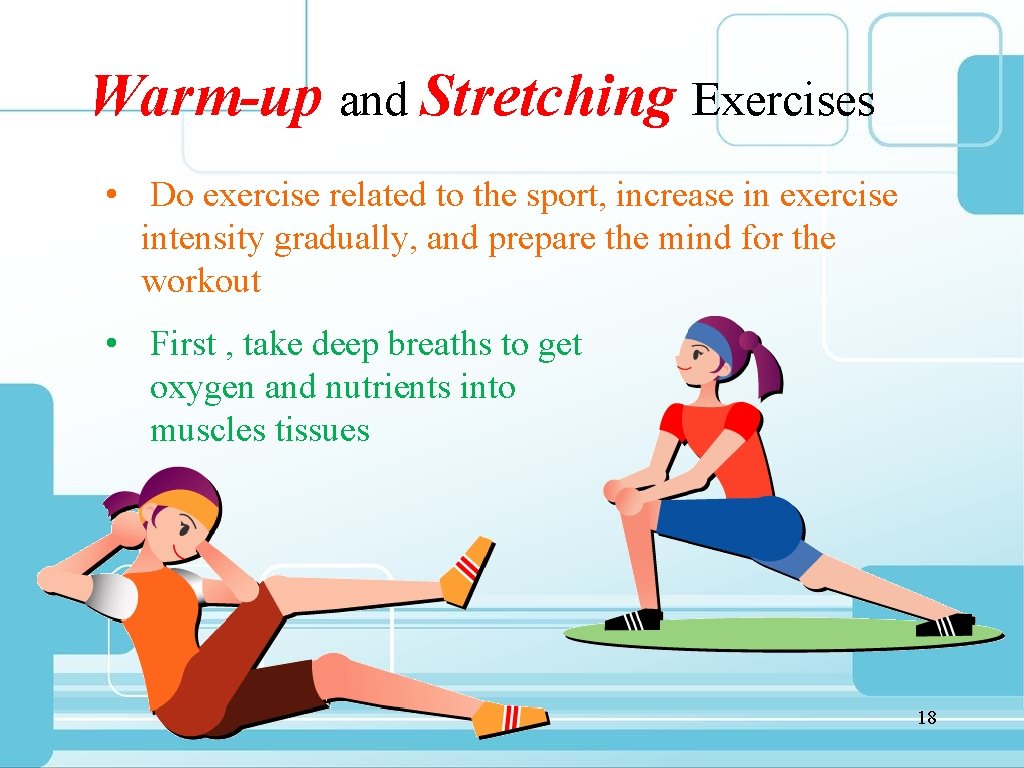
Warm-up and Stretching Exercises • Do exercise related to the sport, increase in exercise intensity gradually, and prepare the mind for the workout • First , take deep breaths to get oxygen and nutrients into muscles tissues 18
Purpose of Warm-up Exercises • improve flexibility of connective tissues • increase the speed of muscle contraction and improve muscular endurance • relax the muscles • increase the speed of nerve conduction • improve cardiorespiratory endurance 19
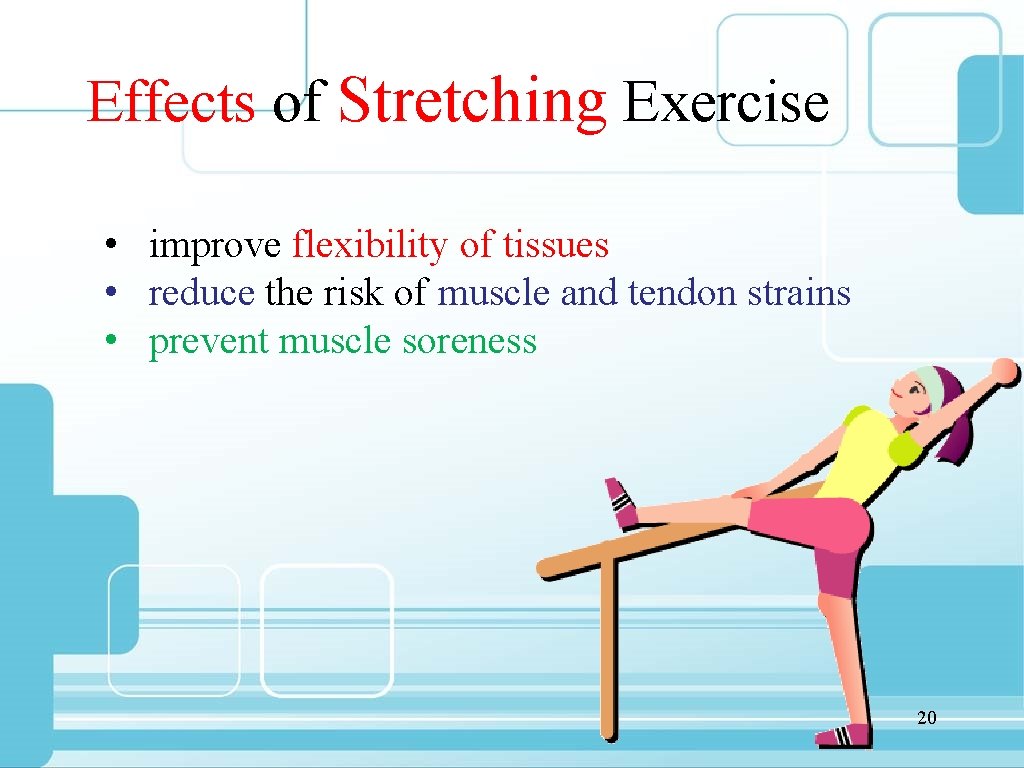
Effects of Stretching Exercise • improve flexibility of tissues • reduce the risk of muscle and tendon strains • prevent muscle soreness 20
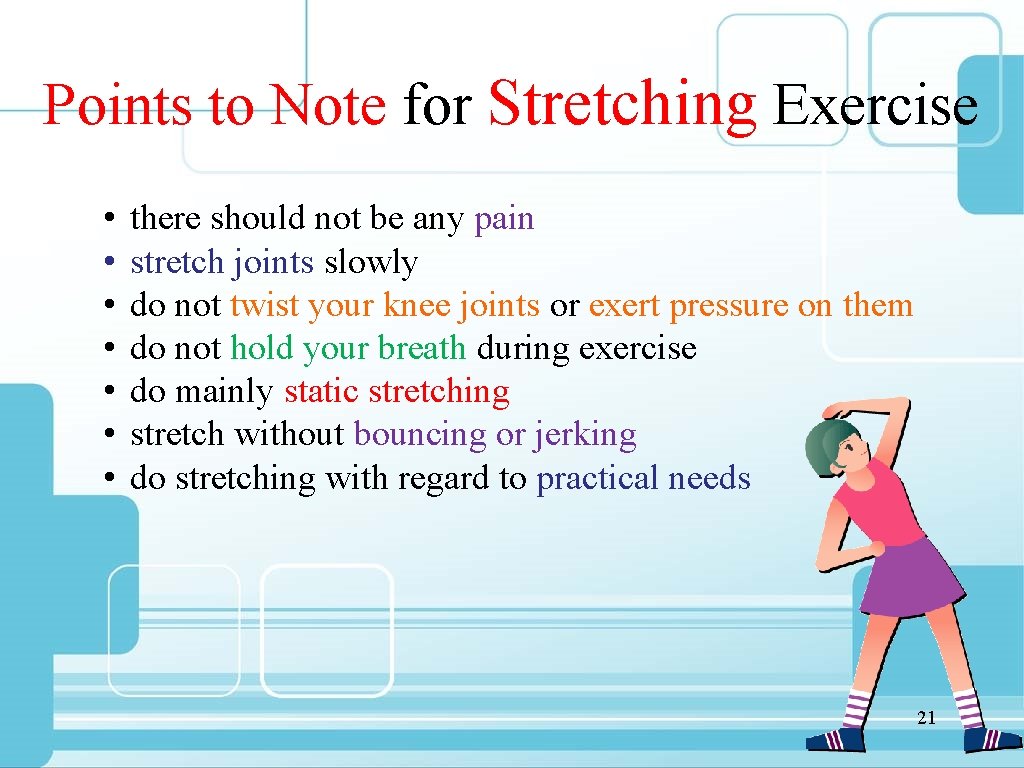
Points to Note for Stretching Exercise • • there should not be any pain stretch joints slowly do not twist your knee joints or exert pressure on them do not hold your breath during exercise do mainly static stretching stretch without bouncing or jerking do stretching with regard to practical needs 21
Cool-down Exercise Purposes of Cool-down Exercise: • • remove lactate and other metabolic waste products provide calming effect physically and mentally prevent delayed muscle soreness increase flexibility of body tissues 22
Safety Guidelines during Exercise • replenish water as needed • wear sportswear and sports shoes • do warm-up and stretching exercises every time before exercise • cool down after exercise • do not do strenuous exercises when feeling tired • build up intensity gradually 23
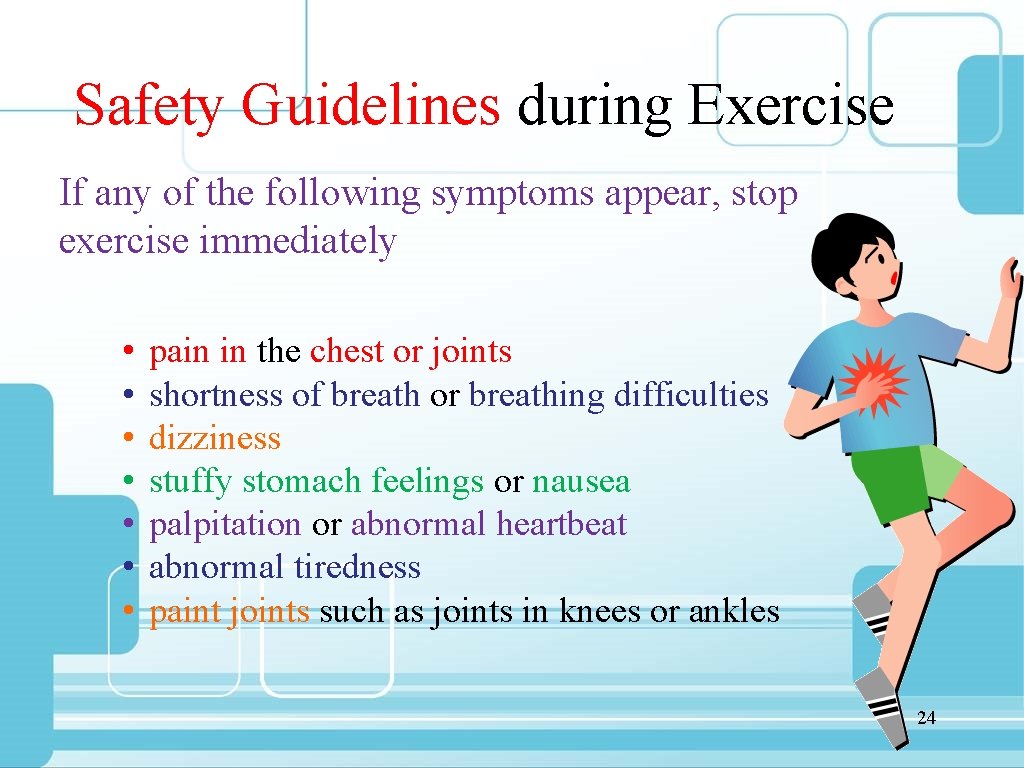
Safety Guidelines during Exercise If any of the following symptoms appear, stop exercise immediately • • pain in the chest or joints shortness of breath or breathing difficulties dizziness stuffy stomach feelings or nausea palpitation or abnormal heartbeat abnormal tiredness paint joints such as joints in knees or ankles 24
Weight Control How do I know if I am overweight? At which point do I have to consider losing weight? Obesity: accumulation of excess body fat Body fat percentage: Ideal: Male: 10 -20% Female: 15 -25% Obese: Male: >25% Female: >30% 25
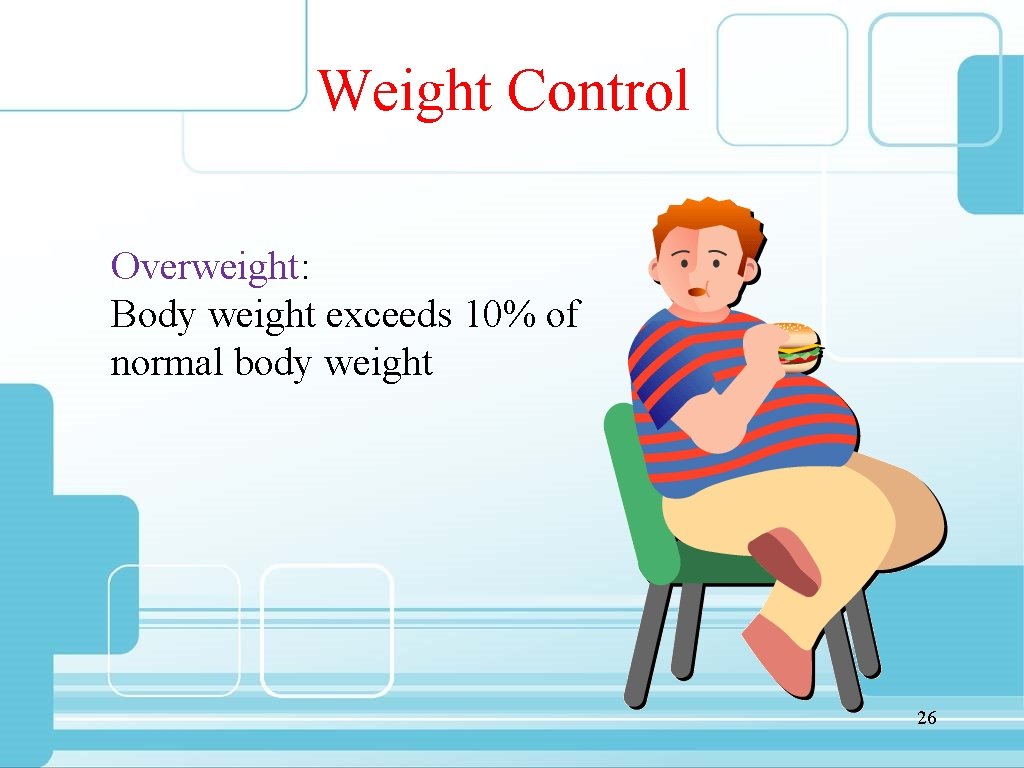
Weight Control Overweight: Body weight exceeds 10% of normal body weight 26
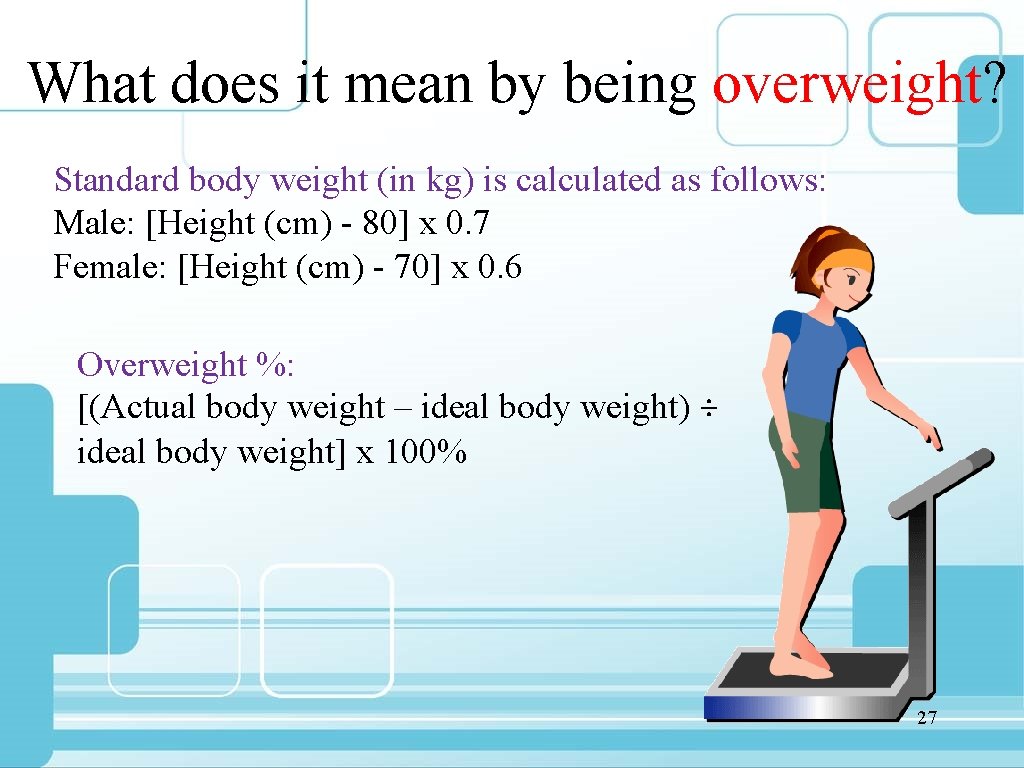
What does it mean by being overweight? Standard body weight (in kg) is calculated as follows: Male: [Height (cm) - 80] x 0. 7 Female: [Height (cm) - 70] x 0. 6 Overweight %: [(Actual body weight – ideal body weight) ÷ ideal body weight] x 100% 27
What is the normal BMI range? 28
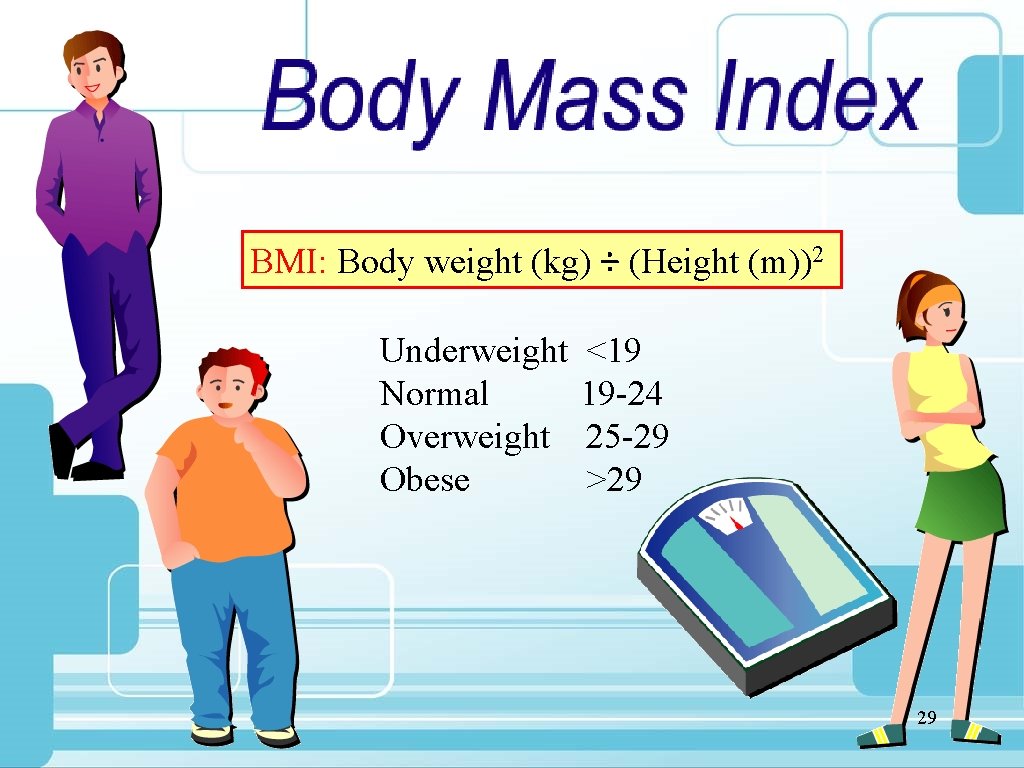
BMI: Body weight (kg) ÷ (Height (m))2 Underweight <19 Normal 19 -24 Overweight 25 -29 Obese >29 29
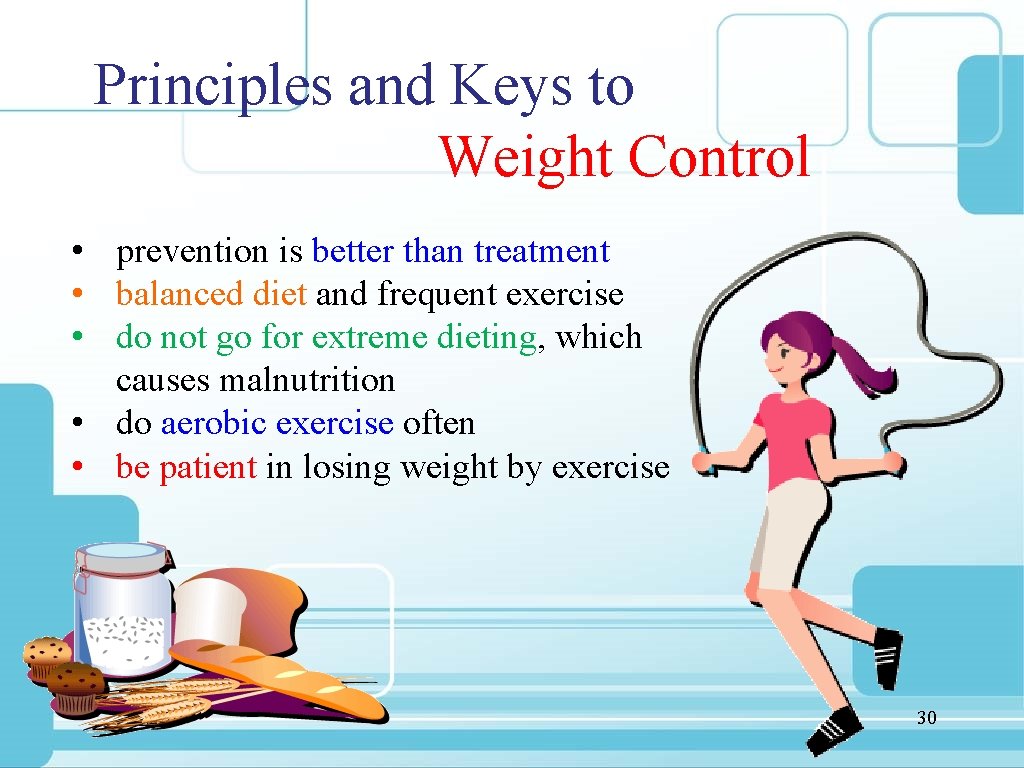
Principles and Keys to Weight Control • prevention is better than treatment • balanced diet and frequent exercise • do not go for extreme dieting, which causes malnutrition • do aerobic exercise often • be patient in losing weight by exercise 30
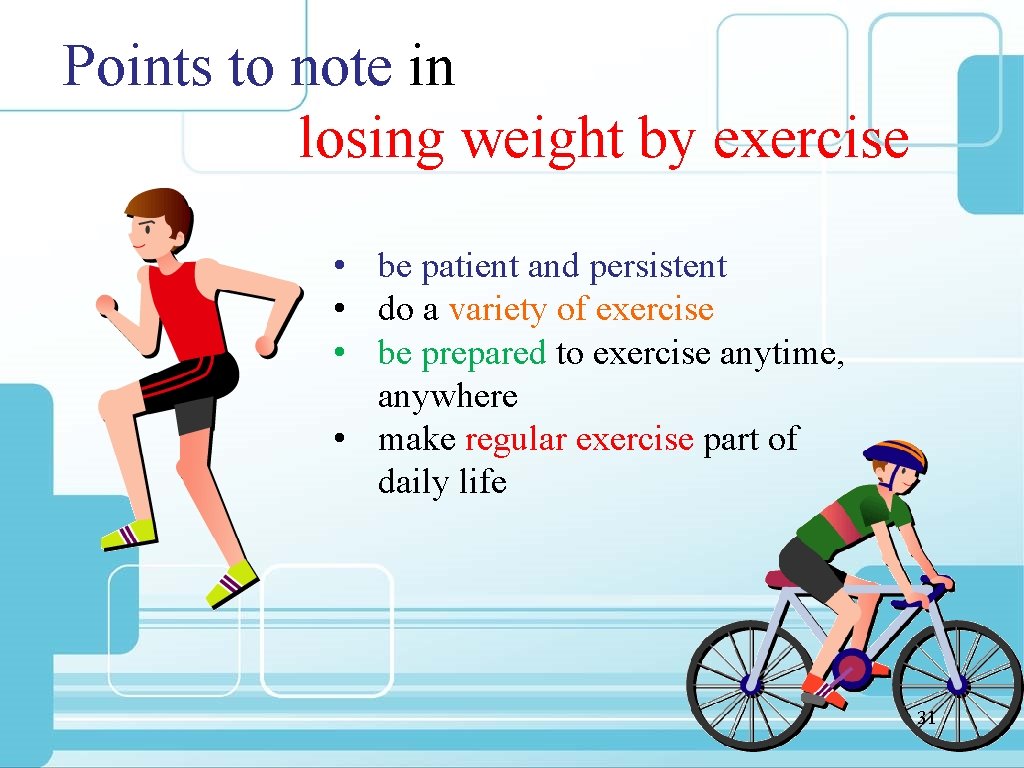
Points to note in losing weight by exercise • be patient and persistent • do a variety of exercise • be prepared to exercise anytime, anywhere • make regular exercise part of daily life 31
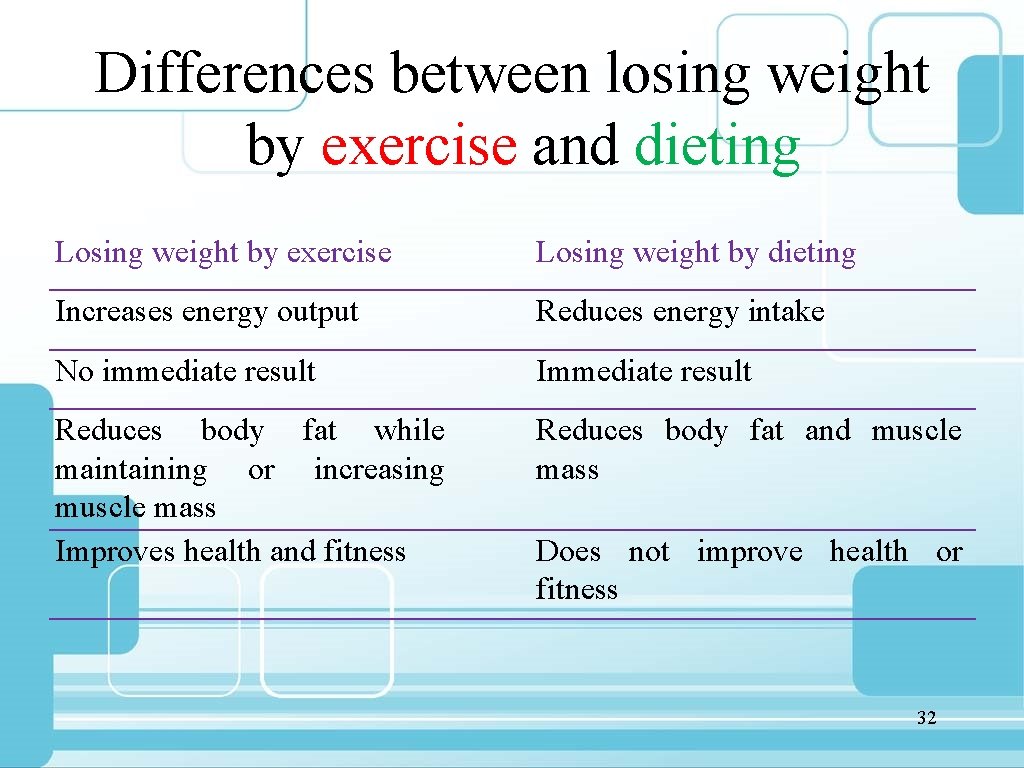
Differences between losing weight by exercise and dieting Losing weight by exercise Losing weight by dieting Increases energy output Reduces energy intake No immediate result Immediate result Reduces body fat while maintaining or increasing muscle mass Improves health and fitness Reduces body fat and muscle mass Does not improve health or fitness 32
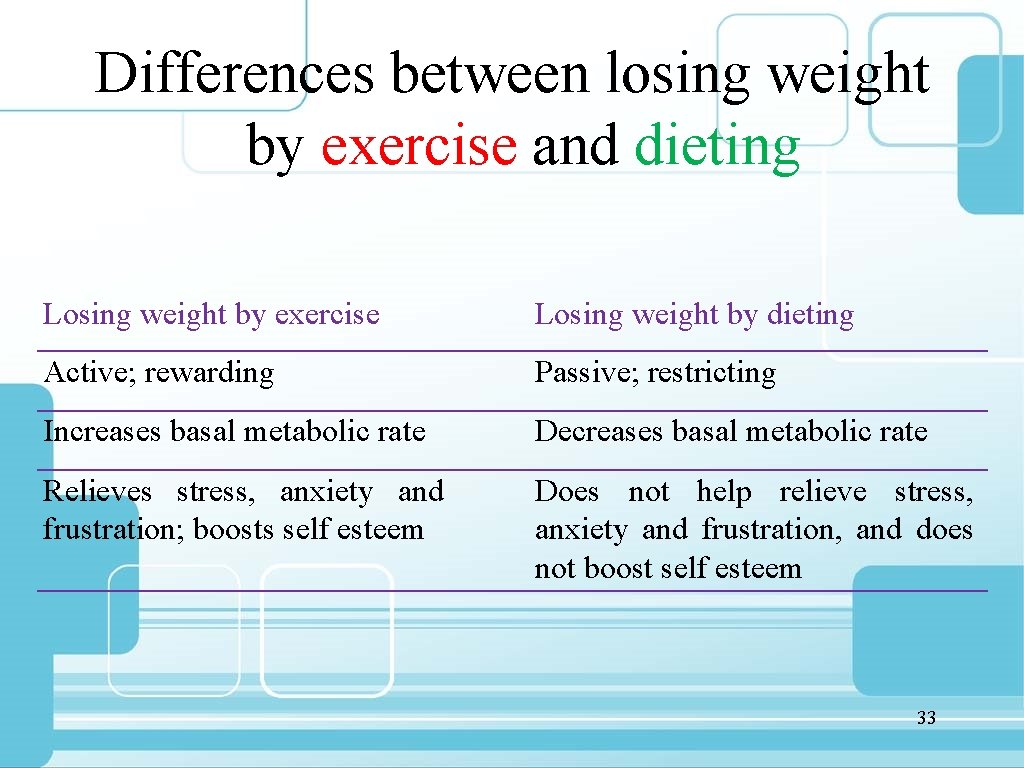
Differences between losing weight by exercise and dieting Losing weight by exercise Losing weight by dieting Active; rewarding Passive; restricting Increases basal metabolic rate Decreases basal metabolic rate Relieves stress, anxiety and frustration; boosts self esteem Does not help relieve stress, anxiety and frustration, and does not boost self esteem 33
Summary How to implement a fitness programme: • find out why you want to work out • pick a sport that suits you • set a short term goal • be persistent All rights reserved by the LCSD 34
- Slides: 34