
Joint Injuries Sprain General Info Most common injury


- Slides: 25
Joint Injuries
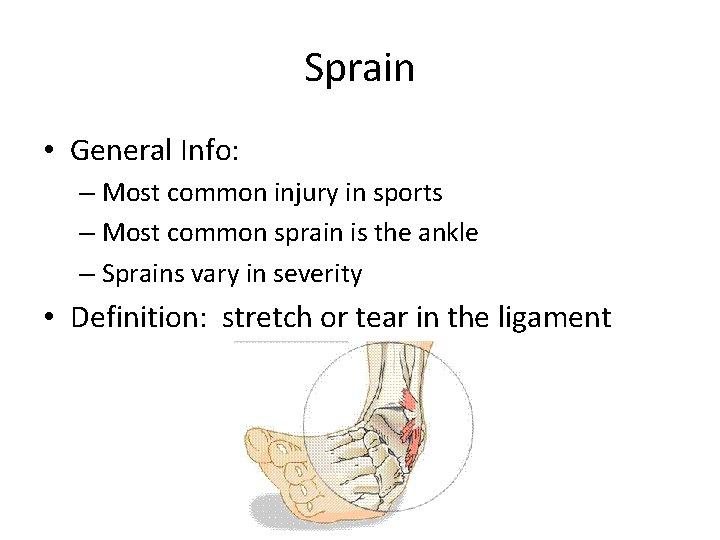
Sprain • General Info: – Most common injury in sports – Most common sprain is the ankle – Sprains vary in severity • Definition: stretch or tear in the ligament
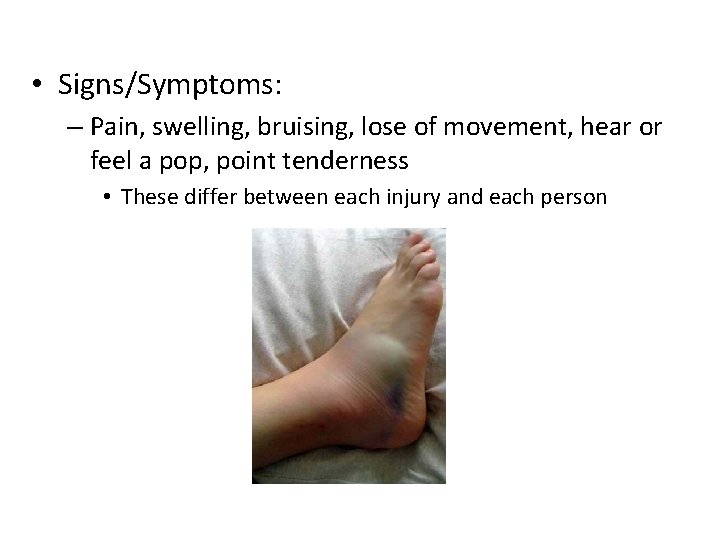
• Signs/Symptoms: – Pain, swelling, bruising, lose of movement, hear or feel a pop, point tenderness • These differ between each injury and each person
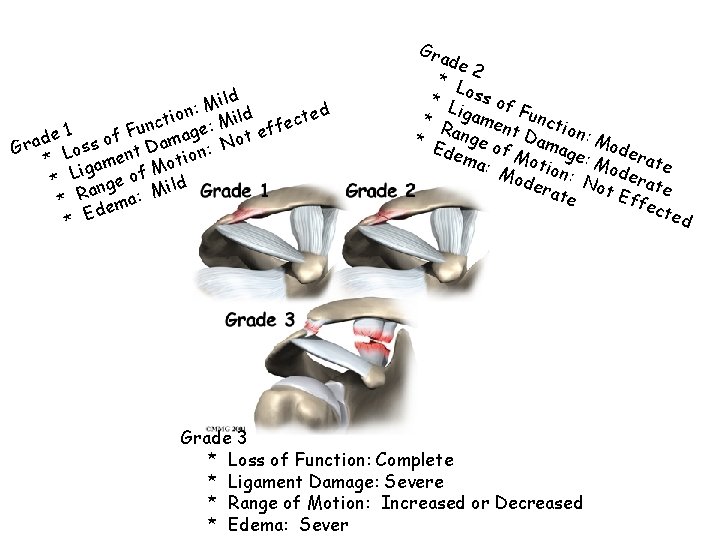
ild M : tion : Mild fected c n Fu mage ef e 1 f t d o o a Gr oss ent Da ion: N L * m ot a M g i f * L nge o ild a M R : * ma e d * E Gra de 2 * L o * L ss of F i * R gamen uncti o t * E ange o Dama n: Mod dem f M otio ge: Mo erate a: d n Mo der : Not erate Eff ect ed Grade 3 * Loss of Function: Complete * Ligament Damage: Severe * Range of Motion: Increased or Decreased * Edema: Sever
• Treatment: – PRICE (Protect, Rest, Ice, Compress, Elevate – How to protect?
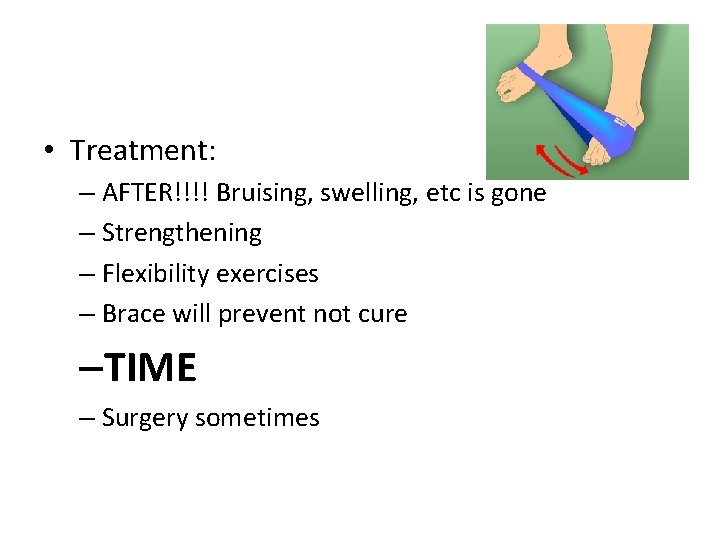
• Treatment: – AFTER!!!! Bruising, swelling, etc is gone – Strengthening – Flexibility exercises – Brace will prevent not cure –TIME – Surgery sometimes
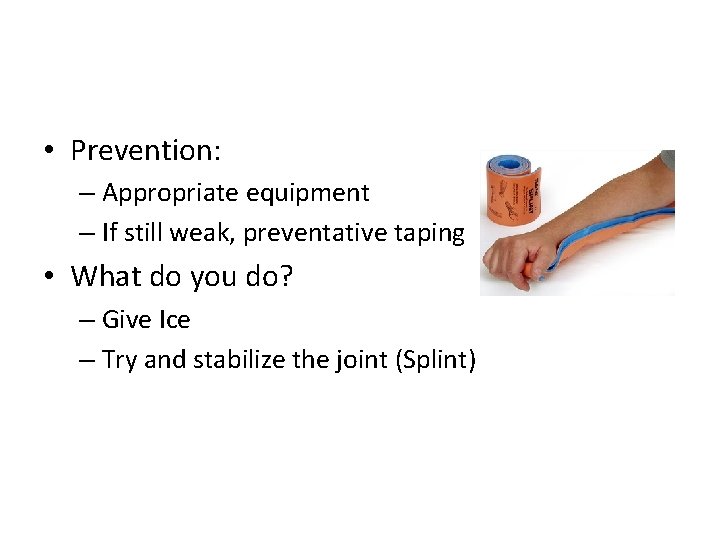
• Prevention: – Appropriate equipment – If still weak, preventative taping • What do you do? – Give Ice – Try and stabilize the joint (Splint)
Tendonitis • Background on Tendons – Vary in size such as ones in your fingers vs. your Achilles Tendon – When normal, they glide easily and smoothly as the muscle contracts – If Tendon is injured – effects the movement of the muscle • Definition: Inflammation of the tendon • Most common cause? Overuse
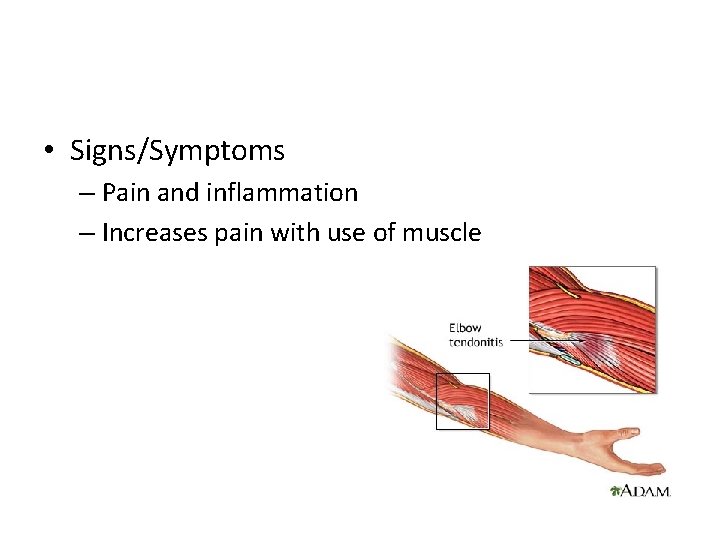
• Signs/Symptoms – Pain and inflammation – Increases pain with use of muscle
• Treatment: – Avoid using the tendon – Anti-inflammatory – Ice – Physical Therapy • Prevention – Slowly increase the intensity • What do you do? – Give Ice – Not much more, tell them to play to pain or not play at all
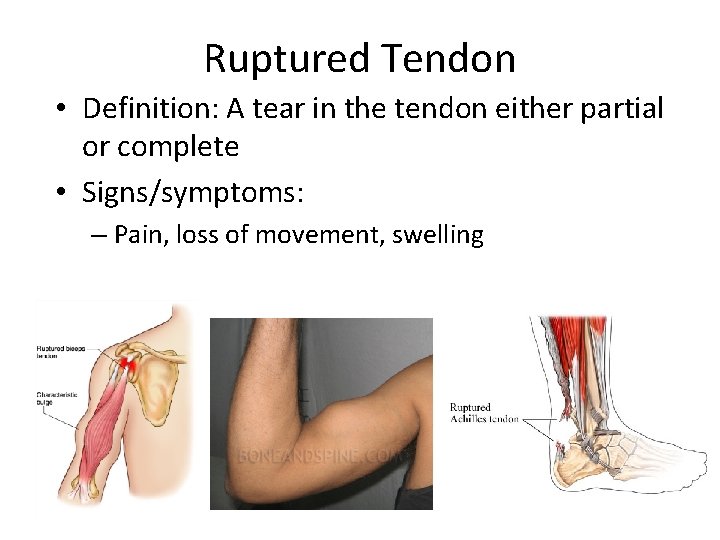
Ruptured Tendon • Definition: A tear in the tendon either partial or complete • Signs/symptoms: – Pain, loss of movement, swelling
• Treatment: – Rest but most the time surgery • Prevention: – Always properly stretch – Don’t overstretch • What do you do? – Keep in mind your patient will be in a lot of pain – Do NOT do anything to injure more or cause more pain – Try and stabilize the entire area to prevent further pain and injury
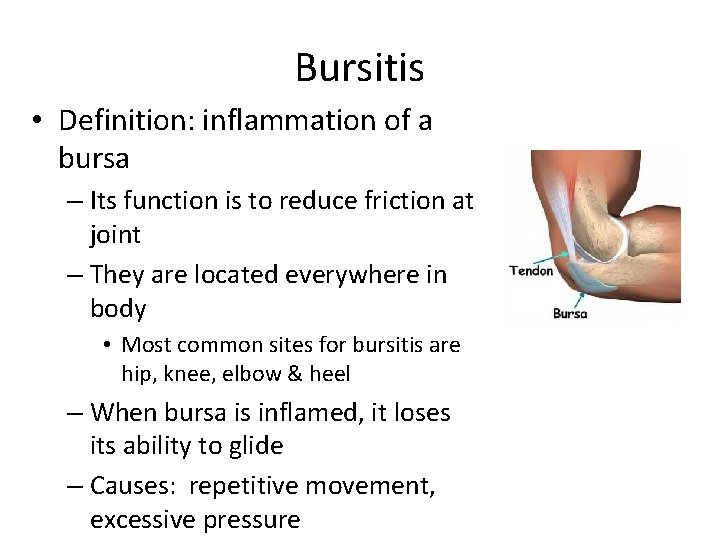
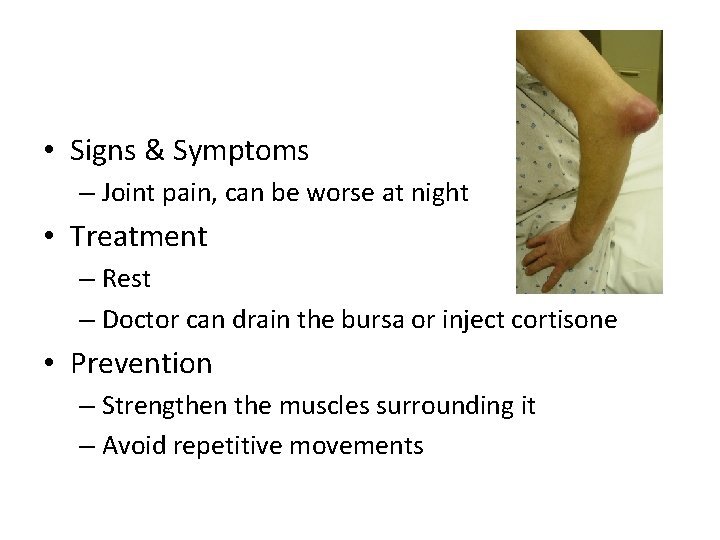
Bursitis • Definition: inflammation of a bursa – Its function is to reduce friction at joint – They are located everywhere in body • Most common sites for bursitis are hip, knee, elbow & heel – When bursa is inflamed, it loses its ability to glide – Causes: repetitive movement, excessive pressure
• Signs & Symptoms – Joint pain, can be worse at night • Treatment – Rest – Doctor can drain the bursa or inject cortisone • Prevention – Strengthen the muscles surrounding it – Avoid repetitive movements
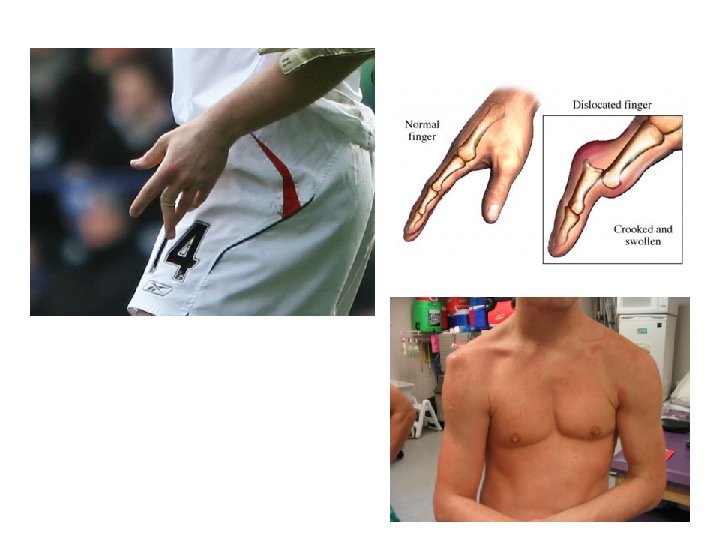
Dislocation • Definition: separation of a joint and malposition of the joint • Causes: force that causes the joint to beyond the normal anatomical limits – It is common that a fracture and torn ligaments also occur • Signs/Symptoms: – PAIN!!!, deformity, complete loss of motion
• Treatment – Reset it (It hurts really bad) – Treat the other injuries that go with it • Prevention – Wear preventative gear (Skeleton in football) – Strengthen the muscles at that joint • What do you do? – DON’T!!!!! try and touch it, move it, or set – Splint or brace to secure the entire area to prevent further injury or pain – Monitor pulse for blood flow – Monitor nerve sensation
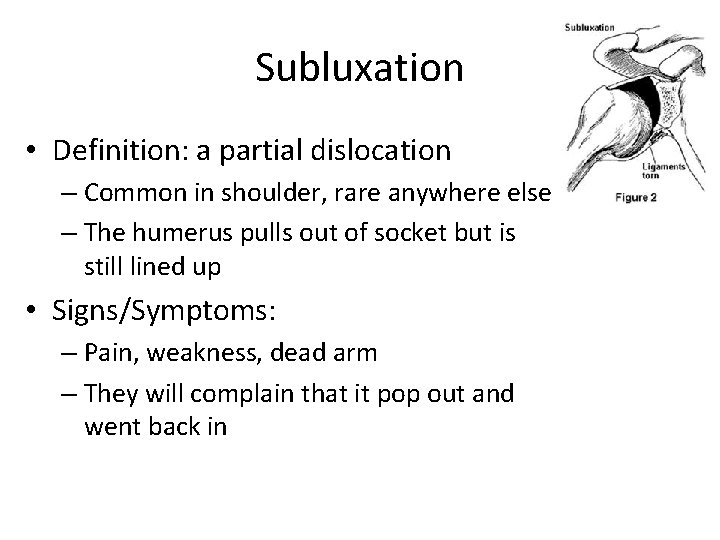
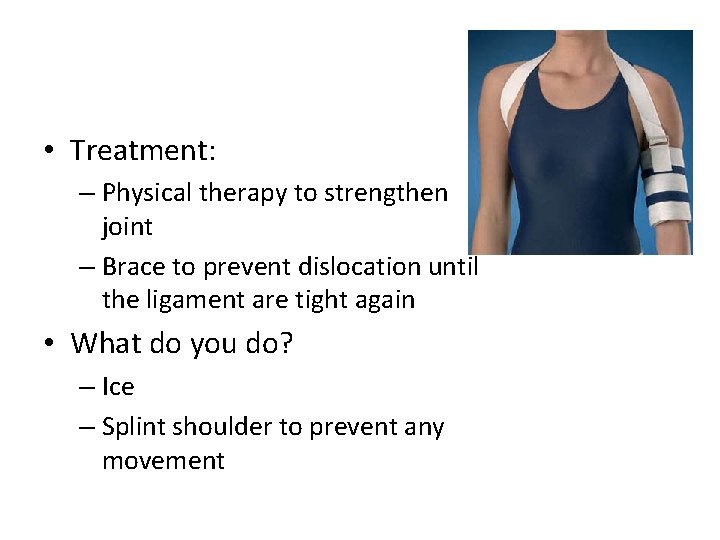
Subluxation • Definition: a partial dislocation – Common in shoulder, rare anywhere else – The humerus pulls out of socket but is still lined up • Signs/Symptoms: – Pain, weakness, dead arm – They will complain that it pop out and went back in
• Treatment: – Physical therapy to strengthen joint – Brace to prevent dislocation until the ligament are tight again • What do you do? – Ice – Splint shoulder to prevent any movement
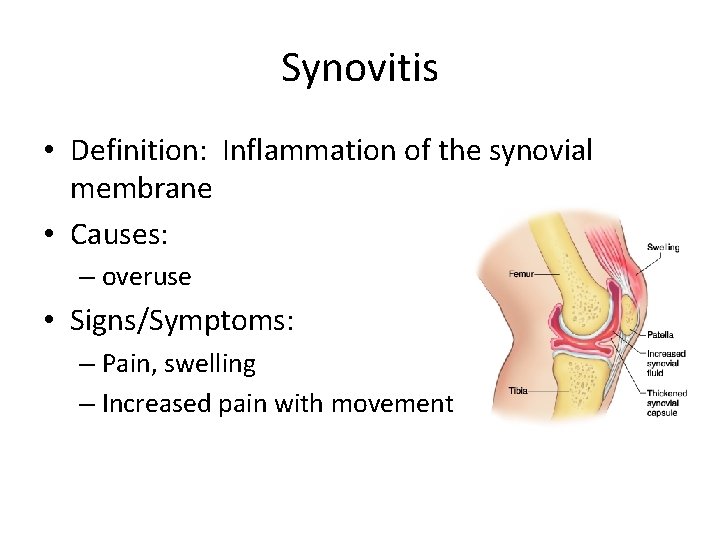
Synovitis • Definition: Inflammation of the synovial membrane • Causes: – overuse • Signs/Symptoms: – Pain, swelling – Increased pain with movement
• Treatment: – If no swelling, Heat packs – If swollen, ICE until edema is gone then heat • What do you do? – Ice it
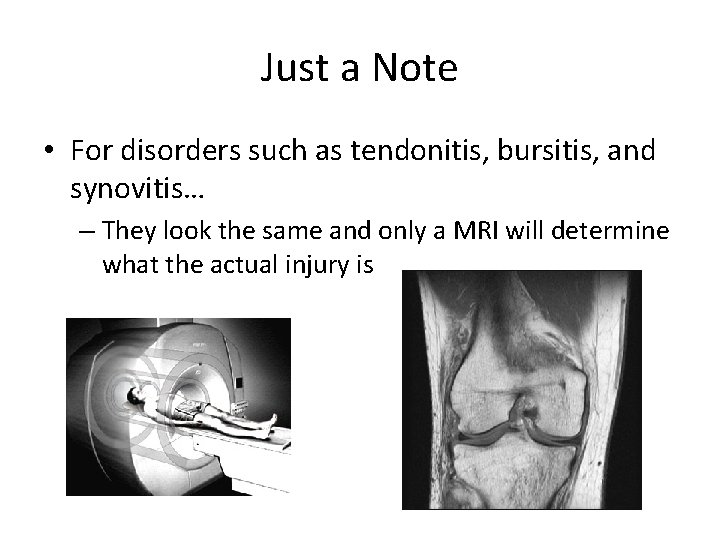
Just a Note • For disorders such as tendonitis, bursitis, and synovitis… – They look the same and only a MRI will determine what the actual injury is
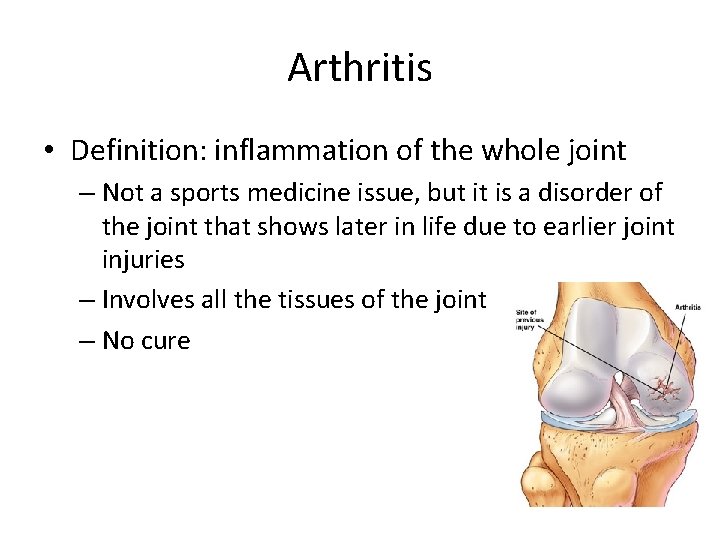
Arthritis • Definition: inflammation of the whole joint – Not a sports medicine issue, but it is a disorder of the joint that shows later in life due to earlier joint injuries – Involves all the tissues of the joint – No cure
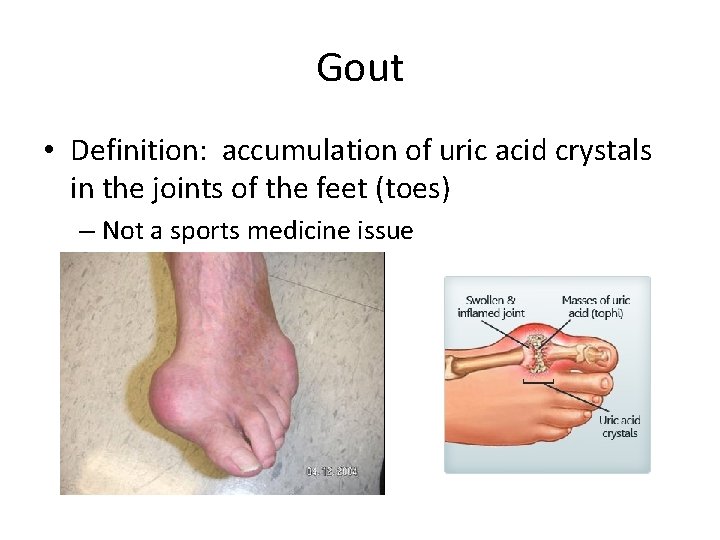
Gout • Definition: accumulation of uric acid crystals in the joints of the feet (toes) – Not a sports medicine issue
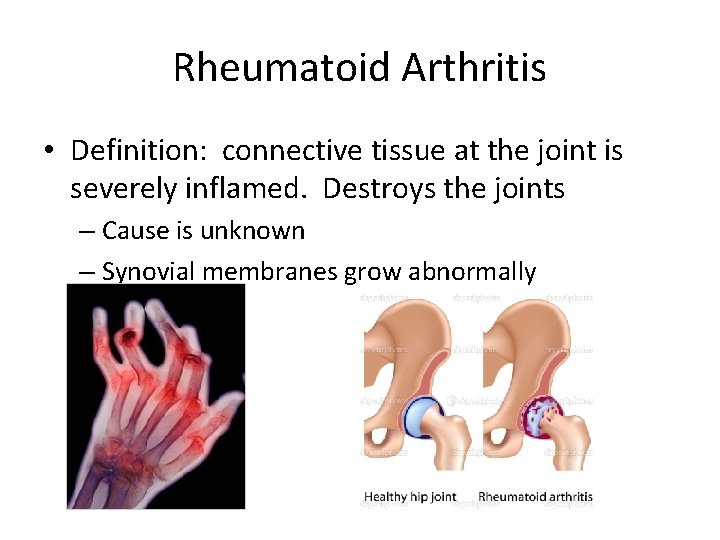
Rheumatoid Arthritis • Definition: connective tissue at the joint is severely inflamed. Destroys the joints – Cause is unknown – Synovial membranes grow abnormally