
John Rawls Justice as Fairness 1921 2002 A
- Slides: 10
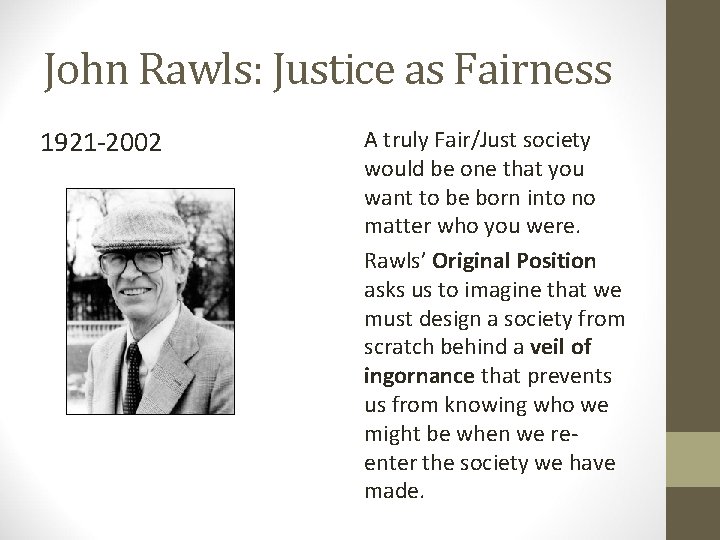
John Rawls: Justice as Fairness 1921 -2002 A truly Fair/Just society would be one that you want to be born into no matter who you were. Rawls’ Original Position asks us to imagine that we must design a society from scratch behind a veil of ingornance that prevents us from knowing who we might be when we reenter the society we have made.
Hunger and Poverty • More than 38 million people are living in poverty in America. In 2019, most families living in poverty earn less than $25, 750 per year. • More than 37 million people struggle with hunger in the United States, including more than 11 million children. • A household that is food insecure has limited or uncertain access to enough food to support a healthy life. • Children are more likely to face food insecurity than any other group in the United States. • More than half (56%) of food-insecure households participated in at least one of the major federal food assistance program — the Supplemental Nutrition Assistance Program (SNAP, formerly Food Stamps); the National School Lunch Program and the Special Supplemental Nutrition Program for Women, Infants and Children (often called WIC)
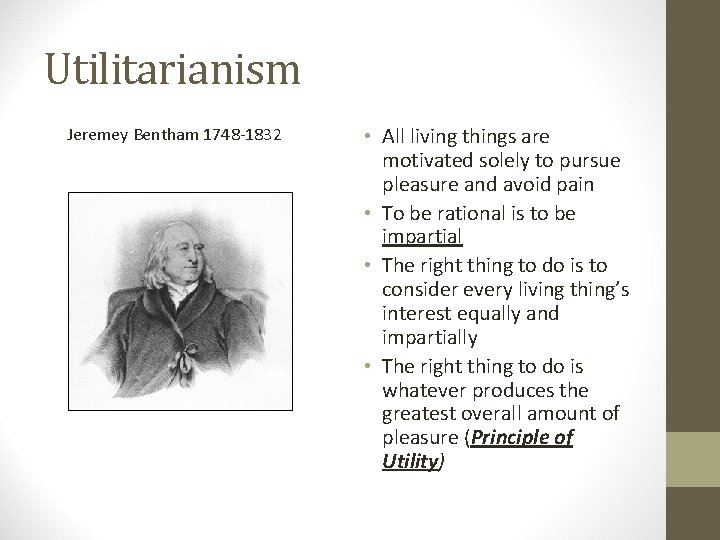
Utilitarianism Jeremey Bentham 1748 -1832 • All living things are motivated solely to pursue pleasure and avoid pain • To be rational is to be impartial • The right thing to do is to consider every living thing’s interest equally and impartially • The right thing to do is whatever produces the greatest overall amount of pleasure (Principle of Utility)
Some Implications of Utilitarianism • Only the consequences of our actions matter for moral evaluation • Rights are not important and can be ignored (Ex: Bentham and London’s Beggars) • The good of the many ALWAYS outweighs the good of the few or the one
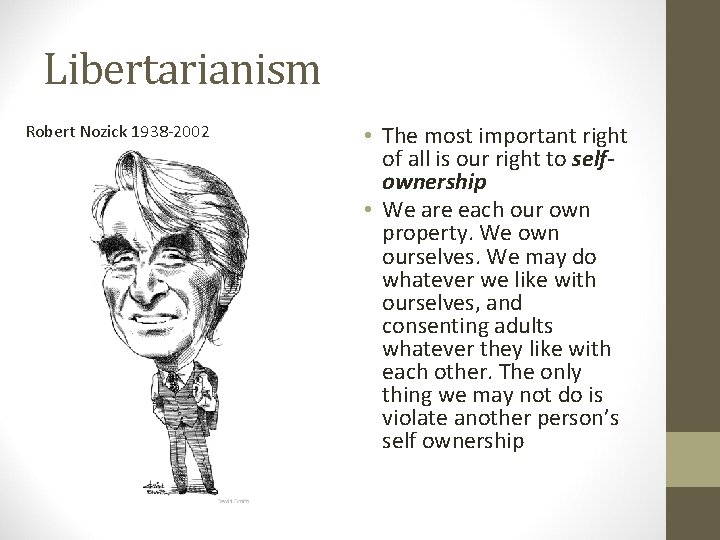
Libertarianism Robert Nozick 1938 -2002 • The most important right of all is our right to selfownership • We are each our own property. We own ourselves. We may do whatever we like with ourselves, and consenting adults whatever they like with each other. The only thing we may not do is violate another person’s self ownership
Implications of Libertarianism • Government should be as small and limited as possible • Drugs, Prostitution, Polygamy, organ selling should all be legalized • Acts like “consensual cannibalism” should not be legally punished • Income tax is unjust and should be abolished
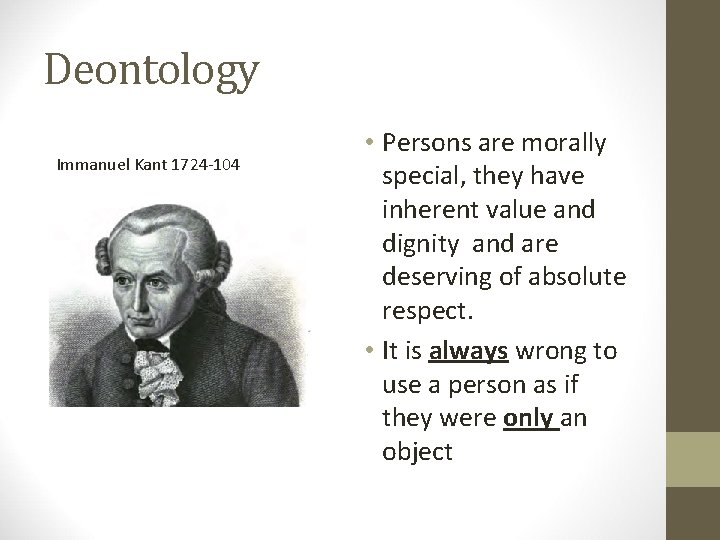
Deontology Immanuel Kant 1724 -104 • Persons are morally special, they have inherent value and dignity and are deserving of absolute respect. • It is always wrong to use a person as if they were only an object
Implications of Deontology • We do not OWN ourselves. We aren’t objects, we can’t be owned, not even by ourselves. • Prostitution, Organ Selling, Drugs, etc … shold be illegal • Consensual cannibalism should be legally punished. You don’t even have a right to kill yourself.
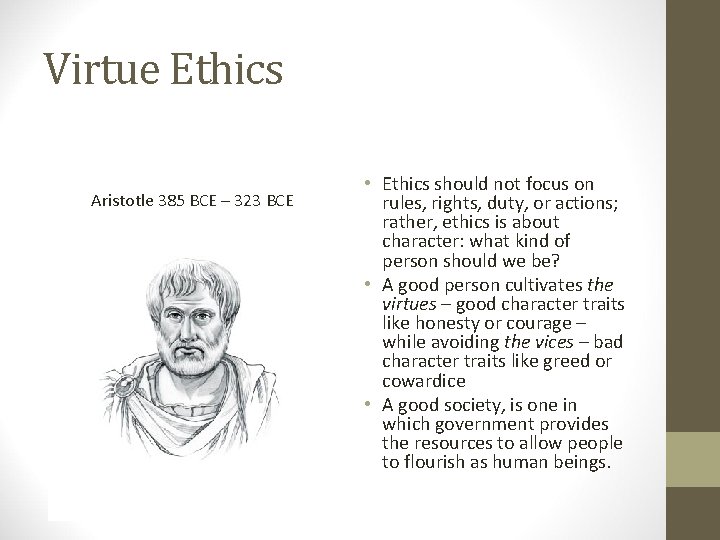
Virtue Ethics Aristotle 385 BCE – 323 BCE • Ethics should not focus on rules, rights, duty, or actions; rather, ethics is about character: what kind of person should we be? • A good person cultivates the virtues – good character traits like honesty or courage – while avoiding the vices – bad character traits like greed or cowardice • A good society, is one in which government provides the resources to allow people to flourish as human beings.
Implications of virtue ethics • The right thing to do partially depends on a universal quality, a virtue like courage, and partially on the individual and her situation. We are all ethically obligated to be brave, but the brave thing to do varies depending on the individual and her situation • What we do does not matter nearly so much as why we did? What virtue or vice compelled us to act? What kind of person are we for acting on the basis of said virtue or vice? • Things are said to be “made for” a specific purpose. Aristotle takes this as far as to say that some people are natural born slaves!