
John 1 Introduction to John How to Study

- Slides: 14
John 1 Introduction to John How to Study (and teach or preach) Chapter 1 Inductively
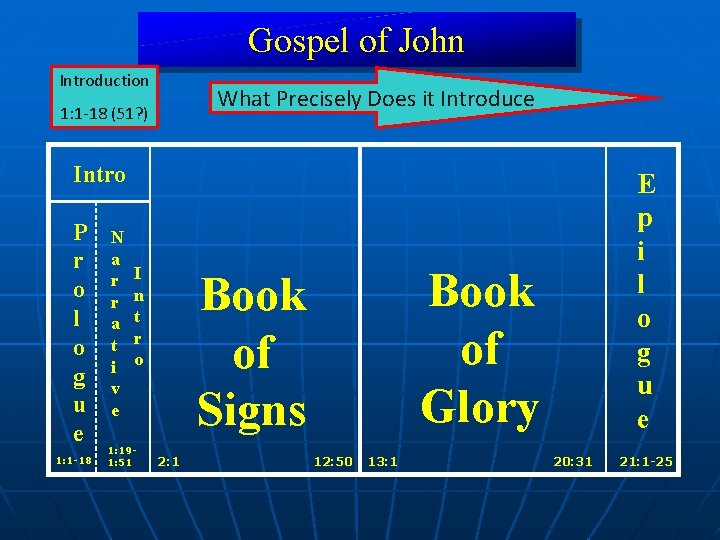
Gospel of John Introduction What Precisely Does it Introduce 1: 1 -18 (51? ) Intro P r o l o g u e 1: 1 -18 N a r r a t i v e I n t r o 1: 191: 51 Book of Glory Book of Signs 2: 1 E p i l o g u e 12: 50 13: 1 20: 31 21: 1 -25
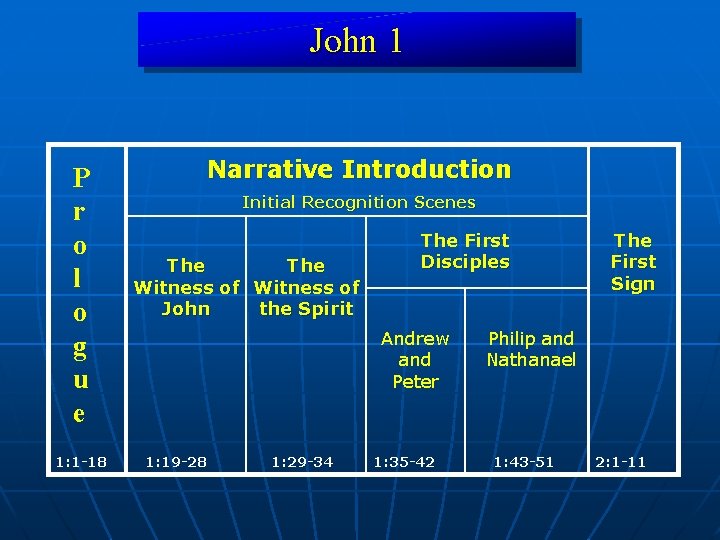
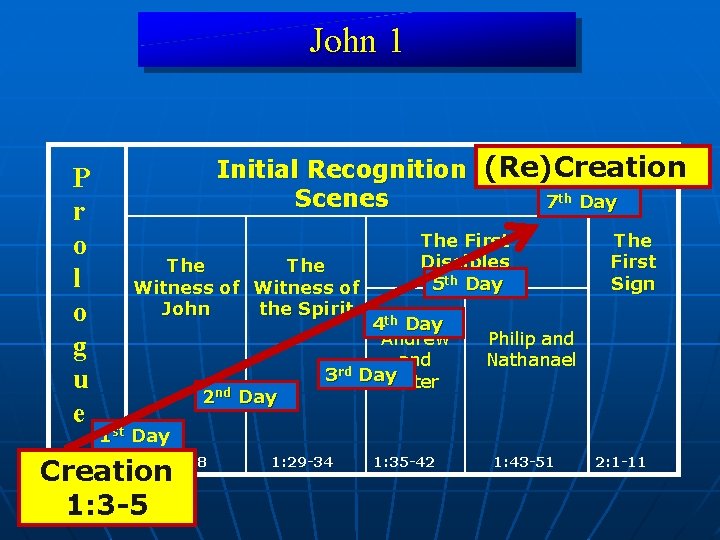
John 1 P r o l o g u e 1: 1 -18 Narrative Introduction Initial Recognition Scenes The Witness of John the Spirit The First Disciples Andrew and Peter 1: 19 -28 1: 29 -34 1: 35 -42 The First Sign Philip and Nathanael 1: 43 -51 2: 1 -11
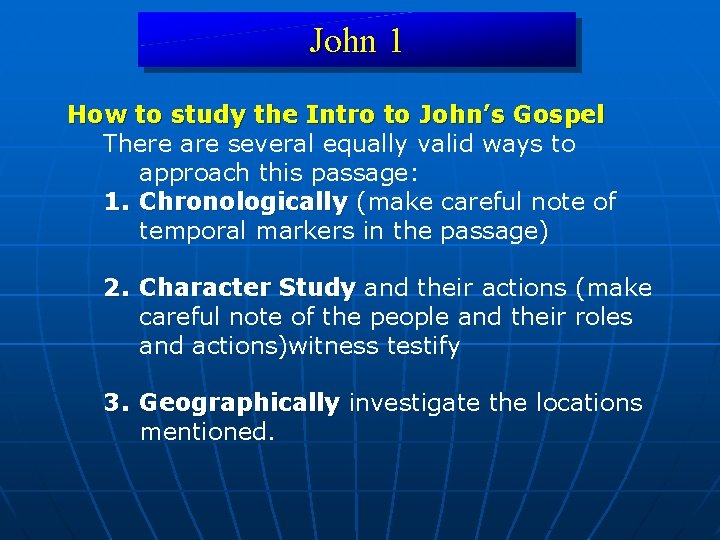
John 1 How to study the Intro to John’s Gospel There are several equally valid ways to approach this passage: 1. Chronologically (make careful note of temporal markers in the passage) 2. Character Study and their actions (make careful note of the people and their roles and actions)witness testify 3. Geographically investigate the locations mentioned.
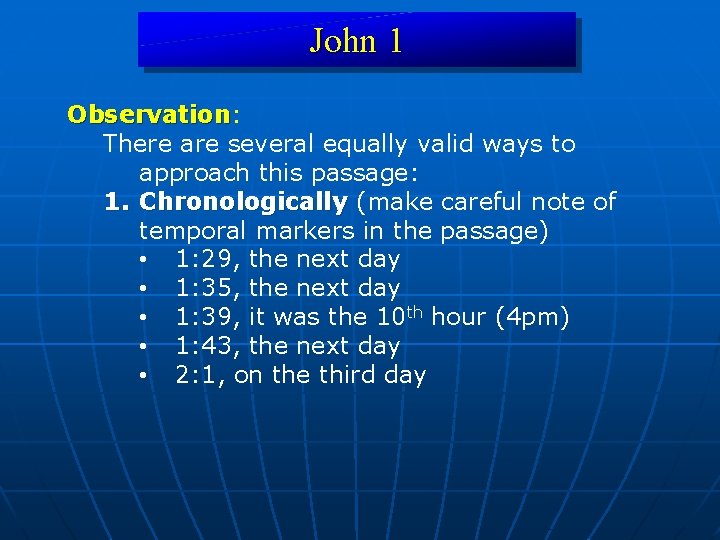
John 1 Observation: Observation There are several equally valid ways to approach this passage: 1. Chronologically (make careful note of temporal markers in the passage) • 1: 29, the next day • 1: 35, the next day • 1: 39, it was the 10 th hour (4 pm) • 1: 43, the next day • 2: 1, on the third day
John 1 P r o l o g u e Initial Recognition (Re)Creation Scenes 7 th Day The Witness of John the Spirit 2 nd Day 3 rd The First Disciples 5 th Day 4 th Day Andrew and Day. Peter The First Sign Philip and Nathanael 1 st Day Creation 1: 3 -5 1: 1 -18 1: 19 -28 1: 29 -34 1: 35 -42 1: 43 -51 2: 1 -11
John 1 Hermeneutical (Text-Driven) Questions: Questions • • • What is the meaning of this introductory material? If I read it chronologically, what are themes that it introduces? Where does it start? Where does it end? If this is indeed an introduction, how does it focus my understanding of the rest of the book? What are the implications?
John 1 Observation: Observation There are several equally valid ways to approach this passage: 2. Character Study and their actions (make careful note of the people and their roles and actions) • John (and his testimony, sent from God 1: 6) • Priests and Levites (sent from the Jews of Jerusalem) • Jesus (not even named until 1: 17, this only second time) • Spirit (and implied Father, “sending one”) • Andrew, Peter, Philip, Nathanael
John 1 Hermeneutical (Text-Driven) Question: Question • • • What is the meaning of each character? What is the meaning/significance of the order of their presentation and the manner in which they are introduced? What is the meaning of significance of their role in the passage? If this is indeed an introduction, how is this role(s) shaped and elaborated upon in the rest of the book? What are the implications of these observations?
John 1 How to study the Intro to John’s Gospel There are several equally valid ways to approach this passage: 3. Geographically investigate the locations mentioned. • Jesus: Came from the Father, and Nazareth • John: Sent from God, a voice calling in S desert, baptizing on “Other side of Jordan. ” • Priests and Levites: Sent from Jews in S Jerusalem • Spirit: Come down from Heaven, C remain on Jesus
John 1 How to study the Intro to John’s Gospel There are several equally valid ways to approach this passage: 3. Geographically investigate the locations mentioned. • Philip, Andrew, Peter (from Bethsaida) • Note the numerous subtle location markers in the passage • Priests want to “take message of John’s identity back to the ones who set them” (1: 22) • Among you stands one you do not know. ” (1: 26)
John 1 How to study the Intro to John’s Gospel There are several equally valid ways to approach this passage: 3. Geographically investigate the locations mentioned. • Note the numerous subtle location markers in the passage • Jesus coming towards them (1: 29) • Man comes after me has surpassed me because he was before me (1: 30) • Jesus passing by, Disciples followed. (1: 37) • Where are you staying/remaining? (1: 38) • Come and you will see (1: 39, 46) • Jesus leaves for Galilee (1: 43)
John 1 How to study the Intro to John’s Gospel There are several equally valid ways to approach this passage: 3. Geographically investigate the locations mentioned. • Note the numerous subtle location markers in the passage • Philip under a fig tree (1: 48) • Angels ascending and descending on the “Son of Man. ” (1: 51)
John 1 Hermeneutical (Text-Driven) Question: Question • • • What is the meaning of each location? What is the meaning of the change of location? What is the meaning of the horizontal references vs. the vertical location markers? If this is indeed an introduction, how are the location references shaped and elaborated upon in the rest of the book? What are the implications of these observations?