
Job Characteristics Model A Kent Van Cleave Jr

Job Characteristics Model A. Kent Van Cleave, Jr. , Ph. D.
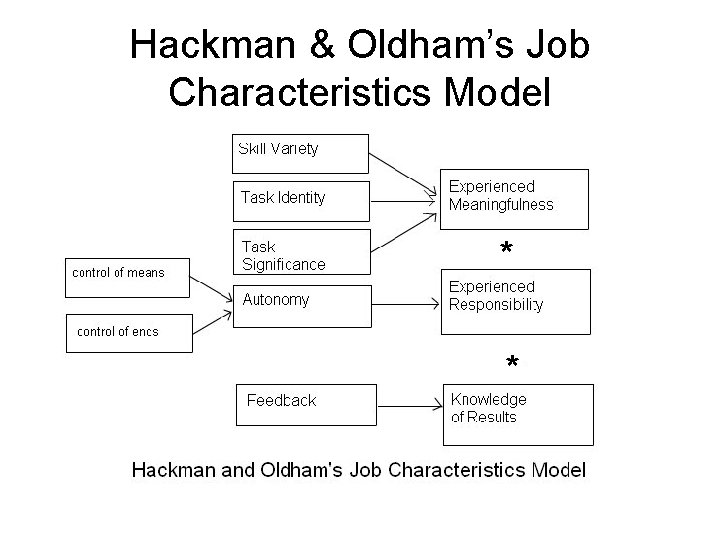
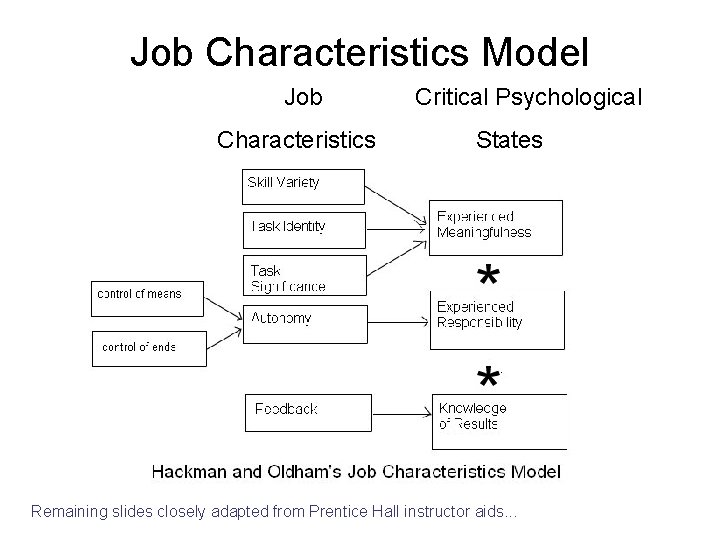
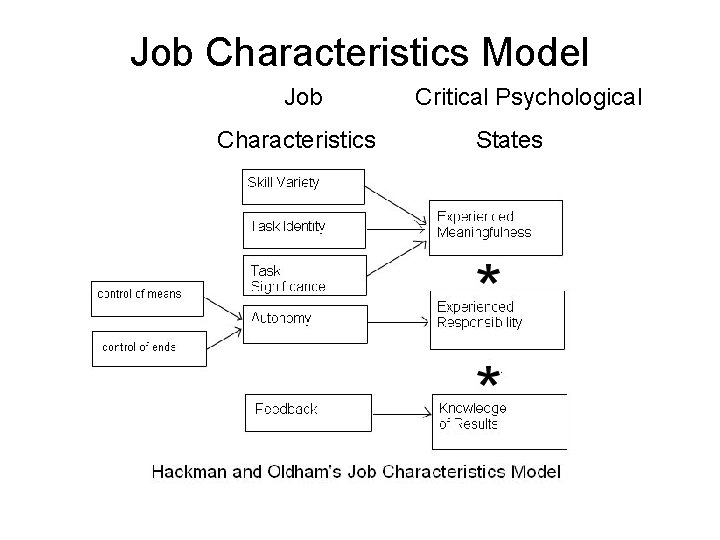
Hackman & Oldham’s Job Characteristics Model * *
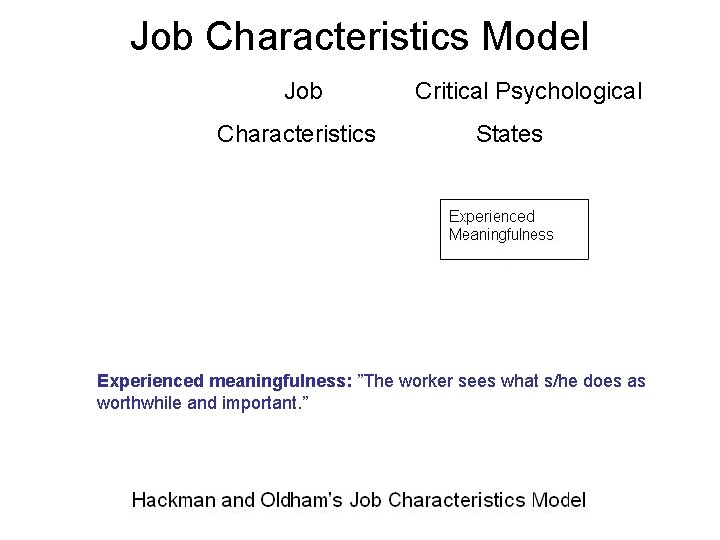
Job Characteristics Model Job Characteristics Critical Psychological States Experienced meaningfulness: ”The worker sees what s/he does as worthwhile and important. ”
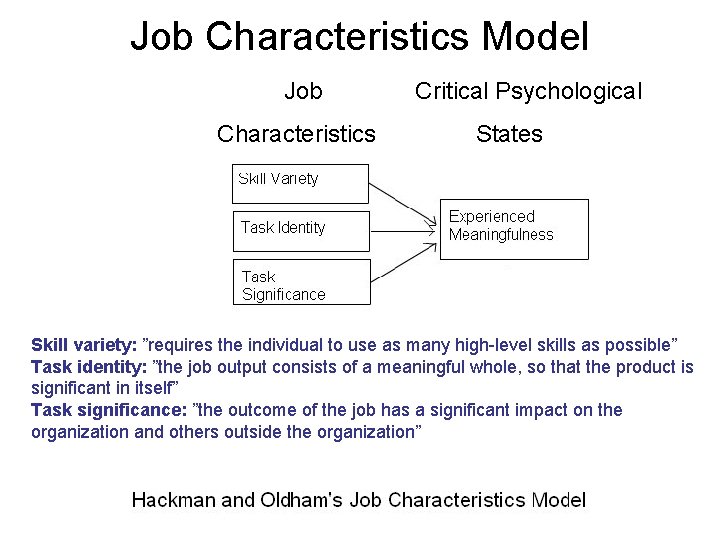
Job Characteristics Model Job Characteristics Critical Psychological States Skill variety: ”requires the individual to use as many high-level skills as possible” Task identity: ”the job output consists of a meaningful whole, so that the product is significant in itself” Task significance: ”the outcome of the job has a significant impact on the organization and others outside the organization”

Job Characteristics Model (cont) • Skill Variety – Extent to which job requires a range of competencies and abilities • Task Identity – Extent to which employees complete a whole, identifiable piece of work • Task Significance – Extent to which employees impact others and the company
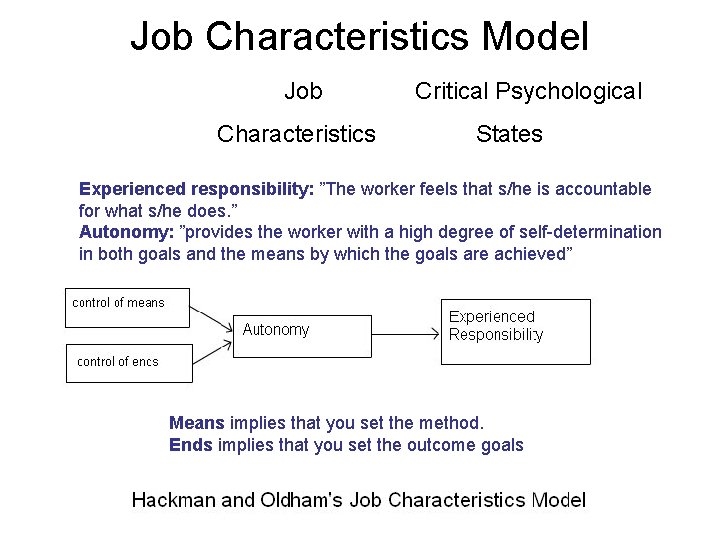
Job Characteristics Model Job Characteristics Critical Psychological States Experienced responsibility: ”The worker feels that s/he is accountable for what s/he does. ” Autonomy: ”provides the worker with a high degree of self-determination in both goals and the means by which the goals are achieved” Means implies that you set the method. Ends implies that you set the outcome goals
Job Characteristics Model • Autonomy – Extent of freedom and discretion available to determine how to perform the job – Control of Ends – set your own goals – Control of Means – choose when and how you do the job.
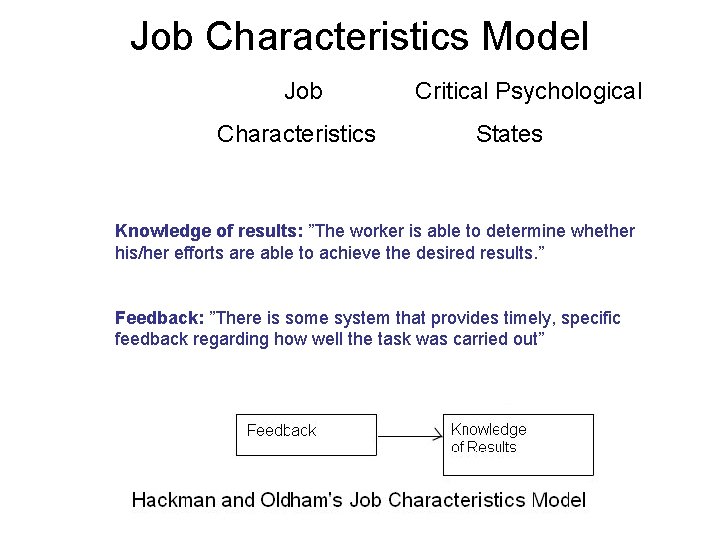
Job Characteristics Model Job Characteristics Critical Psychological States Knowledge of results: ”The worker is able to determine whether his/her efforts are able to achieve the desired results. ” Feedback: ”There is some system that provides timely, specific feedback regarding how well the task was carried out”
Job Characteristics Model • Job Feedback – Extent to which completing a task provides clear & timely performance feedback
Job Characteristics Model Job Characteristics Critical Psychological States Remaining slides closely adapted from Prentice Hall instructor aids. . .
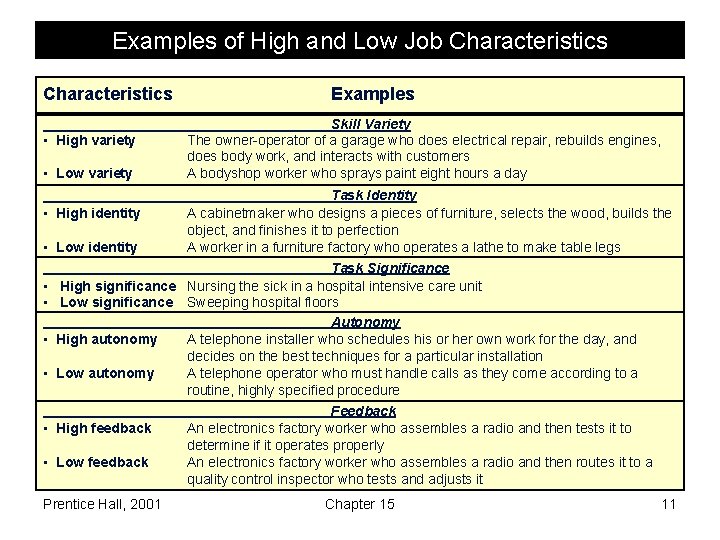
Examples of High and Low Job Characteristics • High variety • Low variety Examples Skill Variety The owner-operator of a garage who does electrical repair, rebuilds engines, does body work, and interacts with customers A bodyshop worker who sprays paint eight hours a day Task Identity • High identity A cabinetmaker who designs a pieces of furniture, selects the wood, builds the object, and finishes it to perfection • Low identity A worker in a furniture factory who operates a lathe to make table legs Task Significance • High significance Nursing the sick in a hospital intensive care unit • Low significance Sweeping hospital floors Autonomy • High autonomy A telephone installer who schedules his or her own work for the day, and decides on the best techniques for a particular installation • Low autonomy A telephone operator who must handle calls as they come according to a routine, highly specified procedure Feedback • High feedback An electronics factory worker who assembles a radio and then tests it to determine if it operates properly • Low feedback An electronics factory worker who assembles a radio and then routes it to a quality control inspector who tests and adjusts it Prentice Hall, 2001 Chapter 15 11
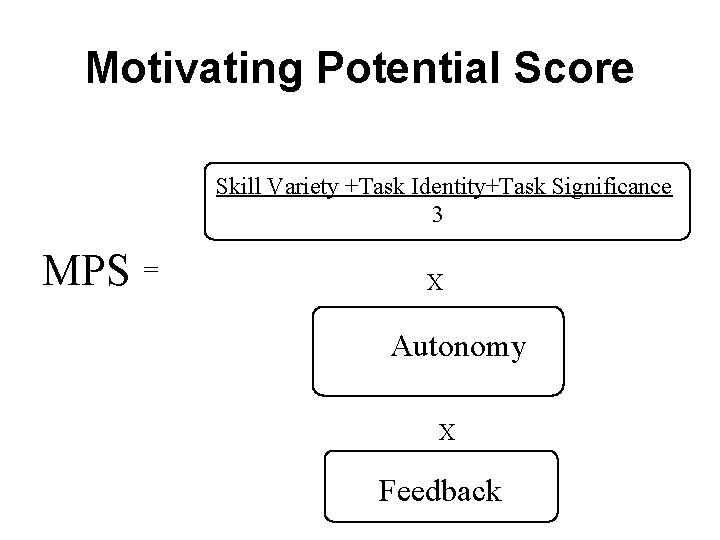
Motivating Potential Score Skill Variety +Task Identity+Task Significance 3 MPS = X Autonomy X Feedback
Job Characteristics Model Job Characteristics Critical Psychological States

Implementing Concepts for the Job Characteristics Model • Combine tasks: Effects skill variety, task identity, & task significance • Group tasks into natural work units: Effects task significance and task identity • Give workers contact with customers: Effects skill variety, autonomy, feedback • Vertically load jobs: Effects autonomy • Open feedback channels: Effects feedback
Designing Jobs for Teams • Team has to be an identifiable group, doing a specified piece of work, and be self-managing • Key behaviors: Ask for ideas, give suggestions, . listen to others, share information, help others • Manager’s role: Make alterations needed for effective group performance, consult
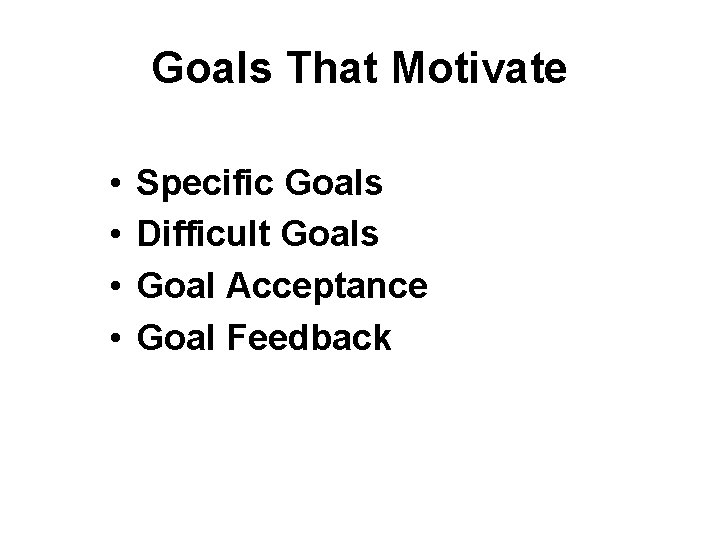
Goals That Motivate • • Specific Goals Difficult Goals Goal Acceptance Goal Feedback
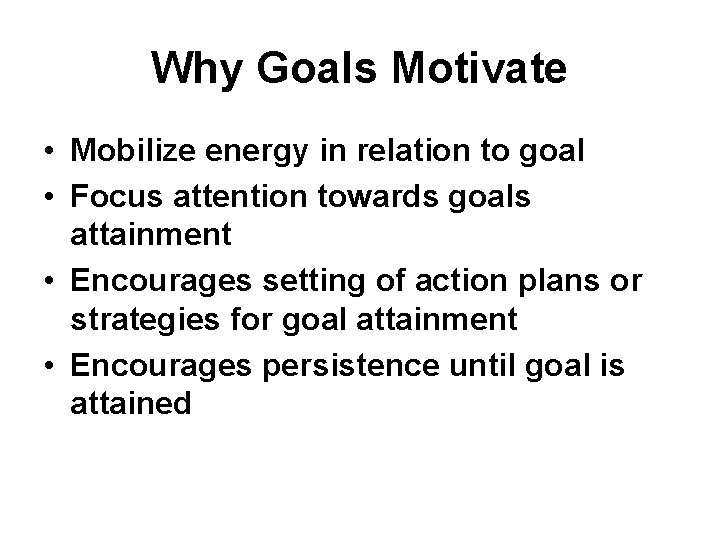
Why Goals Motivate • Mobilize energy in relation to goal • Focus attention towards goals attainment • Encourages setting of action plans or strategies for goal attainment • Encourages persistence until goal is attained
Enhancing Goal Acceptance • Participation • Rewards • Supportiveness
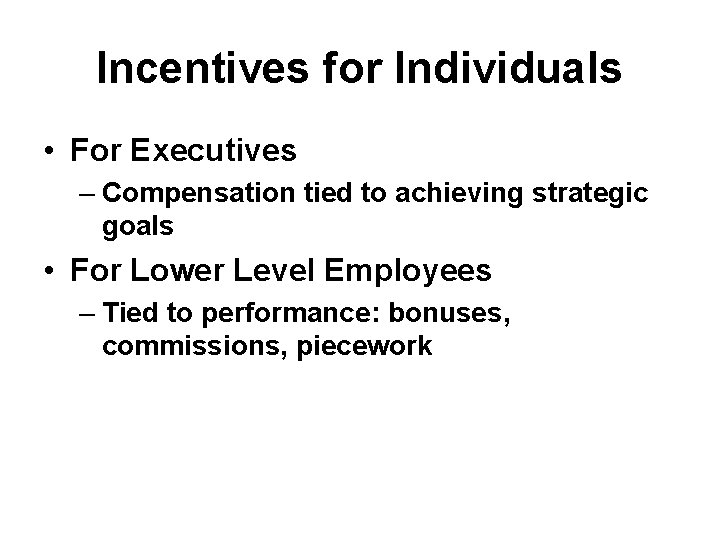
Incentives for Individuals • For Executives – Compensation tied to achieving strategic goals • For Lower Level Employees – Tied to performance: bonuses, commissions, piecework
Incentives for Groups • • Team incentives Profit sharing Gain sharing Stock options
- Slides: 20