
Job Analysis Pay System Technique for Internal Alignment
Job Analysis (Pay System Technique for Internal Alignment) Course Name Course Code Course In Charge Compensation and Reward Management. Law PGHRM 3 E 007 TRM 2 C 005 T Anjali Pathania
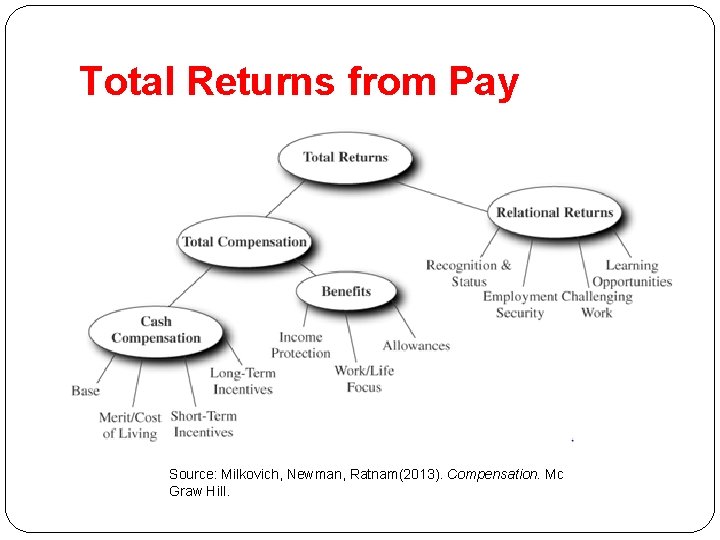
Total Returns from Pay Source: Milkovich, Newman, Ratnam(2013). Compensation. Mc Graw Hill.
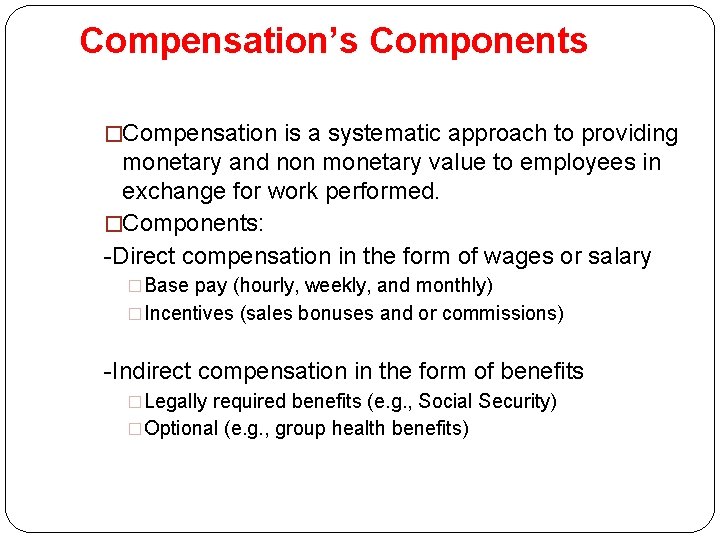
Compensation’s Components �Compensation is a systematic approach to providing monetary and non monetary value to employees in exchange for work performed. �Components: -Direct compensation in the form of wages or salary �Base pay (hourly, weekly, and monthly) �Incentives (sales bonuses and or commissions) -Indirect compensation in the form of benefits �Legally required benefits (e. g. , Social Security) �Optional (e. g. , group health benefits)
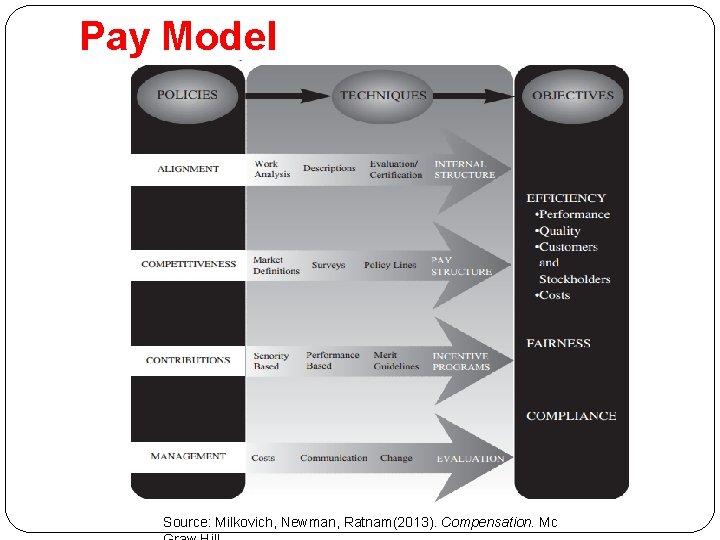
Pay Model Source: Milkovich, Newman, Ratnam(2013). Compensation. Mc

Job Analysis: Technique for Internal Alignment

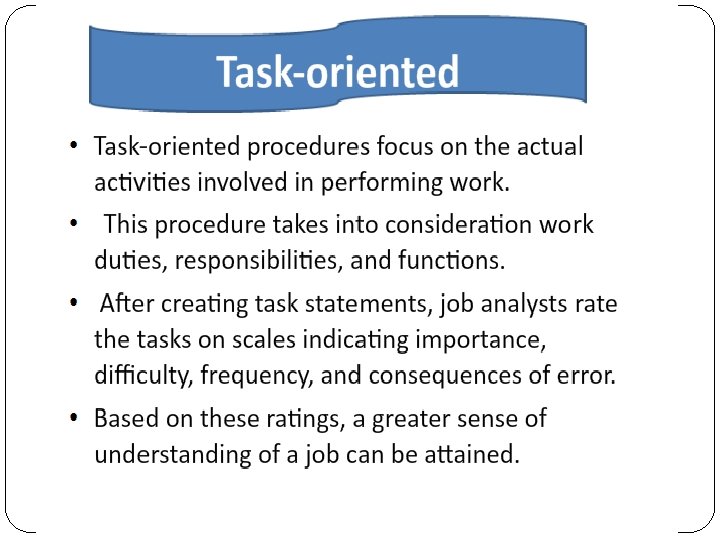
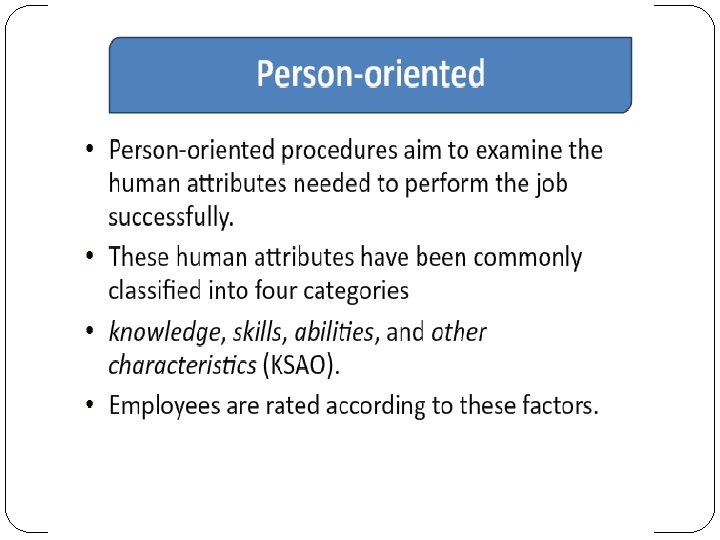
General Types Task Oriented Person Oriented
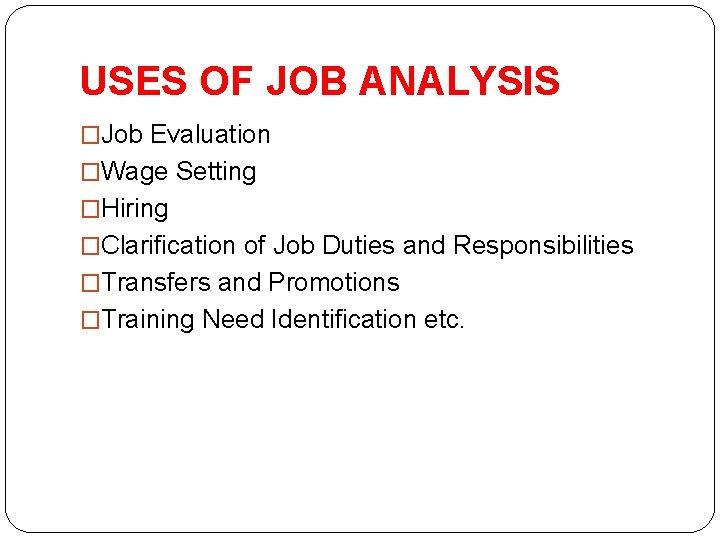
USES OF JOB ANALYSIS �Job Evaluation �Wage Setting �Hiring �Clarification of Job Duties and Responsibilities �Transfers and Promotions �Training Need Identification etc.
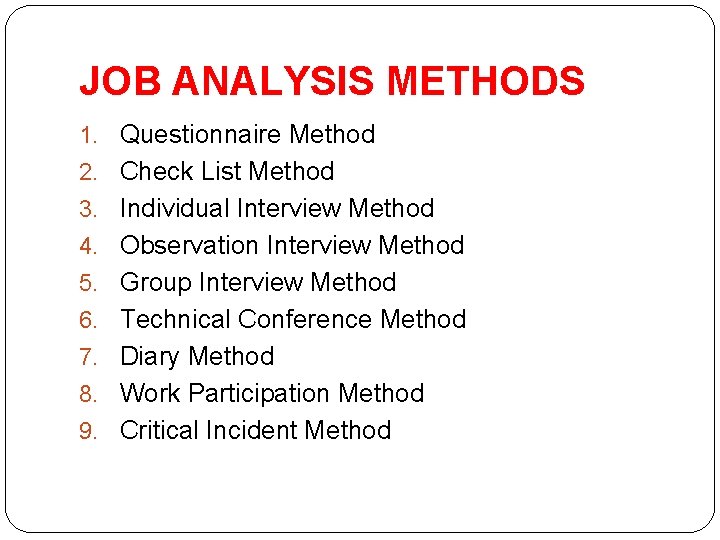
JOB ANALYSIS METHODS 1. Questionnaire Method 2. Check List Method 3. Individual Interview Method 4. Observation Interview Method 5. Group Interview Method 6. Technical Conference Method 7. Diary Method 8. Work Participation Method 9. Critical Incident Method
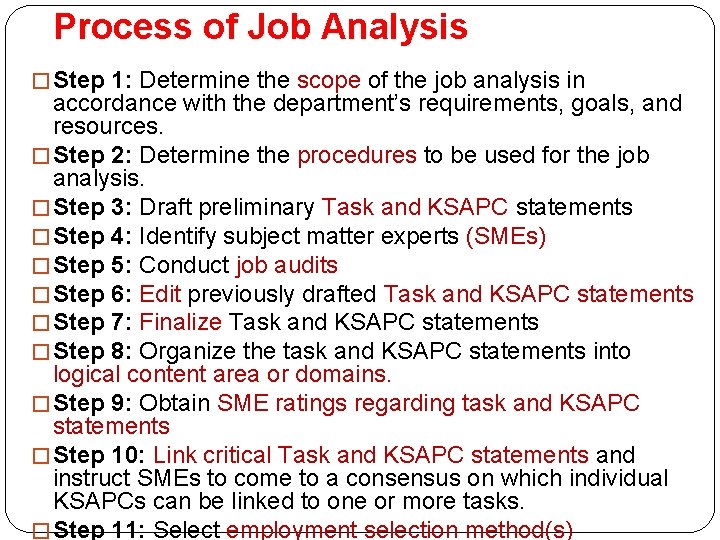
Process of Job Analysis � Step 1: Determine the scope of the job analysis in accordance with the department’s requirements, goals, and resources. � Step 2: Determine the procedures to be used for the job analysis. � Step 3: Draft preliminary Task and KSAPC statements � Step 4: Identify subject matter experts (SMEs) � Step 5: Conduct job audits � Step 6: Edit previously drafted Task and KSAPC statements � Step 7: Finalize Task and KSAPC statements � Step 8: Organize the task and KSAPC statements into logical content area or domains. � Step 9: Obtain SME ratings regarding task and KSAPC statements � Step 10: Link critical Task and KSAPC statements and instruct SMEs to come to a consensus on which individual KSAPCs can be linked to one or more tasks. � Step 11: Select employment selection method(s)
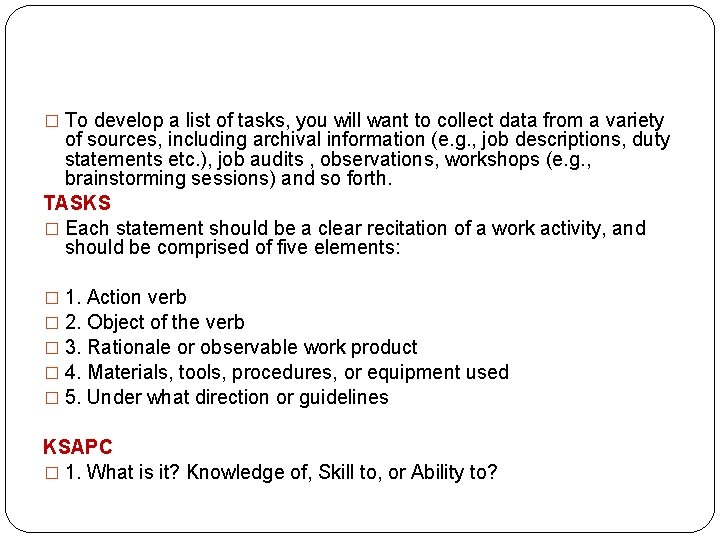
� To develop a list of tasks, you will want to collect data from a variety of sources, including archival information (e. g. , job descriptions, duty statements etc. ), job audits , observations, workshops (e. g. , brainstorming sessions) and so forth. TASKS � Each statement should be a clear recitation of a work activity, and should be comprised of five elements: � 1. � 2. � 3. � 4. � 5. Action verb Object of the verb Rationale or observable work product Materials, tools, procedures, or equipment used Under what direction or guidelines KSAPC � 1. What is it? Knowledge of, Skill to, or Ability to?
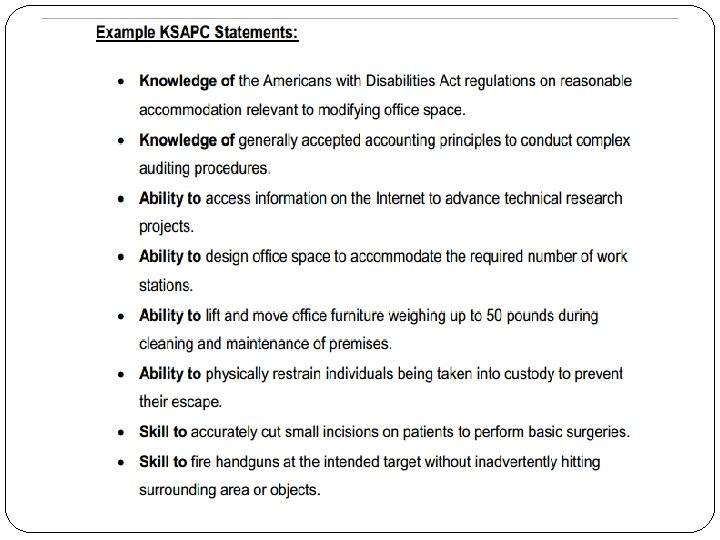
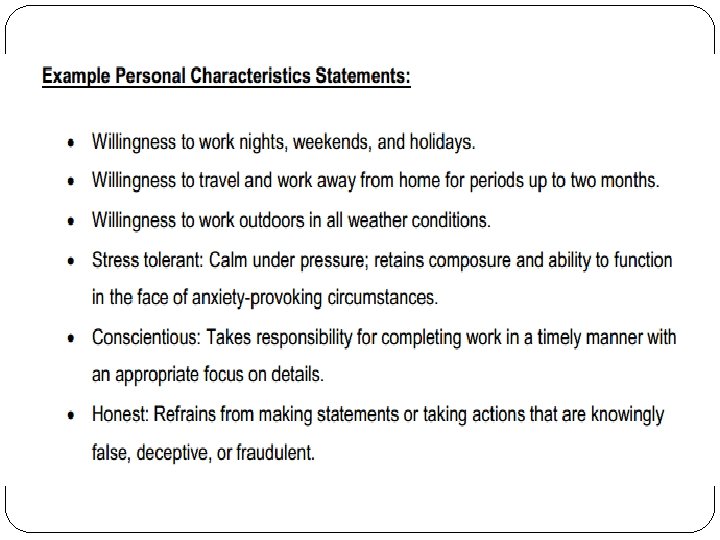
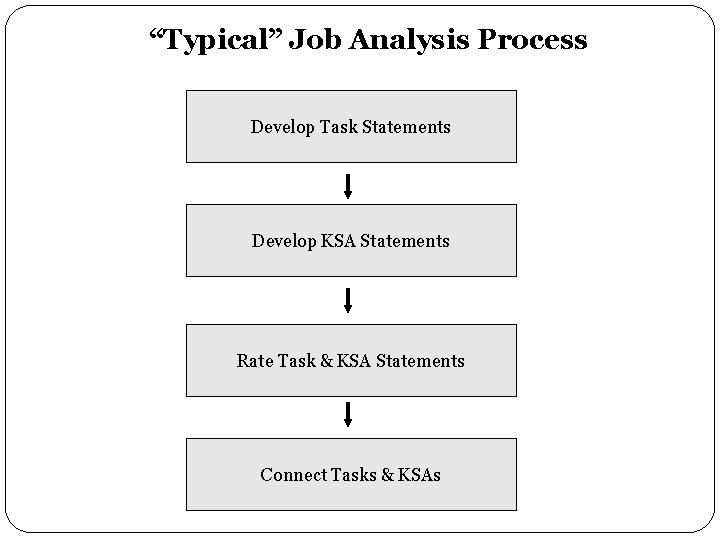
“Typical” Job Analysis Process Develop Task Statements Develop KSA Statements Rate Task & KSA Statements Connect Tasks & KSAs
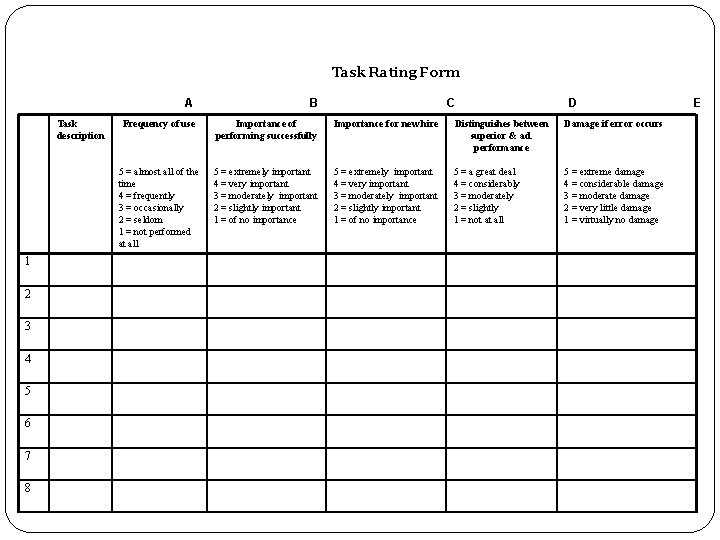
Task Rating Form Task description 1 2 3 4 5 6 7 8 A B C D Frequency of use Importance of performing successfully Importance for new hire Distinguishes between superior & ad. performance Damage if error occurs 5 = almost all of the time 4 = frequently 3 = occasionally 2 = seldom 1 = not performed at all 5 = extremely important 4 = very important 3 = moderately important 2 = slightly important 1 = of no importance 5 = a great deal 4 = considerably 3 = moderately 2 = slightly 1 = not at all 5 = extreme damage 4 = considerable damage 3 = moderate damage 2 = very little damage 1 = virtually no damage E
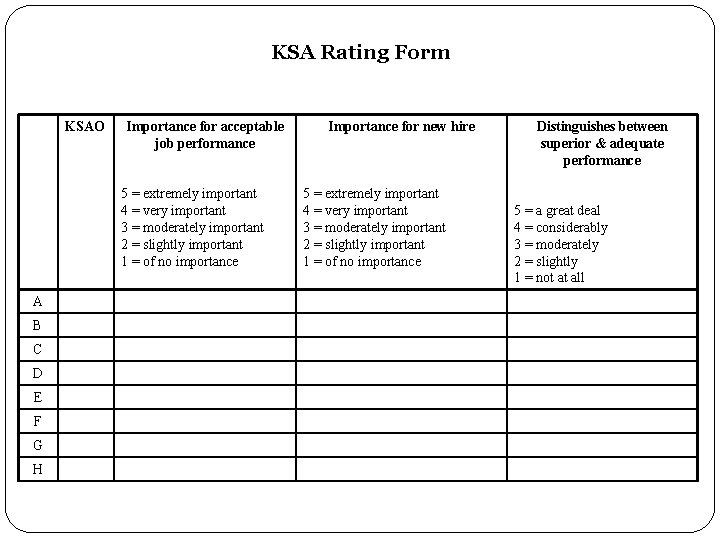
KSA Rating Form KSAO Importance for acceptable job performance 5 = extremely important 4 = very important 3 = moderately important 2 = slightly important 1 = of no importance A B C D E F G H Importance for new hire 5 = extremely important 4 = very important 3 = moderately important 2 = slightly important 1 = of no importance Distinguishes between superior & adequate performance 5 = a great deal 4 = considerably 3 = moderately 2 = slightly 1 = not at all
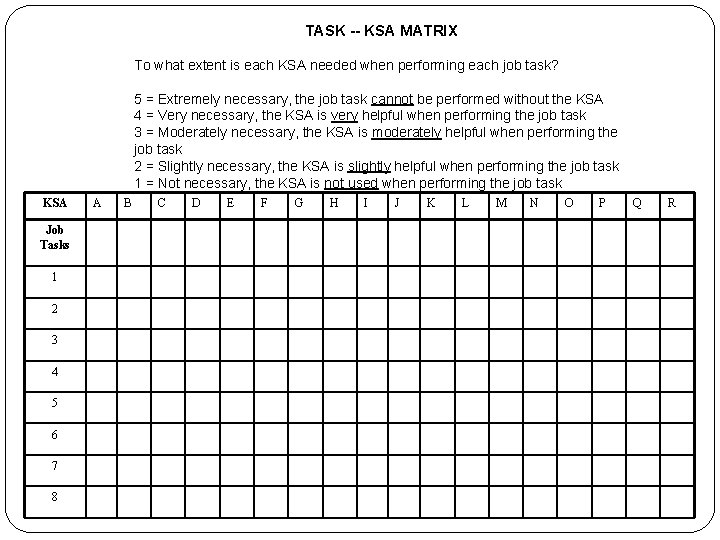
TASK -- KSA MATRIX To what extent is each KSA needed when performing each job task? 5 = Extremely necessary, the job task cannot be performed without the KSA 4 = Very necessary, the KSA is very helpful when performing the job task 3 = Moderately necessary, the KSA is moderately helpful when performing the job task 2 = Slightly necessary, the KSA is slightly helpful when performing the job task 1 = Not necessary, the KSA is not used when performing the job task KSA Job Tasks 1 2 3 4 5 6 7 8 A B C D E F G H I J K L M N O P Q R

THANK YOU
- Slides: 20