
Job Analysis Chapter 4 Md AlAmin Learning Outcomes
Job Analysis Chapter 4 Md. Al-Amin
Learning Outcomes Ø Definition of Job Analysis Ø Information Needed to Analyze Jobs Ø Uses of Job Analysis Ø How to Conduct Job Analysis Ø Methods for Collecting Job Analysis Ø How to Write Job Description Ø How to Write Job Specification Ø Job Analysis in Workers-Empowered World Ø Case Analysis
Job Analysis Ø Determines the duties of different positions and the characteristics of the people to hire for those positions Ø Job analysis assists in producing 1. Job Description (a list job responsibilities) 2. Job Specification (features of the people to hire for the job)
Job Analysis (cont. ) Ø Job description – A list of a job’s duties, responsibilities, reporting relationships, working conditions, and supervisory responsibilities—one product of a job analysis. Ø Job specifications – A list of a job’s “human requirements, ” that is, the requisite education, skills, personality, and so on— another product of a job analysis.
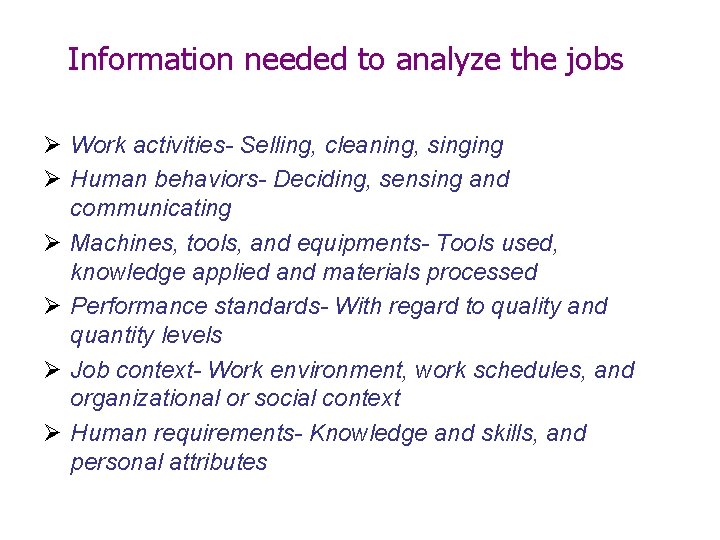
Information needed to analyze the jobs Ø Work activities- Selling, cleaning, singing Ø Human behaviors- Deciding, sensing and communicating Ø Machines, tools, and equipments- Tools used, knowledge applied and materials processed Ø Performance standards- With regard to quality and quantity levels Ø Job context- Work environment, work schedules, and organizational or social context Ø Human requirements- Knowledge and skills, and personal attributes
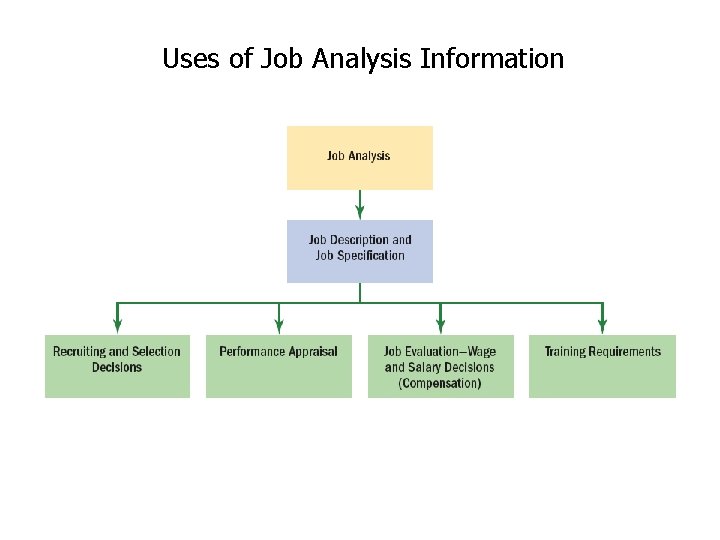
Uses of Job Analysis Information
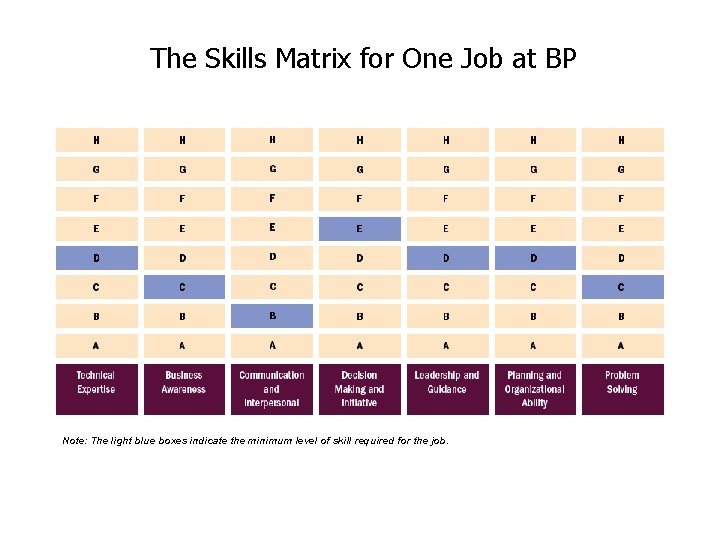
The Skills Matrix for One Job at BP Note: The light blue boxes indicate the minimum level of skill required for the job.
How to Conduct the job analysis: steps in job analysis Ø Step 1: Determine how you will collect the data (e. g. interview, job analysis questionnaire) Ø Step 2: Review relevant background information such as organization charts, and process charts (see the next couple of slides) Ø Step 3: Select the representative positions Ø Step 4: Actually analyze the job by collecting the relevant information Ø Step 5: Verify the job analysis information with the worker performing the job Ø Step 6: Develop the job description and job specification
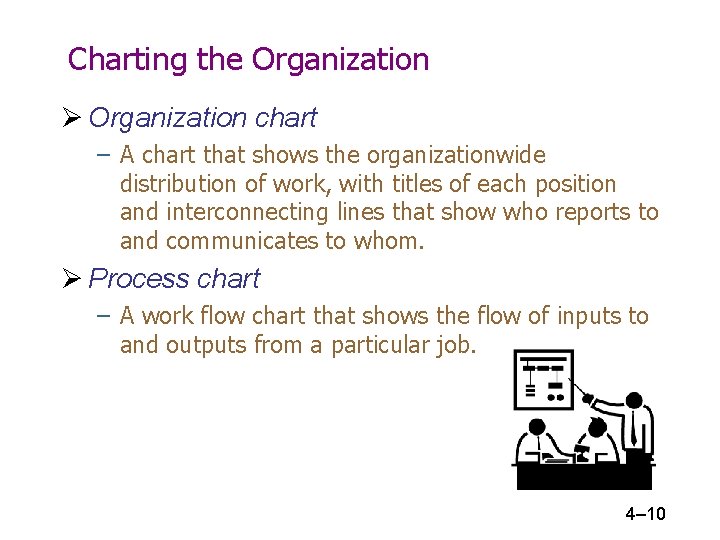
Charting the Organization Ø Organization chart – A chart that shows the organizationwide distribution of work, with titles of each position and interconnecting lines that show who reports to and communicates to whom. Ø Process chart – A work flow chart that shows the flow of inputs to and outputs from a particular job. 4– 10
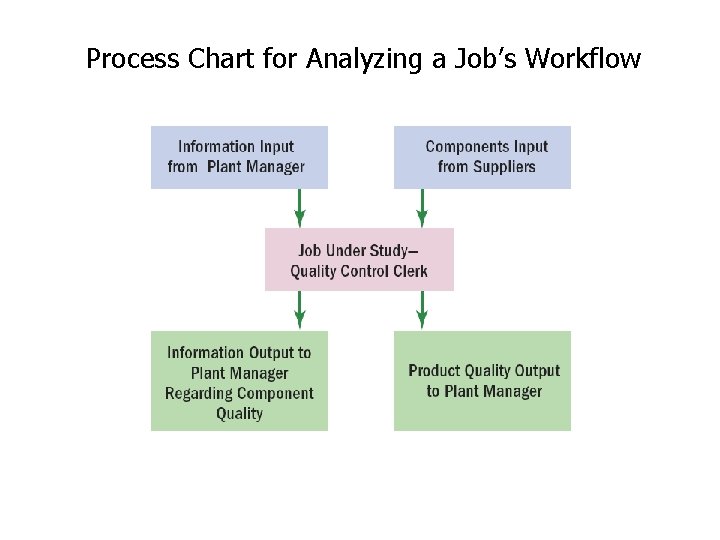
Process Chart for Analyzing a Job’s Workflow
Group Discussion Ø Talk to your next door neighbors and discuss the problems that you might come across if you don’t have job description and job specification for different positions. Ø You have five minutes to discuss and you need to ascertain at least 4 reasons.
Methods of Collecting Job Analysis Information: The Interview Ø Information sources – Individual employees – Groups of employees – Supervisors with knowledge of the job Ø Advantages – Quick, direct way to find overlooked information. Ø Disadvantages – Distorted information – Time consuming – Wrong conception Ø Interview formats – Structured (Checklist) – Unstructured
Methods of Collecting Job Analysis Information: Questionnaires Ø Information source – Have employees fill out questionnaires to describe their jobrelated duties and responsibilities. Ø Questionnaire formats – Structured checklists – Opened-ended questions Ø Advantages – Quick and efficient way to gather information from large numbers of employees Ø Disadvantages – Expense and time consumed in preparing and testing the questionnaire
Methods of Collecting Job Analysis Information: Observation Ø Information source – Observing and noting the physical activities of employees as they go about their jobs. Ø Advantages – Provides first-hand information – Reduces distortion of information Ø Disadvantages – Time consuming – Difficulty in capturing entire job cycle – Of little use if job involves a high level of mental activity.
Methods of Collecting Job Analysis Information: Participant Diary/Logs Ø Information source – Workers keep a chronological diary/ log of what they do and the time spent in each activity. Ø Advantages – Produces a more complete picture of the job – Employee participation Ø Disadvantages – Distortion of information – Depends upon employees to accurately recall their activities
Group Discussion/ Homework Ø Find out a position or job that you are familiar with and identify the most suitable method for collecting job analysis information with regard to that position. Have 4 reasons to justify your answer.
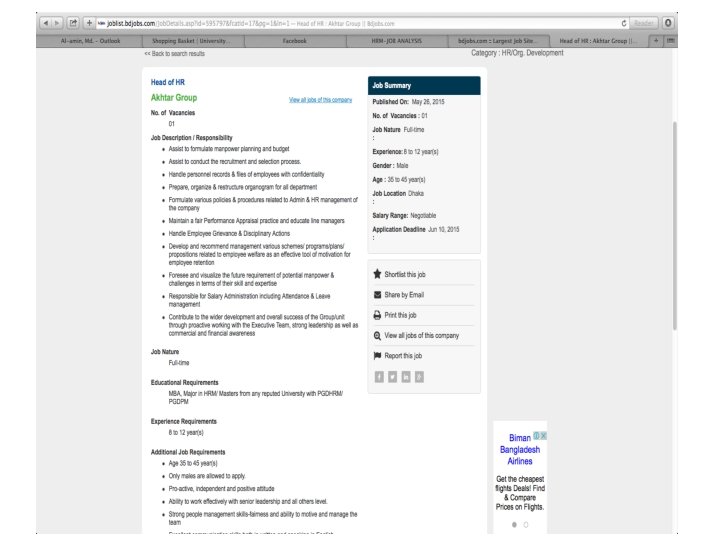
Writing Job Descriptions Ø A job description – A written statement of what the worker actually does, how he or she does it, and what the job’s working conditions are. Ø Sections of a typical job description – Job identification – Job summary – Responsibilities and duties – Authority of incumbent – Standards of performance – Working conditions – Job specifications
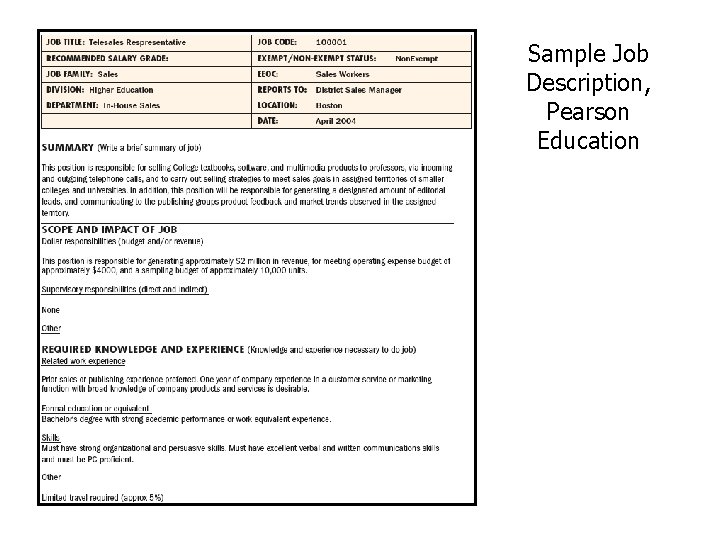
Sample Job Description, Pearson Education
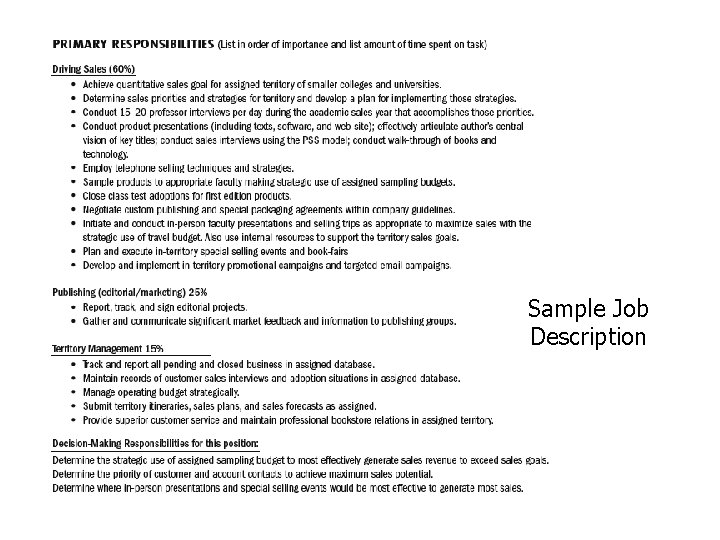
Sample Job Description
The Job Description Ø Job identification - Job Title: Human Resource Manager Location: Dhaka Job Family: Management Job Department- HR Recommended Salary Grade- ……. ?
The Job Description (cont’d) Ø Relationships (chain of command) – Reports to: employee’s immediate supervisor – Supervises: employees that the job incumbent directly supervises – Works with: others with whom the job holder will be expected to work and come into contact with internally. – Outside the company: others with whom the job holder is expected to work and come into contact with externally.
The Job Description (cont’d) Ø Job summary - Describes the general nature of the job - Lists the major functions or activities Ø Responsibilities and duties – A listing of the job’s major responsibilities and duties (essential functions) – Defines limits of jobholder’s decision-making authority, direct supervision, and budgetary limitations.
The Job Description (cont’d) Ø Standards of performance and working conditions – Lists the standards the employee is expected to achieve under each of the job description’s main duties and responsibilities.
Writing Job Specifications Ø Specifications for trained personnel – Focus on traits like length of previous service, quality of relevant training, and previous job performance. Ø Specifications for untrained personnel – Focus on physical traits, personality, interests, or sensory skills that imply some potential for performing or for being trained to do the job.
Writing Job Specifications (cont’d) Ø Specifications Based on Judgment – Self-created judgments (common sense) – List of competencies in Web-based job descriptions (e. g. , www. jobdescription. com) – Standard Occupational Classification Ø Specifications Based on Statistical Analysis – Attempts to determine statistically the relationship between a predictor or human trait and an indicator or criterion of job effectiveness.
Writing Job Specifications (cont’d) Ø Steps in the Statistical Approach – Analyze the job and decide how to measure job performance. – Select personal traits that you believe should predict successful performance. – Test candidates for these traits. – Measure the candidates’ subsequent job performance. – Statistically analyze the relationship between the human trait and job performance.
“Financial resources may be the lifeblood of a company, but human resources are the brains. ” – Rob Silzer 4– 28
- Slides: 28