
Joab Dorsainvil Bony Fish Anatomy Osteichthyes Table of

Joab Dorsainvil Bony Fish Anatomy Osteichthyes
Table of Contents • Fish and Their Habitat • Physical Characteristics • Diagram of an Average Fish • Skeleton of a Fish • Behaviors • Reproductions • Baby Fish • Feeding Habits • Other Types of Fish • Video of Deep Sea Fish • Facts(2)
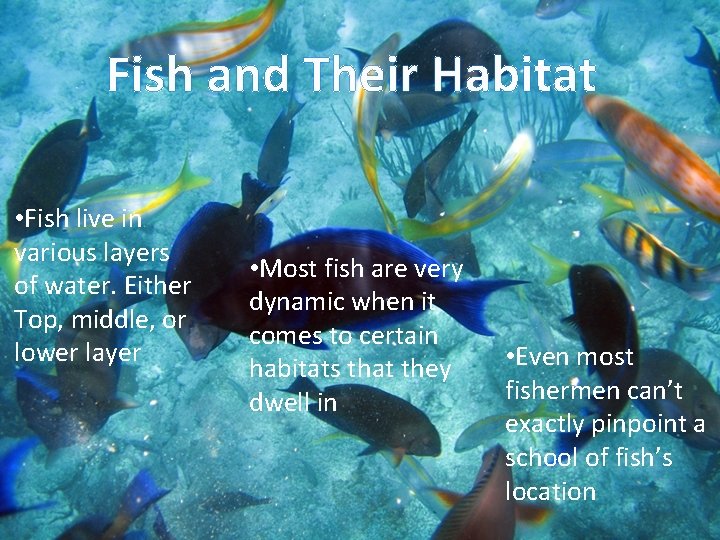
Fish and Their Habitat • Fish live in various layers of water. Either Top, middle, or lower layer • Most fish are very dynamic when it comes to certain habitats that they dwell in • Even most fishermen can’t exactly pinpoint a school of fish’s location
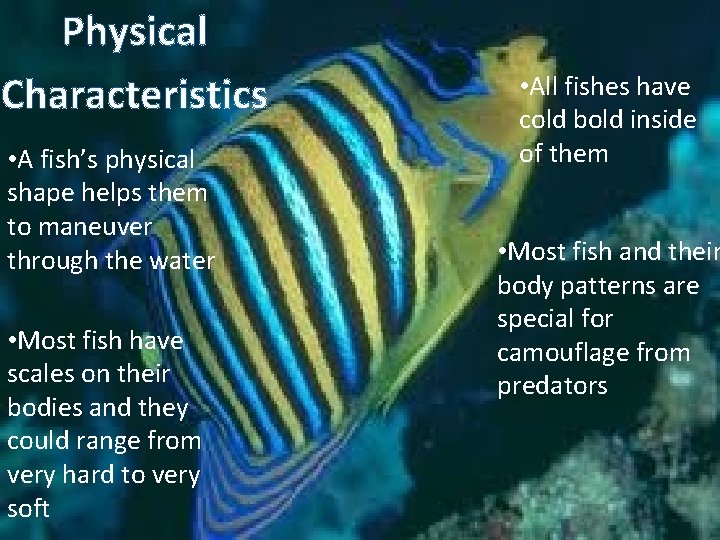
Physical Characteristics • A fish’s physical shape helps them to maneuver through the water • Most fish have scales on their bodies and they could range from very hard to very soft • All fishes have cold bold inside of them • Most fish and their body patterns are special for camouflage from predators
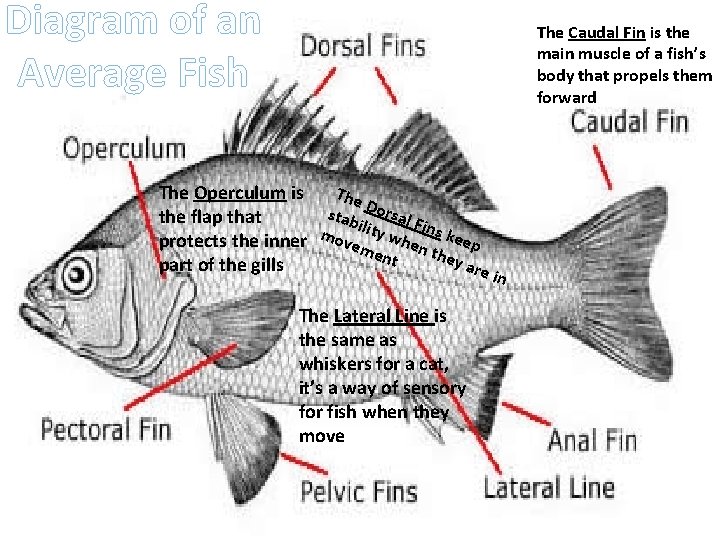
Diagram of an Average Fish The Caudal Fin is the main muscle of a fish’s body that propels them forward The Operculum is stab Dorsal the flap that Fins ility m protects the inner ovem when keep they ent are part of the gills in The Lateral Line is the same as whiskers for a cat, it’s a way of sensory for fish when they move
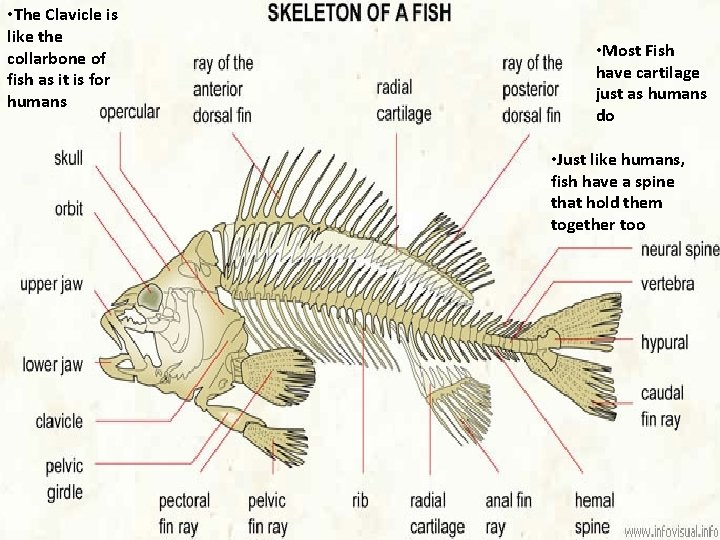
• The Clavicle is like the collarbone of fish as it is for humans • Most Fish have cartilage just as humans do • Just like humans, fish have a spine that hold them together too
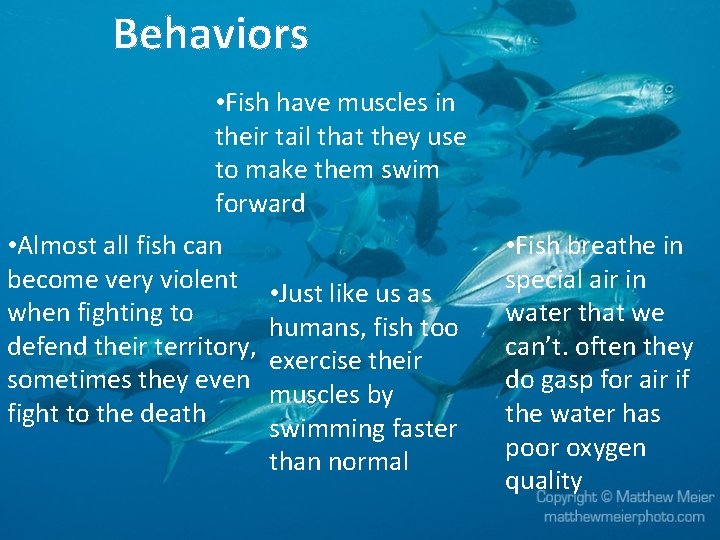
Behaviors • Fish have muscles in their tail that they use to make them swim forward • Almost all fish can become very violent • Just like us as when fighting to humans, fish too defend their territory, exercise their sometimes they even muscles by fight to the death swimming faster than normal • Fish breathe in special air in water that we can’t. often they do gasp for air if the water has poor oxygen quality
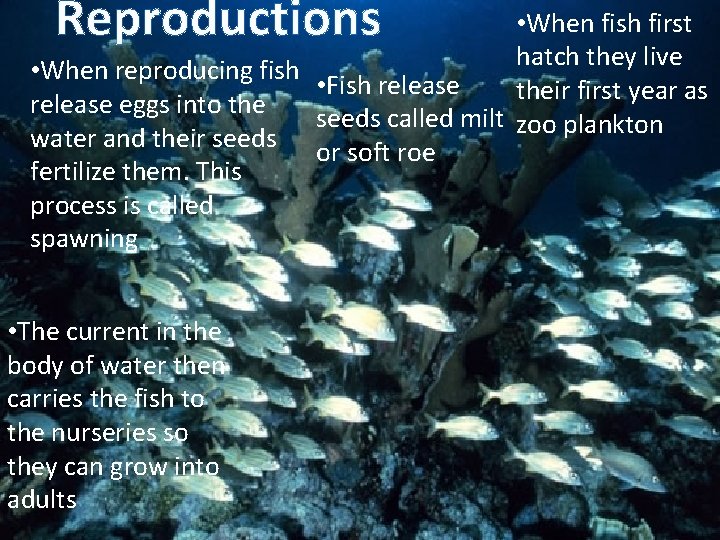
Reproductions • When fish first hatch they live • When reproducing fish • Fish release their first year as release eggs into the seeds called milt zoo plankton water and their seeds or soft roe fertilize them. This process is called spawning • The current in the body of water then carries the fish to the nurseries so they can grow into adults
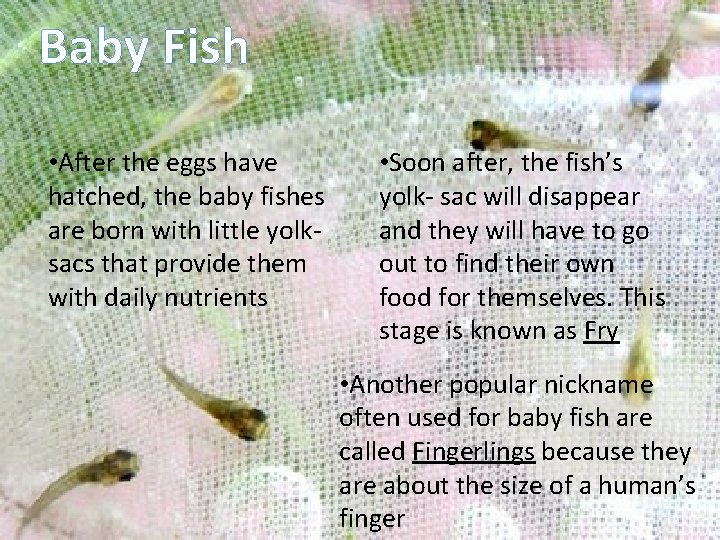
Baby Fish • After the eggs have hatched, the baby fishes are born with little yolksacs that provide them with daily nutrients • Soon after, the fish’s yolk- sac will disappear and they will have to go out to find their own food for themselves. This stage is known as Fry • Another popular nickname often used for baby fish are called Fingerlings because they are about the size of a human’s finger
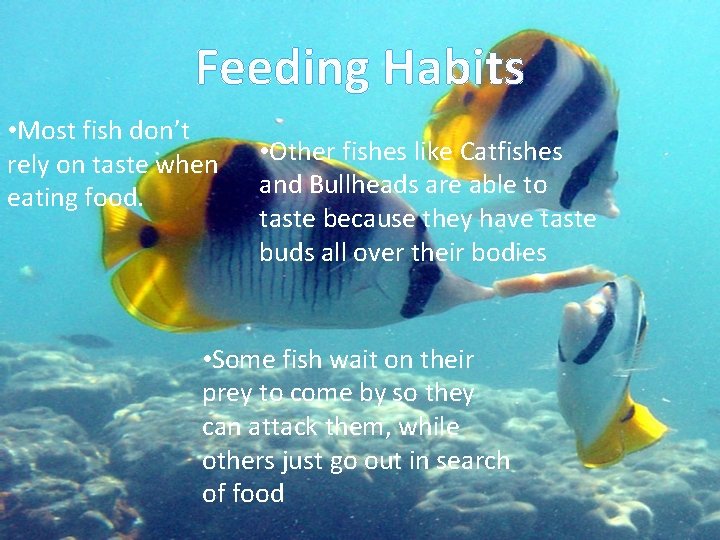
Feeding Habits • Most fish don’t rely on taste when eating food. • Other fishes like Catfishes and Bullheads are able to taste because they have taste buds all over their bodies • Some fish wait on their prey to come by so they can attack them, while others just go out in search of food
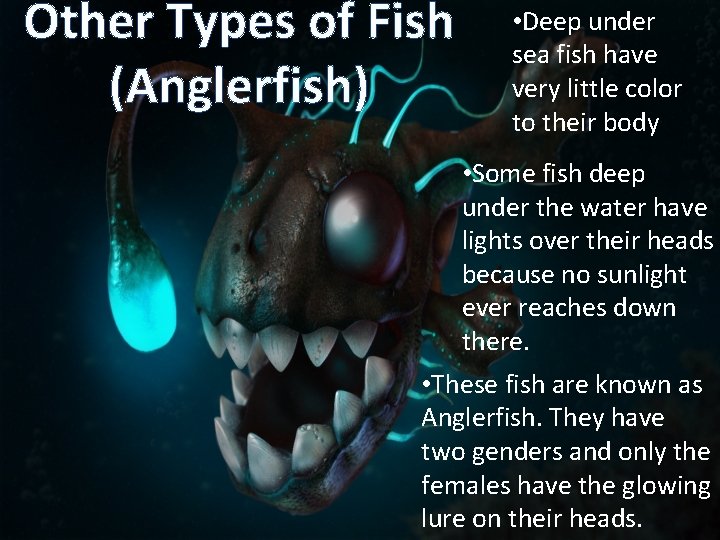
Other Types of Fish (Anglerfish) • Deep under sea fish have very little color to their body • Some fish deep under the water have lights over their heads because no sunlight ever reaches down there. • These fish are known as Anglerfish. They have two genders and only the females have the glowing lure on their heads.
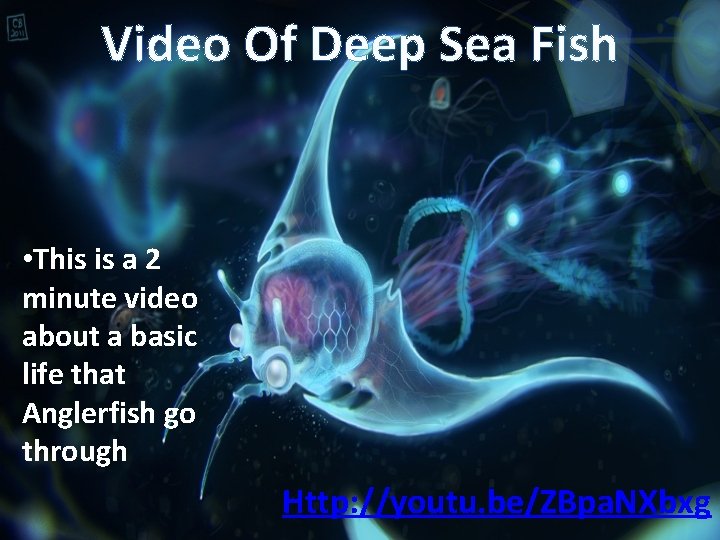
Video Of Deep Sea Fish • This is a 2 minute video about a basic life that Anglerfish go through Http: //youtu. be/ZBpa. NXbxg
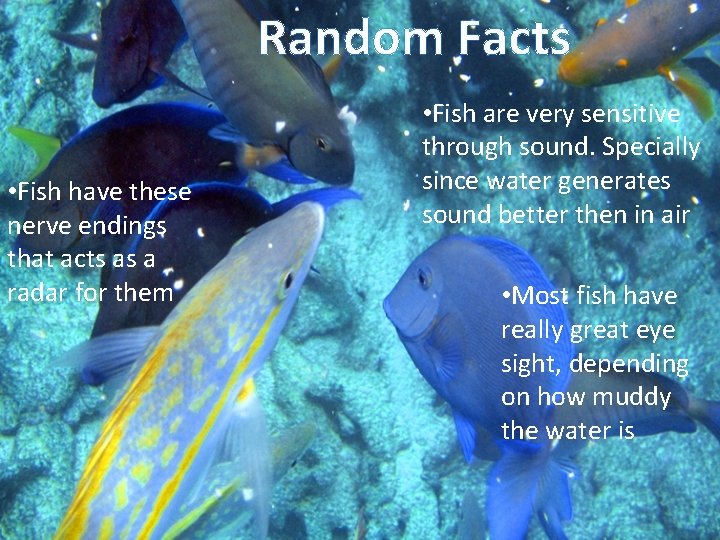
Random Facts • Fish have these nerve endings that acts as a radar for them • Fish are very sensitive through sound. Specially since water generates sound better then in air • Most fish have really great eye sight, depending on how muddy the water is
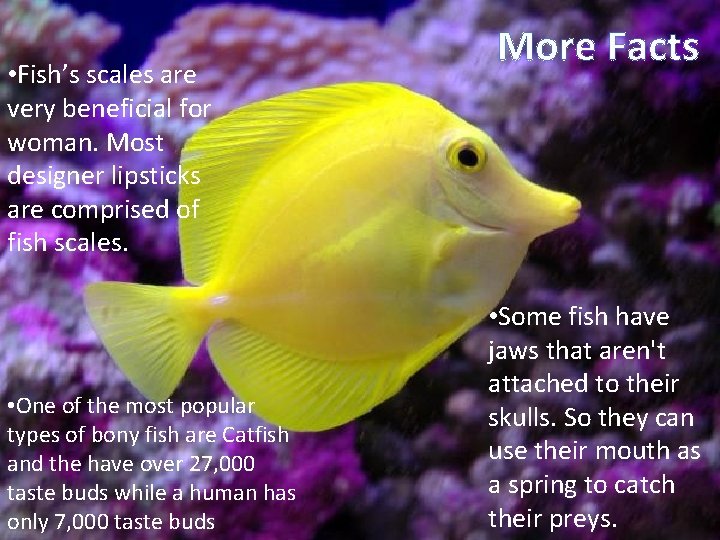
• Fish’s scales are very beneficial for woman. Most designer lipsticks are comprised of fish scales. • One of the most popular types of bony fish are Catfish and the have over 27, 000 taste buds while a human has only 7, 000 taste buds More Facts • Some fish have jaws that aren't attached to their skulls. So they can use their mouth as a spring to catch their preys.
- Slides: 14