
JMS 620 The Efficacy of Values Based Training
JMS 620: The Efficacy of Values Based Training • Maj Joe Plenzler, USMC • LCDR Erik Reynolds, USN • LT Sean Robertson, USN
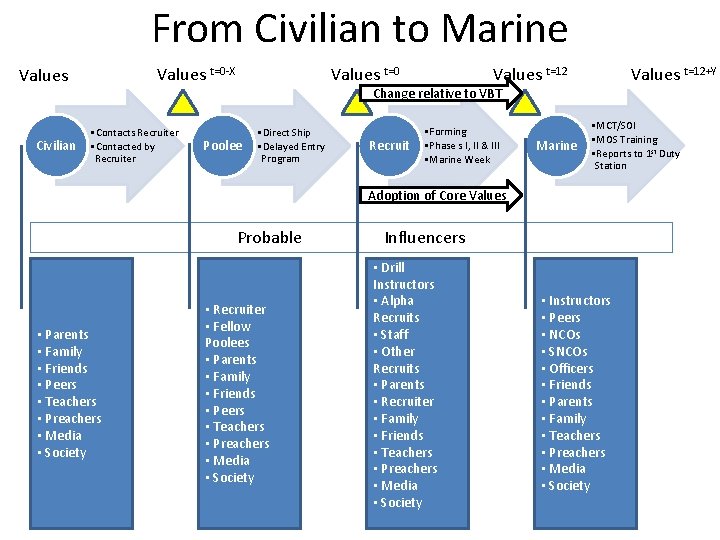
From Civilian to Marine Values t=0 X Values Civilian • Contacts Recruiter • Contacted by Recruiter Values t=0 Values t=12+Y Change relative to VBT Poolee • Direct Ship • Delayed Entry Program Recruit • Forming • Phase s I, II & III • Marine Week Marine • MCT/SOI • MOS Training • Reports to 1 st Duty Station Adoption of Core Values Probable • Parents • Family • Friends • Peers • Teachers • Preachers • Media • Society • Recruiter • Fellow Poolees • Parents • Family • Friends • Peers • Teachers • Preachers • Media • Society Influencers • Drill Instructors • Alpha Recruits • Staff • Other Recruits • Parents • Recruiter • Family • Friends • Teachers • Preachers • Media • Society • Instructors • Peers • NCOs • SNCOs • Officers • Friends • Parents • Family • Teachers • Preachers • Media • Society
Introduction • Evaluated the Marine Corps’ Values Based Training (VBT) program – Primary re socialization vehicle • The Marine Corps is a warrior sub culture within American society whose primary mission is to make Marines and win battles.
Introduction • The explicit purpose of VBT is to provide a “framework that is used to shape young American men and women by defining, refining, and etch ing our enduring (organizational core) values into their very characters” (U. S. Marine Corps, 2009).
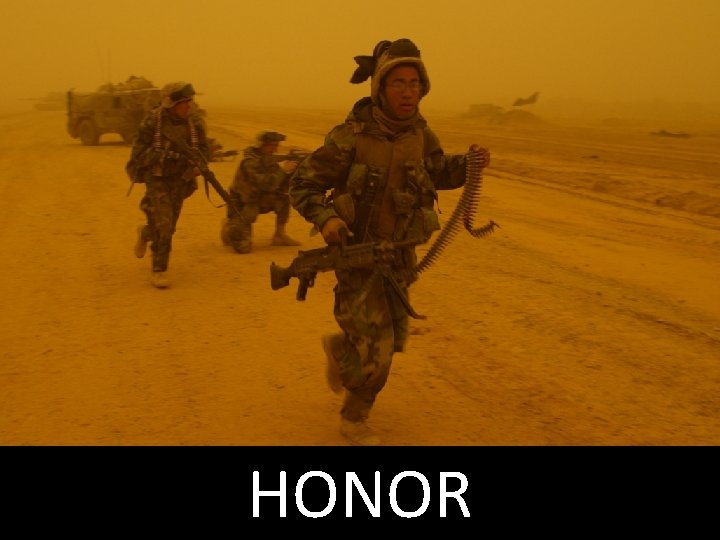
HONOR
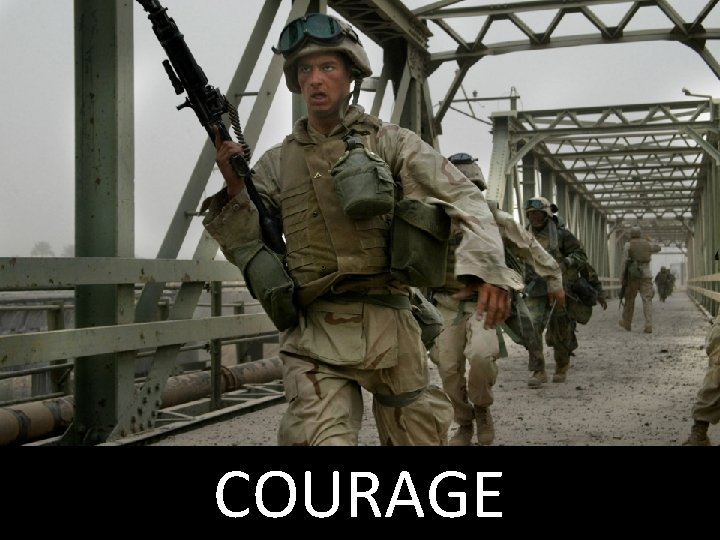
COURAGE
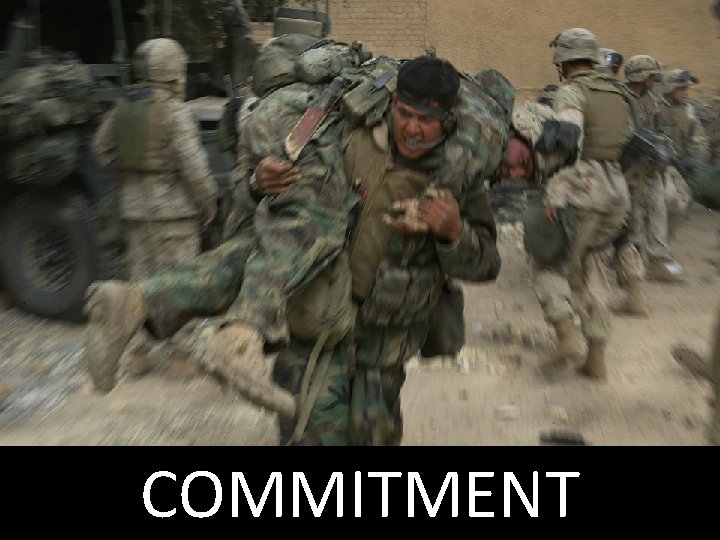
COMMITMENT
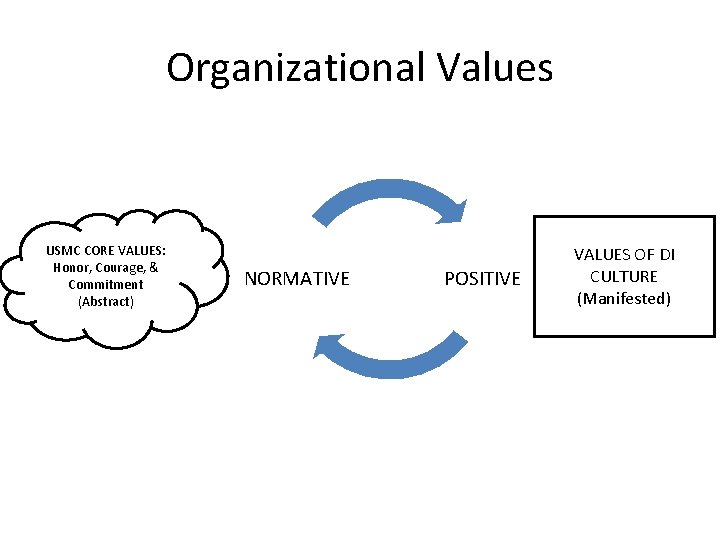
Organizational Values USMC CORE VALUES: Honor, Courage, & Commitment (Abstract) NORMATIVE POSITIVE VALUES OF DI CULTURE (Manifested)
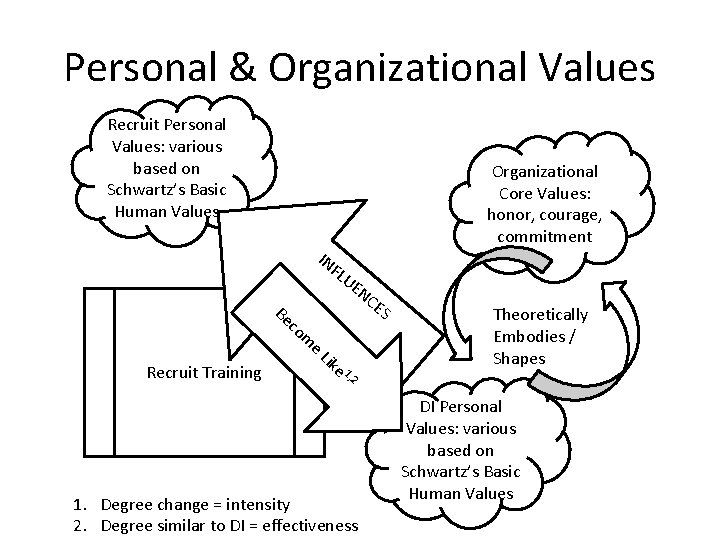
Personal & Organizational Values Recruit Personal Values: various based on Schwartz’s Basic Human Values IN F LU E NC Be co Recruit Training Organizational Core Values: honor, courage, commitment m e Lik e 1, 2 1. Degree change = intensity 2. Degree similar to DI = effectiveness ES Theoretically Embodies / Shapes DI Personal Values: various based on Schwartz’s Basic Human Values
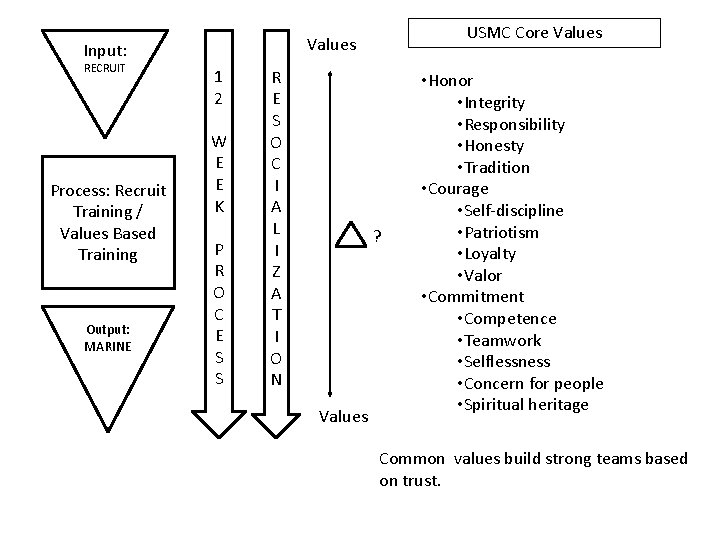
Input: RECRUIT Process: Recruit Training / Values Based Training Output: MARINE USMC Core Values 1 2 W E E K P R O C E S S R E S O C I A L I Z A T I O N ? Values • Honor • Integrity • Responsibility • Honesty • Tradition • Courage • Self discipline • Patriotism • Loyalty • Valor • Commitment • Competence • Teamwork • Selflessness • Concern for people • Spiritual heritage Common values build strong teams based on trust.
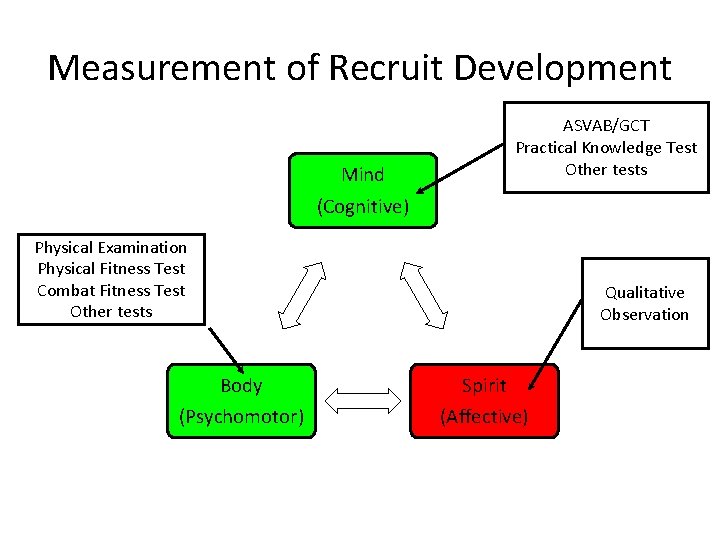
Measurement of Recruit Development Mind (Cognitive) ASVAB/GCT Practical Knowledge Test Other tests Physical Examination Physical Fitness Test Combat Fitness Test Other tests Body (Psychomotor) Qualitative Observation Spirit (Affective)
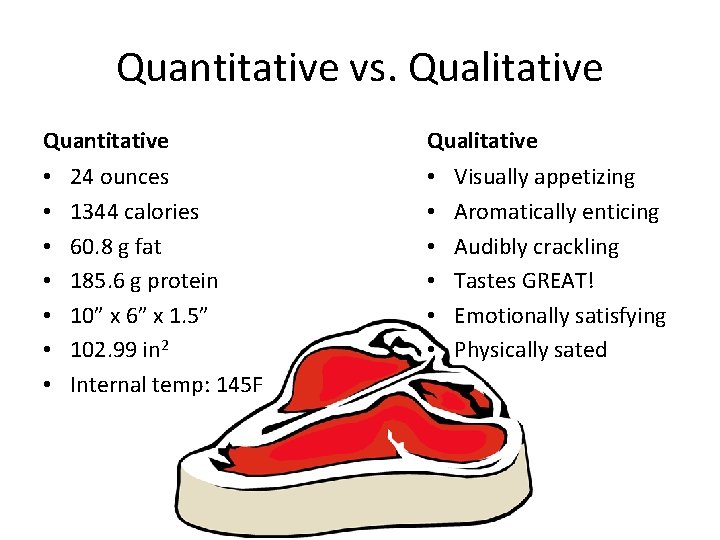
Quantitative vs. Qualitative Quantitative • • 24 ounces 1344 calories 60. 8 g fat 185. 6 g protein 10” x 6” x 1. 5” 102. 99 in 2 Internal temp: 145 F Qualitative • • • Visually appetizing Aromatically enticing Audibly crackling Tastes GREAT! Emotionally satisfying Physically sated
Importance of Project • This study represented the first quantitative evaluation of VBT. • Demonstrated nomothetic association between exposure to VBT and values change. • Values are antecedent determinants of decision and behavior and can predict future behavior.
Goal: Enable sound decision making
Theoretical Background Weber (1905) Durkheim (1912) • • • Kluckhohn: values are internalized symbolic systems; values are evaluative, goal oriented, and affect choice. • Rokeach: First study which identified, defined, and measured values and proposed a values system (36 universal values) • Schwartz: Identified 57 universal values mapped to 10 indices across 2 dimensions Kluckhohn (1951) Rokeach (1973) Schwartz (1992) Weber: social and economic conditions shape values Durkheim: religion served to organize group beliefs and values and moderate behavior
Operational definition of values. • This study assumed Schwartz’s (2006 a) definition of values as “desirable, trans situational goals, varying in importance, that serve as guiding principles in people’s lives” (p. 1).
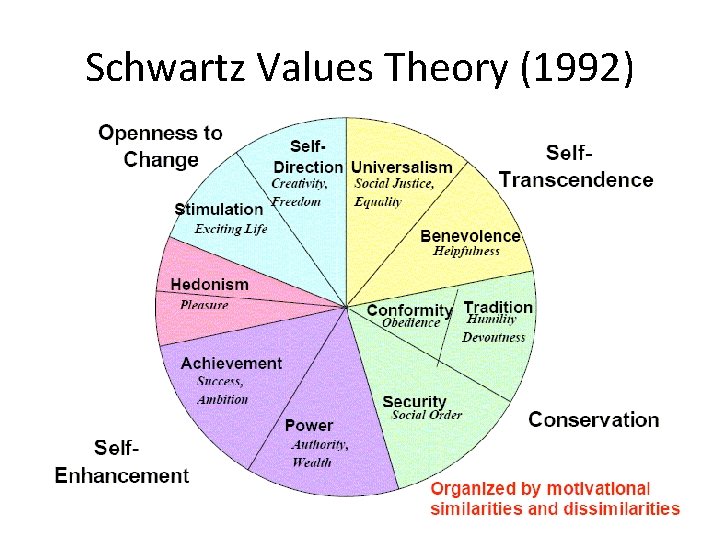
Schwartz Values Theory (1992)
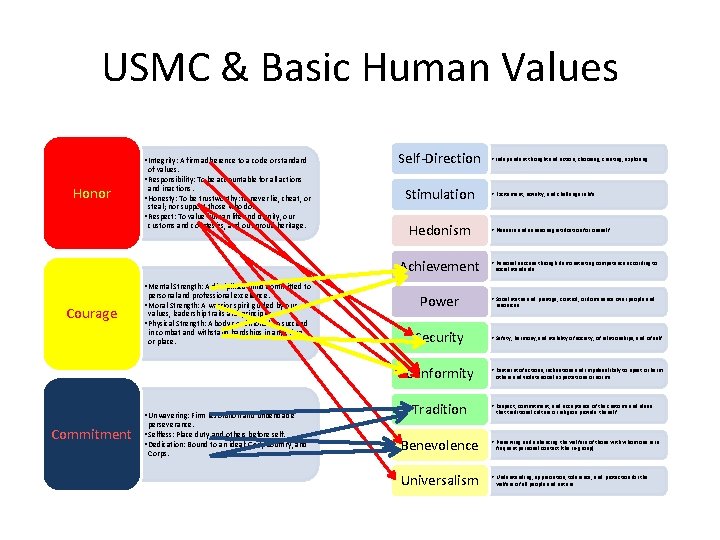
USMC & Basic Human Values • Integrity: A firm adherence to a code or standard Honor of values. • Responsibility: To be accountable for all actions and inactions. • Honesty: To be trustworthy: to never lie, cheat, or steal; nor support those who do. • Respect: To value human life and dignity, our customs and courtesies, and our proud heritage. Self Direction Stimulation Hedonism • Independent thought and action; choosing, creating, exploring. • Excitement, novelty, and challenge in life. • Pleasure and sensuous gratification for oneself. Achievement • Personal success through demonstrating competence according to Power • Social status and prestige, control, or dominance over people and social standards. • Mental Strength: A disciplined mind committed to personal and professional excellence. Courage • Moral Strength: A warrior spirit guided by our values, leadership traits and principles. • Physical Strength: A body conditioned to succeed in combat and withstand hardships in any clime or place. • Unwavering: Firm resolution and unbendable Commitment perseverance. • Selfless: Place duty and others before self. • Dedication: Bound to an ideal: God, Country, and Corps. resources. Security • Safety, harmony, and stability of society, of relationships, and of self. Conformity • Restraint of actions, inclinations and impulses likely to upset or harm Tradition others and violate social expectations or norms. • Respect, commitment, and acceptance of the customs and ideas that traditional culture or religion provide the self. Benevolence • Preserving and enhancing the welfare of those with whom one is in Universalism • Understanding, appreciation, tolerance, and protection for the frequent personal contact (the in group). welfare of all people and nature.
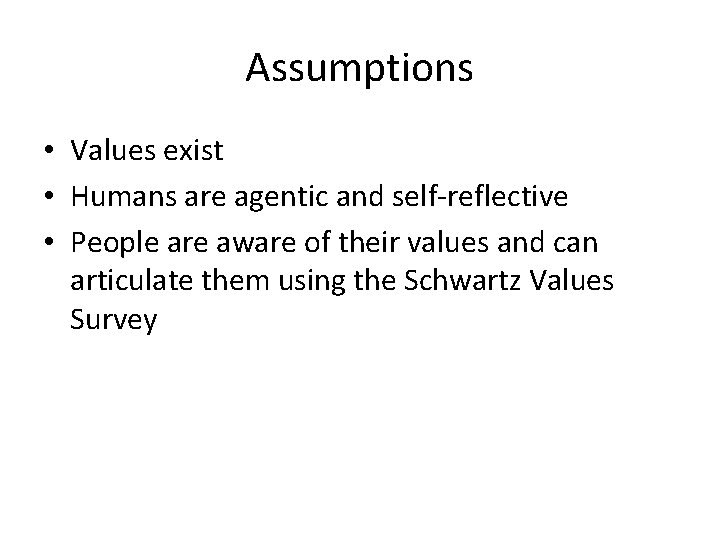
Assumptions • Values exist • Humans are agentic and self reflective • People are aware of their values and can articulate them using the Schwartz Values Survey
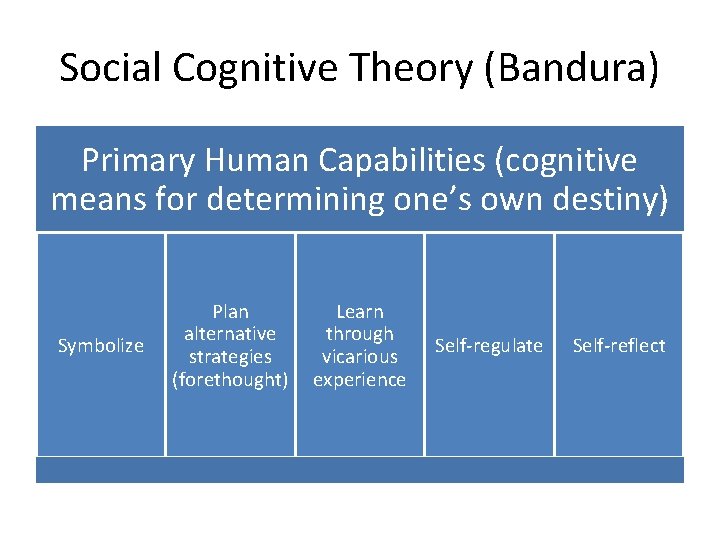
Social Cognitive Theory (Bandura) Primary Human Capabilities (cognitive means for determining one’s own destiny) Symbolize Plan alternative strategies (forethought) Learn through vicarious experience Self regulate Self reflect
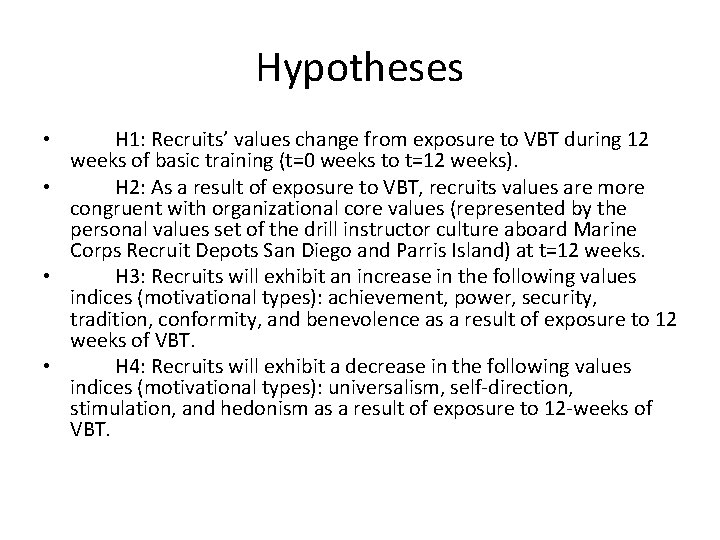
Hypotheses H 1: Recruits’ values change from exposure to VBT during 12 weeks of basic training (t=0 weeks to t=12 weeks). • H 2: As a result of exposure to VBT, recruits values are more congruent with organizational core values (represented by the personal values set of the drill instructor culture aboard Marine Corps Recruit Depots San Diego and Parris Island) at t=12 weeks. • H 3: Recruits will exhibit an increase in the following values indices (motivational types): achievement, power, security, tradition, conformity, and benevolence as a result of exposure to 12 weeks of VBT. • H 4: Recruits will exhibit a decrease in the following values indices (motivational types): universalism, self direction, stimulation, and hedonism as a result of exposure to 12 weeks of VBT. •
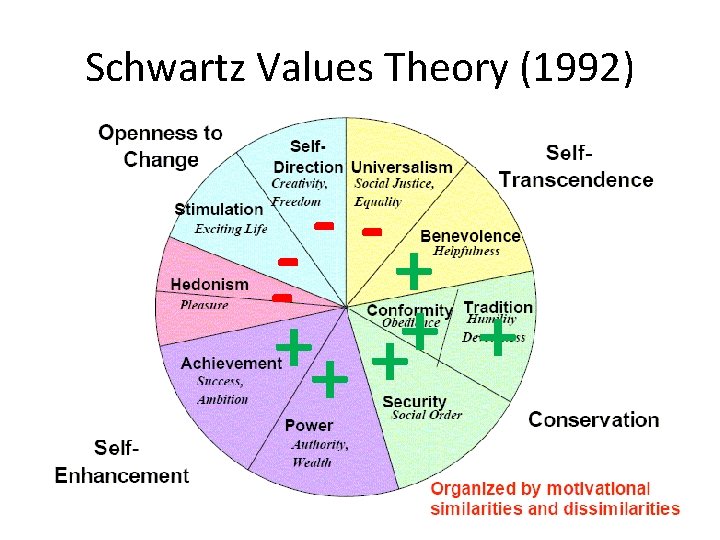
Schwartz Values Theory (1992) -- + + +
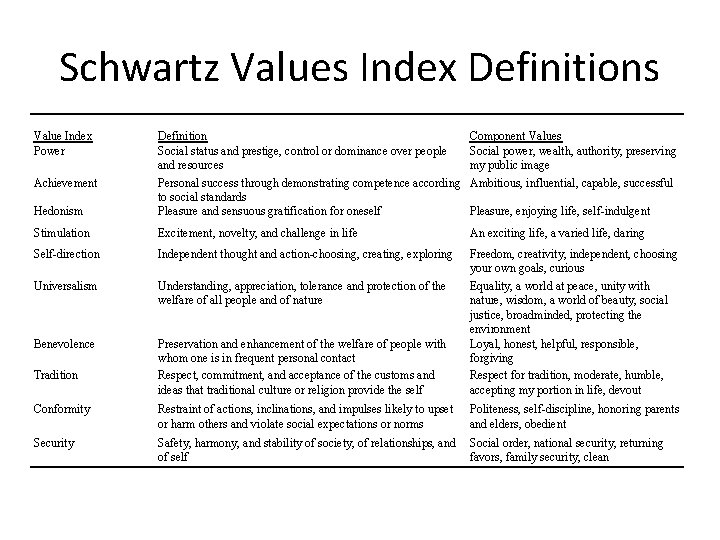
Schwartz Values Index Definitions Value Index Power Component Values Social power, wealth, authority, preserving my public image Ambitious, influential, capable, successful Hedonism Definition Social status and prestige, control or dominance over people and resources Personal success through demonstrating competence according to social standards Pleasure and sensuous gratification for oneself Stimulation Excitement, novelty, and challenge in life An exciting life, a varied life, daring Self-direction Independent thought and action-choosing, creating, exploring Universalism Understanding, appreciation, tolerance and protection of the welfare of all people and of nature Benevolence Preservation and enhancement of the welfare of people with whom one is in frequent personal contact Respect, commitment, and acceptance of the customs and ideas that traditional culture or religion provide the self Freedom, creativity, independent, choosing your own goals, curious Equality, a world at peace, unity with nature, wisdom, a world of beauty, social justice, broadminded, protecting the environment Loyal, honest, helpful, responsible, forgiving Respect for tradition, moderate, humble, accepting my portion in life, devout Conformity Restraint of actions, inclinations, and impulses likely to upset or harm others and violate social expectations or norms Politeness, self-discipline, honoring parents and elders, obedient Security Safety, harmony, and stability of society, of relationships, and of self Social order, national security, returning favors, family security, clean Achievement Tradition Pleasure, enjoying life, self-indulgent
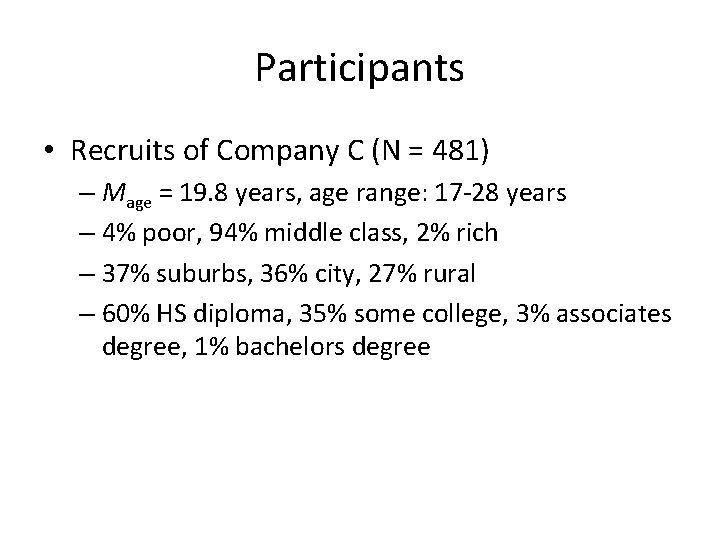
Participants • Recruits of Company C (N = 481) – Mage = 19. 8 years, age range: 17 28 years – 4% poor, 94% middle class, 2% rich – 37% suburbs, 36% city, 27% rural – 60% HS diploma, 35% some college, 3% associates degree, 1% bachelors degree
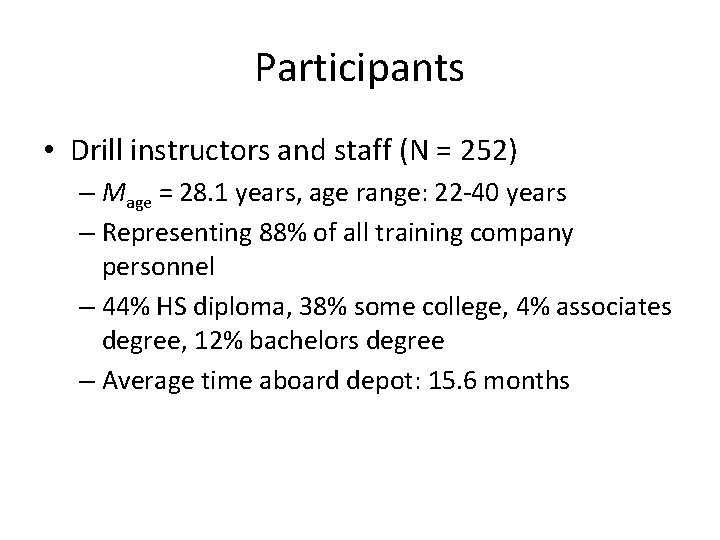
Participants • Drill instructors and staff (N = 252) – Mage = 28. 1 years, age range: 22 40 years – Representing 88% of all training company personnel – 44% HS diploma, 38% some college, 4% associates degree, 12% bachelors degree – Average time aboard depot: 15. 6 months
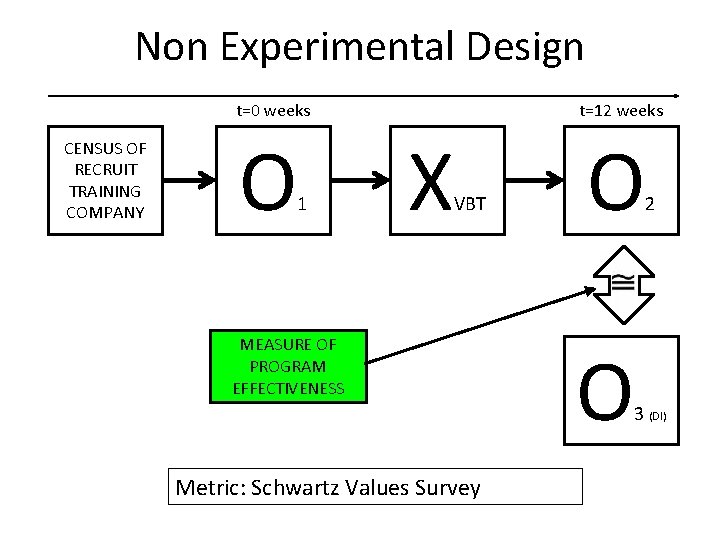
Non Experimental Design t=0 weeks CENSUS OF RECRUIT TRAINING COMPANY O 1 t=12 weeks X VBT MEASURE OF PROGRAM EFFECTIVENESS Metric: Schwartz Values Survey O O 2 3 (DI)
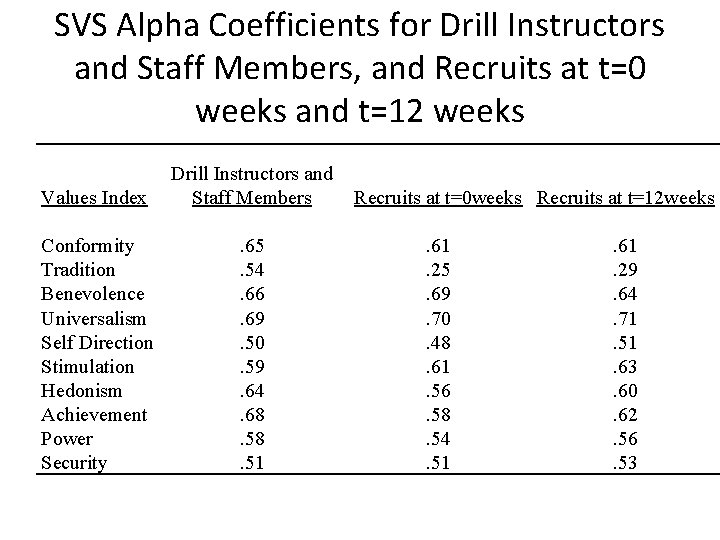
SVS Alpha Coefficients for Drill Instructors and Staff Members, and Recruits at t=0 weeks and t=12 weeks Values Index Drill Instructors and Staff Members Conformity Tradition Benevolence Universalism Self Direction Stimulation Hedonism Achievement Power Security . 65. 54. 66. 69. 50. 59. 64. 68. 51 Recruits at t=0 weeks Recruits at t=12 weeks. 61. 25. 69. 70. 48. 61. 56. 58. 54. 51 . 61. 29. 64. 71. 51. 63. 60. 62. 56. 53
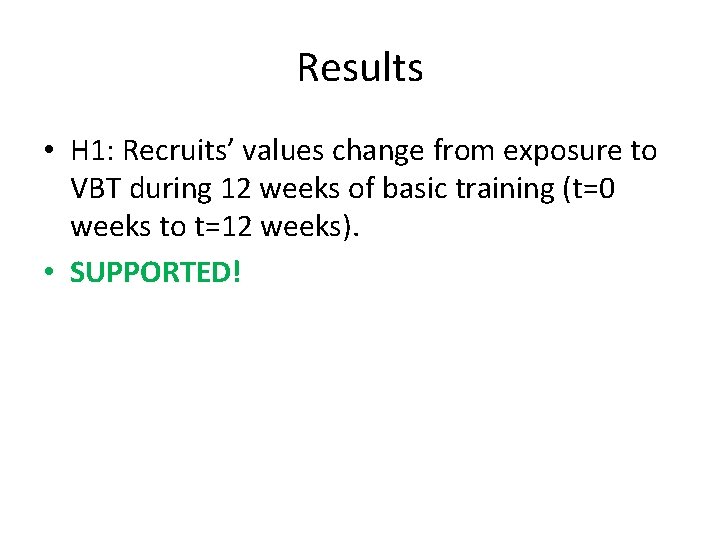
Results • H 1: Recruits’ values change from exposure to VBT during 12 weeks of basic training (t=0 weeks to t=12 weeks). • SUPPORTED!
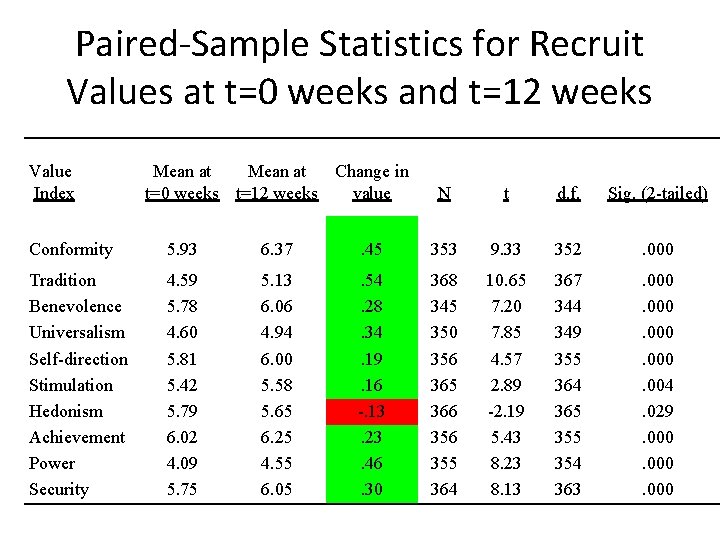
Paired Sample Statistics for Recruit Values at t=0 weeks and t=12 weeks Value Index Mean at Change in t=0 weeks t=12 weeks value N t d. f. Sig. (2 -tailed) Conformity 5. 93 6. 37 . 45 353 9. 33 352 . 000 Tradition Benevolence Universalism Self-direction Stimulation Hedonism Achievement Power Security 4. 59 5. 78 4. 60 5. 81 5. 42 5. 79 6. 02 4. 09 5. 75 5. 13 6. 06 4. 94 6. 00 5. 58 5. 65 6. 25 4. 55 6. 05 . 54. 28. 34. 19. 16 -. 13. 23. 46. 30 368 345 350 356 365 366 355 364 10. 65 7. 20 7. 85 4. 57 2. 89 -2. 19 5. 43 8. 23 8. 13 367 344 349 355 364 365 354 363 . 000. 004. 029. 000
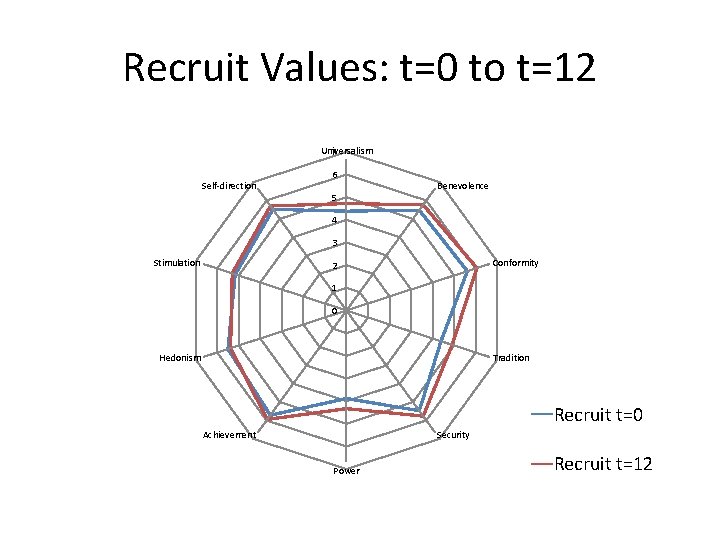
Recruit Values: t=0 to t=12 Universalism 7 Self direction 6 5 Benevolence 4 3 Stimulation Conformity 2 1 0 Hedonism Tradition Recruit t=0 Achievement Security Power Recruit t=12
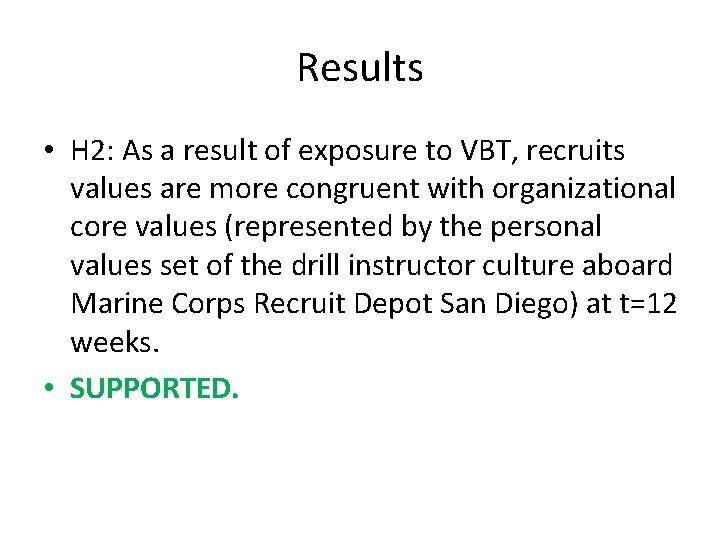
Results • H 2: As a result of exposure to VBT, recruits values are more congruent with organizational core values (represented by the personal values set of the drill instructor culture aboard Marine Corps Recruit Depot San Diego) at t=12 weeks. • SUPPORTED.
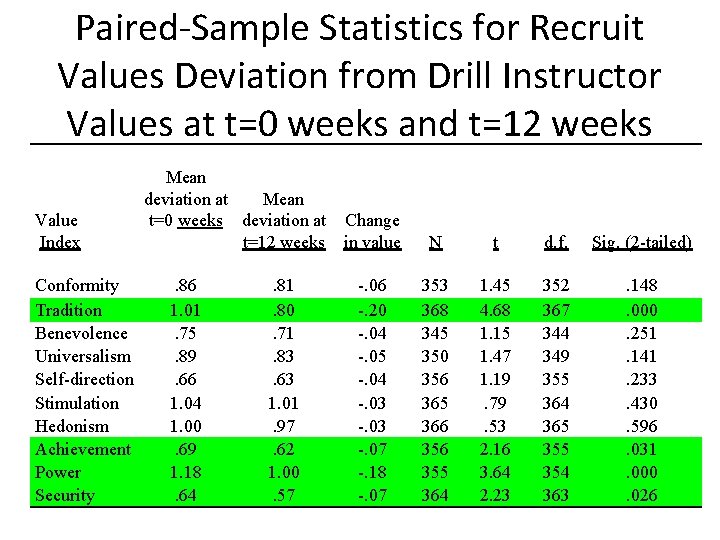
Paired Sample Statistics for Recruit Values Deviation from Drill Instructor Values at t=0 weeks and t=12 weeks Value Index Conformity Tradition Benevolence Universalism Self-direction Stimulation Hedonism Achievement Power Security Mean deviation at Mean t=0 weeks deviation at Change t=12 weeks in value. 86 1. 01. 75. 89. 66 1. 04 1. 00. 69 1. 18. 64 . 81. 80. 71. 83. 63 1. 01. 97. 62 1. 00. 57 -. 06 -. 20 -. 04 -. 05 -. 04 -. 03 -. 07 -. 18 -. 07 N t d. f. Sig. (2 -tailed) 353 368 345 350 356 365 366 355 364 1. 45 4. 68 1. 15 1. 47 1. 19. 79. 53 2. 16 3. 64 2. 23 352 367 344 349 355 364 365 354 363 . 148. 000. 251. 141. 233. 430. 596. 031. 000. 026
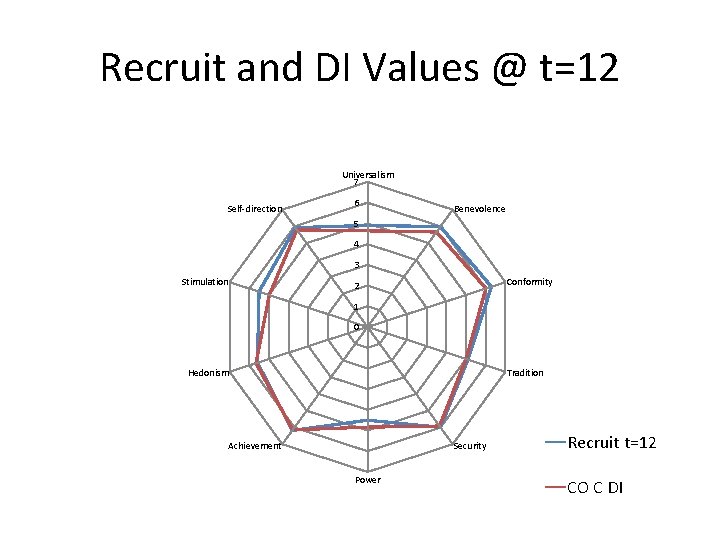
Recruit and DI Values @ t=12 Universalism 7 Self direction 6 Benevolence 5 4 3 Stimulation Conformity 2 1 0 Hedonism Tradition Achievement Security Power Recruit t=12 CO C DI
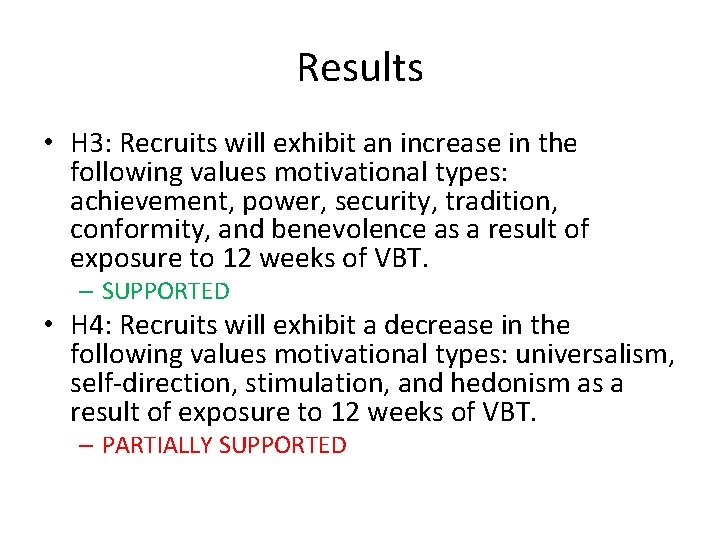
Results • H 3: Recruits will exhibit an increase in the following values motivational types: achievement, power, security, tradition, conformity, and benevolence as a result of exposure to 12 weeks of VBT. – SUPPORTED • H 4: Recruits will exhibit a decrease in the following values motivational types: universalism, self direction, stimulation, and hedonism as a result of exposure to 12 weeks of VBT. – PARTIALLY SUPPORTED
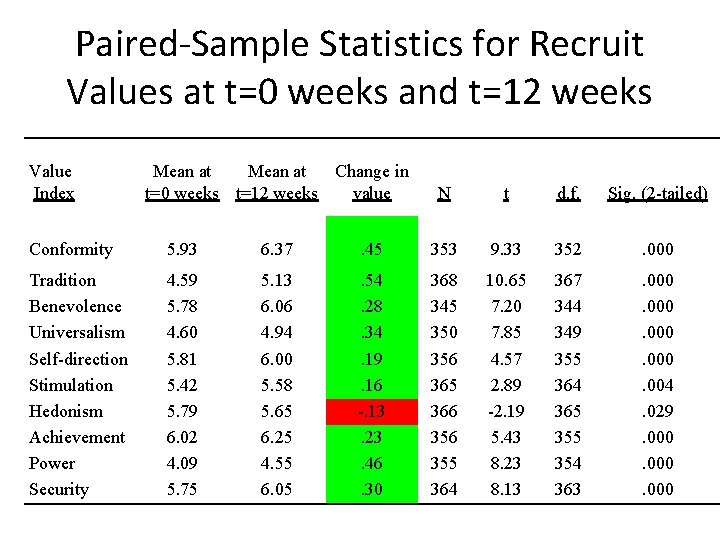
Paired Sample Statistics for Recruit Values at t=0 weeks and t=12 weeks Value Index Mean at Change in t=0 weeks t=12 weeks value N t d. f. Sig. (2 -tailed) Conformity 5. 93 6. 37 . 45 353 9. 33 352 . 000 Tradition Benevolence Universalism Self-direction Stimulation Hedonism Achievement Power Security 4. 59 5. 78 4. 60 5. 81 5. 42 5. 79 6. 02 4. 09 5. 75 5. 13 6. 06 4. 94 6. 00 5. 58 5. 65 6. 25 4. 55 6. 05 . 54. 28. 34. 19. 16 -. 13. 23. 46. 30 368 345 350 356 365 366 355 364 10. 65 7. 20 7. 85 4. 57 2. 89 -2. 19 5. 43 8. 23 8. 13 367 344 349 355 364 365 354 363 . 000. 004. 029. 000
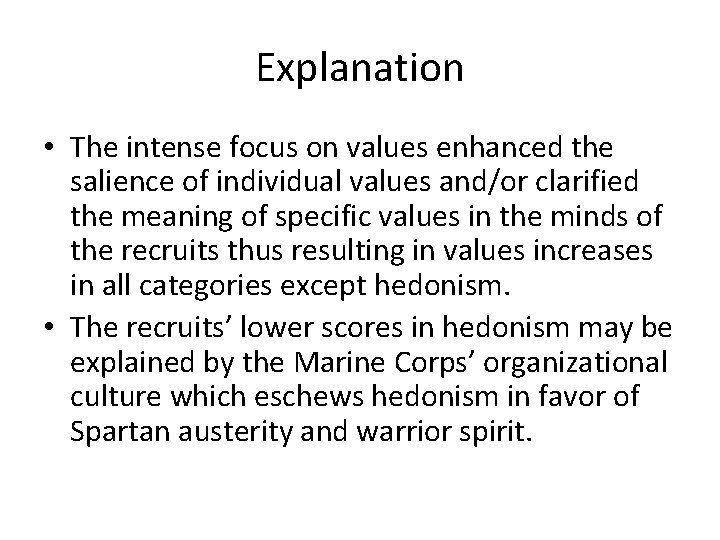
Explanation • The intense focus on values enhanced the salience of individual values and/or clarified the meaning of specific values in the minds of the recruits thus resulting in values increases in all categories except hedonism. • The recruits’ lower scores in hedonism may be explained by the Marine Corps’ organizational culture which eschews hedonism in favor of Spartan austerity and warrior spirit.
Discussion • Bottom line: Study revealed that – Recruits values change – Recruits values are more congruent with DI values at t=12 weeks • Reinforces the imperative of proper drill instructor screening, training and supervision • May have identified areas where VBT could be improved: universalism, self direction, stimulation
Implications for Future • This study treated VBT as a comprehensive and solitary treatment. Further study could: – Identify which elements of VBT are effective and which are not – Determine what drill instructor techniques are most persuasive and effective in communicating and inculcating core values • This study was unable to determine long term effects of VBT. Further study could: – Retest Marines at their first unit – At completion of first re enlistment – At completion of subsequent enlistments
Any questions? Or have I made myself abundantly clear? !?
- Slides: 39