
Jim Loter Director of Information Technology The Seattle


- Slides: 21
Jim Loter Director of Information Technology The Seattle Public Library @jimloter
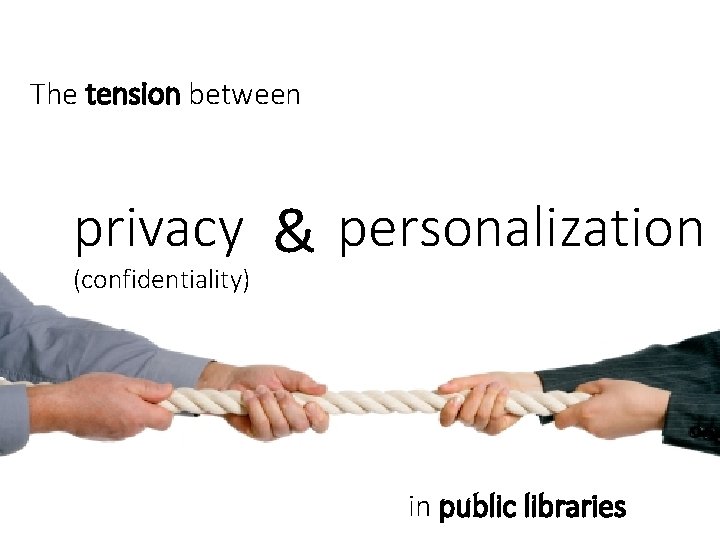
The tension between privacy & personalization (confidentiality) in public libraries
An individual’s ability to personally control information about him/herself
The treatment of information that an individual has disclosed in a relationship of trust with the expectation that it will not be divulged to others without permission.
• Privacy is the right to open inquiry without having the subject of one’s interests examined or scrutinized by others. • Confidentiality exists when a library is in possession of personally identifiable information about users and keeps that information private on their behalf.
• Protects the confidentiality of borrower records as part of its commitment to intellectual freedom • Requests for information and materials • Loan transactions • Online activity • The Library will keep patron records confidential and will not disclose this information except as necessary for the properation of the Library, upon consent of the user, pursuant to subpoena or court order, or as otherwise required by law.
We Know Nothing
Personalization the ability to tailor experiences to the tastes of individual consumers based upon their personal information.
What we hear from patrons • I want to get automated reading recommendations • I want to be notified when [author’s] new book is released • I want to receive notifications when the library schedules an event • I want to be able to keep track of my reading history
What we (also) hear from patrons • I don’t want to log on to a site that’s not operated by the library • I don’t want the library to share my data with [third party] • I don’t want the titles of the books I’m checking out to display on the check-out monitors • I know that you share data with the [NSA | FBI | CIA | Illuminati | Trilateral Commission]
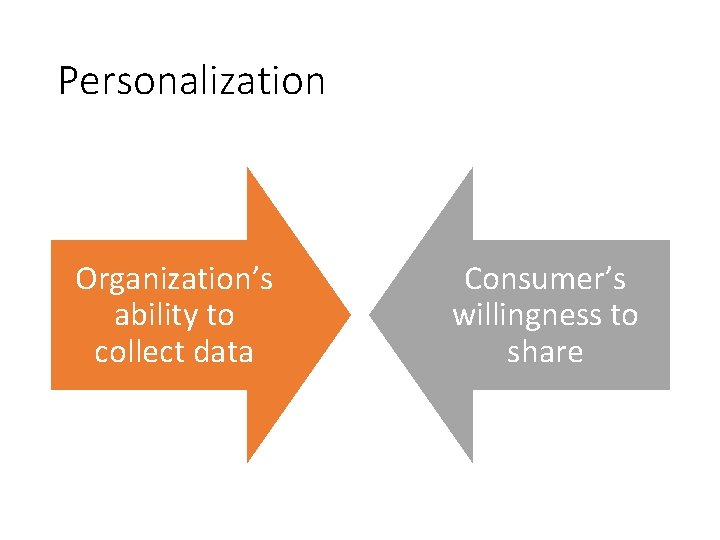
Personalization Organization’s ability to collect data Consumer’s willingness to share
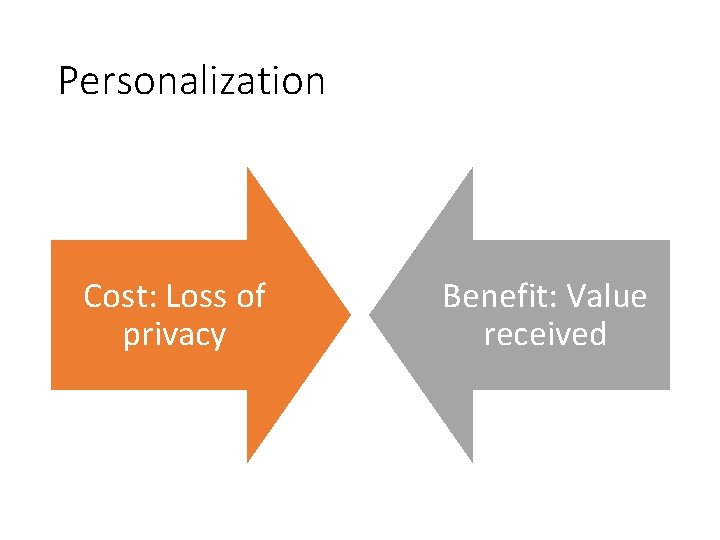
Personalization Cost: Loss of privacy Benefit: Value received
Case 1: Biblio. Commons • Library’s online catalog moved from local service to hosted service • Third-party would have access to patron accounts and records • Company located in Canada • Service requires separate registration and creation of username, validation age • Service encourages “sharing” – reading lists, reviews, ratings, etc.
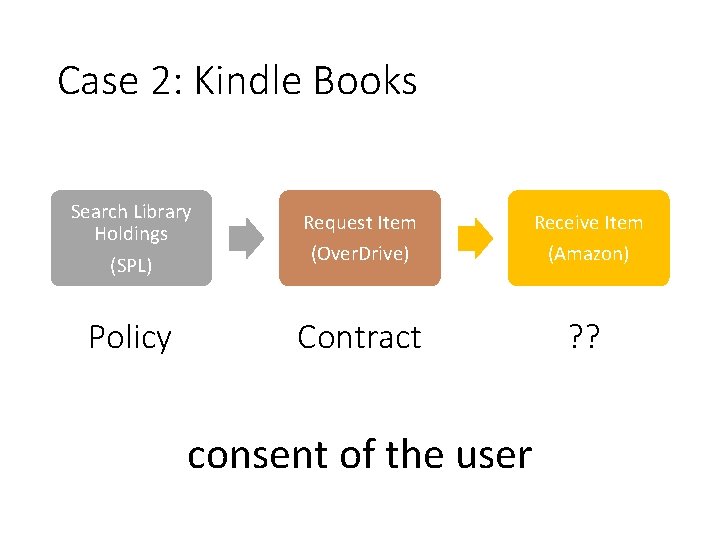
Case 2: Kindle Books Search Library Holdings (SPL) Request Item (Over. Drive) Receive Item (Amazon) Policy Contract ? ? consent of the user
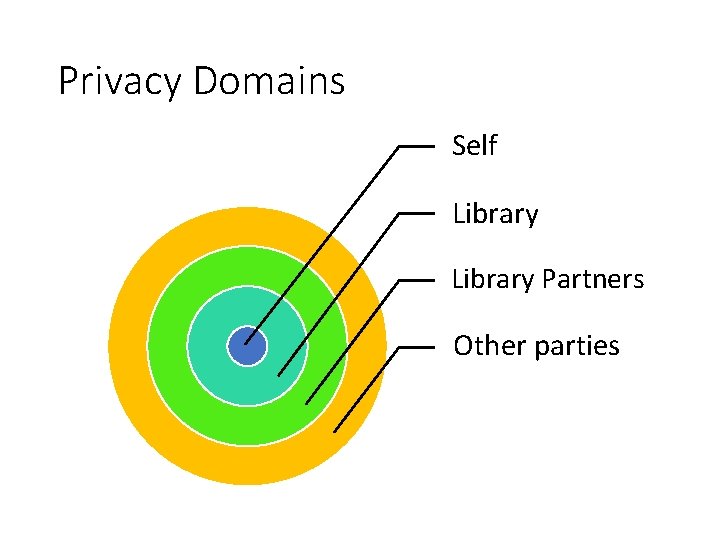
Privacy Domains Self Library Partners Other parties
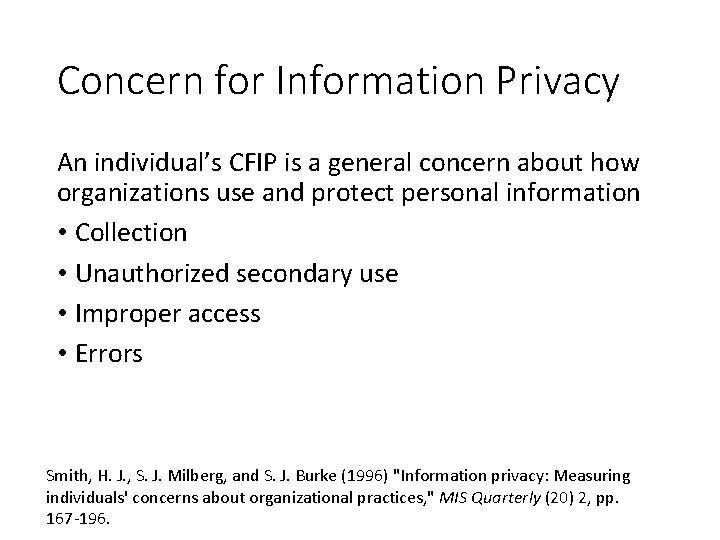
Concern for Information Privacy An individual’s CFIP is a general concern about how organizations use and protect personal information • Collection • Unauthorized secondary use • Improper access • Errors Smith, H. J. , S. J. Milberg, and S. J. Burke (1996) "Information privacy: Measuring individuals' concerns about organizational practices, " MIS Quarterly (20) 2, pp. 167 -196.
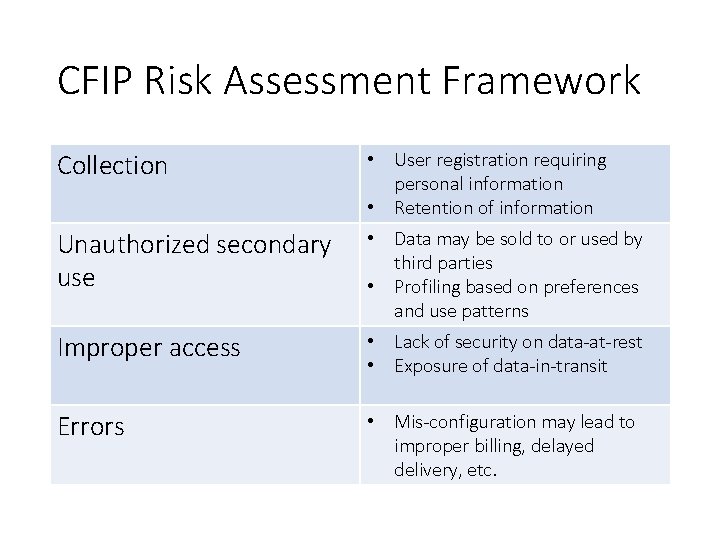
CFIP Risk Assessment Framework Collection • User registration requiring personal information • Retention of information Unauthorized secondary use • Data may be sold to or used by third parties • Profiling based on preferences and use patterns Improper access • Lack of security on data-at-rest • Exposure of data-in-transit Errors • Mis-configuration may lead to improper billing, delayed delivery, etc.
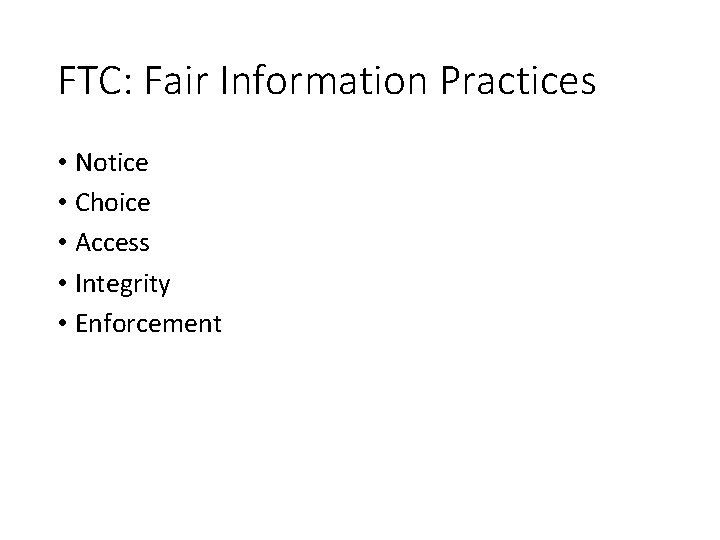
FTC: Fair Information Practices • Notice • Choice • Access • Integrity • Enforcement
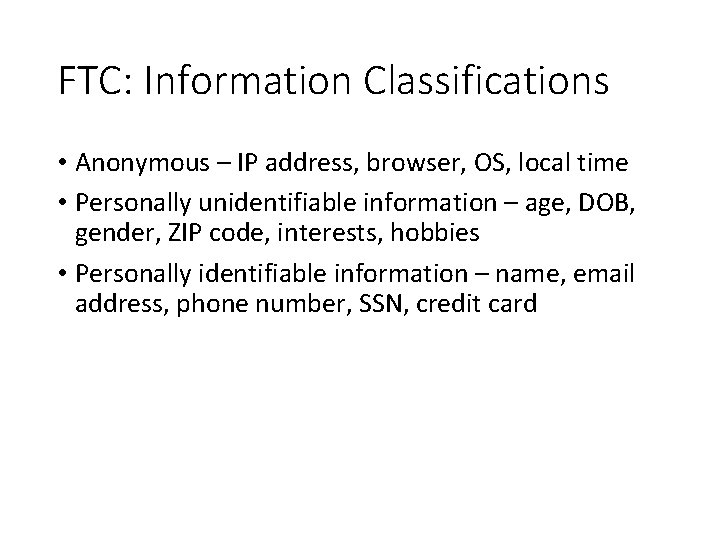
FTC: Information Classifications • Anonymous – IP address, browser, OS, local time • Personally unidentifiable information – age, DOB, gender, ZIP code, interests, hobbies • Personally identifiable information – name, email address, phone number, SSN, credit card
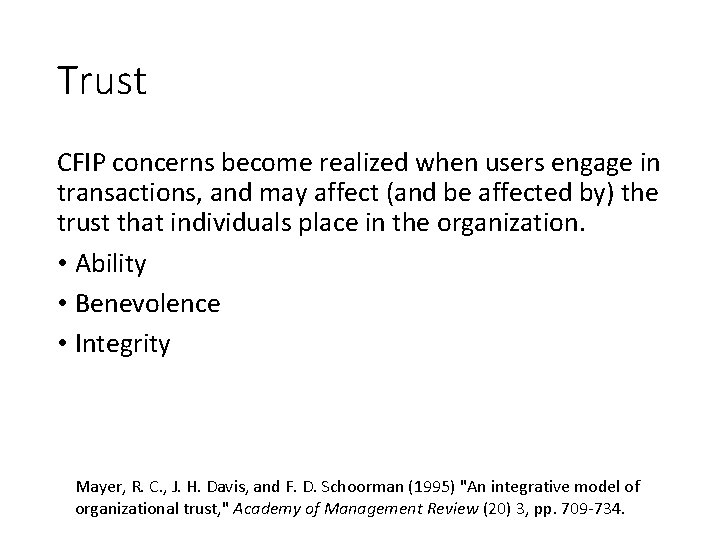
Trust CFIP concerns become realized when users engage in transactions, and may affect (and be affected by) the trust that individuals place in the organization. • Ability • Benevolence • Integrity Mayer, R. C. , J. H. Davis, and F. D. Schoorman (1995) "An integrative model of organizational trust, " Academy of Management Review (20) 3, pp. 709 -734.
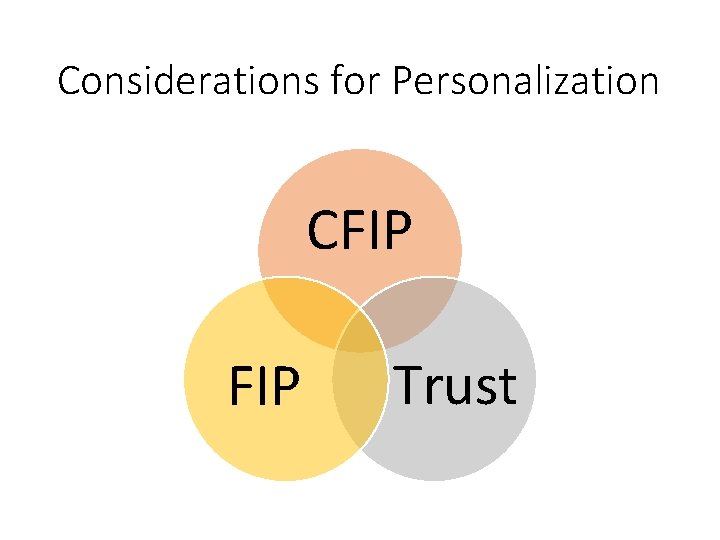
Considerations for Personalization CFIP Trust