
JIC SDO Standards Development Processes Prepared by Dave
JIC SDO Standards Development Processes Prepared by Dave Iberson-Hurst, CDISC 19 th January 2010 Second Draft 1
Purpose of Slide Set • The purpose of the slide set is to provide an overview of the processes employed by the SDOs that constitute the JIC • The slide set shows the alignment between the processes used by the SDOs and also illustrates the time taken to develop standards using the processes. 2
Notes Regarding the Slide Set • Each “real” slide is preceded by a slide containing information relevant to the following slide. • These have been included such that this slide set can be understood without explanation from myself during the JIC meeting on the 20 January 2010 in Phoenix, AZ • Also, please note, SDOs are ordered in alphabetical order based on the SDOs acronym, there is no deeper meaning intended • IHTSDO has not been included at this time due to time constraints. 3
Note for Slide “The Generic Process” • This is based on the document “An overview of SDO processes and processes for common / harmonized standards development (Normative Standards). DRAFT FOR COMMENT. Version 2. 1, 24 April 2008”, referred to as the JIC Process Document • It represents the generic SDO development process 4
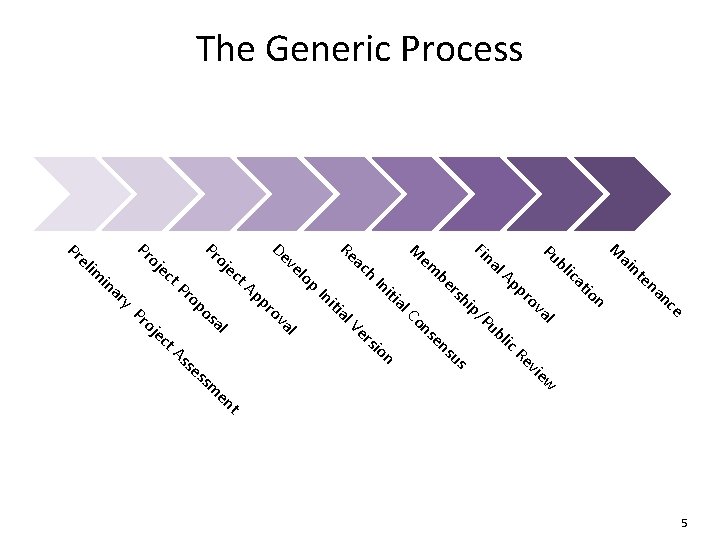
The Generic Process Pr el im in ar y Pr oj ec t. P Pr oj ec ro t. A ss po es De l sm en t pp ro va l lo p In iti al Ve Fin M ac h ve t. A sa Re In rs iti io n al C em be on se al A rs ns hi p/ us pp Pu b lic M Pu bl ica ro va l Re tio ain n te na nc e vie w 5
Note for Slide “CDISC Process” • TAC = Technical Advisory Board – A subset of the elected CDISC board members who provide oversight of the technical work undertaken by CDISC • TLC = Technical Leadership Committee – Consists of the Team Lead of each CDISC technical teams • CDISC does not have an equivalent of the Preliminary Project Assessment • Information sourced from the CDISC document COP 001 Standards Development • The idea for each of the SDO slides is to map to the generic process so that differences become apparent and visible 6
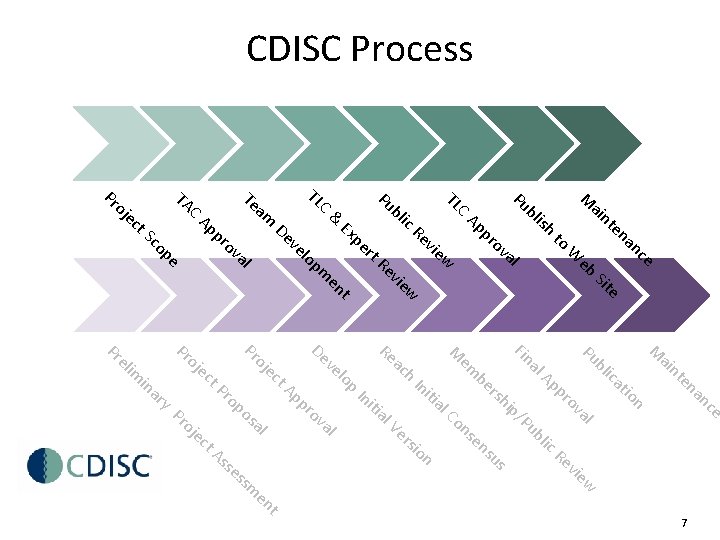
CDISC Process Pr oj ec TA C t. S co Ap pr ov al pe TL Te am C De v el & Pu Ex bl ic pe op m rt en Re el im in ar y Pr oj ec Pr oj t. P Pr oj ec ec ro t. A po ss De sa l es sm en t pp ro va l lo p Re iti al bl pr w M ish ov al to ain te Ve Fin M In rs iti io n al C em be on se rs ns al hi p/ Pu us Ap bl eb e Sit e M Pu bl ica pr o va ic na nc W w ac h In Pu Ap vie Re ve t. A C vie t Pr TL Re v l tio n ain te na nc e ie w 7
Note for Slide “CEN Process” • Information presented in based on the JIC process document and a slide presentation from the CEN web site: “Getting Started. . . How to develop a European Standard” by Ashok Ganesh • There is a gap on the project approval stage (marked by “? ? ? ”). Needs to be filled in. 8
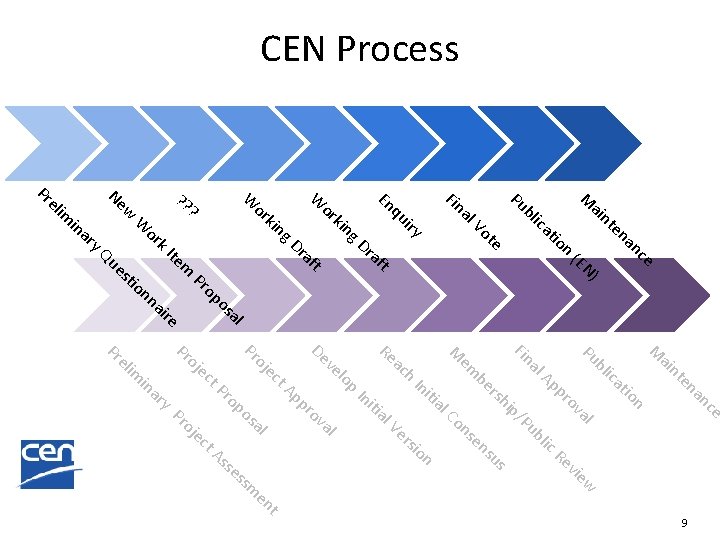
CEN Process Pr el Ne im in w ar y. Q ue W ? ? ? W or k. I te st io nn a ire Pr el im in ar y m W or k or g. D ra ft g. D ra op os Pr oj ec Pr oj iry ft po ss De ec ro t. A al V M ica ot e tio n ain te (E na nc e N) al t. P Pr oj ec Pu bl Fin qu kin in Pr En l es sm en t pp ro va l lo p In iti al Ve Fin M ac h ve t. A sa Re In rs iti io n al C em be on se rs ns al hi p/ Pu us Ap bl ica pr o va ic M Pu bl Re v l tio n ain te na nc e ie w 9
Note for Slide “HL 7 Process” • Based on the JIC process document and personal experience. Therefore probably needs checking! • TSC = Technical Steering Committee • HL 7 does not have an equivalent of the Preliminary Project Assessment 10
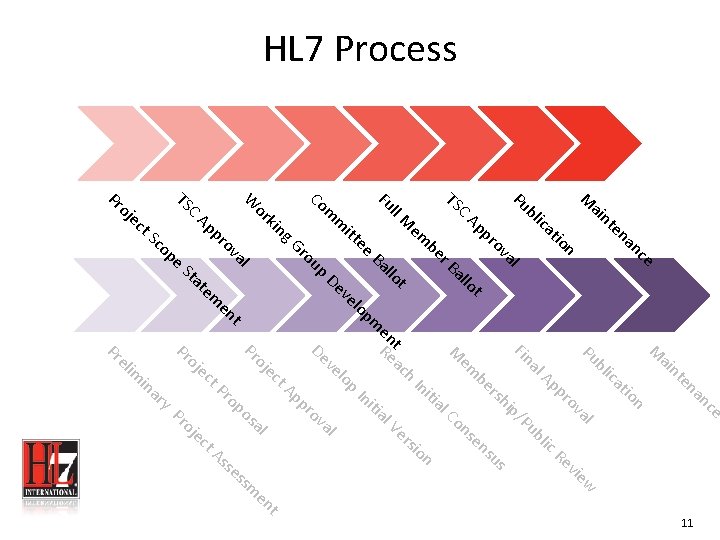
HL 7 Process Pr oj TS ec t. S C pe Ap or k pr co St at Co W m in ov al g. G itt e e up De t Pr el im in ar y Pr oj ec Pr oj t. P Pr oj ec ec ro t. A po ss De sa l es sm en t en Ret ac h pp ro va l In iti al Ve Ap Pu bl pr r. B llo t lo pm lo p be Ba ve t. A C em ve en TS ll M m ro em Fu rs iti io n ain te na nc tio al al C ica ov n e ot Fin M In M em be on se rs ns al hi p/ Pu us Ap bl ica pr o va ic M Pu bl Re v l tio n ain te na nc e ie w 11
Note for Slide “ISO Process” • Based on the JIC process document and the ISO web site page “Stages of the development of International Standards”, – http: //www. iso. org/iso/standards_development/processes_and_procedures/stages_description. htm • ISO stages of development are the default process – Each TC operates with any number of agreements which effects document timeline and number of ballots – Depending on the document, level there may be 2 different agreements for one document 12
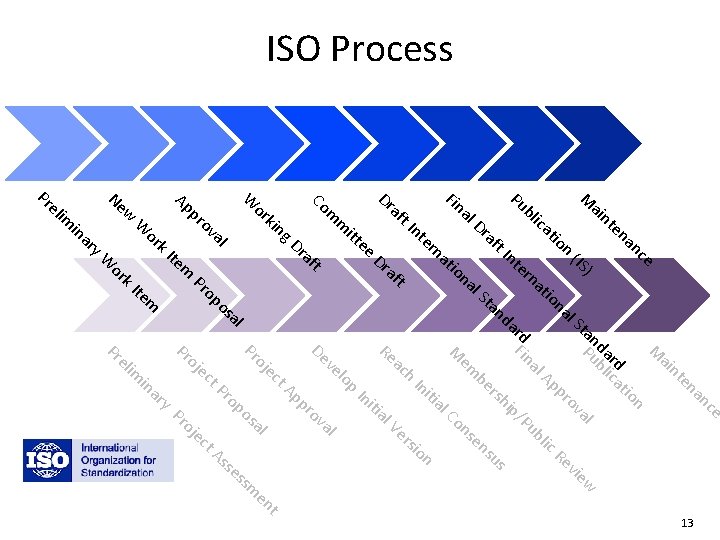
ISO Process Pr Ne w el im in ar y W W or k. I te m Ap W pr te m or k ov m in al g. D ra ft Pr op os Co al Dr af t m itt e e Dr af t Pu In Fin ra ft rn at io na l ain te bl al D te M In n te St an ica tio rn da (IS at ) na nc e io na l. S ta n Pr De Pr M Re Pr M Pu dar ain oj oj el e ac ve bl d al m im ec ec i h lo te ca Ap be t. A t. P in I p na n t pr rs io ar iti I r p n nc o h o n pr y al iti p i v p e o o a al Pr Co /P sa l va oj Ve ub ns l l ec r e lic sio ns t. A Re us n ss vie es sm w en t rd Fin 13
Note for Slide “Alignment” • The previous slides show each SDO’s process aligned with the generic one. It allows for aspects of the process to be highlighted. • The next side puts all of the processes along side each other to allow for a simple comparison to be made. 14
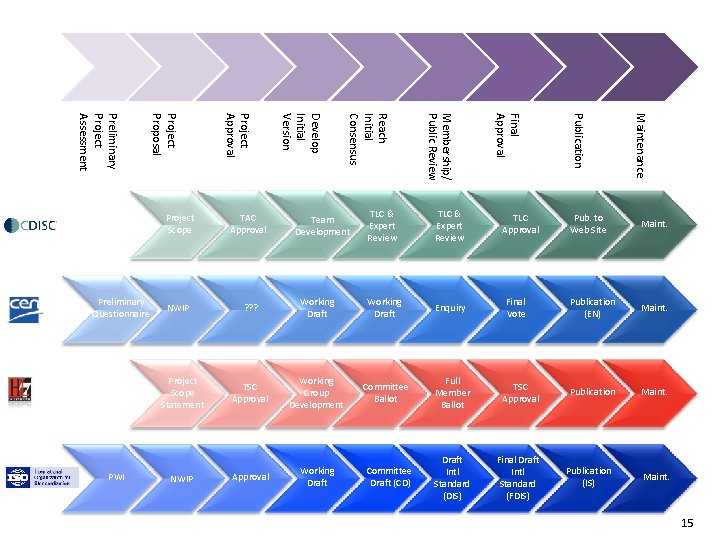
TLC & Expert Review Working Draft Enquiry Working Group Development Committee Ballot Full Member Ballot TSC Approval Draft Intl Standard (DIS) Final Draft Intl Standard (FDIS) TLC Approval Final Vote Maintenance TLC & Expert Review Team Development Publication TSC Approval Project Scope Statement Final Approval ? ? ? Membership/ Public Review NWIP Reach Initial Consensus TAC Approval Develop Initial Version Project Approval Project Proposal Preliminary Project Assessment Preliminary Questionnaire Project Scope Pub. to Web Site Maint. Publication (EN) Maint. Publication Maint. Approval PWI NWIP Approval Working Draft Committee Draft (CD) Publication (IS) Maint. 15
Note for Slide “Where the Time is Spent” Slide • • • This slide is to show where the relative effort is The circles represent months of elapsed time Assumes that a technical standard takes 12 months to write but obviously this could vary widely depending on complexity and other factors Where two colours are used the darker colour indicates the minimum time for the activity with the lighter colour being used to indicate that the activity might well take longer depending on the complexity of the standard, number of comments received etc. Symbols – The small clock icon indicates that the activity has time constraints such as review cycles (must start at the beginning of a cycle or can only be completed at a F 2 F meeting). This is important as this can have major impact on timelines (e. g. An NWIP can only be approved at a F 2 F ISO TC 215 meeting, is that true? ) – The small question mark indicates an optional stage. – The small diamond used in place of the circles indicates that the stage is usually a few days in duration – Black circle with an “N” indicates that the stage is Not Applicable to that SDO • • • Slide is not complete, needs extra info on stage durations and also I think some of the stages have time/cycle constraints (ISO & CEN NWIP/ballots happening around F 2 F meetings) Does not, currently, take into account the HL 7 DSTU status CEN and ISO total duration time for the entire process needs to be entered. CEN quotes 3 years. 16
17
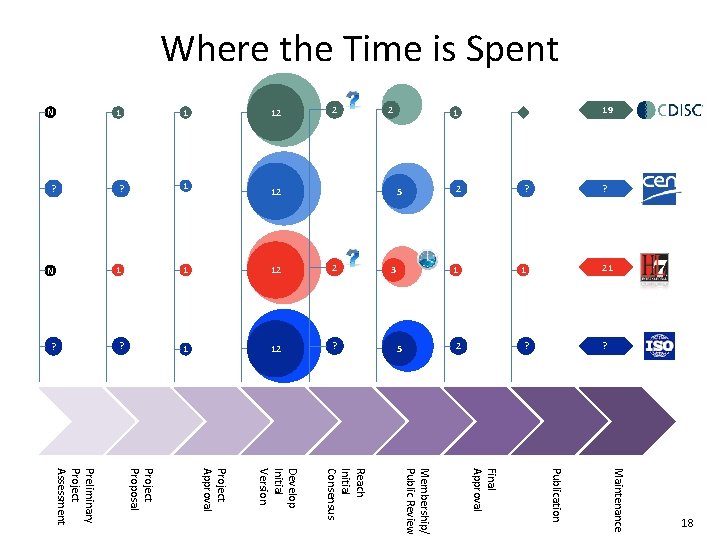
Where the Time is Spent ? 1 1 21 2 ? ? 1 N 1 1 12 2 ? ? 1 12 ? 5 ? 1 3 2 5 12 19 1 2 2 N 12 Preliminary Project Assessment Project Proposal Project Approval Develop Initial Version Reach Initial Consensus Membership/ Public Review Final Approval Publication Maintenance 18
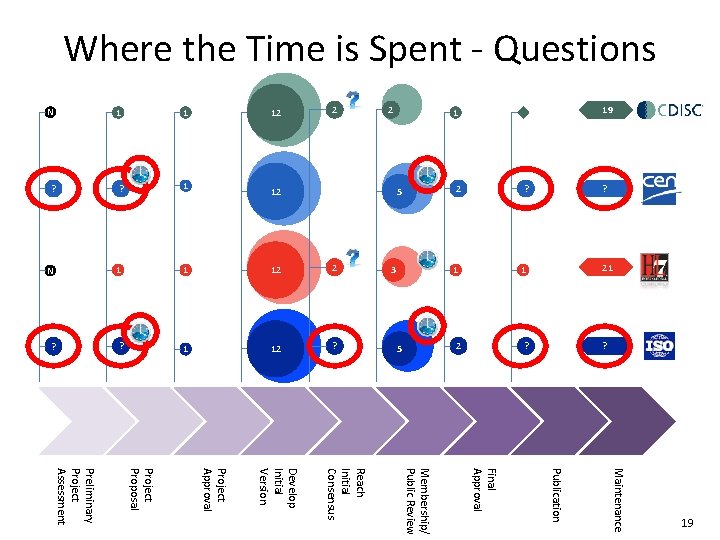
Where the Time is Spent - Questions ? 1 1 21 2 ? ? 1 N 1 1 12 2 ? ? 1 12 ? 5 ? 1 3 2 5 12 19 1 2 2 N 12 Preliminary Project Assessment Project Proposal Project Approval Develop Initial Version Reach Initial Consensus Membership/ Public Review Final Approval Publication Maintenance 19
JIC Alignment • Having worked through the above we see the SDO’s processes in “isolation” • Further issues can arise when JIC tries to coordinated work across SDOs such as: – Alignment of ballots/review – Documentation format issues – Others? • It may be worth doing some work trying to assess these impacts and describing them on a slide 20
- Slides: 20