
JHSGR 1752008 The Hong Kong Disease Management Updates



- Slides: 25
JHSGR 17/5/2008 The Hong Kong Disease – Management Updates Dr. YF Yeung Department of Surgery Prince of Wales Hospital
The Hong Kong Disease SARS
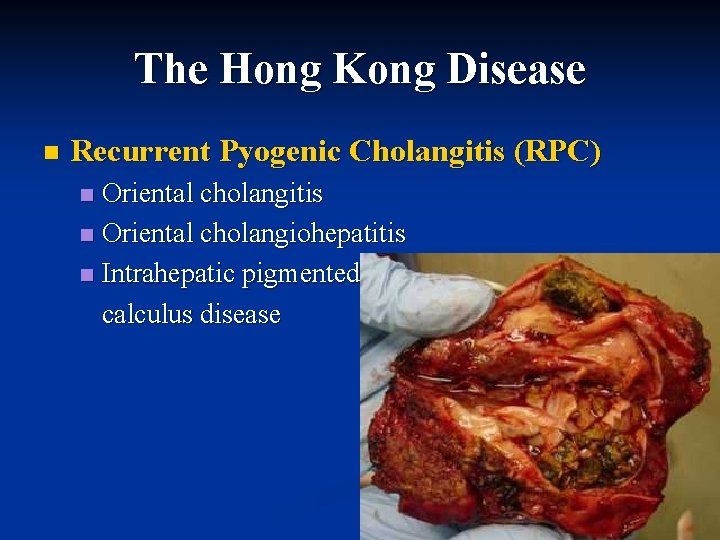
The Hong Kong Disease n Recurrent Pyogenic Cholangitis (RPC) Oriental cholangitis n Oriental cholangiohepatitis n Intrahepatic pigmented calculus disease n
Recurrent Pyogenic Cholangitis n Cook in 1954 Repeated primary biliary infection n Pus-forming bacteria n Multiple stones and strictures in the biliary tree n n Pathogenesis not well understood nowadays n Calcium bilirubinate stones within extra- and intraheptic biliary ducts
Aetiology n ? Oriental diet n n n ? Poor environmental hygiene n n Low saturated fat: biliary stasis Low protein diet: increased formation of calcium bilirubinate stones Recurrent enteric infection and portal bacteraemia ? Clonorchis sinensis and Ascaris lumbricoids
Epidemiology n n Predominantly lower socio-economic class and rural areas Male = Female Peak age incidence: 3 rd to 4 th decades Overall incidence is decreasing in East Asia n HK experience n n 1950 -1952: 30 patients / year 1984 -1989: 22. 8 patients / year Lo et al. HKMJ 1997 n Increasing incidence in the West due to Asian immigrants
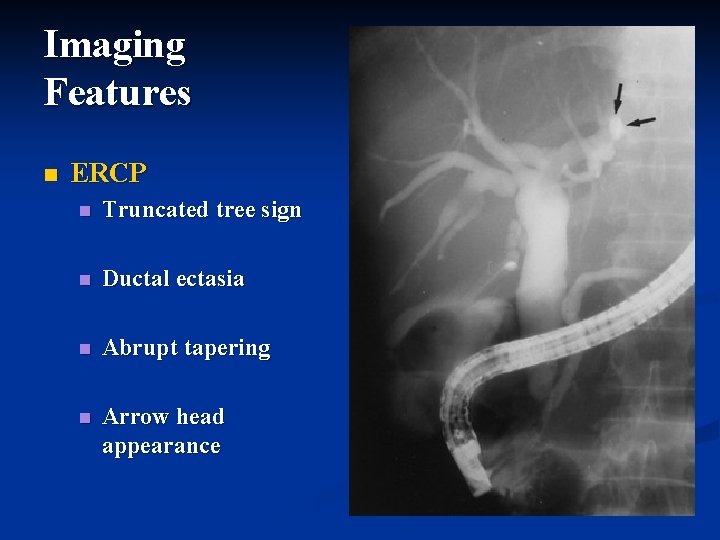
Imaging Features n ERCP n Truncated tree sign n Ductal ectasia n Abrupt tapering n Arrow head appearance
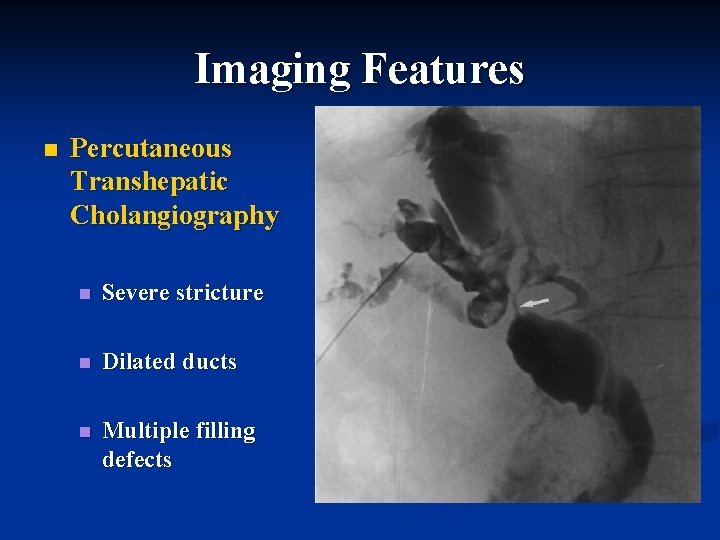
Imaging Features n Percutaneous Transhepatic Cholangiography n Severe stricture n Dilated ducts n Multiple filling defects
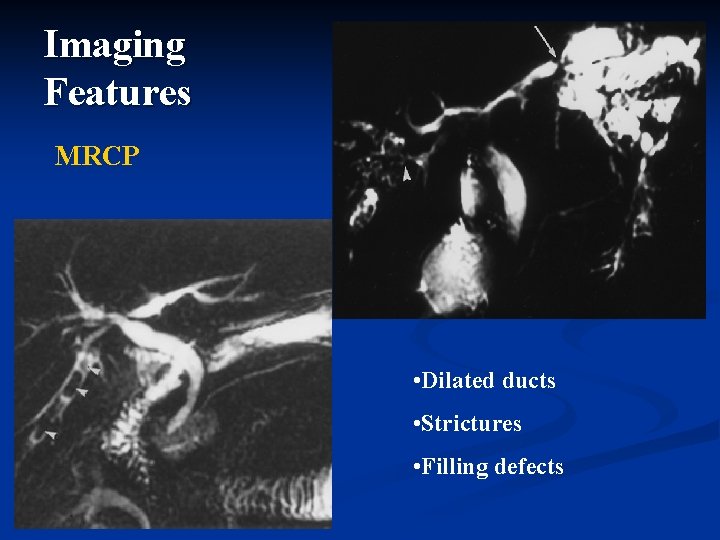
Imaging Features MRCP • Dilated ducts • Strictures • Filling defects
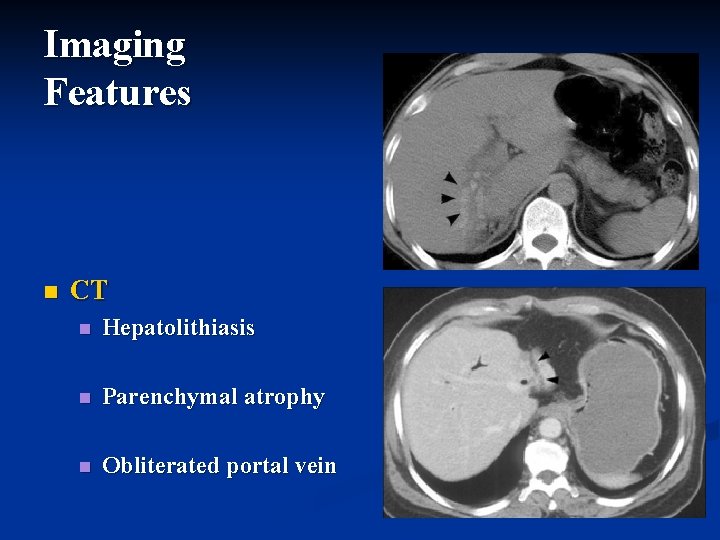
Imaging Features n CT n Hepatolithiasis n Parenchymal atrophy n Obliterated portal vein
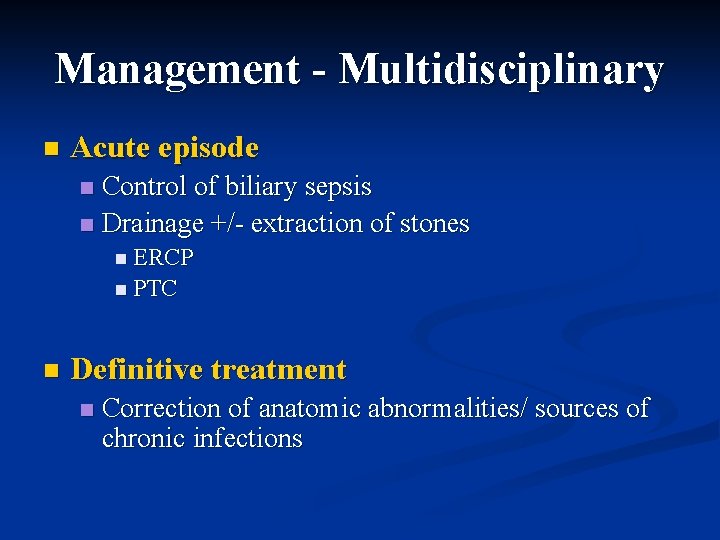
Management - Multidisciplinary n Acute episode Control of biliary sepsis n Drainage +/- extraction of stones n n ERCP n PTC n Definitive treatment n Correction of anatomic abnormalities/ sources of chronic infections
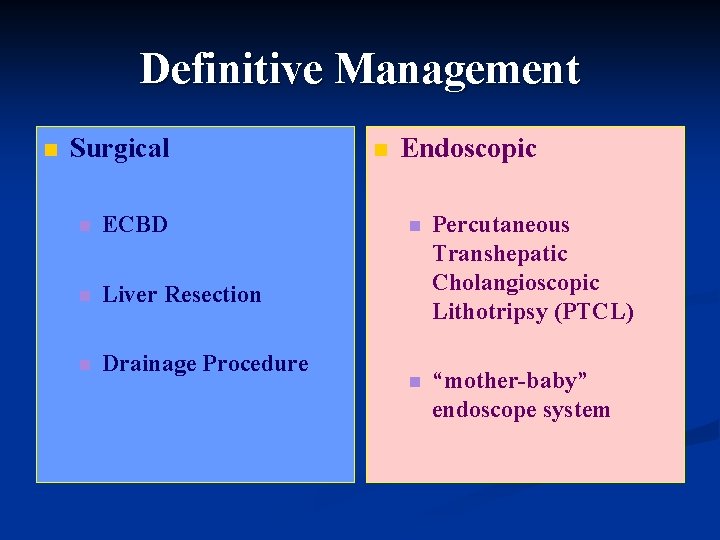
Definitive Management n Surgical n ECBD n Liver Resection n Drainage Procedure n Endoscopic n Percutaneous Transhepatic Cholangioscopic Lithotripsy (PTCL) n “mother-baby” endoscope system
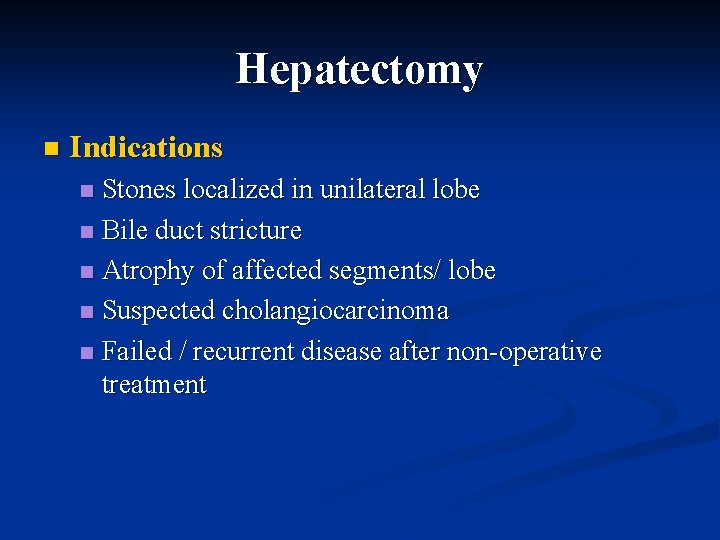
Hepatectomy n Indications Stones localized in unilateral lobe n Bile duct stricture n Atrophy of affected segments/ lobe n Suspected cholangiocarcinoma n Failed / recurrent disease after non-operative treatment n
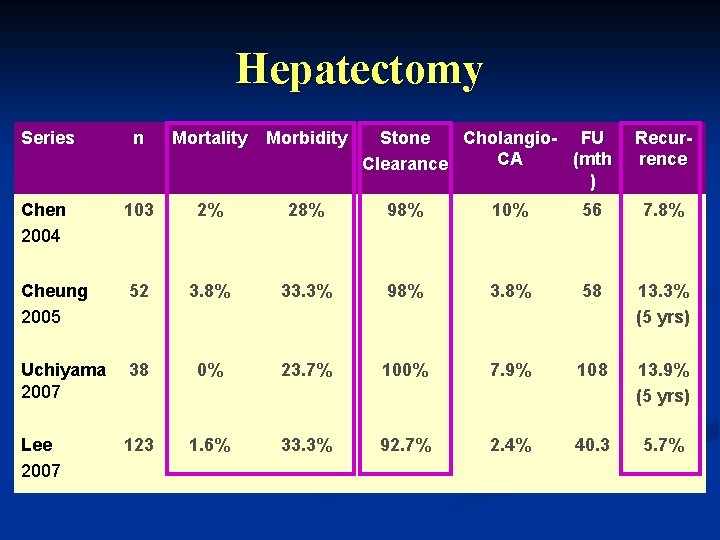
Hepatectomy Series n Mortality Morbidity Stone Cholangio- FU CA (mth Clearance ) Recurrence Chen 2004 103 2% 28% 98% 10% 56 7. 8% Cheung 2005 52 3. 8% 33. 3% 98% 3. 8% 58 13. 3% (5 yrs) Uchiyama 2007 38 0% 23. 7% 100% 7. 9% 108 13. 9% (5 yrs) Lee 2007 123 1. 6% 33. 3% 92. 7% 2. 4% 40. 3 5. 7%
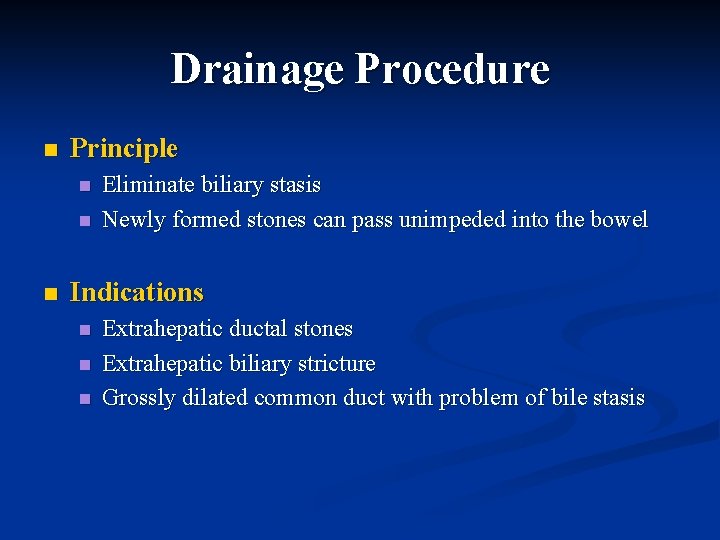
Drainage Procedure n Principle n n n Eliminate biliary stasis Newly formed stones can pass unimpeded into the bowel Indications n n n Extrahepatic ductal stones Extrahepatic biliary stricture Grossly dilated common duct with problem of bile stasis
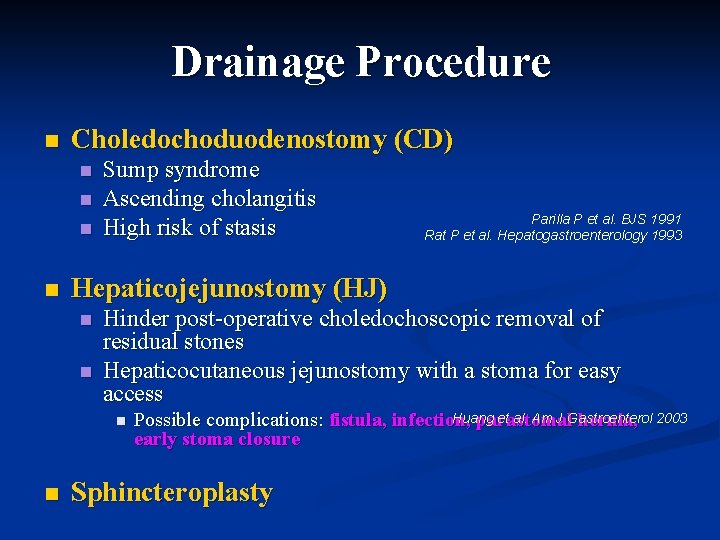
Drainage Procedure n Choledochoduodenostomy (CD) n n Sump syndrome Ascending cholangitis High risk of stasis Hepaticojejunostomy (HJ) n n Hinder post-operative choledochoscopic removal of residual stones Hepaticocutaneous jejunostomy with a stoma for easy access n n Parilla P et al. BJS 1991 Rat P et al. Hepatogastroenterology 1993 Huang et al. Am J Gastroenterol Possible complications: fistula, infection, parastomal hernia, 2003 early stoma closure Sphincteroplasty
Is Drainage Procedure a MUST after hepatectomy?
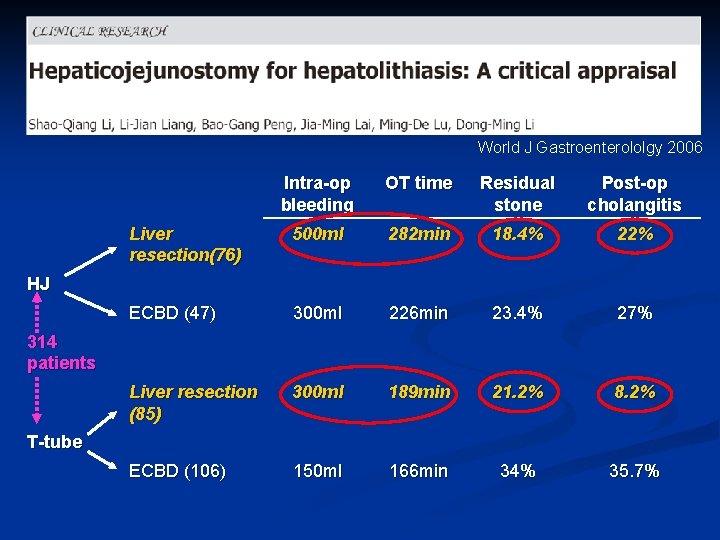
World J Gastroenterololgy 2006 Intra-op bleeding OT time Residual stone Post-op cholangitis Liver resection(76) 500 ml 282 min 18. 4% 22% ECBD (47) 300 ml 226 min 23. 4% 27% Liver resection (85) 300 ml 189 min 21. 2% 8. 2% ECBD (106) 150 ml 166 min 34% 35. 7% HJ 314 patients T-tube
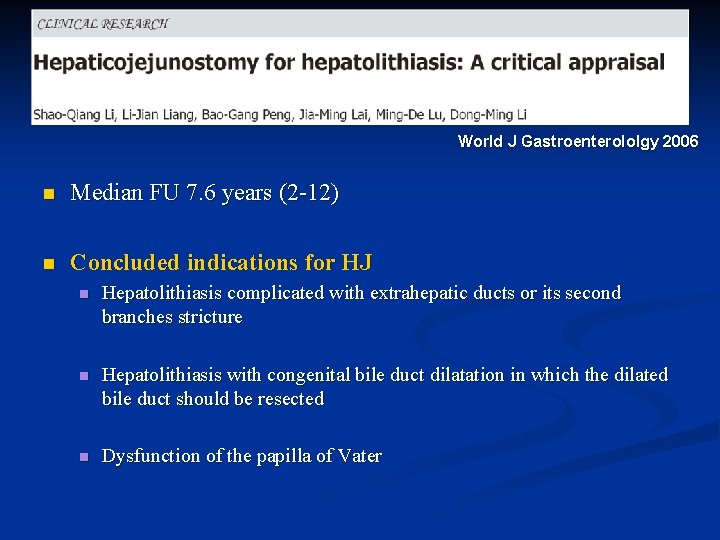
World J Gastroenterololgy 2006 n Median FU 7. 6 years (2 -12) n Concluded indications for HJ n Hepatolithiasis complicated with extrahepatic ducts or its second branches stricture n Hepatolithiasis with congenital bile duct dilatation in which the dilated bile duct should be resected n Dysfunction of the papilla of Vater
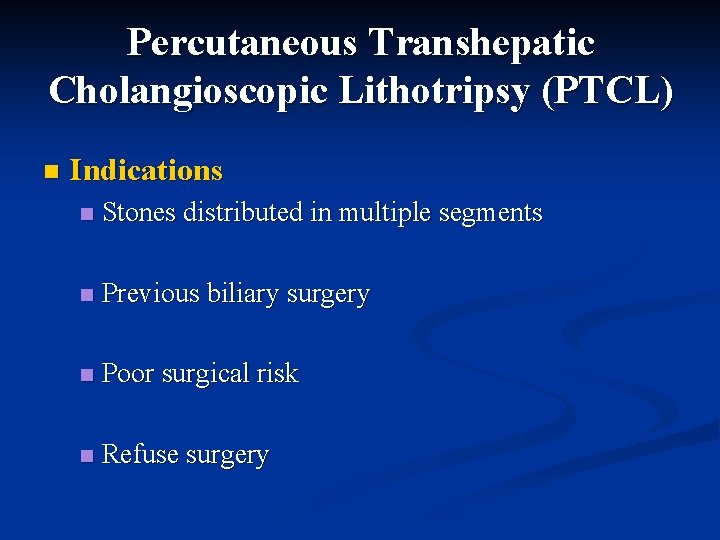
Percutaneous Transhepatic Cholangioscopic Lithotripsy (PTCL) n Indications n Stones distributed in multiple segments n Previous biliary surgery n Poor surgical risk n Refuse surgery
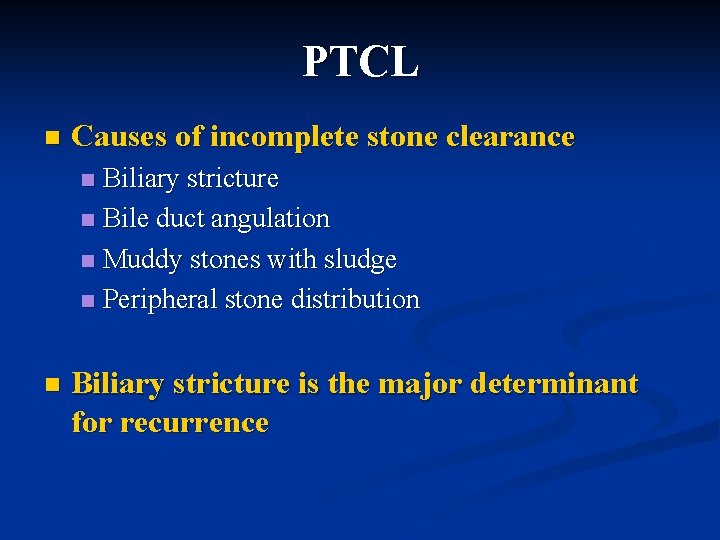
PTCL n Causes of incomplete stone clearance Biliary stricture n Bile duct angulation n Muddy stones with sludge n Peripheral stone distribution n n Biliary stricture is the major determinant for recurrence
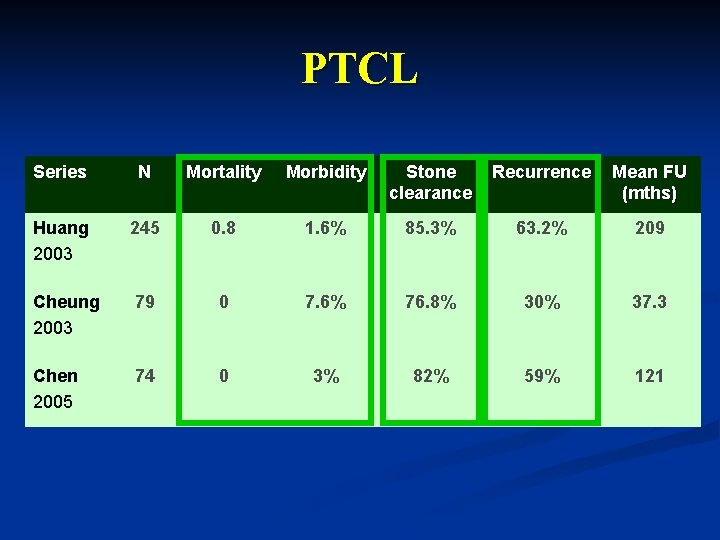
PTCL Series N Mortality Morbidity Stone clearance Recurrence Mean FU (mths) Huang 2003 245 0. 8 1. 6% 85. 3% 63. 2% 209 Cheung 2003 79 0 7. 6% 76. 8% 30% 37. 3 Chen 2005 74 0 3% 82% 59% 121
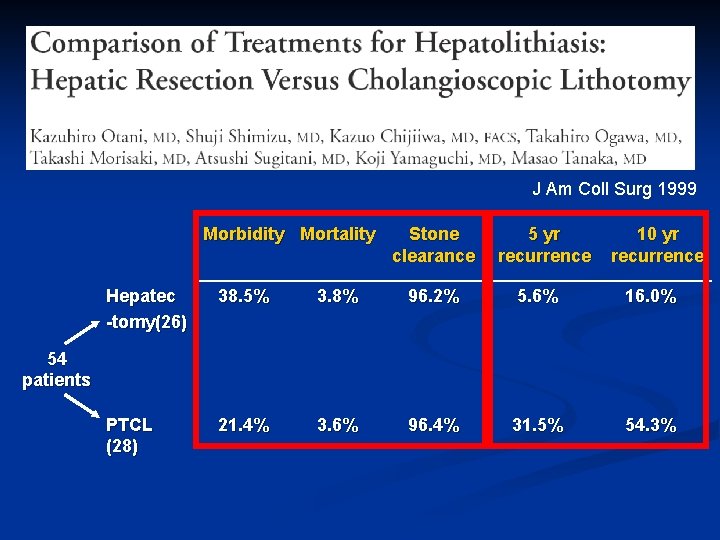
J Am Coll Surg 1999 Morbidity Mortality Stone clearance 5 yr recurrence 10 yr recurrence Hepatec -tomy(26) 38. 5% 3. 8% 96. 2% 5. 6% 16. 0% PTCL (28) 21. 4% 3. 6% 96. 4% 31. 5% 54. 3% 54 patients
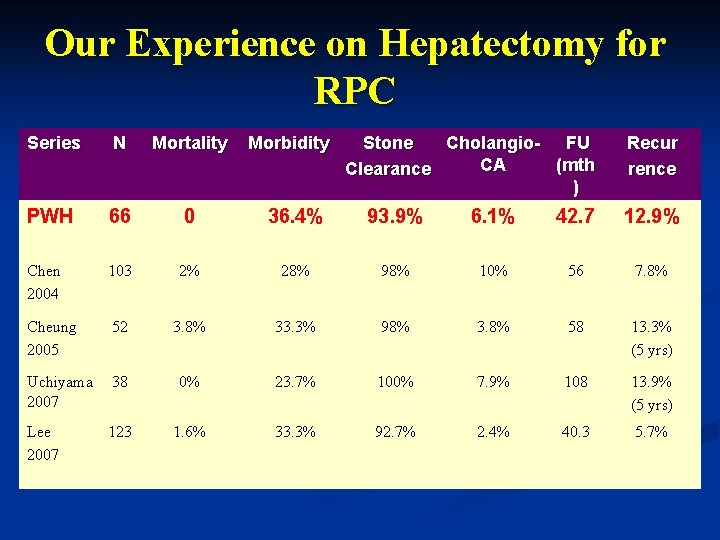
Our Experience on Hepatectomy for RPC Series N Mortality Morbidity Stone Cholangio- FU CA (mth Clearance ) Recur rence PWH 66 0 36. 4% 93. 9% 6. 1% 42. 7 12. 9% Chen 2004 103 2% 28% 98% 10% 56 7. 8% Cheung 2005 52 3. 8% 33. 3% 98% 3. 8% 58 13. 3% (5 yrs) Uchiyama 2007 38 0% 23. 7% 100% 7. 9% 108 13. 9% (5 yrs) Lee 2007 123 1. 6% 33. 3% 92. 7% 2. 4% 40. 3 5. 7%
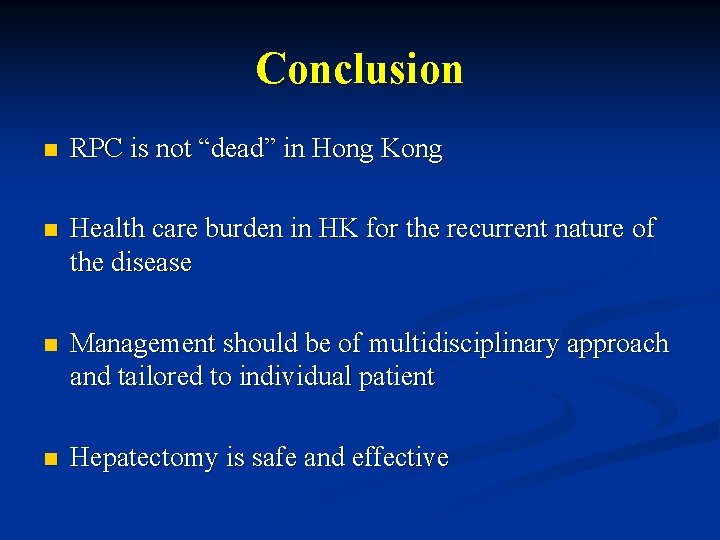
Conclusion n RPC is not “dead” in Hong Kong n Health care burden in HK for the recurrent nature of the disease n Management should be of multidisciplinary approach and tailored to individual patient n Hepatectomy is safe and effective