
Jewish Leadership Council Governors Workshop 4 November 2014
Jewish Leadership Council Governors’ Workshop 4 November 2014 What keeps your head awake at night? Enhancing Vital Partnerships Facilitator Andrea Berkeley June 2011
Introductions and Expectations • Name • Role • School • This workshop will be of value if ………………
Workshop Objectives By the end of the session we will have…. • Explored the ambivalence inherent in the joint but different accountabilities of heads and governors • Expressed hopes and concerns about working together as governors and heads to maximize the potential of every child in our care • Increased understanding of the external and internal pressures on heads that may not always be obvious • Share strategies for building a supportive but challenging relationship of trust between governors and heads.

How we want to work together
Ice-Breaker table activity • Reflect, pair, share……. • If the head of my school were a bird or an animal…. . • I would admire him/her for……. • I would have concerns about…. .

What governing bodies should expect from schools leaders What school leaders should expect from governing bodies Table Activity: ASCL & NAHT document • What questions does this raise for you? • To what extent does this reflect what you expect from each other?
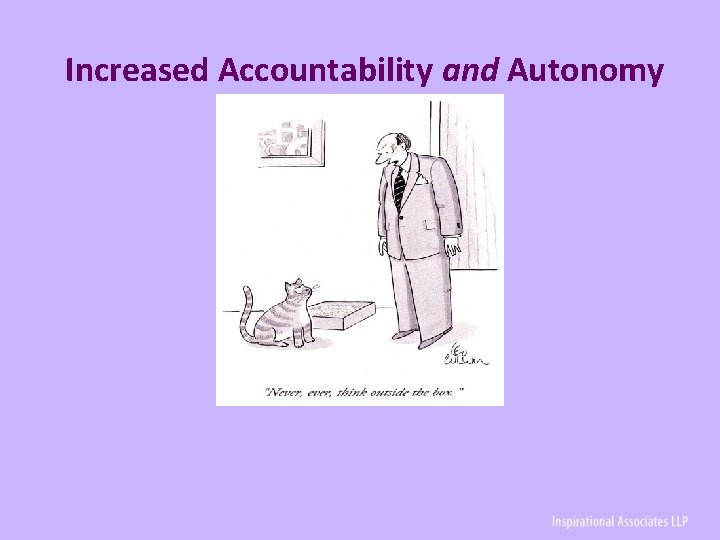
Increased Accountability and Autonomy
Inside the Mind of a Head from poacher turned gamekeeper, non judgementally
What heads really feel External The ‘O’ word - Constant scrutiny - climate of fear The ‘P’ word - Safeguarding and fear of litigation The ‘G’ word - managing up is as hard as managing down • Being accountable, holding others to account • Appearing all-powerful, feeling powerless • Heads are lonely, full of self-doubt - but most have true grit. • •
What keeps heads awake at night? • • • External Constant change – reinventing the wheel and ‘gaming’ Resentful compliance and fear of challenge Death by initiative, policy overload Being accountable, holding others to account Staff turnover and underperformance Delegating and distributing leadership The lure of system leadership Managing boundaries
What governing bodies should expect from schools leaders What school leaders should expect from governing bodies Table Activity: Case Study The key relationship between chair and head
Key Points to Consider • Explore your expectations of the relationship with the headteacher. Are they the same or are you each making (different) assumptions? • Do the arrangements for keeping in touch suit both parties? • How effectively do you support, challenge and hold your head tom account? • Could any aspects of your relationship be improved? • In which areas of work would you and the headteacher benefit from joint training? • How effective is the performance management of the head?

Working together - how do you match up? 13
Amnesia, déjà vu and confused accountabilities
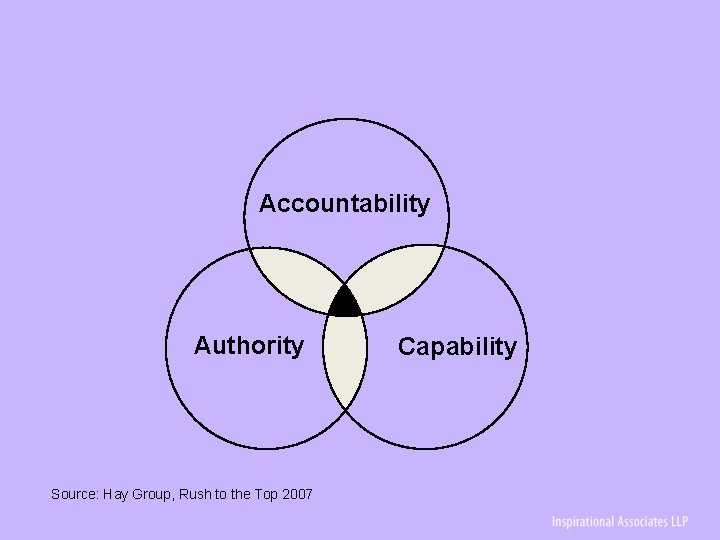
Accountability Authority Source: Hay Group, Rush to the Top 2007 Capability
What keeps heads awake at night? Internal Imposter syndrome Thinking it’s the best job, saying it’s the worst job Sweating the small stuff as well as the big stuff Being in the thick and the thin of things Competing loyalties – children, parents, governors, the wider community • Vampires, monkeys and a tide of human misery • Not being ‘liked’ • • •
What we know about school leadership • Leadership makes a difference - second only to classroom instruction as an influence on student learning. • Learning-centred leadership is critical • Distributing leadership matters • Talent development and succession planning are crucial • Almost all successful leaders draw on the same repertoire of basic leadership practices – a small handful of personal “traits” explain a high proportion of variation (such as being open minded, flexible, persistent and optimistic) • Their achievements do not happen by chance, but by highly reflective, carefully planned and implemented strategies, consistently applied Seven Strong Claims about School Leadership (NCSL 2006) Ten Strong Claims about School Leadership (Day et al 2010)
Getting others on board • “Leadership would be easy to achieve and manage if it weren’t for the uncomfortable reality that without follower-ship there could be no leadership………. . (creative leadership) requires follower-ship to be an active process of participation” (Anton Obholzer)
Distributed leadership or confusion? • Should we aspire to organisations in which everyone should be leader? Sergionvanni, 1999 • Leadership is about direction and influence. • Stability is the chief goal of management, vital for change to be successfully implemented. • Frequent head and deputy head turnover is a key source of instability, and a plausible reason why the blizzard of changes that have been adopted by schools over the past half century have had so little effect on the success of our pupils. Successful School Leadership What It Is and How It Influences Pupil Learning (Leithwood et al, 2006)
- Slides: 19