
Jewish Holiday Traditions A Pictorial Guide to Customs
- Slides: 60
Jewish Holiday Traditions: A Pictorial Guide to Customs and Prayers Mar. 2013 Jewish Holiday Traditions Slide 1
About This Presentation This presentation has been prepared to document the religious and social traditions of a Persian Jewish family. It is based on the non-orthodox religious practices of a modern Jewish family rooted in Iran’s Kurdistan province. The material contained herein can be used freely for personal and educational purposes. Unauthorized uses, including distribution for profit are prohibited. © B. Parhami Edition Released Revised First Sep. 2008 Apr. 2009 Sep. 2010 Mar. 2013 Jewish Holiday Traditions Slide 2
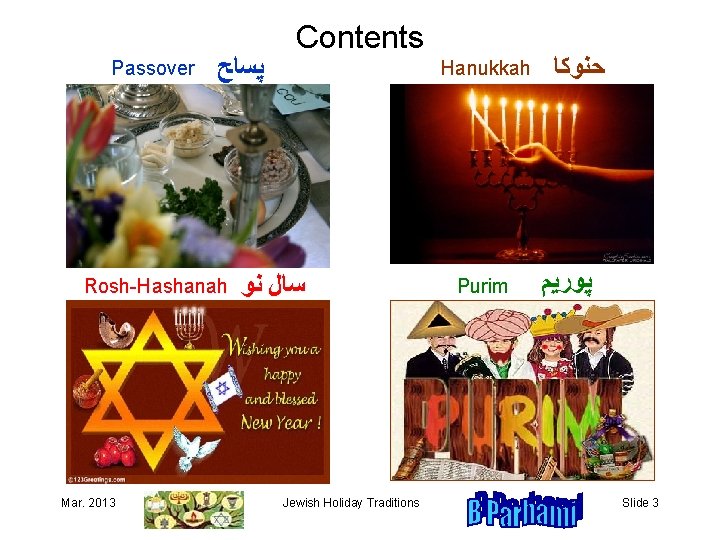
Passover ﭙﺴﺎﺢ Rosh-Hashanah Mar. 2013 Contents Hanukkah ﻧﻮ ﺳﺎﻞ Jewish Holiday Traditions Purim ﺣﻨﻮﻜﺎ ﭙﻮﺮﻴﻢ Slide 3
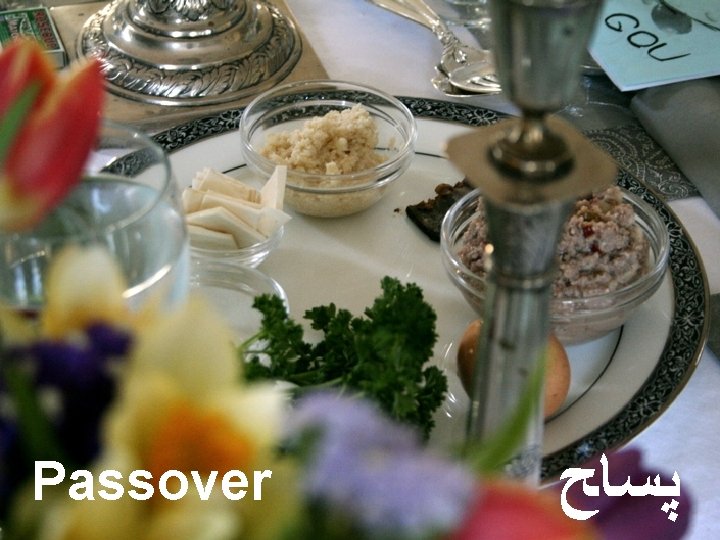
Passover Sep. 2008 Jewish Holiday Traditions ﭙﺴﺎﺢ Slide 4
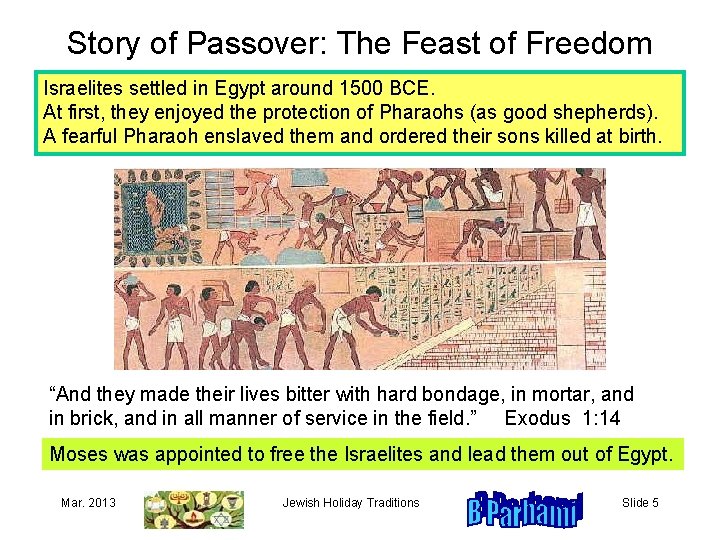
Story of Passover: The Feast of Freedom Israelites settled in Egypt around 1500 BCE. At first, they enjoyed the protection of Pharaohs (as good shepherds). A fearful Pharaoh enslaved them and ordered their sons killed at birth. “And they made their lives bitter with hard bondage, in mortar, and in brick, and in all manner of service in the field. ” Exodus 1: 14 Moses was appointed to free the Israelites and lead them out of Egypt. Mar. 2013 Jewish Holiday Traditions Slide 5
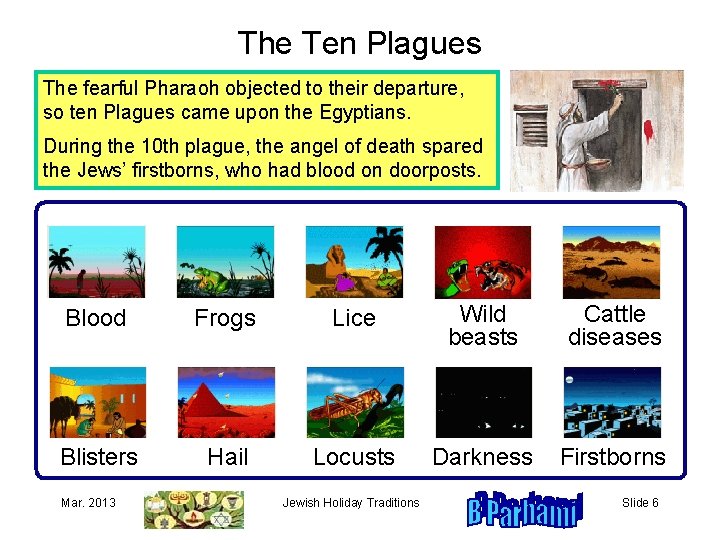
The Ten Plagues The fearful Pharaoh objected to their departure, so ten Plagues came upon the Egyptians. During the 10 th plague, the angel of death spared the Jews’ firstborns, who had blood on doorposts. Blood Frogs Lice Wild beasts Cattle diseases Blisters Hail Locusts Darkness Firstborns Mar. 2013 Jewish Holiday Traditions Slide 6
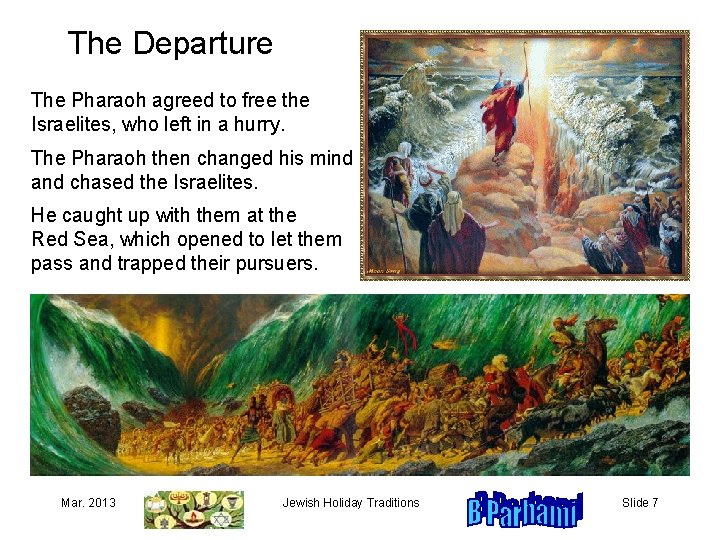
The Departure The Pharaoh agreed to free the Israelites, who left in a hurry. The Pharaoh then changed his mind and chased the Israelites. He caught up with them at the Red Sea, which opened to let them pass and trapped their pursuers. Mar. 2013 Jewish Holiday Traditions Slide 7
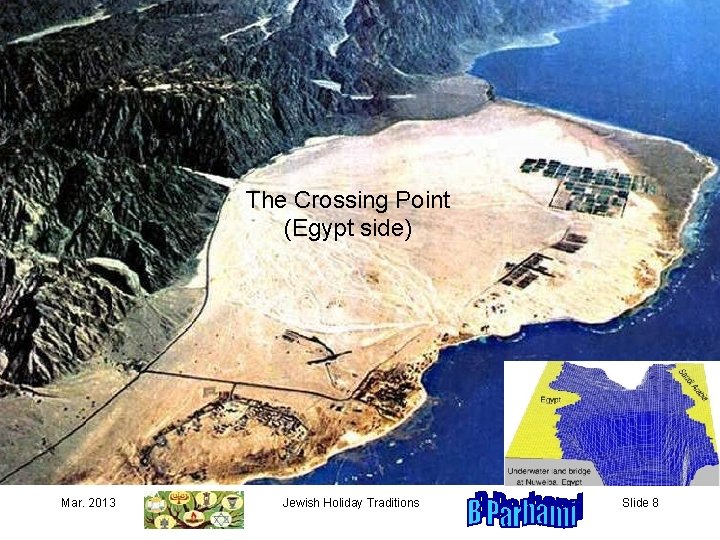
The Crossing Point (Egypt side) Mar. 2013 Jewish Holiday Traditions Slide 8
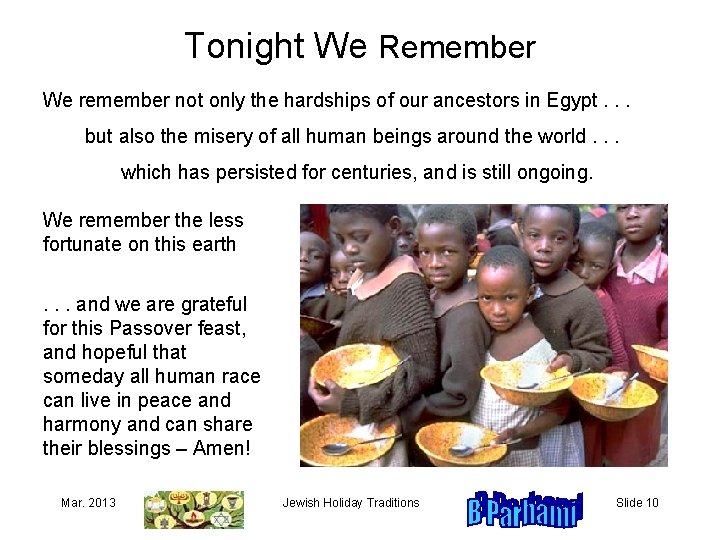
Tonight We Remember We remember not only the hardships of our ancestors in Egypt. . . but also the misery of all human beings around the world. . . which has persisted for centuries, and is still ongoing. We remember the less fortunate on this earth . . . and we are grateful for this Passover feast, and hopeful that someday all human race can live in peace and harmony and can share their blessings – Amen! Mar. 2013 Jewish Holiday Traditions Slide 10
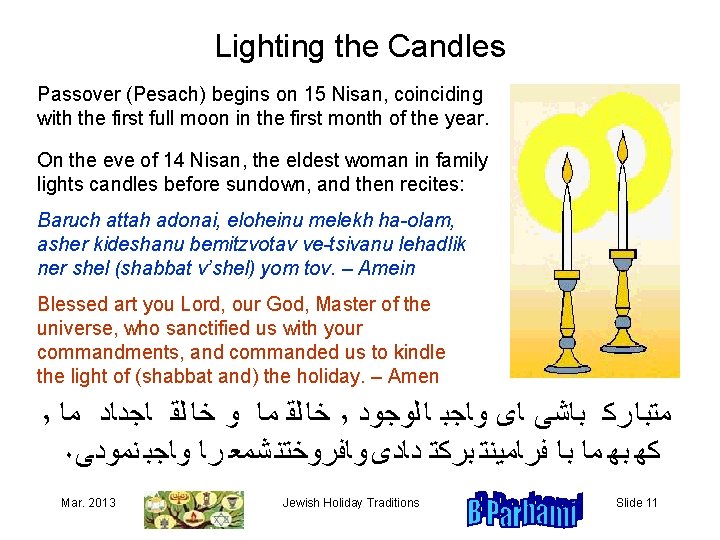
Lighting the Candles Passover (Pesach) begins on 15 Nisan, coinciding with the first full moon in the first month of the year. On the eve of 14 Nisan, the eldest woman in family lights candles before sundown, and then recites: Baruch attah adonai, eloheinu melekh ha-olam, asher kideshanu bemitzvotav ve-tsivanu lehadlik ner shel (shabbat v’shel) yom tov. – Amein Blessed art you Lord, our God, Master of the universe, who sanctified us with your commandments, and commanded us to kindle the light of (shabbat and) the holiday. – Amen ٬ ﺧﺎ ﻠﻘﻬﻤﺎﻬﻬﻮﻬﺨﺎ ﻠﻘﻬﻬﺎﺠﺪﺎﺪﻬﻬﻤﺎﻪ ٬ ﻣﺘﺒﺎ ﺮﻜﻬﻬﺒﺎﺸﻰﻬﺎﻯﻬﻮﺎﺠﺒﻬﺎ ﻠﻮﺠﻮﺪﻪ ۰ ﻫﻜﻬﻬﺒﻬﻬﻤﺎﻬﺒﺎﻬﻔﺮﺎﻤﻴﻨﺘﻬﺒﺮﻜﺘﻬﺪﺎﺪﻯ ﻮﺎﻔﺮﻮﺨﺘﻨ ﺸﻤﻌﻬﺮﺎﻬﻮﺎﺠﺒ ﻨﻤﻮﺪﻰ ﻬ ﻬ Mar. 2013 ﻬ ﻬ ﻬ Jewish Holiday Traditions Slide 11
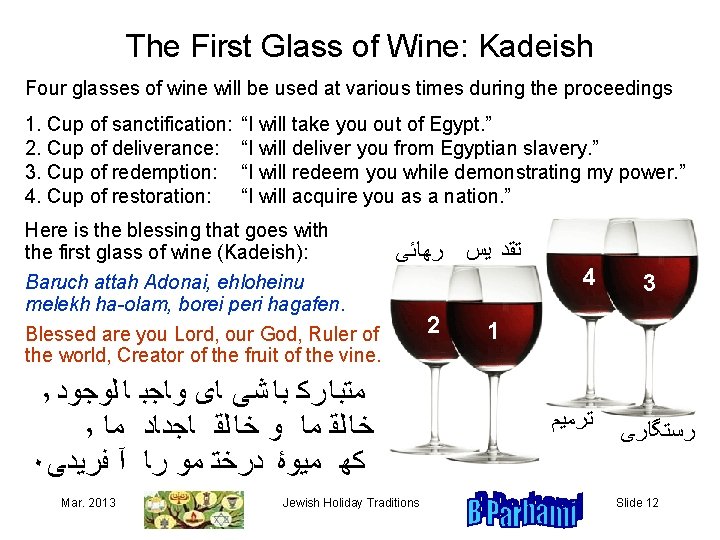
The First Glass of Wine: Kadeish Four glasses of wine will be used at various times during the proceedings 1. Cup of sanctification: 2. Cup of deliverance: 3. Cup of redemption: 4. Cup of restoration: “I will take you out of Egypt. ” “I will deliver you from Egyptian slavery. ” “I will redeem you while demonstrating my power. ” “I will acquire you as a nation. ” Here is the blessing that goes with the first glass of wine (Kadeish): ﺗﻘﺪﻬﻴﺲ ﺭﻬﺎﺌﻰ Baruch attah Adonai, ehloheinu melekh ha-olam, borei peri hagafen. Blessed are you Lord, our God, Ruler of the world, Creator of the fruit of the vine. ٬ ﻣﺘﺒﺎ ﺮﻜﻬﺒﺎ ﺸﻰﻬﺎﻯﻬﻮﺎﺠﺒﻬﺎ ﻠﻮﺠﻮﺪ ٬ ﺧﺎ ﻠﻘﻬﻤﺎﻬﻬﻮﻬﺨﺎ ﻠﻘﻬﻬﺎﺠﺪﺎﺪﻬﻬﻤﺎﻪ ۰ ﺪﺮﺨﺘﻬﻤﻮﻬﺮﺎﻬﻬﺁﻬﻔﺮﻴﺪﻰ ﻛﻬﻬﻬﻤﻴﻮﮤ ﻪ ﻬ ﻬ ﻬ 2 4 3 1 ﺗﺮﻤﻴﻢ ﺭﺴﺘﮕﺎﺮﻰ ﻫ Mar. 2013 Jewish Holiday Traditions Slide 12
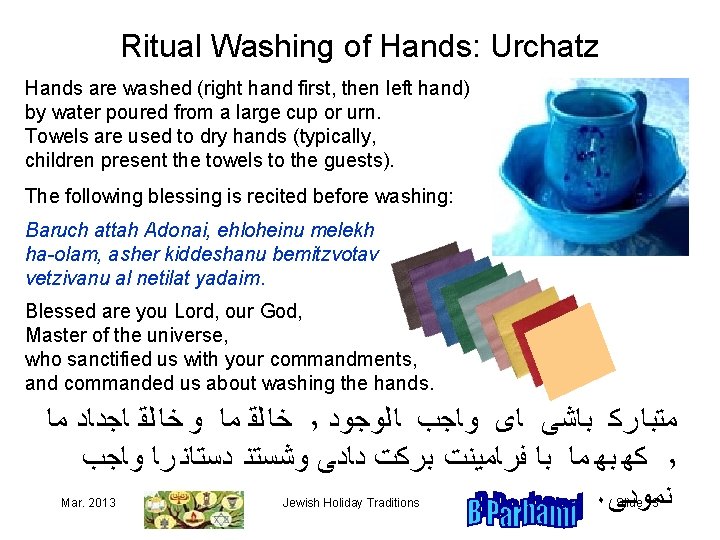
Ritual Washing of Hands: Urchatz Hands are washed (right hand first, then left hand) by water poured from a large cup or urn. Towels are used to dry hands (typically, children present the towels to the guests). The following blessing is recited before washing: Baruch attah Adonai, ehloheinu melekh ha-olam, asher kiddeshanu bemitzvotav vetzivanu al netilat yadaim. Blessed are you Lord, our God, Master of the universe, who sanctified us with your commandments, and commanded us about washing the hands. ﺧﺎ ﻠﻘﻬﺎﺠﺪﺎﺪﻬﻤﺎ ﻫﻮ ﻫﺨﺎ ﻠﻘﻬﻤﺎ ٬ ﻫﺎ ﻠﻮﺠﻮﺪ ﻭﺎﺠﺐ ﻫﺎﻯﻪ ﺑﺎﺸﻰ ﻣﺘﺒﺎ ﺮﻜﻪ ﺩﺴﺘﺎﻨﻬﺮﺎﻬﻮﺎﺠﺐ ﺩﺎﺪﻰ ﻮﺸﺴﺘﻨ ﻫﺒﺮﻜﺖ ﻫﺒﺎﻬﻔﺮﺎﻤﻴﻨﺖ ﻫﻜﻬﻬﺒﻬﻬﻤﺎ ٬ ۰ ﻨﻤﻮﺪﻰ ﻬ ﻬ ﻪ Mar. 2013 ﻬ ﻬ ﻫ Jewish Holiday Traditions Slide 13 ﻫ
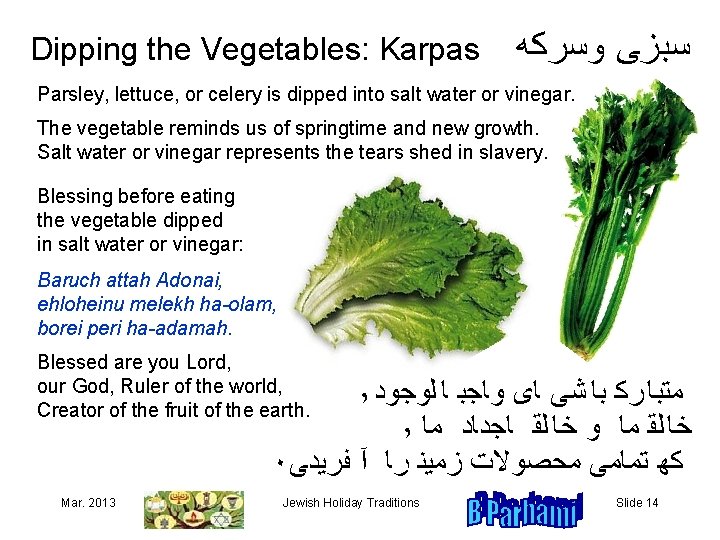
Dipping the Vegetables: Karpas ﻭﺴﺮﻜﻪ ﺳﺒﺰﻰ Parsley, lettuce, or celery is dipped into salt water or vinegar. The vegetable reminds us of springtime and new growth. Salt water or vinegar represents the tears shed in slavery. Blessing before eating the vegetable dipped in salt water or vinegar: Baruch attah Adonai, ehloheinu melekh ha-olam, borei peri ha-adamah. Blessed are you Lord, our God, Ruler of the world, Creator of the fruit of the earth. ٬ ﻣﺘﺒﺎ ﺮﻜﻬﺒﺎ ﺸﻰﻬﺎﻯﻬﻮﺎﺠﺒﻬﺎ ﻠﻮﺠﻮﺪ ٬ ﺧﺎ ﻠﻘﻬﻤﺎﻬﻬﻮﻬﺨﺎ ﻠﻘﻬﻬﺎﺠﺪﺎﺪﻬﻬﻤﺎﻪ ۰ ﺯﻤﻴﻨﻬﺮﺎﻬﻬﺁﻬﻔﺮﻴﺪﻰ ﻛﻬﻬﺘﻤﺎﻤﻰﺘﻤﺤﺼﻮﻻﺖ ﻪ ﻬ ﻬ Mar. 2013 Jewish Holiday Traditions ﻬ Slide 14
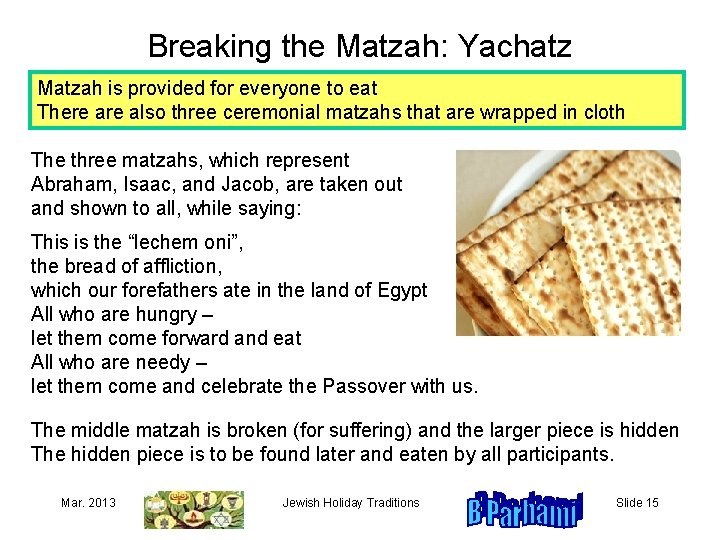
Breaking the Matzah: Yachatz Matzah is provided for everyone to eat There also three ceremonial matzahs that are wrapped in cloth The three matzahs, which represent Abraham, Isaac, and Jacob, are taken out and shown to all, while saying: This is the “lechem oni”, the bread of affliction, which our forefathers ate in the land of Egypt All who are hungry – let them come forward and eat All who are needy – let them come and celebrate the Passover with us. The middle matzah is broken (for suffering) and the larger piece is hidden The hidden piece is to be found later and eaten by all participants. Mar. 2013 Jewish Holiday Traditions Slide 15
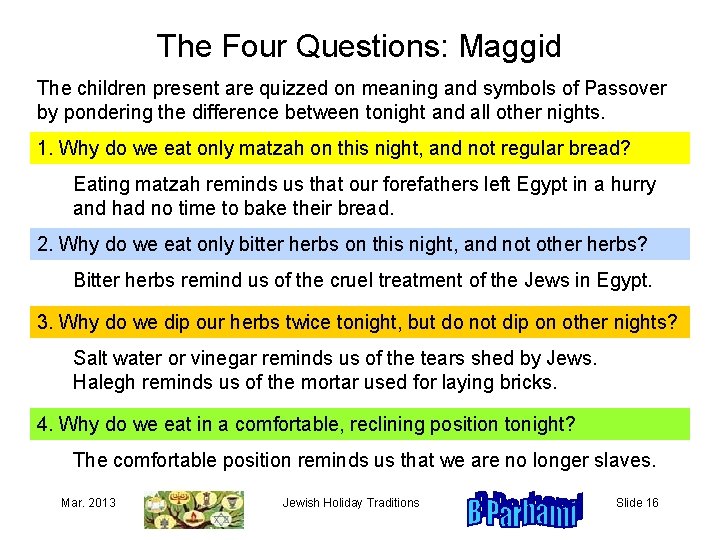
The Four Questions: Maggid The children present are quizzed on meaning and symbols of Passover by pondering the difference between tonight and all other nights. 1. Why do we eat only matzah on this night, and not regular bread? Eating matzah reminds us that our forefathers left Egypt in a hurry and had no time to bake their bread. 2. Why do we eat only bitter herbs on this night, and not other herbs? Bitter herbs remind us of the cruel treatment of the Jews in Egypt. 3. Why do we dip our herbs twice tonight, but do not dip on other nights? Salt water or vinegar reminds us of the tears shed by Jews. Halegh reminds us of the mortar used for laying bricks. 4. Why do we eat in a comfortable, reclining position tonight? The comfortable position reminds us that we are no longer slaves. Mar. 2013 Jewish Holiday Traditions Slide 16
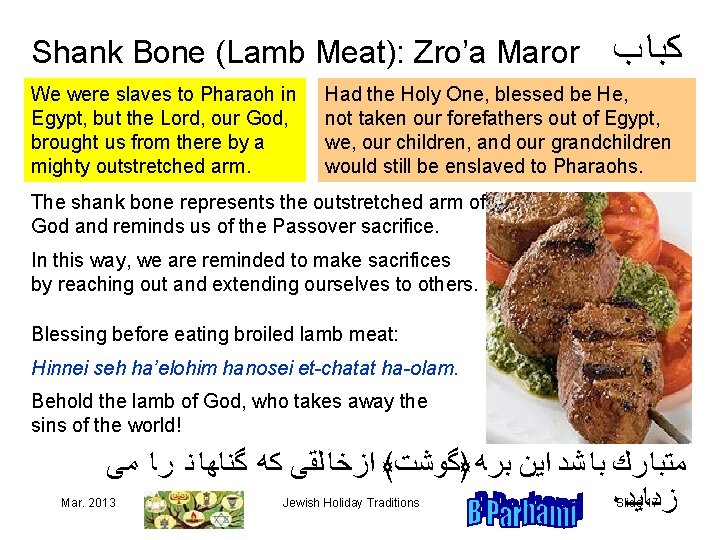
Shank Bone (Lamb Meat): Zro’a Maror ﺏ ﻛﺒﺎ We were slaves to Pharaoh in Egypt, but the Lord, our God, brought us from there by a mighty outstretched arm. Had the Holy One, blessed be He, not taken our forefathers out of Egypt, we, our children, and our grandchildren would still be enslaved to Pharaohs. The shank bone represents the outstretched arm of God and reminds us of the Passover sacrifice. In this way, we are reminded to make sacrifices by reaching out and extending ourselves to others. Blessing before eating broiled lamb meat: Hinnei seh ha’elohim hanosei et-chatat ha-olam. Behold the lamb of God, who takes away the sins of the world! ﻧﻬﺮﺎﻬﻤﻰ ﮔﻨﺎﻬﺎ ﻛﻪ ﺍﺰﺨﺎ ﻠﻘﻰ ﴾ ﴿ﮔﻮﺸﺖ ﺑﺮﻪ ﺍﻴﻦ ﺑﺎ ﺸﺪ ﻣﺘﺒﺎ ﺮﻚ ۰ ﺯﺪﺎﻴﺪ ﻬ Mar. 2013 Jewish Holiday Traditions ﻬ ﻬ Slide 17
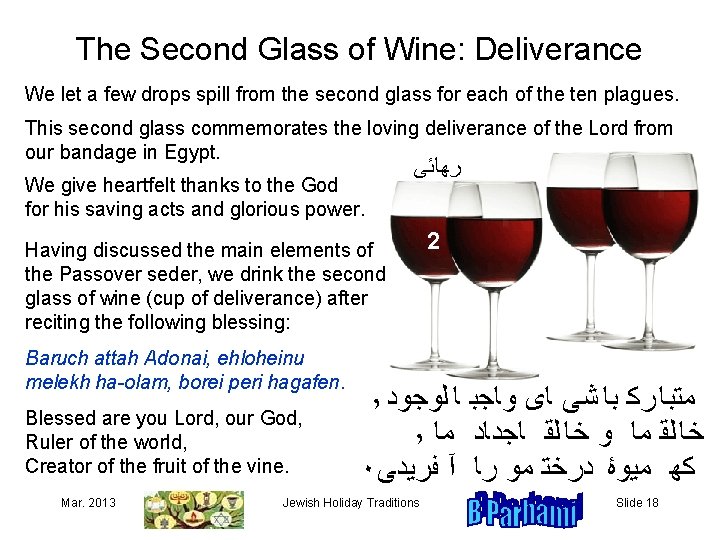
The Second Glass of Wine: Deliverance We let a few drops spill from the second glass for each of the ten plagues. This second glass commemorates the loving deliverance of the Lord from our bandage in Egypt. ﺭﻬﺎﺌﻰ We give heartfelt thanks to the God for his saving acts and glorious power. Having discussed the main elements of the Passover seder, we drink the second glass of wine (cup of deliverance) after reciting the following blessing: Baruch attah Adonai, ehloheinu melekh ha-olam, borei peri hagafen. Blessed are you Lord, our God, Ruler of the world, Creator of the fruit of the vine. Mar. 2013 2 ٬ ﻣﺘﺒﺎ ﺮﻜﻬﺒﺎ ﺸﻰﻬﺎﻯﻬﻮﺎﺠﺒﻬﺎ ﻠﻮﺠﻮﺪ ٬ ﺧﺎ ﻠﻘﻬﻤﺎﻬﻬﻮﻬﺨﺎ ﻠﻘﻬﻬﺎﺠﺪﺎﺪﻬﻬﻤﺎﻪ ۰ ﺪﺮﺨﺘﻬﻤﻮﻬﺮﺎﻬﻬﺁﻬﻔﺮﻴﺪﻰ ﻛﻬﻬﻬﻤﻴﻮﮤ ﻪ Jewish Holiday Traditions ﻬ ﻬ ﻬ ﻫ Slide 18
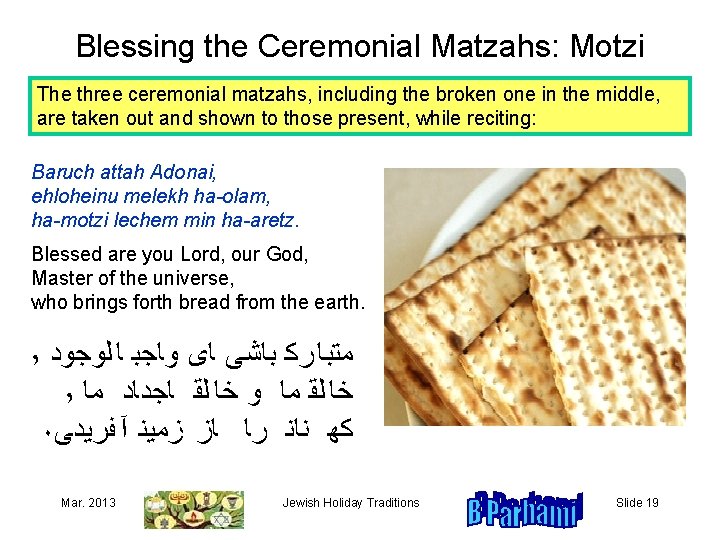
Blessing the Ceremonial Matzahs: Motzi The three ceremonial matzahs, including the broken one in the middle, are taken out and shown to those present, while reciting: Baruch attah Adonai, ehloheinu melekh ha-olam, ha-motzi lechem min ha-aretz. Blessed are you Lord, our God, Master of the universe, who brings forth bread from the earth. ٬ ﻣﺘﺒﺎ ﺮﻜﻬﺒﺎﺸﻰﻬﺎﻯﻬﻮﺎﺠﺒﻬﺎ ﻠﻮﺠﻮﺪﻪ ﻩ ٬ ﺧﺎ ﻠﻘﻬﻤﺎﻬﻬﻮﻬﺨﺎ ﻠﻘﻬﻬﺎﺠﺪﺎﺪﻬﻬﻤﺎﻪ ۰ ﻛﻬﻬﻬﻨﺎﻨﻬﻬﻬﺮﺎﻬﻬﺎﺰﻬﺰﻤﻴﻨﻬﺁ ﻔﺮﻴﺪﻰ ﻬ ﻬ ﻬ Mar. 2013 Jewish Holiday Traditions Slide 19
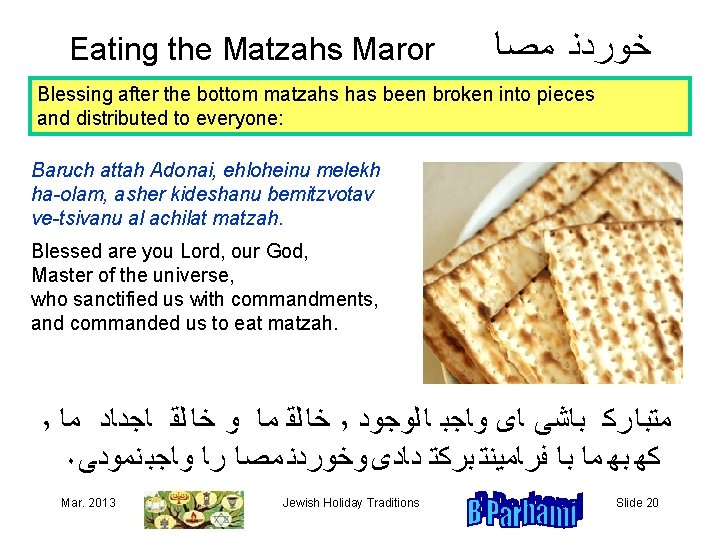
Eating the Matzahs Maror ﺧﻮﺮﺪﻨﻬﻤﺼﺎ Blessing after the bottom matzahs has been broken into pieces and distributed to everyone: Baruch attah Adonai, ehloheinu melekh ha-olam, asher kideshanu bemitzvotav ve-tsivanu al achilat matzah. Blessed are you Lord, our God, Master of the universe, who sanctified us with commandments, and commanded us to eat matzah. ٬ ﺧﺎ ﻠﻘﻬﻤﺎﻬﻬﻮﻬﺨﺎ ﻠﻘﻬﻬﺎﺠﺪﺎﺪﻬﻬﻤﺎﻪ ٬ ﻣﺘﺒﺎ ﺮﻜﻬﻬﺒﺎﺸﻰﻬﺎﻯﻬﻮﺎﺠﺒﻬﺎ ﻠﻮﺠﻮﺪﻪ ۰ ﻫﻜﻬﻬﺒﻬﻬﻤﺎﻬﺒﺎﻬﻔﺮﺎﻤﻴﻨﺘﻬﺒﺮﻜﺘﻬﺪﺎﺪﻯ ﻮﺨﻮﺮﺪﻨﻬﻤﺼﺎ ﻬﺮﺎﻬﻮﺎﺠﺒ ﻨﻤﻮﺪﻰ ﻬ ﻬ Mar. 2013 ﻬ ﻤ ﻬ ﻬ ﻬ Jewish Holiday Traditions Slide 20
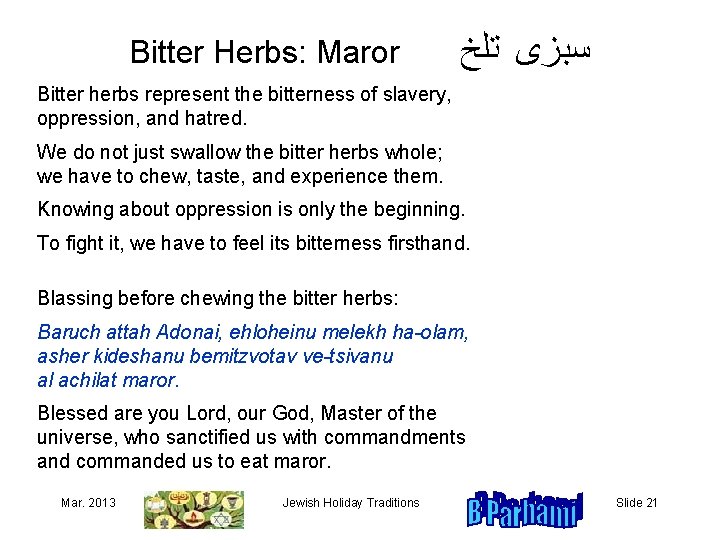
Bitter Herbs: Maror ﺳﺒﺰﻯﻬﺘﻠﺦ Bitter herbs represent the bitterness of slavery, oppression, and hatred. We do not just swallow the bitter herbs whole; we have to chew, taste, and experience them. Knowing about oppression is only the beginning. To fight it, we have to feel its bitterness firsthand. Blassing before chewing the bitter herbs: Baruch attah Adonai, ehloheinu melekh ha-olam, asher kideshanu bemitzvotav ve-tsivanu al achilat maror. Blessed are you Lord, our God, Master of the universe, who sanctified us with commandments and commanded us to eat maror. Mar. 2013 Jewish Holiday Traditions Slide 21
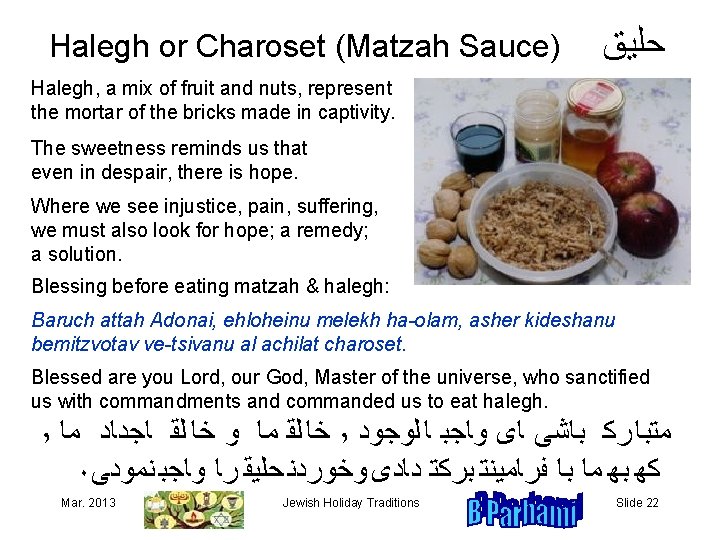
Halegh or Charoset (Matzah Sauce) ﺣﻠﻴﻖ Halegh, a mix of fruit and nuts, represent the mortar of the bricks made in captivity. The sweetness reminds us that even in despair, there is hope. Where we see injustice, pain, suffering, we must also look for hope; a remedy; a solution. Blessing before eating matzah & halegh: Baruch attah Adonai, ehloheinu melekh ha-olam, asher kideshanu bemitzvotav ve-tsivanu al achilat charoset. Blessed are you Lord, our God, Master of the universe, who sanctified us with commandments and commanded us to eat halegh. ٬ ﺧﺎ ﻠﻘﻬﻤﺎﻬﻬﻮﻬﺨﺎ ﻠﻘﻬﻬﺎﺠﺪﺎﺪﻬﻬﻤﺎﻪ ٬ ﻣﺘﺒﺎ ﺮﻜﻬﻬﺒﺎﺸﻰﻬﺎﻯﻬﻮﺎﺠﺒﻬﺎ ﻠﻮﺠﻮﺪﻪ ۰ ﻫﻜﻬﻬﺒﻬﻬﻤﺎﻬﺒﺎﻬﻔﺮﺎﻤﻴﻨﺘﻬﺒﺮﻜﺘﻬﺪﺎﺪﻯ ﻮﺨﻮﺮﺪﻨ ﺤﻠﻴﻘﻬﺮﺎﻬﻮﺎﺠﺒ ﻨﻤﻮﺪﻰ ﻬ ﻬ Mar. 2013 ﻬ ﻬ ﻬ Jewish Holiday Traditions Slide 22
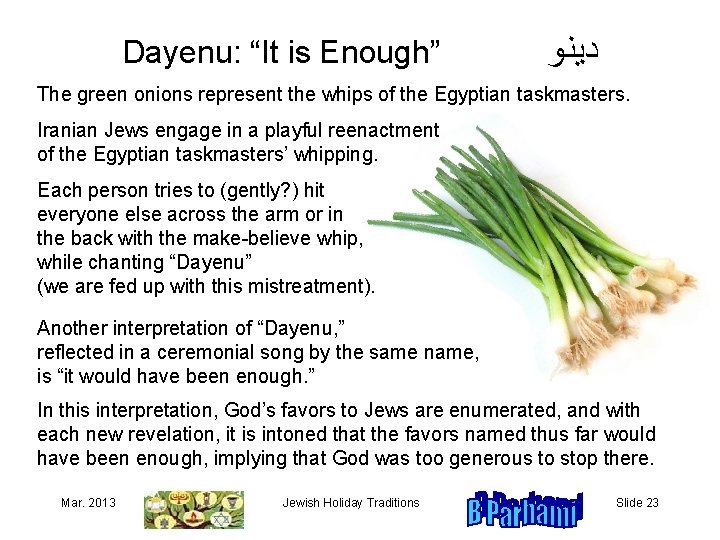
Dayenu: “It is Enough” ﺩﻴﻨﻮ The green onions represent the whips of the Egyptian taskmasters. Iranian Jews engage in a playful reenactment of the Egyptian taskmasters’ whipping. Each person tries to (gently? ) hit everyone else across the arm or in the back with the make-believe whip, while chanting “Dayenu” (we are fed up with this mistreatment). Another interpretation of “Dayenu, ” reflected in a ceremonial song by the same name, is “it would have been enough. ” In this interpretation, God’s favors to Jews are enumerated, and with each new revelation, it is intoned that the favors named thus far would have been enough, implying that God was too generous to stop there. Mar. 2013 Jewish Holiday Traditions Slide 23
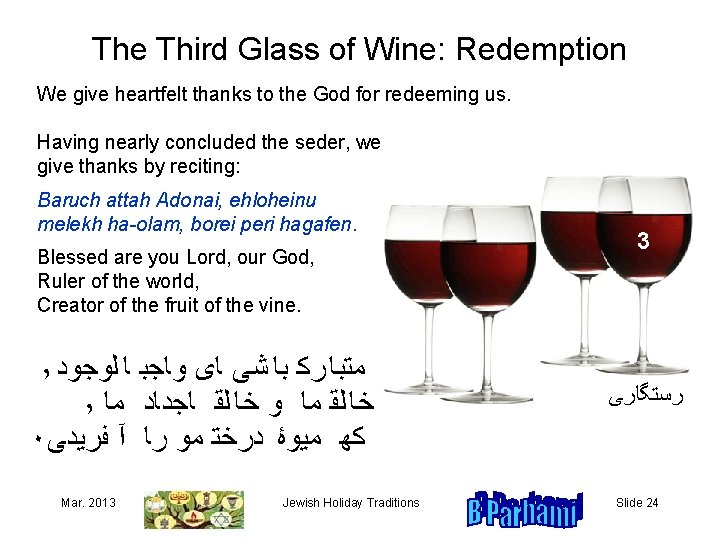
The Third Glass of Wine: Redemption We give heartfelt thanks to the God for redeeming us. Having nearly concluded the seder, we give thanks by reciting: Baruch attah Adonai, ehloheinu melekh ha-olam, borei peri hagafen. Blessed are you Lord, our God, Ruler of the world, Creator of the fruit of the vine. ٬ ﻣﺘﺒﺎ ﺮﻜﻬﺒﺎ ﺸﻰﻬﺎﻯﻬﻮﺎﺠﺒﻬﺎ ﻠﻮﺠﻮﺪ ٬ ﺧﺎ ﻠﻘﻬﻤﺎﻬﻬﻮﻬﺨﺎ ﻠﻘﻬﻬﺎﺠﺪﺎﺪﻬﻬﻤﺎﻪ ۰ ﺪﺮﺨﺘﻬﻤﻮﻬﺮﺎﻬﻬﺁﻬﻔﺮﻴﺪﻰ ﻛﻬﻬﻬﻤﻴﻮﮤ ﻪ ﻬ ﻬ ﻬ 3 ﺭﺴﺘﮕﺎﺮﻰ ﻫ Mar. 2013 Jewish Holiday Traditions Slide 24
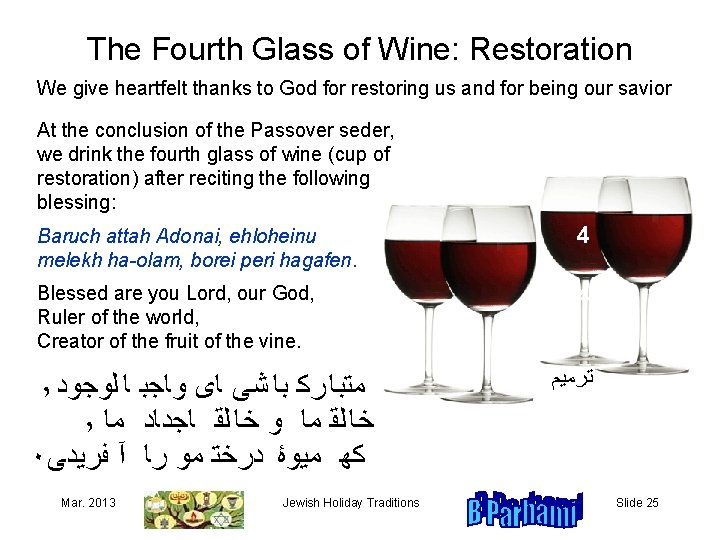
The Fourth Glass of Wine: Restoration We give heartfelt thanks to God for restoring us and for being our savior At the conclusion of the Passover seder, we drink the fourth glass of wine (cup of restoration) after reciting the following blessing: Baruch attah Adonai, ehloheinu melekh ha-olam, borei peri hagafen. 4 Blessed are you Lord, our God, Ruler of the world, Creator of the fruit of the vine. 4 ٬ ﻣﺘﺒﺎ ﺮﻜﻬﺒﺎ ﺸﻰﻬﺎﻯﻬﻮﺎﺠﺒﻬﺎ ﻠﻮﺠﻮﺪ ٬ ﺧﺎ ﻠﻘﻬﻤﺎﻬﻬﻮﻬﺨﺎ ﻠﻘﻬﻬﺎﺠﺪﺎﺪﻬﻬﻤﺎﻪ ۰ ﺪﺮﺨﺘﻬﻤﻮﻬﺮﺎﻬﻬﺁﻬﻔﺮﻴﺪﻰ ﻛﻬﻬﻬﻤﻴﻮﮤ ﻪ ﻬ ﻬ ﺗﺮﻤﻴﻢ ﻬ ﻫ Mar. 2013 Jewish Holiday Traditions Slide 25
Shalakān: The Limping Boy In Kurdistan, Yemen, and parts of north Africa, the following is a tradition (Pesach, usually translated as “Passover, ” can also mean “limping”). In some towns, there was elaborate acting and a dialog between a local person and a matzoh-carrying traveler who knocks on the door: Where do you come from? From Egypt. Where are you headed? To Jerusalem. What do you bring with you? The dough of our fathers from Egypt; they had no time to bake it properly! Why are you limping? From the Pharaoh’s injustice. What is the cure for it? A roasted hard-boiled egg. The egg symbolizes continuity of life, as well as rebirth after mourning. It is a tradition to enter into an egg-tapping contest before eating the eggs to determine whose egg has the strongest shell. Mar. 2013 Jewish Holiday Traditions Slide 26
Concluding Prayers of the Seder: Nirtzah At the conclusion of seder, everyone shouts: Leshanah haba’ah be-yerushalayim! Next year in Jerusalem! (Jews long for the coming era of the Messiah, when all the Jewish people will return to Jerusalem). The rest of the evening is spent singing and enjoying the company of friends and family. Before departure, everyone recites this prayer: May the Creator, our God and the God of our forefathers, bless you, protect you, and give you peace. ٬ ﻫﻤﺎ ﻫﺎﺠﺪﺎﺪ ﻟﻖ ﻫﻮﺨﺎ ﺧﺎ ﻠﻘﻬﻤﺎ ٬ ﺑﺰﺮﮒ ﺗﺎﻬﺨﺪﺎﻰ ﺑﺎﺸﺪ ﻬ ۰ ﻛﻨﺪ ﺣﻔﻈﻪ ﺑﺪﻯﻬﺎ ﺍﺰ ﻭ ﺩﻬﺪ ﻫﺒﺮﻜﺘﻬﻮﺁﺮﺎﻤﺶ ﺭﺎ ﺷﻤﺎ Mar. 2013 Jewish Holiday Traditions Slide 27
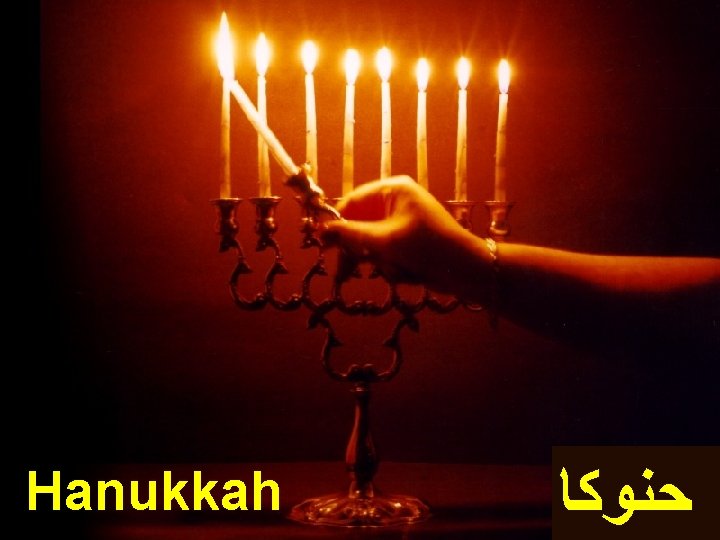
Hanukkah Sep. 2008 Jewish Holiday Traditions ﺣﻨﻮﻜﺎ Slide 28
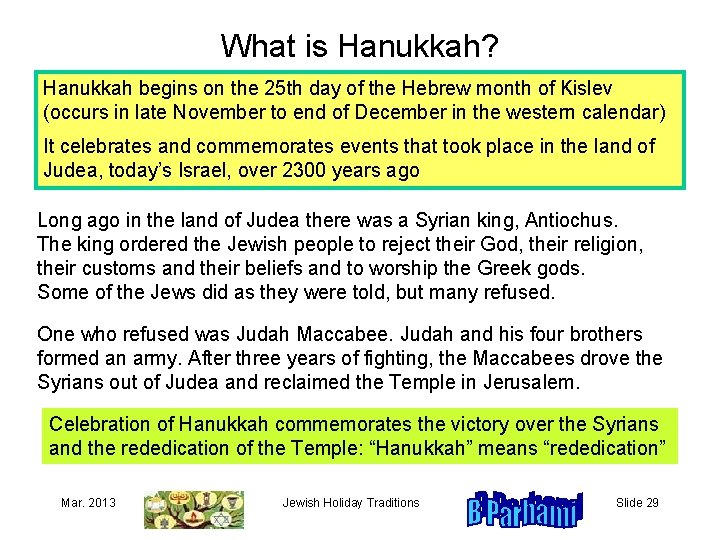
What is Hanukkah? Hanukkah begins on the 25 th day of the Hebrew month of Kislev (occurs in late November to end of December in the western calendar) It celebrates and commemorates events that took place in the land of Judea, today’s Israel, over 2300 years ago Long ago in the land of Judea there was a Syrian king, Antiochus. The king ordered the Jewish people to reject their God, their religion, their customs and their beliefs and to worship the Greek gods. Some of the Jews did as they were told, but many refused. One who refused was Judah Maccabee. Judah and his four brothers formed an army. After three years of fighting, the Maccabees drove the Syrians out of Judea and reclaimed the Temple in Jerusalem. Celebration of Hanukkah commemorates the victory over the Syrians and the rededication of the Temple: “Hanukkah” means “rededication” Mar. 2013 Jewish Holiday Traditions Slide 29
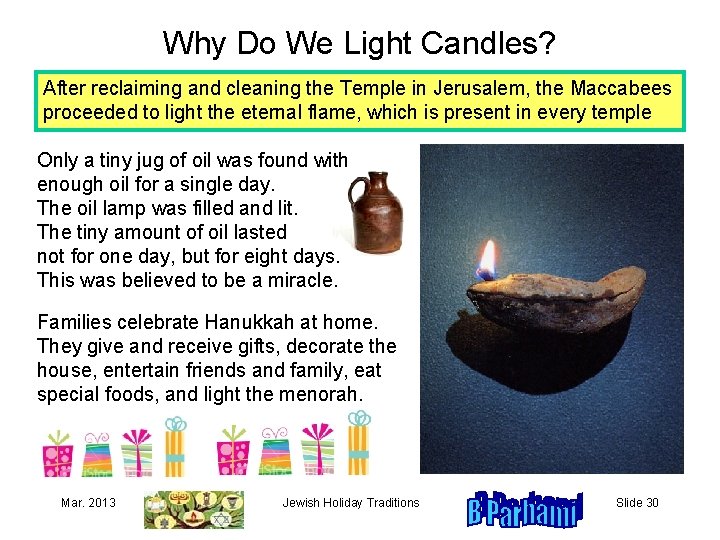
Why Do We Light Candles? After reclaiming and cleaning the Temple in Jerusalem, the Maccabees proceeded to light the eternal flame, which is present in every temple Only a tiny jug of oil was found with enough oil for a single day. The oil lamp was filled and lit. The tiny amount of oil lasted not for one day, but for eight days. This was believed to be a miracle. Families celebrate Hanukkah at home. They give and receive gifts, decorate the house, entertain friends and family, eat special foods, and light the menorah. Mar. 2013 Jewish Holiday Traditions Slide 30
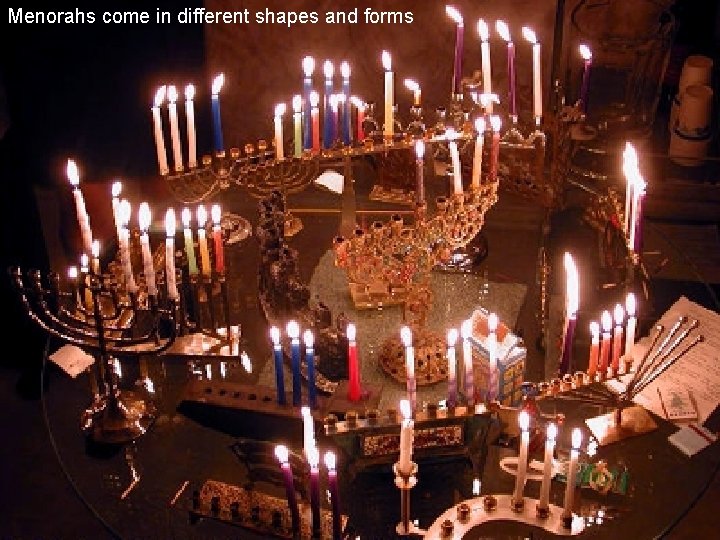
Menorahs come in different shapes and forms Sep. 2008 Jewish Holiday Traditions Slide 31
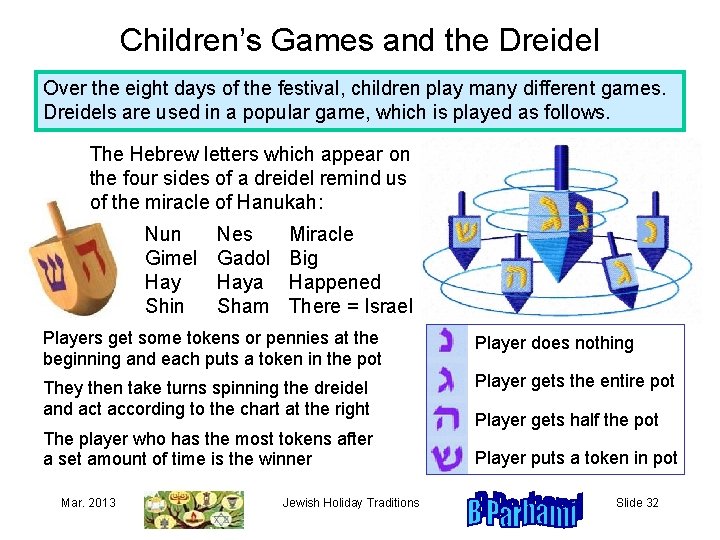
Children’s Games and the Dreidel Over the eight days of the festival, children play many different games. Dreidels are used in a popular game, which is played as follows. The Hebrew letters which appear on the four sides of a dreidel remind us of the miracle of Hanukah: Nun Gimel Hay Shin Nes Gadol Haya Sham Miracle Big Happened There = Israel Players get some tokens or pennies at the beginning and each puts a token in the pot They then take turns spinning the dreidel and act according to the chart at the right The player who has the most tokens after a set amount of time is the winner Mar. 2013 Jewish Holiday Traditions Player does nothing Player gets the entire pot Player gets half the pot Player puts a token in pot Slide 32
Rosh Hashana ﺳﺎﻞ ﻧﻮ Sep. 2008 Jewish Holiday Traditions Slide 33
ﺳﺎﻞ ﻧﻮ Sep. 2010 Jewish Holiday Traditions Slide 34
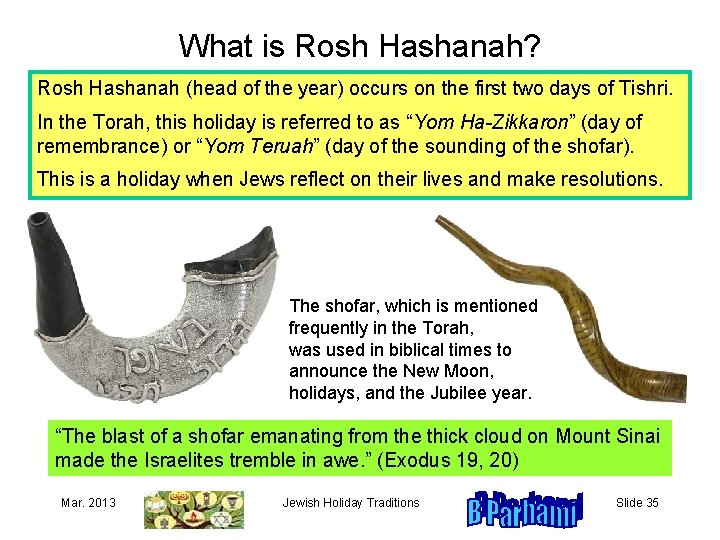
What is Rosh Hashanah? Rosh Hashanah (head of the year) occurs on the first two days of Tishri. In the Torah, this holiday is referred to as “Yom Ha-Zikkaron” (day of remembrance) or “Yom Teruah” (day of the sounding of the shofar). This is a holiday when Jews reflect on their lives and make resolutions. The shofar, which is mentioned frequently in the Torah, was used in biblical times to announce the New Moon, holidays, and the Jubilee year. “The blast of a shofar emanating from the thick cloud on Mount Sinai made the Israelites tremble in awe. ” (Exodus 19, 20) Mar. 2013 Jewish Holiday Traditions Slide 35
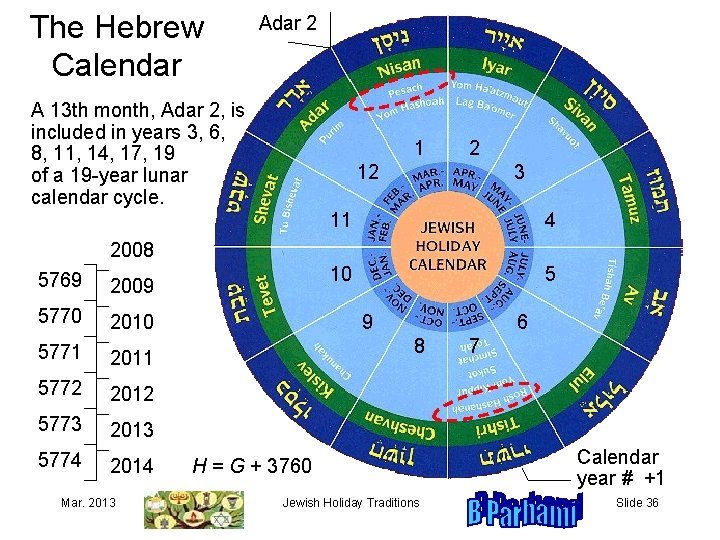
The Hebrew Calendar Adar 2 A 13 th month, Adar 2, is included in years 3, 6, 8, 11, 14, 17, 19 of a 19 -year lunar calendar cycle. 1 2 12 3 11 4 10 5 2008 5769 2009 5770 2010 5771 2011 5772 2012 5773 2013 5774 2014 Mar. 2013 9 6 8 H = G + 3760 Jewish Holiday Traditions 7 Calendar year # +1 Slide 36
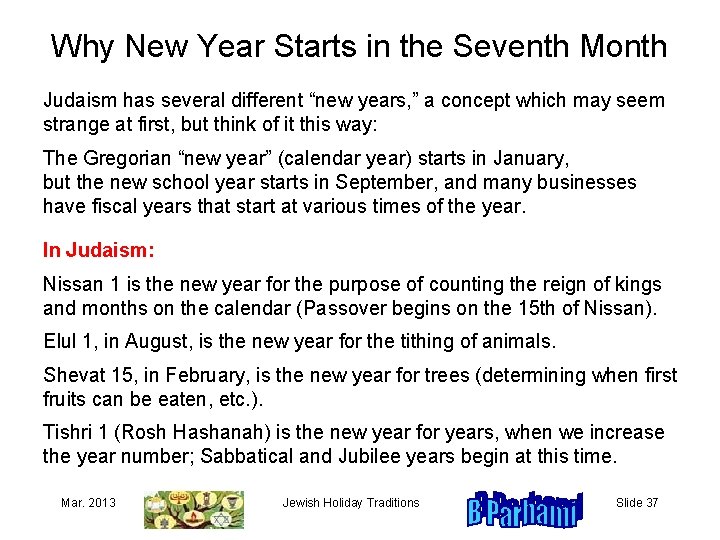
Why New Year Starts in the Seventh Month Judaism has several different “new years, ” a concept which may seem strange at first, but think of it this way: The Gregorian “new year” (calendar year) starts in January, but the new school year starts in September, and many businesses have fiscal years that start at various times of the year. In Judaism: Nissan 1 is the new year for the purpose of counting the reign of kings and months on the calendar (Passover begins on the 15 th of Nissan). Elul 1, in August, is the new year for the tithing of animals. Shevat 15, in February, is the new year for trees (determining when first fruits can be eaten, etc. ). Tishri 1 (Rosh Hashanah) is the new year for years, when we increase the year number; Sabbatical and Jubilee years begin at this time. Mar. 2013 Jewish Holiday Traditions Slide 37
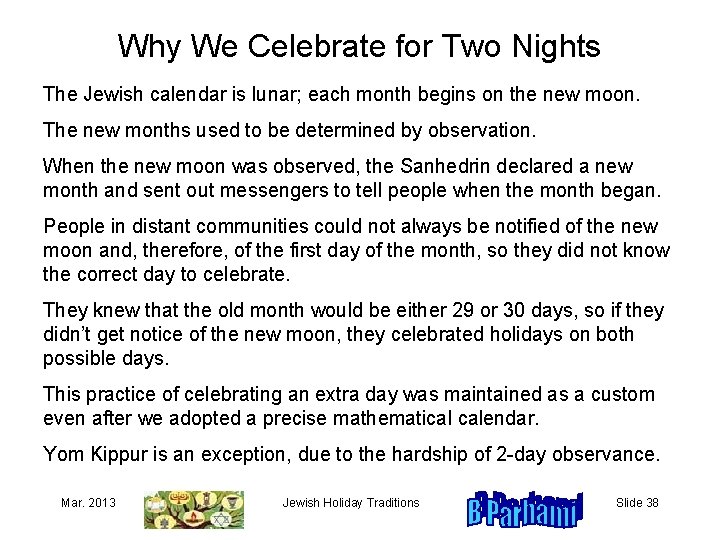
Why We Celebrate for Two Nights The Jewish calendar is lunar; each month begins on the new moon. The new months used to be determined by observation. When the new moon was observed, the Sanhedrin declared a new month and sent out messengers to tell people when the month began. People in distant communities could not always be notified of the new moon and, therefore, of the first day of the month, so they did not know the correct day to celebrate. They knew that the old month would be either 29 or 30 days, so if they didn’t get notice of the new moon, they celebrated holidays on both possible days. This practice of celebrating an extra day was maintained as a custom even after we adopted a precise mathematical calendar. Yom Kippur is an exception, due to the hardship of 2 -day observance. Mar. 2013 Jewish Holiday Traditions Slide 38
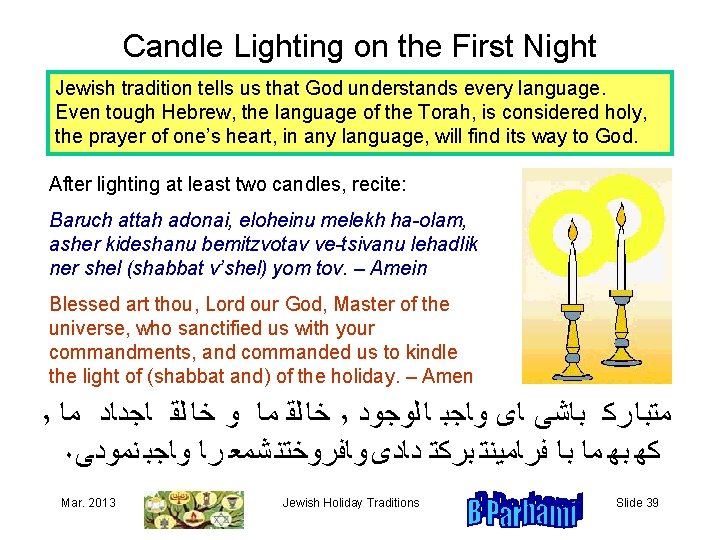
Candle Lighting on the First Night Jewish tradition tells us that God understands every language. Even tough Hebrew, the language of the Torah, is considered holy, the prayer of one’s heart, in any language, will find its way to God. After lighting at least two candles, recite: Baruch attah adonai, eloheinu melekh ha-olam, asher kideshanu bemitzvotav ve-tsivanu lehadlik ner shel (shabbat v’shel) yom tov. – Amein Blessed art thou, Lord our God, Master of the universe, who sanctified us with your commandments, and commanded us to kindle the light of (shabbat and) of the holiday. – Amen ٬ ﺧﺎ ﻠﻘﻬﻤﺎﻬﻬﻮﻬﺨﺎ ﻠﻘﻬﻬﺎﺠﺪﺎﺪﻬﻬﻤﺎﻪ ٬ ﻣﺘﺒﺎ ﺮﻜﻬﻬﺒﺎﺸﻰﻬﺎﻯﻬﻮﺎﺠﺒﻬﺎ ﻠﻮﺠﻮﺪﻪ ۰ ﻫﻜﻬﻬﺒﻬﻬﻤﺎﻬﺒﺎﻬﻔﺮﺎﻤﻴﻨﺘﻬﺒﺮﻜﺘﻬﺪﺎﺪﻯ ﻮﺎﻔﺮﻮﺨﺘﻨ ﺸﻤﻌﻬﺮﺎﻬﻮﺎﺠﺒ ﻨﻤﻮﺪﻰ ﻬ ﻬ Mar. 2013 ﻬ ﻬ ﻬ Jewish Holiday Traditions Slide 39
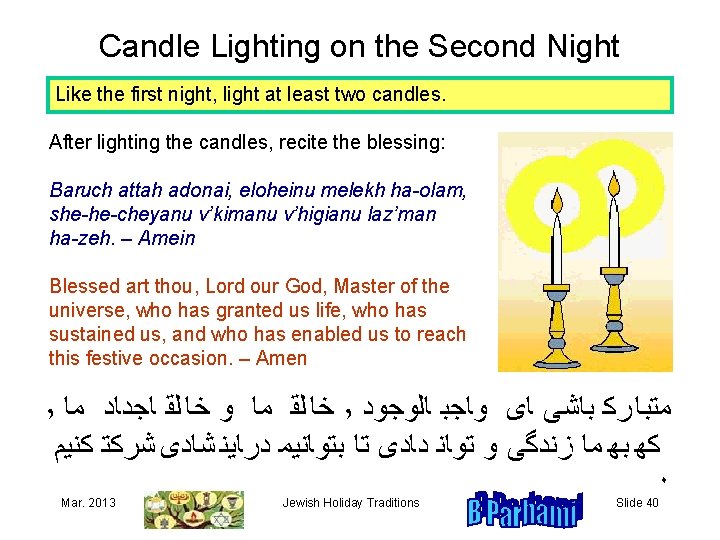
Candle Lighting on the Second Night Like the first night, light at least two candles. After lighting the candles, recite the blessing: Baruch attah adonai, eloheinu melekh ha-olam, she-he-cheyanu v’kimanu v’higianu laz’man ha-zeh. – Amein Blessed art thou, Lord our God, Master of the universe, who has granted us life, who has sustained us, and who has enabled us to reach this festive occasion. – Amen ٬ ﺧﺎ ﻠﻘﻬﻬﻤﺎﻬﻬﻮﻬﺨﺎ ﻠﻘﻬﺎﺠﺪﺎﺪﻬﻬﻤﺎﻪ ٬ ﻣﺘﺒﺎ ﺮﻜﻬﺒﺎﺸﻰﻬﺎﻯﻬﻬﻮﺎﺠﺒﻬﺎﻠﻮﺠﻮﺪﻪ ﻫﻜﻬﻬﺒﻬﻬﻤﺎﻬﺰﻨﺪﮔﻰﻬﻮﻬﺘﻮﺎﻨ ﺪﺎﺪﻯ ﺘﺎﻬﺒﺘﻮﺎﻨﻴﻤﻬﺪﺮﺎﻴﻨ ﺸﺎﺪﻯ ﺸﺮﻜﺘﻬﻜﻨﻴﻢ ﻬ ﻬ ﻬﻬ ﻬﻬ ۰ Mar. 2013 Jewish Holiday Traditions Slide 40
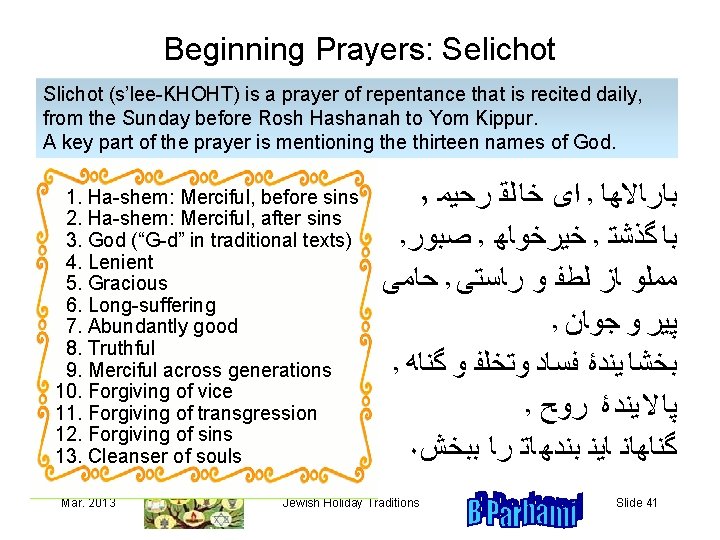
Beginning Prayers: Selichot Slichot (s’lee-KHOHT) is a prayer of repentance that is recited daily, from the Sunday before Rosh Hashanah to Yom Kippur. A key part of the prayer is mentioning the thirteen names of God. 1. Ha-shem: Merciful, before sins 2. Ha-shem: Merciful, after sins 3. God (“G-d” in traditional texts) 4. Lenient 5. Gracious 6. Long-suffering 7. Abundantly good 8. Truthful 9. Merciful across generations 10. Forgiving of vice 11. Forgiving of transgression 12. Forgiving of sins 13. Cleanser of souls Mar. 2013 ٬ ﺍﻯﻬﺨﺎ ﻠﻘﻬﺮﺤﻴﻤﻪ ٬ ﺑﺎﺮﺎﻻﻬﺎ ٬ ﺻﺒﻮﺮ ٬ ﺧﻴﺮﺨﻮﺎﻬﻪ ٬ ﺑﺎ ﮔﺬﺸﺘﻪ ﺣﺎﻤﻰ ٬ ﻣﻤﻠﻮﻬﺎﺰﻬﻠﻄﻔﻬﻮﻬﺮﺎﺴﺘﻰ ٬ ﺟﻮﺎﻦ ﻭ ﭙﻴﺮ ٬ ﮔﻨﺎﻪ ﻭﺘﺨﻠﻔﻬﻮ ﺑﺨﺸﺎ ﻴﻨﺪﮤﻬﻔﺴﺎﺪ ٬ ﺭﻮﺢ ﭙﺎ ﻻ ﻳﻨﺪ ﮤﻪ ۰ ﮔﻨﺎﻬﺎﻨﻬﺎﻴﻨﻬﺒﻨﺪﻬ ﺎﺘﻬﺮﺎﻬﺒﺒﺨﺶ Jewish Holiday Traditions ﻬ ﻬ ﻪ ﻬ Slide 41
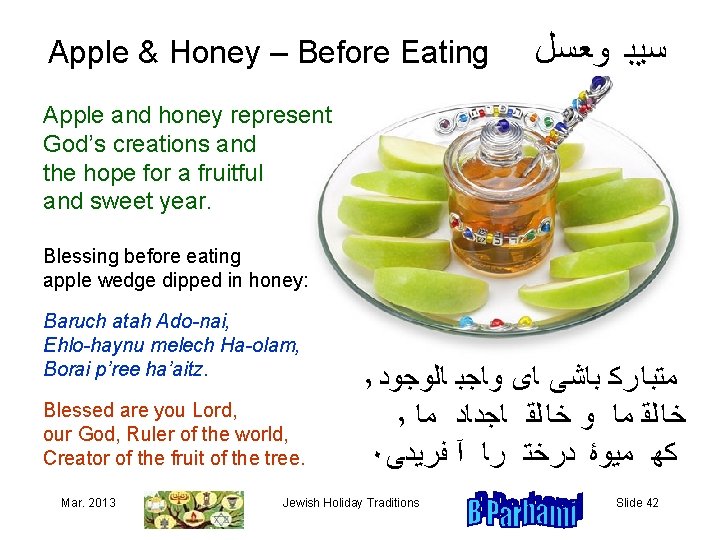
Apple & Honey – Before Eating ﺳﻴﺒﻬﻮﻌﺴﻞ Apple and honey represent God’s creations and the hope for a fruitful and sweet year. Blessing before eating apple wedge dipped in honey: Baruch atah Ado-nai, Ehlo-haynu melech Ha-olam, Borai p’ree ha’aitz. Blessed are you Lord, our God, Ruler of the world, Creator of the fruit of the tree. Mar. 2013 ٬ ﻣﺘﺒﺎ ﺮﻜﻬﺒﺎﺸﻰﻬﺎﻯﻬﻮﺎﺠﺒﻬﺎﻠﻮﺠﻮﺪ ٬ ﺧﺎ ﻠﻘﻬﻤﺎﻬﻬﻮﻬﺨﺎ ﻠﻘﻬﻬﺎﺠﺪﺎﺪﻬﻬﻤﺎﻪ ۰ ﺪﺮﺨﺘﻬﻬﺮﺎﻬﻬﺁﻬﻔﺮﻴﺪﻰ ﻛﻬﻬﻬﻤﻴﻮﮤ ﻪ Jewish Holiday Traditions ﻬ ﻬ ﻬ ﻫ Slide 42
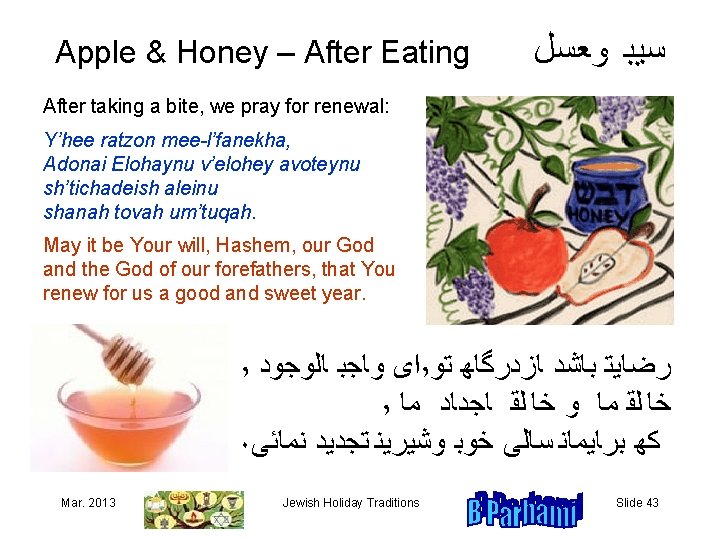
Apple & Honey – After Eating ﺳﻴﺒﻬﻮﻌﺴﻞ After taking a bite, we pray for renewal: Y’hee ratzon mee-l’fanekha, Adonai Elohaynu v’elohey avoteynu sh’tichadeish aleinu shanah tovah um’tuqah. May it be Your will, Hashem, our God and the God of our forefathers, that You renew for us a good and sweet year. ٬ ﺍﻯﻬﻮﺎﺠﺒﻬﺎﻠﻮﺠﻮﺪﻪ ٬ ﺭﻀﺎﻴﺘﻬﺒﺎﺸﺪﻬﺎﺰﺪﺮﮔﺎﻬﻬﺘﻮ ٬ ﺧﺎ ﻠﻘﻬﻤﺎﻬﻬﻮﻬﺨﺎ ﻠﻘﻬﻬﺎﺠﺪﺎﺪﻬﻬﻤﺎﻪ ۰ ﻫﻜﻬﻬﺒﺮﺎﻴﻤﺎﻨﻬﺴﺎﻠﻰﻬﺨﻮﺒﻬﻮﺸﻴﺮﻴﻨﻬﺘﺠﺪﻴﺪﻬﻨﻤﺎﺌﻰ ﻬ Mar. 2013 Jewish Holiday Traditions ﻬ Slide 43
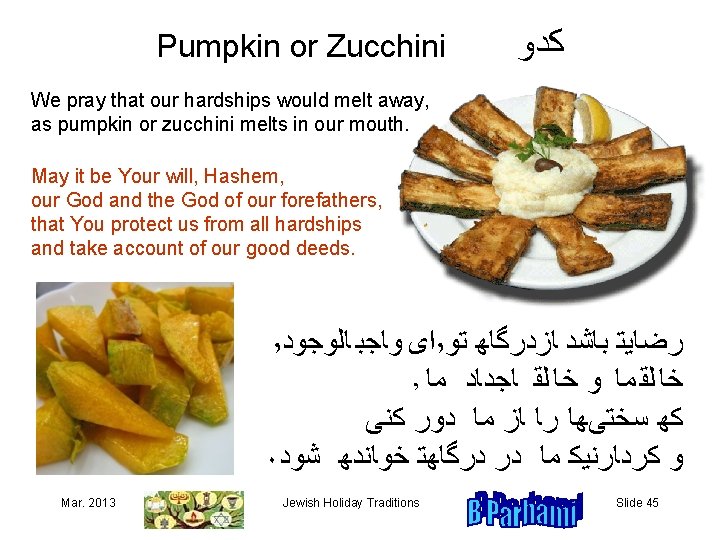
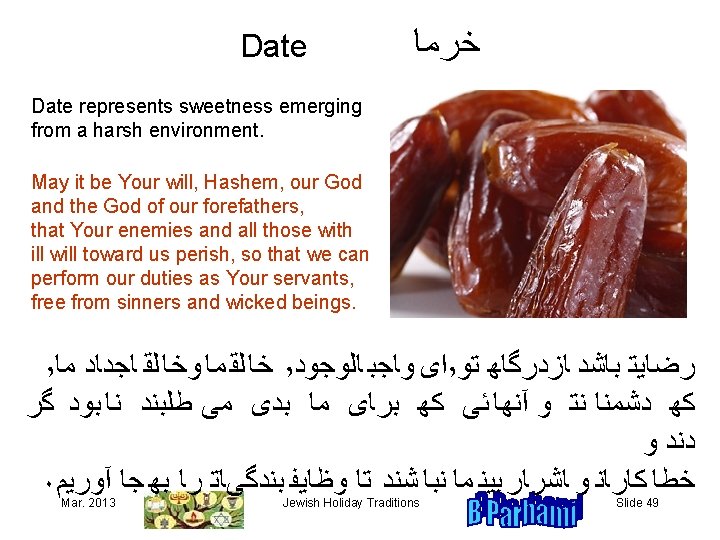
Pumpkin or Zucchini ﻛﺪﻮ We pray that our hardships would melt away, as pumpkin or zucchini melts in our mouth. May it be Your will, Hashem, our God and the God of our forefathers, that You protect us from all hardships and take account of our good deeds. ٬ ﺍﻯﻬﻮﺎﺠﺒ ﺎﻠﻮﺠﻮﺪ ٬ ﺭﻀﺎﻴﺘﻬﺒﺎﺸﺪﻬﺎﺰﺪﺮﮔﺎﻬﻬﺘﻮ ٬ ﺧﺎ ﻠﻘ ﻤﺎﻬ ﻮﻬﺨﺎ ﻠﻘﻬﻬﺎﺠﺪﺎﺪﻬﻬﻤﺎﻪ ﻛﻬﻬﺴﺨﺘﻰﻬﺎﻬﺮﺎﻬﺎﺰﻬﻤﺎﻬﻬﺪﻮﺮﻬﻜﻨﻰ ۰ ﻭﻬﻜﺮﺪﺎﺮﻨﻴﻜﻬﻤﺎﻬﻬﺪﺮﻬﺪﺮﮔﺎﻬﺘﻬﺨﻮﺎﻨﺪﻬﻬﻬﺸﻮﺪ ﻬ ﻬ Mar. 2013 Jewish Holiday Traditions ﻬ ﻬ ﻬ Slide 45
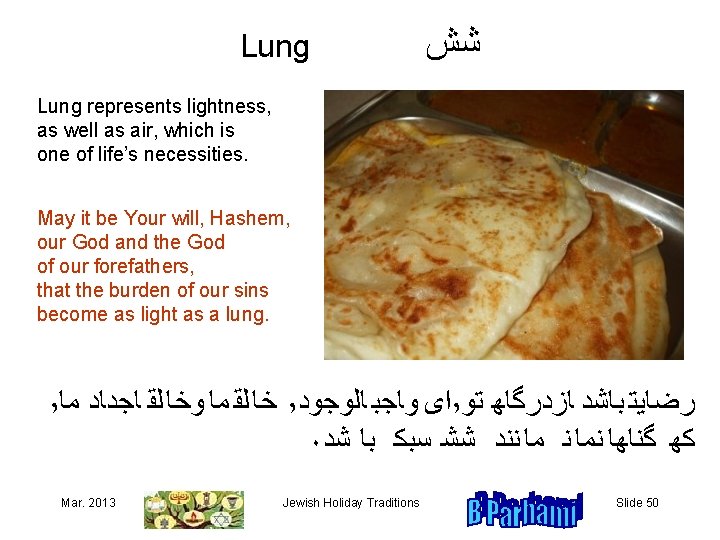
Lung ﺷﺶ Lung represents lightness, as well as air, which is one of life’s necessities. May it be Your will, Hashem, our God and the God of our forefathers, that the burden of our sins become as light as a lung. ٬ ﻫﺨﺎ ﻠﻘ ﻤﺎ ﻮﺨﺎ ﻠﻘﻬﺎﺠﺪﺎﺪﻬﻤﺎ ٬ ﺍﻯﻬﻮﺎﺠﺒ ﺎﻠﻮﺠﻮﺪ ٬ ﺭﻀﺎﻴﺘﻬﺒﺎﺸﺪﻬﺎﺰﺪﺮﮔﺎﻬﻬﺘﻮ ۰ ﻛﻬ ﻬﮔﻨﺎﻬﺎ ﻨﻤﺎ ﻨ ﻬ ﻤﺎ ﻨﻨﺪﻬﻬﺸﺸﻬﺴﺒﻜﻬﻬﺒﺎﻬﺸﺪ ﻬ ﻬ ﻬ Mar. 2013 Jewish Holiday Traditions ﻬ ﻬ ﻬ ﻬ ﻬ Slide 50
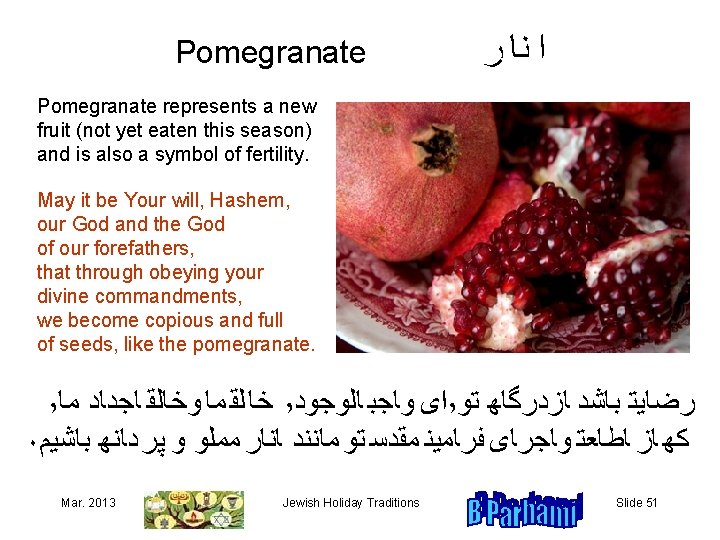
Pomegranate ﺍﻬﻨﺎﻬﺮ Pomegranate represents a new fruit (not yet eaten this season) and is also a symbol of fertility. May it be Your will, Hashem, our God and the God of our forefathers, that through obeying your divine commandments, we become copious and full of seeds, like the pomegranate. ٬ ﻫﺨﺎ ﻠﻘ ﻤﺎ ﻮﺨﺎﻠﻘﻬﺎﺠﺪﺎﺪﻬﻤﺎ ٬ ﺍﻯﻬﻮﺎﺠﺒ ﺎﻠﻮﺠﻮﺪ ٬ ﺭﻀﺎﻴﺘﻬﺒﺎﺸﺪﻬﺎﺰﺪﺮﮔﺎﻬﻬﺘﻮ ۰ ﻫﻜﻬ ﺎﺰ ﺎﻄﺎﻌﺘﻬﻮﺎﺠﺮﺎﻯ ﻔﺮﺎﻤﻴﻨﻬﻤﻘﺪﺴ ﺘﻮ ﻤﺎﻨﻨﺪﻬﺎﻨﺎﺮ ﻤﻤﻠﻮﻬﻮﻬﭙﺮ ﺪﺎﻨﻬﻬﺒﺎﺸﻴﻢ ﻬ ﻬ Mar. 2013 ﻬ ﻬ ﻬ Jewish Holiday Traditions ﻬ ﻬ ﻬ Slide 51
Concluding Prayers and Wishes Jews believe that on Rosh Hashanah, God remembers all our deeds and writes our destiny in the book of life. At the end of the ten-day holy period, particularly on Yom Kippur, we pray that our sins be forgiven. So, at the conclusion of the Rosh Hashanah ceremonial prayers and blessings, one may offer the following wishes to those present: May the Creator, our God and the God of our forefathers, inscribe your good deeds in the book of life. ٬ ﺧﺎ ﻠﻘﻬﻤﺎﻬﻮﺨﺎﻠﻘﻬﺎﺠﺪﺎﺪﻬﻤﺎ ٬ ﺑﺰﺮﮒ ﺗﺎﻬﺨﺪﺎﻰ ﺑﺎﺸﺪ ﻬ ۰ ﺍﻌﻤﺎﻬﻠﻬﻨﻴﻜﺘﺎﻬﻨﻬﺮﺎﻬﺪﺮﻬﺪﻔﺘﺮﻬﺤﻴﺎﻬﺘﻬﺜﺒﺘﻬﻜﻨﺪ Mar. 2013 Jewish Holiday Traditions Slide 52
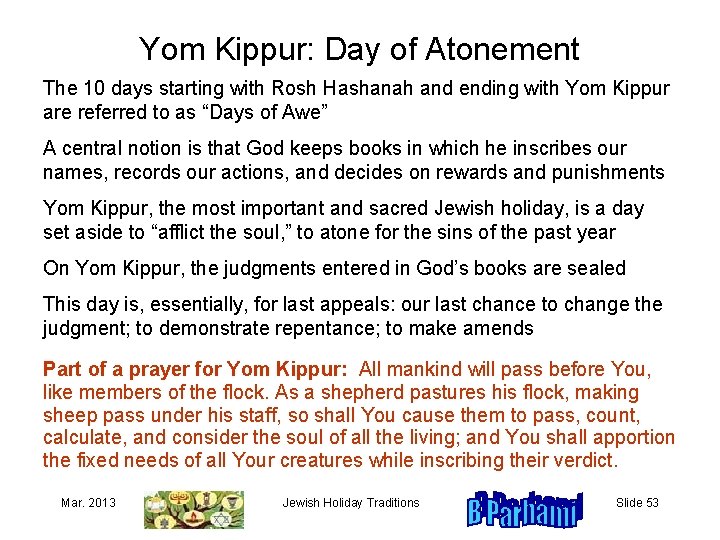
Yom Kippur: Day of Atonement The 10 days starting with Rosh Hashanah and ending with Yom Kippur are referred to as “Days of Awe” A central notion is that God keeps books in which he inscribes our names, records our actions, and decides on rewards and punishments Yom Kippur, the most important and sacred Jewish holiday, is a day set aside to “afflict the soul, ” to atone for the sins of the past year On Yom Kippur, the judgments entered in God’s books are sealed This day is, essentially, for last appeals: our last chance to change the judgment; to demonstrate repentance; to make amends Part of a prayer for Yom Kippur: All mankind will pass before You, like members of the flock. As a shepherd pastures his flock, making sheep pass under his staff, so shall You cause them to pass, count, calculate, and consider the soul of all the living; and You shall apportion the fixed needs of all Your creatures while inscribing their verdict. Mar. 2013 Jewish Holiday Traditions Slide 53
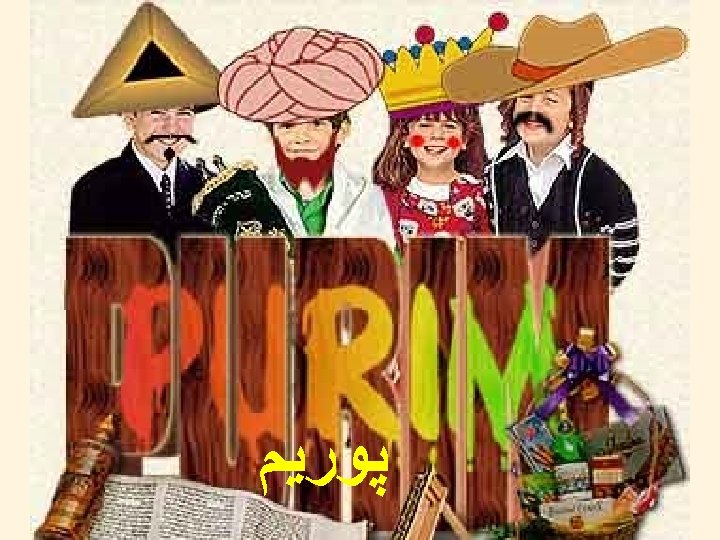
ﭙﻮﺮﻴﻢ Sep. 2008 Jewish Holiday Traditions ﺳﺎﻞ ﻧﻮ Slide 54
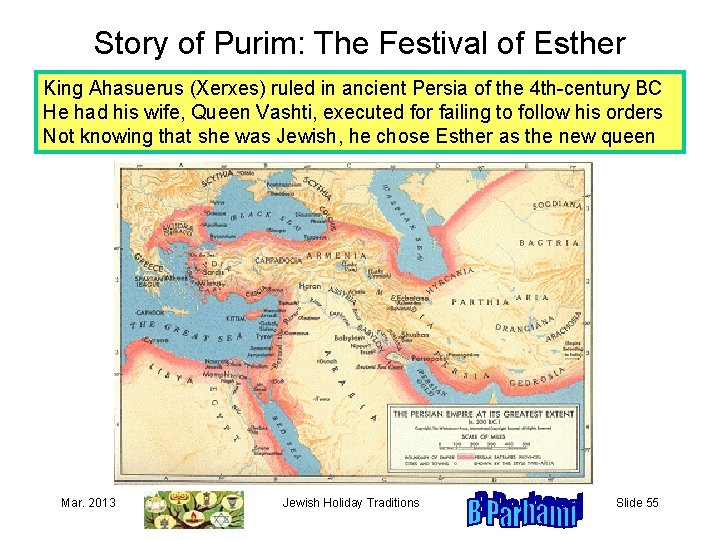
Story of Purim: The Festival of Esther King Ahasuerus (Xerxes) ruled in ancient Persia of the 4 th-century BC He had his wife, Queen Vashti, executed for failing to follow his orders Not knowing that she was Jewish, he chose Esther as the new queen Mar. 2013 Jewish Holiday Traditions Slide 55
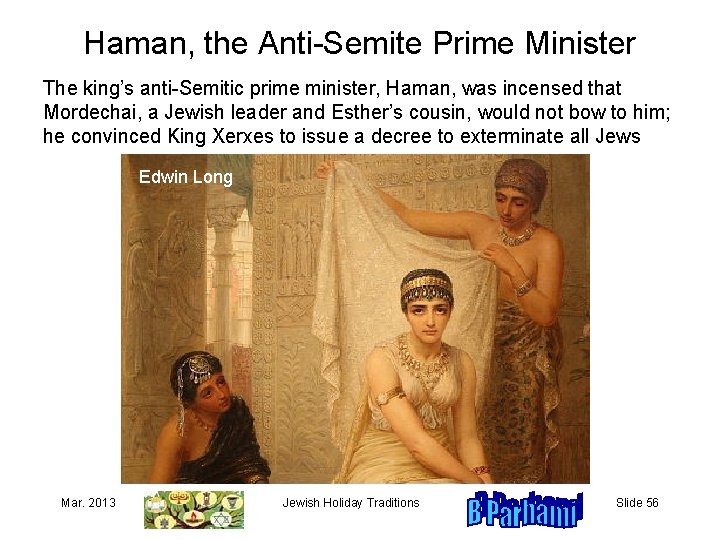
Haman, the Anti-Semite Prime Minister The king’s anti-Semitic prime minister, Haman, was incensed that Mordechai, a Jewish leader and Esther’s cousin, would not bow to him; he convinced King Xerxes to issue a decree to exterminate all Jews Edwin Long Mar. 2013 Jewish Holiday Traditions Slide 56
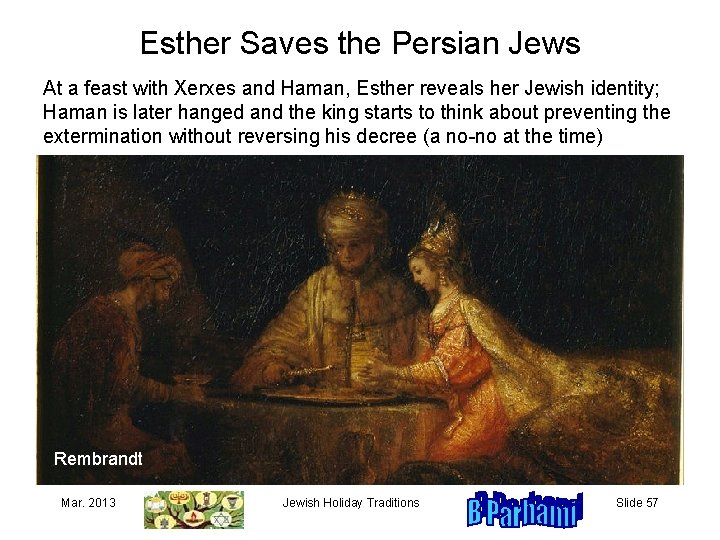
Esther Saves the Persian Jews At a feast with Xerxes and Haman, Esther reveals her Jewish identity; Haman is later hanged and the king starts to think about preventing the extermination without reversing his decree (a no-no at the time) Rembrandt Mar. 2013 Jewish Holiday Traditions Slide 57
Variants of the Story of How Jews Survived Traditional version: The King issued a second decree, authorizing the Jews to defend themselves against attackers. The Jews got organized, fighting and defeating their enemies; many Persians were killed New interpretation by computer scientists Daniel Berry & Farhad Arbab: Jews, who until then had their distinct traditional clothing, dressed like other Persians and blended in with the crowds, making it impossible for the attackers to identify and kill them. Berry and Arbab support their recently published theory as follows: 1. It is more consistent with history. If Jews had killed many Persians, there would have been enmities and retaliations for a long time 2. It explains why Jews wear costumes on Purim (there is no other equally acceptable and appealing explanation for this tradition) Rembrandt Mar. 2013 Jewish Holiday Traditions Slide 58
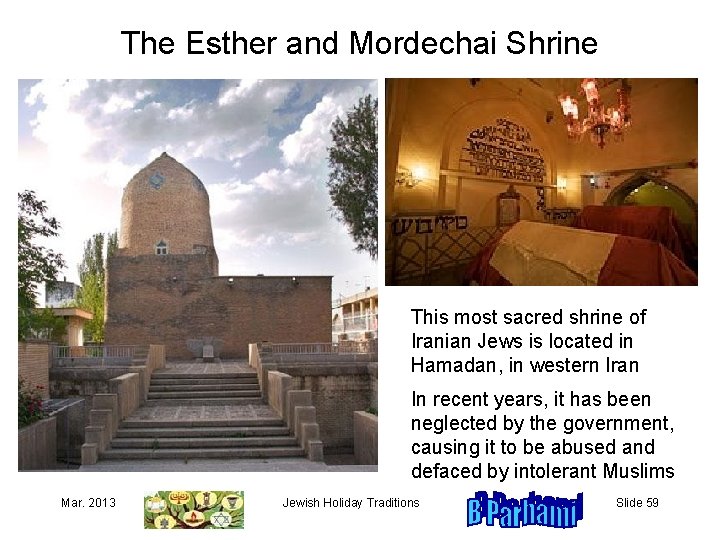
The Esther and Mordechai Shrine This most sacred shrine of Iranian Jews is located in Hamadan, in western Iran Rembrandt Mar. 2013 In recent years, it has been neglected by the government, causing it to be abused and defaced by intolerant Muslims Jewish Holiday Traditions Slide 59
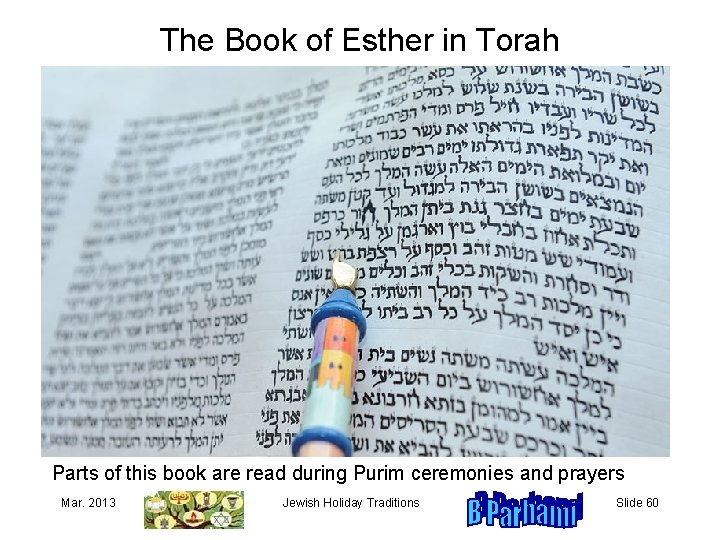
The Book of Esther in Torah Rembrandt Parts of this book are read during Purim ceremonies and prayers Mar. 2013 Jewish Holiday Traditions Slide 60