
Jeremy Main Chair Healthcare Distribution Association The HDA
Jeremy Main Chair Healthcare Distribution Association
The HDA Who we are HDA Gold Standard of Good Distribution Practice HDA is a UK-wide representative trade • resilience & certainty across 4 countries of the UK association whose mission is to advance • 7 -day, 24 hour emergency service the interests and values of those member companies who provide comprehensive medicines wholesaling, distribution and associated services to all • integrated into NHS primary & secondary care Ø community pharmacy support Ø medicine recalls & anti-counterfeit surveillance (on behalf of MHRA) Ø NHS pandemic preparedness/buffer stocks • MHRA membership of HDA RP Committee UK pharmacies, hospitals, and • HDA membership of MHRA anti-counterfeiting stakeholder group dispensing doctors. Patient safety is the • HDA membership of DHSC Supply Chain Groups priority of all members. • HDA seat on Secur. Med UK Board (NMVO) • HDA membership of GS 1
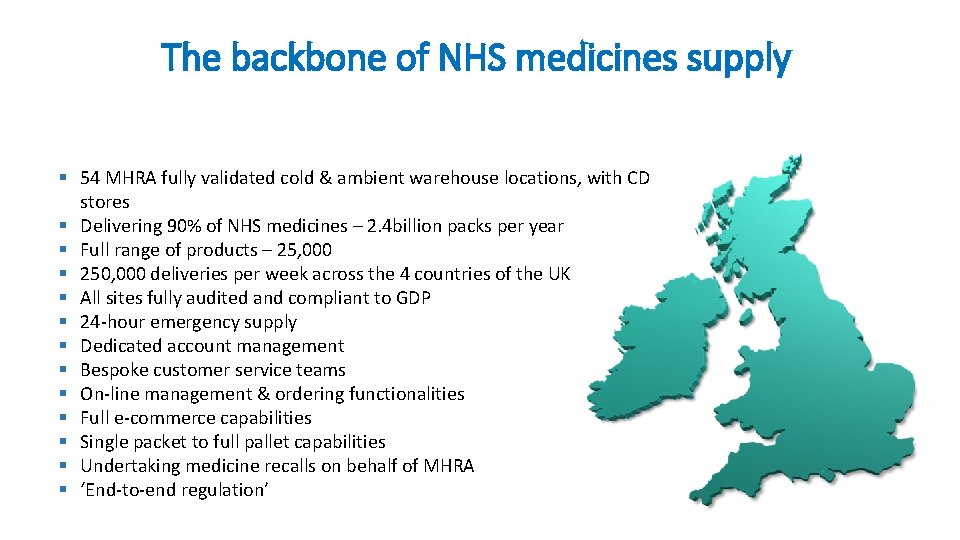
The backbone of NHS medicines supply § 54 MHRA fully validated cold & ambient warehouse locations, with CD stores § Delivering 90% of NHS medicines – 2. 4 billion packs per year § Full range of products – 25, 000 § 250, 000 deliveries per week across the 4 countries of the UK § All sites fully audited and compliant to GDP § 24 -hour emergency supply § Dedicated account management § Bespoke customer service teams § On-line management & ordering functionalities § Full e-commerce capabilities § Single packet to full pallet capabilities § Undertaking medicine recalls on behalf of MHRA § ‘End-to-end regulation’
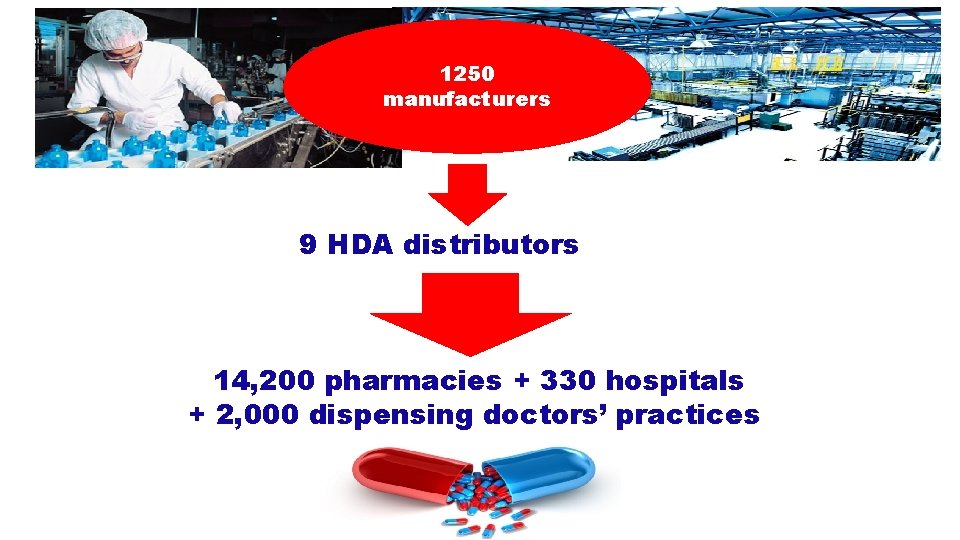
1250 manufacturers 9 HDA distributors 14, 200 pharmacies + 330 hospitals + 2, 000 dispensing doctors’ practices

Independent Chair… • Facilitate Continuity and Consistency at Council • Enable More Time and Focus Day to Day • Support the HDA Team • More Time on Specific Initiatives and Projects • Increase Presence with Stakeholders • Add momentum to developing a new strategy
“ “ My long-term goals are to work with the HDA team, our members and our industry stakeholders to add momentum to the development of the Association and build on all our excellent work and achievements to ensure that we increase the strength, credibility and influence of the Association - and are recognised as a vibrant voice with a clear, distinctive purpose and strategy.
Current Landscape • The role of Wholesalers & Distributors is not fully understood • Quid Pro Quo it is also not Recognized • External Pressures have never been greater • Retail Pharmacy is in Crisis? • We are all mired in the Issues of Today • No new Models are Clearly Evolving yet • However the Pace of Change Will Continue
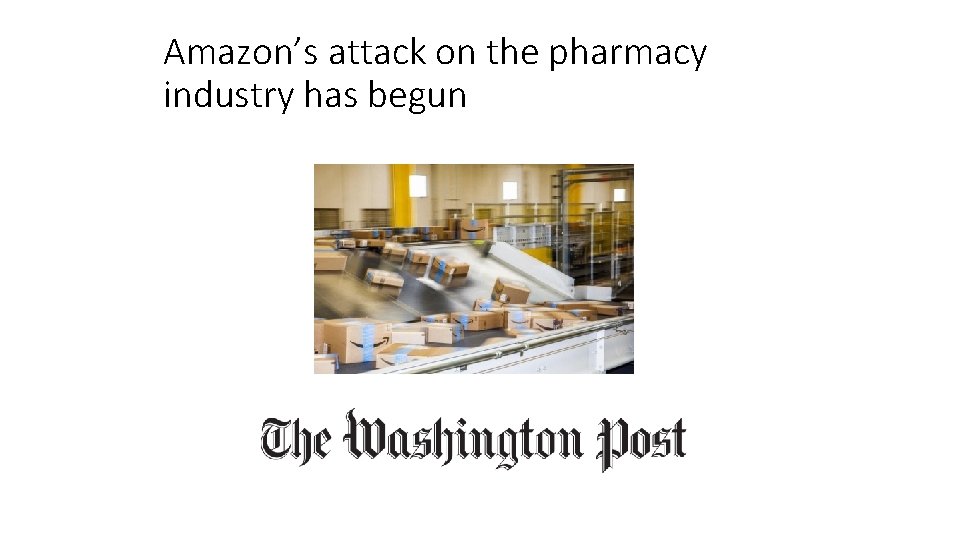
Amazon’s attack on the pharmacy industry has begun

Stakeholder Feedback
Research Objectives • Analyse current issues relevant to participants and HDA members • Understand more fully Perceptions of the Healthcare Distribution Sector • Identify how the Sector can best meet the expectations of Stakeholders • Understand more on which issues we can and should collaborate
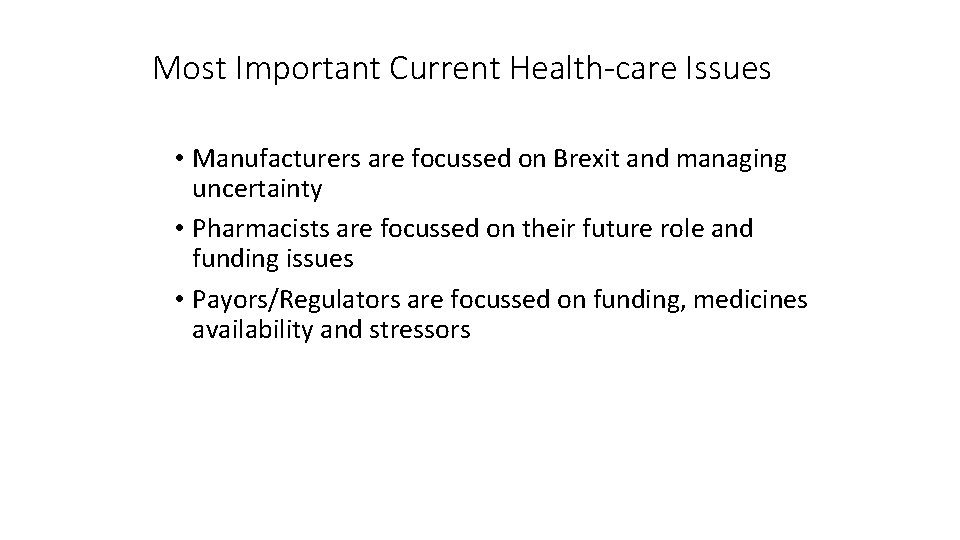
Most Important Current Health-care Issues • Manufacturers are focussed on Brexit and managing uncertainty • Pharmacists are focussed on their future role and funding issues • Payors/Regulators are focussed on funding, medicines availability and stressors
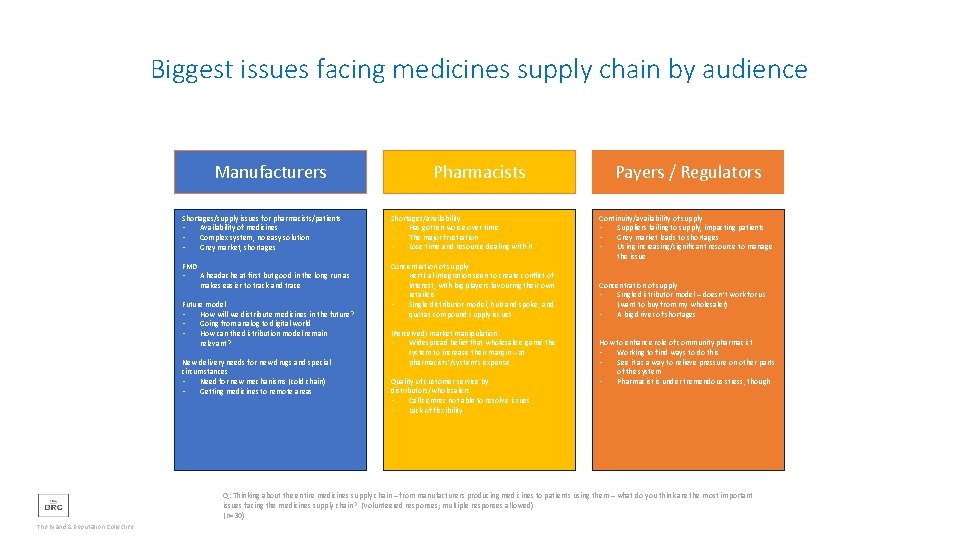
Biggest issues facing medicines supply chain by audience Manufacturers Pharmacists Shortages/supply issues for pharmacists/patients • Availability of medicines • Complex system, no easy solution • Grey market, shortages Shortages/availability • Has gotten worse over time • The major frustration • Lose time and resource dealing with it FMD Concentration of supply • Vertical integration seen to create conflict of interest, with big players favouring their own retailers • Single distributor model, hub and spoke, and quotas compound supply issues • A headache at first but good in the long run as makes easier to track and trace Future model • How will we distribute medicines in the future? • Going from analog to digital world • How can the distribution model remain relevant? New delivery needs for new drugs and special circumstances • Need for new mechanisms (cold chain) • Getting medicines to remote areas (Perceived) market manipulation • Widespread belief that wholesalers game the system to increase their margin – at pharmacists’/system’s expense Quality of customer service by distributors/wholesalers • Call centres not able to resolve issues • Lack of flexibility Payers / Regulators Continuity/availability of supply • Suppliers failing to supply, impacting patients • Grey market leads to shortages • Using increasing/significant resource to manage the issue Concentration of supply • Single distributor model – doesn’t work for us (want to buy from my wholesaler) • A big driver of shortages How to enhance role of community pharmacist • Working to find ways to do this • See it as a way to relieve pressure on other parts of the system • Pharmacist is under tremendous stress, though Q: Thinking about the entire medicines supply chain – from manufacturers producing medicines to patients using them – what do you think are the most important issues facing the medicines supply chain? (Volunteered responses; multiple responses allowed) (n=30) The Brand & Reputation Collective 13
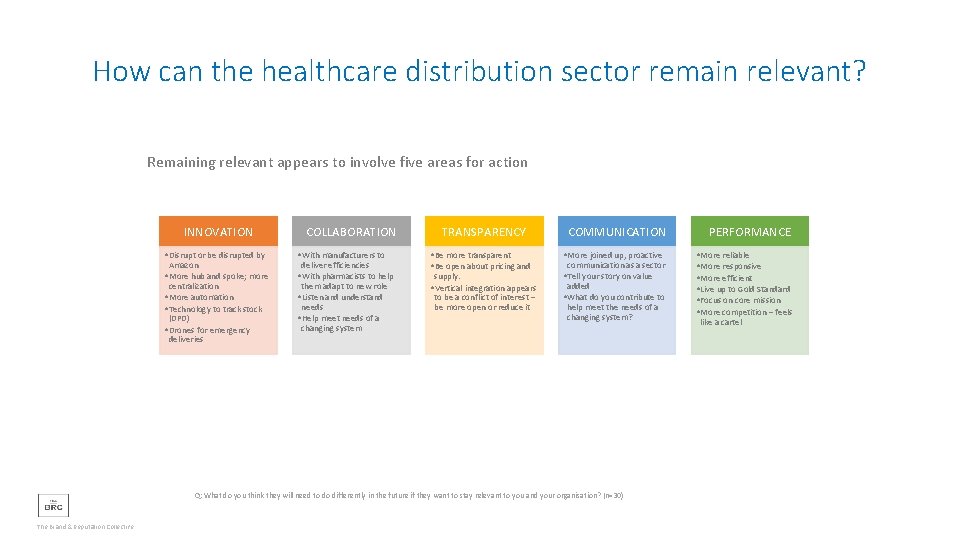
How can the healthcare distribution sector remain relevant? Remaining relevant appears to involve five areas for action INNOVATION • Disrupt or be disrupted by Amazon • More hub and spoke; more centralization • More automation • Technology to track stock (DPD) • Drones for emergency deliveries COLLABORATION • With manufacturers to deliver efficiencies • With pharmacists to help them adapt to new role • Listen and understand needs • Help meet needs of a changing system TRANSPARENCY • Be more transparent • Be open about pricing and supply. • Vertical integration appears to be a conflict of interest – be more open or reduce it COMMUNICATION • More joined up, proactive communication as a sector • Tell your story on value added • What do you contribute to help meet the needs of a changing system? PERFORMANCE • More reliable • More responsive • More efficient • Live up to Gold Standard • Focus on core mission • More competition – feels like a cartel Q: What do you think they will need to do differently in the future if they want to stay relevant to you and your organisation? (n=30) The Brand & Reputation Collective 14
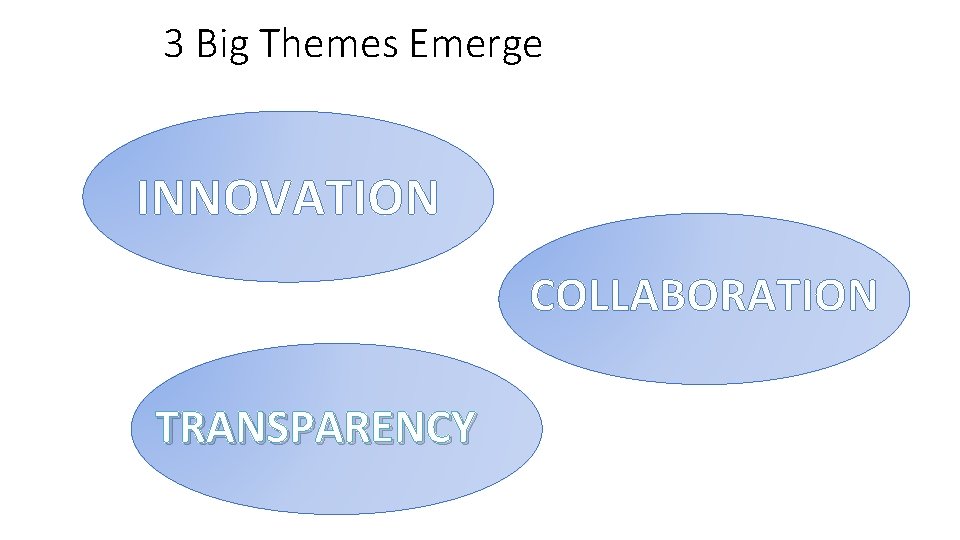
3 Big Themes Emerge INNOVATION COLLABORATION TRANSPARENCY
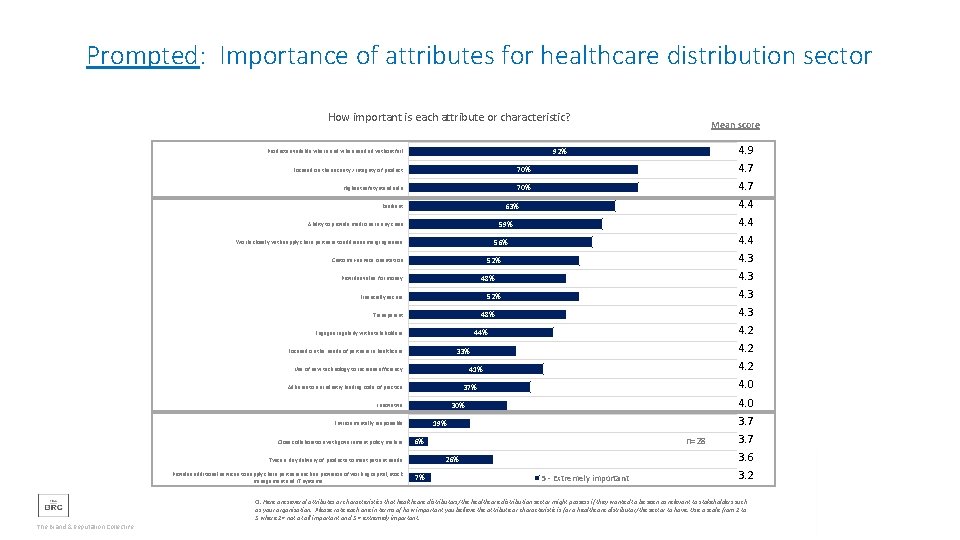
Prompted: Importance of attributes for healthcare distribution sector How important is each attribute or characteristic? Mean score 4. 9 92% Products available where and when needed without fail Focused on the security / integrity of product 70% 4. 7 Highest safety standards 70% 4. 7 4. 4 56% Works closely with supply chain partners to address emerging issues 4. 3 52% Customer-service orientation 4. 3 48% Provides value for money 4. 3 52% Financially secure 4. 3 48% Transparent 4. 2 44% Engages regularly with stakeholders 4. 2 33% Focused on the needs of partners in healthcare 4. 2 41% Use of new technology to increase efficiency 4. 0 37% Adheres to an industry leading code of practice 4. 0 30% Innovative 3. 7 19% Environmentally responsible n=28 6% 7% 3. 7 3. 6 26% Twice a day delivery of products to meet patient needs Provides additional services to supply chain partners such as provision of working capital, stock management and IT systems 4. 4 59% Ability to provide medicine in any crisis Close collaboration with government policy makers 4. 4 63% Resilient 5 - Extremely important 3. 2 Q. Here are several attributes or characteristics that healthcare distributors/the healthcare distribution sector might possess if they wanted to be seen as relevant to stakeholders such as your organisation. Please rate each one in terms of how important you believe the attribute or characteristic is for a healthcare distributor/the sector to have. Use a scale from 1 to 5 where 1= not at all important and 5 = extremely important. The Brand & Reputation Collective 16
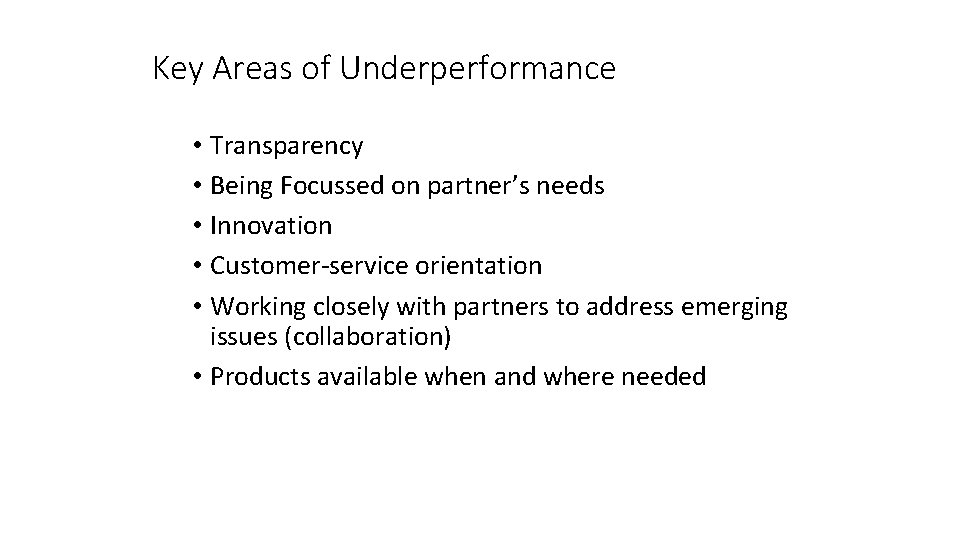
Key Areas of Underperformance • Transparency • Being Focussed on partner’s needs • Innovation • Customer-service orientation • Working closely with partners to address emerging issues (collaboration) • Products available when and where needed
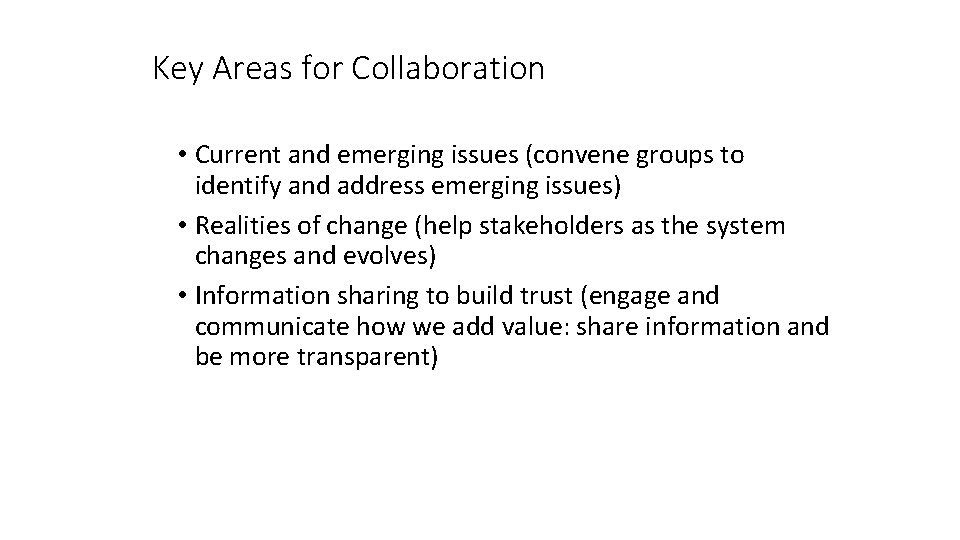
Key Areas for Collaboration • Current and emerging issues (convene groups to identify and address emerging issues) • Realities of change (help stakeholders as the system changes and evolves) • Information sharing to build trust (engage and communicate how we add value: share information and be more transparent)
Increasing Value • Get (keep) the basics right, particularly on quality and consistency • Be more transparent, especially in terms of holding and movement of goods • Tell your story, especially success stories • Convene to identify and address emerging issues • Collaborate more
3 Big Opportunities • Be a Convener on Important Issues with all Stakeholders (a Fulcrum) • Horizon Scanning to identify Emerging Issues (Sector Thought. Leader) • Proactive Storyteller to communicate the Vital Role and Value of the Distribution Sector (Promoter)
In the Pipeline • Added Impetus to our Communication and Public Relations Plan (Storytelling) • Further Work Collaborative Work on Medicines Availability program (Collaboration) • A New 5 -Year Strategy Blueprint- Vision, Mission and Goals for the HDA (Future Horizon Scanning)
5 -Year Strategy Process Result • Embrace the Stakeholder Research • Identify the key issues • Prioritise the key issues • Distil a new vision, mission • Develop a new strategic plan • Deeper engagement with all stakeholders • Communication of the role and value of our sector • Increase in recognition of the relevance and importance of the sector • Thought Leadership as the sector changes and evolves
“ “ Most of all we hope that all of you, our stakeholders and partners, will continue to positively engage with us and ensure that together, we will be fit not only for today but for the future as well.
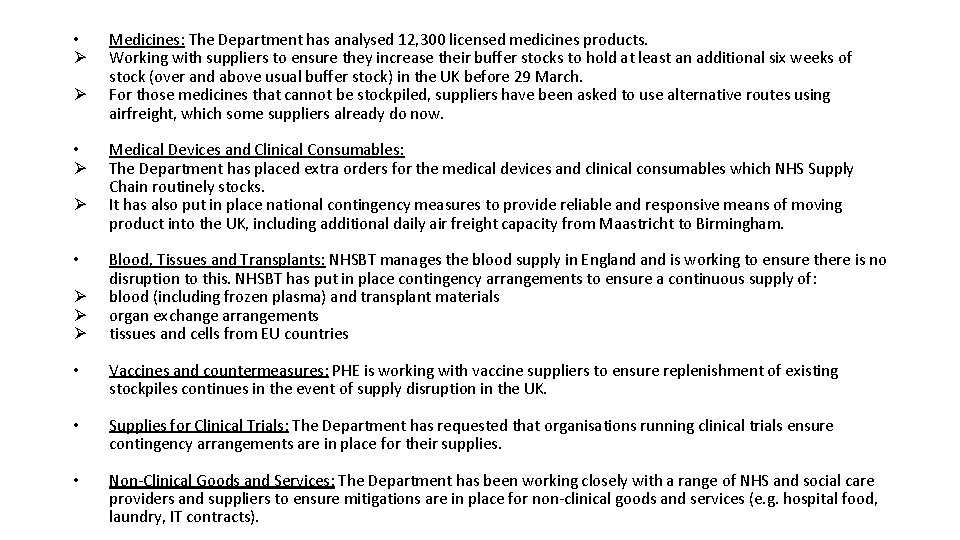
• Ø Ø Ø Medicines: The Department has analysed 12, 300 licensed medicines products. Working with suppliers to ensure they increase their buffer stocks to hold at least an additional six weeks of stock (over and above usual buffer stock) in the UK before 29 March. For those medicines that cannot be stockpiled, suppliers have been asked to use alternative routes using airfreight, which some suppliers already do now. Medical Devices and Clinical Consumables: The Department has placed extra orders for the medical devices and clinical consumables which NHS Supply Chain routinely stocks. It has also put in place national contingency measures to provide reliable and responsive means of moving product into the UK, including additional daily air freight capacity from Maastricht to Birmingham. Blood, Tissues and Transplants: NHSBT manages the blood supply in England is working to ensure there is no disruption to this. NHSBT has put in place contingency arrangements to ensure a continuous supply of: blood (including frozen plasma) and transplant materials organ exchange arrangements tissues and cells from EU countries • Vaccines and countermeasures: PHE is working with vaccine suppliers to ensure replenishment of existing stockpiles continues in the event of supply disruption in the UK. • Supplies for Clinical Trials: The Department has requested that organisations running clinical trials ensure contingency arrangements are in place for their supplies. • Non-Clinical Goods and Services: The Department has been working closely with a range of NHS and social care providers and suppliers to ensure mitigations are in place for non-clinical goods and services (e. g. hospital food, laundry, IT contracts).
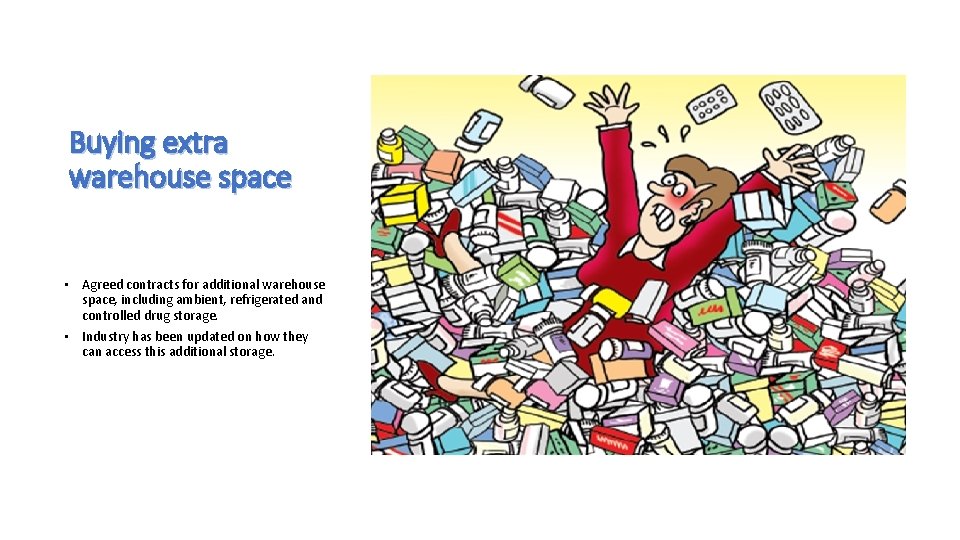
Buying extra warehouse space • Agreed contracts for additional warehouse space, including ambient, refrigerated and controlled drug storage. • Industry has been updated on how they can access this additional storage.
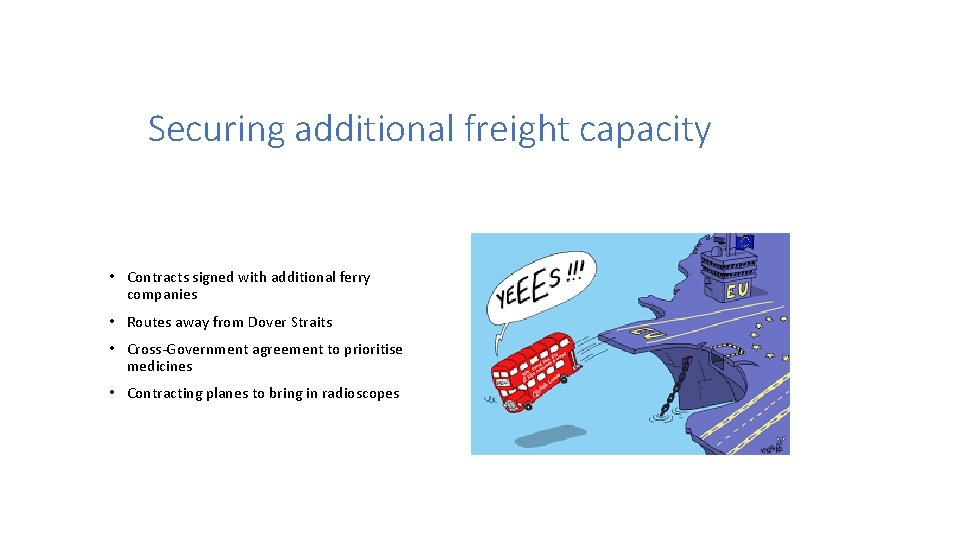
3. Securing additional freight capacity • Contracts signed with additional ferry companies • Routes away from Dover Straits • Cross-Government agreement to prioritise medicines • Contracting planes to bring in radioscopes
Adjusting regulatory requirements • Consulting on, and publishing further guidance and technical notices on how medicines will be regulated in the event of ‘no-deal’
Strengthening the processes and resources used to deal with shortages • Implementing serious shortage protocols legislation for community pharmacies
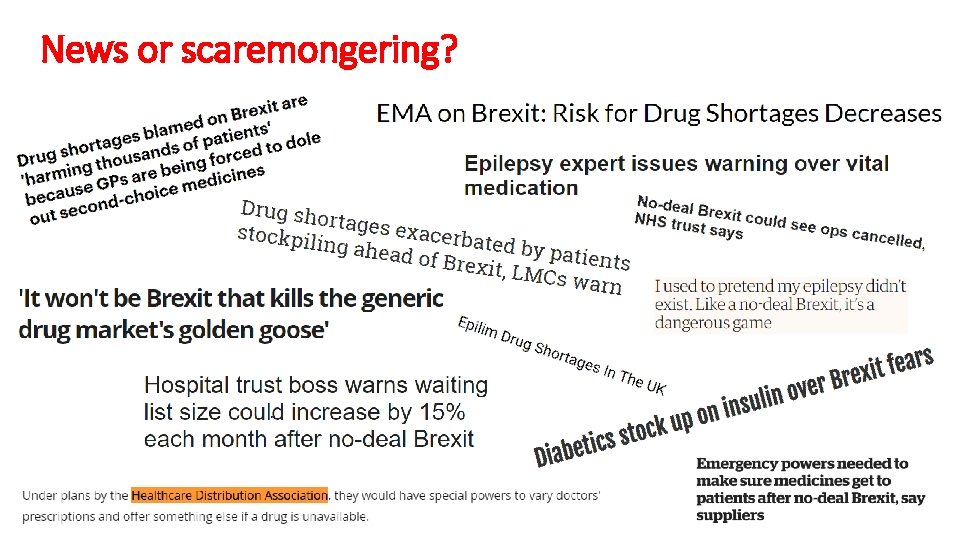
News or scaremongering?
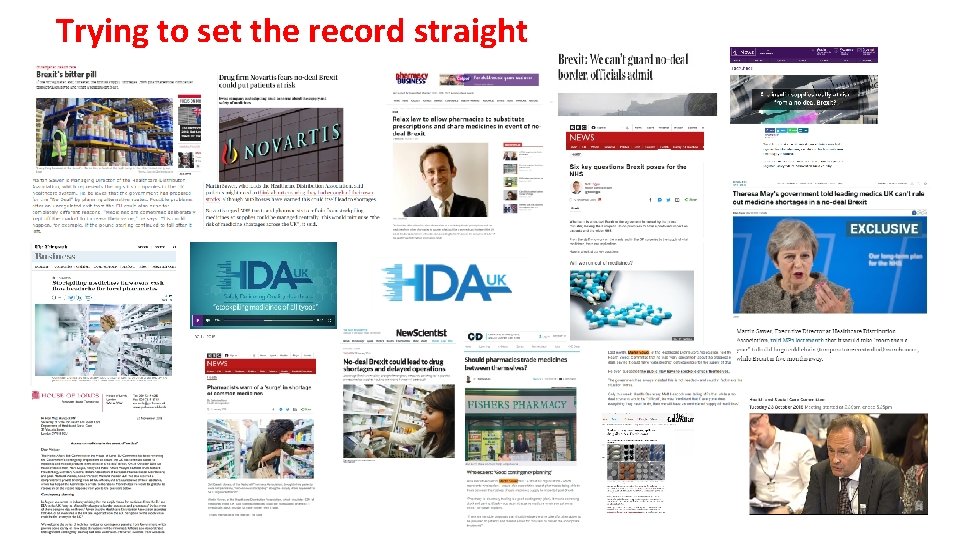
Trying to set the record straight
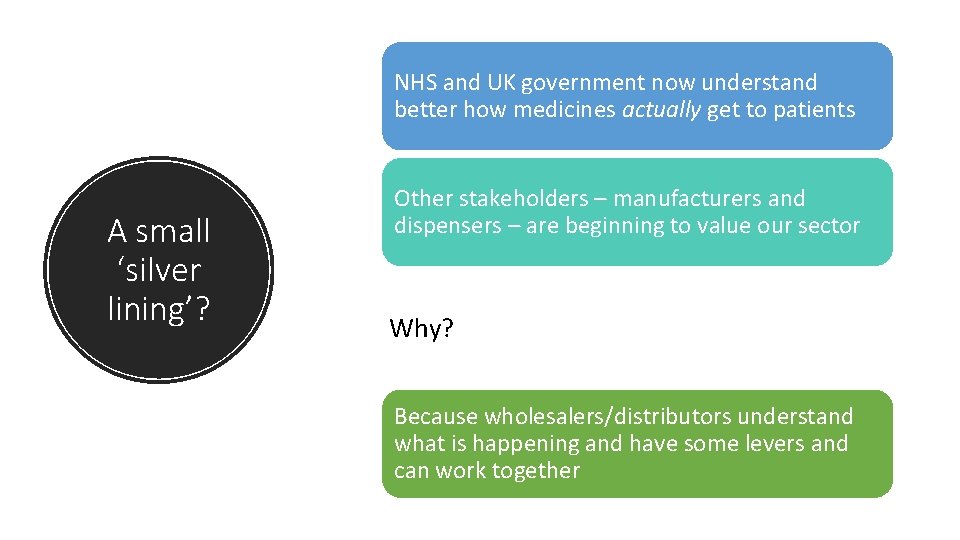
NHS and UK government now understand better how medicines actually get to patients A small ‘silver lining’? Other stakeholders – manufacturers and dispensers – are beginning to value our sector Why? Because wholesalers/distributors understand what is happening and have some levers and can work together
Thank you for listening & Enjoy the remainder of the conference!
- Slides: 32