
JEPPIAAR Institute Of Technology Self Belief Self Discipline
JEPPIAAR Institute Of Technology Self Belief | Self Discipline | Self Respect Department Of Electronics And Communication Engineering Subject: Wireless Network Title: Wireless Application Protocol (WAP) Name Yuvaraja. K Jayakumar. D Jagadeesan. K Hariprasath. V Inbensiya. R India. B. S Karthiga. R Reg. No 210617106090 210617106043 210617106041 210617106037 210617106039 210617106040 210617106045
Overview • Wireless Application Protocol • WAP: Main Features • WAP Architecture • World-Wide Web Model • WAP Model • Advantages of WAP • Disadvantages of WAP • Conclusion • Reference
Wireless Application Protocol ♦ Wireless Application Protocol commonly known as WAP is used to enable the access of internet in the mobile phones or PDAs. ♦ An open, global specification that empowers mobile users with wireless devices to easily access and interact with internet information and services instantly.
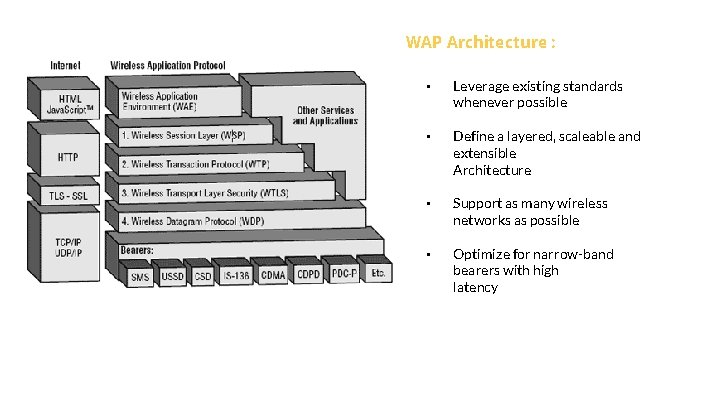
WAP Architecture : • Leverage existing standards whenever possible • Define a layered, scaleable and extensible Architecture • Support as many wireless networks as possible • Optimize for narrow-band bearers with high latency
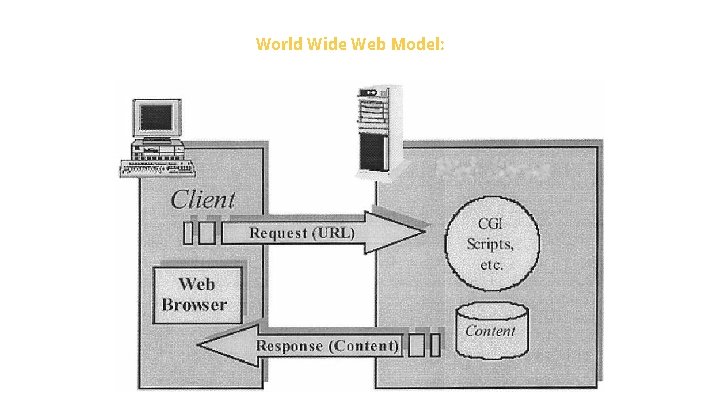
World Wide Web Model:
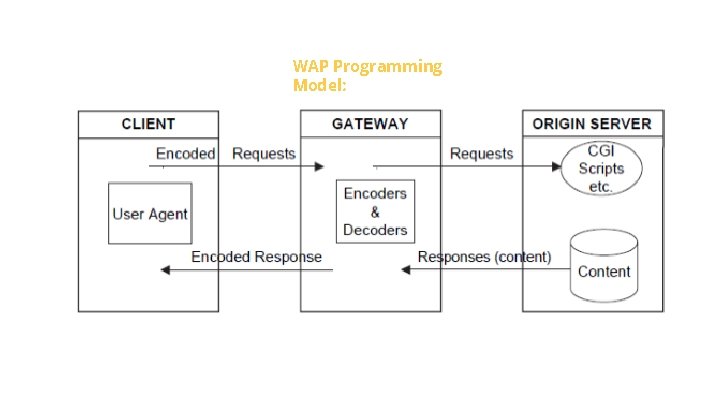
WAP Programming Model:
ADVANTAGES: • Implementation near to the Internet model. • Most modern mobile telephone devices support WAP. • Real-time send/receive data; Multiplatform functionality (little change is needed to run on any web site since XML is Used). • No hardware obsolescence.
DISADVANTAGES: • Low speeds, security, and very small user Interface. • Not very familiar to the users. • Business model is expensive. • Forms are hard to design. • Third party is included.
CONCLUSION: • In conclusion, WAP is suitable for the creation of mobile learning training course material. • The optimization of WAP and the handling of the design challenges makes it feasible to use mobile handheld devices for distance learning in real-time. • The application developer must always be aware of the user and take into account the usability issues if the application is to be a success.
![REFERENCE: [1]Joris Claessens. Analysis and design of an advanced infrastructure for secure and anonymous](http://slidetodoc.com/presentation_image_h2/46d2a6c9f5dd1cdb337a3add0e41034f/image-10.jpg "REFERENCE: [1]Joris Claessens. Analysis and design of an advanced infrastructure for secure and anonymous")
REFERENCE: [1]Joris Claessens. Analysis and design of an advanced infrastructure for secure and anonymous electronic payment systems on the Internet. PHD thesis, Katholieke Universiteit Leuven, December 2002. 220 pages. [2] Tim Dierks and Eric Rescorla. The TLS Protocol Version 1. 1. IETF Internet Draft, March 2003. [3] Ric Howell (Concise Group Ltd). WAP security. http: //www. vbxml. com/wap/articles/wap-security/default. asp. [4] Open Mobile Alliance. http: //www. openmobilealliance. org/. [5] Markku Saarinen. Attacks Against The WAP WTLS Protocol. http: //www. cc. jyu. fi/∼mjos/wtls. pdf.

Thank You!
- Slides: 11