
Jeopardy Find the Area Missing Length Circumference Perimeter

- Slides: 26
Jeopardy Find the Area Missing Length Circumference Perimeter and Area 100 100 100 200 200 200 300 300 300 400 400 400 500 500 500
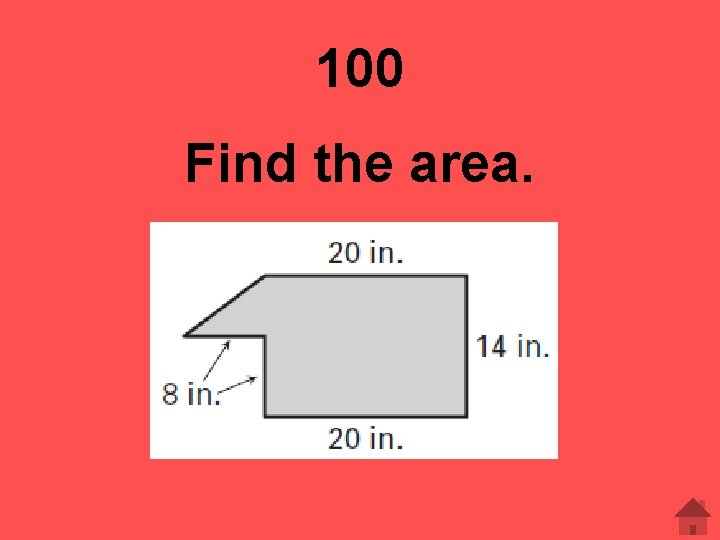
100 Find the area.
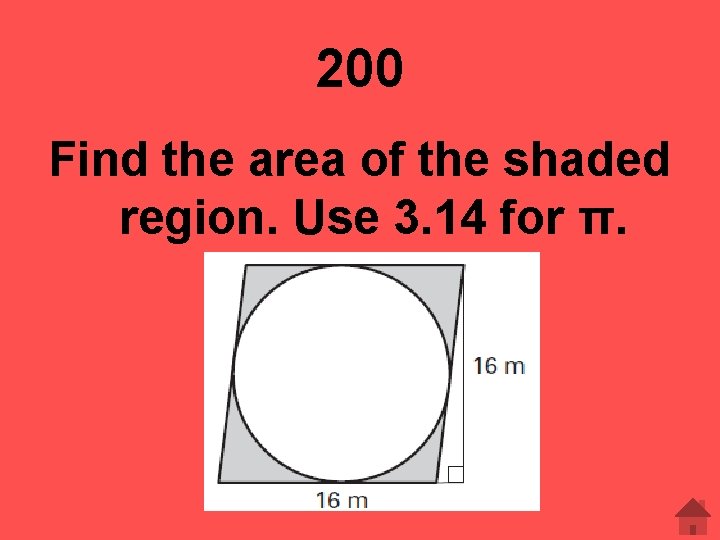
200 Find the area of the shaded region. Use 3. 14 for π.
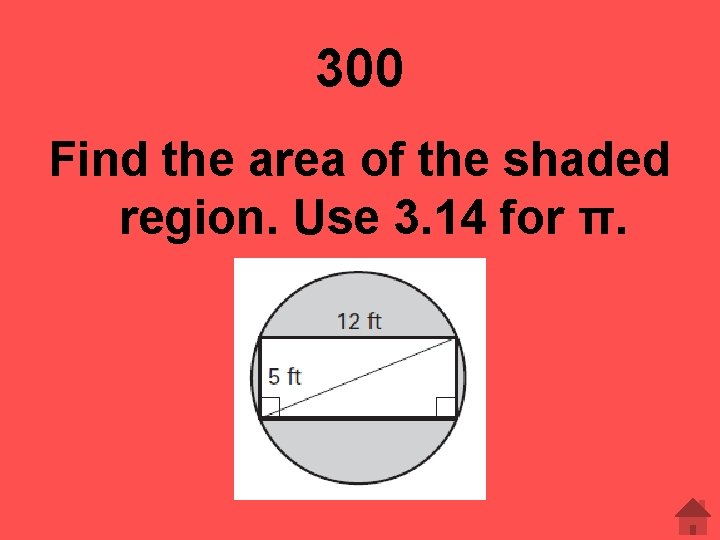
300 Find the area of the shaded region. Use 3. 14 for π.
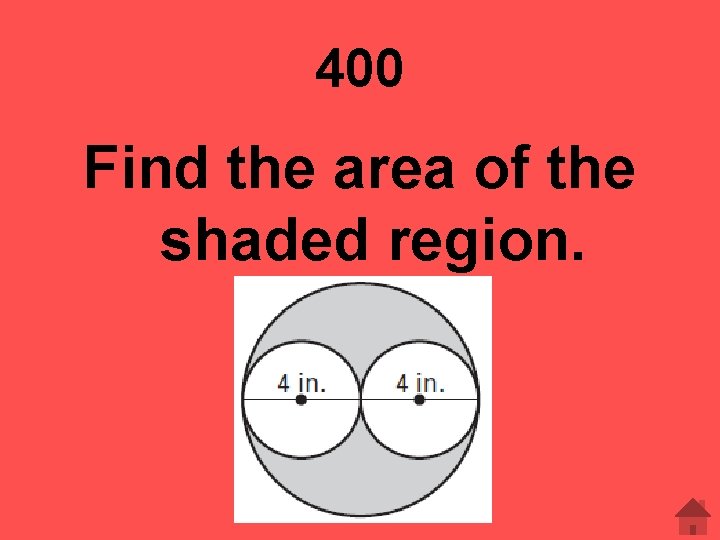
400 Find the area of the shaded region.
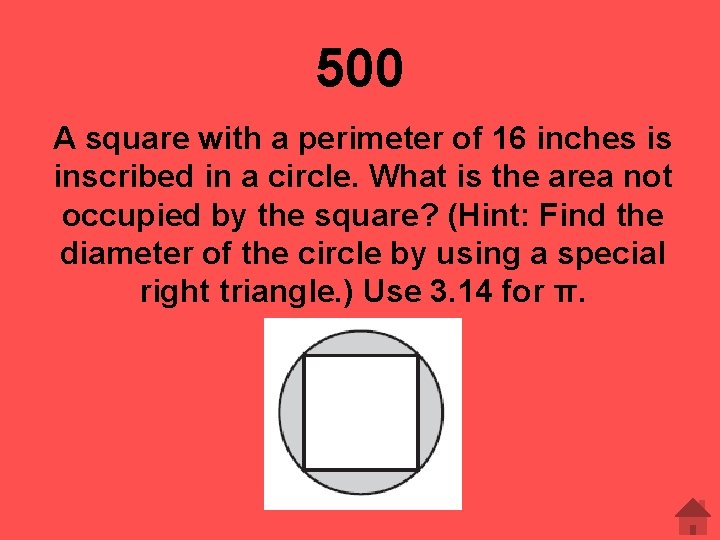
500 A square with a perimeter of 16 inches is inscribed in a circle. What is the area not occupied by the square? (Hint: Find the diameter of the circle by using a special right triangle. ) Use 3. 14 for π.
100 A parallelogram has an area of 92 square units. Its height is 4 units. Find the base.
200 A trapezoid has an area of 105 square units. Its bases are 12 units and 18 units. Find the height.
300 The St. Peter’s Basilica dome in Rome, Italy could cover a ground area of 1365 square meters. Find the diameter of the dome. Use 3. 14 for π.
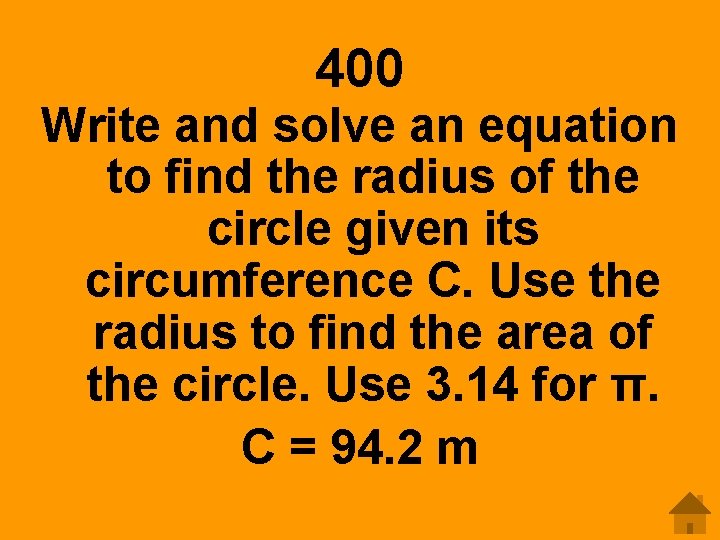
400 Write and solve an equation to find the radius of the circle given its circumference C. Use the radius to find the area of the circle. Use 3. 14 for π. C = 94. 2 m
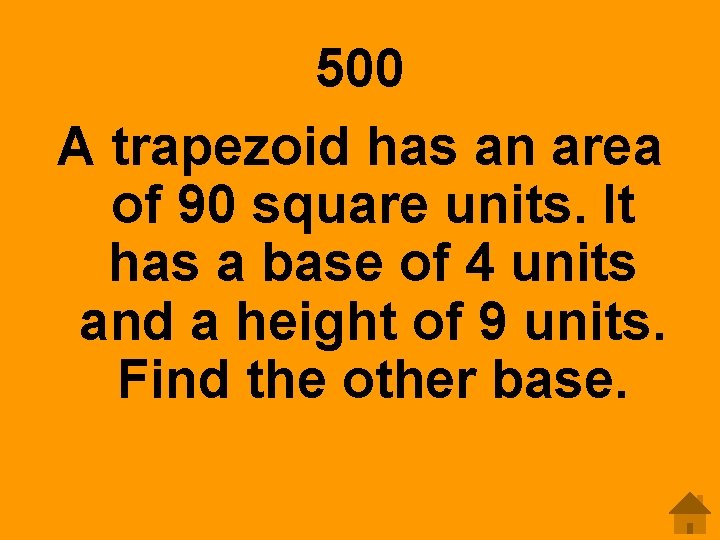
500 A trapezoid has an area of 90 square units. It has a base of 4 units and a height of 9 units. Find the other base.
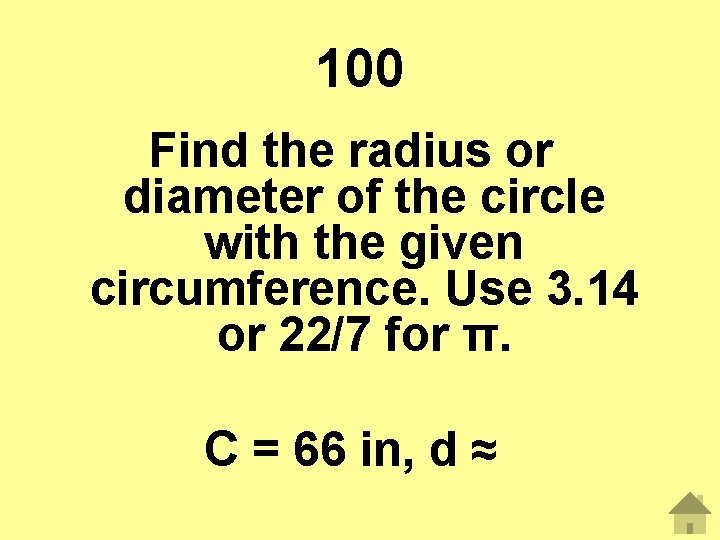
100 Find the radius or diameter of the circle with the given circumference. Use 3. 14 or 22/7 for π. C = 66 in, d ≈
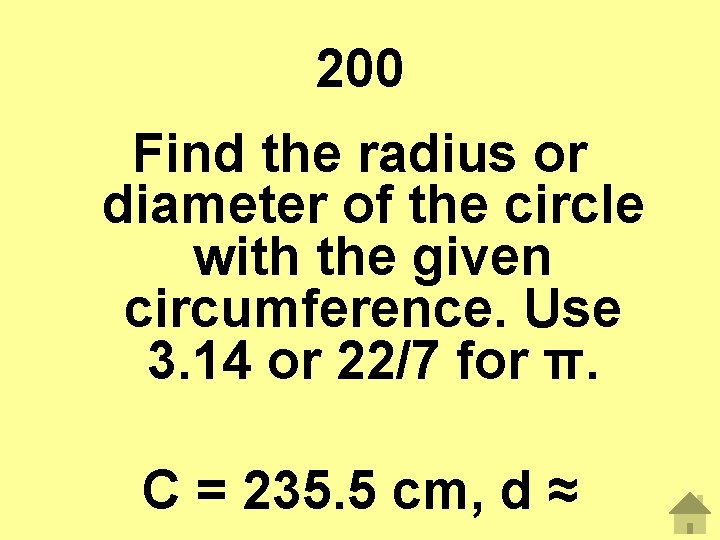
200 Find the radius or diameter of the circle with the given circumference. Use 3. 14 or 22/7 for π. C = 235. 5 cm, d ≈
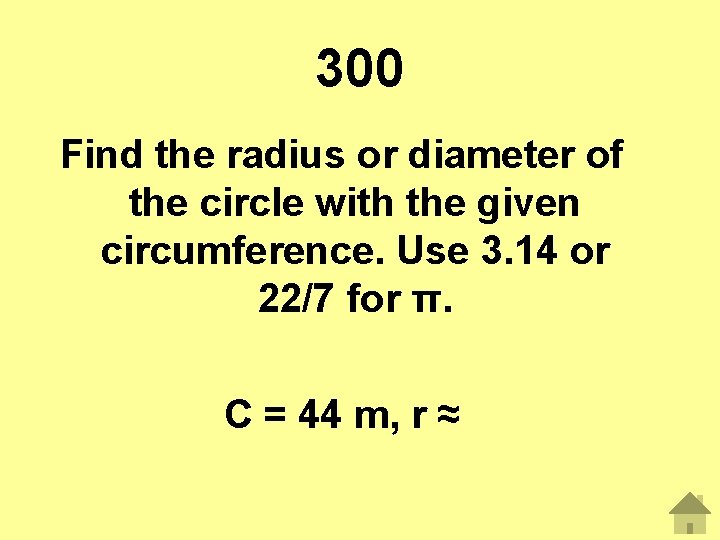
300 Find the radius or diameter of the circle with the given circumference. Use 3. 14 or 22/7 for π. C = 44 m, r ≈
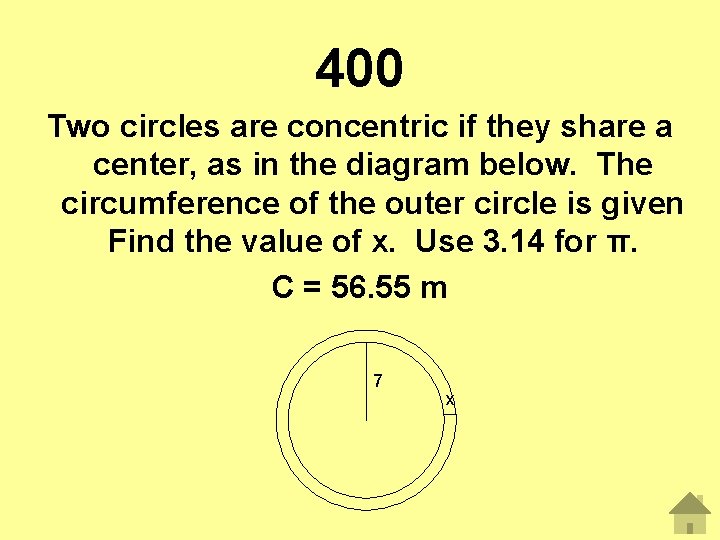
400 Two circles are concentric if they share a center, as in the diagram below. The circumference of the outer circle is given Find the value of x. Use 3. 14 for π. C = 56. 55 m 7 x
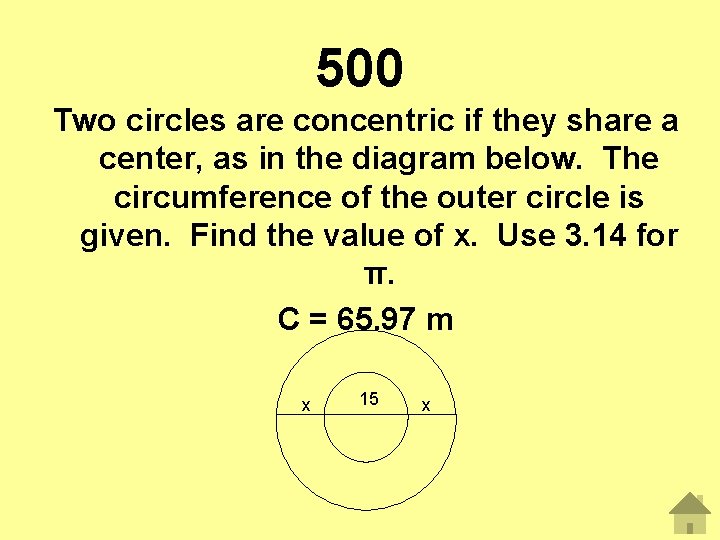
500 Two circles are concentric if they share a center, as in the diagram below. The circumference of the outer circle is given. Find the value of x. Use 3. 14 for π. C = 65. 97 m x 15 x
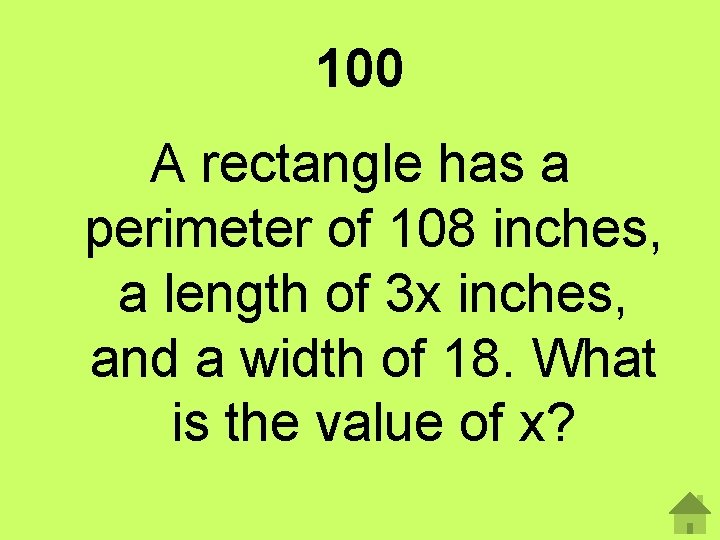
100 A rectangle has a perimeter of 108 inches, a length of 3 x inches, and a width of 18. What is the value of x?
200 A triangle has an area of 45 square meters, a height of 6 meters, and a base of 5 y. What is the value of y?
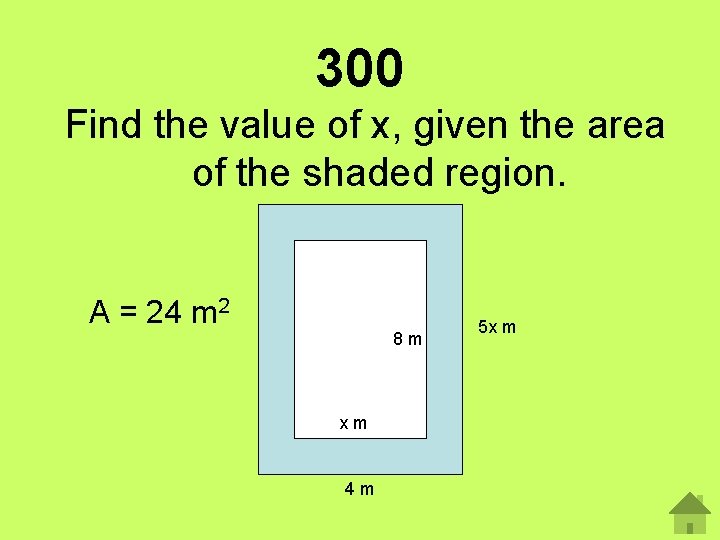
300 Find the value of x, given the area of the shaded region. A = 24 m 2 8 m xm 4 m 5 x m
400 A triangle has an area of 10 square meters, and a base of 4 x. What is height of the triangle in terms of x?
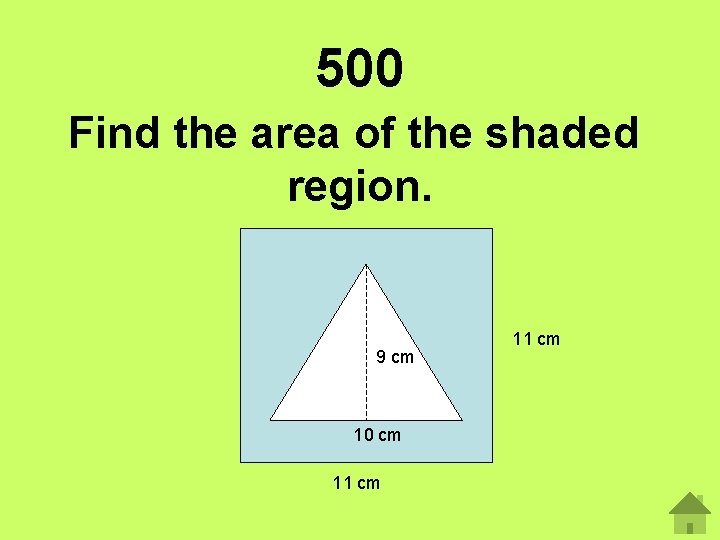
500 Find the area of the shaded region. 9 cm 10 cm 11 cm
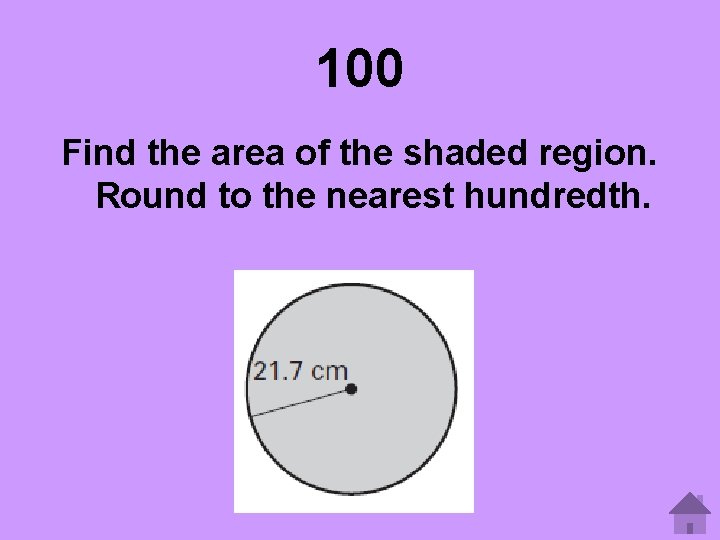
100 Find the area of the shaded region. Round to the nearest hundredth.
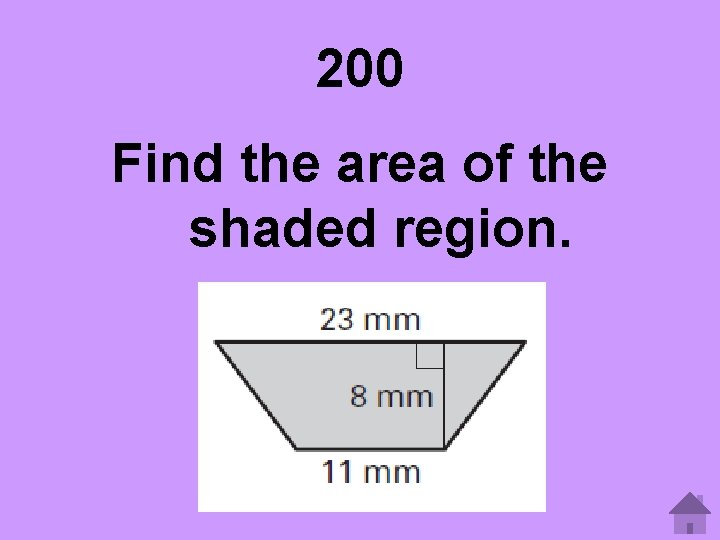
200 Find the area of the shaded region.
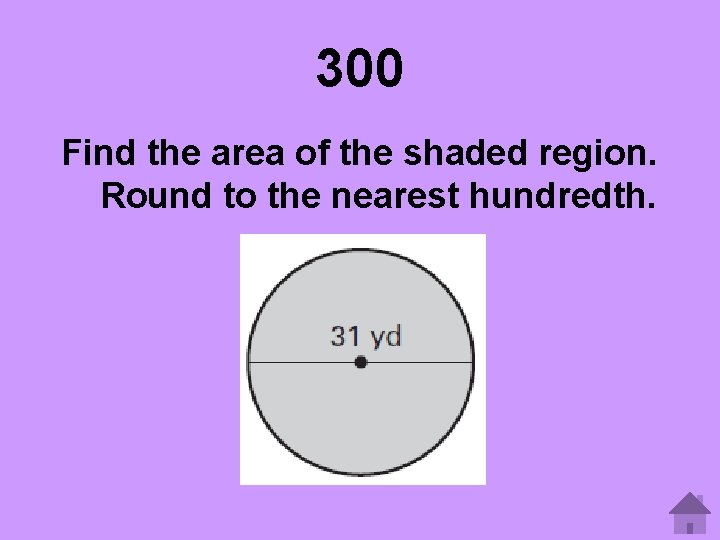
300 Find the area of the shaded region. Round to the nearest hundredth.
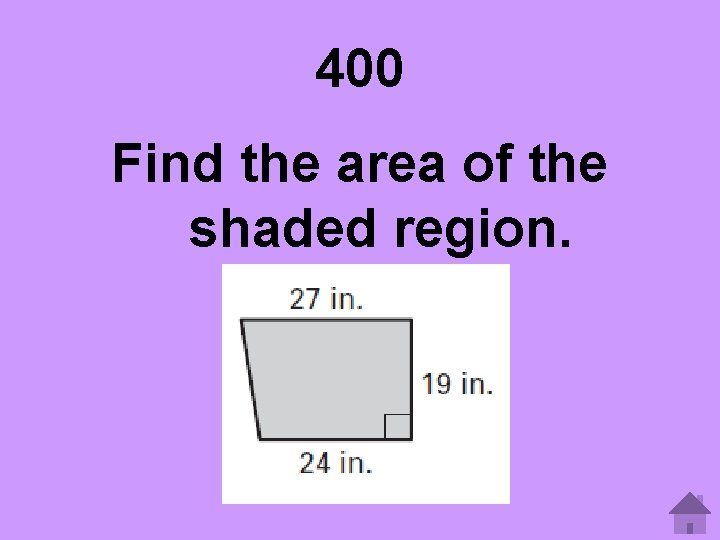
400 Find the area of the shaded region.
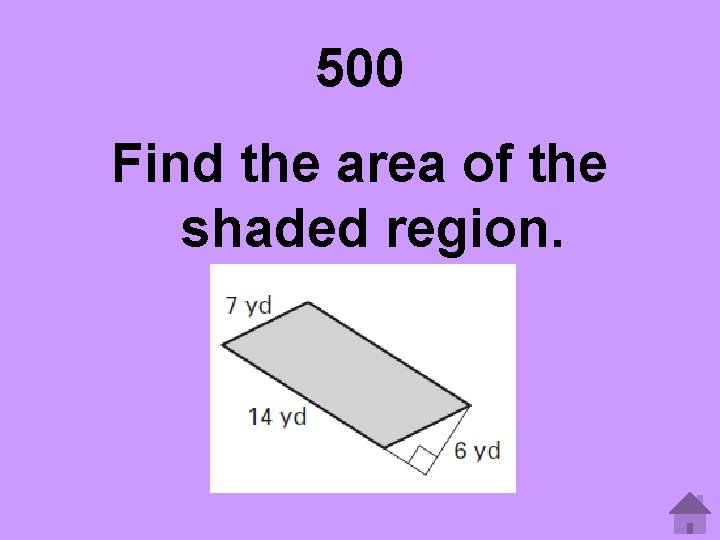
500 Find the area of the shaded region.