
Jeopardy Final Jeopardy MICROSCOPES PART 1 MICROSCOPES PART






- Slides: 75
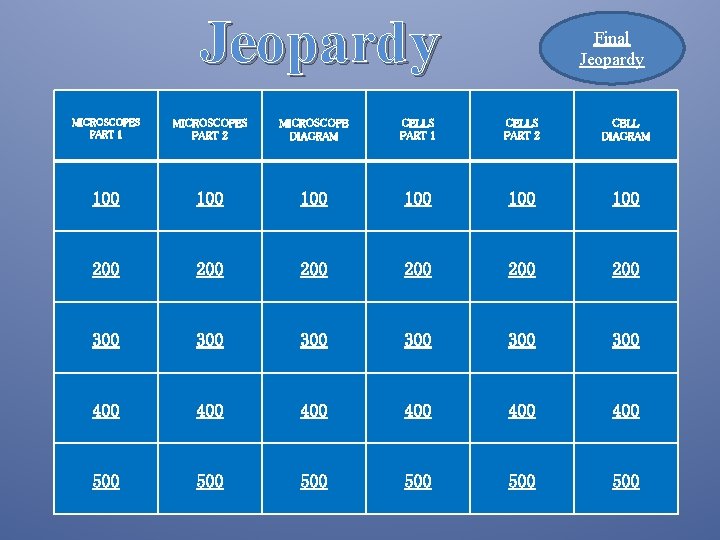
Jeopardy Final Jeopardy MICROSCOPES PART 1 MICROSCOPES PART 2 MICROSCOPE DIAGRAM CELLS PART 1 CELLS PART 2 CELL DIAGRAM 100 100 100 200 200 200 300 300 300 400 400 400 500 500 500
What is the difference between a SIMPLE and a COMPOUND Microscope ? A 100
A Compound Microscope has more than one lens A 100
What did Robert Hooke discover ? A 200
He discovered CELLS A 200
What was Anton van Leeuwenhoek’s contribution to Science ? A 300
He discovered tiny MICROORGANISMS A 300
What happens to a microscope’s FIELD OF VIEW when magnification INCREASES ? A 400
It DECREASES A 400
What would the TOTAL MAGNIFICATION of your microscope be if you are using an Objective Lens with a magnification of 45 X ? A 500
It would be 450 X A 500
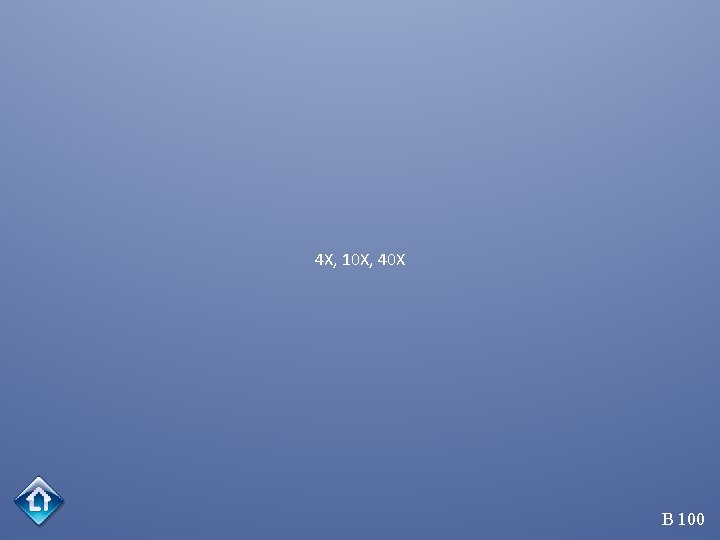
The magnifications of the OBJECTIVE LENSES of our microscopes are… B 100
4 X, 10 X, 40 X B 100
The microscopes we use in class are called…. B 200
COMPOUND LIGHT MICROSCOPES B 200
The microscope part used to adjust the amount of light on the slide is called ? B 300
The DIAPHRAGM B 300
What is the “platform” upon which the slides or specimens are placed for viewing? B 400
The STAGE B 400
Which part of the microscope should NEVER be used when viewing a slide under “HIGH” power? B 500
The COARSE ADJUSTMENT KNOB B 500
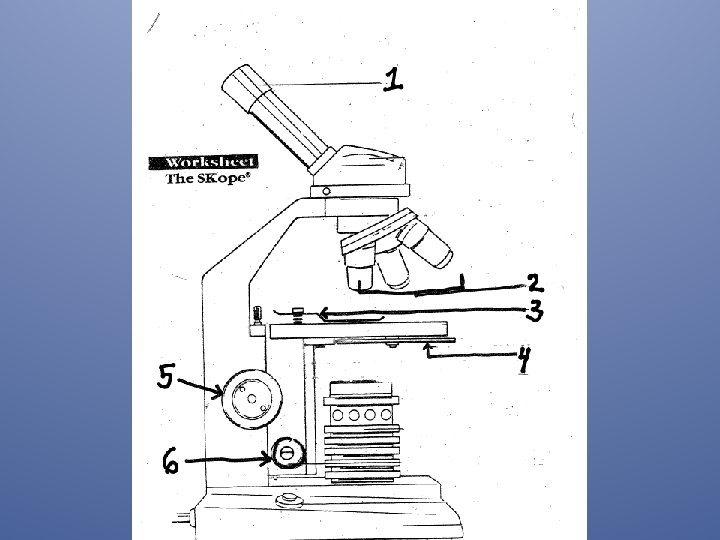
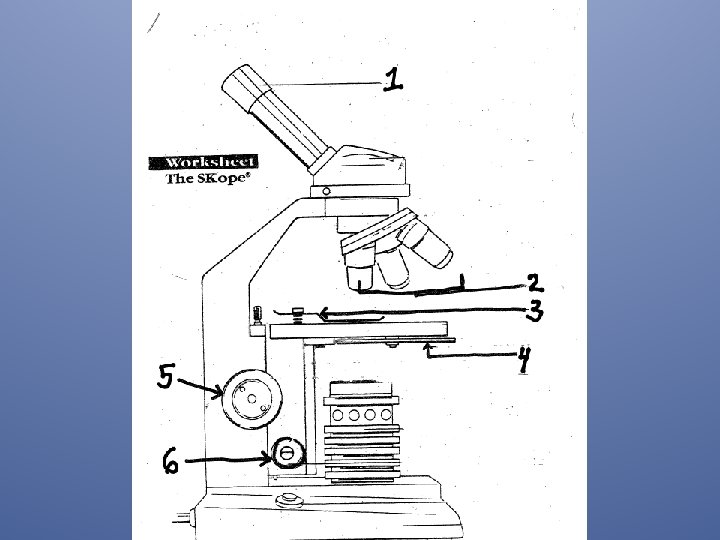
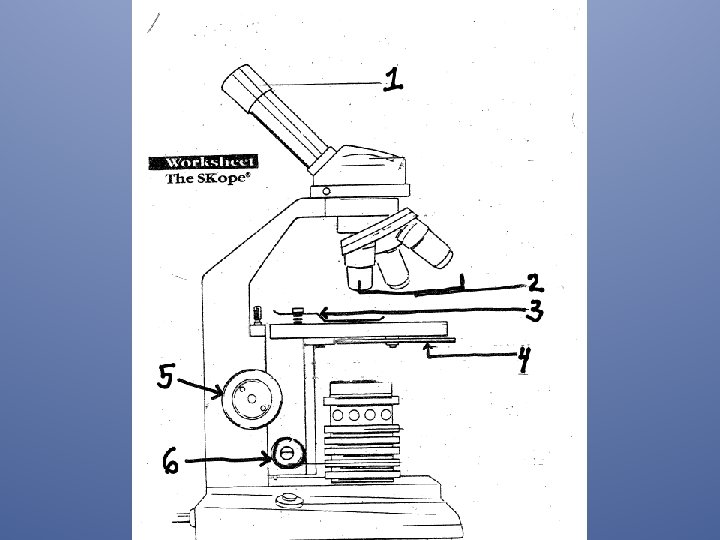
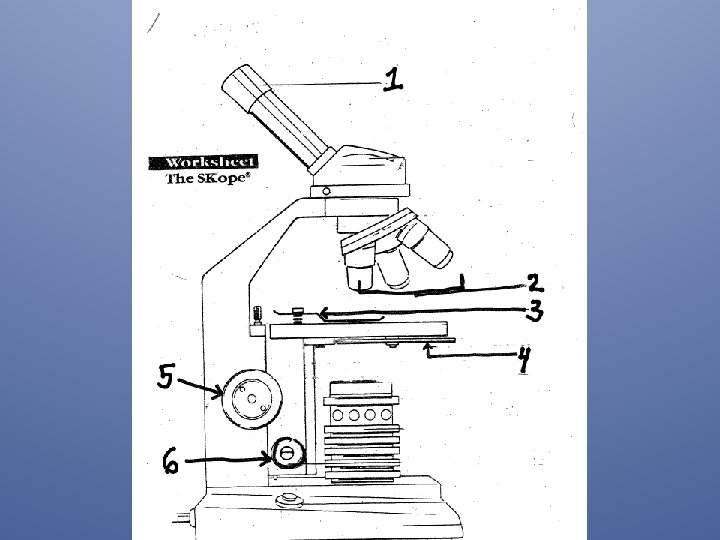
The Part labeled “ 1” is the… C 100
EYEPIECE C 100
PART 5 is the C 200
COARSE ADJUSTMENT KNOB C 200
The function of PART 4 is C 300
To adjust the amount of light on the slide C 300
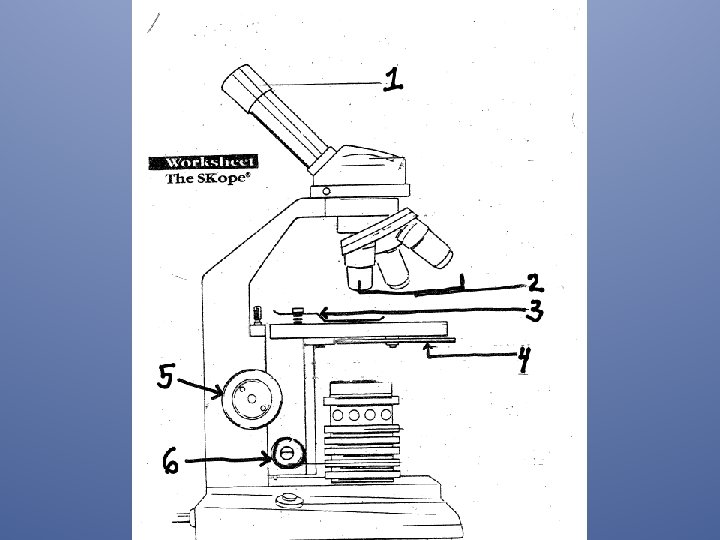
What is PART 2 ? C 400
The OBJECTIVE LENS C 400
What is the function of PART 3 ? C 500
To hold the slide or specimen in place. C 500
The tiny structures that carry out different functions within the cell are D 100
ORGANELLES D 100
List the 3 statements of the Cell Theory. D 200
1. All living things are made of cells 2. Cells are the basic units of structure and function in living things. 3. Cells are produced from other cells D 200
a. Organisms whose cells have Nuclei are…. . b. Organisms having cells that DO NOT have Nuclei are…. . D 300
a. EUKARYOTES b. PROKARYOTES D 300
All of a cell’s functions are controlled by which structure ? D 400
The Nucleus D 400
List the correct order of the LEVELS OF CELLULAR ORGANIZATION: D 500
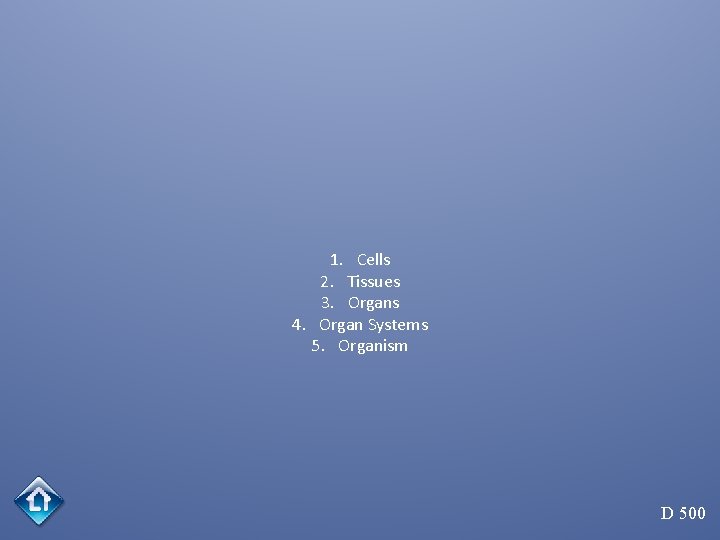
1. Cells 2. Tissues 3. Organs 4. Organ Systems 5. Organism D 500
Protein production is carried out by which organelles? E 100
RIBOSOMES E 100
The function of the cell’s VACUOLES is: E 200
STORAGE of materials E 200
The structure that controls which substances enter or exit the cell is the E 300
CELL MEMBRANE E 300
Organelles that break down sugars in order to produce energy are E 400
MITOCHONDRIA E 400
The organelles in which PHOTOSYNTHESIS occurs are E 500
CHLOROPLASTS E 500
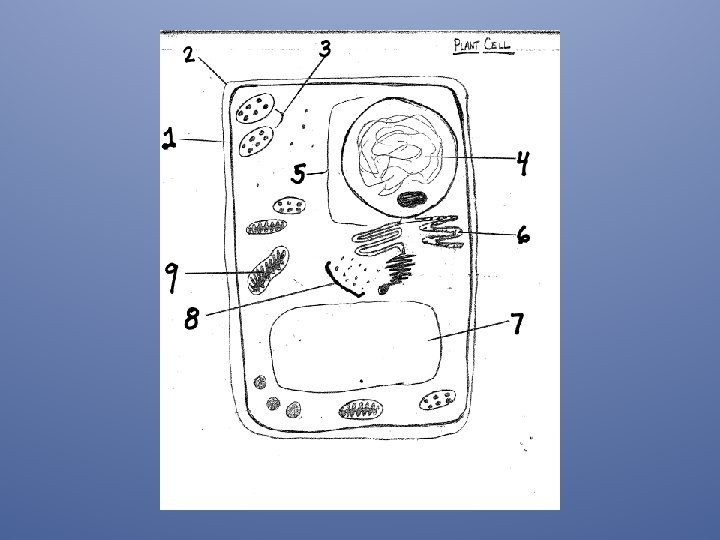
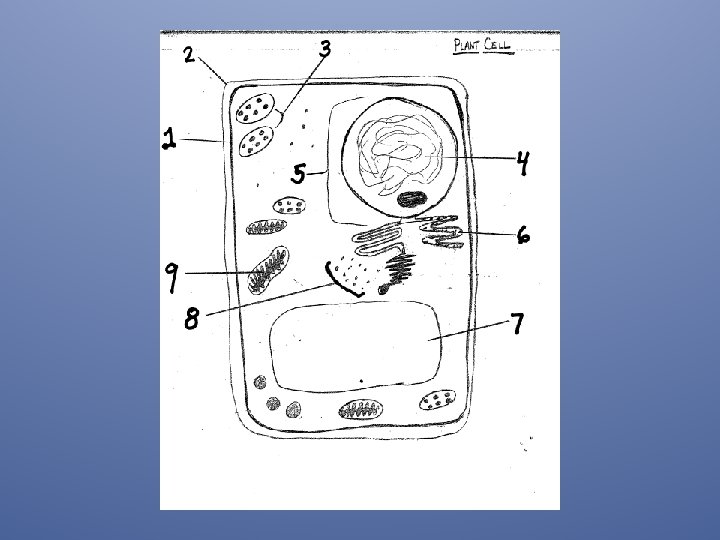
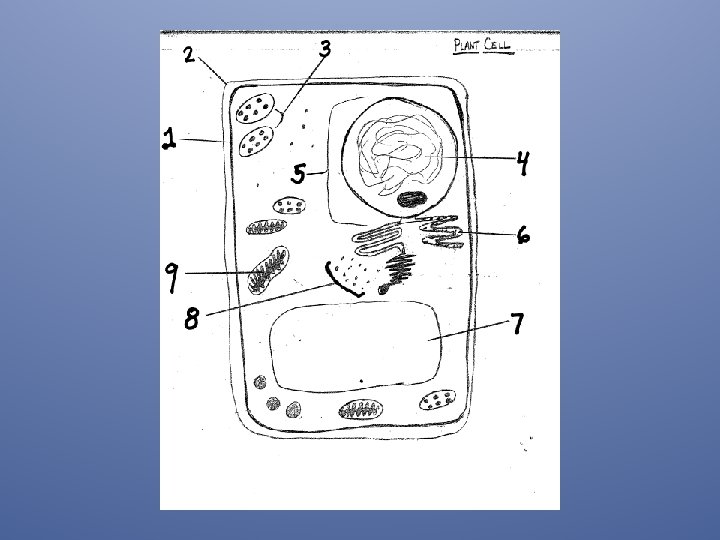
Energy production occurs in which of the organelles? F 100
PART 9 F 100
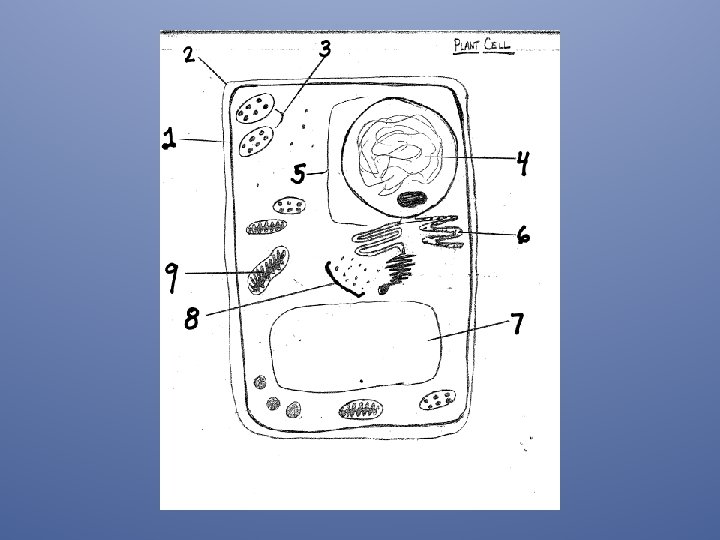
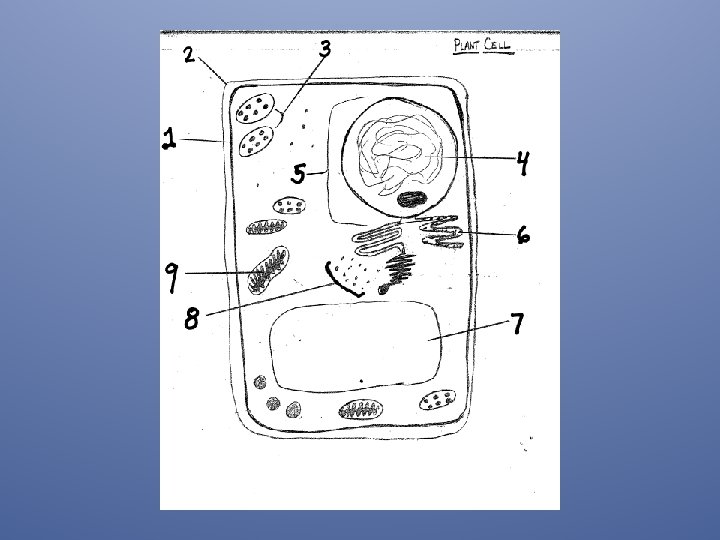
Part 8 are F 200
RIBOSOMES F 200
Photosynthesis occurs in which organelle ? F 300
PART 3 F 300
Which structures are found only in PLANT cells and not in ANIMAL cells ? F 400
Parts 2 & 3 F 400
Identify Parts 4, 6, & 7 F 500
Part 4: CHROMATIN PART 6: E. R. PART 7: VACUOLE F 500
Today’s Final Jeopardy category is Please make your wager
FJ Question
FJ Answer
Gracias por jugar Jeopardy