
Jennifer Jones MD UCF College of Medicine Gainesville
- Slides: 49
Jennifer Jones, MD UCF College of Medicine Gainesville, Florida An ACCME-accredited medical education company
Slides available at www. t 2 diabetescme. org LEARN AT YOUR OWN PACE NO COST • CME • T 2 DM RESOURCES
Disclosures In accordance with the ACCME Standards for Commercial Support, The France Foundation (TFF) requires that individuals in a position to control the content of an educational activity disclose all relevant financial relationships with any commercial interest. TFF resolves all conflicts of interest to ensure independence, objectivity, balance, and scientific rigor in all its educational programs. Furthermore, TFF seeks to verify that all scientific research referred to, reported, or used in a CME/CE activity conforms to the generally accepted standards of experimental design, data collection, and analysis. TFF is committed to providing learners with high-quality CME/CE activities that promote improvements in health care and not those of a commercial interest. Richard Sadovsky, MD Jennifer Jones, MD, has indicated he has no relevant relationships with industry to disclose. This activity is supported by an educational grant from Sanofi US.
Learning Objectives 1. Explore the rationale for combining GLP-1 agonists with basal insulin as a means of optimizing Hb. A 1 C 2. Examine safety and efficacy data on emerging GLP-1 agonist/basal insulin combinations, with an eye towards practical implications for day-to-day practice 3. Consider efficacy, side effects, costs, and tolerability to individualize therapy to meet A 1 C goals
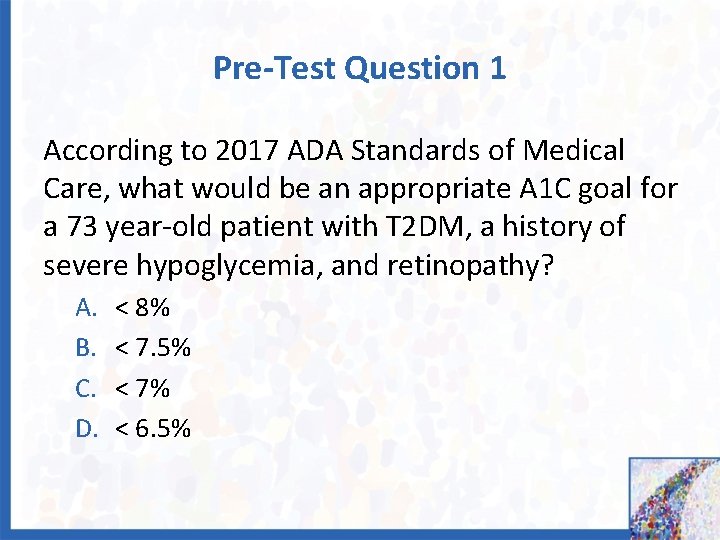
Pre-Test Question 1 According to 2017 ADA Standards of Medical Care, what would be an appropriate A 1 C goal for a 73 year-old patient with T 2 DM, a history of severe hypoglycemia, and retinopathy? A. B. C. D. < 8% < 7. 5% < 7% < 6. 5%
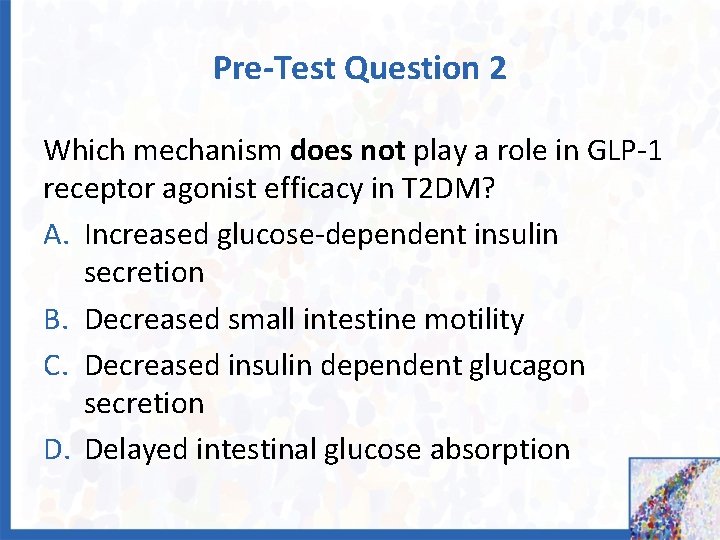
Pre-Test Question 2 Which mechanism does not play a role in GLP-1 receptor agonist efficacy in T 2 DM? A. Increased glucose-dependent insulin secretion B. Decreased small intestine motility C. Decreased insulin dependent glucagon secretion D. Delayed intestinal glucose absorption
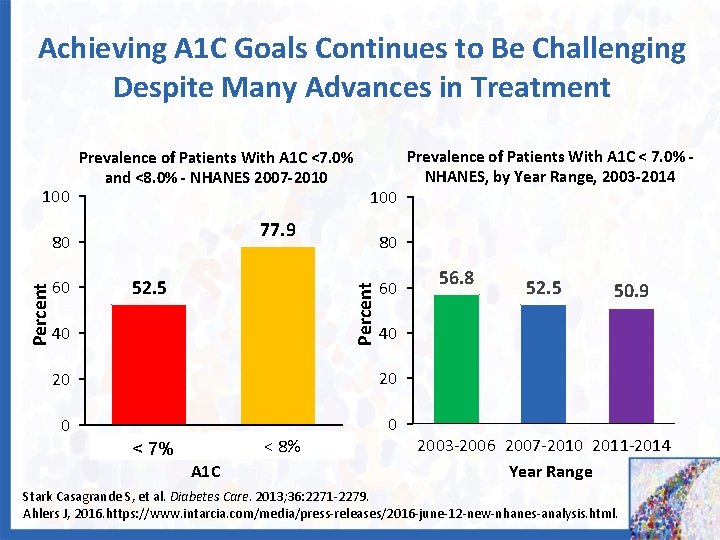
Achieving A 1 C Goals Continues to Be Challenging Despite Many Advances in Treatment 77. 9 Percent 80 60 100 52. 5 40 60 56. 8 52. 5 50. 9 40 20 20 0 0 < 8% Hb. A 1 c < 7% Hb. A 1 c < 8% < 7% A 1 C Prevalence of Patients With A 1 C < 7. 0% NHANES, by Year Range, 2003 -2014 80 Percent 100 Prevalence of Patients With A 1 C <7. 0% and <8. 0% - NHANES 2007 -2010 2003 -2006 2007 -2010 2011 -2014 Year Range Stark Casagrande S, et al. Diabetes Care. 2013; 36: 2271 -2279. Ahlers J, 2016. https: //www. intarcia. com/media/press-releases/2016 -june-12 -new-nhanes-analysis. html.
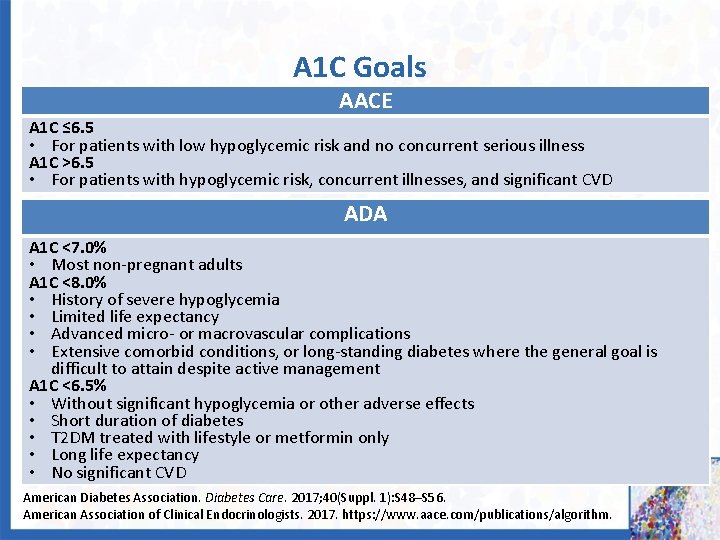
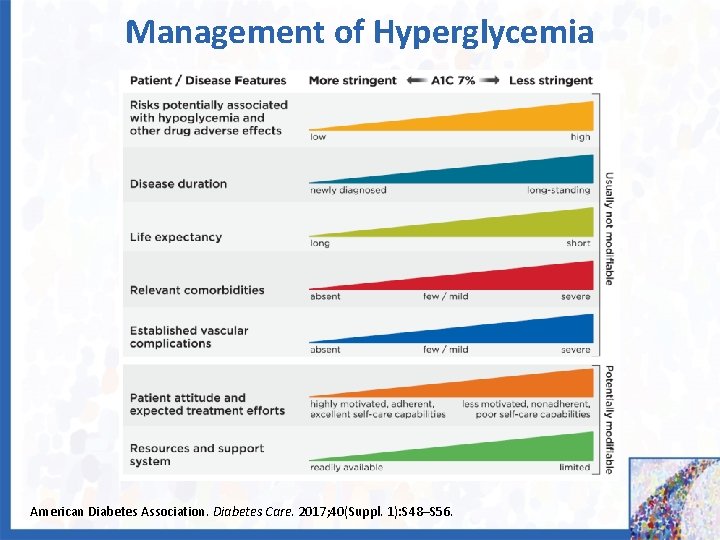
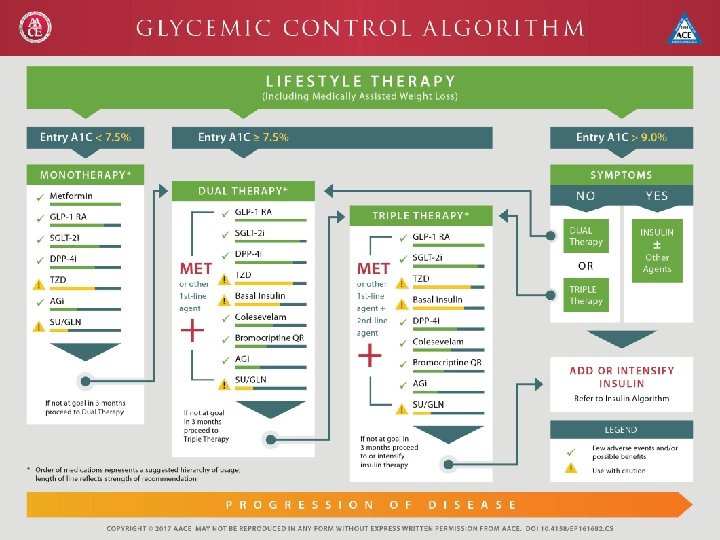
A 1 C Goals AACE A 1 C ≤ 6. 5 • For patients with low hypoglycemic risk and no concurrent serious illness A 1 C >6. 5 • For patients with hypoglycemic risk, concurrent illnesses, and significant CVD ADA A 1 C <7. 0% • Most non-pregnant adults A 1 C <8. 0% • History of severe hypoglycemia • Limited life expectancy • Advanced micro- or macrovascular complications • Extensive comorbid conditions, or long-standing diabetes where the general goal is difficult to attain despite active management A 1 C <6. 5% • Without significant hypoglycemia or other adverse effects • Short duration of diabetes • T 2 DM treated with lifestyle or metformin only • Long life expectancy • No significant CVD American Diabetes Association. Diabetes Care. 2017; 40(Suppl. 1): S 48–S 56. American Association of Clinical Endocrinologists. 2017. https: //www. aace. com/publications/algorithm.
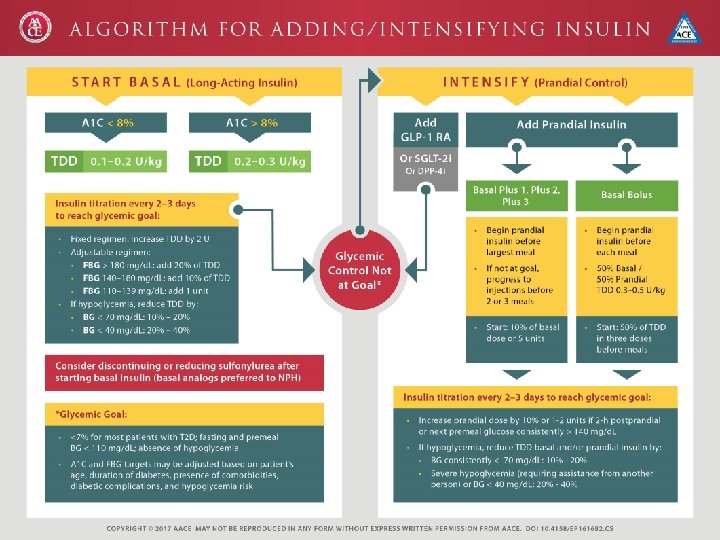
Management of Hyperglycemia American Diabetes Association. Diabetes Care. 2017; 40(Suppl. 1): S 48–S 56.
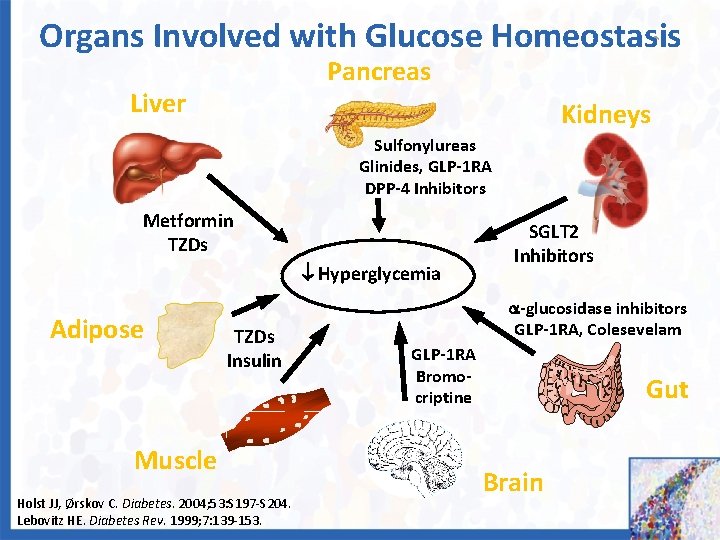
Organs Involved with Glucose Homeostasis Pancreas Liver Kidneys Sulfonylureas Glinides, GLP-1 RA DPP-4 Inhibitors Metformin TZDs Hyperglycemia Adipose TZDs Insulin Muscle Holst JJ, Ørskov C. Diabetes. 2004; 53: S 197 -S 204. Lebovitz HE. Diabetes Rev. 1999; 7: 139 -153. SGLT 2 Inhibitors -glucosidase inhibitors GLP-1 RA, Colesevelam GLP-1 RA Bromocriptine Gut Brain
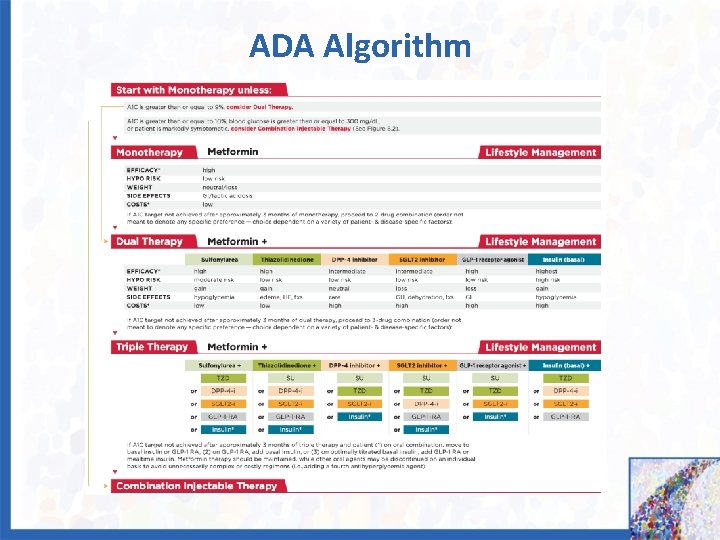
ADA Algorithm
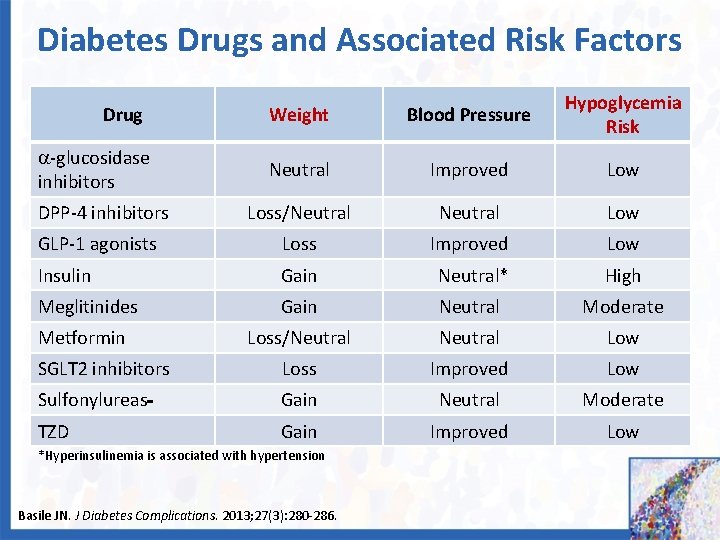
Diabetes Drugs and Associated Risk Factors Weight Blood Pressure Hypoglycemia Risk Neutral Improved Low DPP-4 inhibitors Loss/Neutral Low GLP-1 agonists Loss Improved Low Insulin Gain Neutral* High Meglitinides Gain Neutral Moderate Metformin Loss/Neutral Low SGLT 2 inhibitors Loss Improved Low Sulfonylureas Gain Neutral Moderate TZD Gain Improved Low Drug -glucosidase inhibitors *Hyperinsulinemia is associated with hypertension Basile JN. J Diabetes Complications. 2013; 27(3): 280 -286.
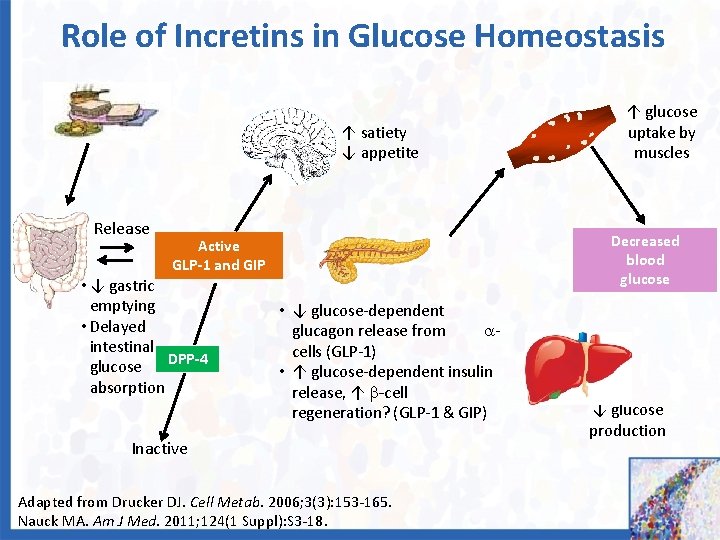
Role of Incretins in Glucose Homeostasis ↑ satiety ↓ appetite Release Decreased blood glucose Active GLP-1 and GIP • ↓ gastric emptying • Delayed intestinal glucose DPP-4 absorption ↑ glucose uptake by muscles • ↓ glucose-dependent glucagon release from cells (GLP-1) • ↑ glucose-dependent insulin release, ↑ -cell regeneration? (GLP-1 & GIP) Inactive Adapted from Drucker DJ. Cell Metab. 2006; 3(3): 153 -165. Nauck MA. Am J Med. 2011; 124(1 Suppl): S 3 -18. ↓ glucose production
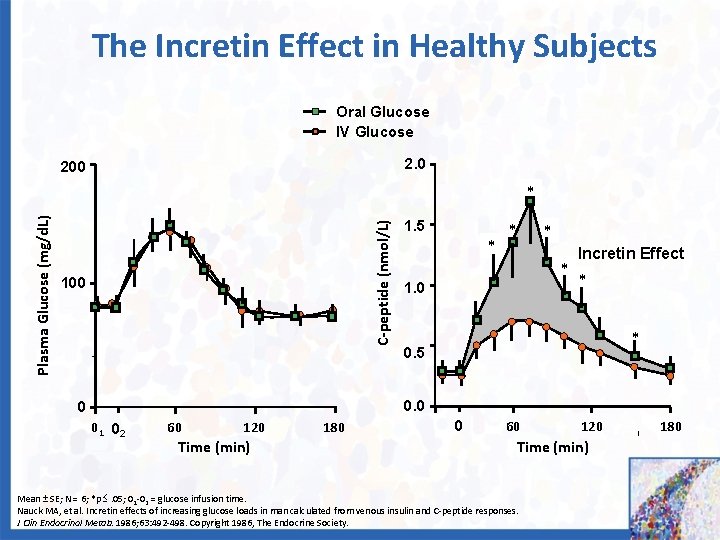
The Incretin Effect in Healthy Subjects Oral Glucose IV Glucose 2. 0 200 C-peptide (nmol/L) Plasma Glucose (mg/d. L) * 100 1. 5 * * 1. 0 Incretin Effect * * 0. 5 0. 0 0 0 1 02 60 120 Time (min) 180 0 60 120 Time (min) Mean ± SE; N = 6; *p . 05; 01 -02 = glucose infusion time. Nauck MA, et al. Incretin effects of increasing glucose loads in man calculated from venous insulin and C-peptide responses. J Clin Endocrinol Metab. 1986; 63: 492 -498. Copyright 1986, The Endocrine Society. 180
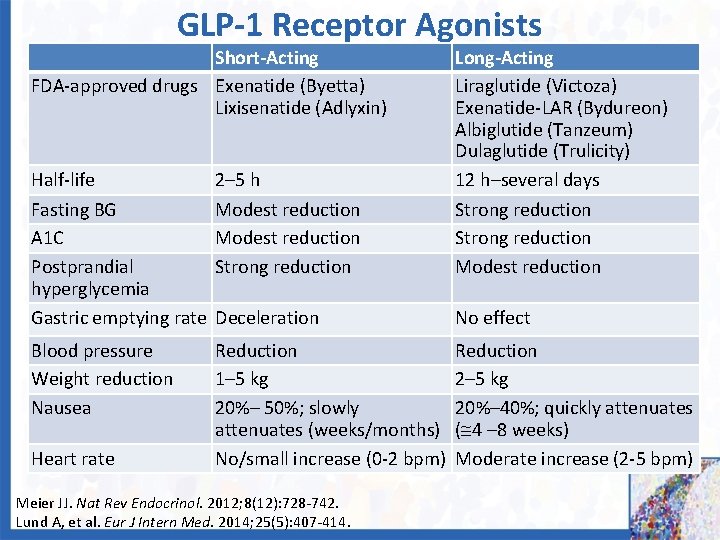
GLP-1 Receptor Agonists Short-Acting FDA-approved drugs Exenatide (Byetta) Lixisenatide (Adlyxin) Half-life Fasting BG A 1 C Postprandial hyperglycemia Gastric emptying rate 2– 5 h Modest reduction Strong reduction Long-Acting Liraglutide (Victoza) Exenatide-LAR (Bydureon) Albiglutide (Tanzeum) Dulaglutide (Trulicity) 12 h–several days Strong reduction Modest reduction Deceleration No effect Blood pressure Weight reduction Nausea Reduction 1– 5 kg 20%– 50%; slowly attenuates (weeks/months) No/small increase (0 -2 bpm) Reduction 2– 5 kg 20%– 40%; quickly attenuates ( 4 – 8 weeks) Moderate increase (2 -5 bpm) Heart rate Meier JJ. Nat Rev Endocrinol. 2012; 8(12): 728 -742. Lund A, et al. Eur J Intern Med. 2014; 25(5): 407 -414.
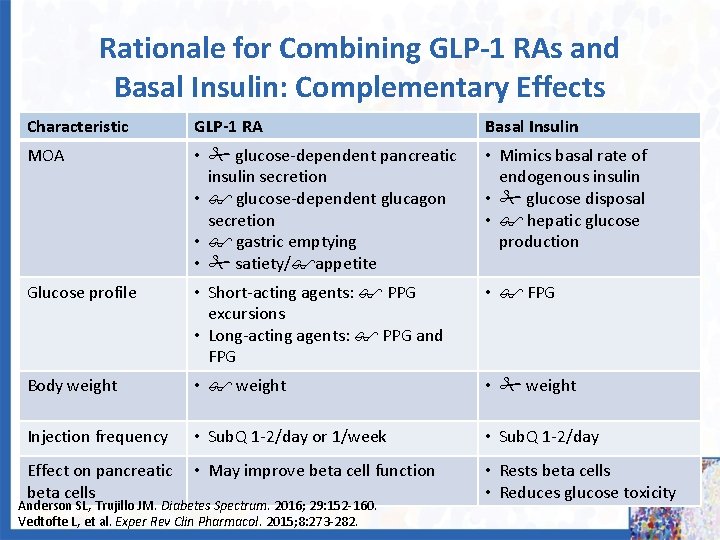
Rationale for Combining GLP-1 RAs and Basal Insulin: Complementary Effects Characteristic GLP-1 RA Basal Insulin MOA • glucose-dependent pancreatic insulin secretion • glucose-dependent glucagon secretion • gastric emptying • satiety/ appetite • Mimics basal rate of endogenous insulin • glucose disposal • hepatic glucose production Glucose profile • Short-acting agents: PPG excursions • Long-acting agents: PPG and FPG • FPG Body weight • weight Injection frequency • Sub. Q 1 -2/day or 1/week • Sub. Q 1 -2/day Effect on pancreatic • May improve beta cell function beta cells Anderson SL, Trujillo JM. Diabetes Spectrum. 2016; 29: 152 -160. Vedtofte L, et al. Exper Rev Clin Pharmacol. 2015; 8: 273 -282. • Rests beta cells • Reduces glucose toxicity
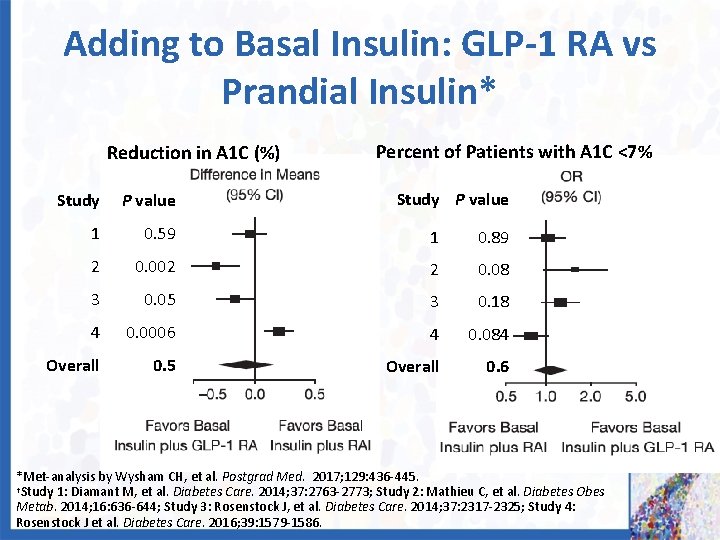
Adding to Basal Insulin: GLP-1 RA vs Prandial Insulin* Reduction in A 1 C (%) Percent of Patients with A 1 C <7% Study P value 1 0. 59 1 0. 89 2 0. 002 2 0. 08 3 0. 05 3 0. 18 4 0. 0006 4 0. 084 Overall 0. 5 Overall 0. 6 *Met-analysis by Wysham CH, et al. Postgrad Med. 2017; 129: 436 -445. †Study 1: Diamant M, et al. Diabetes Care. 2014; 37: 2763 -2773; Study 2: Mathieu C, et al. Diabetes Obes Metab. 2014; 16: 636 -644; Study 3: Rosenstock J, et al. Diabetes Care. 2014; 37: 2317 -2325; Study 4: Rosenstock J et al. Diabetes Care. 2016; 39: 1579 -1586.
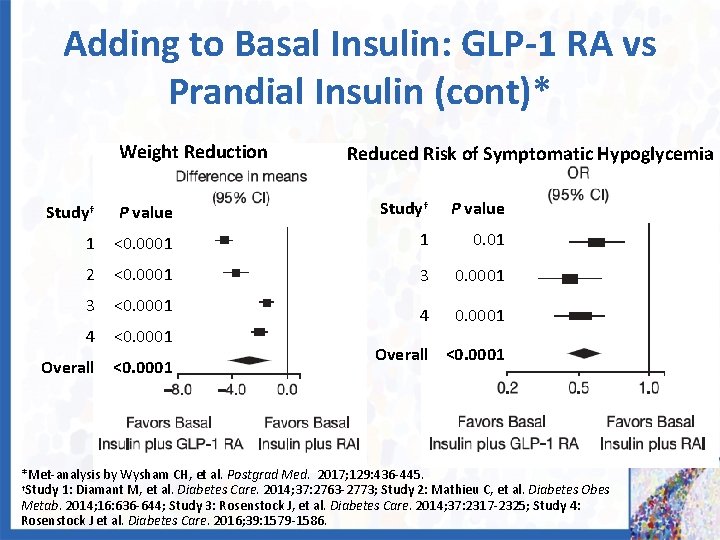
Adding to Basal Insulin: GLP-1 RA vs Prandial Insulin (cont)* Weight Reduction Reduced Risk of Symptomatic Hypoglycemia Study† P value 1 <0. 0001 1 0. 01 2 <0. 0001 3 <0. 0001 4 0. 0001 Overall <0. 0001 *Met-analysis by Wysham CH, et al. Postgrad Med. 2017; 129: 436 -445. †Study 1: Diamant M, et al. Diabetes Care. 2014; 37: 2763 -2773; Study 2: Mathieu C, et al. Diabetes Obes Metab. 2014; 16: 636 -644; Study 3: Rosenstock J, et al. Diabetes Care. 2014; 37: 2317 -2325; Study 4: Rosenstock J et al. Diabetes Care. 2016; 39: 1579 -1586.
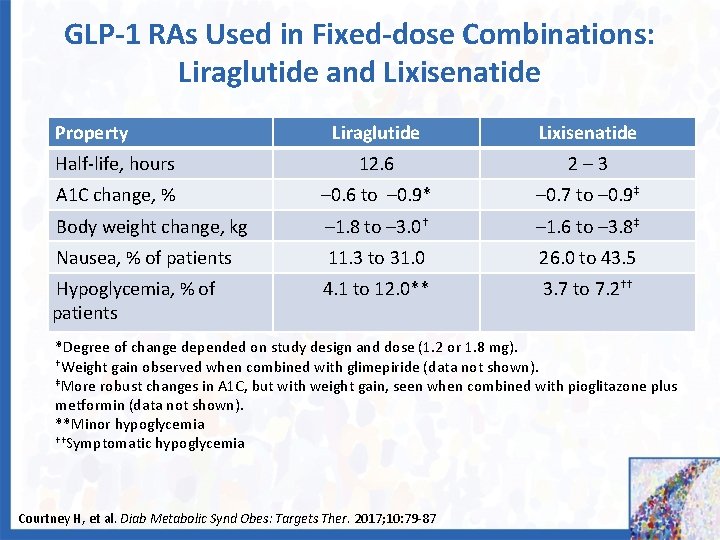
GLP-1 RAs Used in Fixed-dose Combinations: Liraglutide and Lixisenatide Property Liraglutide Lixisenatide Half-life, hours 12. 6 2 – 3 A 1 C change, % – 0. 6 to – 0. 9* – 0. 7 to – 0. 9‡ Body weight change, kg – 1. 8 to – 3. 0† – 1. 6 to – 3. 8‡ Nausea, % of patients 11. 3 to 31. 0 26. 0 to 43. 5 Hypoglycemia, % of patients 4. 1 to 12. 0** 3. 7 to 7. 2†† *Degree of change depended on study design and dose (1. 2 or 1. 8 mg). †Weight gain observed when combined with glimepiride (data not shown). ‡More robust changes in A 1 C, but with weight gain, seen when combined with pioglitazone plus metformin (data not shown). **Minor hypoglycemia ††Symptomatic hypoglycemia Courtney H, et al. Diab Metabolic Synd Obes: Targets Ther. 2017; 10: 79 -87
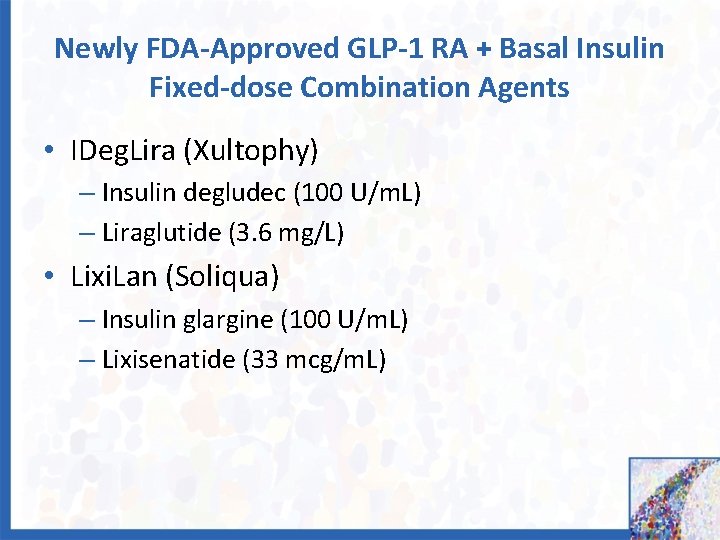
Newly FDA-Approved GLP-1 RA + Basal Insulin Fixed-dose Combination Agents • IDeg. Lira (Xultophy) – Insulin degludec (100 U/m. L) – Liraglutide (3. 6 mg/L) • Lixi. Lan (Soliqua) – Insulin glargine (100 U/m. L) – Lixisenatide (33 mcg/m. L)
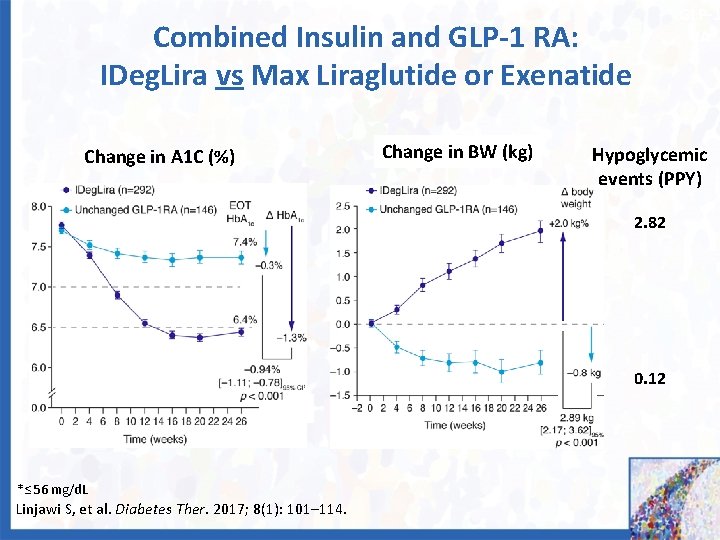
GLP-1 RA Combined Insulin and GLP-1 RA: IDeg. Lira vs Max Liraglutide or Exenatide Change in A 1 C (%) Change in BW (kg) Hypoglycemic events (PPY) 2. 82 0. 12 *≤ 56 mg/d. L Linjawi S, et al. Diabetes Ther. 2017; 8(1): 101– 114.
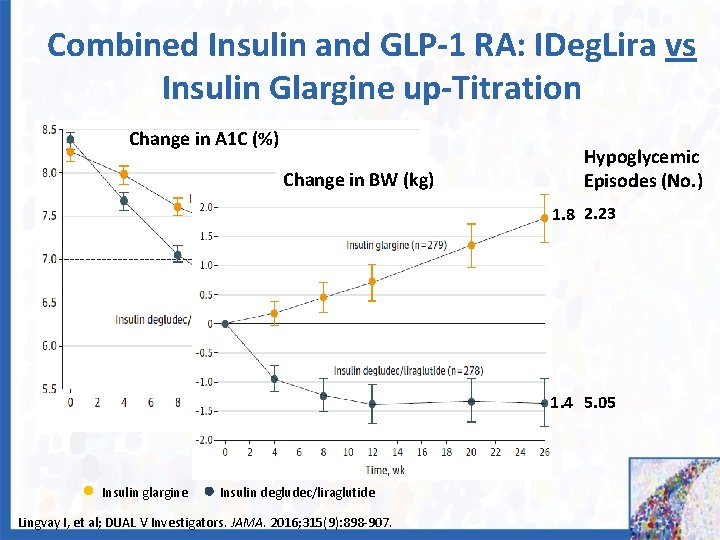
Combined Insulin and GLP-1 RA: IDeg. Lira vs Insulin Glargine up-Titration Change in A 1 C (%) Change in BW (kg) Hypoglycemic Episodes (No. ) 1. 8 2. 23 7. 1 6. 6 1. 4 5. 05 Insulin glargine Insulin degludec/liraglutide Lingvay I, et al; DUAL V Investigators. JAMA. 2016; 315(9): 898 -907.
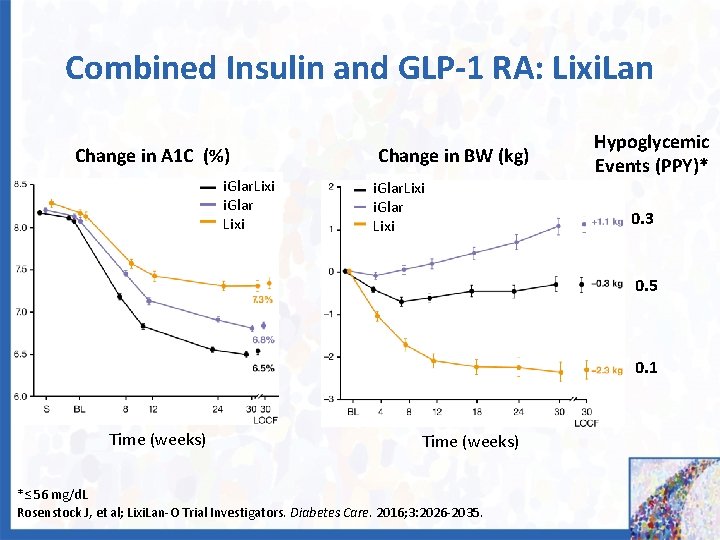
Combined Insulin and GLP-1 RA: Lixi. Lan Change in A 1 C (%) i. Glar. Lixi i. Glar Lixi Change in BW (kg) i. Glar. Lixi i. Glar Lixi Hypoglycemic Events (PPY)* 0. 3 0. 5 0. 1 Time (weeks) *≤ 56 mg/d. L Rosenstock J, et al; Lixi. Lan-O Trial Investigators. Diabetes Care. 2016; 3: 2026 -2035.
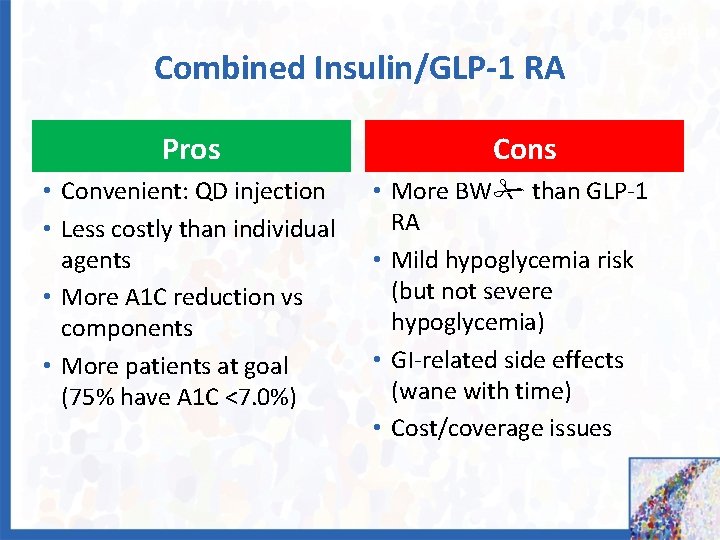
GLP-1 R Combined Insulin/GLP-1 RA Pros • Convenient: QD injection • Less costly than individual agents • More A 1 C reduction vs components • More patients at goal (75% have A 1 C <7. 0%) Cons • More BW than GLP-1 RA • Mild hypoglycemia risk (but not severe hypoglycemia) • GI-related side effects (wane with time) • Cost/coverage issues
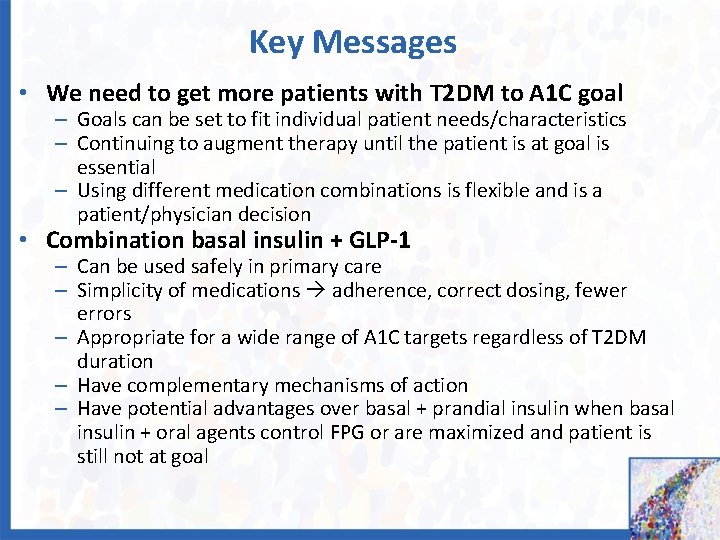
Key Messages • We need to get more patients with T 2 DM to A 1 C goal – Goals can be set to fit individual patient needs/characteristics – Continuing to augment therapy until the patient is at goal is essential – Using different medication combinations is flexible and is a patient/physician decision • Combination basal insulin + GLP-1 – Can be used safely in primary care – Simplicity of medications adherence, correct dosing, fewer errors – Appropriate for a wide range of A 1 C targets regardless of T 2 DM duration – Have complementary mechanisms of action – Have potential advantages over basal + prandial insulin when basal insulin + oral agents control FPG or are maximized and patient is still not at goal
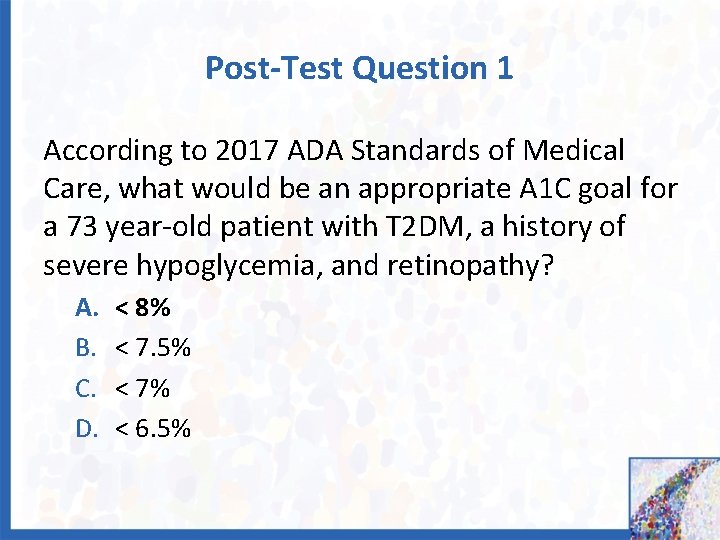
Post-Test Question 1 According to 2017 ADA Standards of Medical Care, what would be an appropriate A 1 C goal for a 73 year-old patient with T 2 DM, a history of severe hypoglycemia, and retinopathy? A. B. C. D. < 8% < 7. 5% < 7% < 6. 5%
Post-Test Question 2 Which mechanism does not play a role in GLP-1 receptor agonist efficacy in T 2 DM? A. Increased glucose-dependent insulin secretion B. Decreased small intestine motility C. Decreased insulin dependent glucagon secretion D. Delayed intestinal glucose absorption
Tools and Resources • Management of Hyperglycemia in Type 2 Diabetes, 2015: A Patient-Centered Approach – Inzucchi SE, et al. Diabetes Care. 2015; 38: 140– 149. • American Diabetes Association – www. diabetes. org • Strategies for Improving Care Please visit www. T 2 diabetes. CME. org – Diabetes Care. 2015; 38(Suppl. 1): S 5–S 7. • Patient assistance programs – http: //www. rxassist. org/ • National Certification Board for Diabetes Educators – http: //www. ncbde. org/ • American Association of Diabetes Educators – http: //www. diabeteseducator. org/Professional. Resources/Certification/ • Insulin self-injection – https: //www. diabeteseducator. org/export/sites/aade/_resources/pdf/research/AA DE_Med. Ed. pdf
Learning Objectives 1. Explore the rationale for combining GLP-1 agonists with basal insulin as a means of optimizing Hb. A 1 c 2. Examine safety and efficacy data on emerging GLP-1 agonist/basal insulin combinations, with an eye towards practical implications for day-to-day practice 3. Consider efficacy, side effects, costs, and tolerability to individualize therapy to meet A 1 C goals
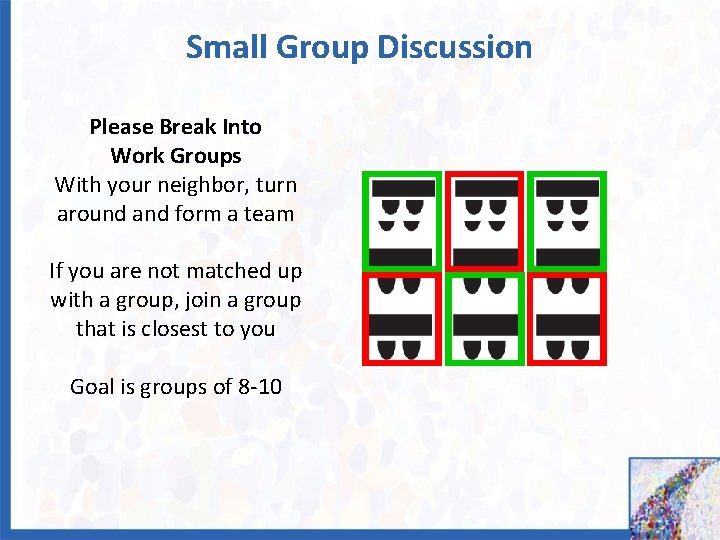
Small Group Discussion Please Break Into Work Groups With your neighbor, turn around and form a team If you are not matched up with a group, join a group that is closest to you Goal is groups of 8 -10
Case Review GOAL: Work together in multidisciplinary teams to diagnose and manage patients, using clinical cases and problem-based learning • Each group will have a case to analyze and develop for presentation to the larger group. • Some patient data will not be supplied and can be generated by the group based on clinical experience. The group should work in this framework to create a case presentation describing their patient. • A representative of the team will present their case in the second half of the PBL session. • Case presentations will be 5 minutes each including questions. (Due to time constraints, some cases may not be presented. )
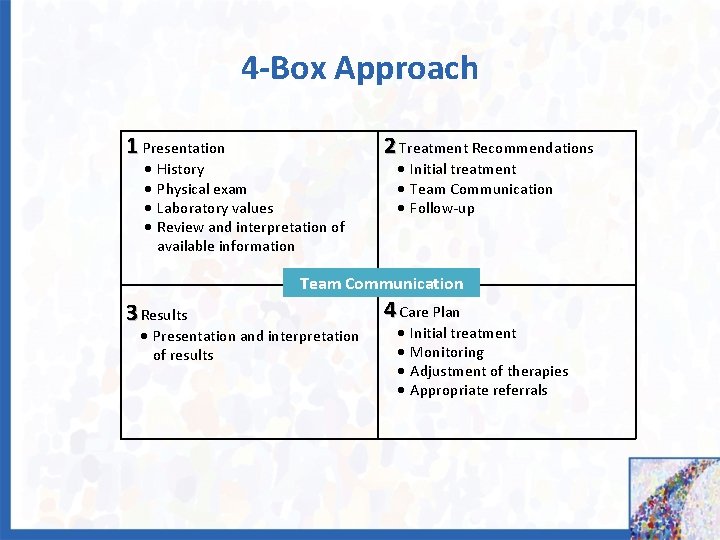
4 -Box Approach 1 Presentation History Physical exam Laboratory values Review and interpretation of available information 3 Results 2 Treatment Recommendations Initial treatment Team Communication Follow-up Team Communication 4 Care Plan Presentation and interpretation of results Initial treatment Monitoring Adjustment of therapies Appropriate referrals
Checklist q. Analyze case using 4 -box approach q Create a case presentation describing your patient q. Pick a representative of the team to present your case in the second half of session
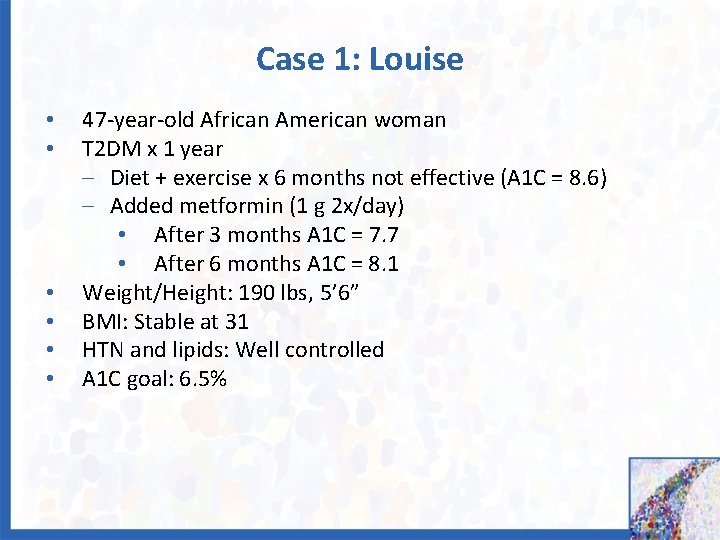
Case 1: Louise • • • 47 -year-old African American woman T 2 DM x 1 year ‒ Diet + exercise x 6 months not effective (A 1 C = 8. 6) ‒ Added metformin (1 g 2 x/day) • After 3 months A 1 C = 7. 7 • After 6 months A 1 C = 8. 1 Weight/Height: 190 lbs, 5’ 6” BMI: Stable at 31 HTN and lipids: Well controlled A 1 C goal: 6. 5%
Case 1 What would you do next to help Louise meet her A 1 C goal? Why? ______________________________ ______________________________
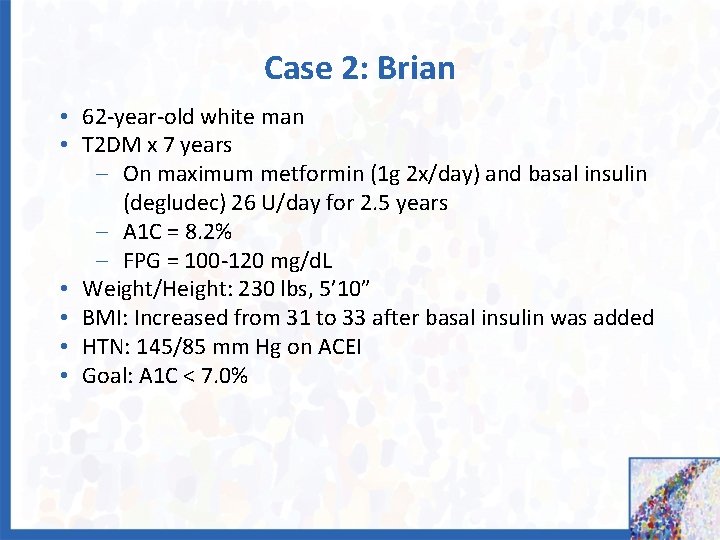
Case 2: Brian • 62 -year-old white man • T 2 DM x 7 years ‒ On maximum metformin (1 g 2 x/day) and basal insulin (degludec) 26 U/day for 2. 5 years ‒ A 1 C = 8. 2% ‒ FPG = 100 -120 mg/d. L • Weight/Height: 230 lbs, 5’ 10” • BMI: Increased from 31 to 33 after basal insulin was added • HTN: 145/85 mm Hg on ACEI • Goal: A 1 C < 7. 0%
Case 2 What is the best next step to get Brian to A 1 C goal while avoiding further weight gain or helping him to lose some weight? ______________________________ ______________________________
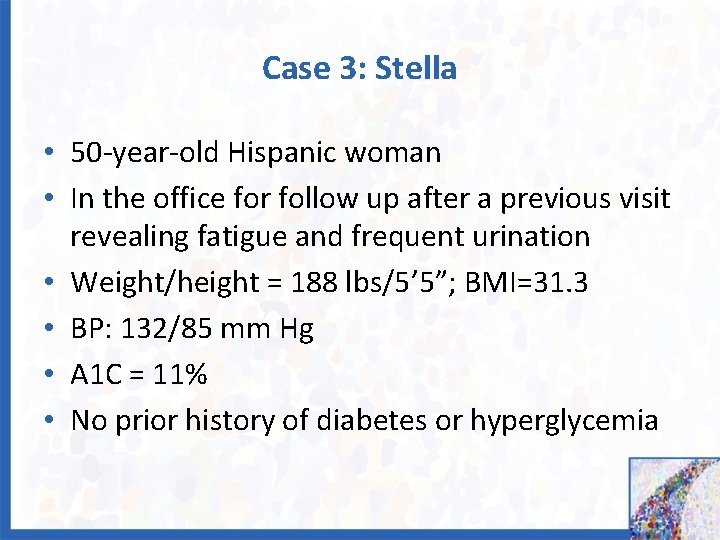
Case 3: Stella • 50 -year-old Hispanic woman • In the office for follow up after a previous visit revealing fatigue and frequent urination • Weight/height = 188 lbs/5’ 5”; BMI=31. 3 • BP: 132/85 mm Hg • A 1 C = 11% • No prior history of diabetes or hyperglycemia
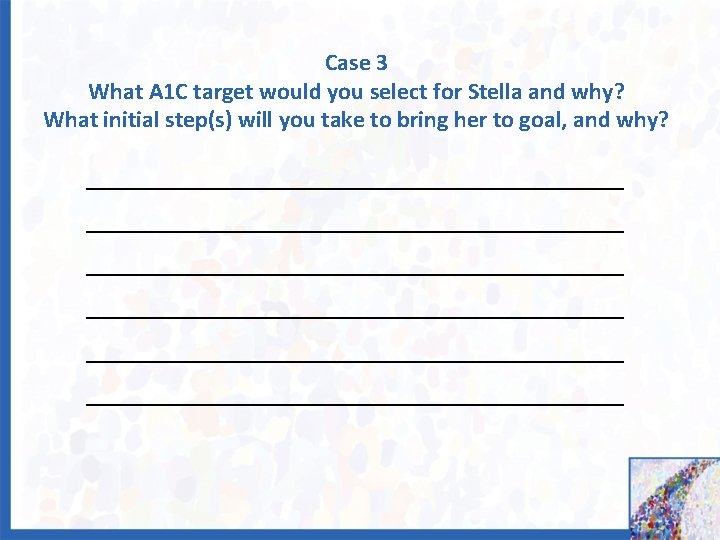
Case 3 What A 1 C target would you select for Stella and why? What initial step(s) will you take to bring her to goal, and why? ______________________________ ______________________________
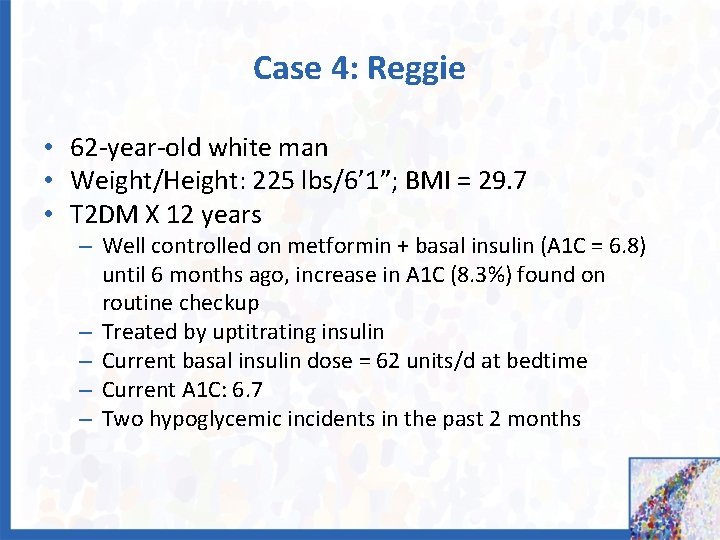
Case 4: Reggie • 62 -year-old white man • Weight/Height: 225 lbs/6’ 1”; BMI = 29. 7 • T 2 DM X 12 years – Well controlled on metformin + basal insulin (A 1 C = 6. 8) until 6 months ago, increase in A 1 C (8. 3%) found on routine checkup – Treated by uptitrating insulin – Current basal insulin dose = 62 units/d at bedtime – Current A 1 C: 6. 7 – Two hypoglycemic incidents in the past 2 months
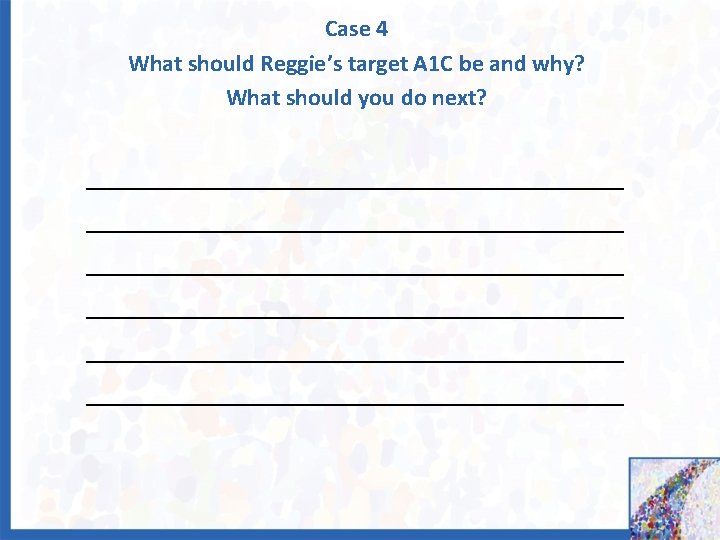
Case 4 What should Reggie’s target A 1 C be and why? What should you do next? ______________________________ ______________________________
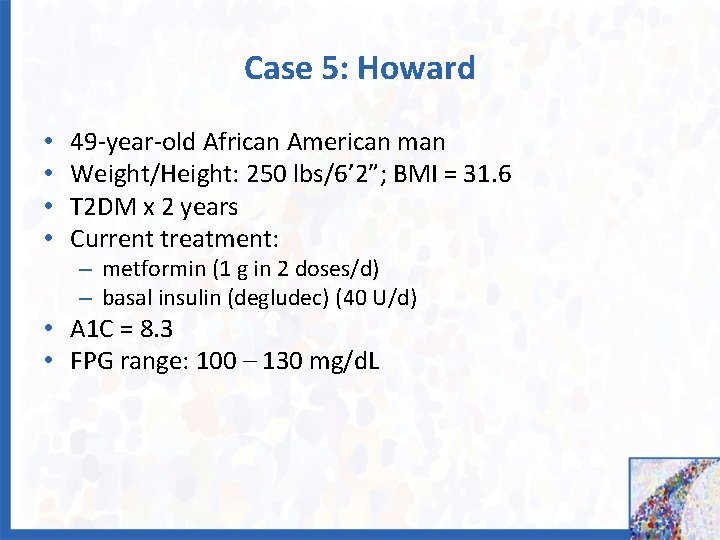
Case 5: Howard • • 49 -year-old African American man Weight/Height: 250 lbs/6’ 2”; BMI = 31. 6 T 2 DM x 2 years Current treatment: – metformin (1 g in 2 doses/d) – basal insulin (degludec) (40 U/d) • A 1 C = 8. 3 • FPG range: 100 – 130 mg/d. L
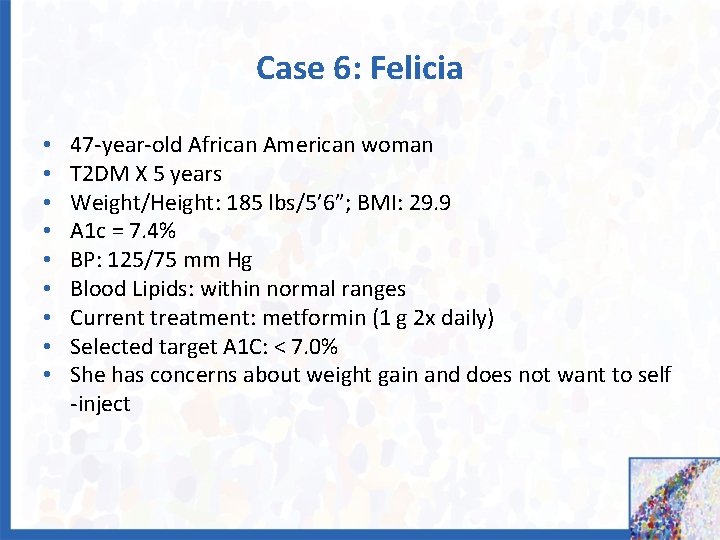
Case 6: Felicia • • • 47 -year-old African American woman T 2 DM X 5 years Weight/Height: 185 lbs/5’ 6”; BMI: 29. 9 A 1 c = 7. 4% BP: 125/75 mm Hg Blood Lipids: within normal ranges Current treatment: metformin (1 g 2 x daily) Selected target A 1 C: < 7. 0% She has concerns about weight gain and does not want to self -inject
Case 6 What one (1) agent would you add for Felicia and why? ______________________________ ______________________________
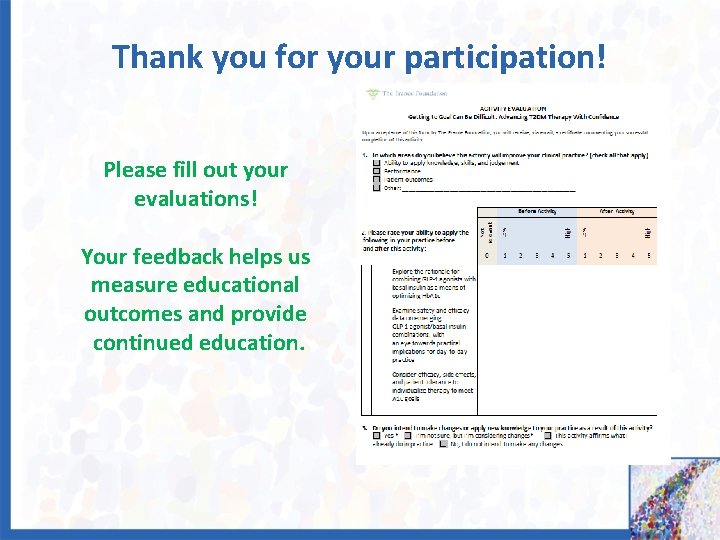
Thank you for your participation! Please fill out your evaluations! Your feedback helps us measure educational outcomes and provide continued education.