
JC Technology Electric Circuits Electric Circuits Computers CD
- Slides: 24
JC Technology Electric Circuits
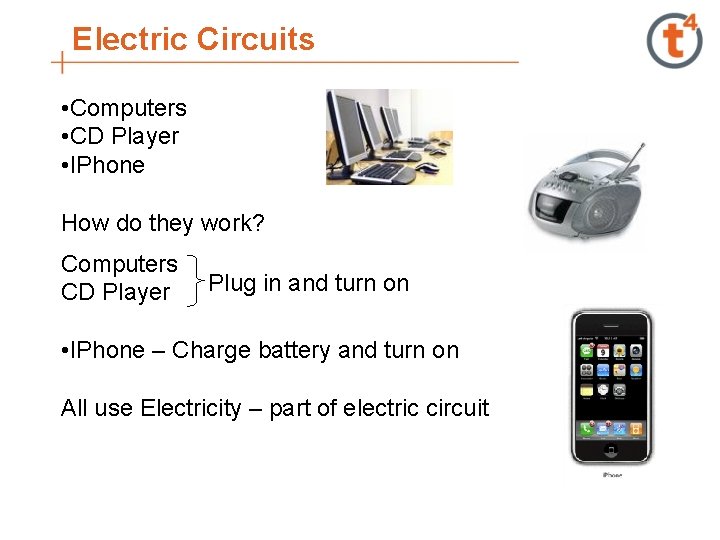
Electric Circuits • Computers • CD Player • IPhone How do they work? Computers CD Player Plug in and turn on • IPhone – Charge battery and turn on All use Electricity – part of electric circuit
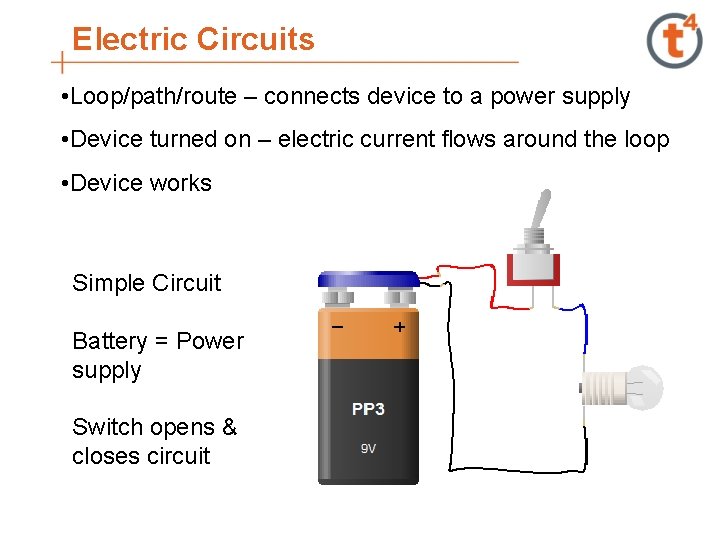
Electric Circuits • Loop/path/route – connects device to a power supply • Device turned on – electric current flows around the loop • Device works Simple Circuit Battery = Power supply Switch opens & closes circuit
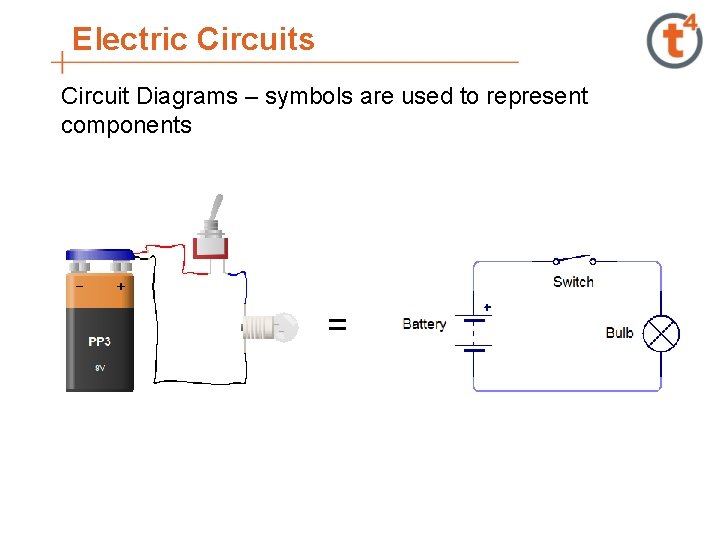
Electric Circuits Circuit Diagrams – symbols are used to represent components =
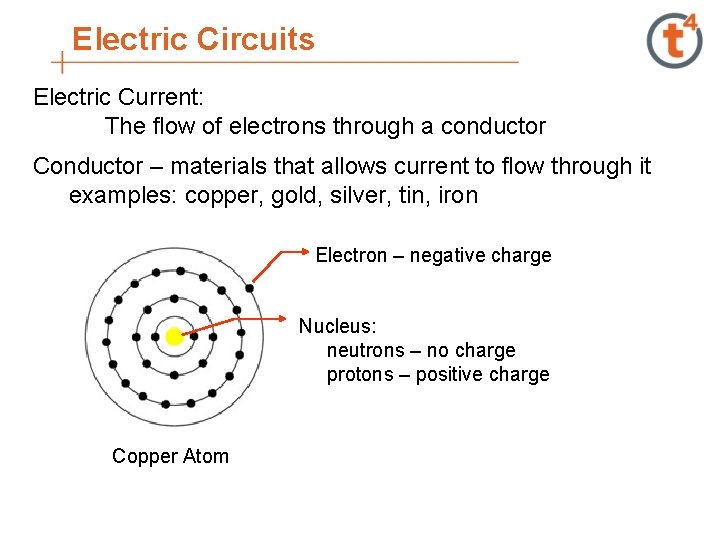
Electric Circuits Electric Current: The flow of electrons through a conductor Conductor – materials that allows current to flow through it examples: copper, gold, silver, tin, iron Electron – negative charge Nucleus: neutrons – no charge protons – positive charge Copper Atom
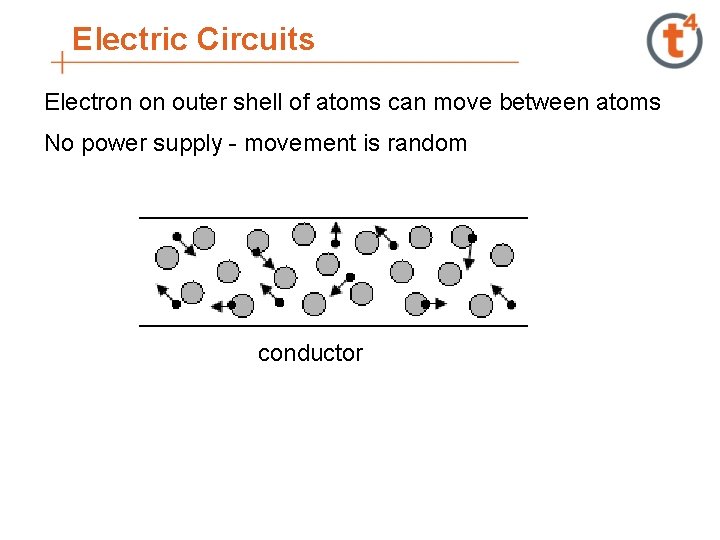
Electric Circuits Electron on outer shell of atoms can move between atoms No power supply - movement is random conductor
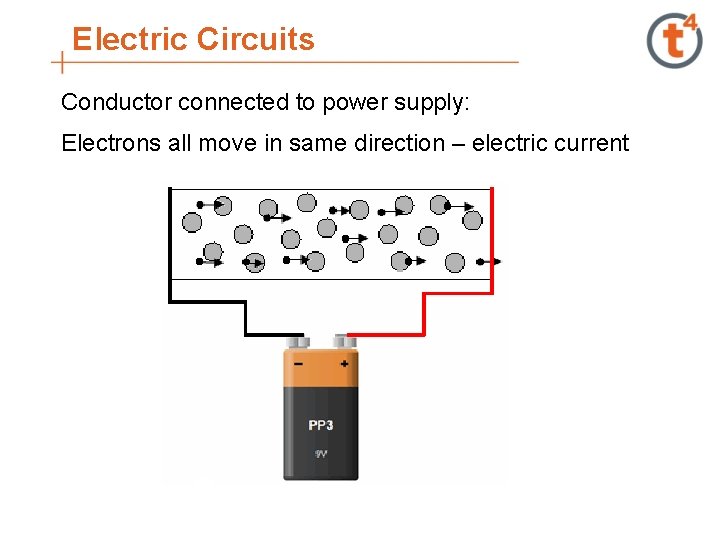
Electric Circuits Conductor connected to power supply: Electrons all move in same direction – electric current
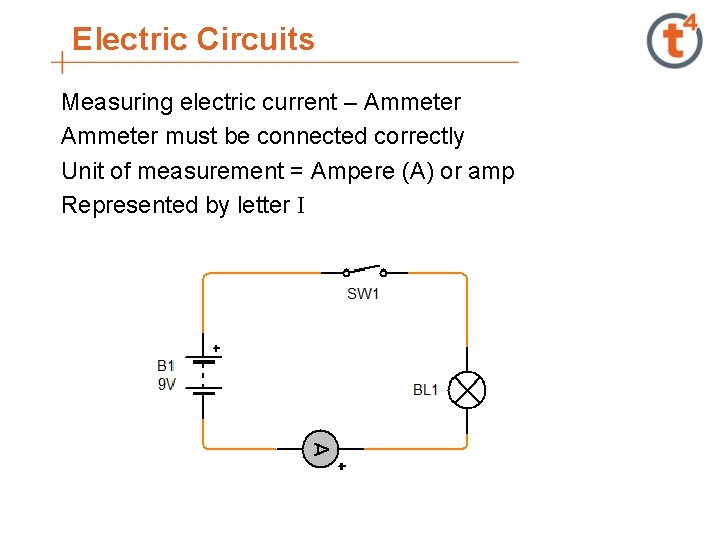
Electric Circuits Measuring electric current – Ammeter must be connected correctly Unit of measurement = Ampere (A) or amp Represented by letter I
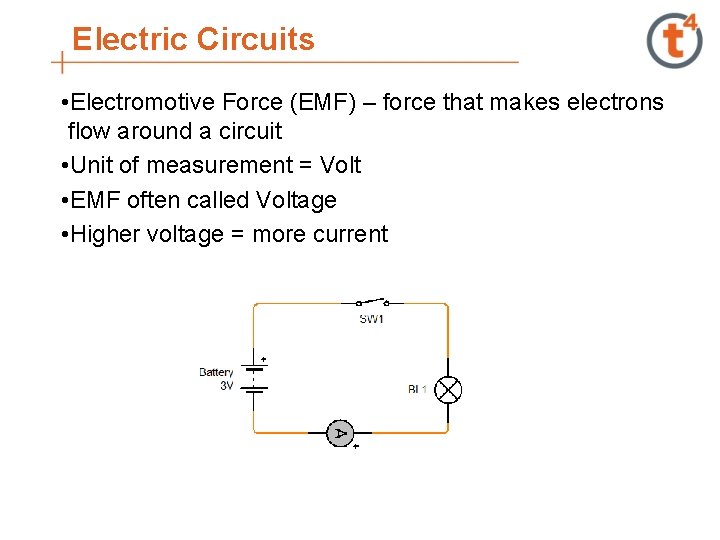
Electric Circuits • Electromotive Force (EMF) – force that makes electrons flow around a circuit • Unit of measurement = Volt • EMF often called Voltage • Higher voltage = more current
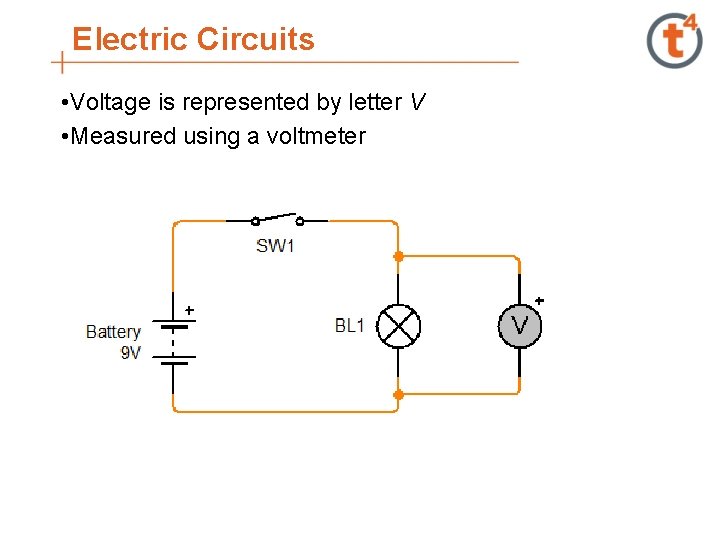
Electric Circuits • Voltage is represented by letter V • Measured using a voltmeter
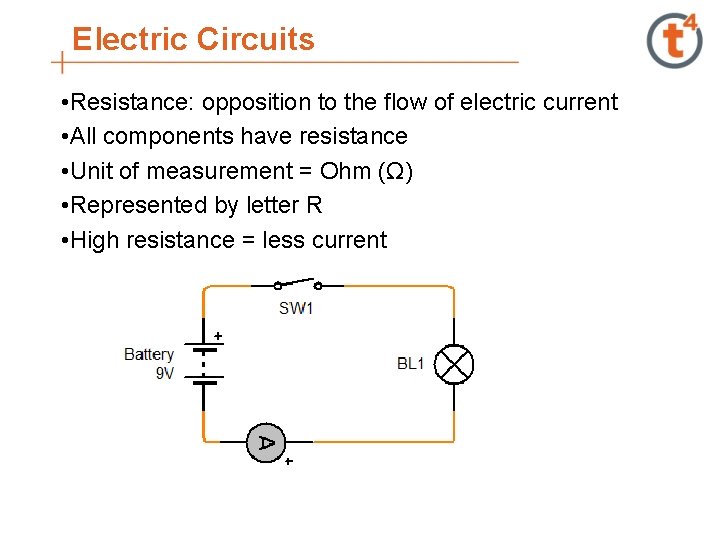
Electric Circuits • Resistance: opposition to the flow of electric current • All components have resistance • Unit of measurement = Ohm (Ω) • Represented by letter R • High resistance = less current
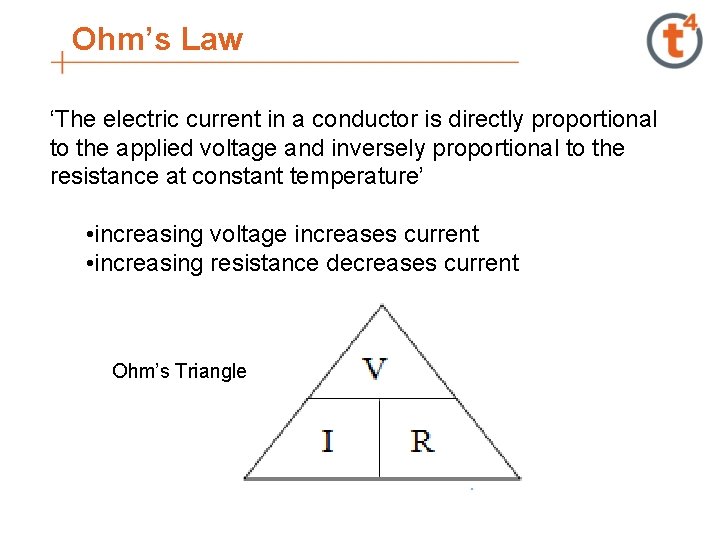
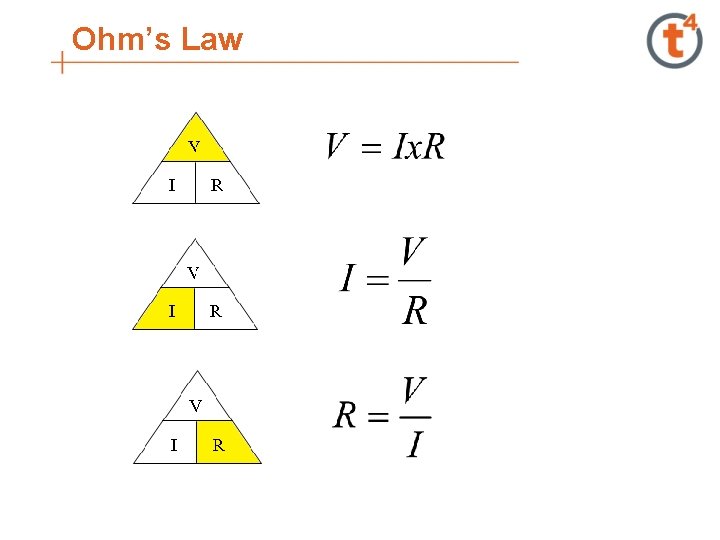
Ohm’s Law ‘The electric current in a conductor is directly proportional to the applied voltage and inversely proportional to the resistance at constant temperature’ • increasing voltage increases current • increasing resistance decreases current Ohm’s Triangle
Ohm’s Law
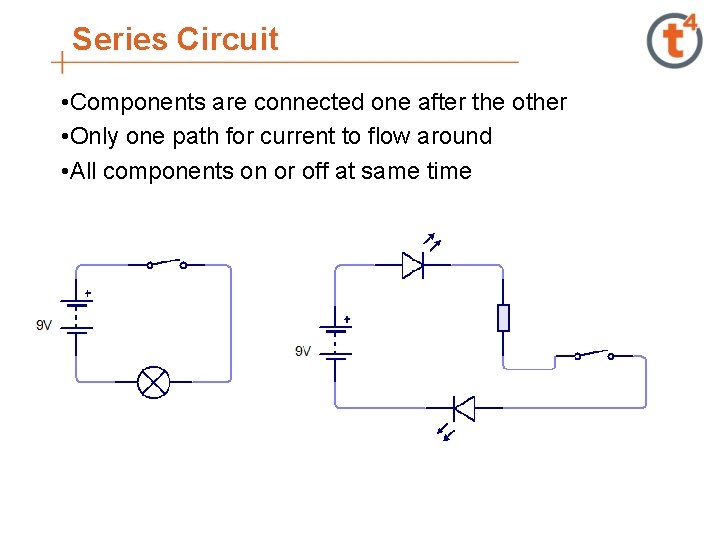
Series Circuit • Components are connected one after the other • Only one path for current to flow around • All components on or off at same time
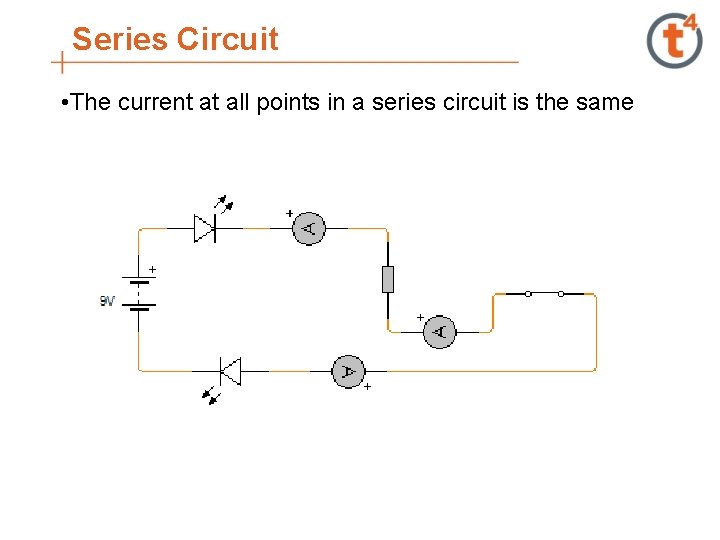
Series Circuit • The current at all points in a series circuit is the same
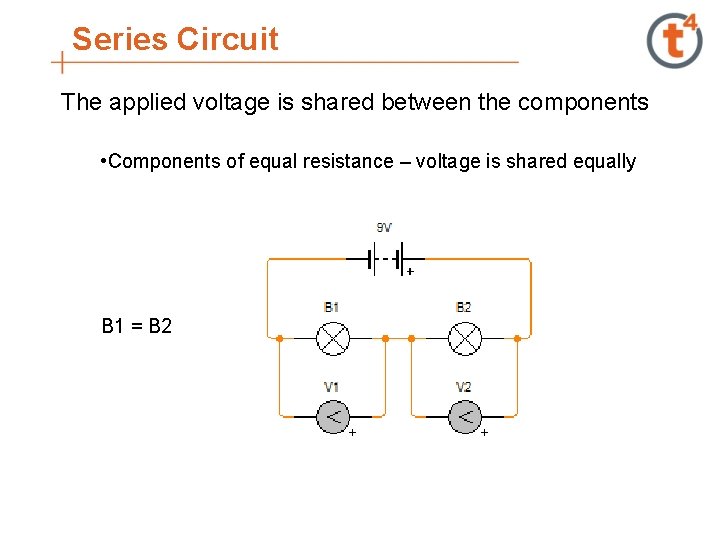
Series Circuit The applied voltage is shared between the components • Components of equal resistance – voltage is shared equally B 1 = B 2
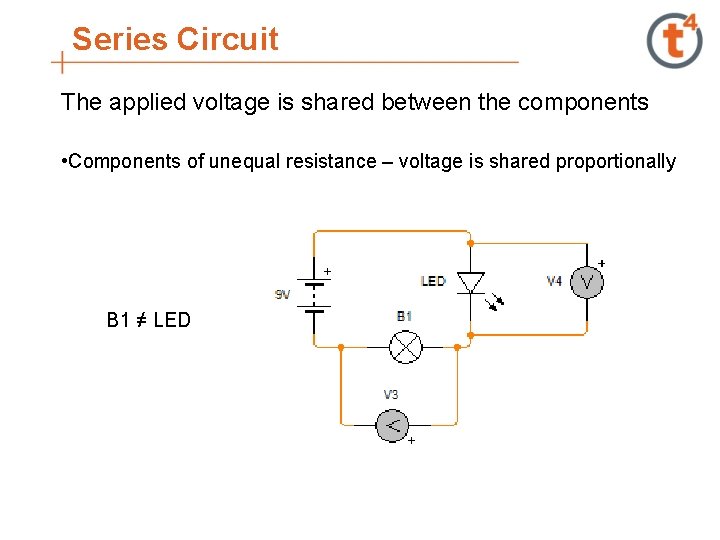
Series Circuit The applied voltage is shared between the components • Components of unequal resistance – voltage is shared proportionally B 1 ≠ LED
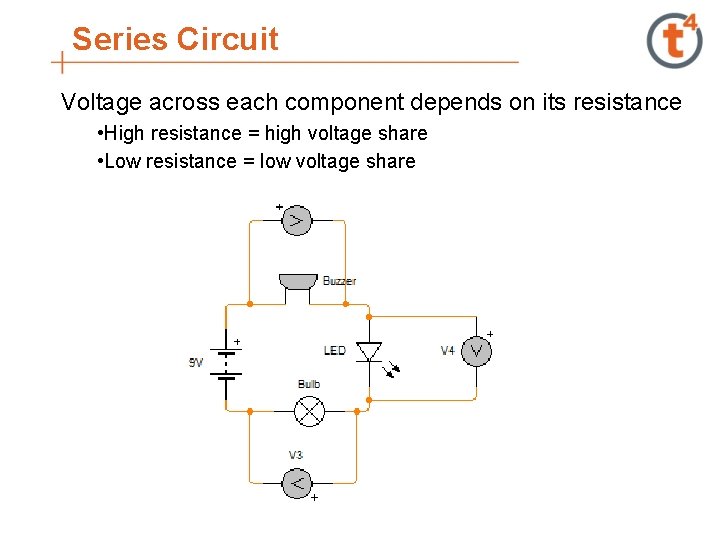
Series Circuit Voltage across each component depends on its resistance • High resistance = high voltage share • Low resistance = low voltage share
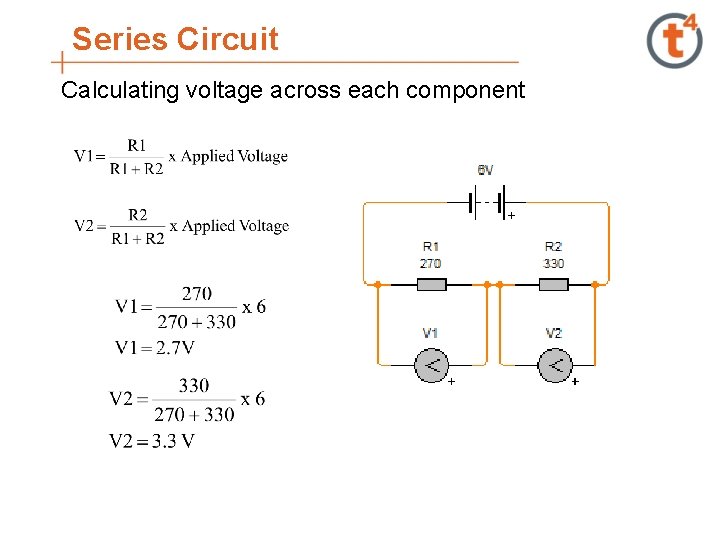
Series Circuit Calculating voltage across each component
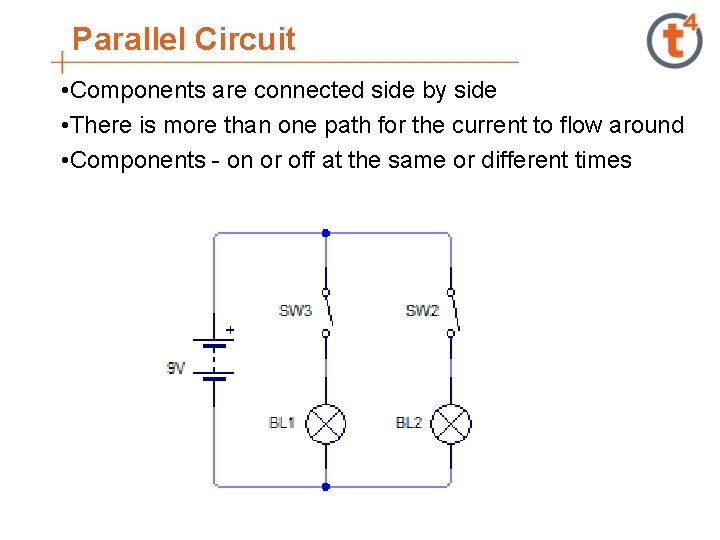
Parallel Circuit • Components are connected side by side • There is more than one path for the current to flow around • Components - on or off at the same or different times
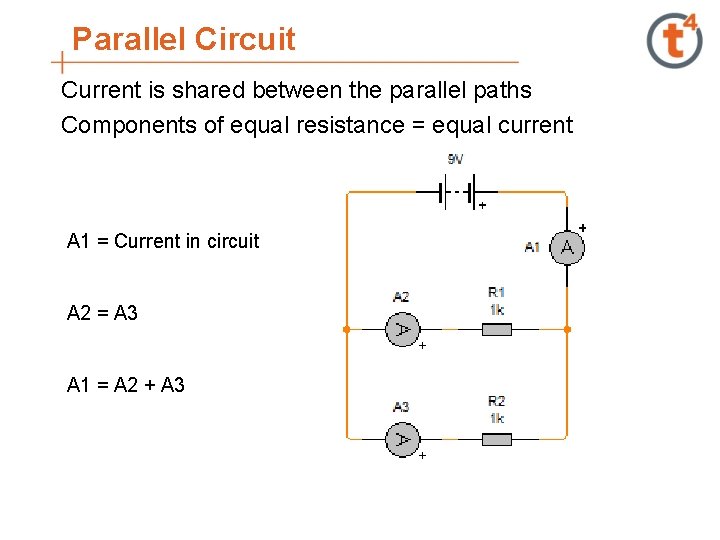
Parallel Circuit Current is shared between the parallel paths Components of equal resistance = equal current A 1 = Current in circuit A 2 = A 3 A 1 = A 2 + A 3
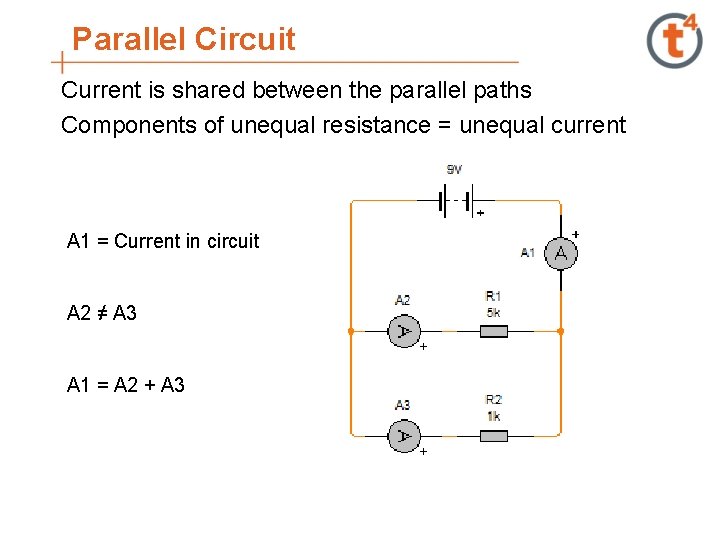
Parallel Circuit Current is shared between the parallel paths Components of unequal resistance = unequal current A 1 = Current in circuit A 2 ≠ A 3 A 1 = A 2 + A 3
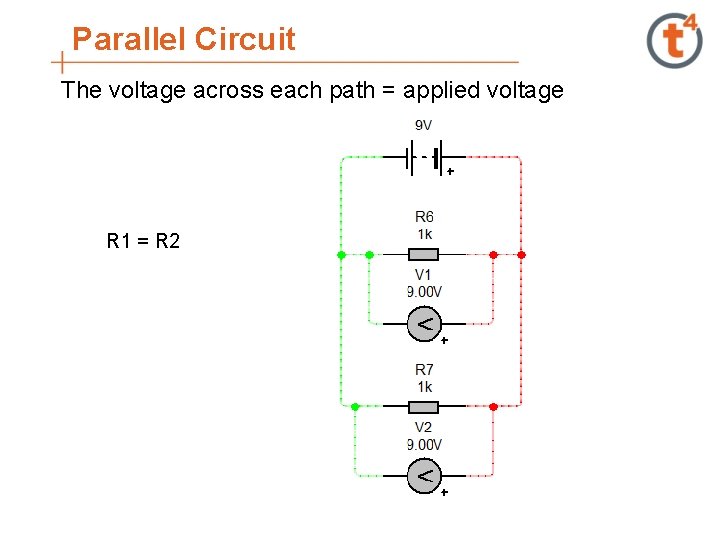
Parallel Circuit The voltage across each path = applied voltage R 1 = R 2
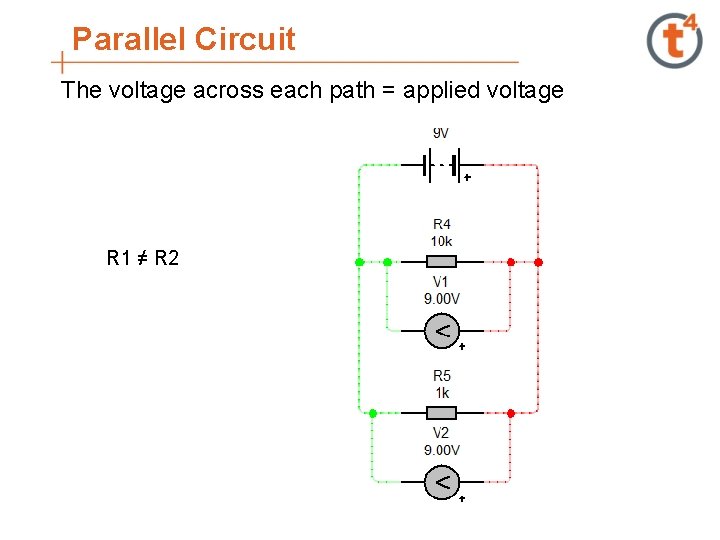
Parallel Circuit The voltage across each path = applied voltage R 1 ≠ R 2