
Jawless Fish Form and Functions Objectives 2 4

Jawless Fish Form and Functions Objectives 2, 4, 5, 7 Mr. Walker Vertebrate Zoology
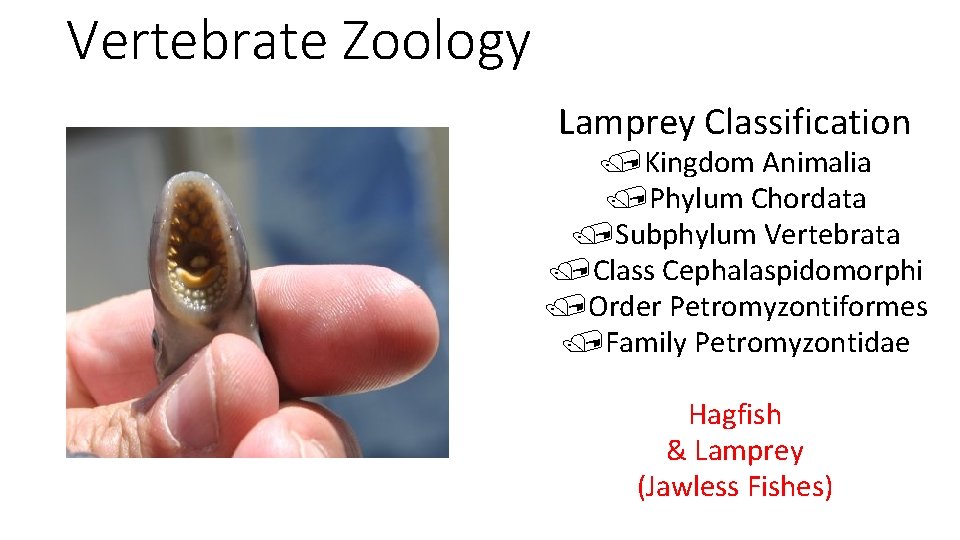
Vertebrate Zoology Lamprey Classification /Kingdom Animalia /Phylum Chordata /Subphylum Vertebrata /Class Cephalaspidomorphi /Order Petromyzontiformes /Family Petromyzontidae Hagfish & Lamprey (Jawless Fishes)

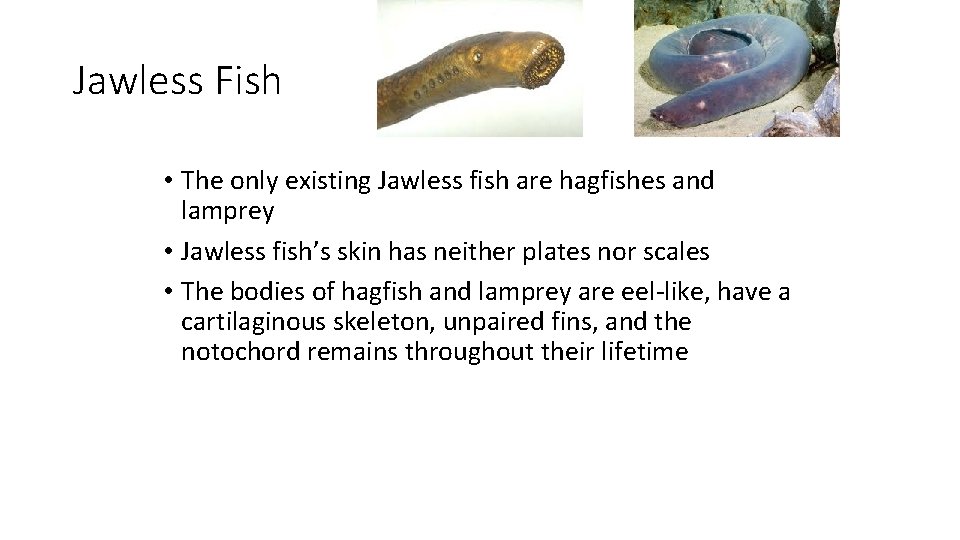
Jawless Fish • The only existing Jawless fish are hagfishes and lamprey • Jawless fish’s skin has neither plates nor scales • The bodies of hagfish and lamprey are eel-like, have a cartilaginous skeleton, unpaired fins, and the notochord remains throughout their lifetime
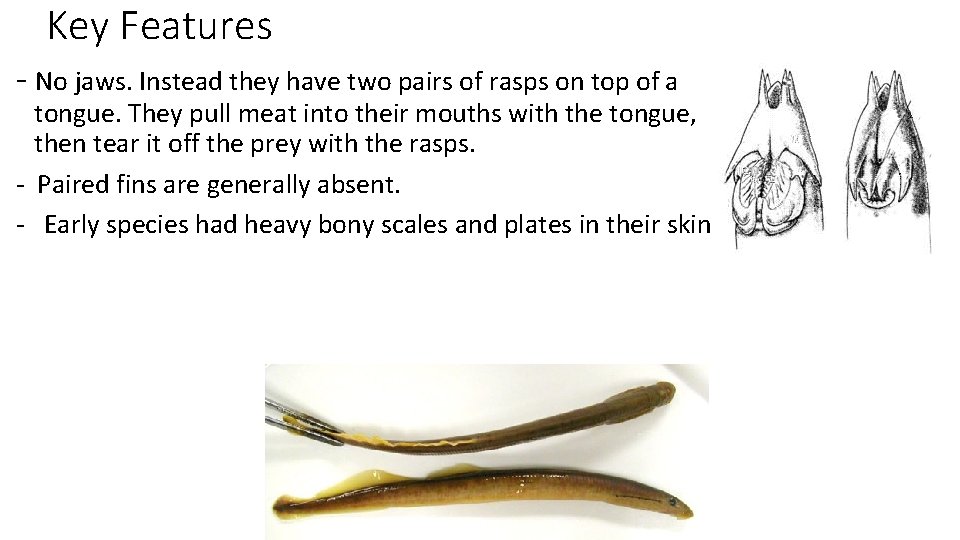
Key Features - No jaws. Instead they have two pairs of rasps on top of a tongue. They pull meat into their mouths with the tongue, then tear it off the prey with the rasps. - Paired fins are generally absent. - Early species had heavy bony scales and plates in their skin
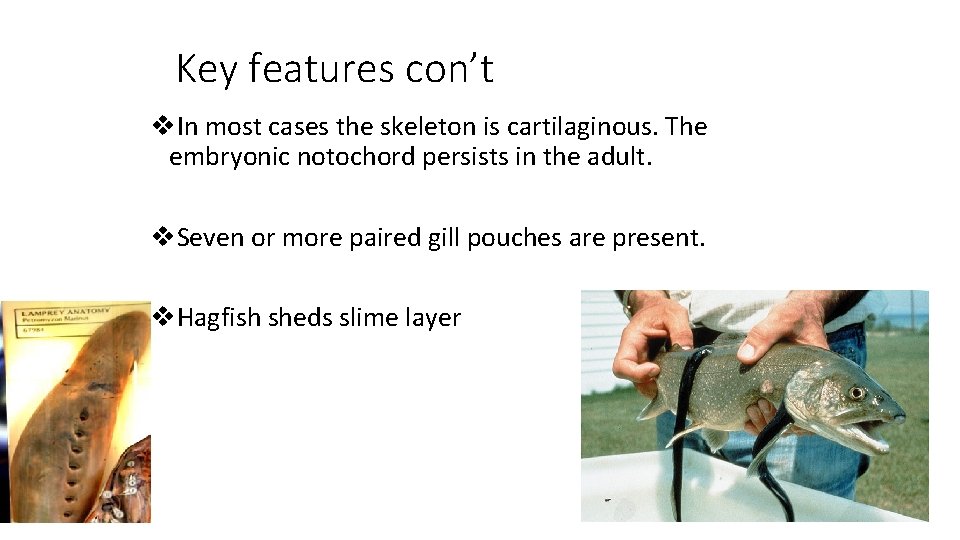
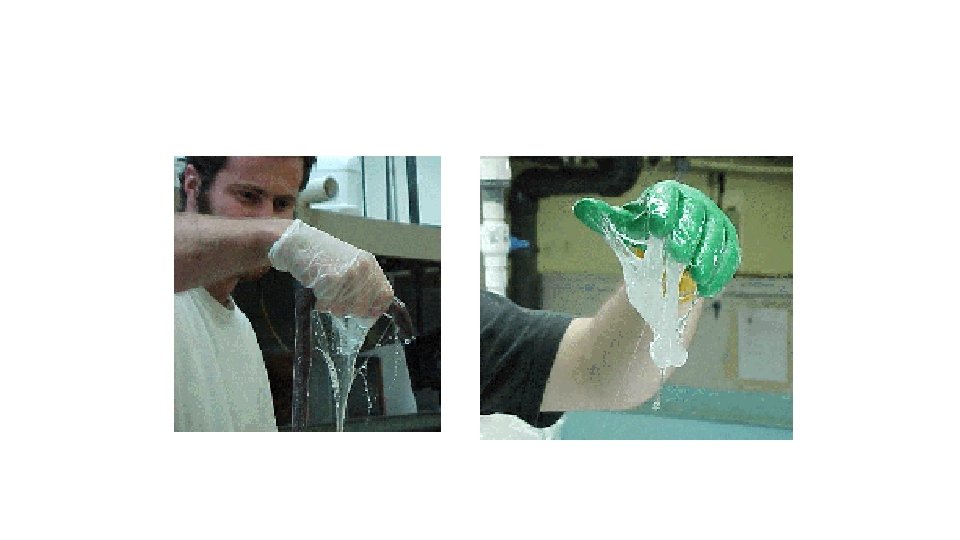
Key features con’t v. In most cases the skeleton is cartilaginous. The embryonic notochord persists in the adult. v. Seven or more paired gill pouches are present. v. Hagfish sheds slime layer
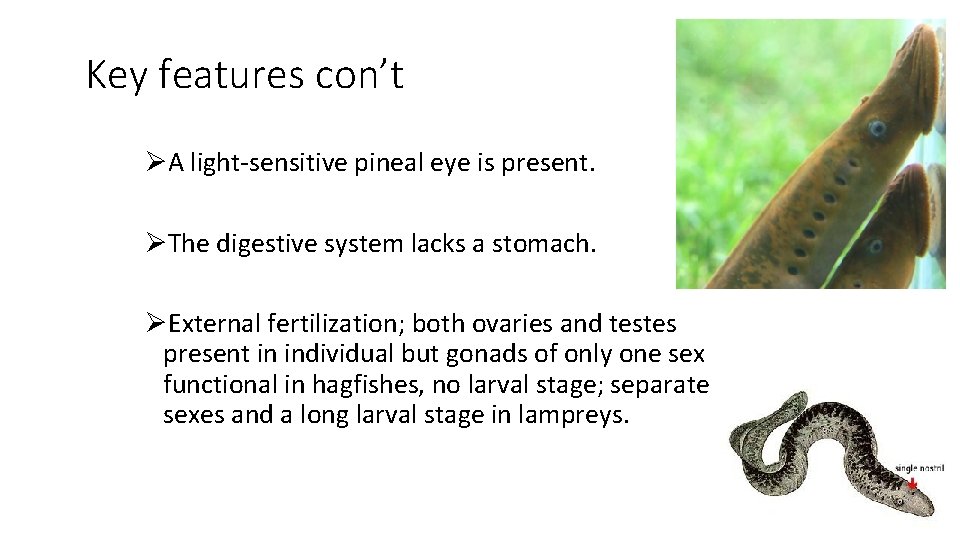
Key features con’t ØA light-sensitive pineal eye is present. ØThe digestive system lacks a stomach. ØExternal fertilization; both ovaries and testes present in individual but gonads of only one sex functional in hagfishes, no larval stage; separate sexes and a long larval stage in lampreys.
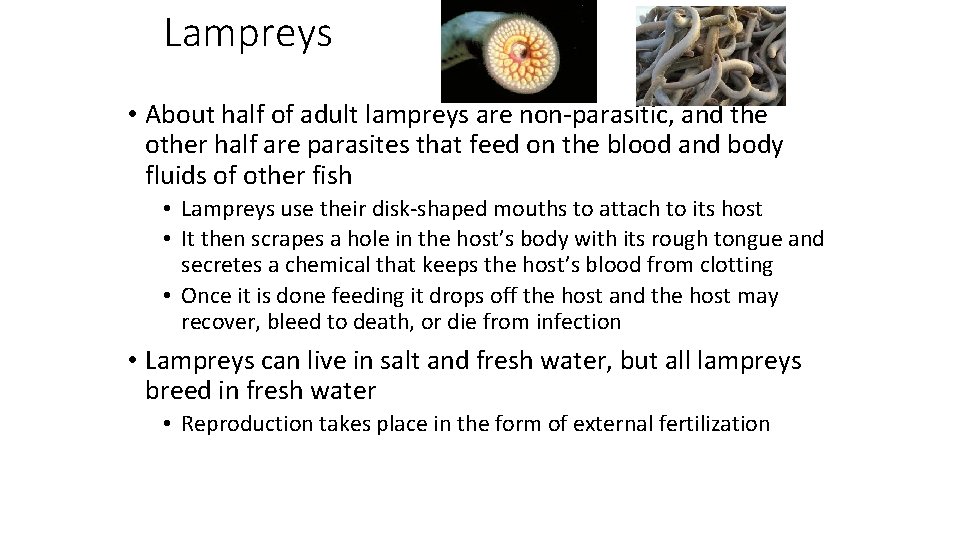
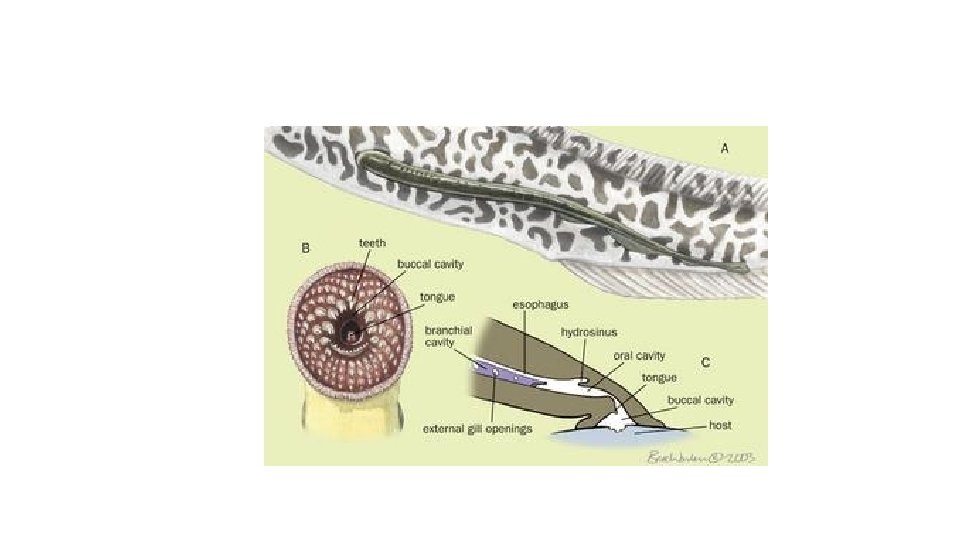
Lampreys • About half of adult lampreys are non-parasitic, and the other half are parasites that feed on the blood and body fluids of other fish • Lampreys use their disk-shaped mouths to attach to its host • It then scrapes a hole in the host’s body with its rough tongue and secretes a chemical that keeps the host’s blood from clotting • Once it is done feeding it drops off the host and the host may recover, bleed to death, or die from infection • Lampreys can live in salt and fresh water, but all lampreys breed in fresh water • Reproduction takes place in the form of external fertilization
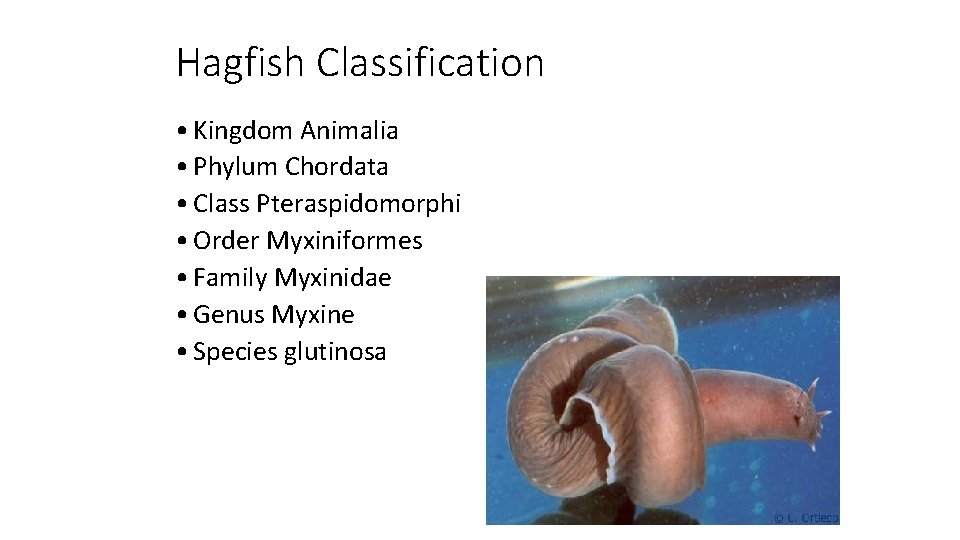
Hagfish Classification • Kingdom Animalia • Phylum Chordata • Class Pteraspidomorphi • Order Myxiniformes • Family Myxinidae • Genus Myxine • Species glutinosa
Slime Glands
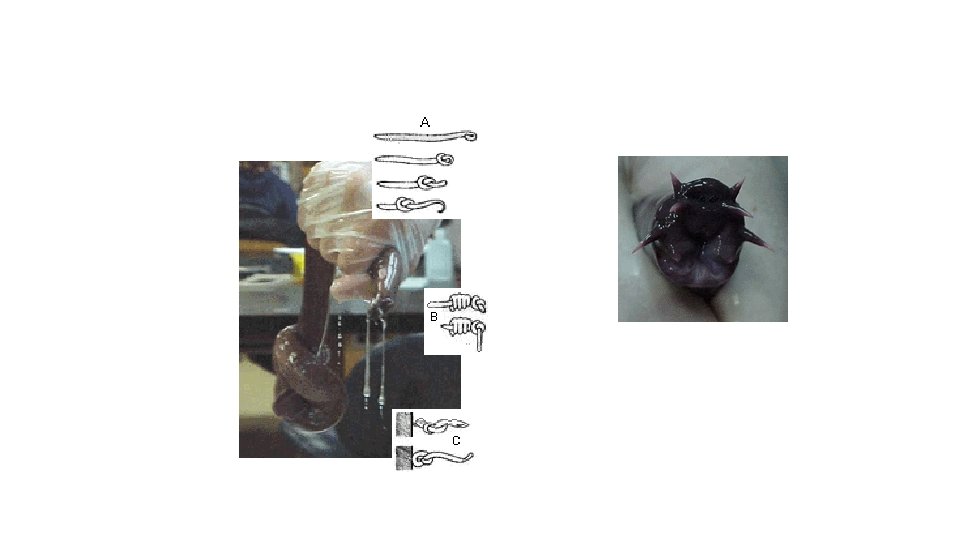
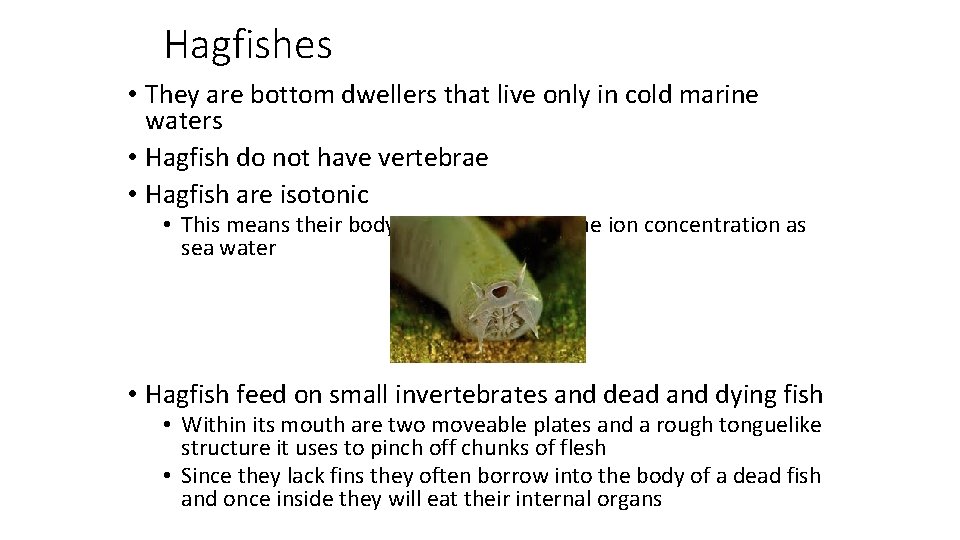
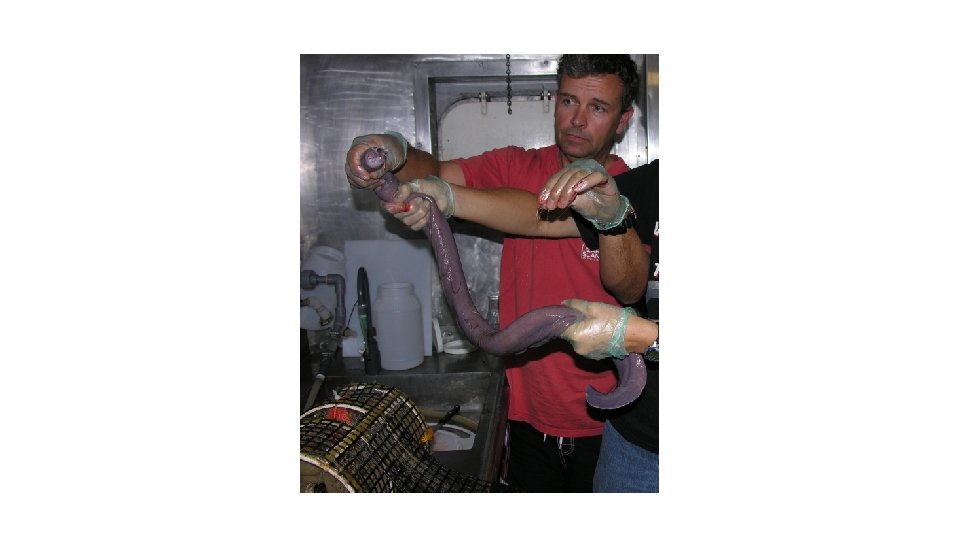
Hagfishes • They are bottom dwellers that live only in cold marine waters • Hagfish do not have vertebrae • Hagfish are isotonic • This means their body fluids have the same ion concentration as sea water • Hagfish feed on small invertebrates and dead and dying fish • Within its mouth are two moveable plates and a rough tonguelike structure it uses to pinch off chunks of flesh • Since they lack fins they often borrow into the body of a dead fish and once inside they will eat their internal organs
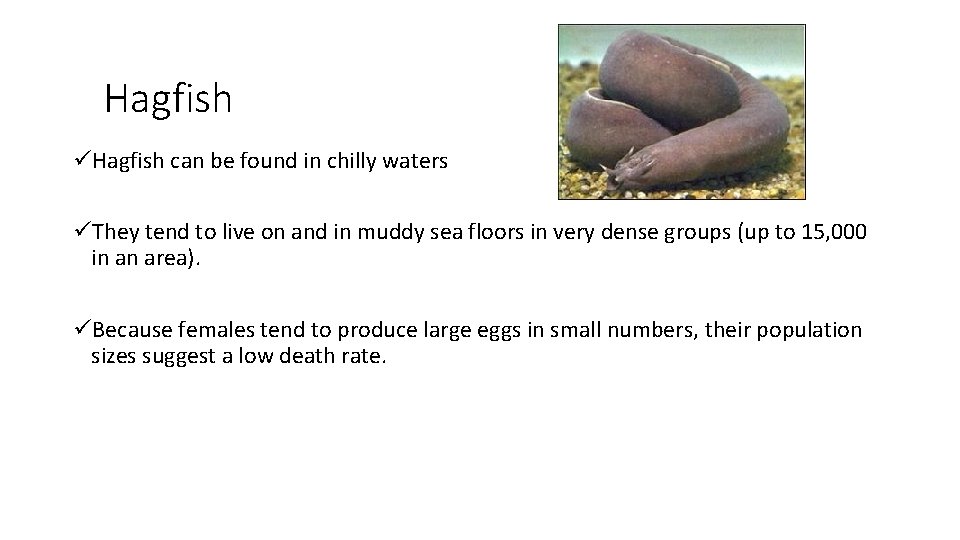
Hagfish üHagfish can be found in chilly waters üThey tend to live on and in muddy sea floors in very dense groups (up to 15, 000 in an area). üBecause females tend to produce large eggs in small numbers, their population sizes suggest a low death rate.
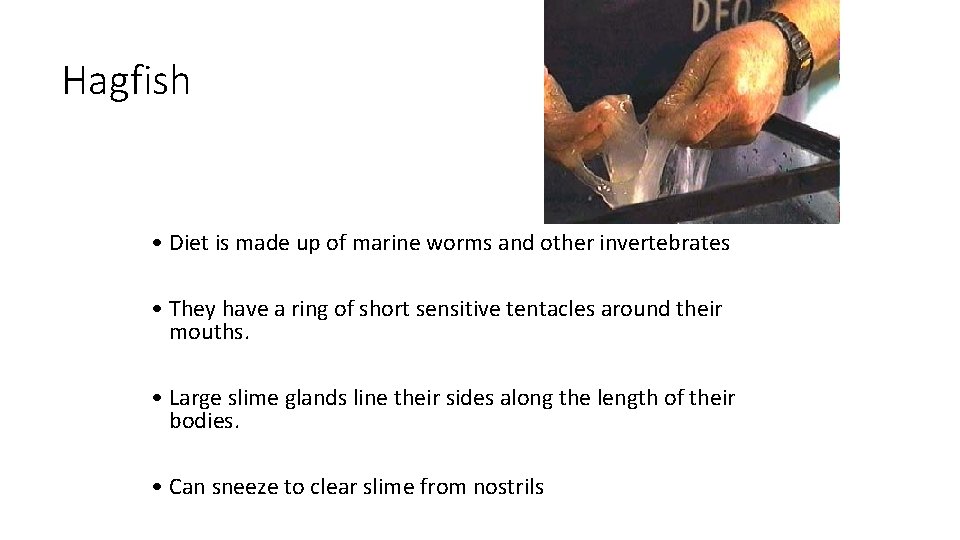
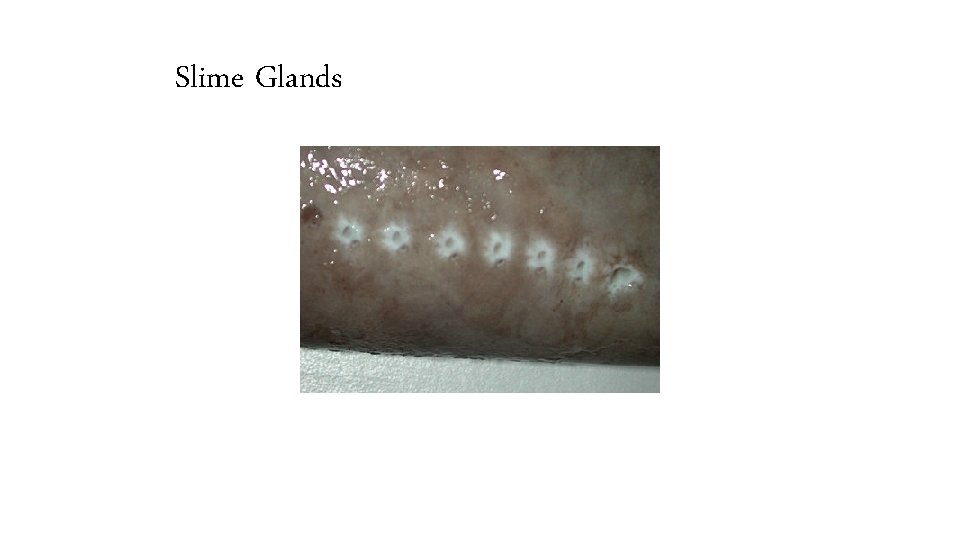
Hagfish • Diet is made up of marine worms and other invertebrates • They have a ring of short sensitive tentacles around their mouths. • Large slime glands line their sides along the length of their bodies. • Can sneeze to clear slime from nostrils
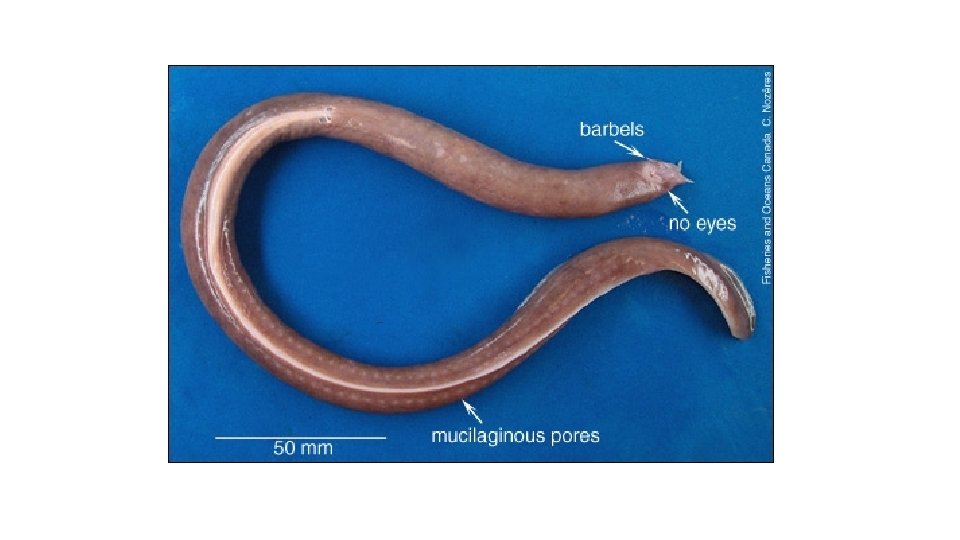
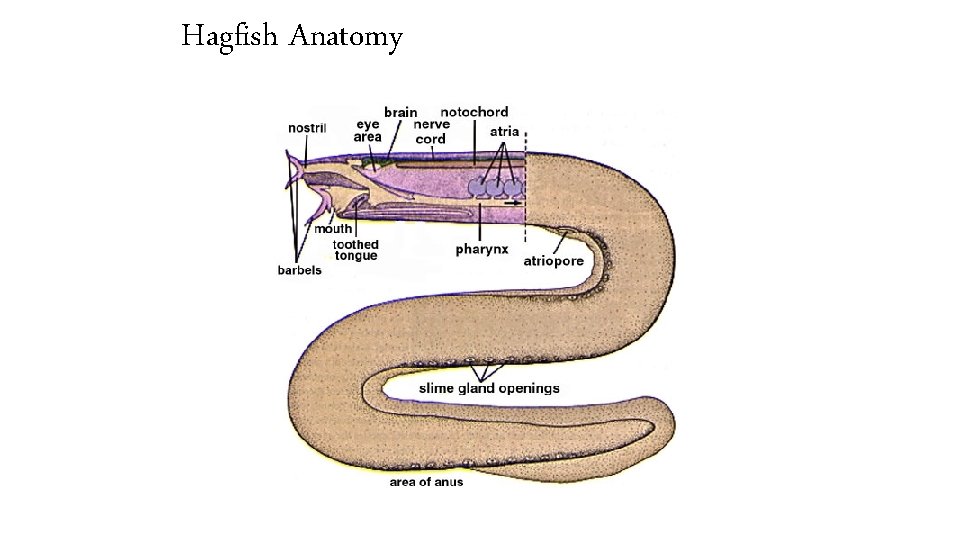
Hagfish Anatomy

/Hagfish have a very low metabolism. Once they eat, they may not have to again for up to seven months. /Although hagfish have a partial skull, they have no back bone, so are not true vertebrates. What skeleton they do have is made of cartilage.
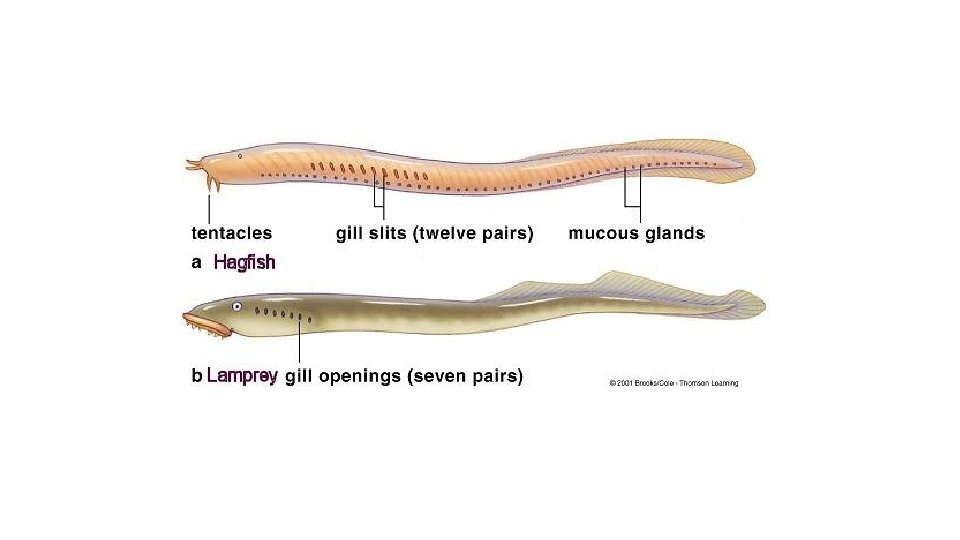
Summary of Hagfishes: • Class Myxini: (Hagfishes) These have a slender body, eel like, no scales, and contain slime glands. No paired appendages or dorsal fin. Cartilaginous skeleton. No jaws but have two rows of eversible teeth in their mouth. 5 -16 pairs of gills. Digestive system without stomach. Differentiated brain without a cerebellum. Sexes are separate but can have both ovaries and testies (only one is functional). External fertilization; large yolky eggs, no larval stage.
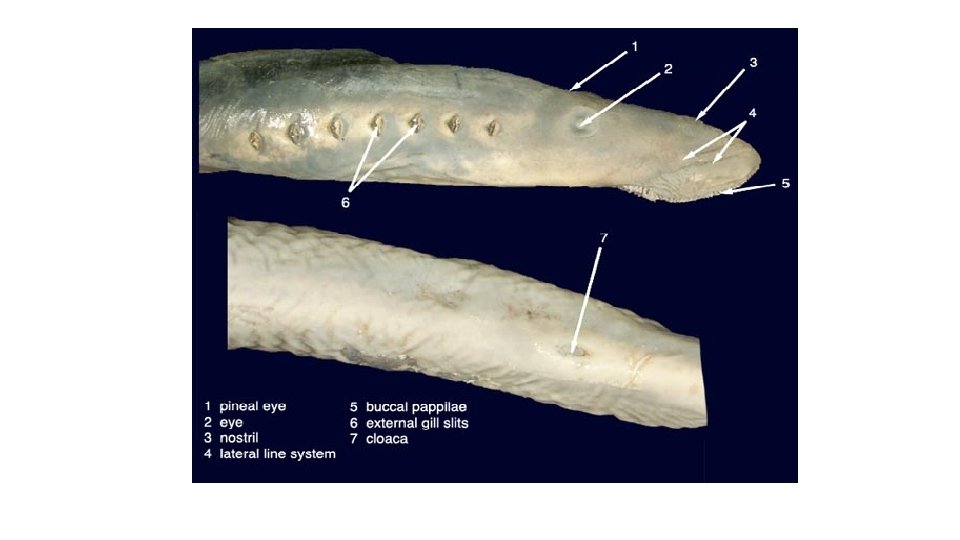
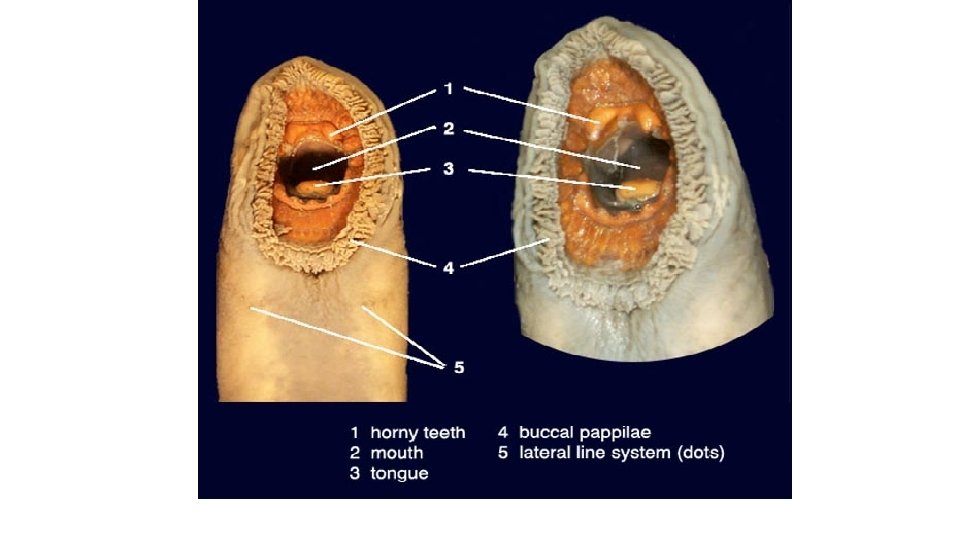
Summary of Lampreys • Class Cephalaspidomorphi: (Lampreys) These have body slender, eel-like, rounded with naked skin. One or two dorsal fins, no paired appendages. Cartilaginous skeleton. Sucker-like oral disc and tongue with well-developed keratinized teeth. Differentiated brain with small cerebellum present. Eyes are well developed in adults. Sexes are separate. External fertilization, has a long larval stage.

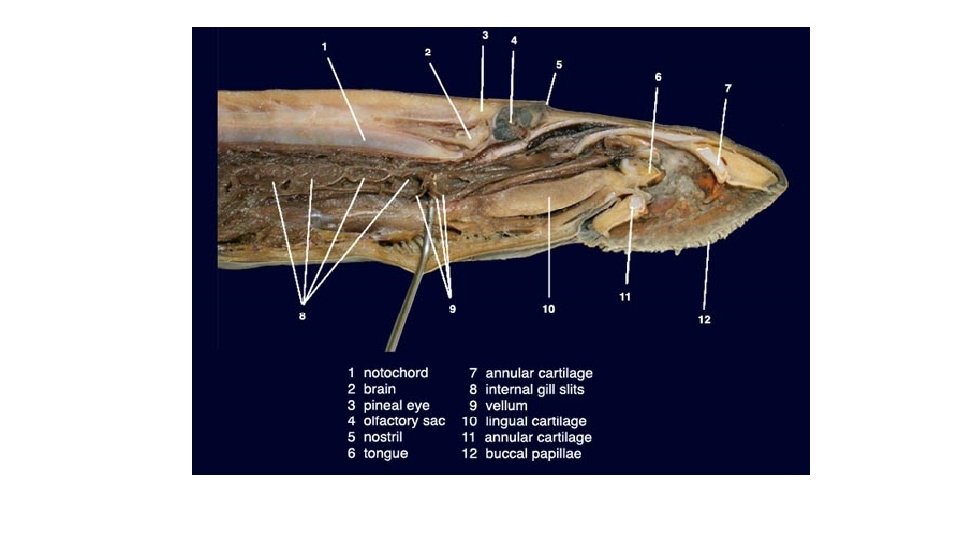
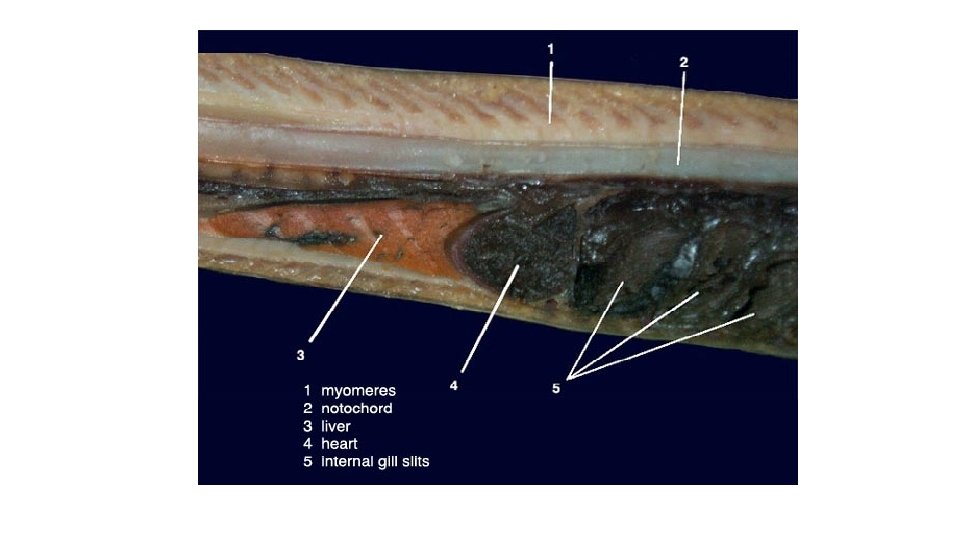
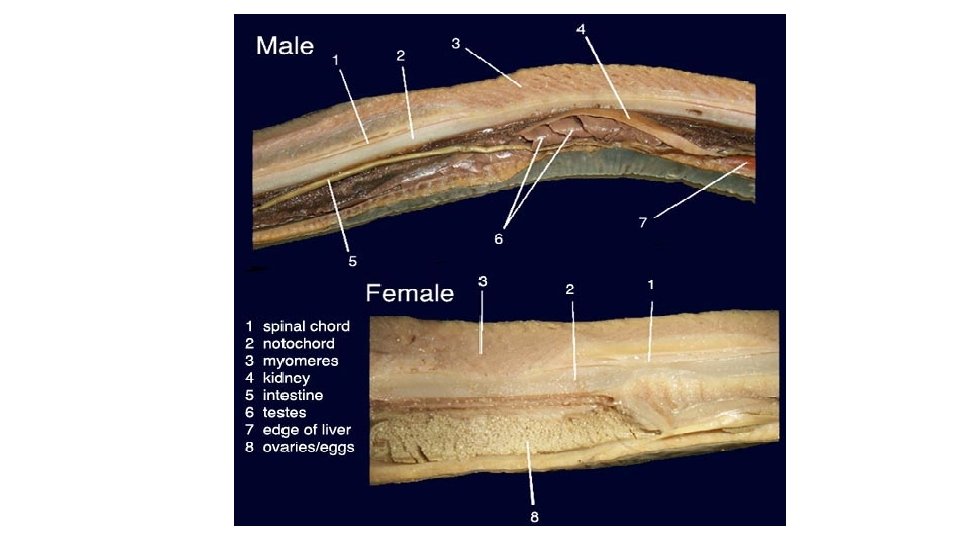
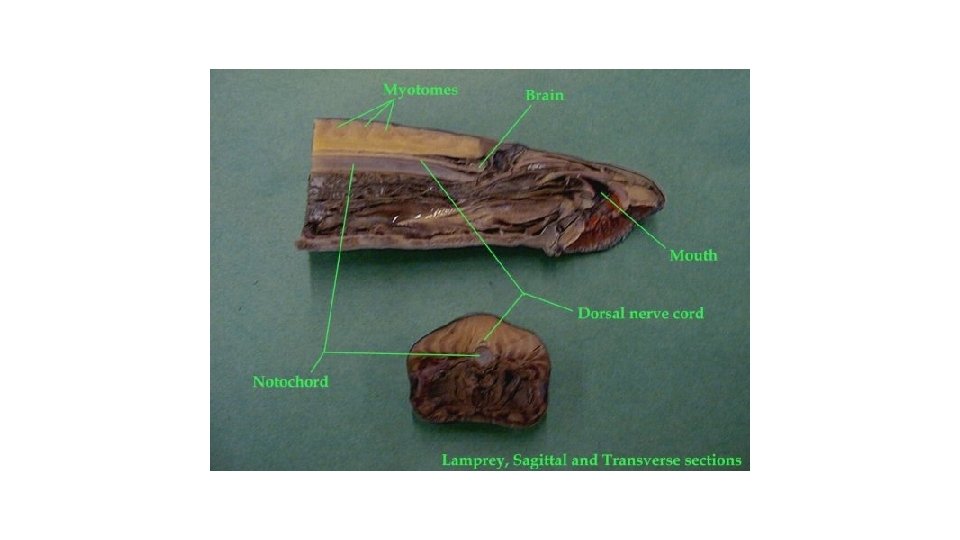
Lamprey Dissection /External /Mouth /Head & Pharynx /Heart /Gonads
- Slides: 31