
JAVA LISTS LIBRARIES A library is a collection
JAVA LISTS
LIBRARIES • A library is a collection of frequently used tools to facilitate programming large applications (or other libraries) • Examples you probably have seen • • • java. Math java. util. Scanner java. util. Random • Other examples • • • Access to servers/databases Graphics Reflection
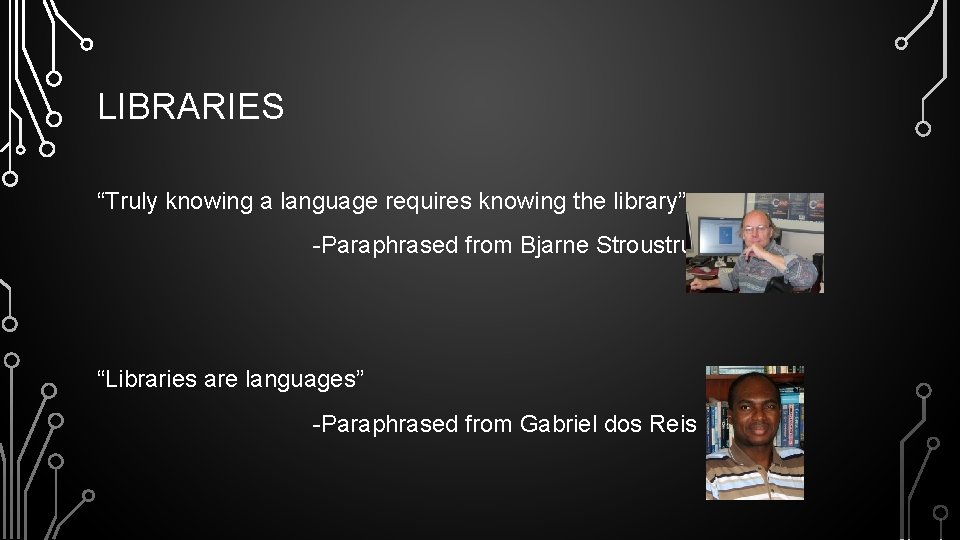
LIBRARIES “Truly knowing a language requires knowing the library” -Paraphrased from Bjarne Stroustrup “Libraries are languages” -Paraphrased from Gabriel dos Reis
SUMMARY OF CLASSES (LIST RELATED) • Array. List<E> - Resizable-array doubling (supports List) • Linked. List<E> - Doubly linked list (supports List, Deque, Stack, and Queue) • Vector<E> - Resizable-array incremental (supports List) • Stack<E> • Array. Deque<E> - Resizable-array doubling (supports Deque, Stack, and Queue) • Others outside the scope of this course • To find how to use them, go to the Java API!
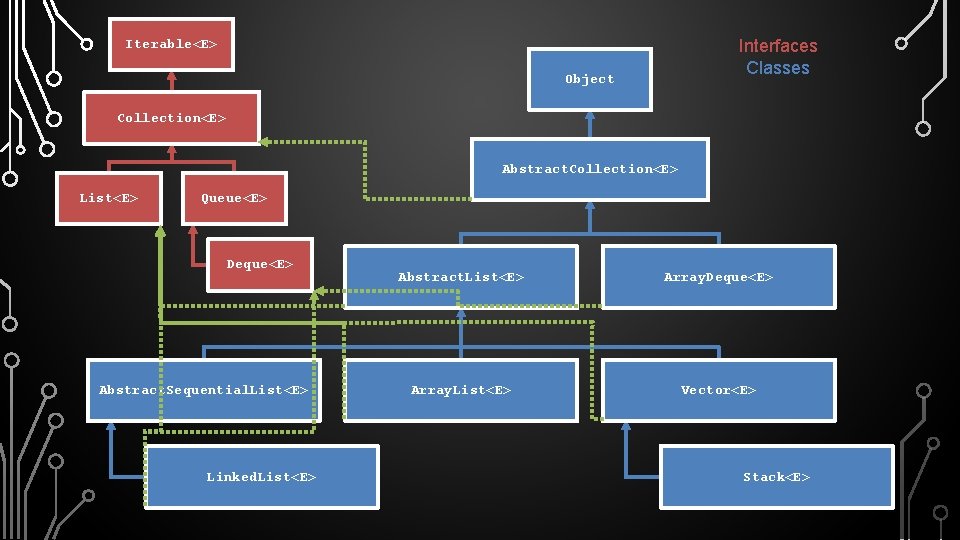
Interfaces Classes Iterable<E> Object Collection<E> Abstract. Collection<E> List<E> Queue<E> Deque<E> Abstract. Sequential. List<E> Linked. List<E> Abstract. List<E> Array. Deque<E> Array. List<E> Vector<E> Stack<E>
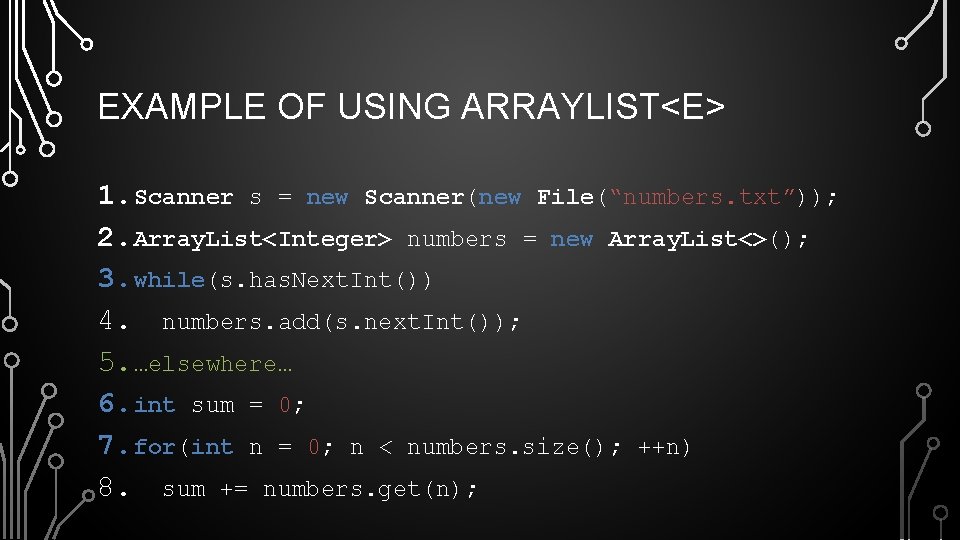
EXAMPLE OF USING ARRAYLIST<E> 1. Scanner s = new Scanner(new File(“numbers. txt”)); 2. Array. List<Integer> numbers = new Array. List<>(); 3. while(s. has. Next. Int()) 4. numbers. add(s. next. Int()); 5. …elsewhere… 6. int sum = 0; 7. for(int n = 0; n < numbers. size(); ++n) 8. sum += numbers. get(n);
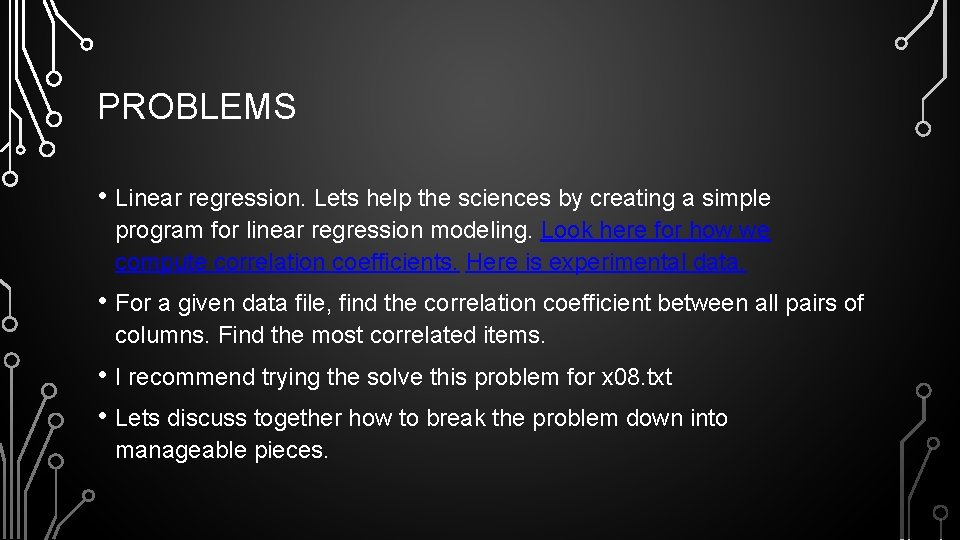
PROBLEMS • Linear regression. Lets help the sciences by creating a simple program for linear regression modeling. Look here for how we compute correlation coefficients. Here is experimental data. • For a given data file, find the correlation coefficient between all pairs of columns. Find the most correlated items. • I recommend trying the solve this problem for x 08. txt • Lets discuss together how to break the problem down into manageable pieces.
- Slides: 7