
Japanese Western Classical Music from the Meiji to

- Slides: 31
リサイタル Japanese Western Classical Music from the Meiji to the Modern Era. Dr. Michael J. Holderer Revised Feb 18, 2014 1
Why • Unique Topic • Multi Dimensional • • • Language Arts History Sociology All music areas Theatre Dance Literature/Poetry • Japanese Opera Performances Rare • Sponsorship opportunities …. Asian instrument companies, banks, societies, Japan government, individual benefactor • Build Relationships with Japanese Universities and US Societies 2
What’s in a name? • Japanese • Classical Music – Strict definition – Broad definition • Japanese Classical Music – Popular misconceptions – The Facts 3
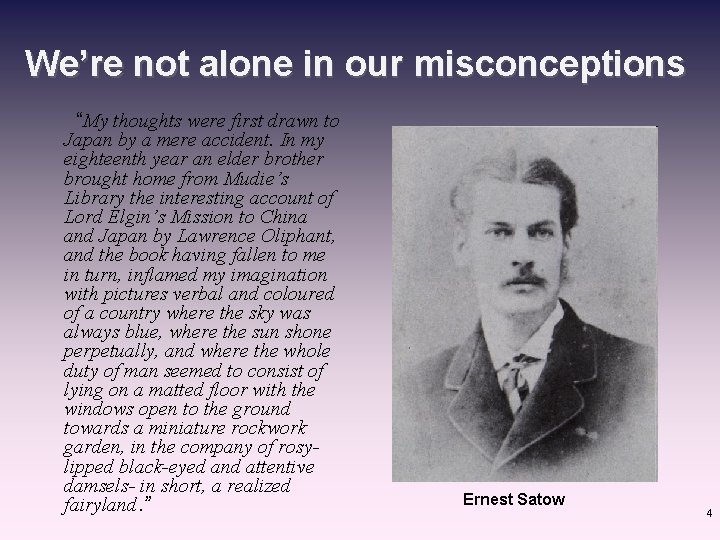
We’re not alone in our misconceptions “My thoughts were first drawn to Japan by a mere accident. In my eighteenth year an elder brother brought home from Mudie’s Library the interesting account of Lord Elgin’s Mission to China and Japan by Lawrence Oliphant, and the book having fallen to me in turn, inflamed my imagination with pictures verbal and coloured of a country where the sky was always blue, where the sun shone perpetually, and where the whole duty of man seemed to consist of lying on a matted floor with the windows open to the ground towards a miniature rockwork garden, in the company of rosylipped black-eyed and attentive damsels- in short, a realized fairyland. ” Ernest Satow 4
Meiji Era (1868 -1912) • Influence of West through missionaries, travel and education abroad. • End of Shogunate. • Rule of Pro-Western Emperor. 5
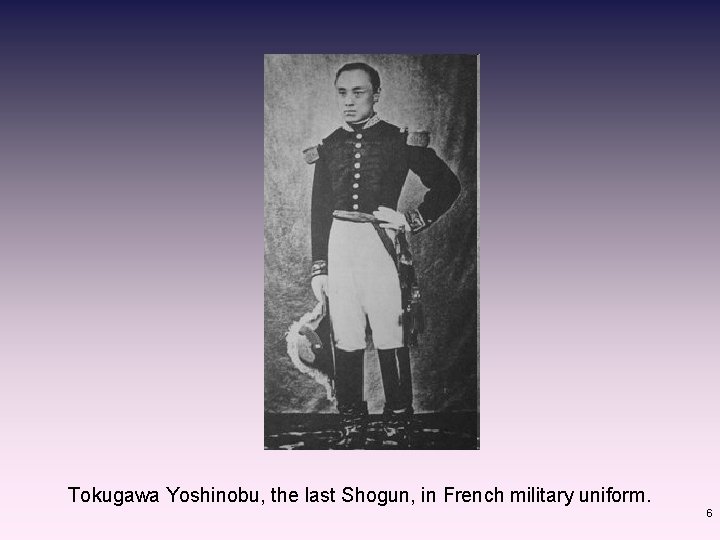
Tokugawa Yoshinobu, the last Shogun, in French military uniform. 6
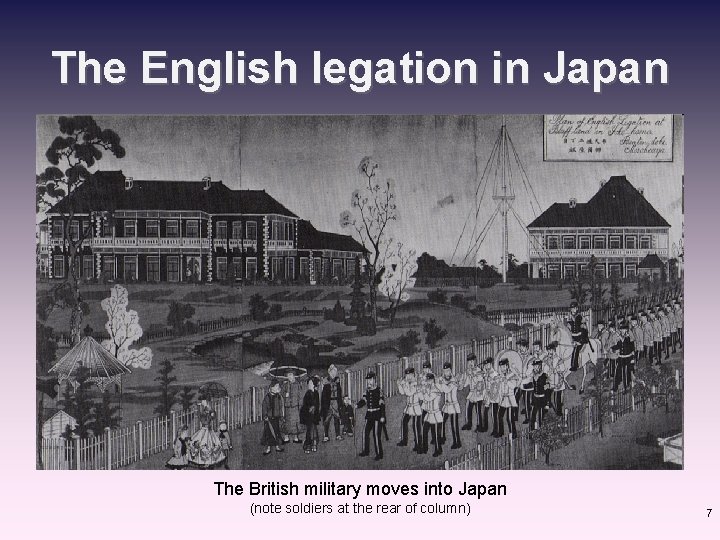
The English legation in Japan The British military moves into Japan (note soldiers at the rear of column) 7
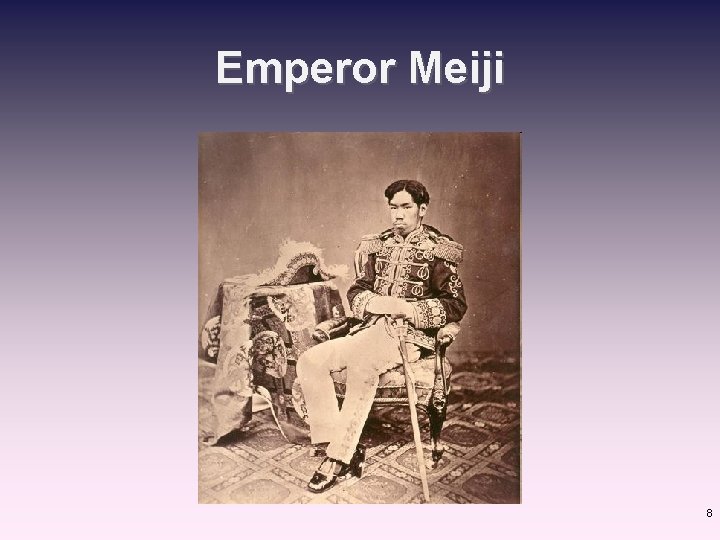
Emperor Meiji 8
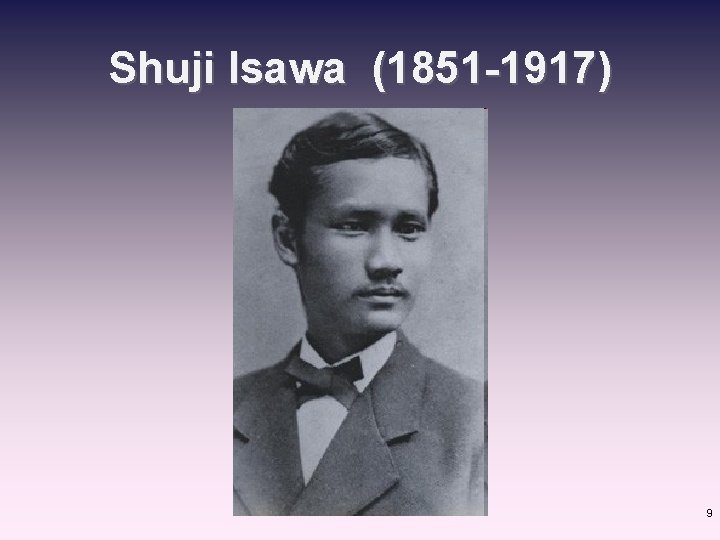
Shuji Isawa (1851 -1917) 9
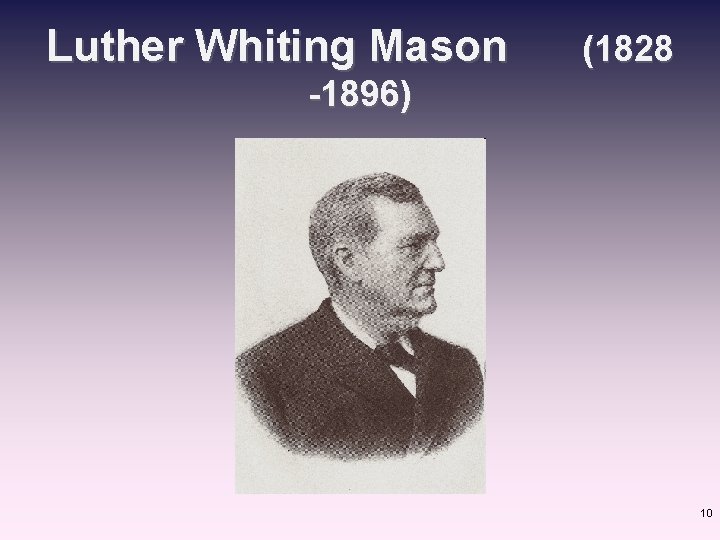
Luther Whiting Mason (1828 -1896) 10
It’s all Japanese to me! • Shoka – • • • Music approved by the Japanese National Board of Education to be taught to students. Yagaku – Broad Term for all Western music Hogaku – Broad term for all Japanese music Doyo – Music that is particularly suitable for children Gunka – Military band music in the Western Style Ongaku – Japanese for “music” in general Kakyoku – “Melody” or “Song” 11
“The Big Three” • Kosaku Yamada (1886 -1965) • Yoshinao Nakada (1923 -2000) • Toru Takemitsu (1930 – 1996) 12
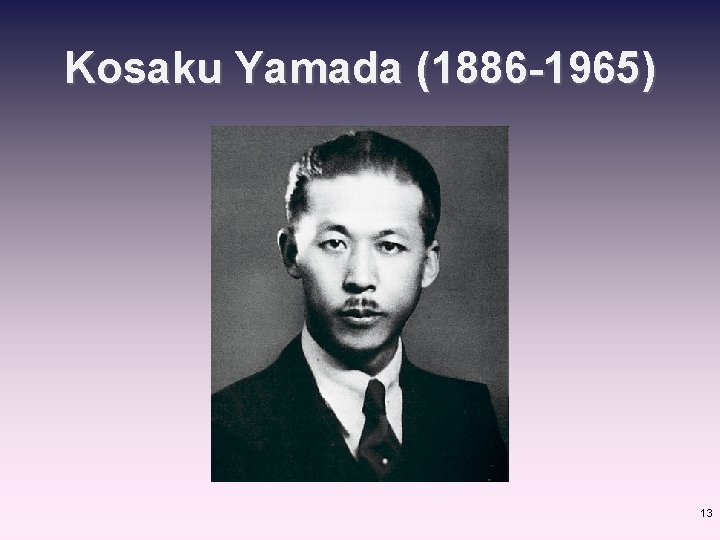
Kosaku Yamada (1886 -1965) 13
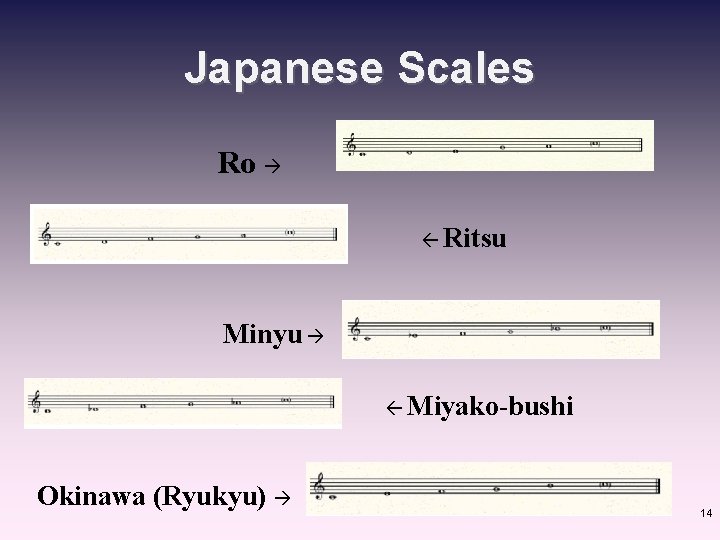
Japanese Scales Ro Ritsu Minyu Miyako-bushi Okinawa (Ryukyu) 14
East meets West Yamada and Debussy *Symbolism* Symbolism was largely a reaction against Naturalism and Realism, anti-idealistic movements which attempted to capture reality in its gritty particularity, and to elevate the humble and the ordinary over the ideal. These movements invited a reaction in favor of spirituality, the imagination, and dreams; the path to Symbolism begins with that reaction. 15
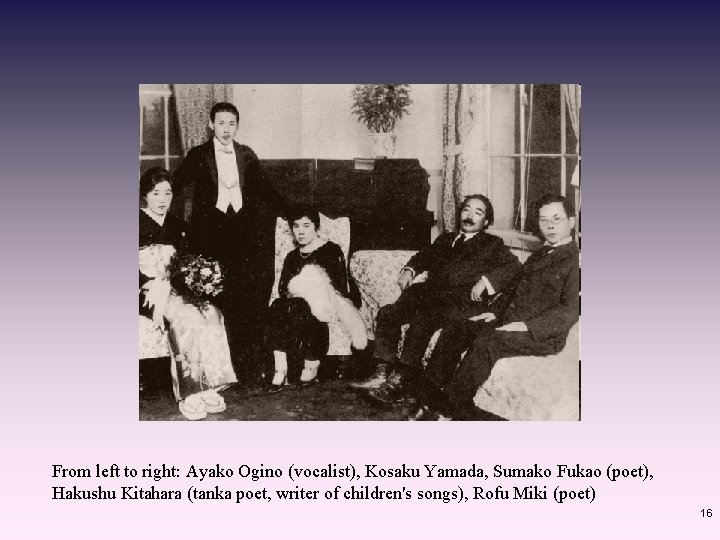
From left to right: Ayako Ogino (vocalist), Kosaku Yamada, Sumako Fukao (poet), Hakushu Kitahara (tanka poet, writer of children's songs), Rofu Miki (poet) 16
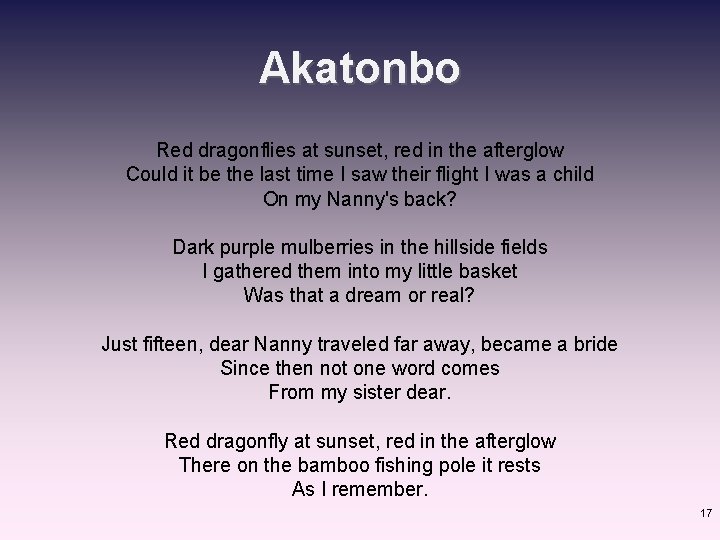
Akatonbo Red dragonflies at sunset, red in the afterglow Could it be the last time I saw their flight I was a child On my Nanny's back? Dark purple mulberries in the hillside fields I gathered them into my little basket Was that a dream or real? Just fifteen, dear Nanny traveled far away, became a bride Since then not one word comes From my sister dear. Red dragonfly at sunset, red in the afterglow There on the bamboo fishing pole it rests As I remember. 17
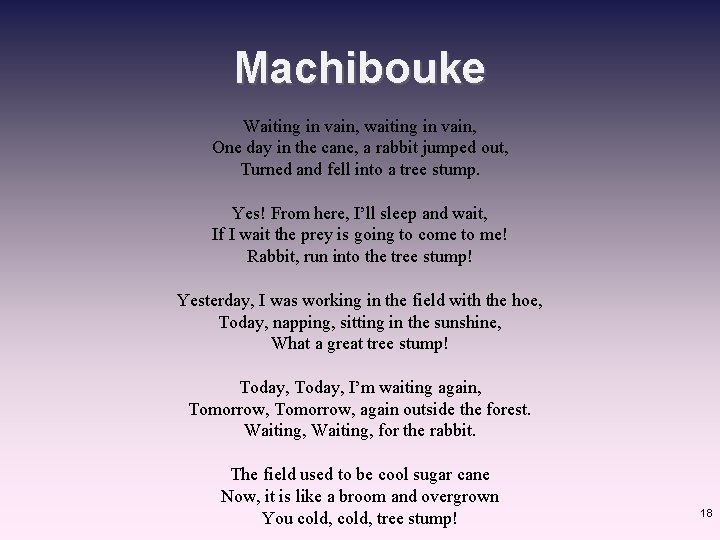
Machibouke Waiting in vain, waiting in vain, One day in the cane, a rabbit jumped out, Turned and fell into a tree stump. Yes! From here, I’ll sleep and wait, If I wait the prey is going to come to me! Rabbit, run into the tree stump! Yesterday, I was working in the field with the hoe, Today, napping, sitting in the sunshine, What a great tree stump! Today, I’m waiting again, Tomorrow, again outside the forest. Waiting, for the rabbit. The field used to be cool sugar cane Now, it is like a broom and overgrown You cold, tree stump! 18
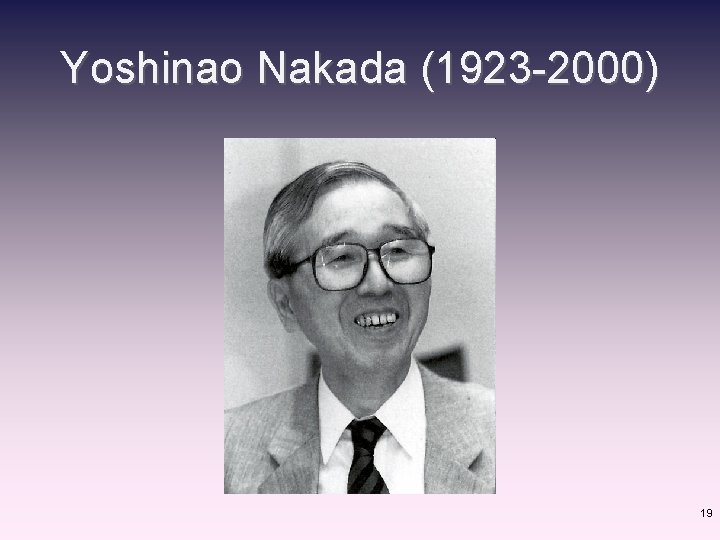
Yoshinao Nakada (1923 -2000) 19
What does that word mean again? Doyo – songs for children 20
Nakada’s musical style • Heavily influenced by the 20 the century “Romantic” composers such as Richard Strauss as well as the music of Prokofiev. • Pushes the boundaries of tonality, while never being explicitly atonal. 21
Nakada on contemporary music • Musical composition, like sports has set rules that must be followed. • Deviating from these violates the rules of play (composing). 22
The Happy Elephant In the joyful morning the Elephant by himself is smiling. In a very good mood the Elephant is smiling. Why are you so happy Elephant who is smiling? 23
Kiri to Hanashita My cheek gets wet easily My cheek gets cold That day you wrote- that character- what was it? I don’t know There, still, now, it hurts. There still it hurts The mist has wet my little cheek There a little cold A couple always in the mist, In the mist together, in love. I can’t see you to behold you But when I try to hold you, You are not really there, After all, I cry. 24
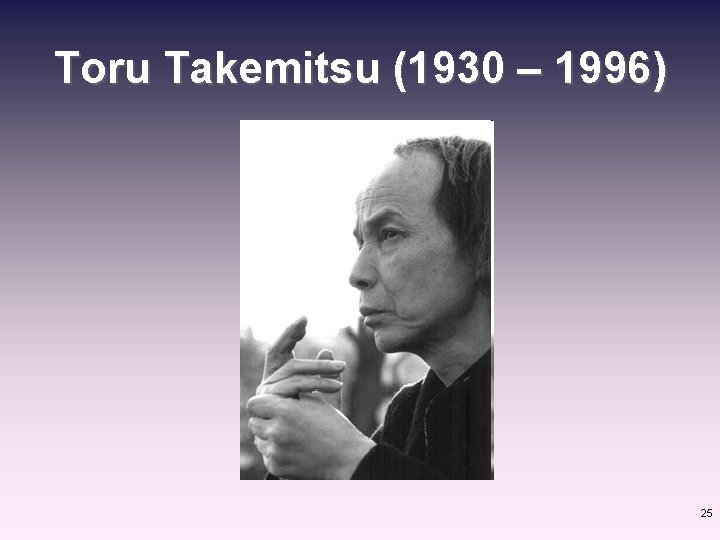
Toru Takemitsu (1930 – 1996) 25
‘Takemitsu’ “I believe that cultures do converge and gradually form themselves into a cluster. Furthermore, that very often what occurs in the fusion of cultures goes beyond what can be predicted from cultural influences flowing back and forth. What we see today is a Japan deeply influenced by the West, by Europe and the United States, and we see increasing numbers of Westerners who are deeply impressed by Eastern cultures. More and more, East and West are being evaluated on equal terms. But we’re not there yet: fundamental differences still remain. ” 26
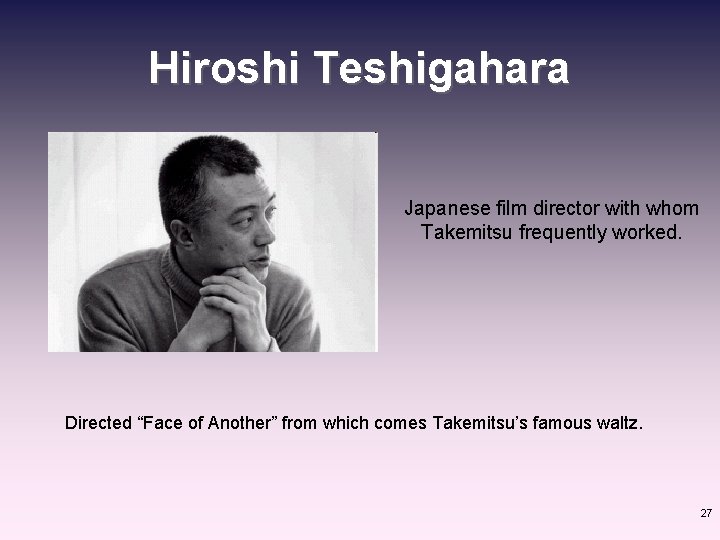
Hiroshi Teshigahara Japanese film director with whom Takemitsu frequently worked. Directed “Face of Another” from which comes Takemitsu’s famous waltz. 27
“There is no greater indication of the familiarity of a concept than that the word expressing it enters a foreign language with no need of translation. Japan has furnished the English language with several of these words such as geisha, ninja, kami-kaze, samurai, kimono which need no translation. ” 28
Chiisana Sora I looked up at the blue sky, the clouds like cotton flew by and with them carried sorrow. Chorus: And I recalled my childhood when I was scolded and I cried. (Chorus) I looked at them against the evening sky, near the stained glass of a church, burning deep like crimson. (Chorus) I looked up at the night sky, the shining heavens seemed to cry, one tiny star, a teardrop. (Chorus) 29
Waltz I see you in (your face), there standing in front of me. But I do not recognize you any longer. Where are you, you “yesterday” you? Once in spring time, I saw you so, How with the hint of a milky glass Placed, you were to me near, yet far removed Once in moonlight, I saw you to a grade You had glazed skin you were to me good , yet foreign. Once into spring, I thought you belonged to me strongly, to me we were one yes in the heart firm. Once in garden, I took departure, but I felt you closely at the same time although we were separated. Long have I wholly forgotten how strangely you became I could see today staring at me, (but what I really saw was) myself. You wear another mask. 30
31