
Japanese knotweed biocontrol Progress to date Lindsey Norgrove
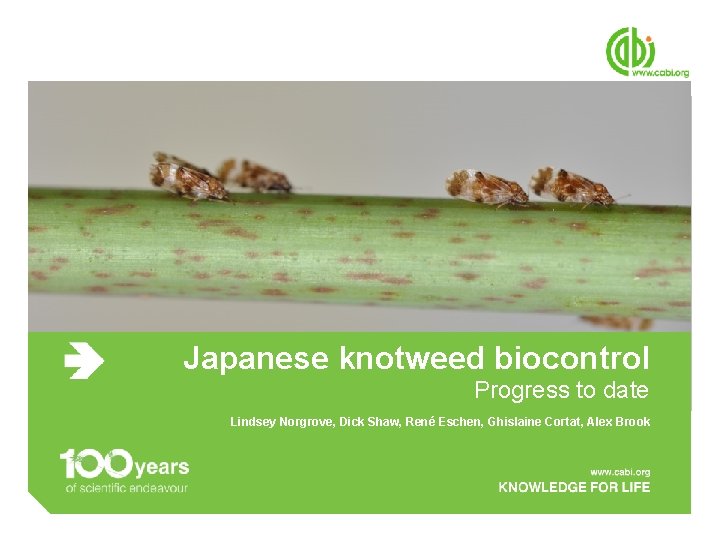
Japanese knotweed biocontrol Progress to date Lindsey Norgrove, Dick Shaw, René Eschen, Ghislaine Cortat, Alex Brook
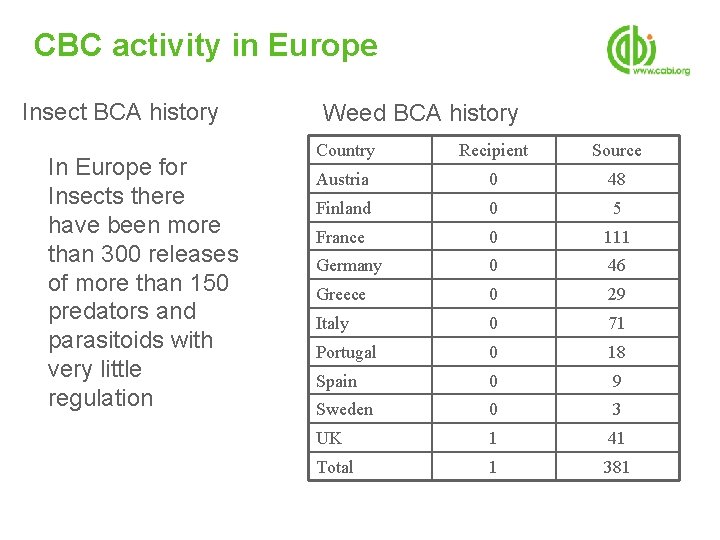
CBC activity in Europe Insect BCA history In Europe for Insects there have been more than 300 releases of more than 150 predators and parasitoids with very little regulation Weed BCA history Country Recipient Source Austria 0 48 Finland 0 5 France 0 111 Germany 0 46 Greece 0 29 Italy 0 71 Portugal 0 18 Spain 0 9 Sweden 0 3 UK 1 41 Total 1 381
Weed CBC - Long and extensive history Over the past 100 years, more than 400 different biocontrol agents have been used against around 150 target plants, totalling over 1, 300 introductions around the globe.
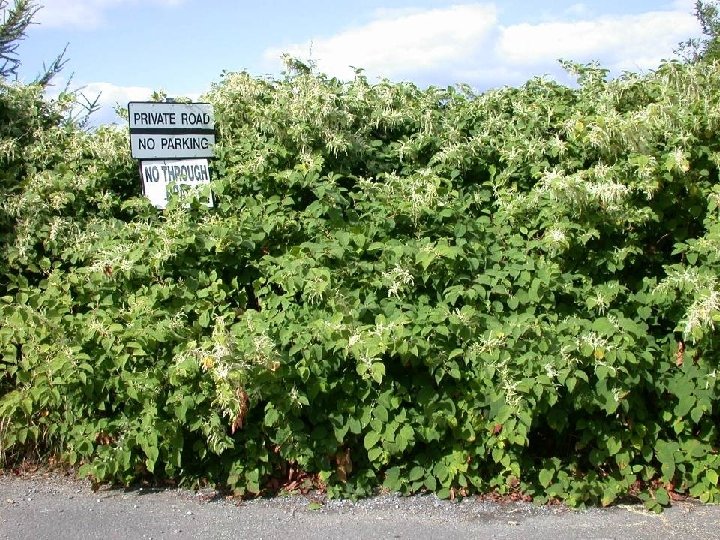
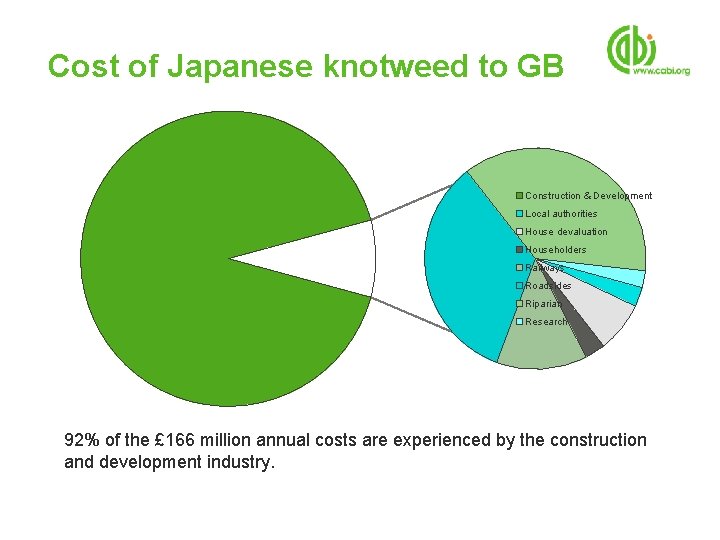
Cost of Japanese knotweed to GB Construction & Development Local authorities House devaluation Householders Railways Roadsides Riparian Research 92% of the £ 166 million annual costs are experienced by the construction and development industry.
A consortium of Sponsors came together in 2003 to sponsor the programme
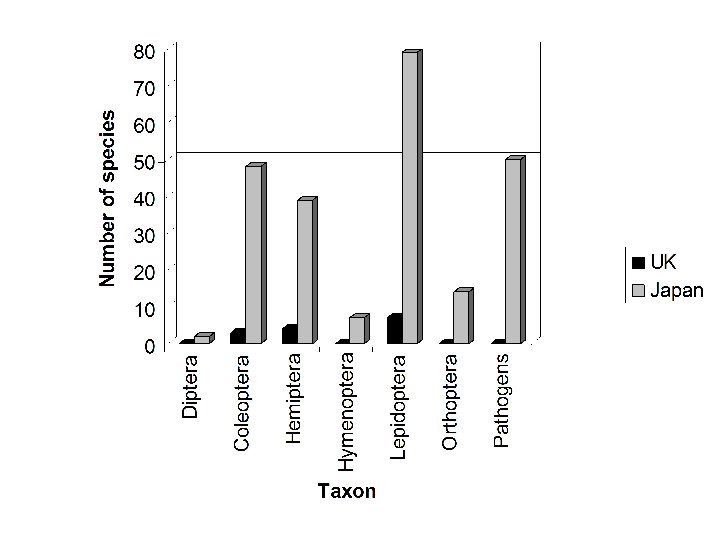
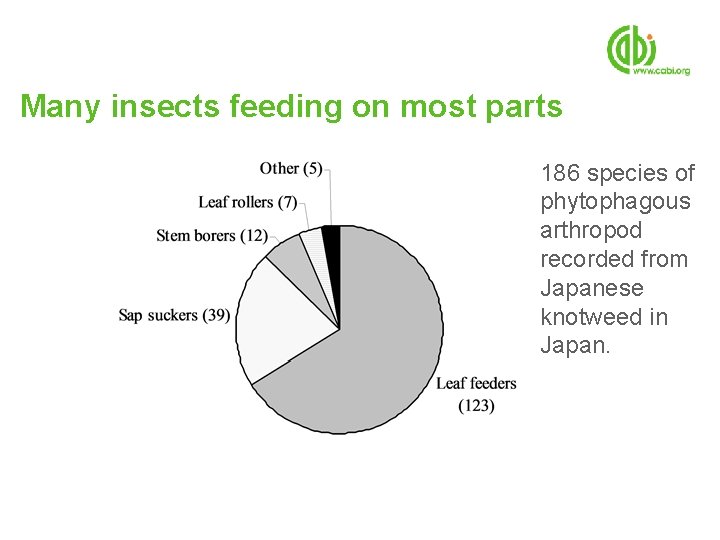
Many insects feeding on most parts 186 species of phytophagous arthropod recorded from Japanese knotweed in Japan.
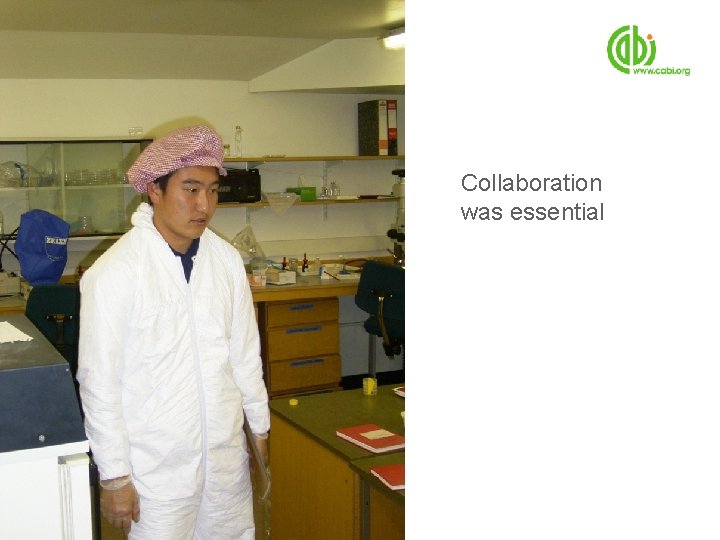
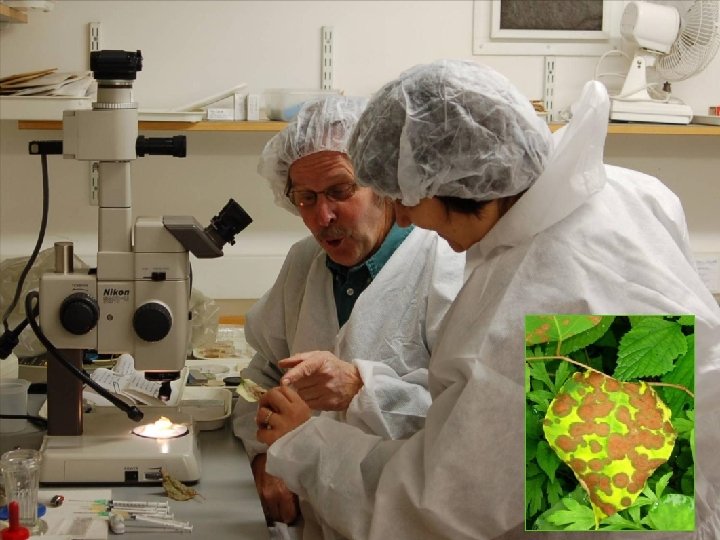
Collaboration was essential
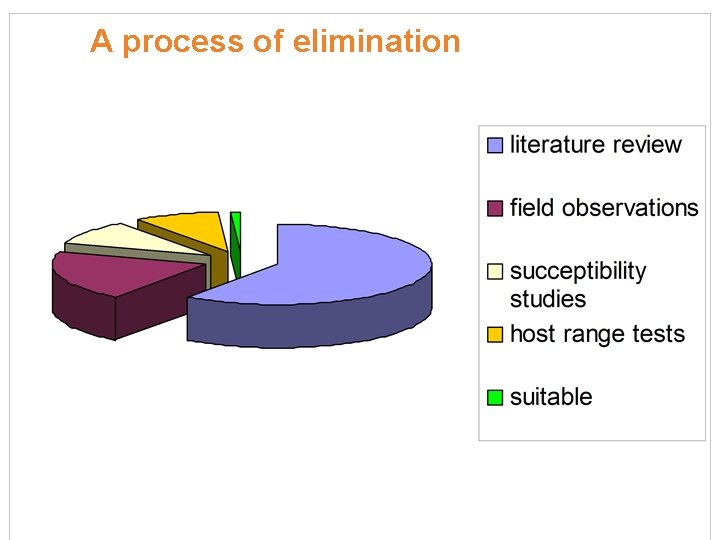
A process of elimination
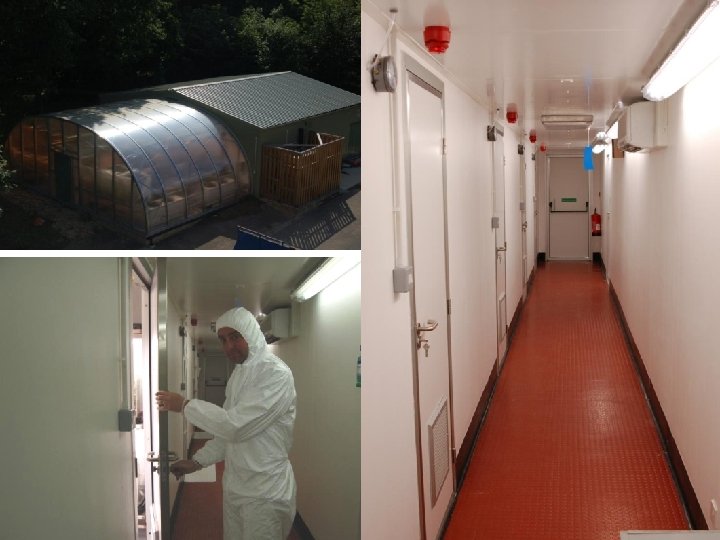

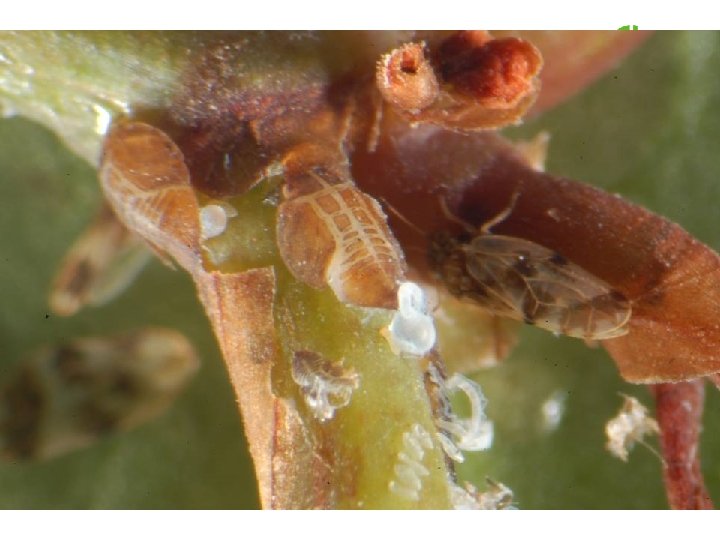
Aphalara itadori
Test Plant List • • 90 species and varieties representatives from 19 families. 37 plants natives including all native Polygonaceae 23 species introduced to the UK, 3 species native to Europe, 13 ornamental 10 economically important UK species No means of agreeing the test plant list in advance!

Aphalara adult survival
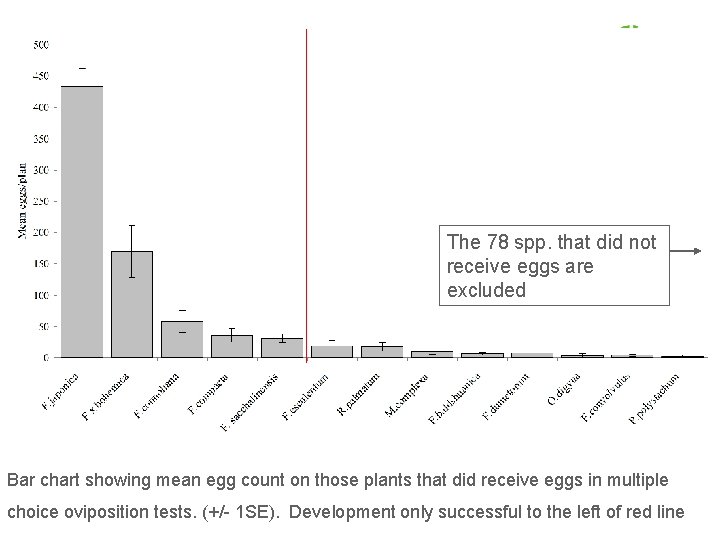
The 78 spp. that did not receive eggs are excluded Bar chart showing mean egg count on those plants that did receive eggs in multiple choice oviposition tests. (+/- 1 SE). Development only successful to the left of red line
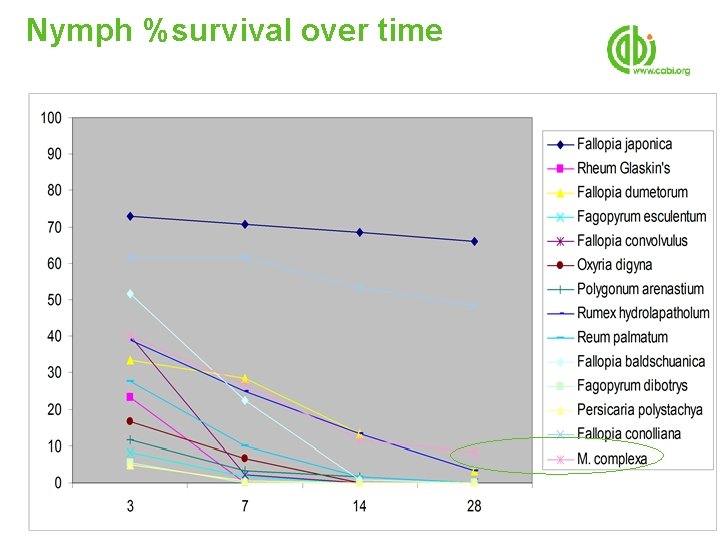
Nymph %survival over time
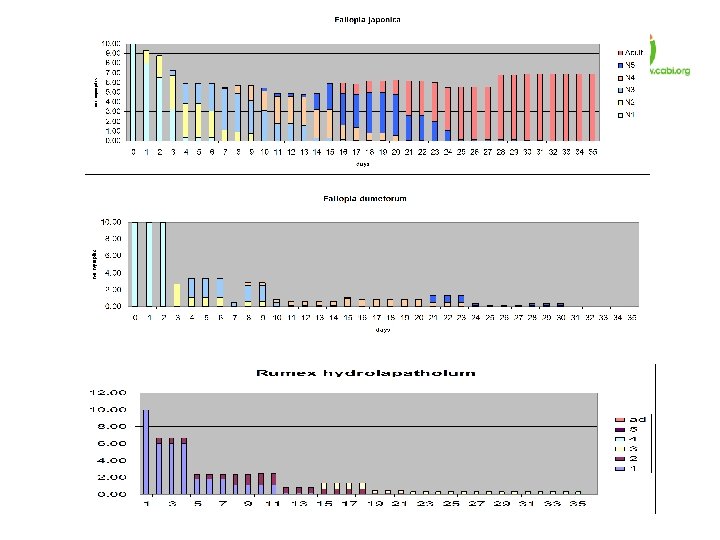
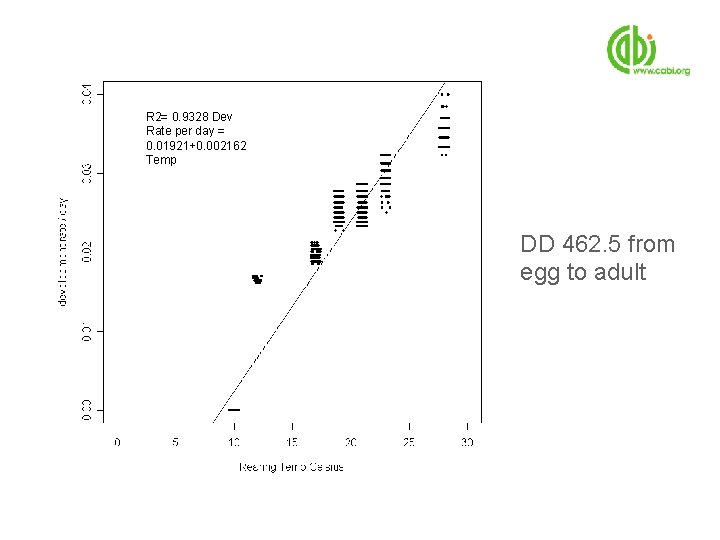
R 2= 0. 9328 Dev Rate per day = 0. 01921+0. 002162 Temp DD 462. 5 from egg to adult
Licensing: The two processes (England) • Licence to release into the wild under the Wildlife and Countryside Act 1981 • Licence to free it from a Plant Health Quarantine license as “an organism likely to be injurious to plants in the UK” - EU Standing Committee on Plant Health were kept informed See also: Hunt et al (2010) An international comparison of invertebrate biological control agent regulation: what can Europe learn? REBECA.
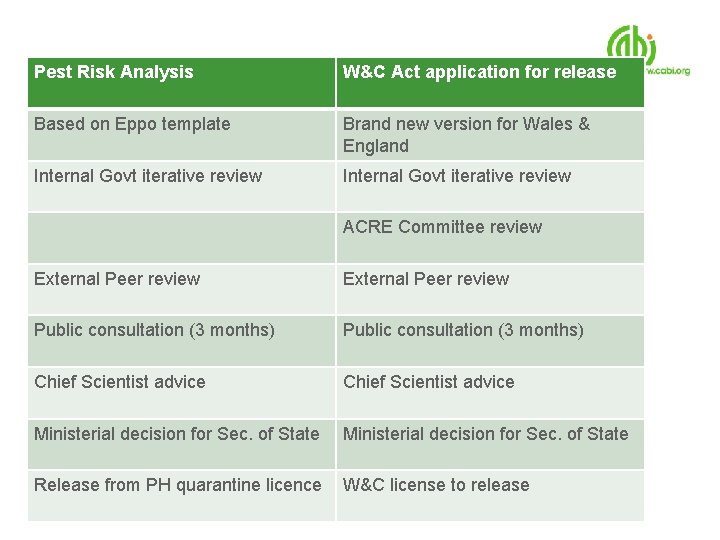
Pest Risk Analysis W&C Act application for release Based on Eppo template Brand new version for Wales & England Internal Govt iterative review ACRE Committee review External Peer review Public consultation (3 months) Chief Scientist advice Ministerial decision for Sec. of State Release from PH quarantine licence W&C license to release
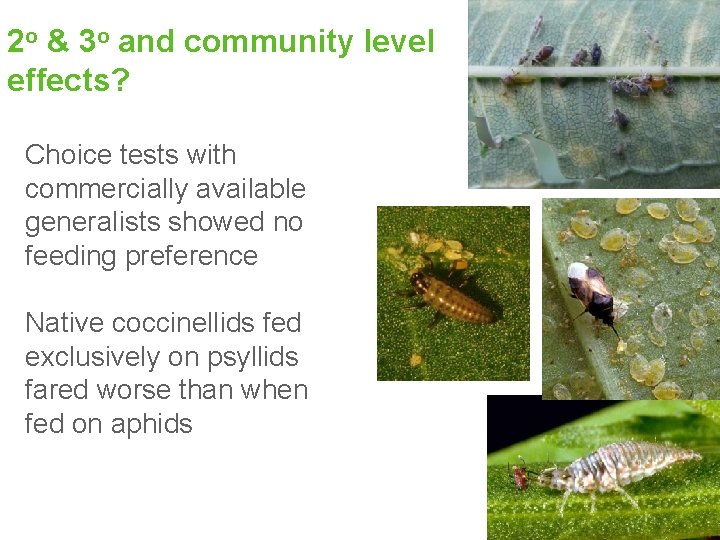
2 o & 3 o and community level effects? Choice tests with commercially available generalists showed no feeding preference Native coccinellids fed exclusively on psyllids fared worse than when fed on aphids
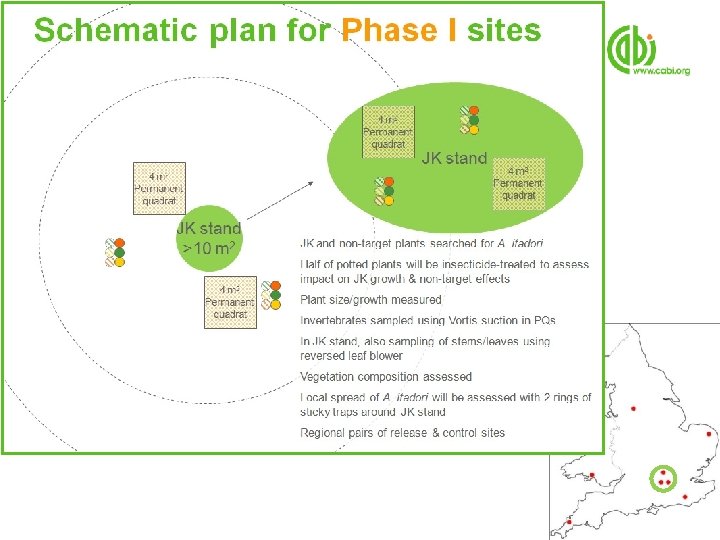
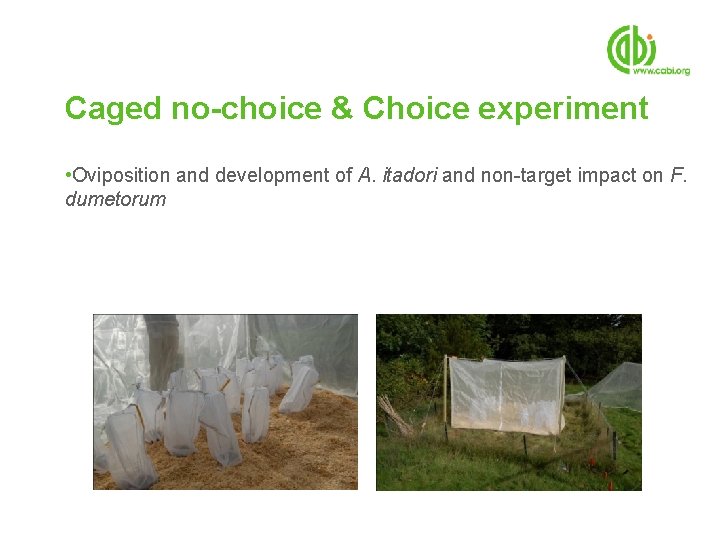
Caged no-choice & Choice experiment • Oviposition and development of A. itadori and non-target impact on F. dumetorum
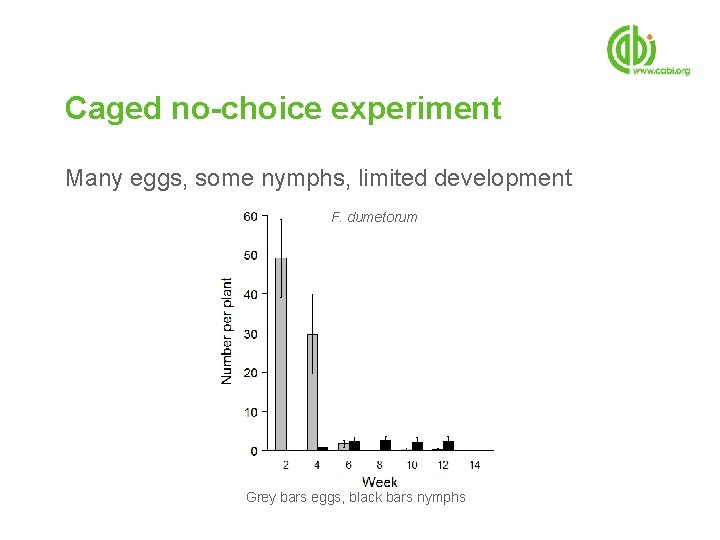
Caged no-choice experiment Many eggs, some nymphs, limited development F. dumetorum Grey bars eggs, black bars nymphs
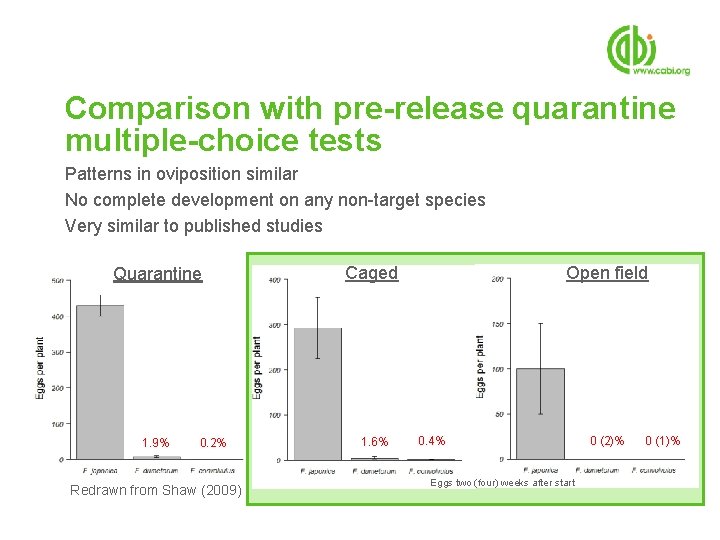
Comparison with pre-release quarantine multiple-choice tests Patterns in oviposition similar No complete development on any non-target species Very similar to published studies Quarantine 1. 9% 0. 2% Redrawn from Shaw (2009) Open field Caged 1. 6% 0. 4% Eggs two (four) weeks after start 0 (2)% 0 (1)%
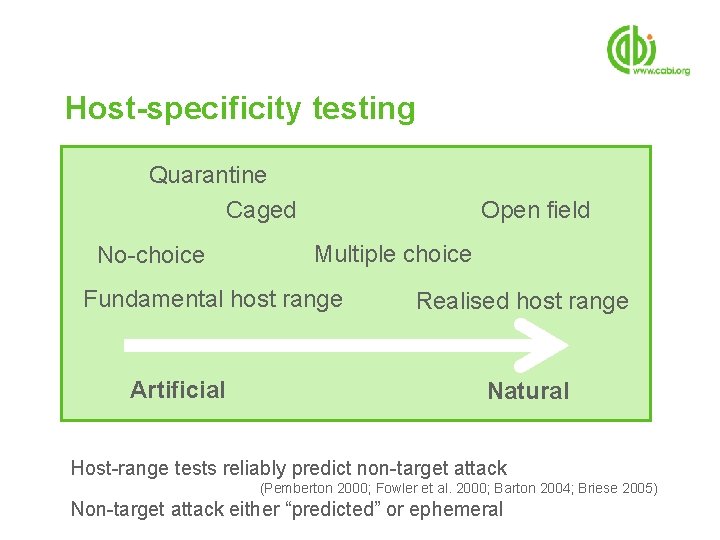
Host-specificity testing Quarantine Caged No-choice Open field Multiple choice Fundamental host range Artificial Realised host range Natural Host-range tests reliably predict non-target attack (Pemberton 2000; Fowler et al. 2000; Barton 2004; Briese 2005) Non-target attack either “predicted” or ephemeral
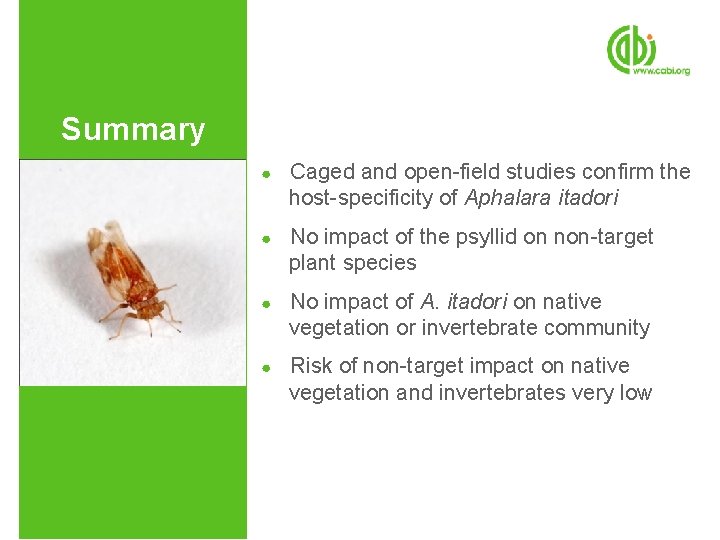
Summary ● Caged and open-field studies confirm the host-specificity of Aphalara itadori ● No impact of the psyllid on non-target plant species ● No impact of A. itadori on native vegetation or invertebrate community ● Risk of non-target impact on native vegetation and invertebrates very low
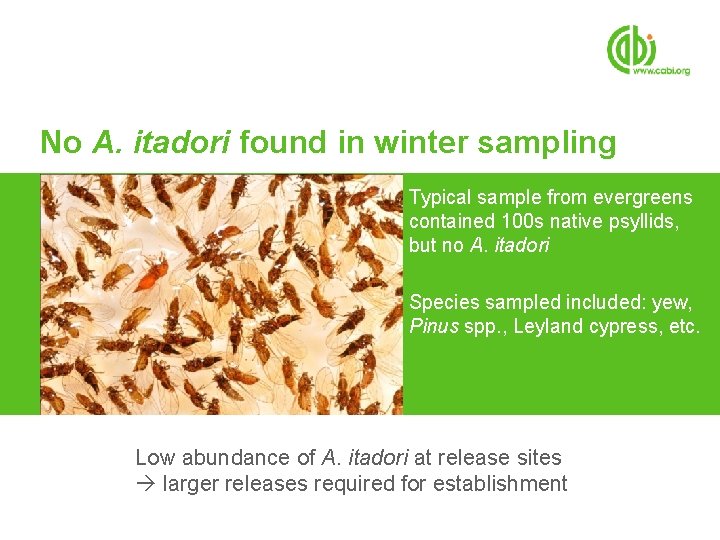
No A. itadori found in winter sampling Typical sample from evergreens contained 100 s native psyllids, but no A. itadori Species sampled included: yew, Pinus spp. , Leyland cypress, etc. Low abundance of A. itadori at release sites larger releases required for establishment
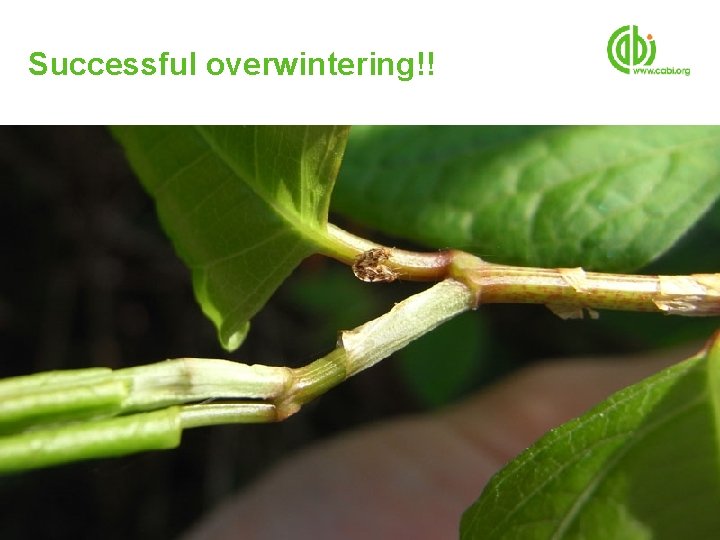
Successful overwintering!!
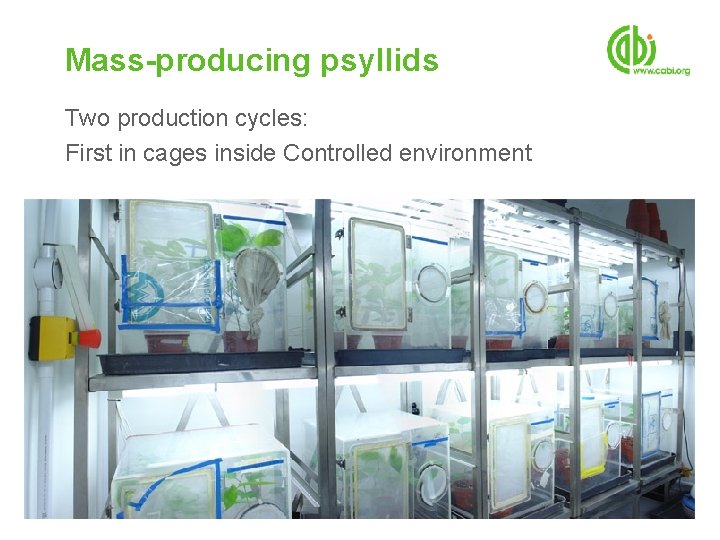
Mass-producing psyllids Two production cycles: First in cages inside Controlled environment
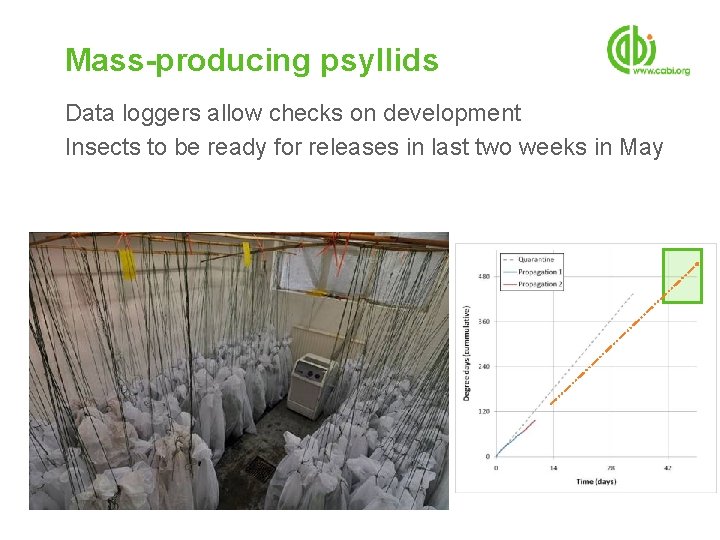
Mass-producing psyllids Data loggers allow checks on development Insects to be ready for releases in last two weeks in May
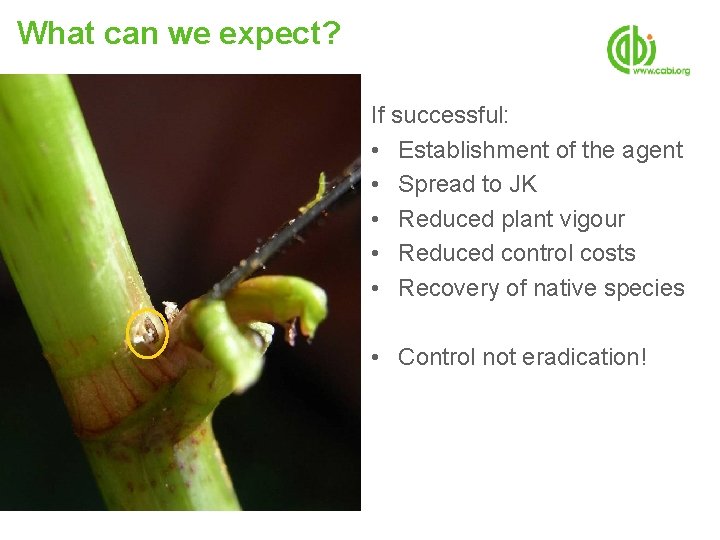
What can we expect? If successful: • Establishment of the agent • Spread to JK • Reduced plant vigour • Reduced control costs • Recovery of native species • Control not eradication!
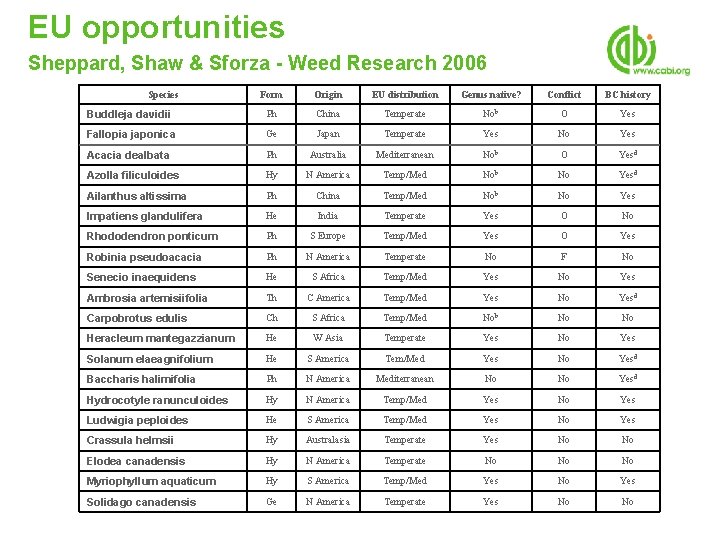
EU opportunities Sheppard, Shaw & Sforza - Weed Research 2006 Species Form Origin EU distribution Genus native? Conflict BC history Buddleja davidii Ph China Temperate Nob O Yes Fallopia japonica Ge Japan Temperate Yes No Yes Acacia dealbata Ph Australia Mediterranean Nob O Yesd Azolla filiculoides Hy N America Temp/Med Nob No Yesd Ailanthus altissima Ph China Temp/Med Nob No Yes Impatiens glandulifera He India Temperate Yes O No Rhododendron ponticum Ph S Europe Temp/Med Yes O Yes Robinia pseudoacacia Ph N America Temperate No F No Senecio inaequidens He S Africa Temp/Med Yes No Yes Ambrosia artemisiifolia Th C America Temp/Med Yes No Yesd Carpobrotus edulis Ch S Africa Temp/Med Nob No No Heracleum mantegazzianum He W Asia Temperate Yes No Yes Solanum elaeagnifolium He S America Tem/Med Yes No Yesd Baccharis halimifolia Ph N America Mediterranean No No Yesd Hydrocotyle ranunculoides Hy N America Temp/Med Yes No Yes Ludwigia peploides He S America Temp/Med Yes No Yes Crassula helmsii Hy Australasia Temperate Yes No No Elodea canadensis Hy N America Temperate No No No Myriophyllum aquaticum Hy S America Temp/Med Yes No Yes Solidago canadensis Ge N America Temperate Yes No No
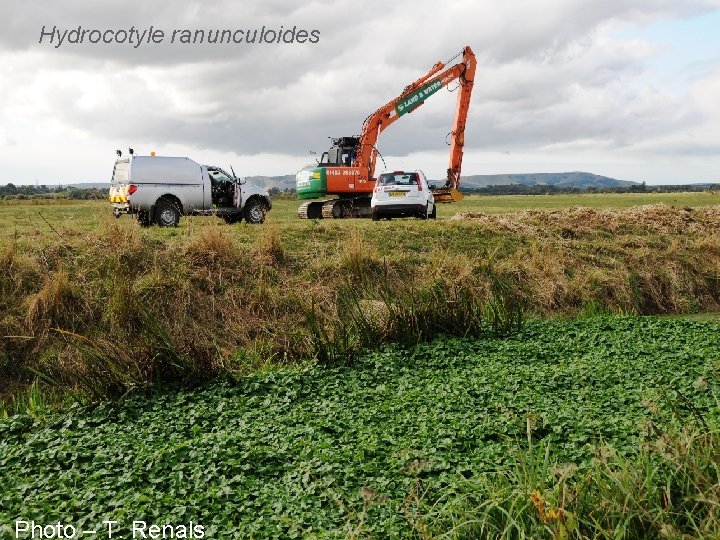
Hydrocotyle ranunculoides Photo – T. Renals
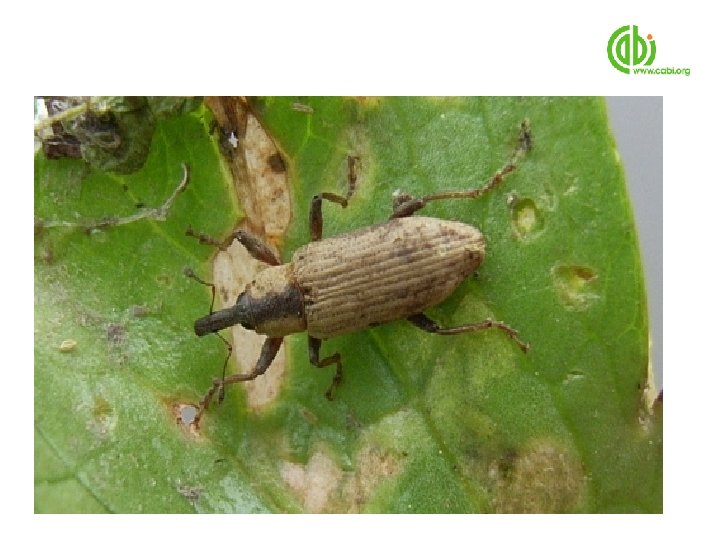
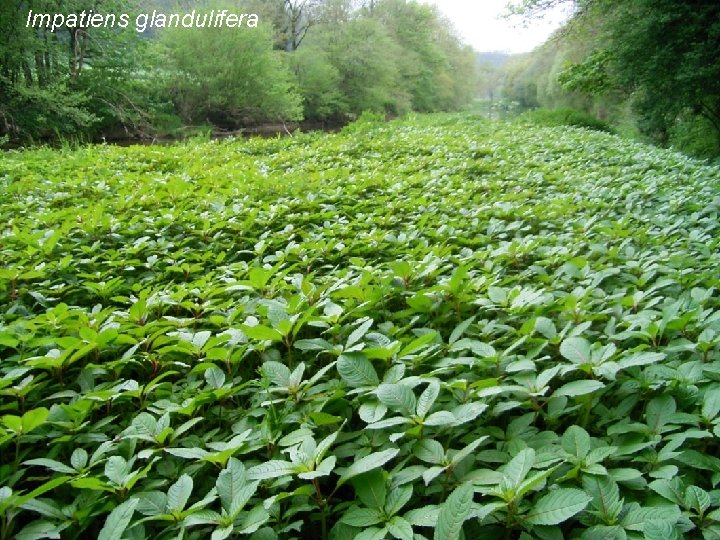
Impatiens glandulifera
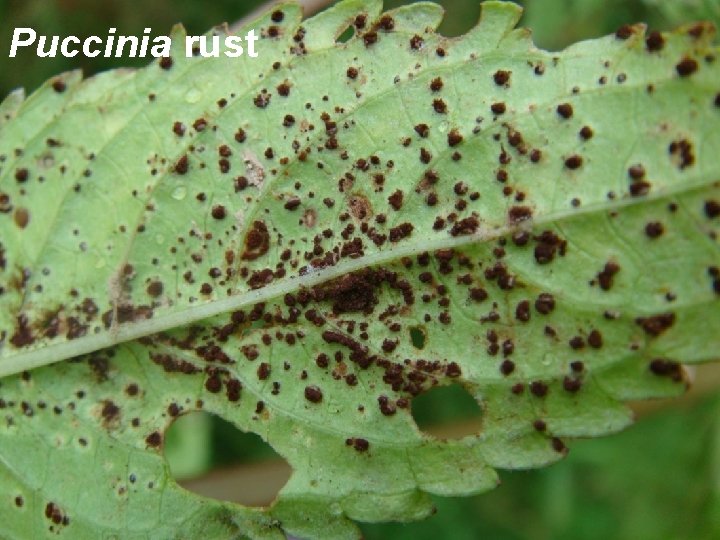
Puccinia rust
Thank you to all involved • Dr Harry Evans (CABI), • Dr Marion Seier & Dr Rob Reeder • Rob Tanner (CABI) • Djamila Djeddour (CABI) • Dr Carol Ellison • Drs Murphy, Cock and Holderness (CABI) • Ghislaine Cortat (CABI) • Dr Rene Eschen • Anna Harris • Sonal Varia • Corin Pratt • Alex Brook • Dr Esther Gerber • Valérie Coudrain & Sarah Bryner (CABI tudents) • Sasha White • Dr Paul Cannon and Dr Alan Buddie (CABI) • Linda Birken (Imperial College student) • Gareth Martin (Imperial College student) • James Broom (Imperial College student) • Dr John Bailey and Kat Pashley (Leicester University) • Dr Lois Child (Loughborough University) • Dr Andy Polaszek & others (NHM) • Professor Masami Takagi (Kyushu University) • Dr Daisuke Kurose (Kyushu University) • Dr Narutu Furuya (Kyushu University) • Dr Naoki Takahashi (Kyushu University) • Yuko Inoue (Kyushu University) • Dr Fritzi Grevstad (University of Washington) • Dr Bernd Blossey (Cornell University) • Dr Rob Bouchier (AAFC Canada) • Dr Brian Van Hezelwink (AAFC Canada) • Victoria Nuzzo (Independent Consultant) • Mic Julien (CSIRO) • Dr Andy Sheppard (CSIRO) • Dr Simon Fowler (Landcare Research NZ) • Drs Ted Centre & Gary Buckingham (Florida Uni) • Profs Mick Crawley &Tim Coulson (Imperial College) • Dr Willie Cabrera Walsh (SABCL) • Dr Jonathan Newman (CEH) • Dr Usha Dev (NBPGR) • Dr Ravi Kheterpal (NBPGR) • Dr Robin Adair (DPI Queensland) • Drs John Ireson & Richard Holloway (Utas) • Lindsay Smith (Landcare Research) • ACRE • FERA – many especially Dr Claire Sansford • Pesticide Safety Directorate • The Non Native Species Secretariat The Project Board and sponsors for funding and guidance

Thank You Any Questions?
- Slides: 43