
Japanese Internment Japanese Internment Fears following Pearl Harbor
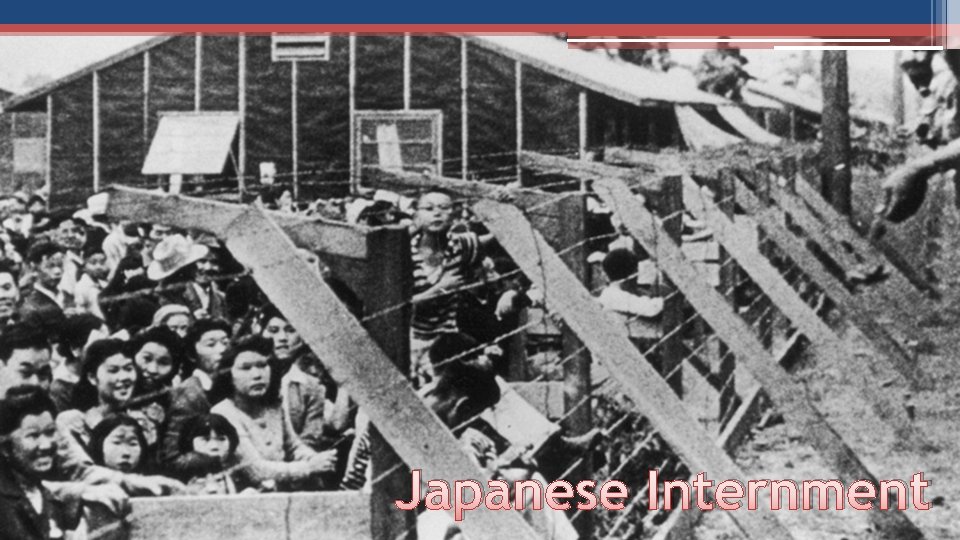
Japanese Internment
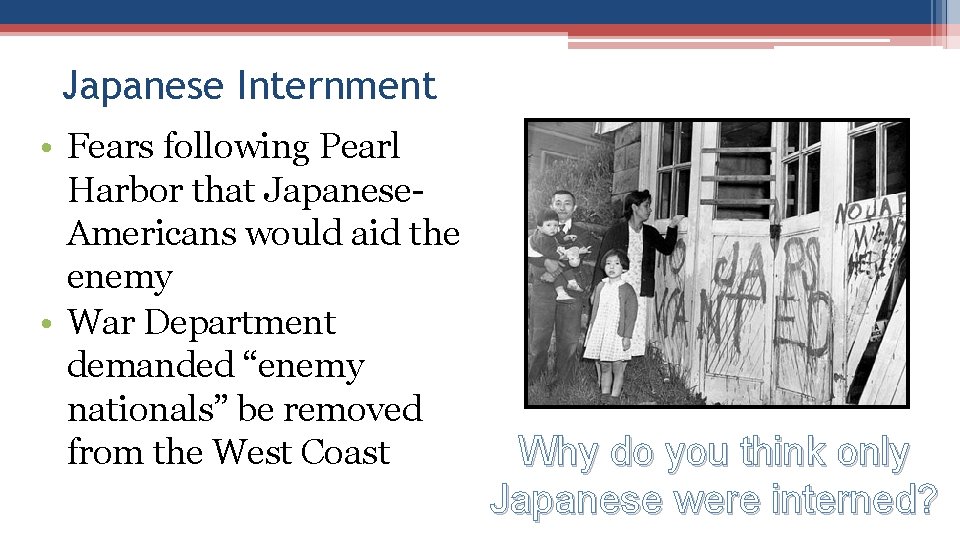
Japanese Internment • Fears following Pearl Harbor that Japanese. Americans would aid the enemy • War Department demanded “enemy nationals” be removed from the West Coast Why do you think only Japanese were interned?
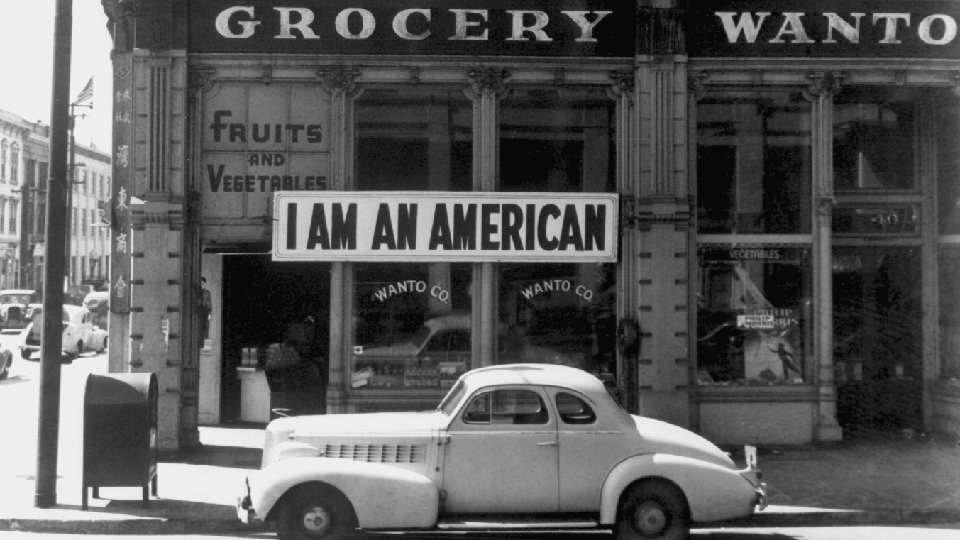
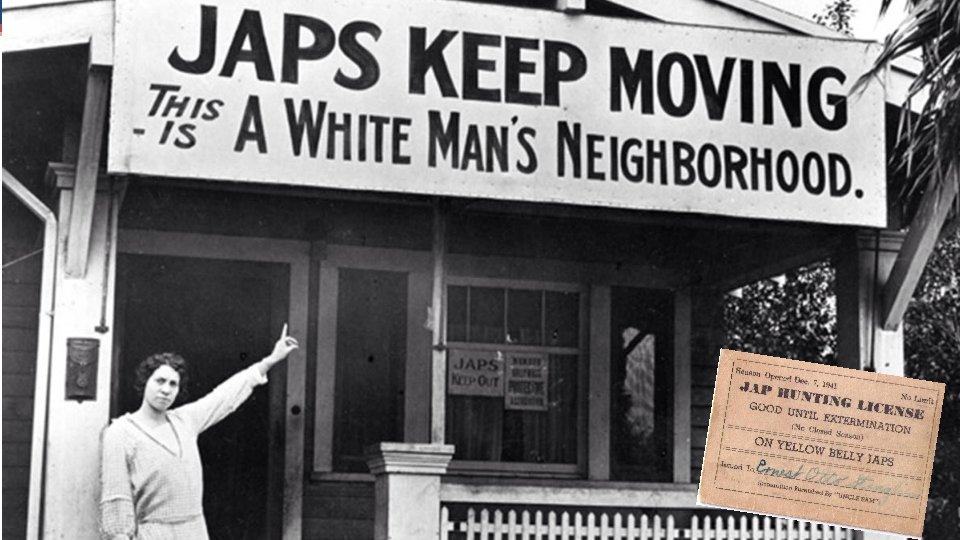
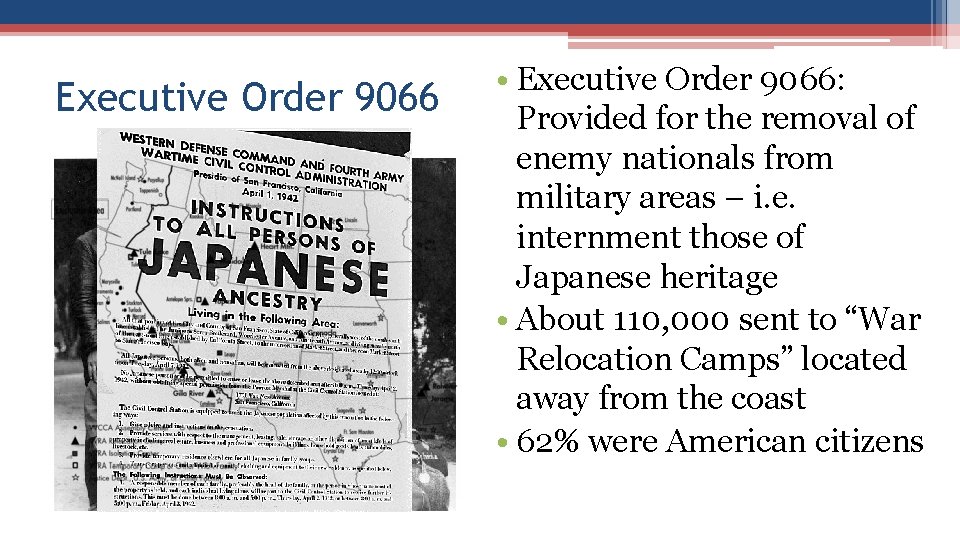
Executive Order 9066 • Executive Order 9066: Provided for the removal of enemy nationals from military areas – i. e. internment those of Japanese heritage • About 110, 000 sent to “War Relocation Camps” located away from the coast • 62% were American citizens
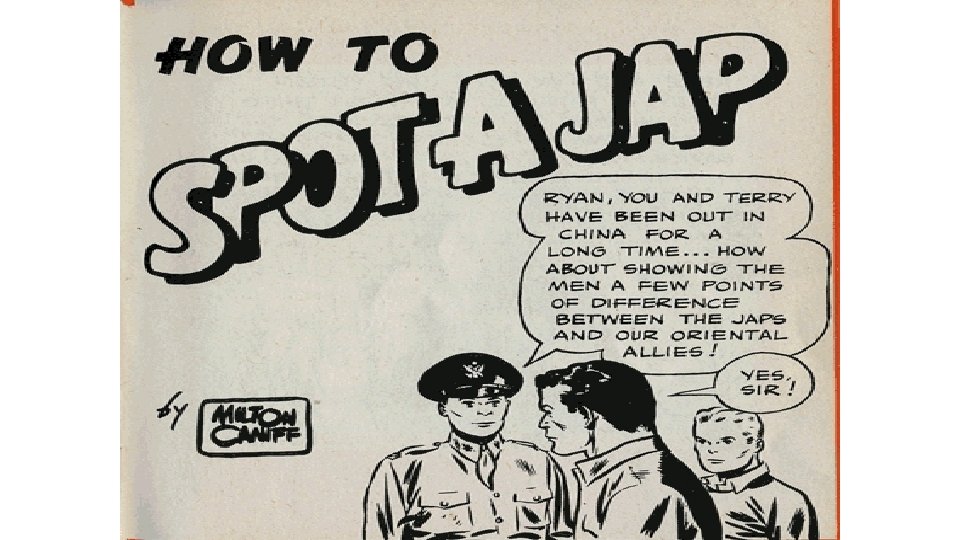
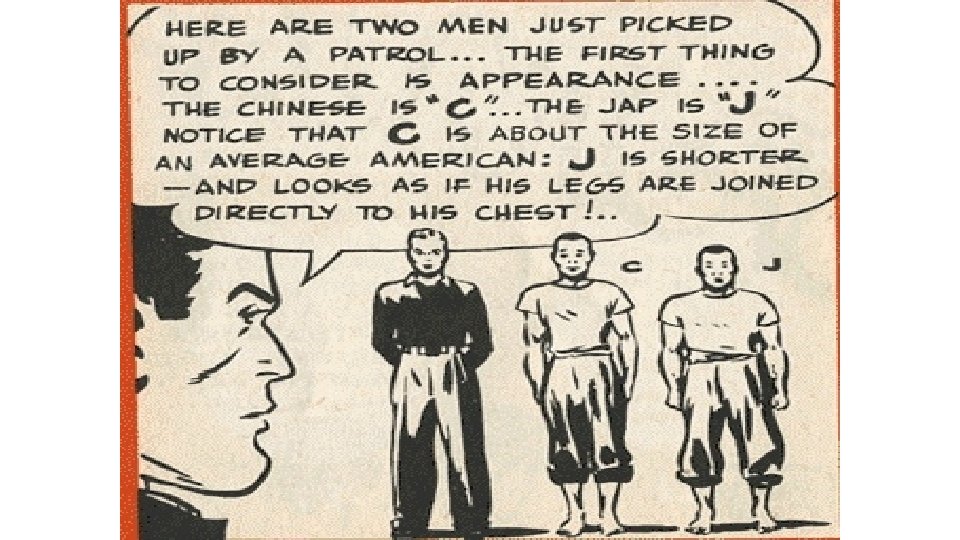
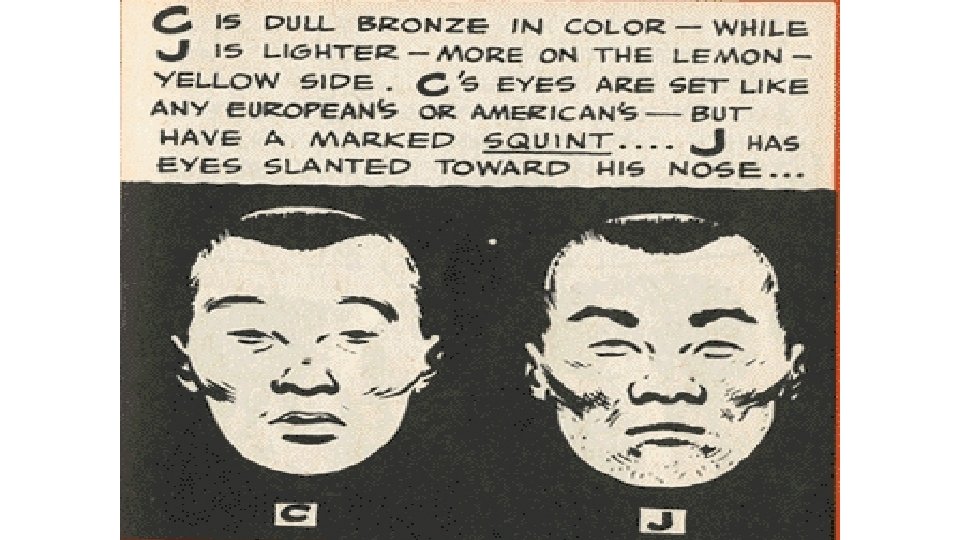
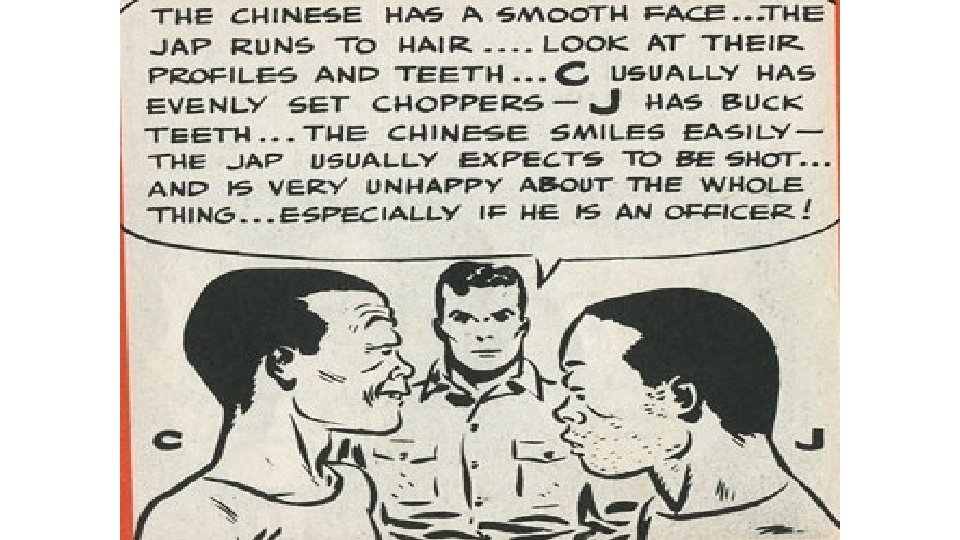
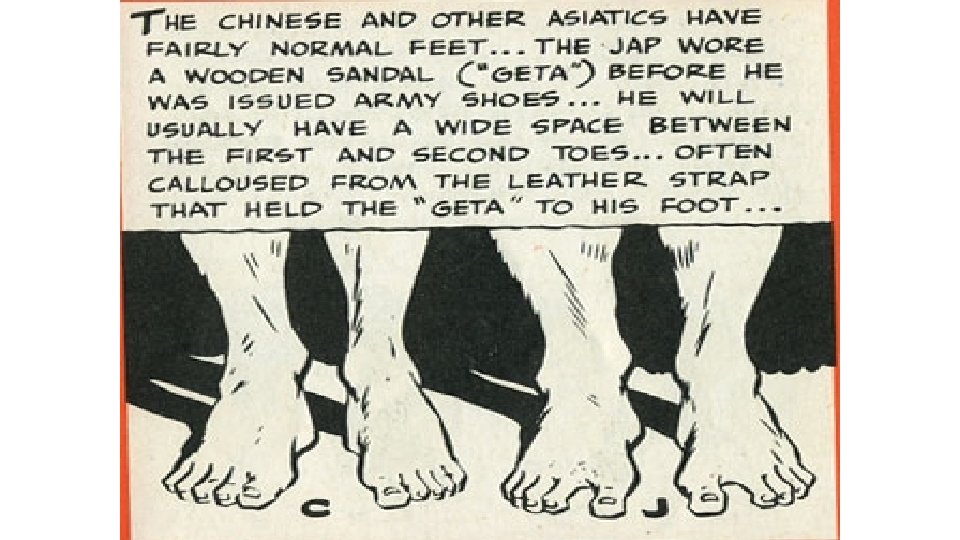
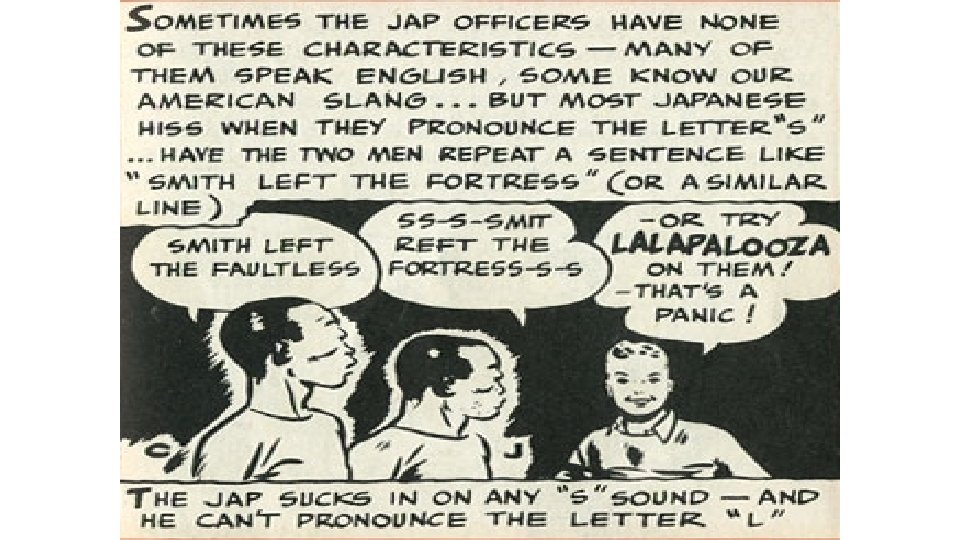
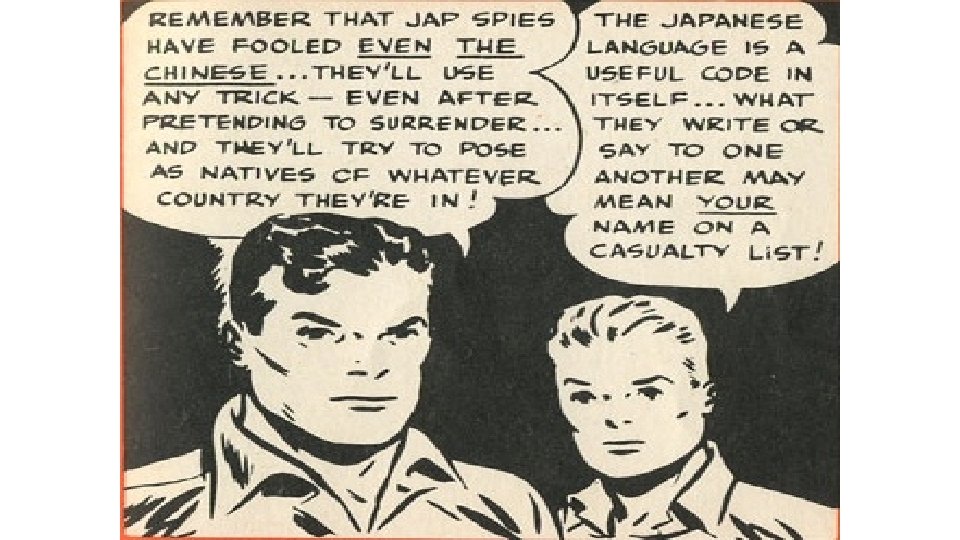
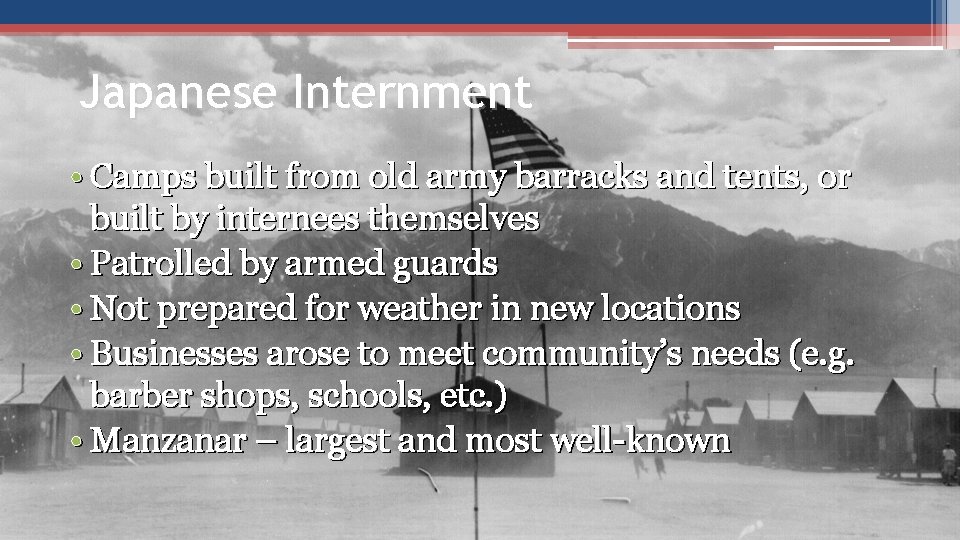
Japanese Internment • Camps built from old army barracks and tents, or built by internees themselves • Patrolled by armed guards • Not prepared for weather in new locations • Businesses arose to meet community’s needs (e. g. barber shops, schools, etc. ) • Manzanar – largest and most well-known
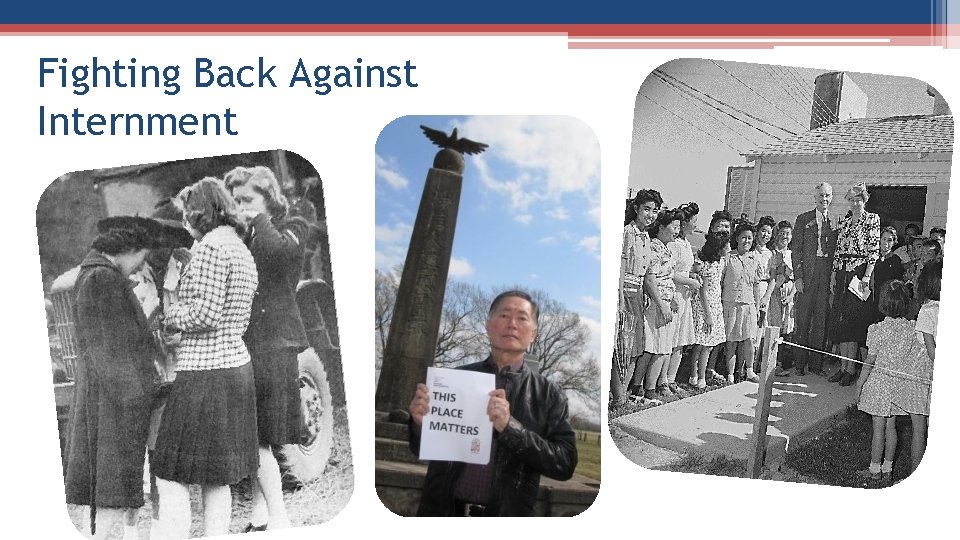
Fighting Back Against Internment
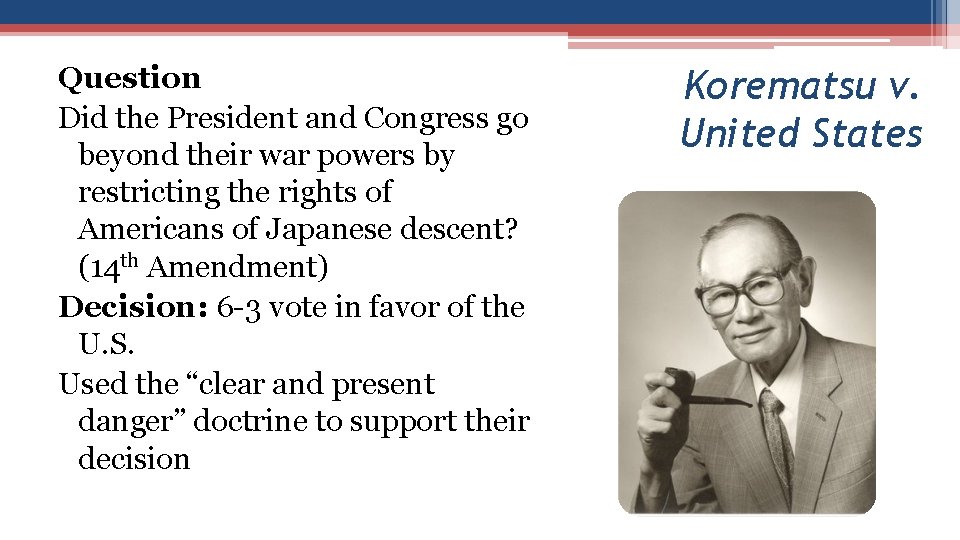
Question Did the President and Congress go beyond their war powers by restricting the rights of Americans of Japanese descent? (14 th Amendment) Decision: 6 -3 vote in favor of the U. S. Used the “clear and present danger” doctrine to support their decision Korematsu v. United States
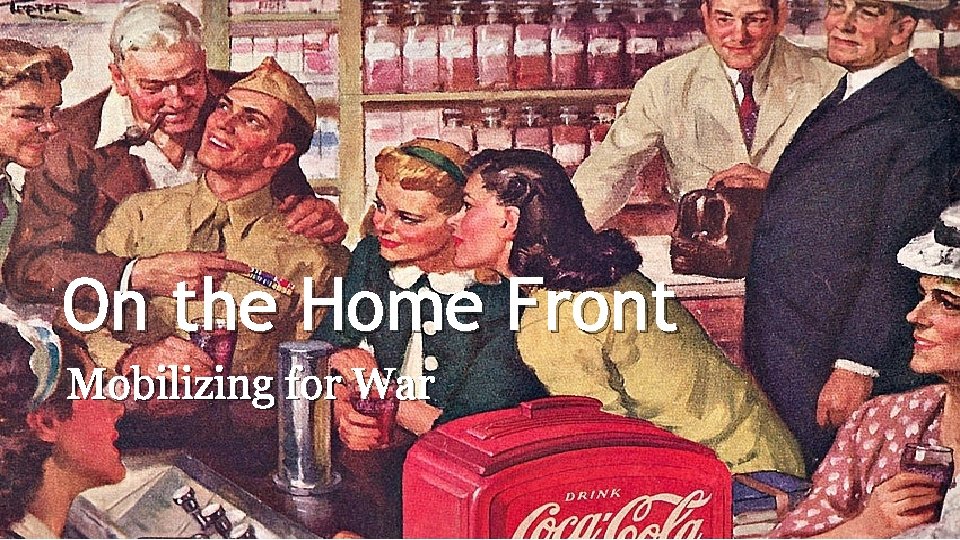
On the Home Front Mobilizing for War
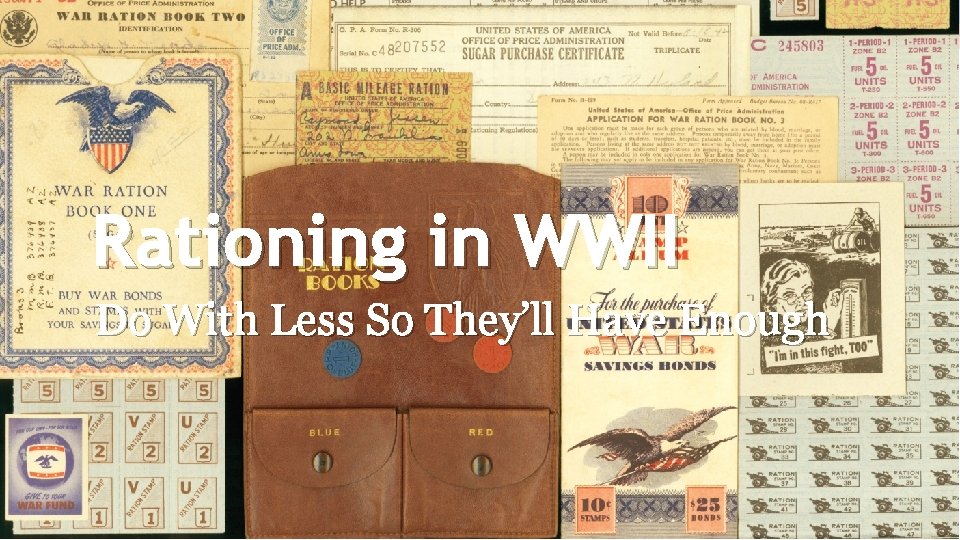
Rationing in WWII Do With Less So They’ll Have Enough
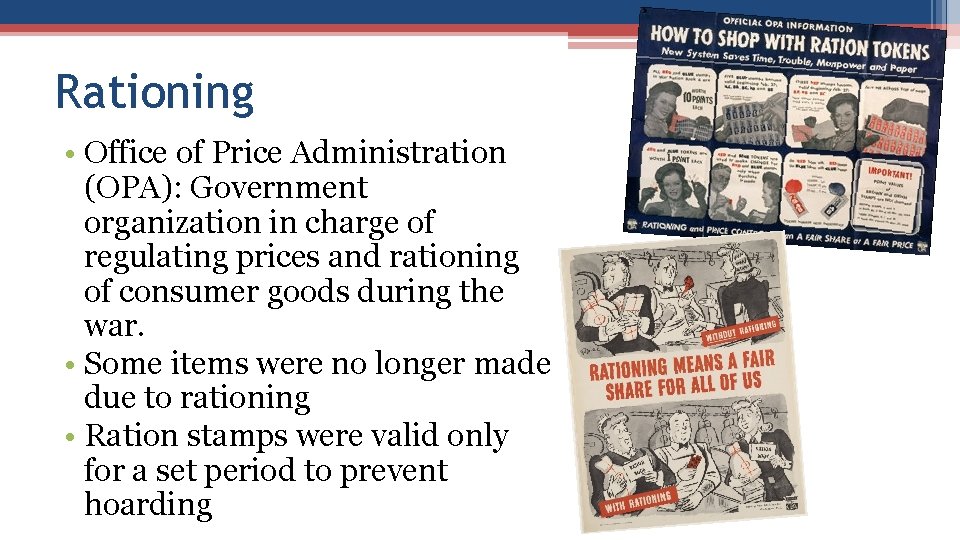
Rationing • Office of Price Administration (OPA): Government organization in charge of regulating prices and rationing of consumer goods during the war. • Some items were no longer made due to rationing • Ration stamps were valid only for a set period to prevent hoarding
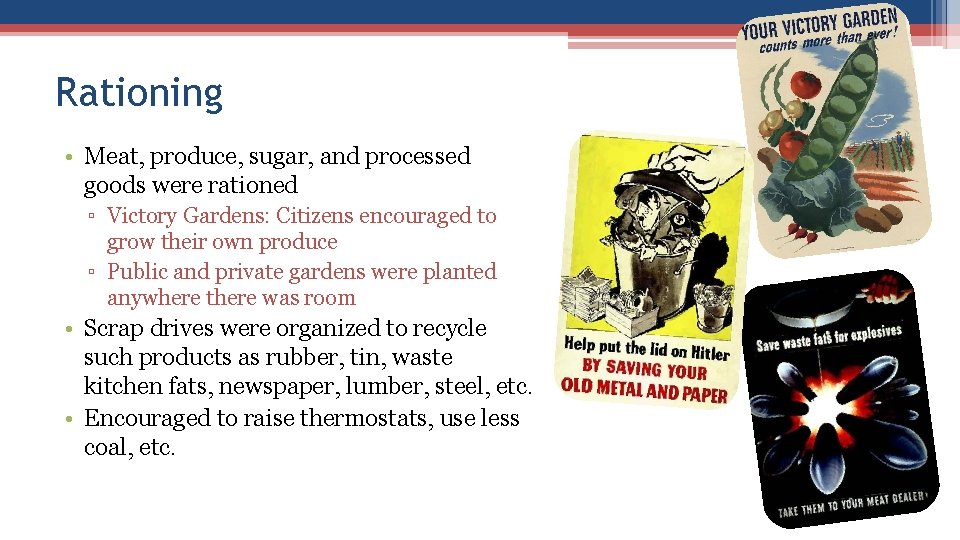
Rationing • Meat, produce, sugar, and processed goods were rationed ▫ Victory Gardens: Citizens encouraged to grow their own produce ▫ Public and private gardens were planted anywhere there was room • Scrap drives were organized to recycle such products as rubber, tin, waste kitchen fats, newspaper, lumber, steel, etc. • Encouraged to raise thermostats, use less coal, etc.
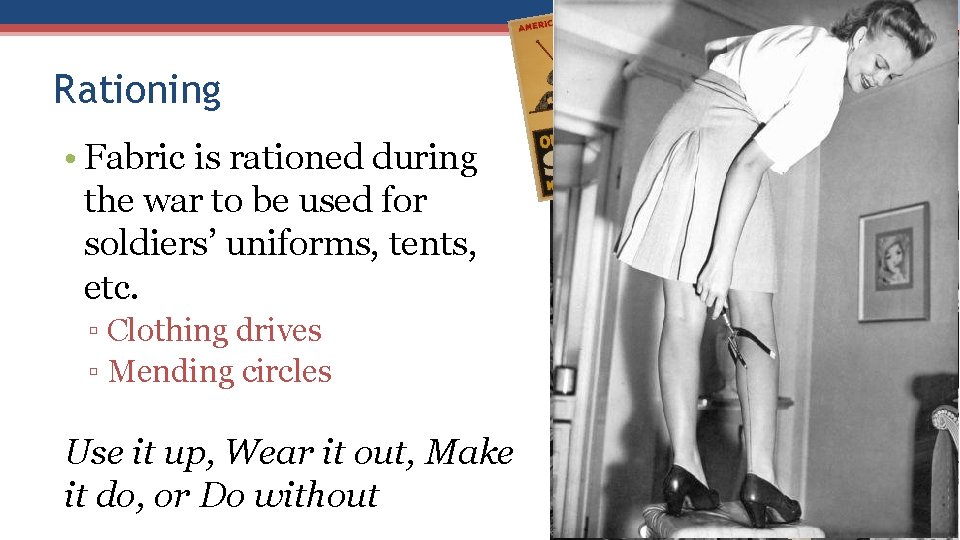
Rationing • Fabric is rationed during the war to be used for soldiers’ uniforms, tents, etc. ▫ Clothing drives ▫ Mending circles Use it up, Wear it out, Make it do, or Do without
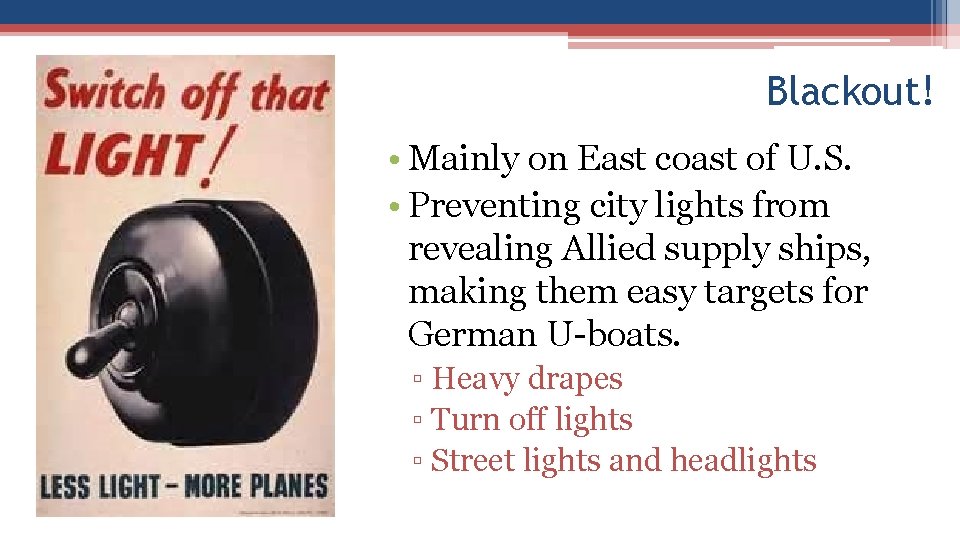
Blackout! • Mainly on East coast of U. S. • Preventing city lights from revealing Allied supply ships, making them easy targets for German U-boats. ▫ Heavy drapes ▫ Turn off lights ▫ Street lights and headlights

Rationing Challenge! Rationing was an integral part of home front support for the war. Citizens ability to purchase certain items were severely limited due to their need for the men fighting overseas. • As a group, you must create a menu for breakfast, lunch, and dinner. You should strive to create a menu that is both diverse and nutritious. • You must serve at least 1 fruit/vegetable, 1 grain/starch, 1 protein, and 1 beverage at every meal • You have a total of $5. 00 and 50 ration points • Certain items may last for multiple meals – if you’re unsure, ask! • The class will vote on the best ration menu. The winning menu will receive 5 points extra credit on this assignment!
- Slides: 23