
Japanese Feudalism Topic 12 Lesson 5 9 th

- Slides: 11
Japanese Feudalism Topic 12, Lesson 5 9 th Grade World History
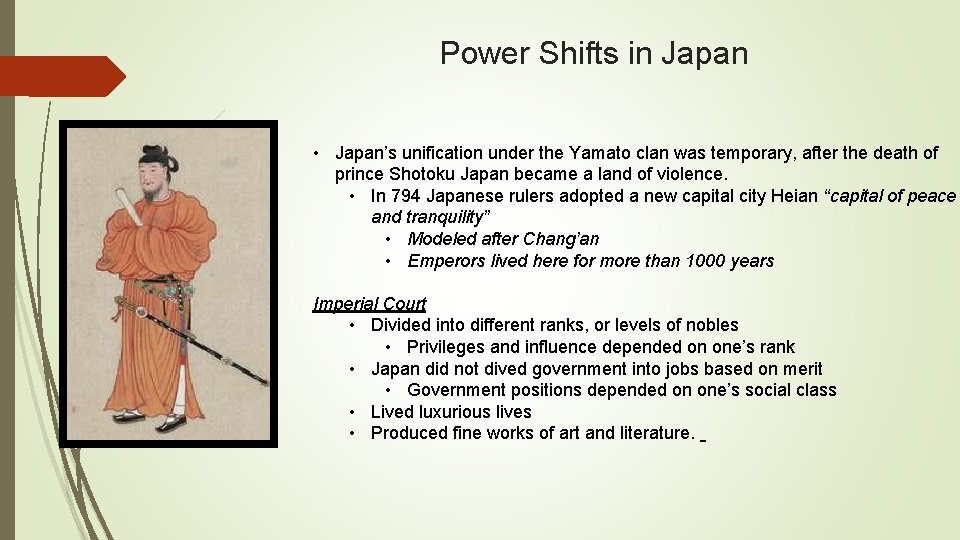
Power Shifts in Japan • Japan’s unification under the Yamato clan was temporary, after the death of prince Shotoku Japan became a land of violence. • In 794 Japanese rulers adopted a new capital city Heian “capital of peace and tranquility” • Modeled after Chang’an • Emperors lived here for more than 1000 years Imperial Court • Divided into different ranks, or levels of nobles • Privileges and influence depended on one’s rank • Japan did not dived government into jobs based on merit • Government positions depended on one’s social class • Lived luxurious lives • Produced fine works of art and literature.
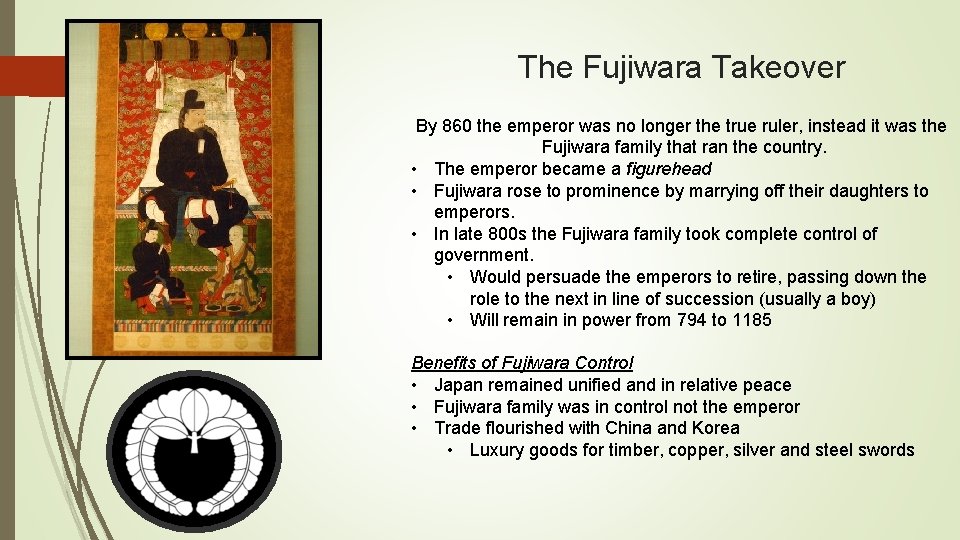
The Fujiwara Takeover By 860 the emperor was no longer the true ruler, instead it was the Fujiwara family that ran the country. • The emperor became a figurehead • Fujiwara rose to prominence by marrying off their daughters to emperors. • In late 800 s the Fujiwara family took complete control of government. • Would persuade the emperors to retire, passing down the role to the next in line of succession (usually a boy) • Will remain in power from 794 to 1185 Benefits of Fujiwara Control • Japan remained unified and in relative peace • Fujiwara family was in control not the emperor • Trade flourished with China and Korea • Luxury goods for timber, copper, silver and steel swords
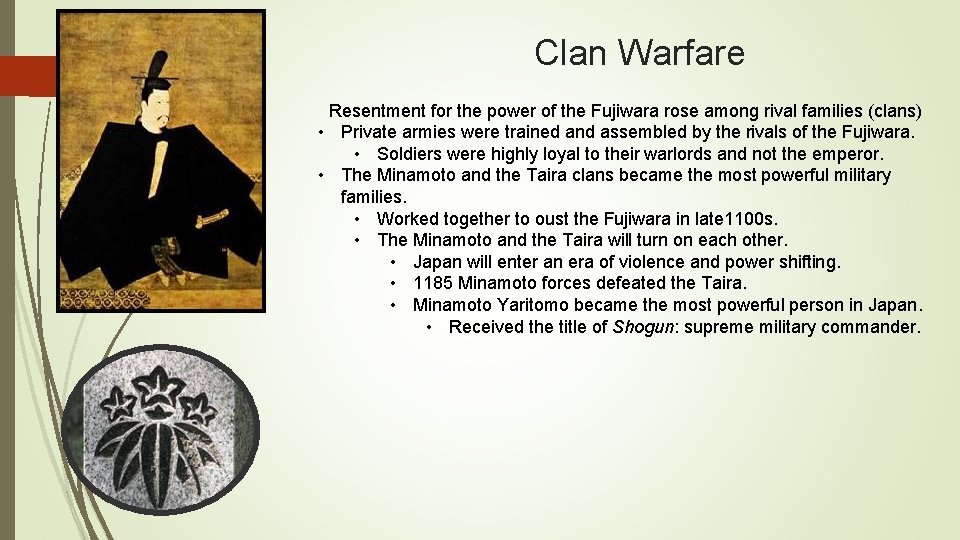
Clan Warfare Resentment for the power of the Fujiwara rose among rival families (clans) • Private armies were trained and assembled by the rivals of the Fujiwara. • Soldiers were highly loyal to their warlords and not the emperor. • The Minamoto and the Taira clans became the most powerful military families. • Worked together to oust the Fujiwara in late 1100 s. • The Minamoto and the Taira will turn on each other. • Japan will enter an era of violence and power shifting. • 1185 Minamoto forces defeated the Taira. • Minamoto Yaritomo became the most powerful person in Japan. • Received the title of Shogun: supreme military commander.
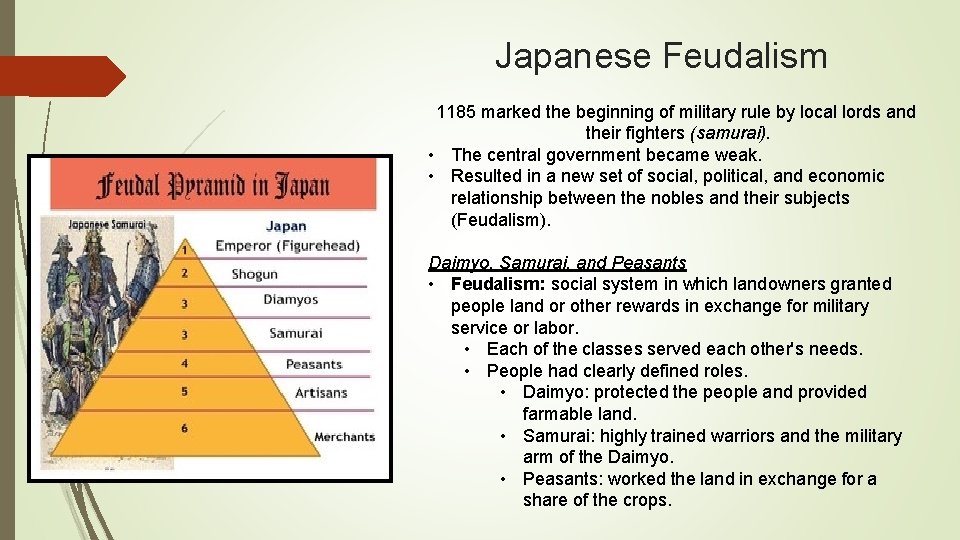
Japanese Feudalism 1185 marked the beginning of military rule by local lords and their fighters (samurai). • The central government became weak. • Resulted in a new set of social, political, and economic relationship between the nobles and their subjects (Feudalism). Daimyo, Samurai, and Peasants • Feudalism: social system in which landowners granted people land or other rewards in exchange for military service or labor. • Each of the classes served each other's needs. • People had clearly defined roles. • Daimyo: protected the people and provided farmable land. • Samurai: highly trained warriors and the military arm of the Daimyo. • Peasants: worked the land in exchange for a share of the crops.
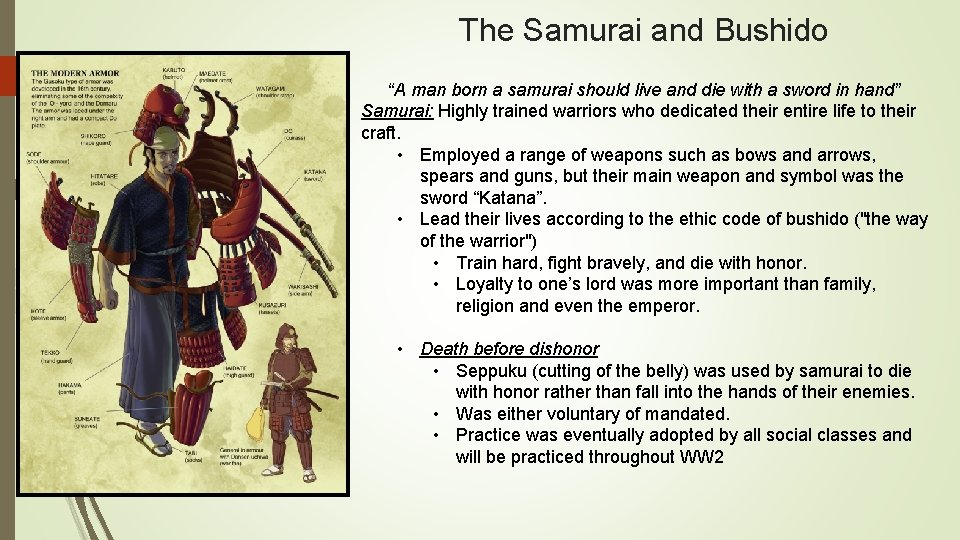
The Samurai and Bushido “A man born a samurai should live and die with a sword in hand” Samurai: Highly trained warriors who dedicated their entire life to their craft. • Employed a range of weapons such as bows and arrows, spears and guns, but their main weapon and symbol was the sword “Katana”. • Lead their lives according to the ethic code of bushido ("the way of the warrior") • Train hard, fight bravely, and die with honor. • Loyalty to one’s lord was more important than family, religion and even the emperor. • Death before dishonor • Seppuku (cutting of the belly) was used by samurai to die with honor rather than fall into the hands of their enemies. • Was either voluntary of mandated. • Practice was eventually adopted by all social classes and will be practiced throughout WW 2
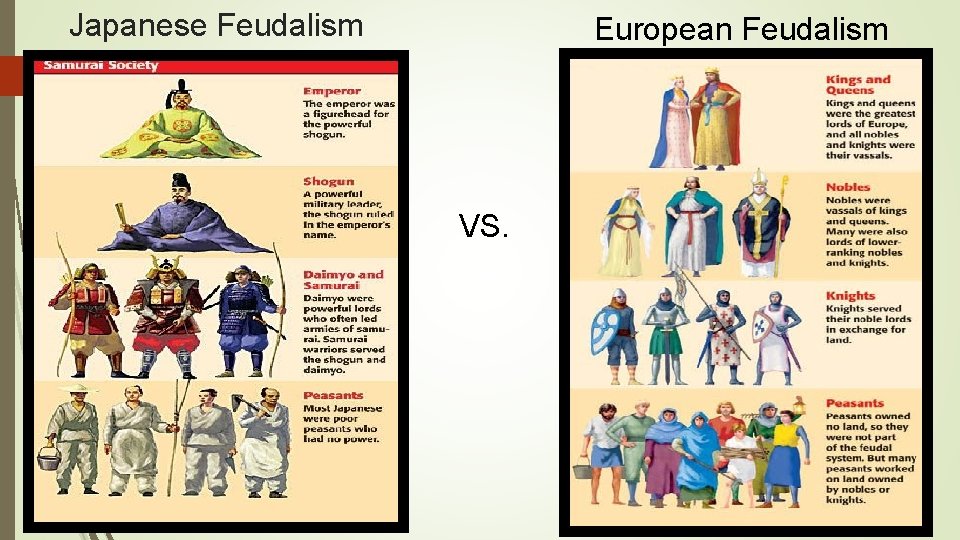
Japanese Feudalism European Feudalism VS.
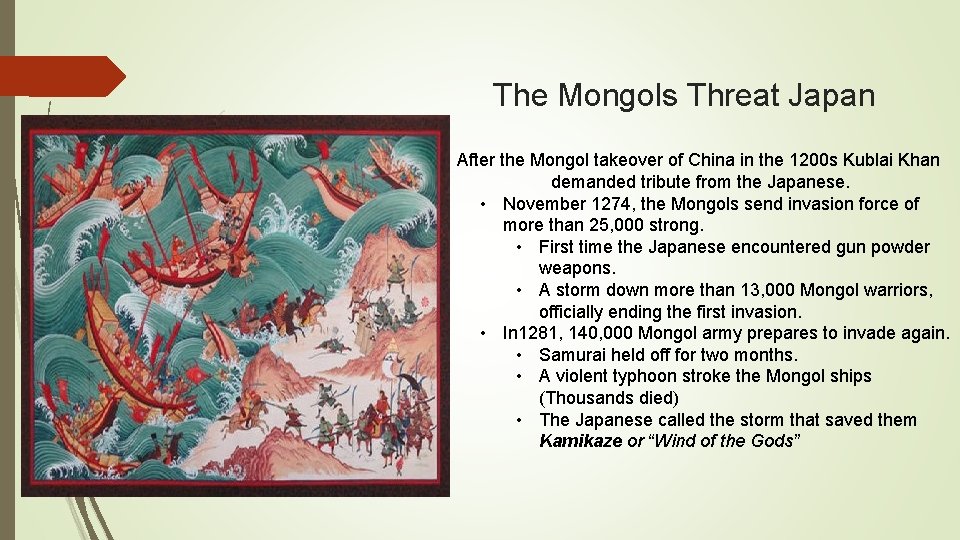
The Mongols Threat Japan After the Mongol takeover of China in the 1200 s Kublai Khan demanded tribute from the Japanese. • November 1274, the Mongols send invasion force of more than 25, 000 strong. • First time the Japanese encountered gun powder weapons. • A storm down more than 13, 000 Mongol warriors, officially ending the first invasion. • In 1281, 140, 000 Mongol army prepares to invade again. • Samurai held off for two months. • A violent typhoon stroke the Mongol ships (Thousands died) • The Japanese called the storm that saved them Kamikaze or “Wind of the Gods”
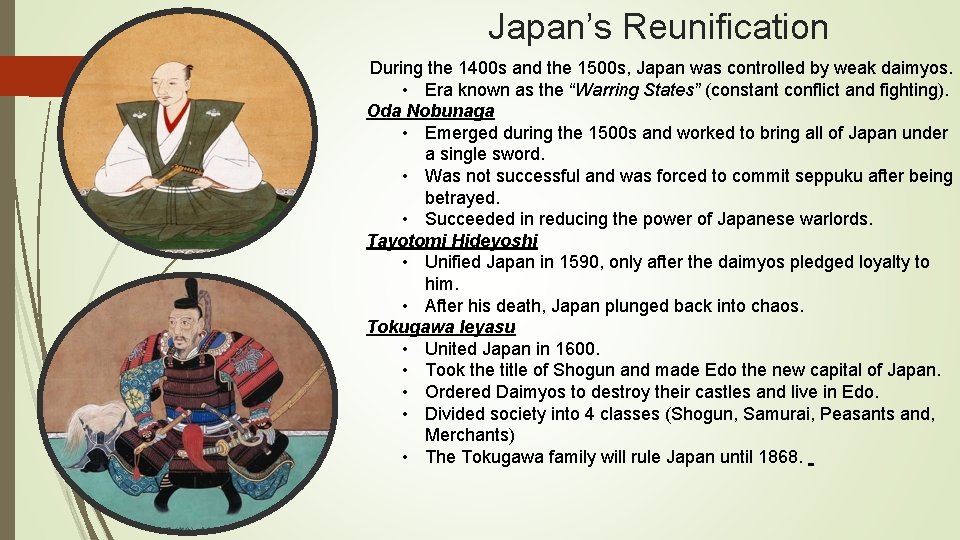
Japan’s Reunification During the 1400 s and the 1500 s, Japan was controlled by weak daimyos. • Era known as the “Warring States” (constant conflict and fighting). Oda Nobunaga • Emerged during the 1500 s and worked to bring all of Japan under a single sword. • Was not successful and was forced to commit seppuku after being betrayed. • Succeeded in reducing the power of Japanese warlords. Tayotomi Hideyoshi • Unified Japan in 1590, only after the daimyos pledged loyalty to him. • After his death, Japan plunged back into chaos. Tokugawa Ieyasu • United Japan in 1600. • Took the title of Shogun and made Edo the new capital of Japan. • Ordered Daimyos to destroy their castles and live in Edo. • Divided society into 4 classes (Shogun, Samurai, Peasants and, Merchants) • The Tokugawa family will rule Japan until 1868.
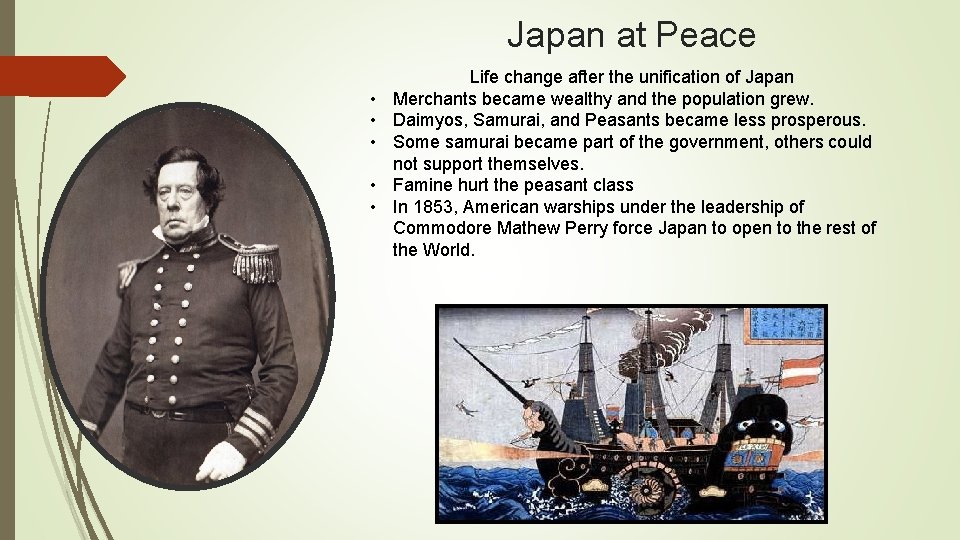
Japan at Peace • • • Life change after the unification of Japan Merchants became wealthy and the population grew. Daimyos, Samurai, and Peasants became less prosperous. Some samurai became part of the government, others could not support themselves. Famine hurt the peasant class In 1853, American warships under the leadership of Commodore Mathew Perry force Japan to open to the rest of the World.