
Japanese Experience on Bridging Studies through PMDECs Reviews

Japanese Experience on Bridging Studies through PMDEC’s Reviews of NDAs National Institute of Health Sciences PMDEC (Pharmaceuticals and Medical Devices Evaluation Center) Evaluation Division II Yasuhiro Fujiwara MD, Ph. D 2001/10/22 2 nd Kitasato-Harvard Symopium
Standard Disclaimer “This is not an official MHLW/PMDEC guidance or policy statement. No official support of endorsement by MHLW/PMDEC is intended or should be inferred. ”
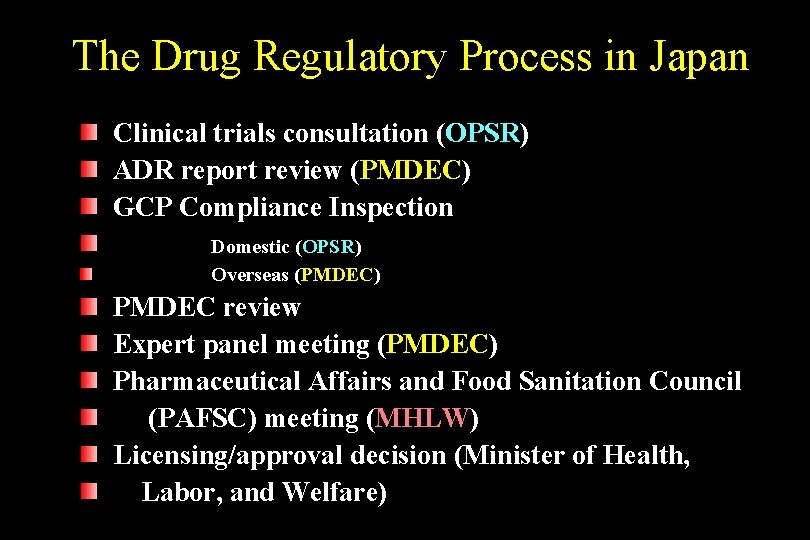
The Drug Regulatory Process in Japan Clinical trials consultation (OPSR) ADR report review (PMDEC) GCP Compliance Inspection Domestic (OPSR) Overseas (PMDEC) PMDEC review Expert panel meeting (PMDEC) Pharmaceutical Affairs and Food Sanitation Council (PAFSC) meeting (MHLW) Licensing/approval decision (Minister of Health, Labor, and Welfare)

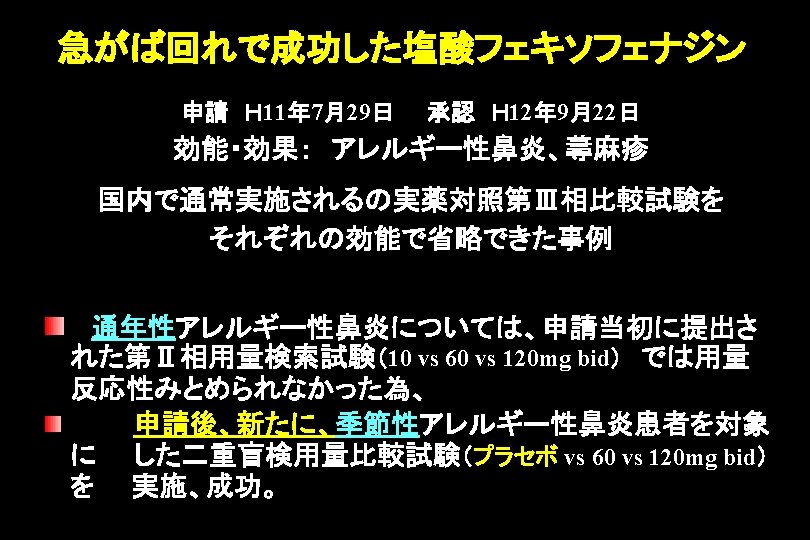
Drugs Approved with a Prospectively Conceptualized Bridging Strategy during Clinical Development As of October 22, 2001 fexofenadine oseltamivir anastrozole sumatriptan zolmitriptan September 22, 2000 approved on December 12, 2000 approved on December 22, 2000 approved on June 20, 2001 approved on
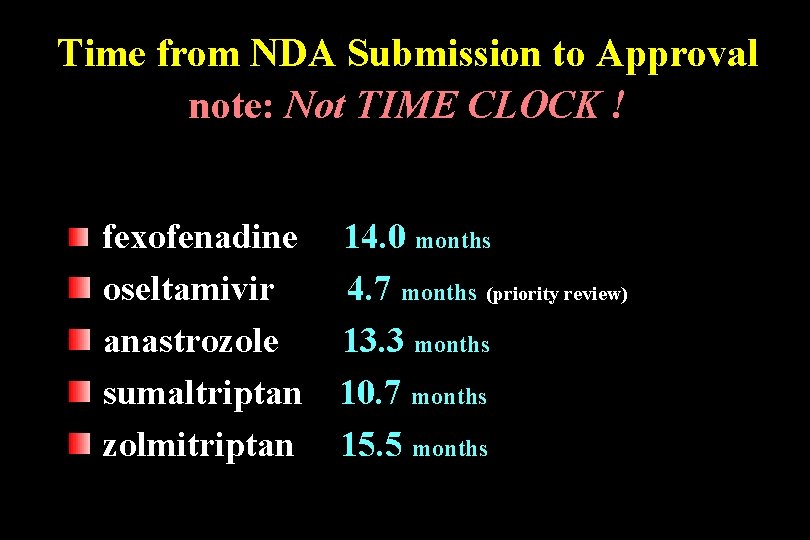
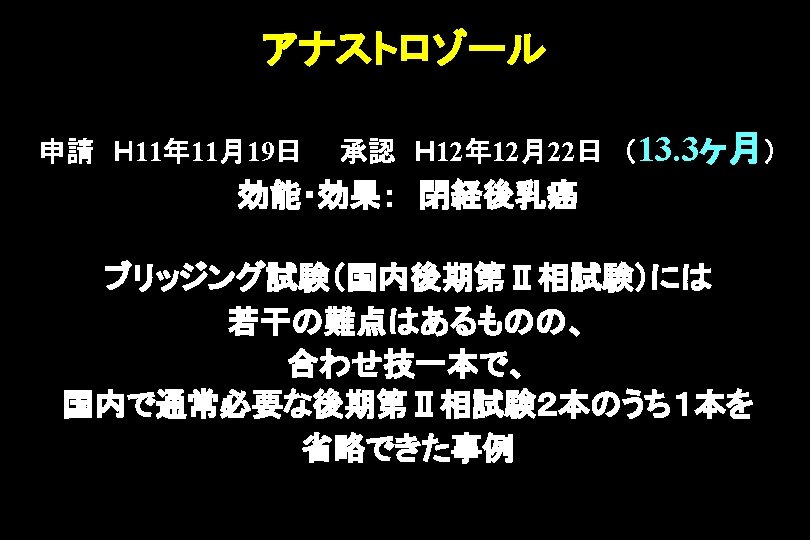
Time from NDA Submission to Approval note: Not TIME CLOCK ! fexofenadine oseltamivir anastrozole sumaltriptan zolmitriptan 14. 0 months 4. 7 months (priority review) 13. 3 months 10. 7 months 15. 5 months
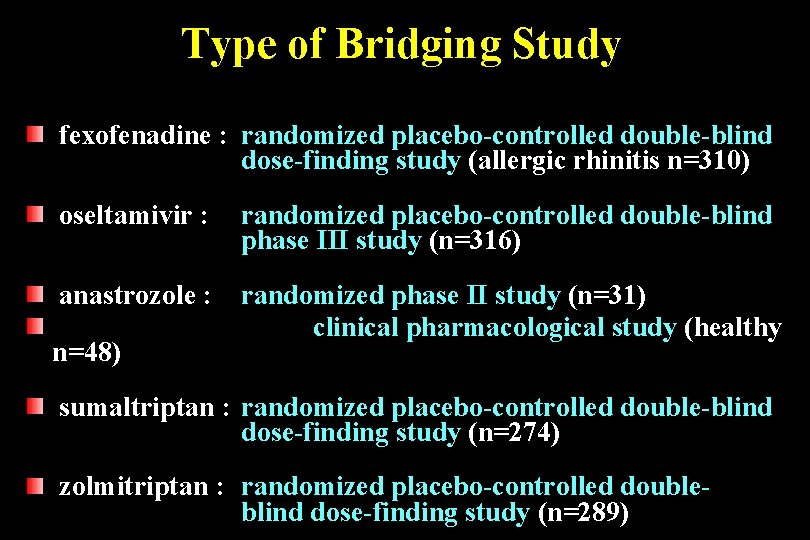
Type of Bridging Study fexofenadine : randomized placebo-controlled double-blind dose-finding study (allergic rhinitis n=310) oseltamivir : randomized placebo-controlled double-blind phase III study (n=316) anastrozole : randomized phase II study (n=31) clinical pharmacological study (healthy n=48) sumaltriptan : randomized placebo-controlled double-blind dose-finding study (n=274) zolmitriptan : randomized placebo-controlled doubleblind dose-finding study (n=289)
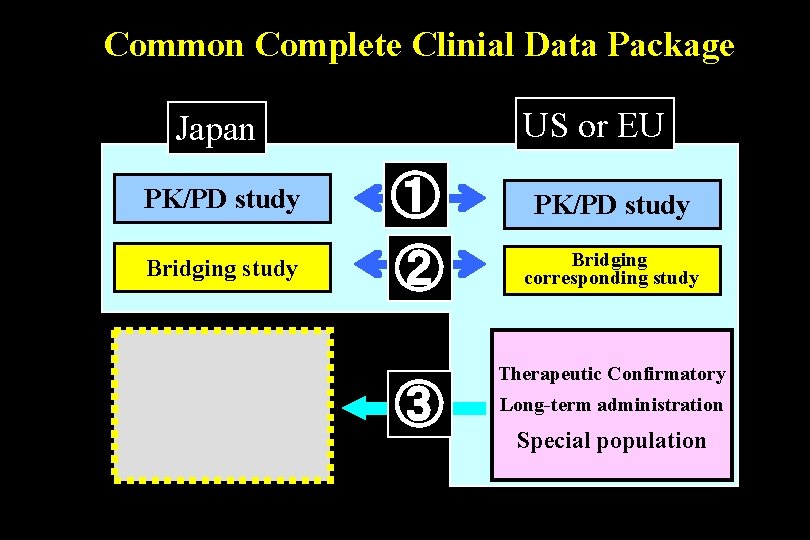
Common Complete Clinial Data Package US or EU Japan PK/PD study ① PK/PD study Bridging study ② Bridging corresponding study ③ Therapeutic Confirmatory Long-term administration Special population

FEXOFENADINE
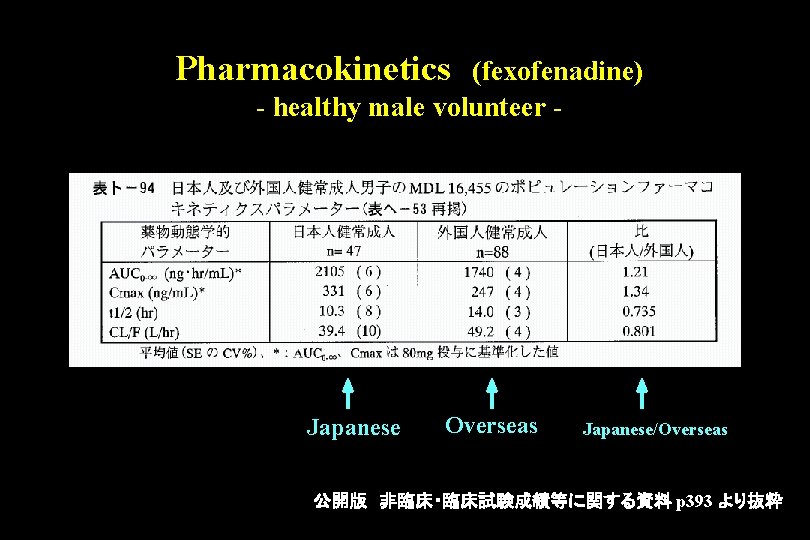
Pharmacokinetics (fexofenadine) - healthy male volunteer - Japanese Overseas Japanese/Overseas 公開版 非臨床・臨床試験成績等に関する資料 p 393 より抜粋
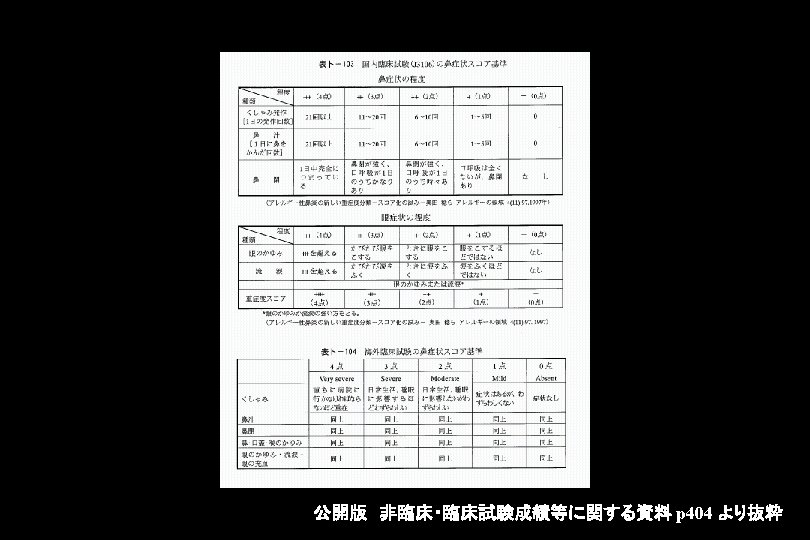
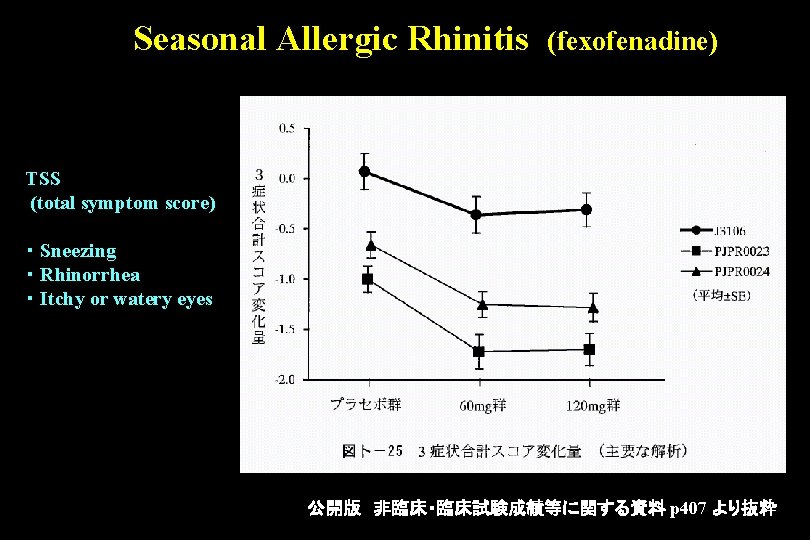
Seasonal Allergic Rhinitis (fexofenadine) TSS (total symptom score) ・ Sneezing ・ Rhinorrhea ・ Itchy or watery eyes 公開版 非臨床・臨床試験成績等に関する資料 p 407 より抜粋

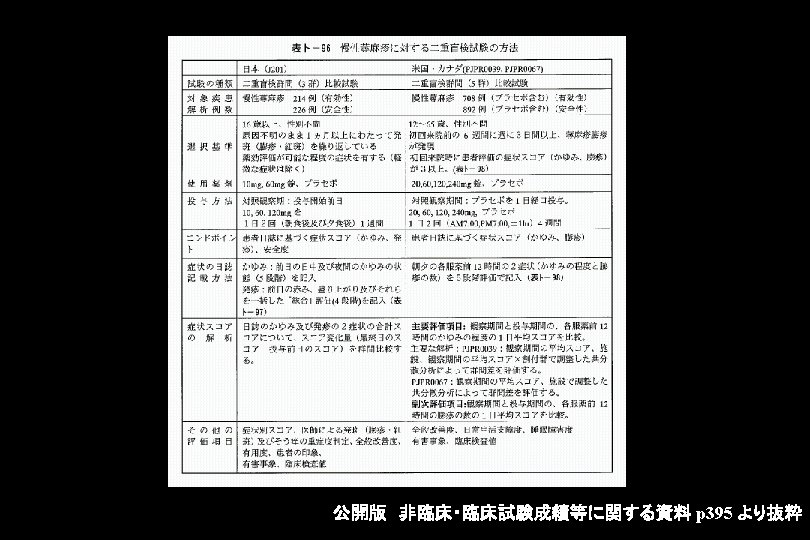
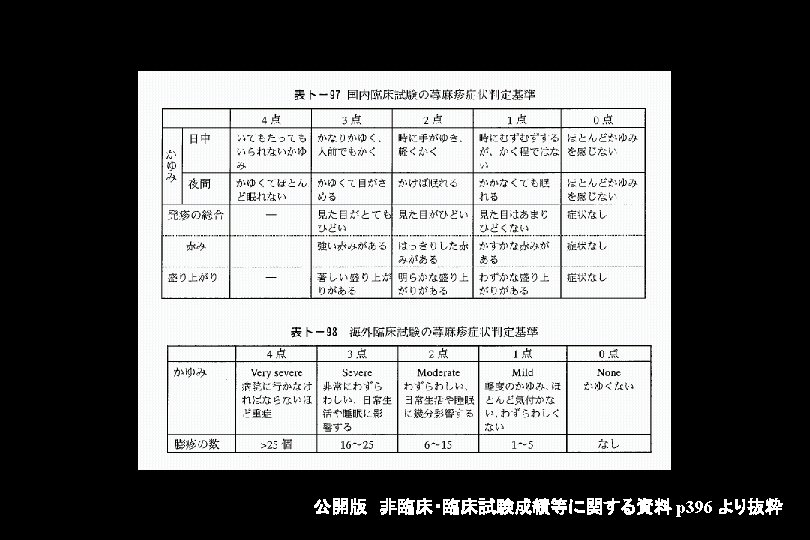
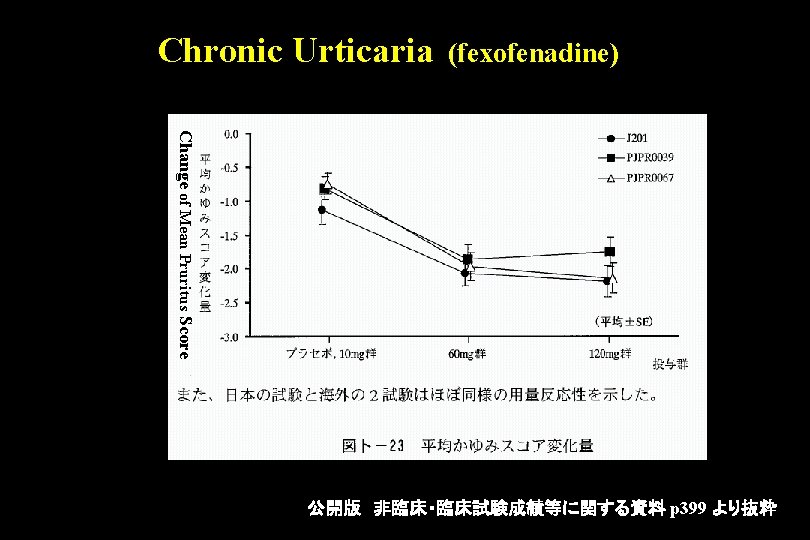
Chronic Urticaria (fexofenadine) Change of Mean Pruritus Score 公開版 非臨床・臨床試験成績等に関する資料 p 399 より抜粋


SUMATRIPTAN
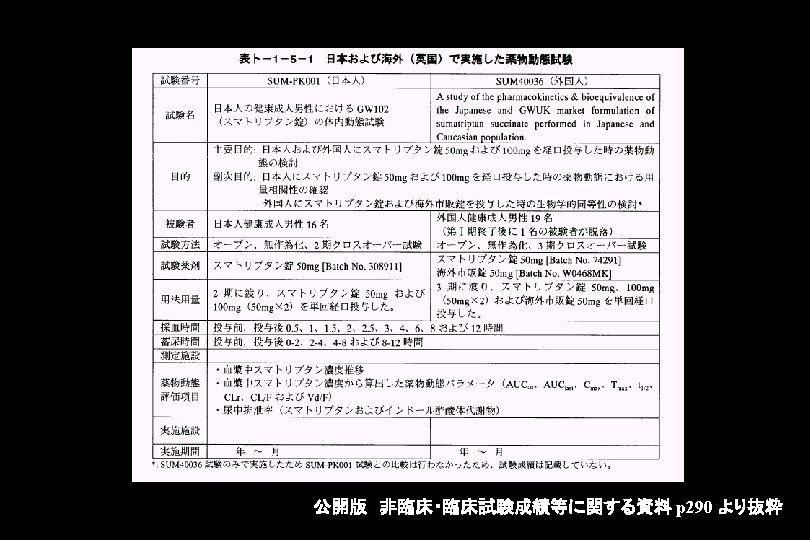
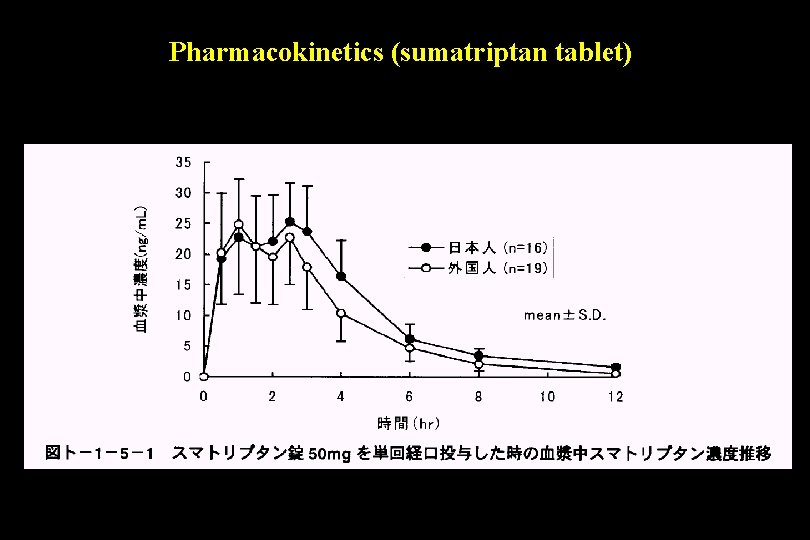
Pharmacokinetics (sumatriptan tablet)
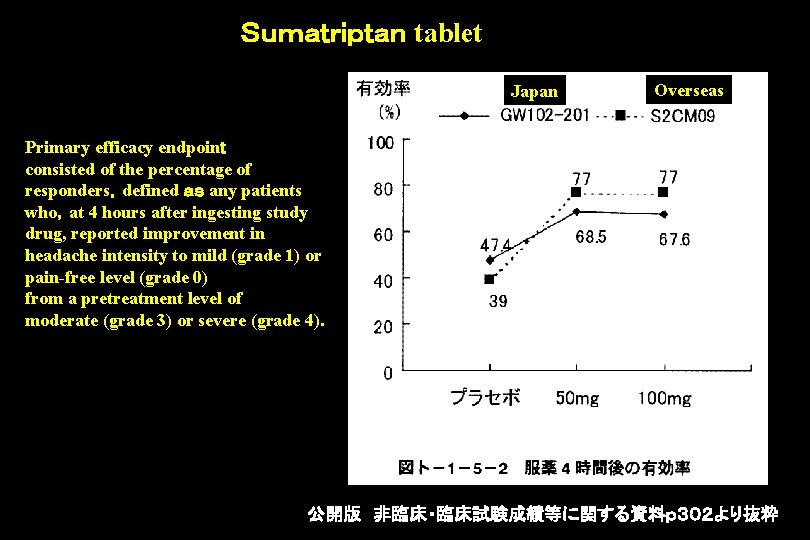
Sumatriptan tablet Japan Overseas Primary efficacy endpoint consisted of the percentage of responders,defined as any patients who,at 4 hours after ingesting study drug, reported improvement in headache intensity to mild (grade 1) or pain-free level (grade 0) from a pretreatment level of moderate (grade 3) or severe (grade 4). 公開版 非臨床・臨床試験成績等に関する資料p302より抜粋

ANASTROZOLE
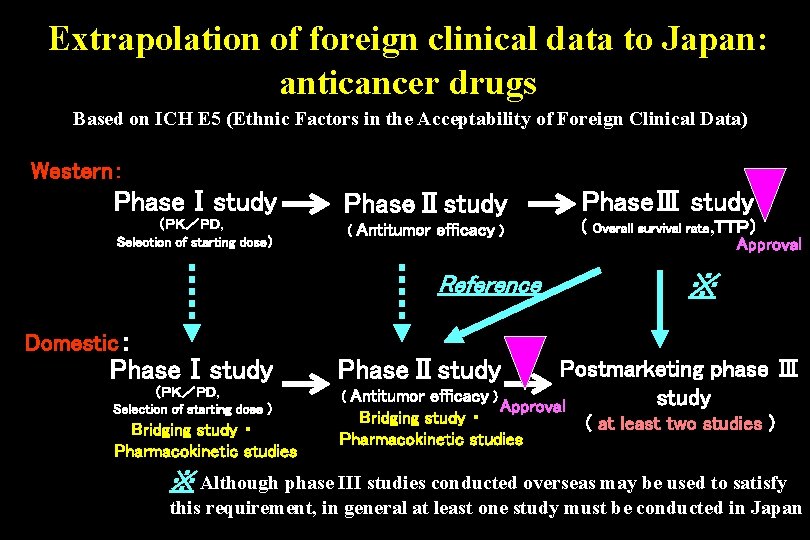
Extrapolation of foreign clinical data to Japan: anticancer drugs Based on ICH E 5 (Ethnic Factors in the Acceptability of Foreign Clinical Data) Western: PhaseⅠstudy PhaseⅡstudy PhaseⅢ study (PK/PD, Selection of starting dose) ( Antitumor ( Overall survival rate, TTP) Approval efficacy ) Reference ※ Domestic: PhaseⅠstudy (PK/PD, Selection of starting dose ) Bridging study ・ Pharmacokinetic studies PhaseⅡstudy Postmarketing phase Ⅲ ( Antitumor efficacy ) study Approval Bridging study ・ Pharmacokinetic studies ( at least two studies ) ※ Although phase III studies conducted overseas may be used to satisfy this requirement, in general at least one study must be conducted in Japan
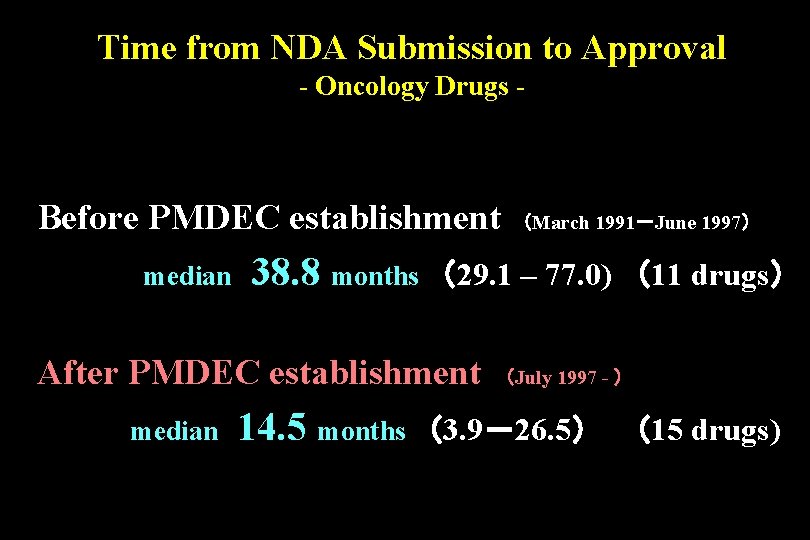
Time from NDA Submission to Approval - Oncology Drugs - Before PMDEC establishment (March 1991-June 1997) median 38. 8 months (29. 1 – 77. 0) (11 drugs) After PMDEC establishment (July 1997 - ) median 14. 5 months (3. 9-26. 5) (15 drugs)
アナストロゾールのcomplete clinical data package 審査センターの解釈
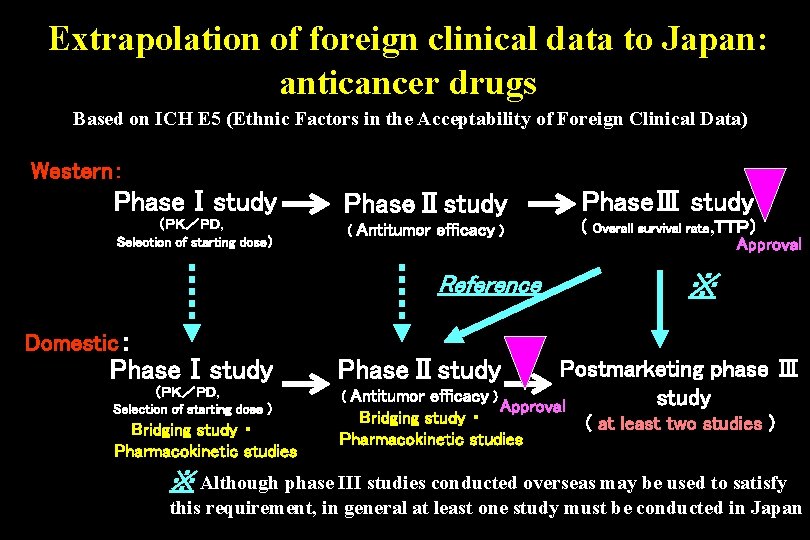
Extrapolation of foreign clinical data to Japan: anticancer drugs Based on ICH E 5 (Ethnic Factors in the Acceptability of Foreign Clinical Data) Western: PhaseⅠstudy PhaseⅡstudy PhaseⅢ study (PK/PD, Selection of starting dose) ( Antitumor ( Overall survival rate, TTP) Approval efficacy ) Reference ※ Domestic: PhaseⅠstudy (PK/PD, Selection of starting dose ) Bridging study ・ Pharmacokinetic studies PhaseⅡstudy Postmarketing phase Ⅲ ( Antitumor efficacy ) study Approval Bridging study ・ Pharmacokinetic studies ( at least two studies ) ※ Although phase III studies conducted overseas may be used to satisfy this requirement, in general at least one study must be conducted in Japan
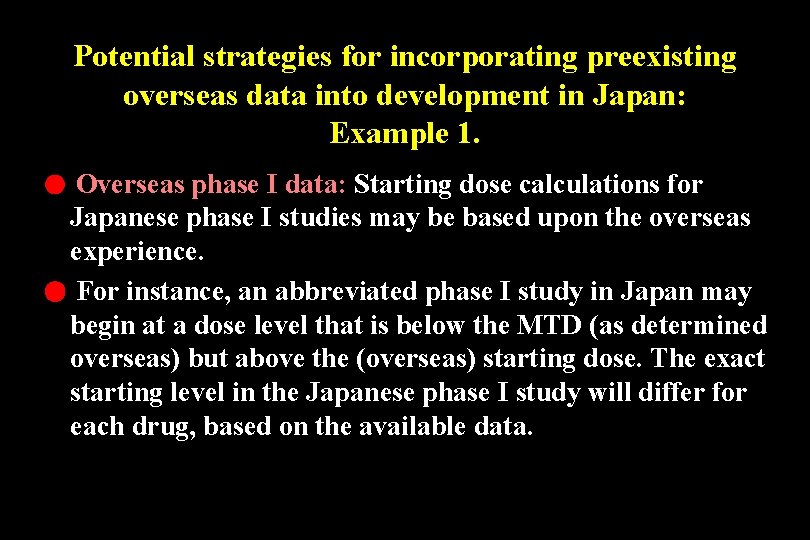
Potential strategies for incorporating preexisting overseas data into development in Japan: Example 1. ● Overseas phase I data: Starting dose calculations for Japanese phase I studies may be based upon the overseas experience. ● For instance, an abbreviated phase I study in Japan may begin at a dose level that is below the MTD (as determined overseas) but above the (overseas) starting dose. The exact starting level in the Japanese phase I study will differ for each drug, based on the available data.
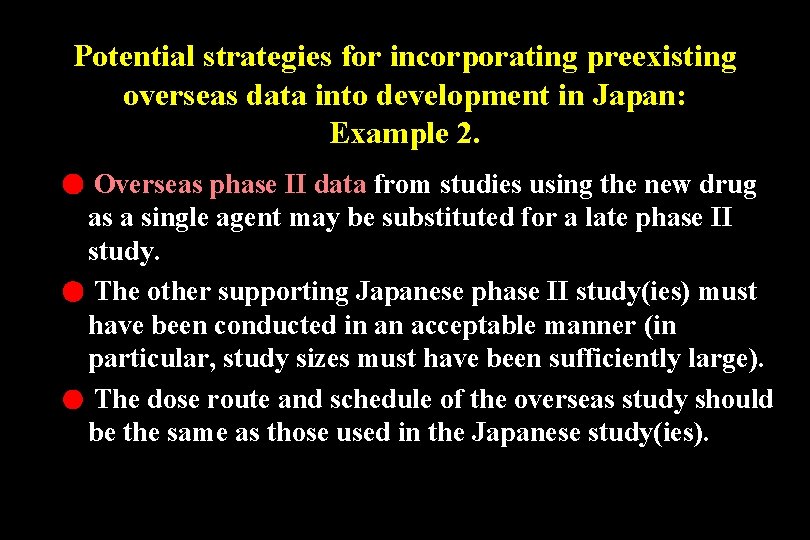
Potential strategies for incorporating preexisting overseas data into development in Japan: Example 2. ● Overseas phase II data from studies using the new drug as a single agent may be substituted for a late phase II study. ● The other supporting Japanese phase II study(ies) must have been conducted in an acceptable manner (in particular, study sizes must have been sufficiently large). ● The dose route and schedule of the overseas study should be the same as those used in the Japanese study(ies).
Potential strategies for incorporating preexisting overseas data into development in Japan: Example 2 (contd). When there is a difference between the doses used in the overseas study and in the Japanese studies, the sponsor must be able to demonstrate that the difference in dosing will not result in a difference in clinical effect. ● Data to support such an assertion should be based on comparisons of the results from appropriately designed and well-conducted PK/PD studies conducted both within and without Japan. ●
Potential strategies for incorporating preexisting overseas data into development in Japan: Example 3. ● Overseas phase III comparative study data may provide data regarding the safety of chronic dosing (e. g. , studies of hormonal agents or of adjuvant therapy, etc. ) in the preapproval setting. ● Careful consideration should be given to the potential impact upon the study outcomes (and the ability to extrapolate these results to Japan) of extrinsic factors, such as variations in treatment patterns, standards of care, etc.
Potential strategies for incorporating preexisting overseas data into development in Japan: Example 4. ● Data from an overseas phase III comparative study may also be submitted as one of the required postmarketing phase III studies. ● As in the previous case, careful consideration should be given to the potential impact upon the study outcomes (and the ability to extrapolate these results to Japan) of extrinsic factors, such as variations in treatment patterns, standards of care, etc.
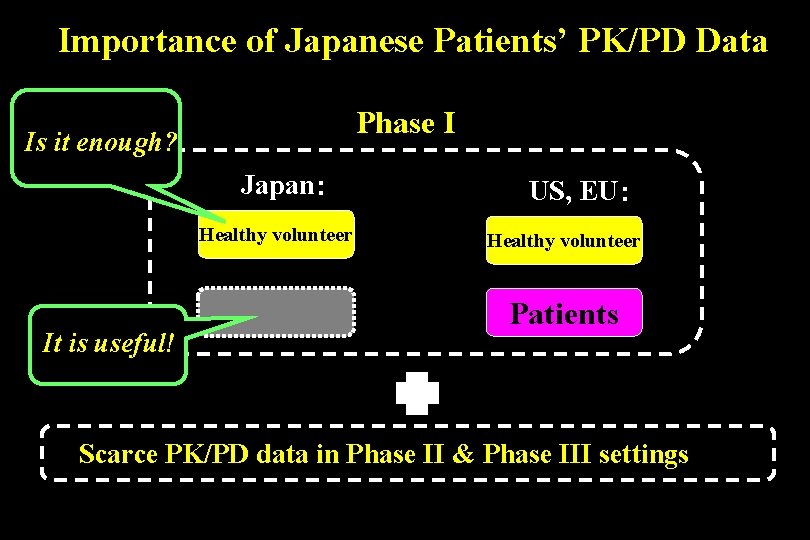
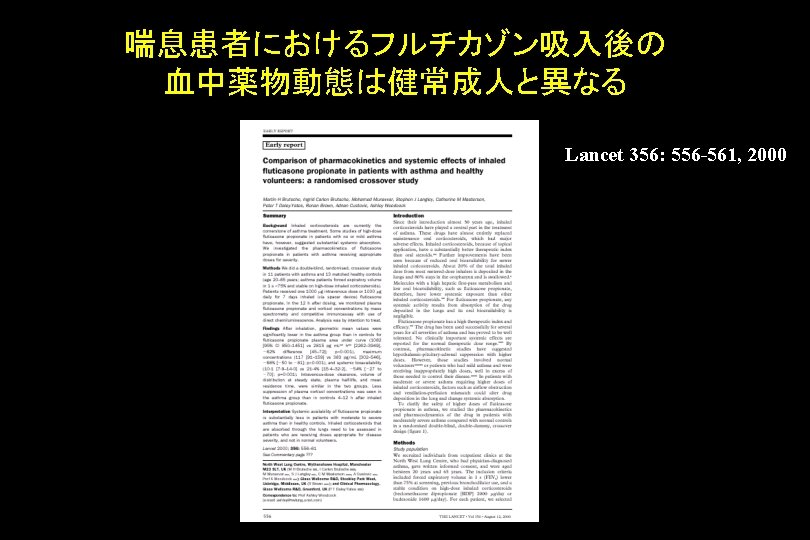
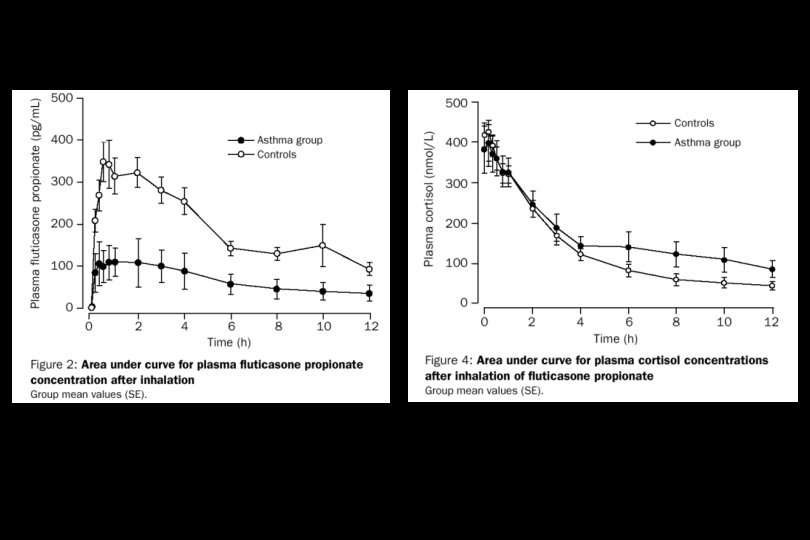
Importance of Japanese Patients’ PK/PD Data Phase I Is it enough? Japan: Healthy volunteer It is useful! US, EU: Healthy volunteer Patients Scarce PK/PD data in Phase II & Phase III settings
- Slides: 45