
Japanese Beetle Popillia japonica Order Coleoptera family Scarabaeidae
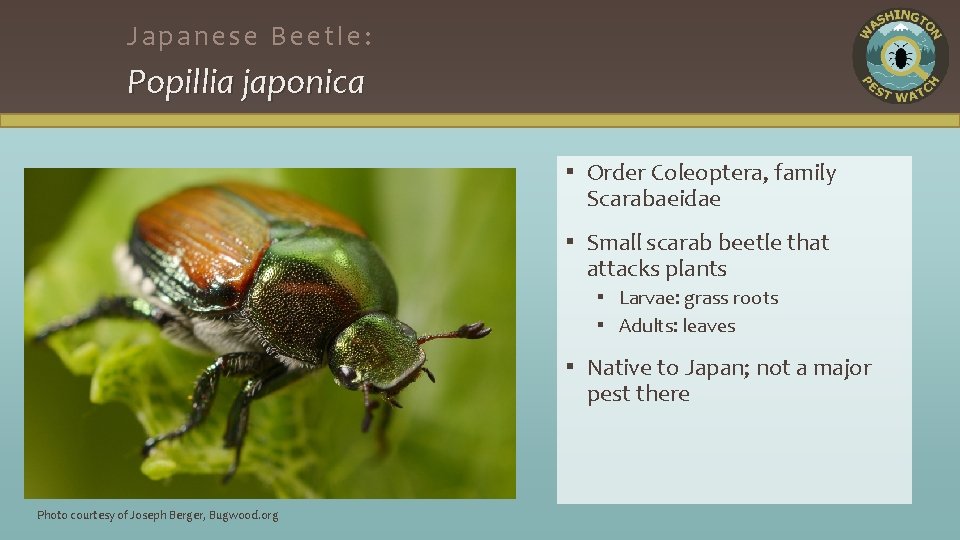
Japanese Beetle: Popillia japonica ▪ Order Coleoptera, family Scarabaeidae ▪ Small scarab beetle that attacks plants ▪ Larvae: grass roots ▪ Adults: leaves ▪ Native to Japan; not a major pest there Photo courtesy of Joseph Berger, Bugwood. org
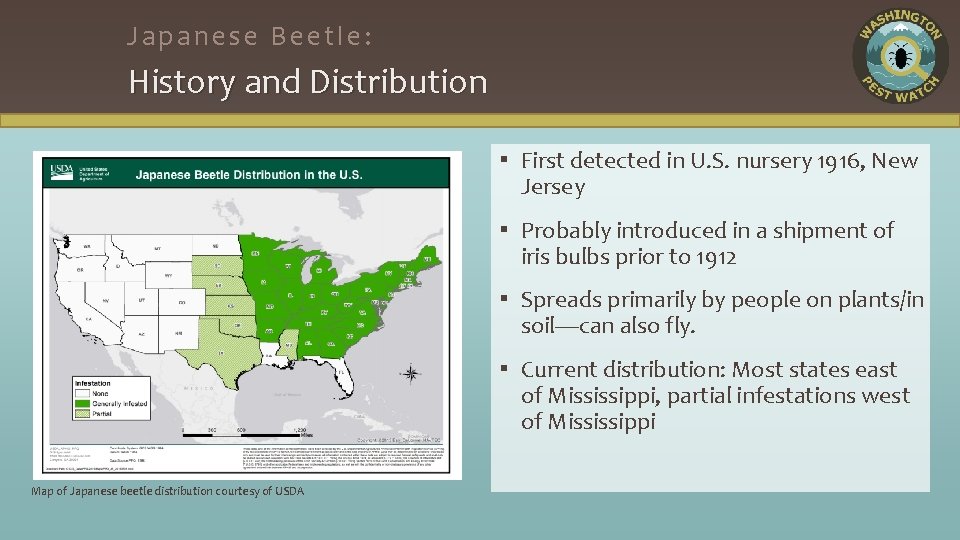
Japanese Beetle: History and Distribution ▪ First detected in U. S. nursery 1916, New Jersey ▪ Probably introduced in a shipment of iris bulbs prior to 1912 ▪ Spreads primarily by people on plants/in soil—can also fly. ▪ Current distribution: Most states east of Mississippi, partial infestations west of Mississippi Map of Japanese beetle distribution courtesy of USDA
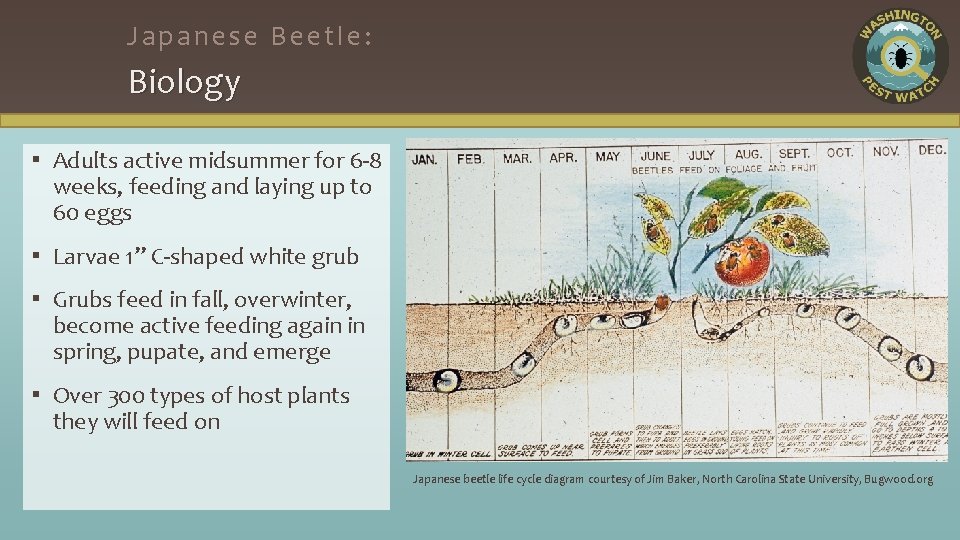
Japanese Beetle: Biology ▪ Adults active midsummer for 6 -8 weeks, feeding and laying up to 60 eggs ▪ Larvae 1” C-shaped white grub ▪ Grubs feed in fall, overwinter, become active feeding again in spring, pupate, and emerge ▪ Over 300 types of host plants they will feed on Japanese beetle life cycle diagram courtesy of Jim Baker, North Carolina State University, Bugwood. org
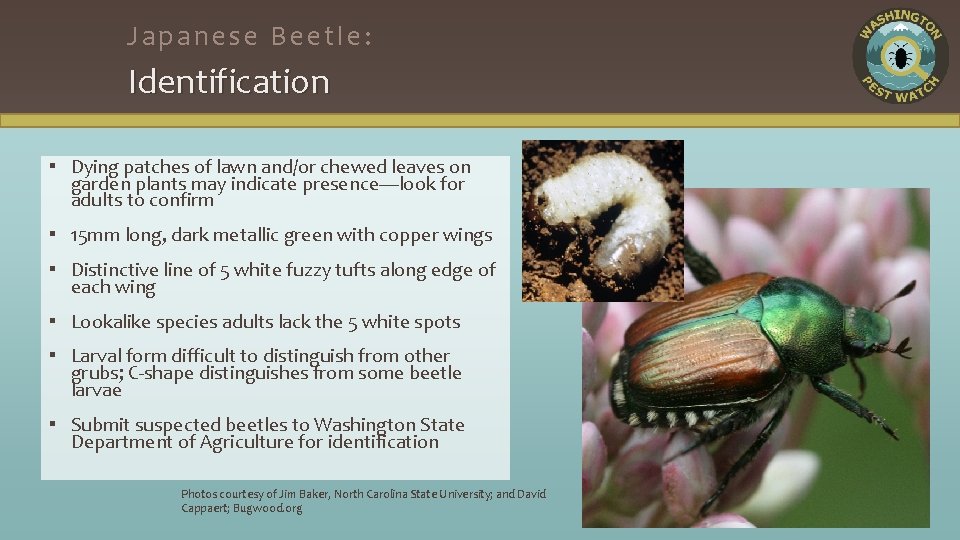
Japanese Beetle: Identification ▪ Dying patches of lawn and/or chewed leaves on garden plants may indicate presence—look for adults to confirm ▪ 15 mm long, dark metallic green with copper wings ▪ Distinctive line of 5 white fuzzy tufts along edge of each wing ▪ Lookalike species adults lack the 5 white spots ▪ Larval form difficult to distinguish from other grubs; C-shape distinguishes from some beetle larvae ▪ Submit suspected beetles to Washington State Department of Agriculture for identification Photos courtesy of Jim Baker, North Carolina State University; and David Cappaert; Bugwood. org
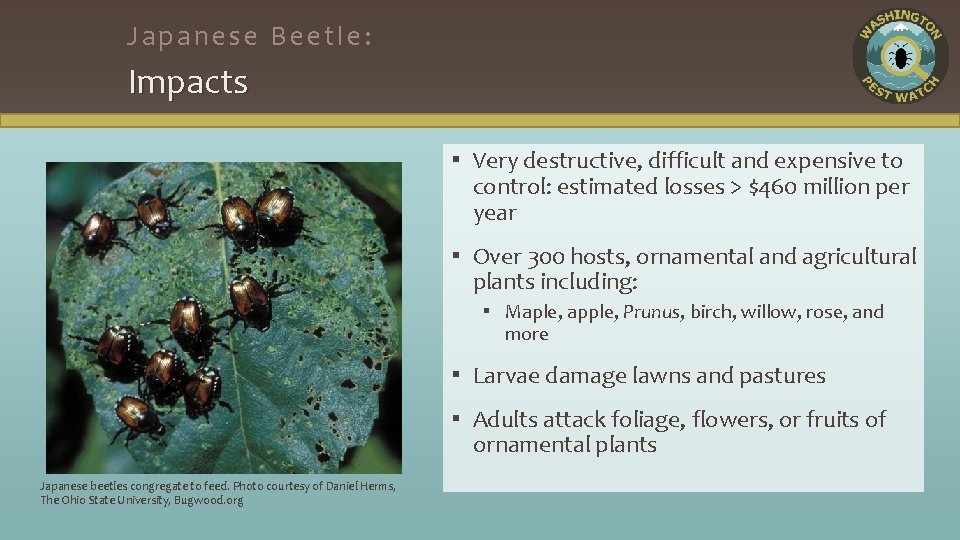
Japanese Beetle: Impacts ▪ Very destructive, difficult and expensive to control: estimated losses > $460 million per year ▪ Over 300 hosts, ornamental and agricultural plants including: ▪ Maple, apple, Prunus, birch, willow, rose, and more ▪ Larvae damage lawns and pastures ▪ Adults attack foliage, flowers, or fruits of ornamental plants Japanese beetles congregate to feed. Photo courtesy of Daniel Herms, The Ohio State University, Bugwood. org
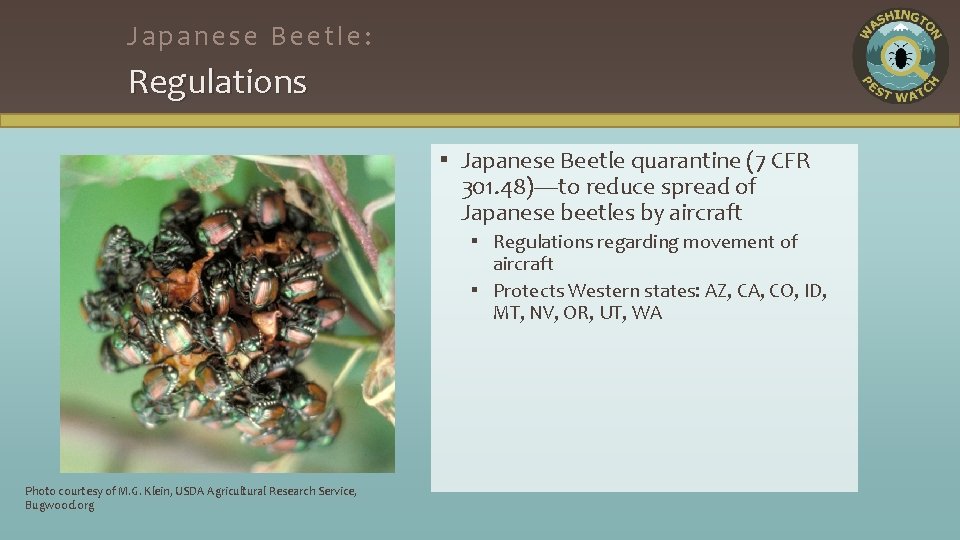
Japanese Beetle: Regulations ▪ Japanese Beetle quarantine (7 CFR 301. 48)—to reduce spread of Japanese beetles by aircraft ▪ Regulations regarding movement of aircraft ▪ Protects Western states: AZ, CA, CO, ID, MT, NV, OR, UT, WA Photo courtesy of M. G. Klein, USDA Agricultural Research Service, Bugwood. org
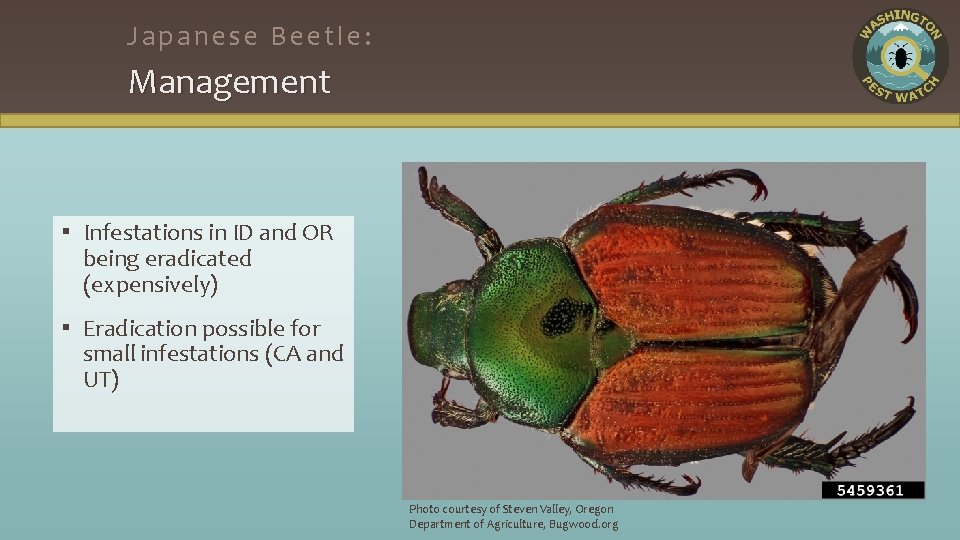
Japanese Beetle: Management ▪ Infestations in ID and OR being eradicated (expensively) ▪ Eradication possible for small infestations (CA and UT) Photo courtesy of Steven Valley, Oregon Department of Agriculture, Bugwood. org
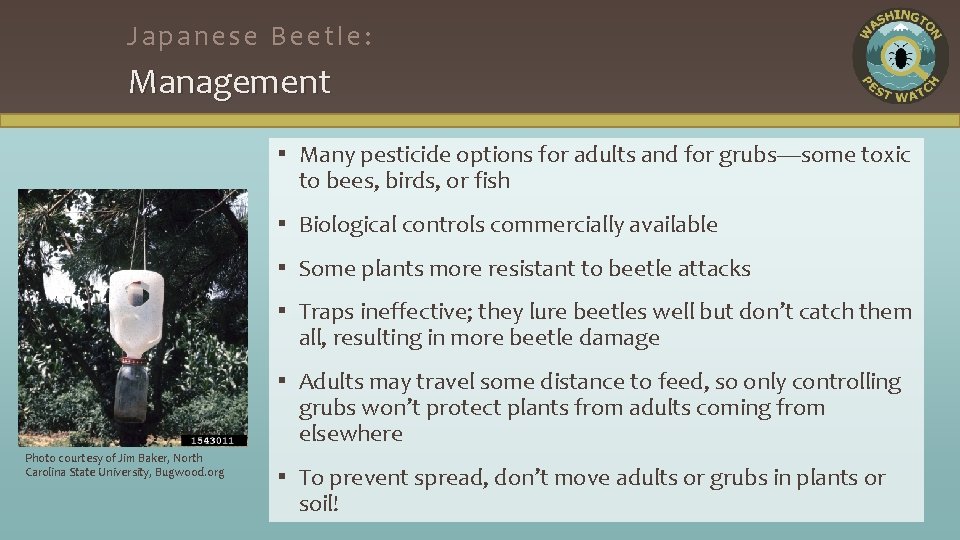
Japanese Beetle: Management ▪ Many pesticide options for adults and for grubs—some toxic to bees, birds, or fish ▪ Biological controls commercially available ▪ Some plants more resistant to beetle attacks ▪ Traps ineffective; they lure beetles well but don’t catch them all, resulting in more beetle damage ▪ Adults may travel some distance to feed, so only controlling grubs won’t protect plants from adults coming from elsewhere Photo courtesy of Jim Baker, North Carolina State University, Bugwood. org ▪ To prevent spread, don’t move adults or grubs in plants or soil!
- Slides: 8