JAPAN THE MEIJI RESTORATION Chapter 28 Section 2
- Slides: 9
JAPAN: THE MEIJI RESTORATION Chapter 28 Section 2
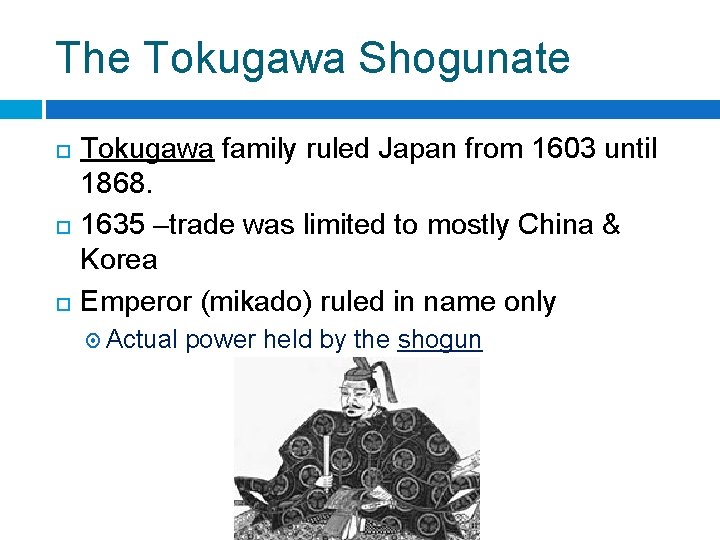
The Tokugawa Shogunate Tokugawa family ruled Japan from 1603 until 1868. 1635 –trade was limited to mostly China & Korea Emperor (mikado) ruled in name only Actual power held by the shogun
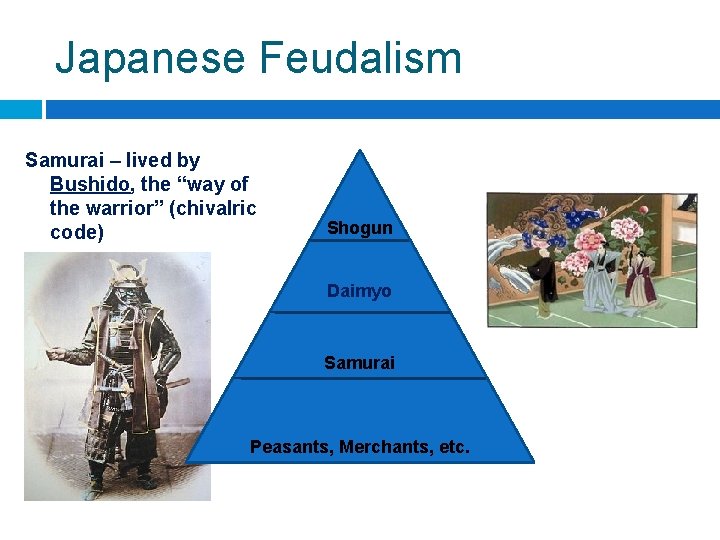
Japanese Feudalism Samurai – lived by Bushido, the “way of the warrior” (chivalric code) Shogun Daimyo Samurai Peasants, Merchants, etc.
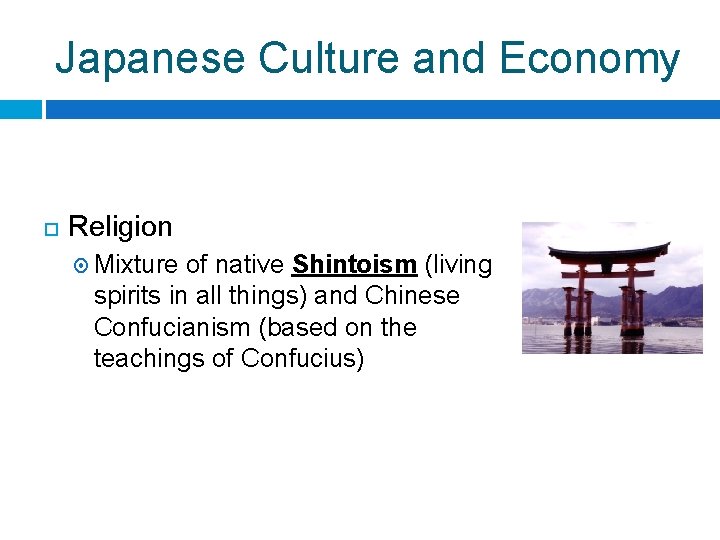
Japanese Culture and Economy Religion Mixture of native Shintoism (living spirits in all things) and Chinese Confucianism (based on the teachings of Confucius)
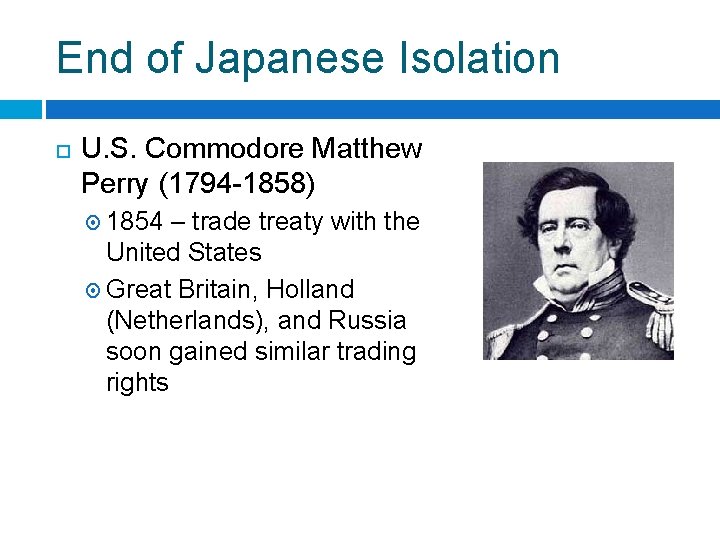
End of Japanese Isolation U. S. Commodore Matthew Perry (1794 -1858) 1854 – trade treaty with the United States Great Britain, Holland (Netherlands), and Russia soon gained similar trading rights
The Shi-shi (“Men of High Purpose”) v. Samurai who felt that the arrival of Westerners was an attack on the traditional values of Japan. v They believed that: § Japan was sacred ground. § The emperor, now a figurehead in Kyoto, was a god. v Were furious at the Shogun for signing treaties with the West without the Emperor’s consent. v Their slogan Revere the Emperor, Expel the Barbarians!
**Meiji Restoration** Shogun forced to relinquish power Power officially in hands of Emperor Mutsuhito His reign was called the “Meiji” Japan westernized by selective borrowing.
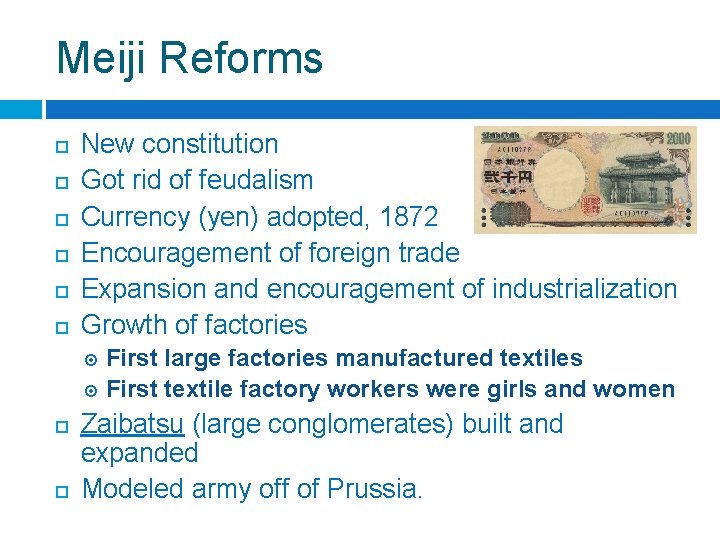
Meiji Reforms New constitution Got rid of feudalism Currency (yen) adopted, 1872 Encouragement of foreign trade Expansion and encouragement of industrialization Growth of factories First large factories manufactured textiles First textile factory workers were girls and women Zaibatsu (large conglomerates) built and expanded Modeled army off of Prussia.
Imperialization of Japan Why? Lack of fertile land for agriculture Markets for finished products Need for the raw materials of industry Population growth Response to Western imperialism