
Japan The Four Major Islands of Japan HOKKAIDO
- Slides: 16
Japan
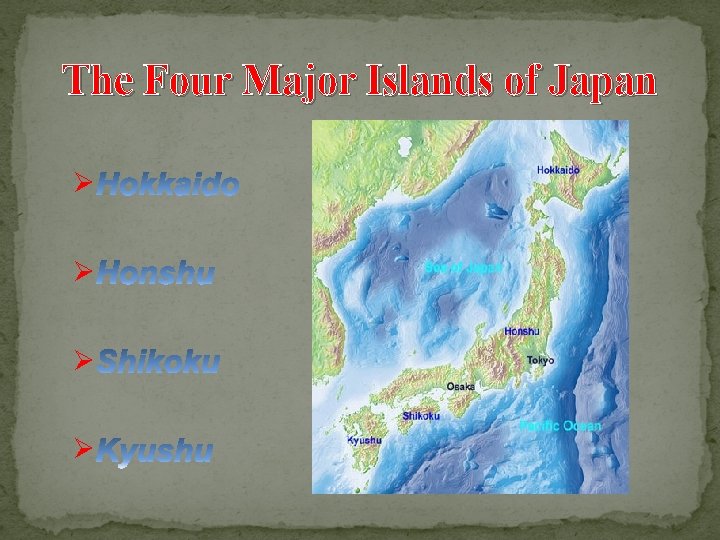
The Four Major Islands of Japan Ø Ø
HOKKAIDO Hokkaido is the northern most island of Japan and represents roughly 20% of the total land mass and about 5% of the population. The island is home to some of the most brilliant natural beauties in Japan and is a hot spot for tourists due to it’s more agreeable climate and distinct seasons. Many people flock there in the summer for it’s cooler temperatures and during the winter enjoy skiing at some of Japan’s world-class ski resorts.
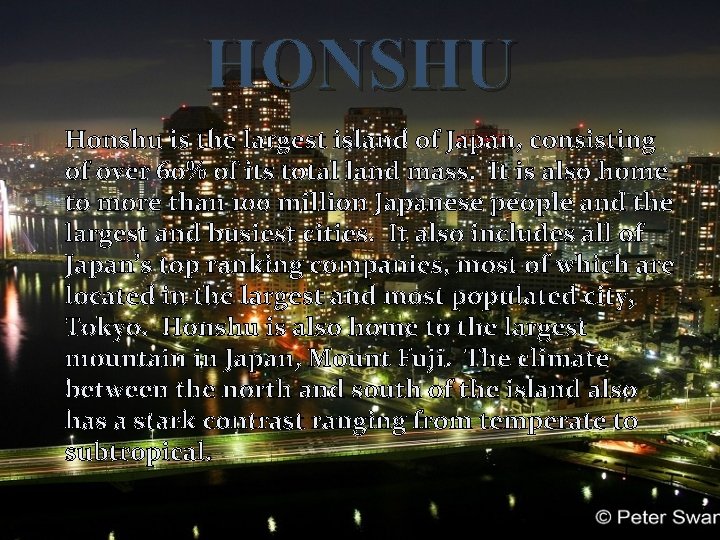
HONSHU Honshu is the largest island of Japan, consisting of over 60% of its total land mass. It is also home to more than 100 million Japanese people and the largest and busiest cities. It also includes all of Japan’s top ranking companies, most of which are located in the largest and most populated city, Tokyo. Honshu is also home to the largest mountain in Japan, Mount Fuji. The climate between the north and south of the island also has a stark contrast ranging from temperate to subtropical.
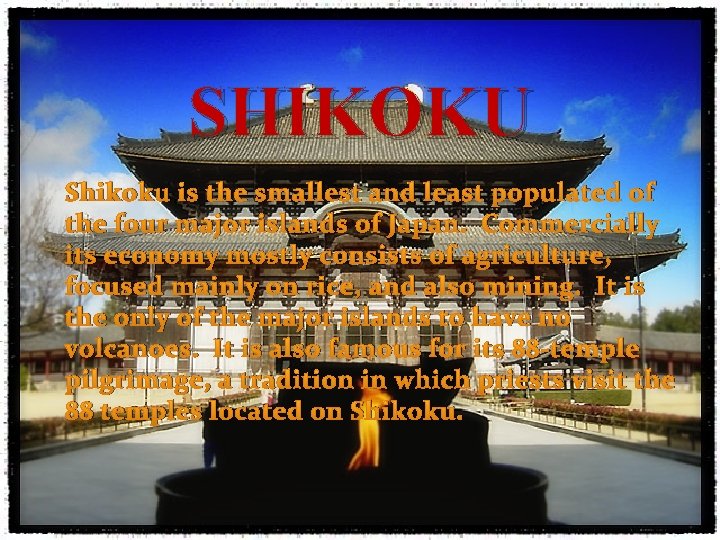
SHIKOKU Shikoku is the smallest and least populated of the four major islands of Japan. Commercially its economy mostly consists of agriculture, focused mainly on rice, and also mining. It is the only of the major islands to have no volcanoes. It is also famous for its 88 -temple pilgrimage, a tradition in which priests visit the 88 temples located on Shikoku.
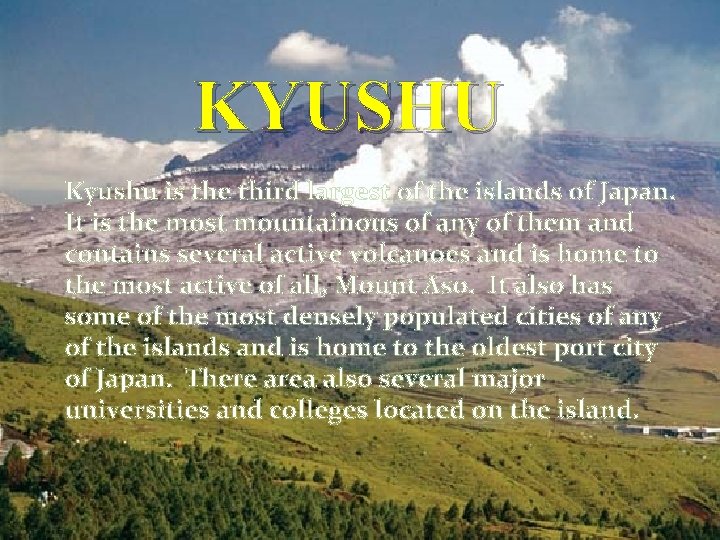
KYUSHU Kyushu is the third largest of the islands of Japan. It is the most mountainous of any of them and contains several active volcanoes and is home to the most active of all, Mount Aso. It also has some of the most densely populated cities of any of the islands and is home to the oldest port city of Japan. There area also several major universities and colleges located on the island.
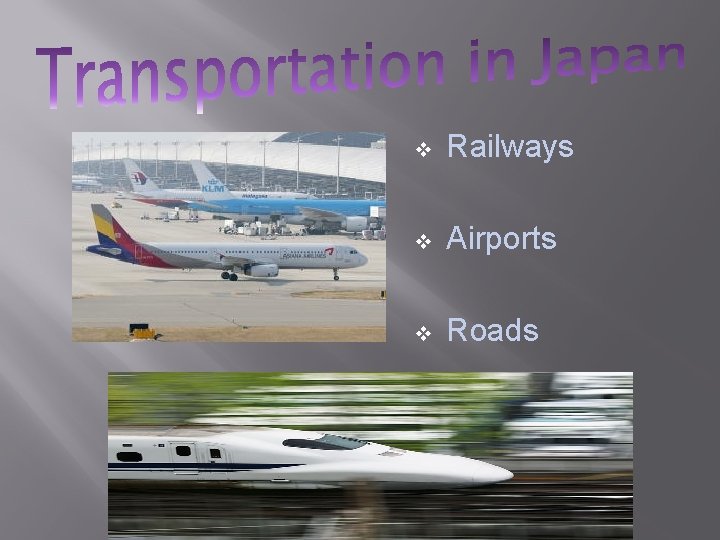
v Railways v Airports v Roads
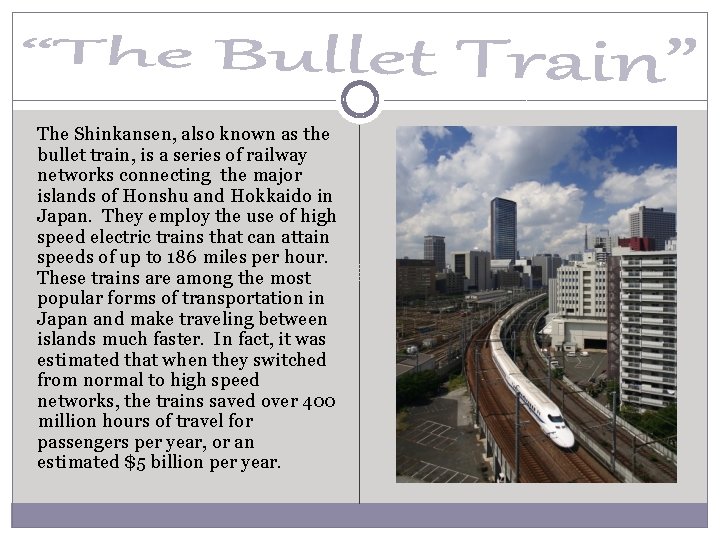
The Shinkansen, also known as the bullet train, is a series of railway networks connecting the major islands of Honshu and Hokkaido in Japan. They employ the use of high speed electric trains that can attain speeds of up to 186 miles per hour. These trains are among the most popular forms of transportation in Japan and make traveling between islands much faster. In fact, it was estimated that when they switched from normal to high speed networks, the trains saved over 400 million hours of travel for passengers per year, or an estimated $5 billion per year.
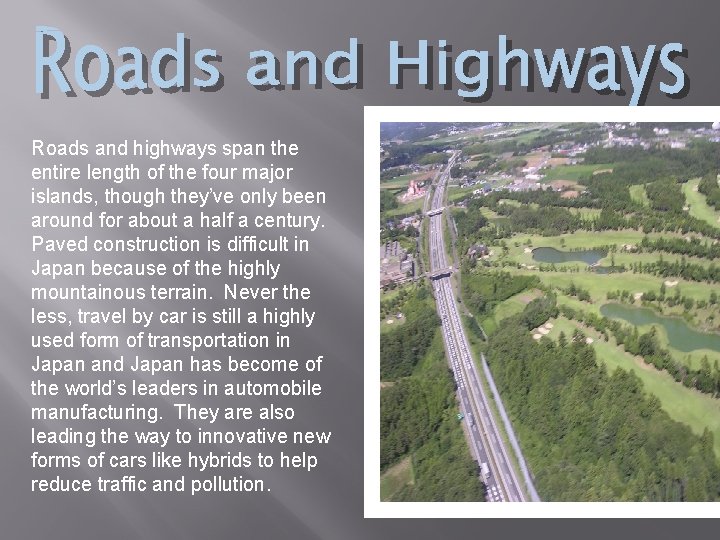
Roads and highways span the entire length of the four major islands, though they’ve only been around for about a half a century. Paved construction is difficult in Japan because of the highly mountainous terrain. Never the less, travel by car is still a highly used form of transportation in Japan and Japan has become of the world’s leaders in automobile manufacturing. They are also leading the way to innovative new forms of cars like hybrids to help reduce traffic and pollution.
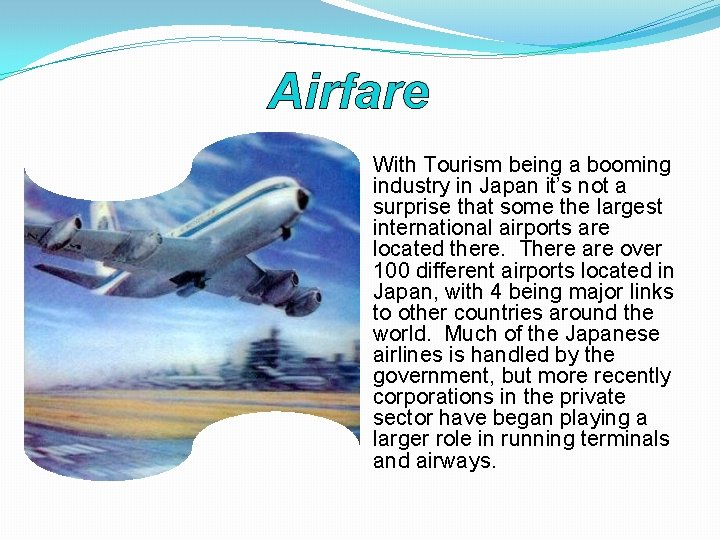
Airfare With Tourism being a booming industry in Japan it’s not a surprise that some the largest international airports are located there. There are over 100 different airports located in Japan, with 4 being major links to other countries around the world. Much of the Japanese airlines is handled by the government, but more recently corporations in the private sector have began playing a larger role in running terminals and airways.
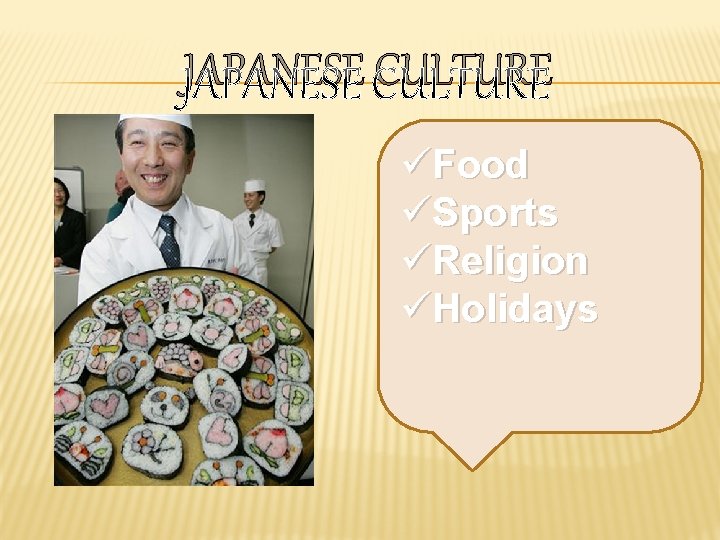
JAPANESE CULTURE üFood üSports üReligion üHolidays
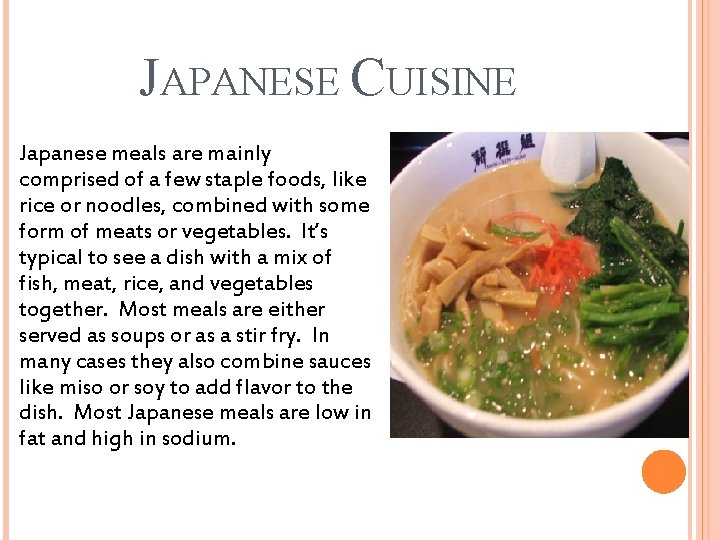
JAPANESE CUISINE Japanese meals are mainly comprised of a few staple foods, like rice or noodles, combined with some form of meats or vegetables. It’s typical to see a dish with a mix of fish, meat, rice, and vegetables together. Most meals are either served as soups or as a stir fry. In many cases they also combine sauces like miso or soy to add flavor to the dish. Most Japanese meals are low in fat and high in sodium.
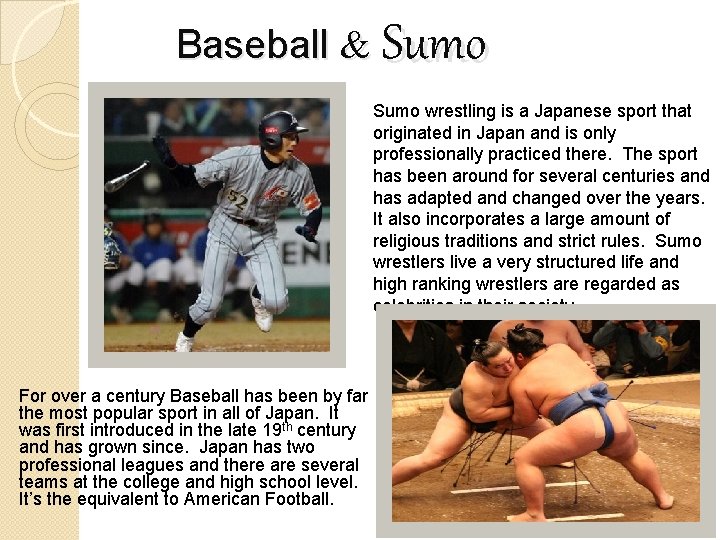
Baseball & Sumo wrestling is a Japanese sport that originated in Japan and is only professionally practiced there. The sport has been around for several centuries and has adapted and changed over the years. It also incorporates a large amount of religious traditions and strict rules. Sumo wrestlers live a very structured life and high ranking wrestlers are regarded as celebrities in their society. For over a century Baseball has been by far the most popular sport in all of Japan. It was first introduced in the late 19 th century and has grown since. Japan has two professional leagues and there are several teams at the college and high school level. It’s the equivalent to American Football.
Buddhism and Shinto
Japanese Holidays There are Japanese holidays for nearly every month of the year. Perhaps the most important and highly regarded of these is the Japanese new years, known as Oshogatsu. With the start of each year Japanese families thoroughly clean their houses in order to start the year cleansed and renewed. They also serve special dishes and pass out new years cards. Other important holidays include Green Day, Children’s Day, and Coming-of-Age Day. There also many Holidays that have been introduced from the West like Christmas and Thanks Giving.
THANK YOU!