
JAPAN Periods 3 6 Period 3 Isolation Geography
- Slides: 11
JAPAN Periods 3 -6
Period 3 -Isolation Geography- rocky, island- isolated from mainland � Language separate from Chinese � Religion- Shintoism-animistic that emphasized nature/spirits (kami) that inhabit objects in nature Developed aristocratic clans Some trade with Tang (China) Yamato Clan took over introduced Buddhism
Period 3 -Fujiwara Rule/Heian Age Culture � Melding of Shintoism, Confucianism & Buddhism � Mastered Chinese building styles � Aristocracy appreciated poetry � Tale of Genji- (c 1000 CE) written by a noblewoman (Murasaki Shikibu) First book written in Japanese Described court life Ironic that women were not encouraged to be educated! Japanese dynasties rarely changed (unlike China) since emperor had little power Government- entrusted to warriors � Shogun- military governor who ruled in place of emperor
Period 3 -Minamoto Clan est Bakufu –military government Like Europe-developed feudalism � Regional lords controlled land economic powers � Unlike Fujiwara aristocracy-valued military skills rather than poetic skills � Local Lords supported by warriors-Samurais provided military services in exchange for food, clothing and housing Lived by Bushido code (code of the warrior)-complete loyalty to lord If violated code, committed seppuku (suicide by knife to the guts) � Political instability-period characterized by much fighting among lords
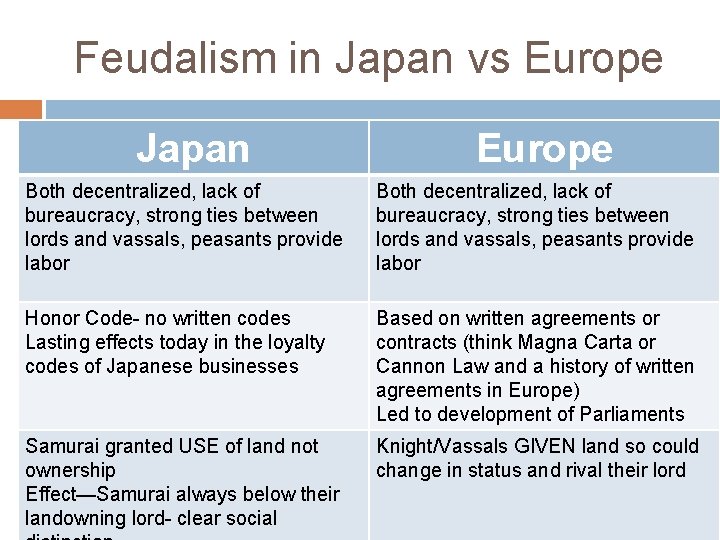
Feudalism in Japan vs Europe Japan Europe Both decentralized, lack of bureaucracy, strong ties between lords and vassals, peasants provide labor Honor Code- no written codes Lasting effects today in the loyalty codes of Japanese businesses Based on written agreements or contracts (think Magna Carta or Cannon Law and a history of written agreements in Europe) Led to development of Parliaments Samurai granted USE of land not ownership Effect—Samurai always below their landowning lord- clear social Knight/Vassals GIVEN land so could change in status and rival their lord
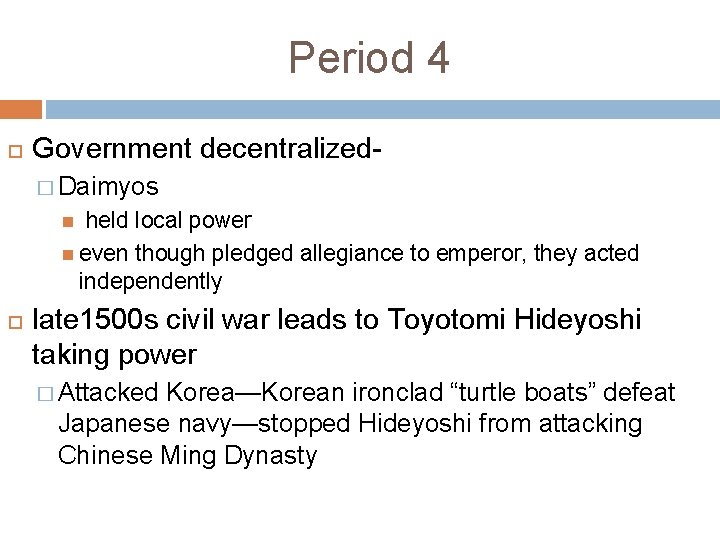
Period 4 Government decentralized� Daimyos held local power even though pledged allegiance to emperor, they acted independently late 1500 s civil war leads to Toyotomi Hideyoshi taking power � Attacked Korea—Korean ironclad “turtle boats” defeat Japanese navy—stopped Hideyoshi from attacking Chinese Ming Dynasty
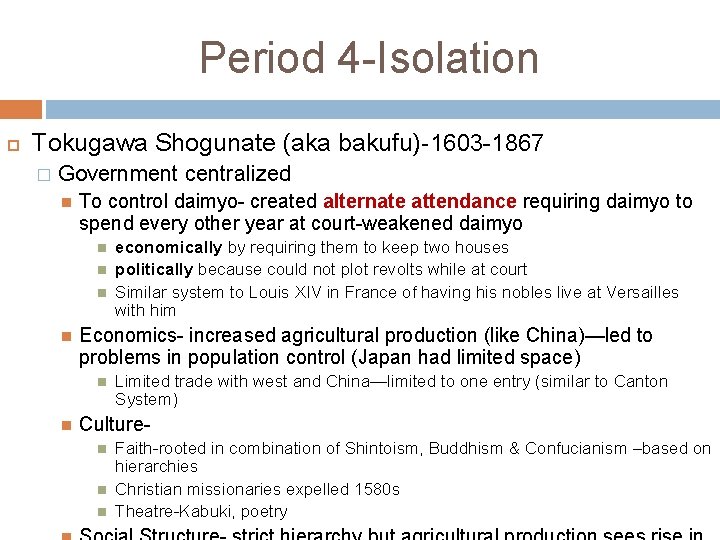
Period 4 -Isolation Tokugawa Shogunate (aka bakufu)-1603 -1867 � Government centralized To control daimyo- created alternate attendance requiring daimyo to spend every other year at court-weakened daimyo Economics- increased agricultural production (like China)—led to problems in population control (Japan had limited space) economically by requiring them to keep two houses politically because could not plot revolts while at court Similar system to Louis XIV in France of having his nobles live at Versailles with him Limited trade with west and China—limited to one entry (similar to Canton System) Culture Faith-rooted in combination of Shintoism, Buddhism & Confucianism –based on hierarchies Christian missionaries expelled 1580 s Theatre-Kabuki, poetry
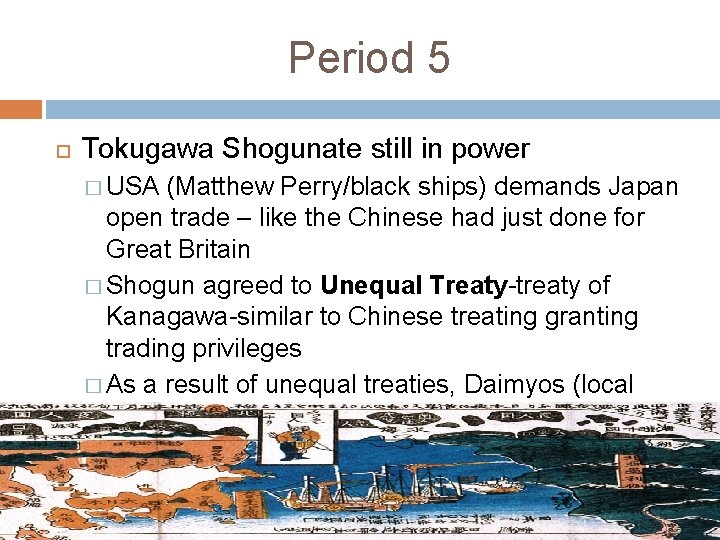
Period 5 Tokugawa Shogunate still in power � USA (Matthew Perry/black ships) demands Japan open trade – like the Chinese had just done for Great Britain � Shogun agreed to Unequal Treaty-treaty of Kanagawa-similar to Chinese treating granting trading privileges � As a result of unequal treaties, Daimyos (local lords) rebel and start a new government
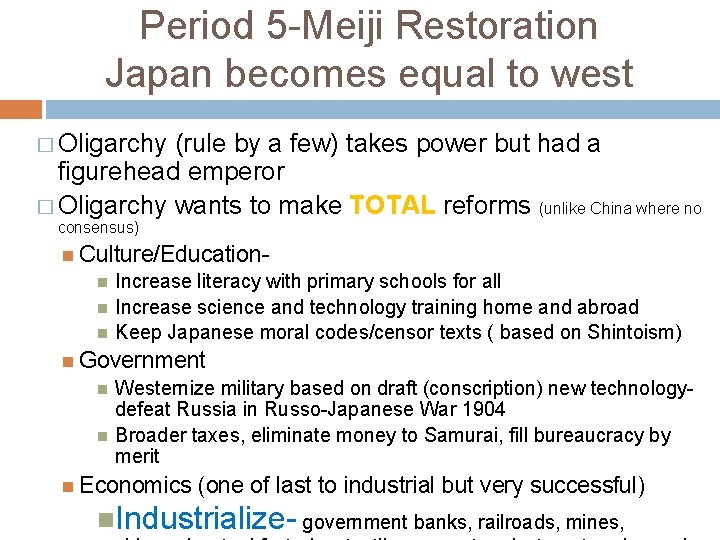
Period 5 -Meiji Restoration Japan becomes equal to west � Oligarchy (rule by a few) takes power but had a figurehead emperor � Oligarchy wants to make TOTAL reforms (unlike China where no consensus) Culture/Education Increase literacy with primary schools for all Increase science and technology training home and abroad Keep Japanese moral codes/censor texts ( based on Shintoism) Government Westernize military based on draft (conscription) new technologydefeat Russia in Russo-Japanese War 1904 Broader taxes, eliminate money to Samurai, fill bureaucracy by merit Economics (one of last to industrial but very successful) Industrialize- government banks, railroads, mines,
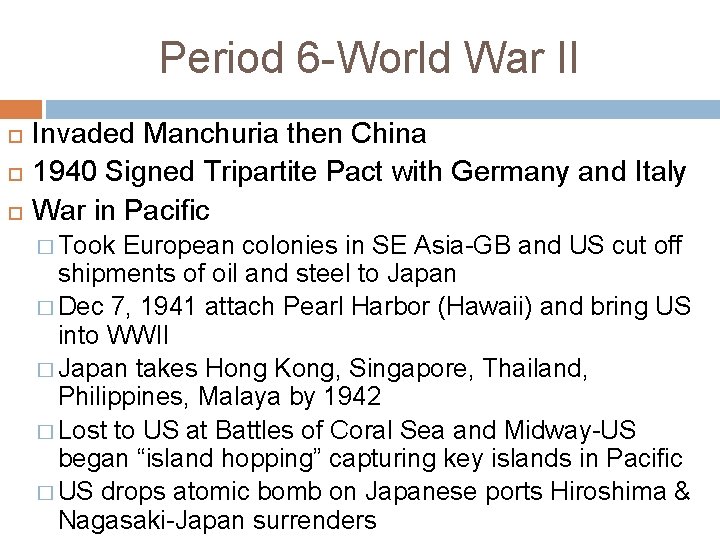
Period 6 -World War II Invaded Manchuria then China 1940 Signed Tripartite Pact with Germany and Italy War in Pacific � Took European colonies in SE Asia-GB and US cut off shipments of oil and steel to Japan � Dec 7, 1941 attach Pearl Harbor (Hawaii) and bring US into WWII � Japan takes Hong Kong, Singapore, Thailand, Philippines, Malaya by 1942 � Lost to US at Battles of Coral Sea and Midway-US began “island hopping” capturing key islands in Pacific � US drops atomic bomb on Japanese ports Hiroshima & Nagasaki-Japan surrenders
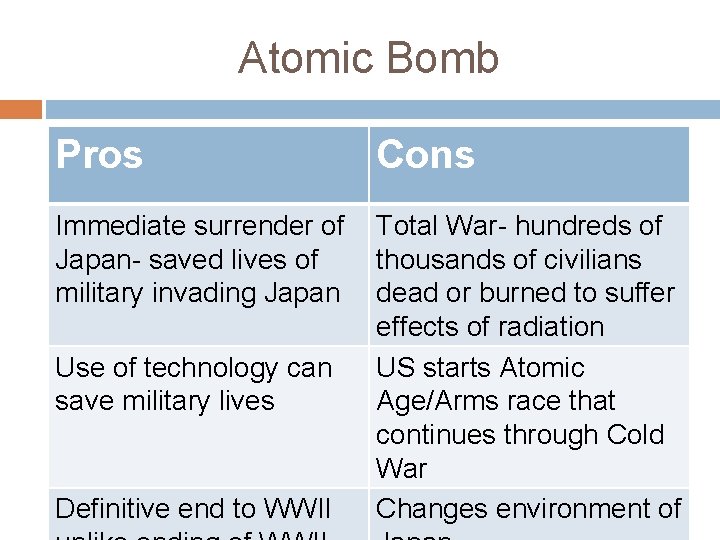
Atomic Bomb Pros Cons Immediate surrender of Japan- saved lives of military invading Japan Total War- hundreds of thousands of civilians dead or burned to suffer effects of radiation US starts Atomic Age/Arms race that continues through Cold War Changes environment of Use of technology can save military lives Definitive end to WWII