
japan PALACES AND SHRINES Japanese architecture Originally heavily
- Slides: 3
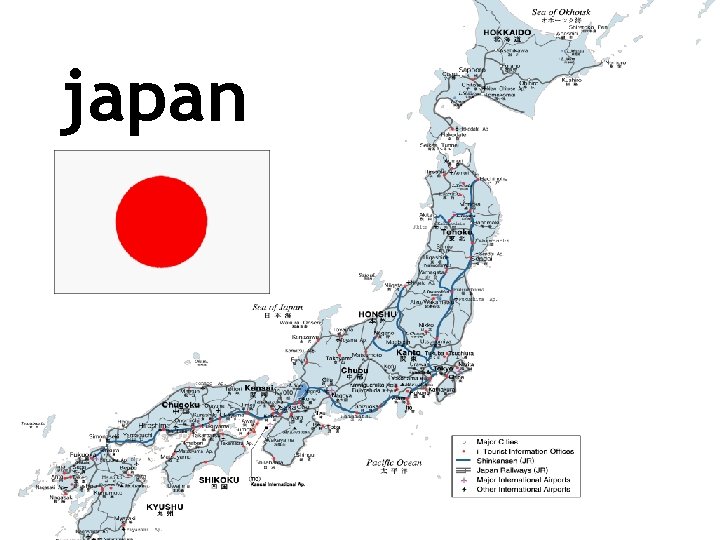
japan
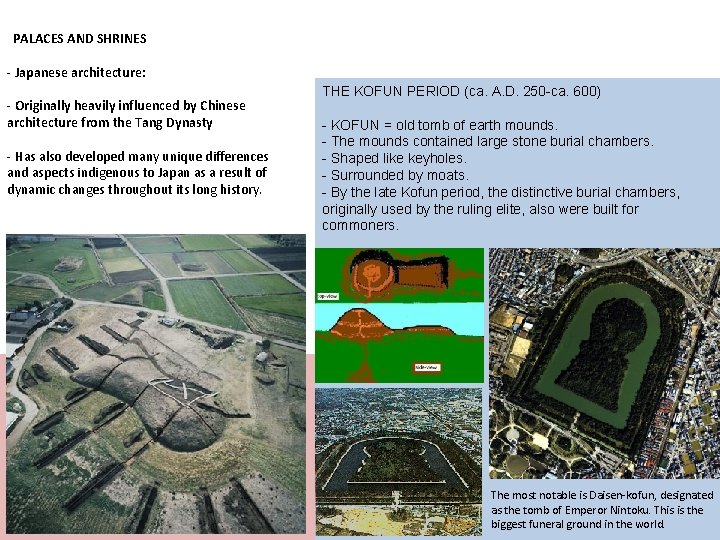
PALACES AND SHRINES - Japanese architecture: - Originally heavily influenced by Chinese architecture from the Tang Dynasty - Has also developed many unique differences and aspects indigenous to Japan as a result of dynamic changes throughout its long history. Japan: Art, Architecture & Interior THE KOFUN PERIOD (ca. A. D. 250 -ca. 600) - KOFUN = old tomb of earth mounds. - The mounds contained large stone burial chambers. - Shaped like keyholes. - Surrounded by moats. - By the late Kofun period, the distinctive burial chambers, originally used by the ruling elite, also were built for commoners. The most notable is Daisen-kofun, designated as the tomb of Emperor Nintoku. This is the biggest funeral ground in the world.
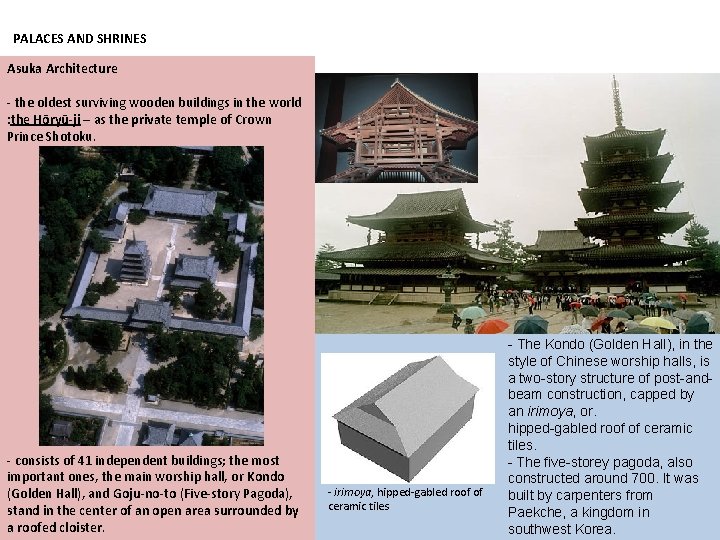
PALACES AND SHRINES Asuka Architecture Japan: Art, Architecture & Interior - the oldest surviving wooden buildings in the world : the Hōryū-ji – as the private temple of Crown Prince Shotoku. - consists of 41 independent buildings; the most important ones, the main worship hall, or Kondo (Golden Hall), and Goju-no-to (Five-story Pagoda), stand in the center of an open area surrounded by a roofed cloister. - irimoya, hipped-gabled roof of ceramic tiles - The Kondo (Golden Hall), in the style of Chinese worship halls, is a two-story structure of post-andbeam construction, capped by an irimoya, or. hipped-gabled roof of ceramic tiles. - The five-storey pagoda, also constructed around 700. It was built by carpenters from Paekche, a kingdom in southwest Korea.