
Japan Lesson 3 Samurai and Shoguns Review u








- Slides: 45
Japan Lesson 3 Samurai and Shoguns
Review u Prince Shotoku ( 574 -622 C. E. ) brought Chinese culture to Japan u Heian Period (794 -1185 C. E. ) Japan’s Golden Age – Many cultural developments (lesson 2) u During the Heian Period, the Fujiwara Clan was in power
Nobles Gain Power
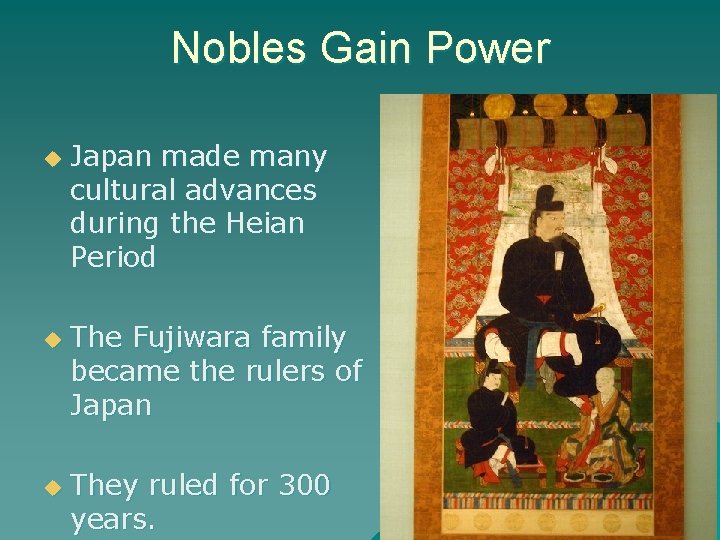
Nobles Gain Power u u u Japan made many cultural advances during the Heian Period The Fujiwara family became the rulers of Japan They ruled for 300 years.
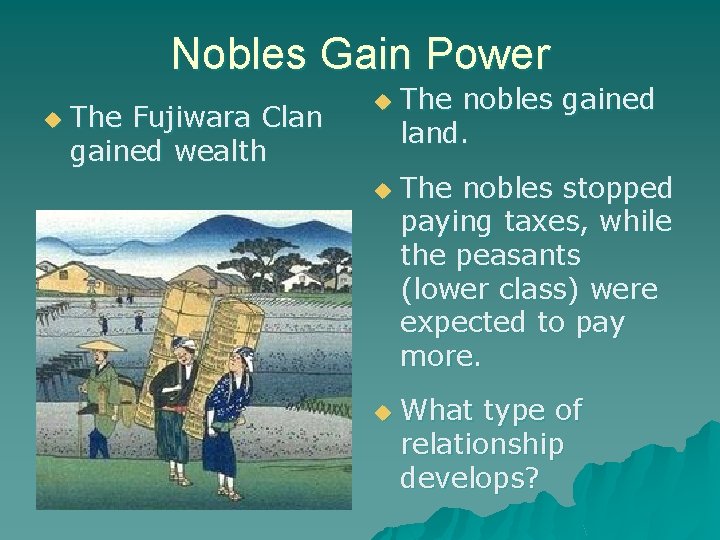
Nobles Gain Power u The Fujiwara Clan gained wealth u u u The nobles gained land. The nobles stopped paying taxes, while the peasants (lower class) were expected to pay more. What type of relationship develops?
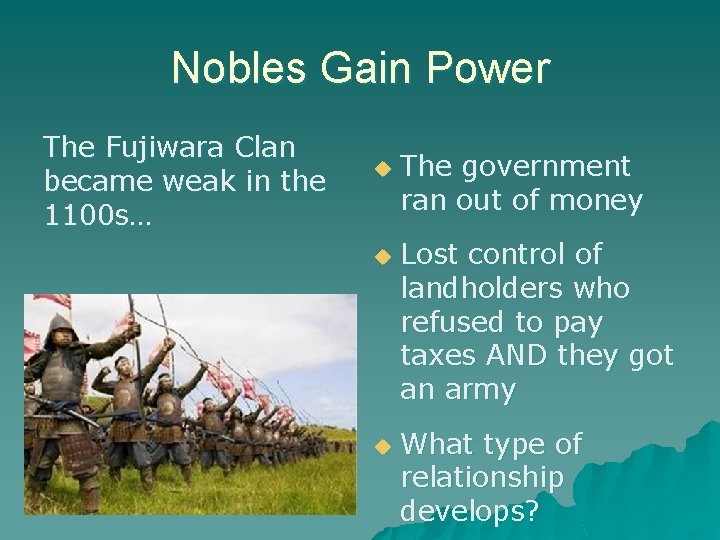
Nobles Gain Power The Fujiwara Clan became weak in the 1100 s… u u u The government ran out of money Lost control of landholders who refused to pay taxes AND they got an army What type of relationship develops?
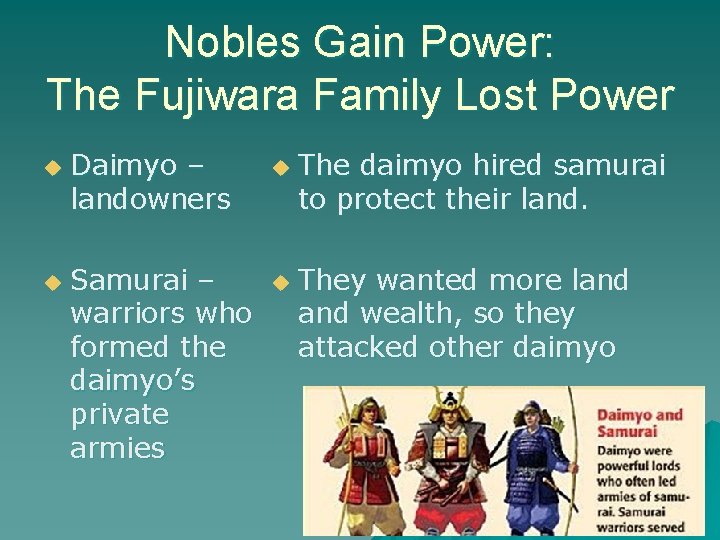
Nobles Gain Power: The Fujiwara Family Lost Power u u Daimyo – landowners Samurai – warriors who formed the daimyo’s private armies u u The daimyo hired samurai to protect their land. They wanted more land wealth, so they attacked other daimyo
Japanese Feudalism
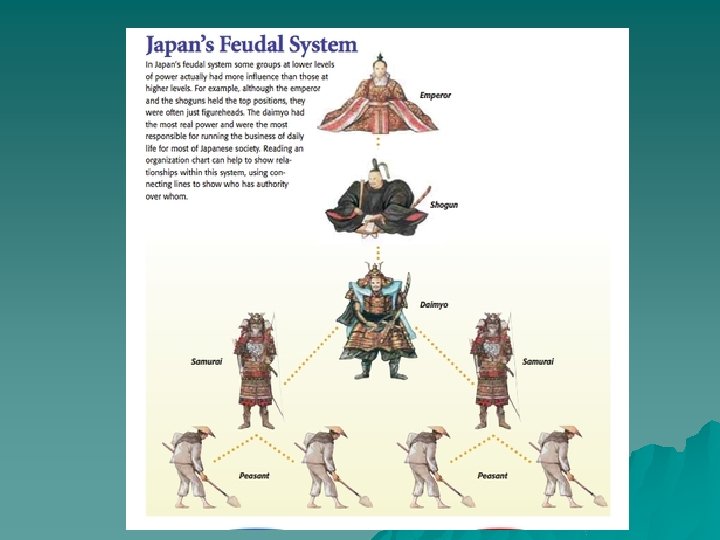
Japanese Feudalism u Definition: Feudalism was a system in which people were given land protection by people of higher rank, and worked and fought for them in return.
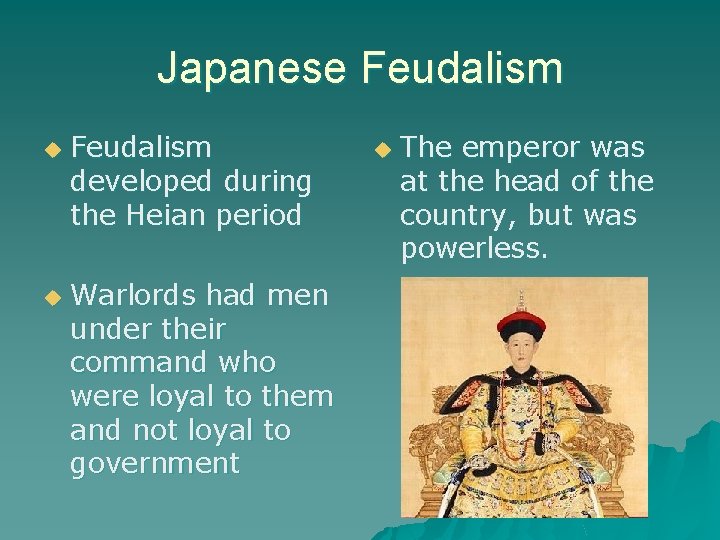
Japanese Feudalism u u Feudalism developed during the Heian period Warlords had men under their command who were loyal to them and not loyal to government u The emperor was at the head of the country, but was powerless.
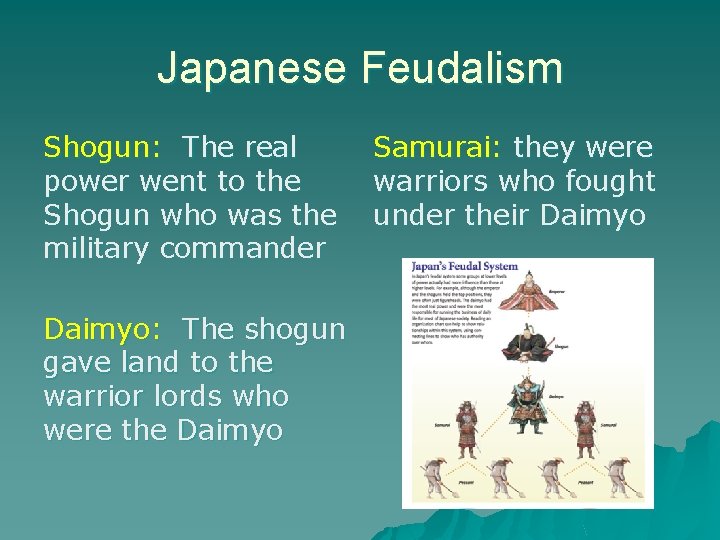
Japanese Feudalism Shogun: The real power went to the Shogun who was the military commander Daimyo: The shogun gave land to the warrior lords who were the Daimyo Samurai: they were warriors who fought under their Daimyo
Japanese Feudalism The First Shogun, pg. 268 u Minamoto Yoritomo became the first shogun in 1192. u Shogun means “Supreme Commander” u He led the army and ruled the country. u Shoguns ruled Japan for 700 years.
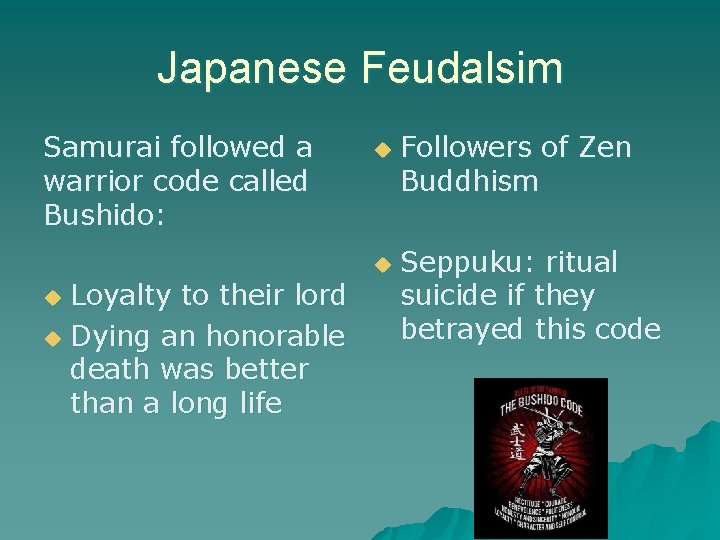
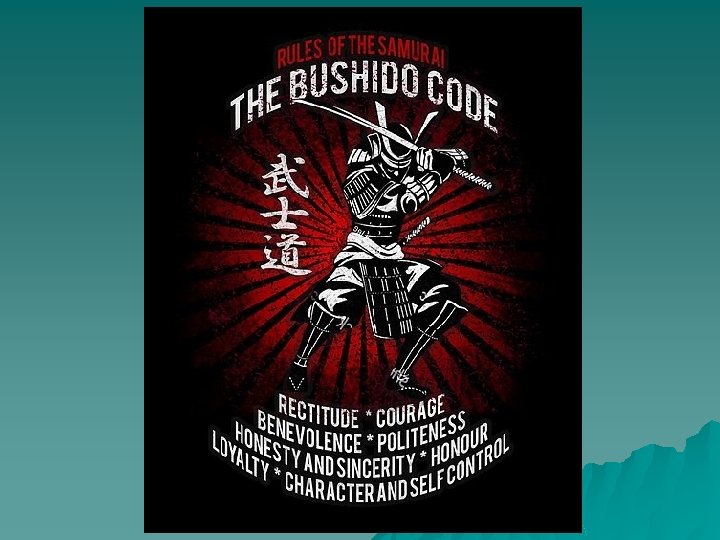
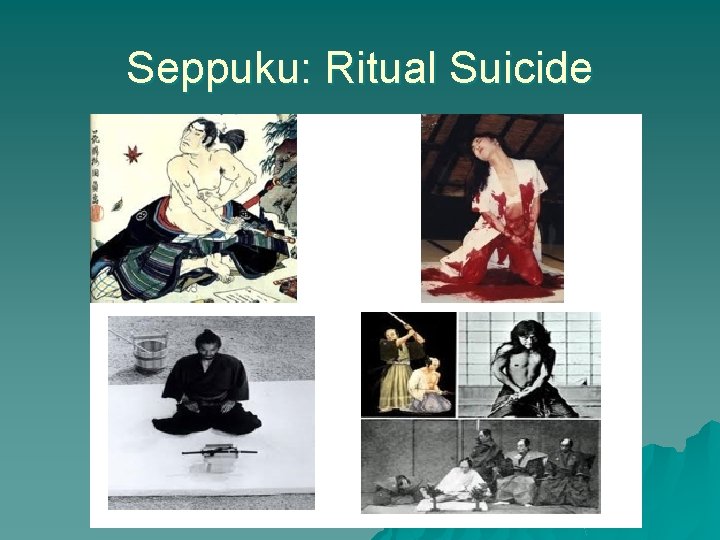
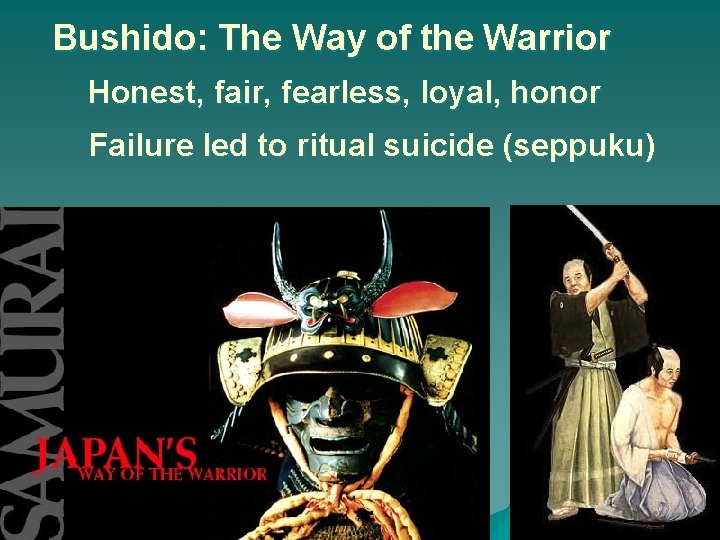
Japanese Feudalsim Samurai followed a warrior code called Bushido: u u Loyalty to their lord u Dying an honorable death was better than a long life u Followers of Zen Buddhism Seppuku: ritual suicide if they betrayed this code
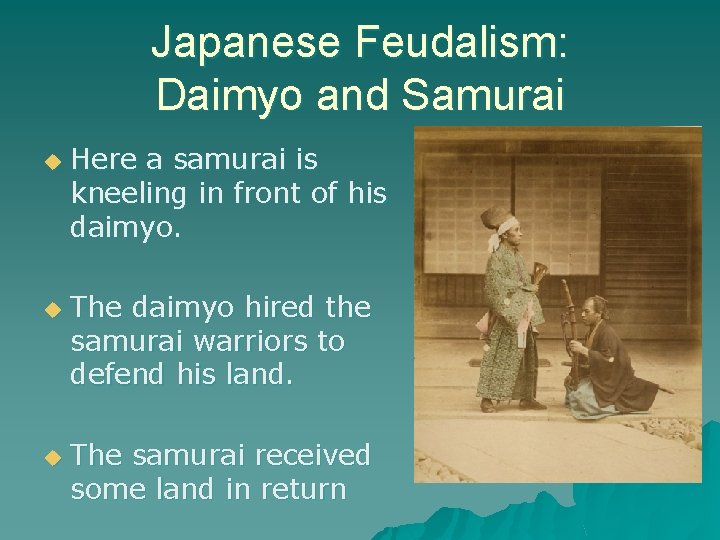
Japanese Feudalism: Daimyo and Samurai u u u Here a samurai is kneeling in front of his daimyo. The daimyo hired the samurai warriors to defend his land. The samurai received some land in return
Seppuku: Ritual Suicide
The Pyramid u The Four Tiered System of Feudal Japan u Feudal u Video Japan on Feudalism
Fill in your Feudalism Pyramid The Emperor The emperor: u This ruler had no real power. u They were considered religious leaders u Link: Emperors
Shogun and Daimyo u Shogun – supreme commander of the army u Daimyo – large landowners who had their own private army u Link: A Brief History of Daimyo
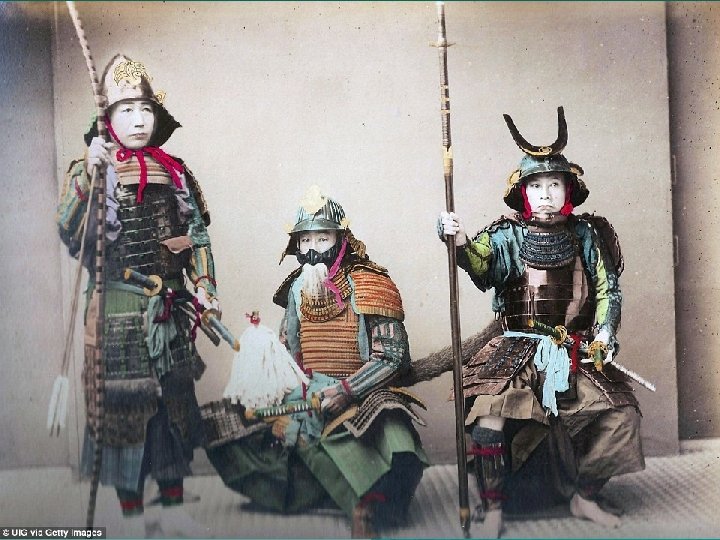
Samurai Warriors u They army were warriors in a daimyo’s u They followed a warrior code called bushido u Video: Samurai Video
Peasants and Artisans u Peasants – The main job of a peasant was being a farmer. They were paid in rice and land. u Artisans - a skilled craft worker who created things by hand that may be functional or decorative For video link, see the next slide:
Merchants u These were traveling traders and shop keepers. u They profited from the labor of the more productive peasant and artisan classes. u Peasants, Artisans, Merchants
Textbook u Read pg. 267 -268
Rise of Military Society
Rise of Military Society Samurai Training: horsemanship u archery u swords u martial arts u self-control u ability to endure pain u
Samurai Battle u Before battles, samurai shouted out their names, ancestors, deeds, and reason for fighting u After battles, survivors of losing side were killed and opponents heads were severed, cleaned and mounted on boards.
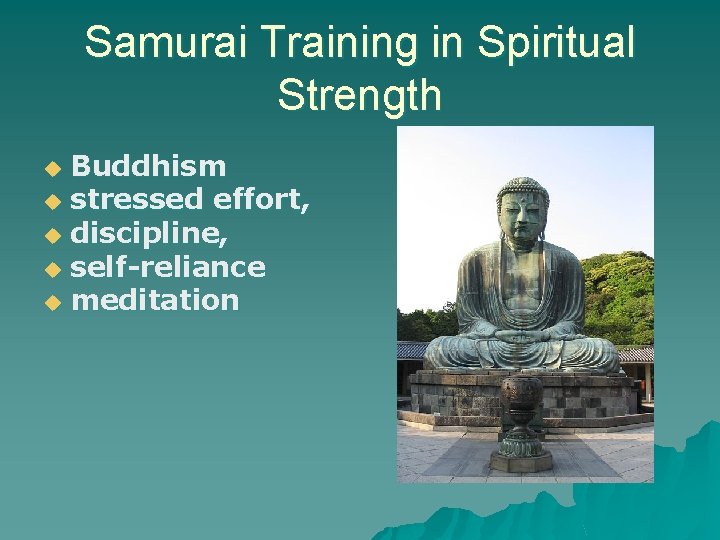
Samurai Training in Spiritual Strength Buddhism u stressed effort, u discipline, u self-reliance u meditation u
Bushido: The Way of the Warrior Honest, fair, fearless, loyal, honor Failure led to ritual suicide (seppuku)
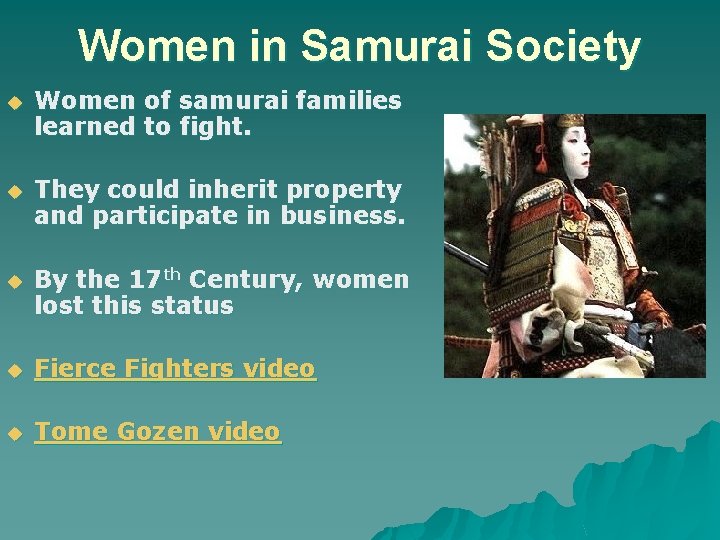
Women in Samurai Society u Women of samurai families learned to fight. u They could inherit property and participate in business. u By the 17 th Century, women lost this status u Fierce Fighters video u Tome Gozen video
Samurai Videos u Samurai The Last Samurai movie scene
Textbook u Read pg. 268 -269
Powerful Warriors Unify Japan
Powerful Warriors Unify Japan
Powerful Warriors Unify Japan u u Rival Daimyo fought for land 3 strong military leaders ended this fighting and united Japan u Oda Nobunaga u Toyotomi Hideyoshi u Tokugawa Ieyasu
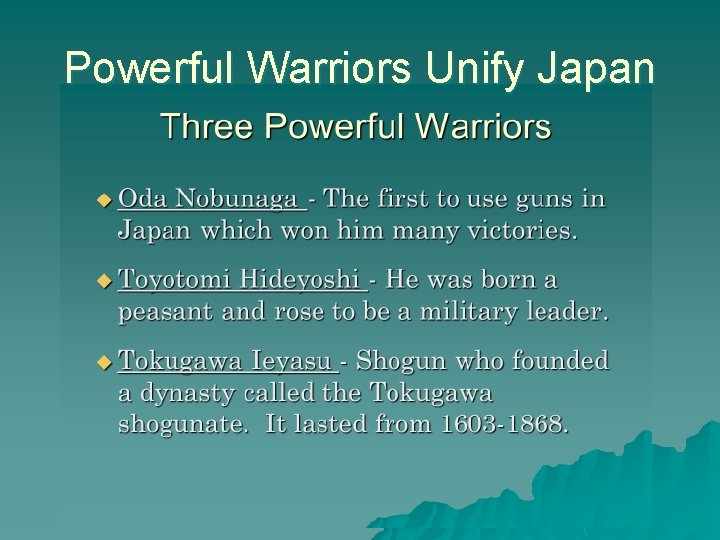
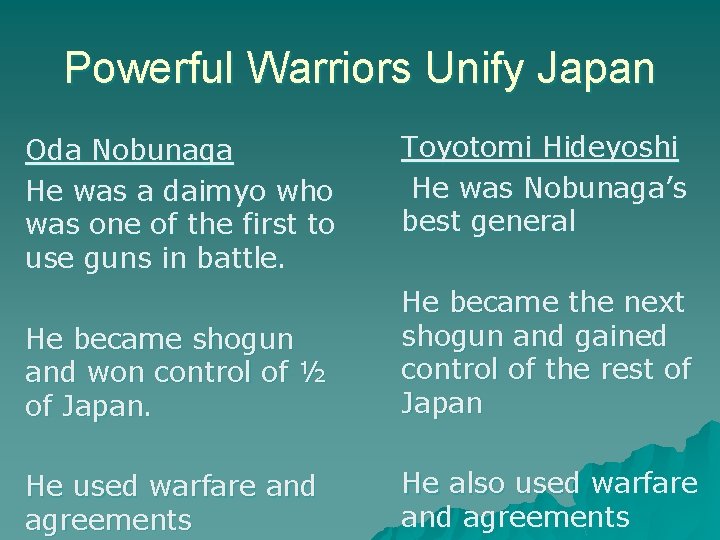
Powerful Warriors Unify Japan Oda Nobunaga He was a daimyo who was one of the first to use guns in battle. Toyotomi Hideyoshi He was Nobunaga’s best general He became shogun and won control of ½ of Japan. He became the next shogun and gained control of the rest of Japan He used warfare and agreements He also used warfare and agreements
Powerful Warriors Unify Japan u After Hideyoshi died, people fought over who should lead next. u u u Tokugawa Ieyasu won and became the next shogun He formed the Tokugawa Shogunate Dynasty His family ruled for 250 years.
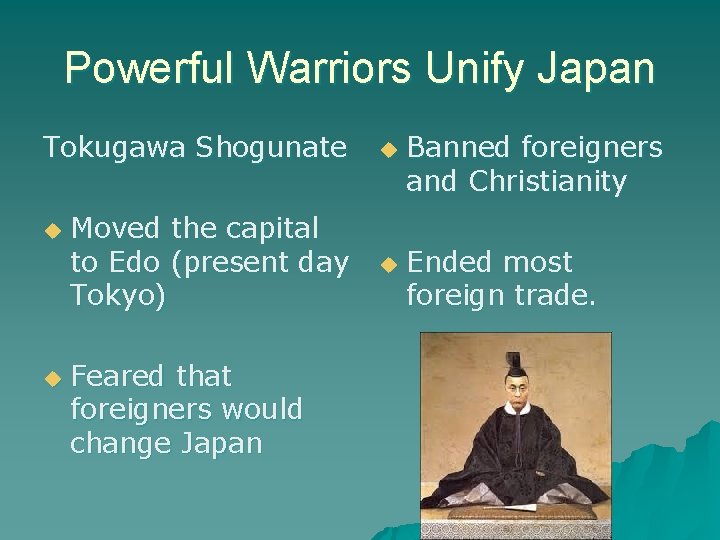
Powerful Warriors Unify Japan Tokugawa Shogunate u Moved the capital to Edo (present day Tokyo) u u u Feared that foreigners would change Japan Banned foreigners and Christianity Ended most foreign trade.
Powerful Warriors Unify Japan Tokugawa Shogunate u Would not let Japanese leave. Japan became isolated. u The Shogun set up a strong central government and controlled the daimyo They had peace and prosperity
Video Tokugawa Shogunate Review (5 minutes)
Reteaching Complete your Review Handout for Lesson 3