
January Safety Info New Years Resolution We have
- Slides: 6
January Safety Info New Year’s Resolution: We have much to be thankful for, including seatbelts, airbags and NO DISTRACTIONS while driving! § Cold Weather Ergonomics Reminders § Beware Truck Ice Fly-Off § Defensive Driving Pointers § Occupational Safety & Health to Watch Out For
COLD WEATHER ERGONOMICS Stay well hydrated year-round. This can help avoid catching cold. The science behind this is well known. Drink water and citrus beverages. Avoid sugar & energy drinks. Eat right, avoid junk food, grease Wear wrap-around eye protection in cold & wind. This protects the eye from dry air. It also lessens heat loss from ocular region of the face. Wear a helmet liner in cold/wind. In addition to warmth, it also holds the hat in place in windy conditions. Most body heat loss is from neck and head. Break-away chin strap or helmet liner is a requirement when on foot on the ROW. A hat blowing into traffic can cause serious issues. Chin straps are $3. Helmet liners are $4. Dress in several light layers. Add or remove layers to adjust for air temp. Avoid bulky garments when driving. Keep loose garments and accessories, drawstrings, scarfs tucked secure, avoid snag hazard
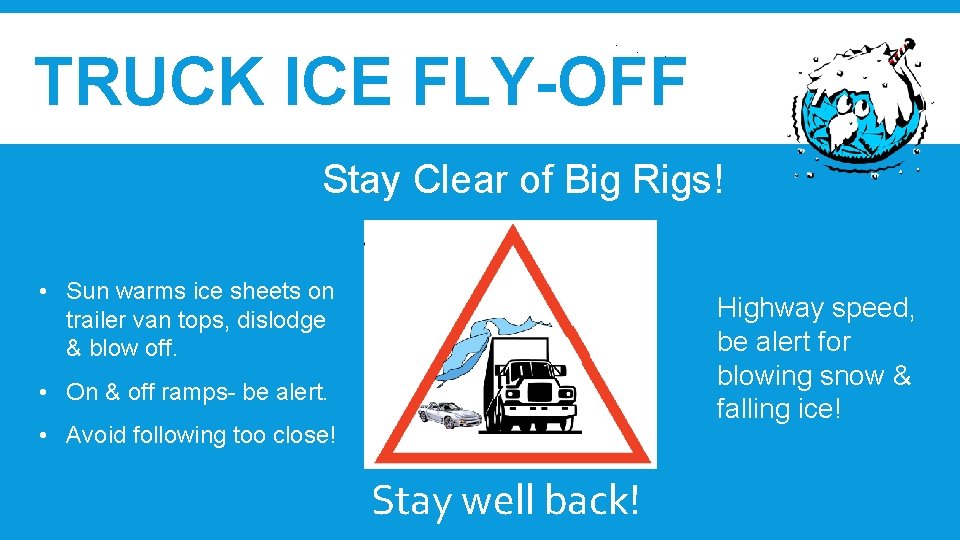
TRUCK ICE FLY-OFF Stay Clear of Big Rigs! • Sun warms ice sheets on trailer van tops, dislodge & blow off. Highway speed, be alert for blowing snow & falling ice! • On & off ramps- be alert. • Avoid following too close! Stay well back!
DEFENSIVE DRIVING DON’T LEAVE HOME (OR WORK…) WITHOUT IT!! » Maintain 4 second following distance to vehicle ahead of you » Be alert for Ice on roadway – bridge decks, certain other pavement configurations » » » » Do not be pressured by other drivers – no distractions Avoid non-essential driving in snow & ice Carry extra weight amidships for stability Check your tires – pressure and tread If stuck in deep snow – keep exhaust pipe clear Keep an emergency kit in the vehicle for winter – check AAA web site Newer roads are generally safer than older roads – better drainage, pavement, guardrails; alignment, line of sight, etc.
OCCUPATIONAL SAFETY & HEALTH q Get a flu shot- it takes 2 weeks to sink in and take effect q Impaired drivers at night – the later at night, the more likely to be encountered q Not learning preventive measures from incidents, accidents; Continuous Improvement q Deer and animal hazards q Observe proper lane discipline; be alert for negligent drivers q Distractions!!! Pull over if needed, it can prevent a wreck! q Road Rage – many different forms; use truck lighting defensively q Weather issues – ice, snow, freezing rain, standing water; drainage issues q Other: you choose, there is a long list!
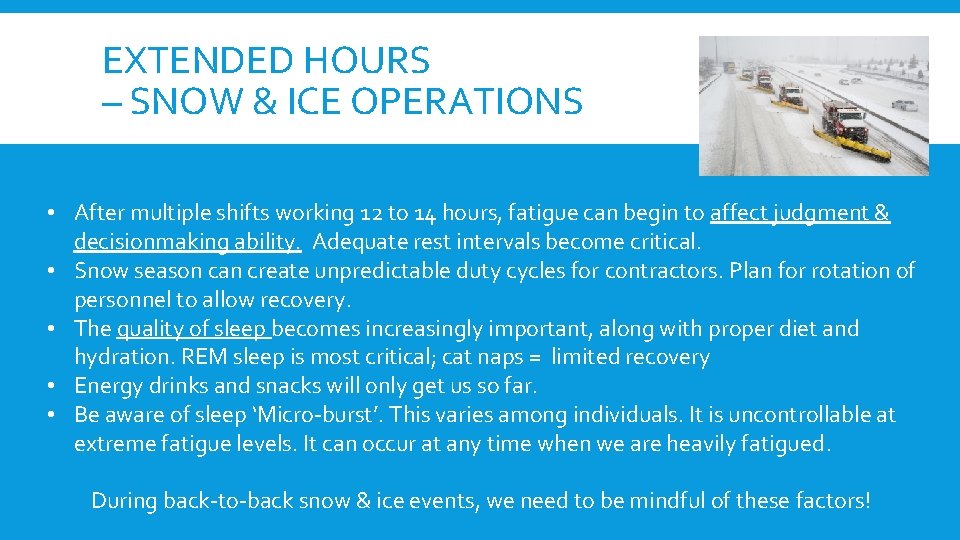
EXTENDED HOURS – SNOW & ICE OPERATIONS • After multiple shifts working 12 to 14 hours, fatigue can begin to affect judgment & decisionmaking ability. Adequate rest intervals become critical. • Snow season can create unpredictable duty cycles for contractors. Plan for rotation of personnel to allow recovery. • The quality of sleep becomes increasingly important, along with proper diet and hydration. REM sleep is most critical; cat naps = limited recovery • Energy drinks and snacks will only get us so far. • Be aware of sleep ‘Micro-burst’. This varies among individuals. It is uncontrollable at extreme fatigue levels. It can occur at any time when we are heavily fatigued. During back-to-back snow & ice events, we need to be mindful of these factors!