
Jang Sun and Mizutani NeuroFuzzy and Soft Computing




- Slides: 19
Jang, Sun, and Mizutani Neuro-Fuzzy and Soft Computing Chapter 6 Derivative-Based Optimization Dan Simon Cleveland State University 1
Outline 1. 2. 3. 4. Gradient Descent The Newton-Raphson Method The Levenberg–Marquardt Algorithm Trust Region Methods 2
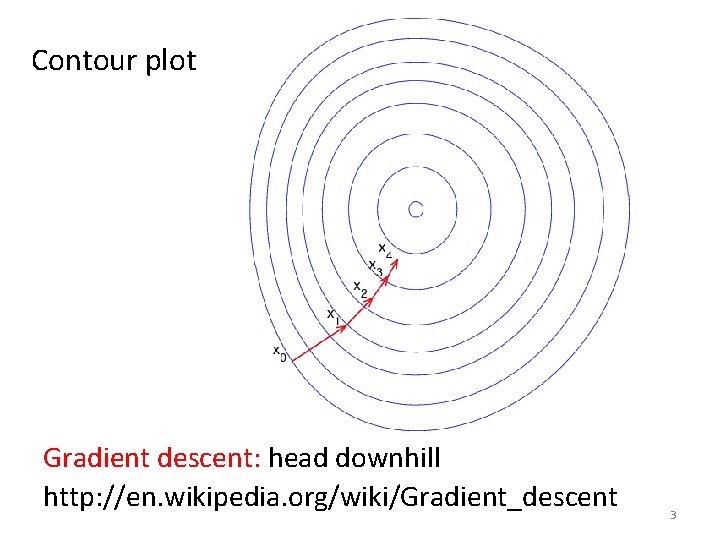
Contour plot Gradient descent: head downhill http: //en. wikipedia. org/wiki/Gradient_descent 3
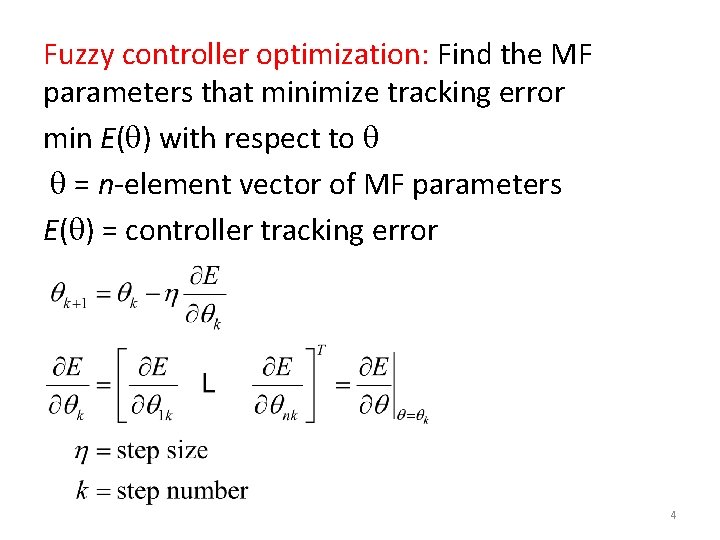
Fuzzy controller optimization: Find the MF parameters that minimize tracking error min E( ) with respect to = n-element vector of MF parameters E( ) = controller tracking error 4
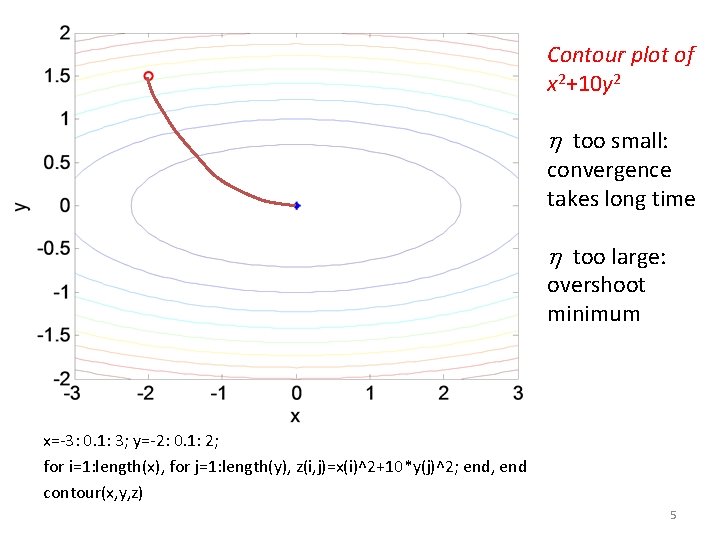
Contour plot of x 2+10 y 2 too small: convergence takes long time too large: overshoot minimum x=-3: 0. 1: 3; y=-2: 0. 1: 2; for i=1: length(x), for j=1: length(y), z(i, j)=x(i)^2+10*y(j)^2; end, end contour(x, y, z) 5
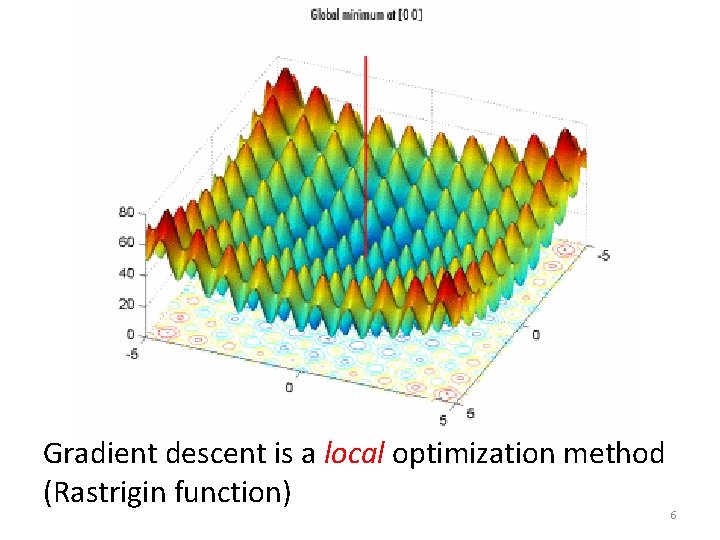
Gradient descent is a local optimization method (Rastrigin function) 6
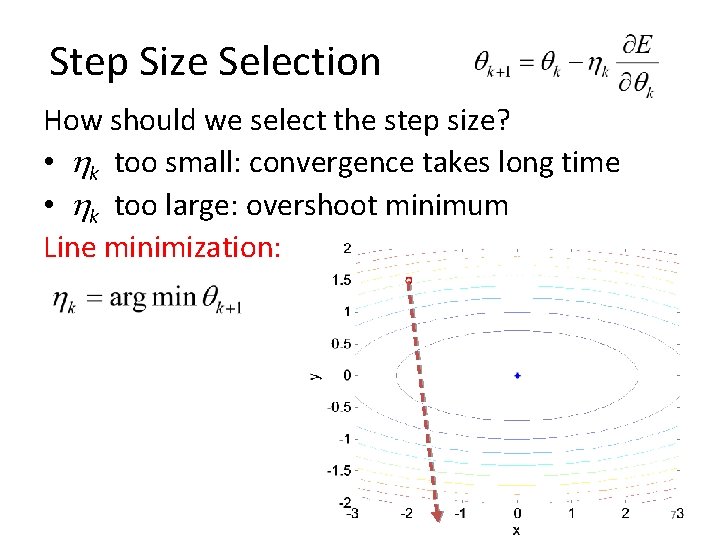
Step Size Selection How should we select the step size? • k too small: convergence takes long time • k too large: overshoot minimum Line minimization: 7
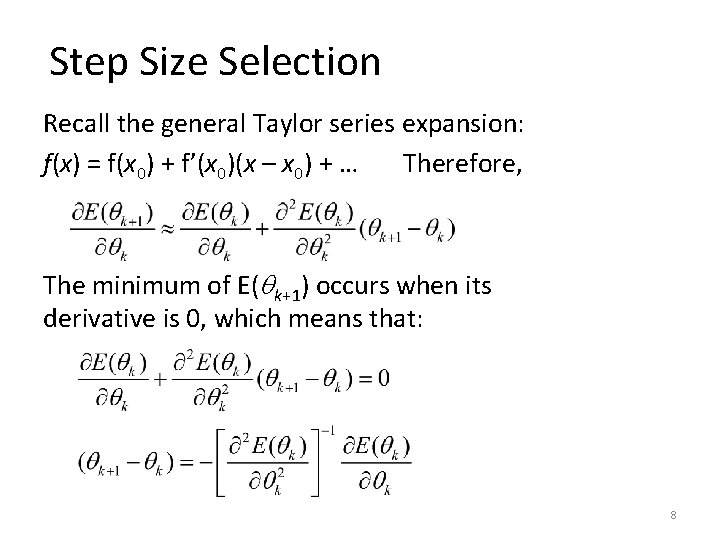
Step Size Selection Recall the general Taylor series expansion: f(x) = f(x 0) + f’(x 0)(x – x 0) + … Therefore, The minimum of E( k+1) occurs when its derivative is 0, which means that: 8
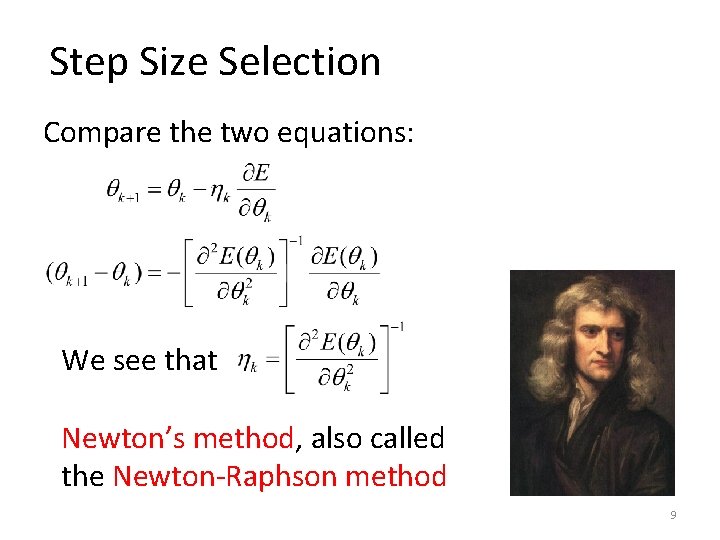
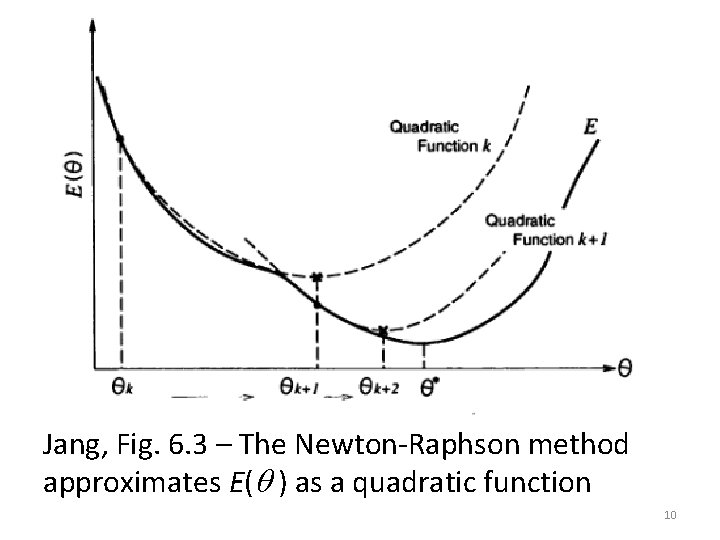
Step Size Selection Compare the two equations: We see that Newton’s method, also called the Newton-Raphson method 9
Jang, Fig. 6. 3 – The Newton-Raphson method approximates E( ) as a quadratic function 10
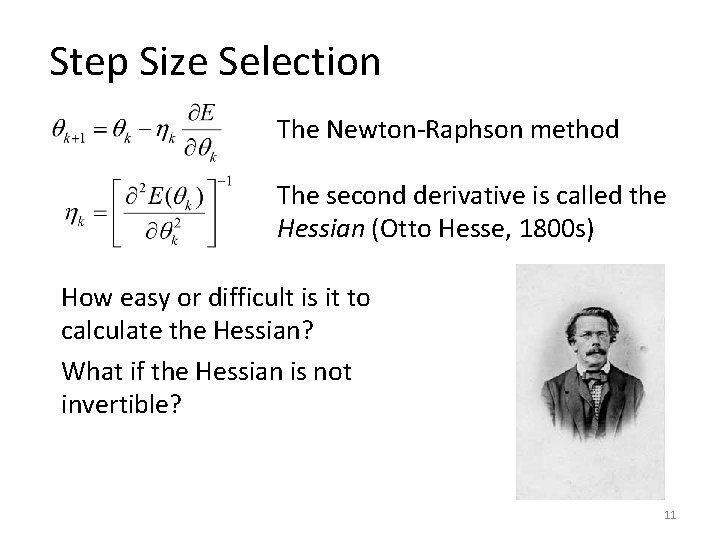
Step Size Selection The Newton-Raphson method The second derivative is called the Hessian (Otto Hesse, 1800 s) How easy or difficult is it to calculate the Hessian? What if the Hessian is not invertible? 11
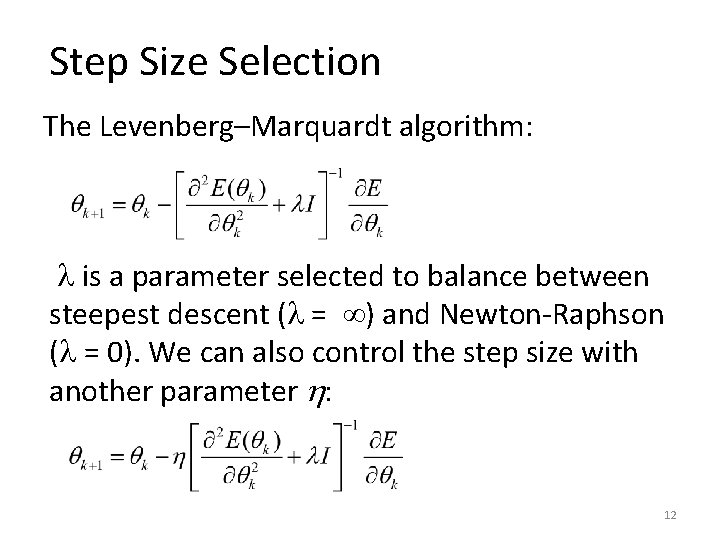
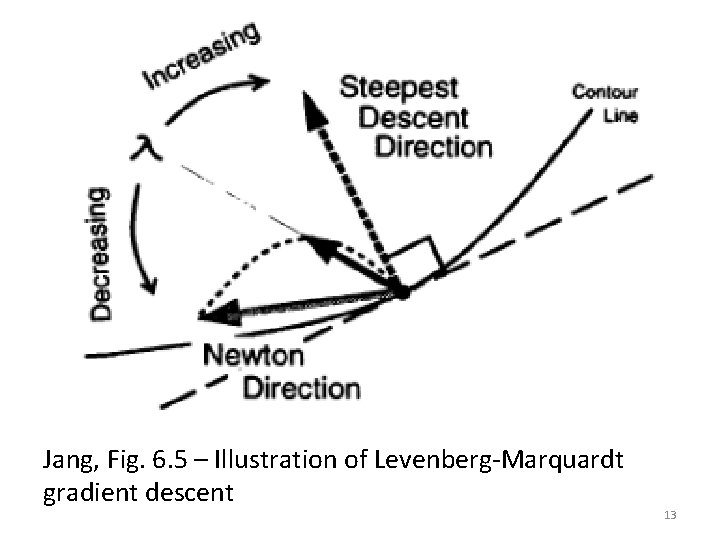
Step Size Selection The Levenberg–Marquardt algorithm: is a parameter selected to balance between steepest descent ( = ) and Newton-Raphson ( = 0). We can also control the step size with another parameter : 12
Jang, Fig. 6. 5 – Illustration of Levenberg-Marquardt gradient descent 13
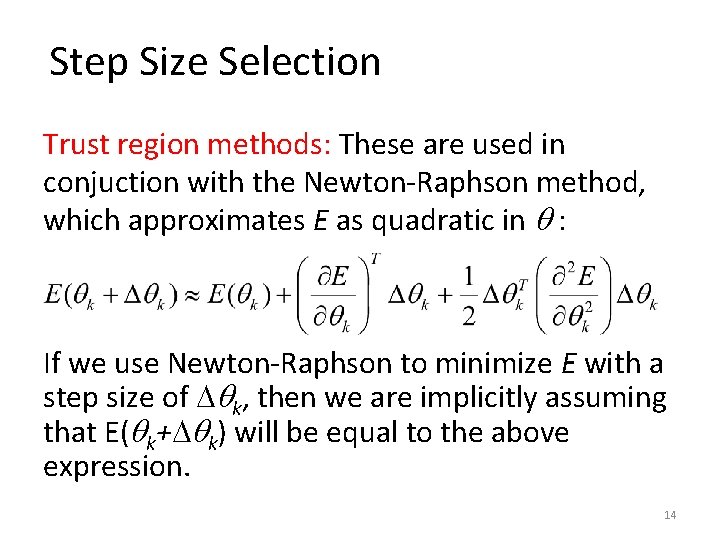
Step Size Selection Trust region methods: These are used in conjuction with the Newton-Raphson method, which approximates E as quadratic in : If we use Newton-Raphson to minimize E with a step size of k, then we are implicitly assuming that E( k+ k) will be equal to the above expression. 14
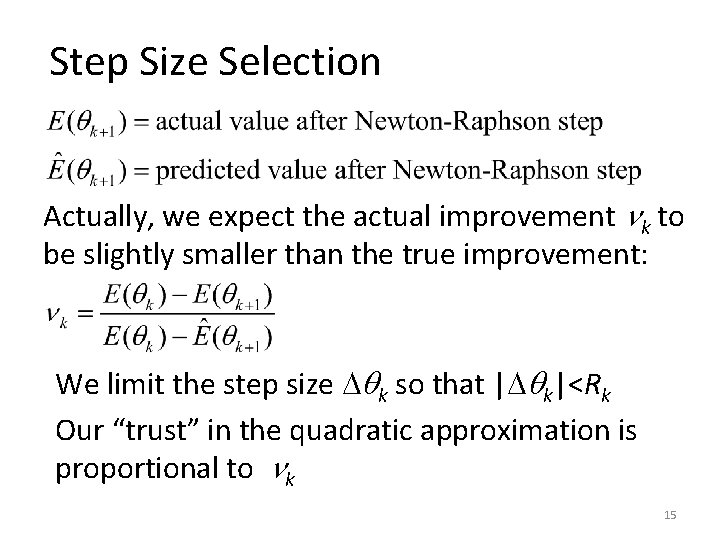
Step Size Selection Actually, we expect the actual improvement k to be slightly smaller than the true improvement: We limit the step size k so that | k|<Rk Our “trust” in the quadratic approximation is proportional to k 15
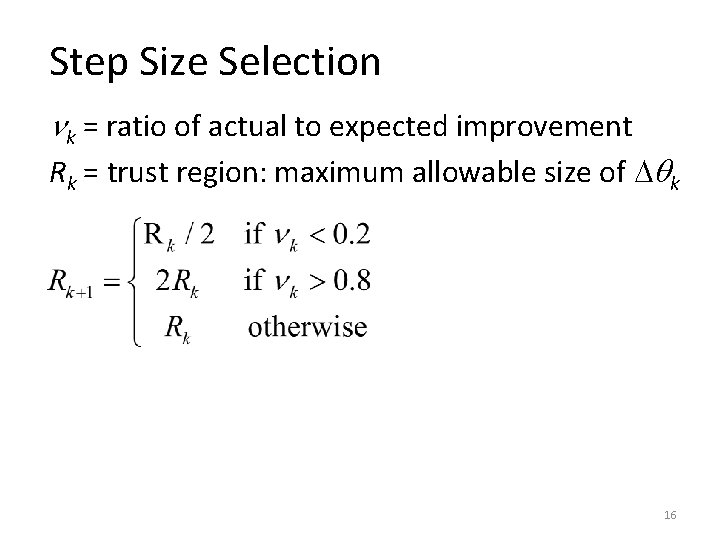
Step Size Selection k = ratio of actual to expected improvement Rk = trust region: maximum allowable size of k 16
17
18
19