
JANET BELSKY Experiencing The Lifespan 3 rd edition
JANET BELSKY Experiencing The Lifespan 3 rd edition Chapter 1: The People and the Field Copyright © 2013, 2011 by Worth Publishers
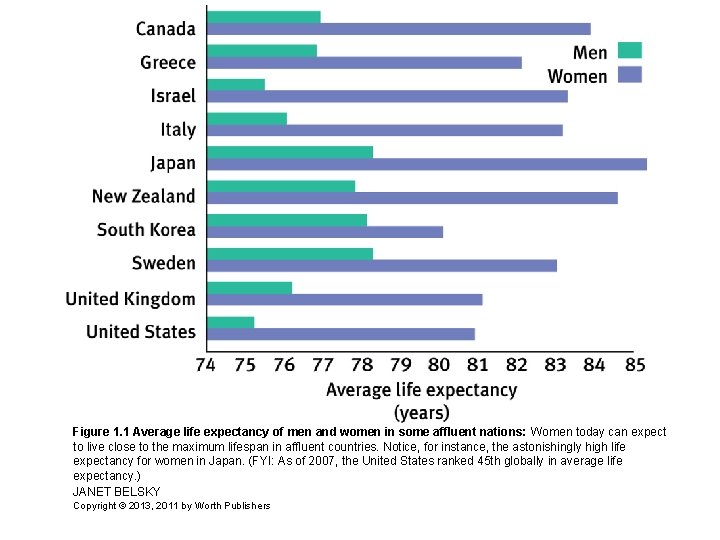
Figure 1. 1 Average life expectancy of men and women in some affluent nations: Women today can expect to live close to the maximum lifespan in affluent countries. Notice, for instance, the astonishingly high life expectancy for women in Japan. (FYI: As of 2007, the United States ranked 45 th globally in average life expectancy. ) JANET BELSKY Copyright © 2013, 2011 by Worth Publishers
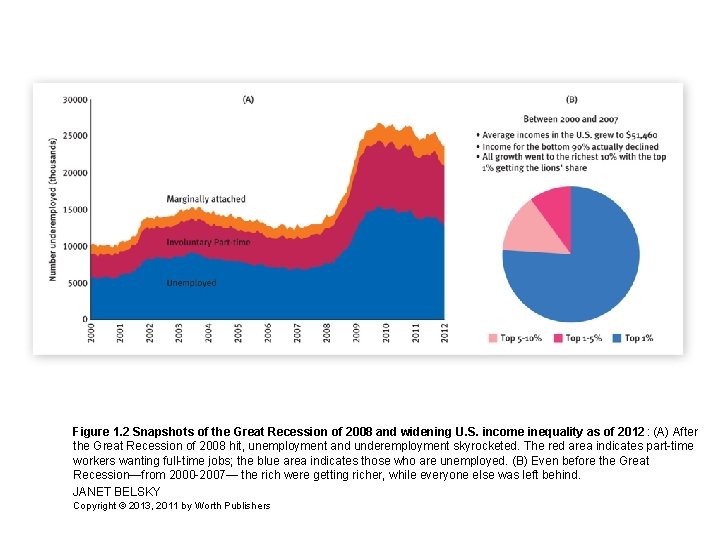
Figure 1. 2 Snapshots of the Great Recession of 2008 and widening U. S. income inequality as of 2012: (A) After the Great Recession of 2008 hit, unemployment and underemployment skyrocketed. The red area indicates part-time workers wanting full-time jobs; the blue area indicates those who are unemployed. (B) Even before the Great Recession—from 2000 -2007— the rich were getting richer, while everyone else was left behind. JANET BELSKY Copyright © 2013, 2011 by Worth Publishers
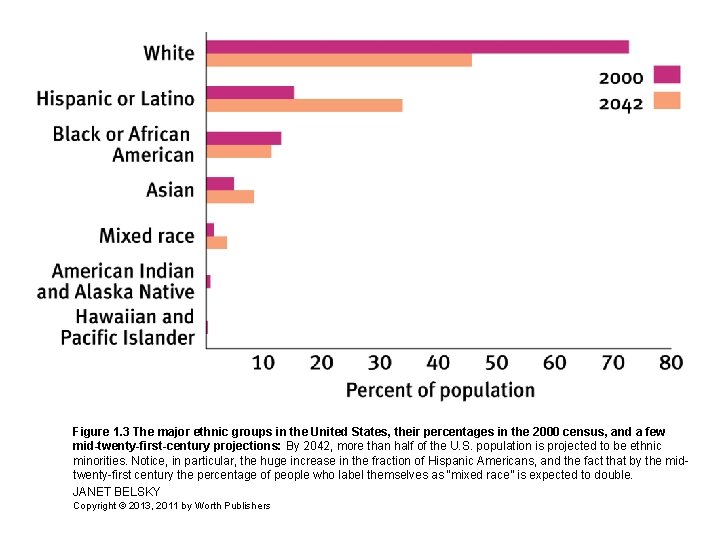
Figure 1. 3 The major ethnic groups in the United States, their percentages in the 2000 census, and a few mid-twenty-first-century projections: By 2042, more than half of the U. S. population is projected to be ethnic minorities. Notice, in particular, the huge increase in the fraction of Hispanic Americans, and the fact that by the midtwenty-first century the percentage of people who label themselves as “mixed race” is expected to double. JANET BELSKY Copyright © 2013, 2011 by Worth Publishers
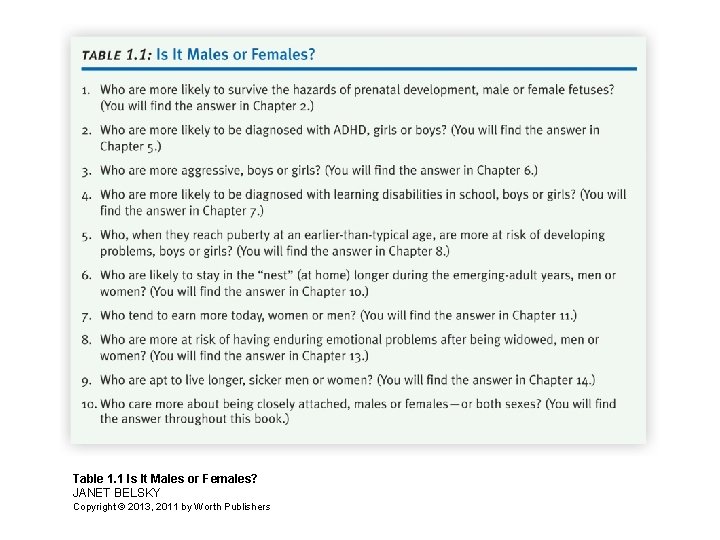
Table 1. 1 Is It Males or Females? JANET BELSKY Copyright © 2013, 2011 by Worth Publishers
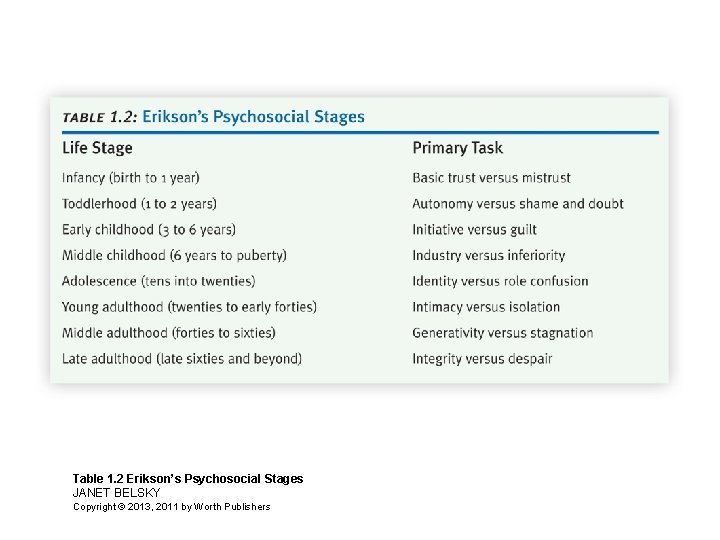
Table 1. 2 Erikson’s Psychosocial Stages JANET BELSKY Copyright © 2013, 2011 by Worth Publishers
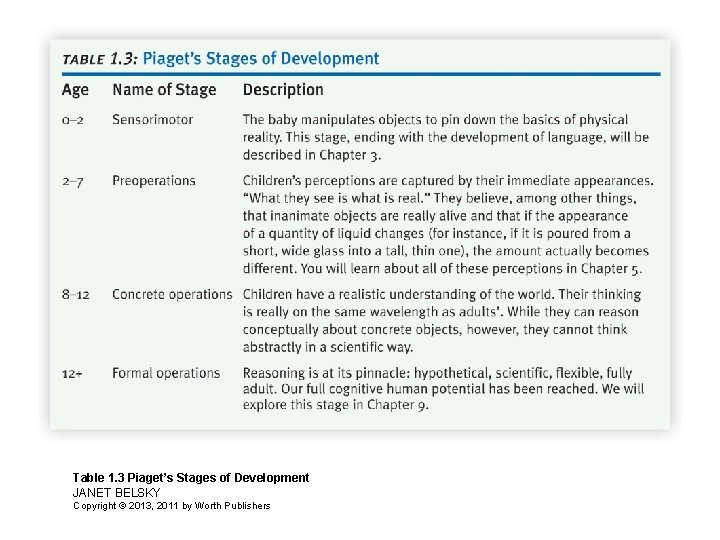
Table 1. 3 Piaget’s Stages of Development JANET BELSKY Copyright © 2013, 2011 by Worth Publishers

Table 1. 4 Summary of the Major Current Theories in Lifespan Development JANET BELSKY Copyright © 2013, 2011 by Worth Publishers
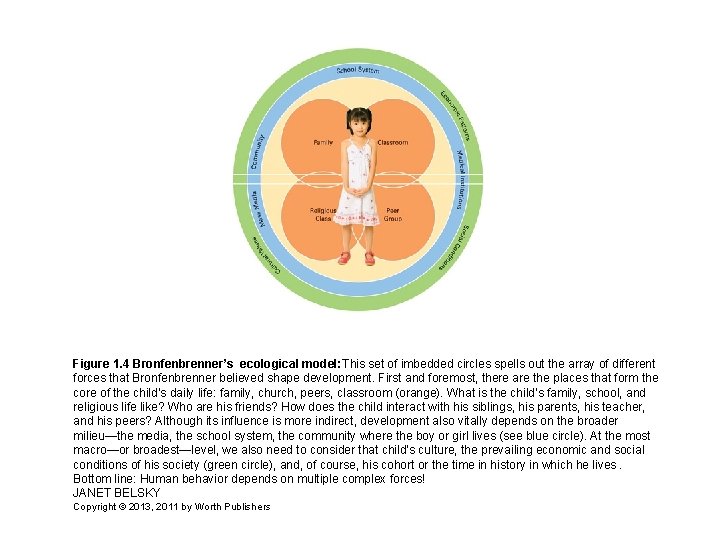
Figure 1. 4 Bronfenbrenner’s ecological model: This set of imbedded circles spells out the array of different forces that Bronfenbrenner believed shape development. First and foremost, there are the places that form the core of the child’s daily life: family, church, peers, classroom (orange). What is the child’s family, school, and religious life like? Who are his friends? How does the child interact with his siblings, his parents, his teacher, and his peers? Although its influence is more indirect, development also vitally depends on the broader milieu—the media, the school system, the community where the boy or girl lives (see blue circle). At the most macro—or broadest—level, we also need to consider that child’s culture, the prevailing economic and social conditions of his society (green circle), and, of course, his cohort or the time in history in which he lives. Bottom line: Human behavior depends on multiple complex forces! JANET BELSKY Copyright © 2013, 2011 by Worth Publishers
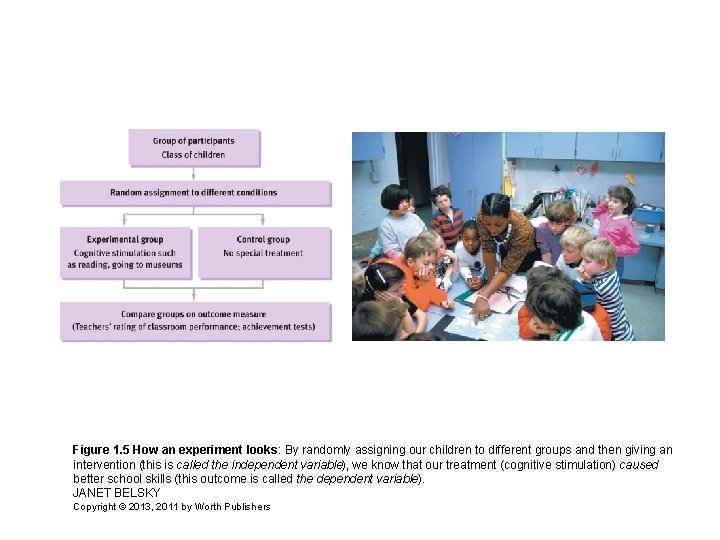
Figure 1. 5 How an experiment looks: By randomly assigning our children to different groups and then giving an intervention (this is called the independent variable), we know that our treatment (cognitive stimulation) caused better school skills (this outcome is called the dependent variable). JANET BELSKY Copyright © 2013, 2011 by Worth Publishers
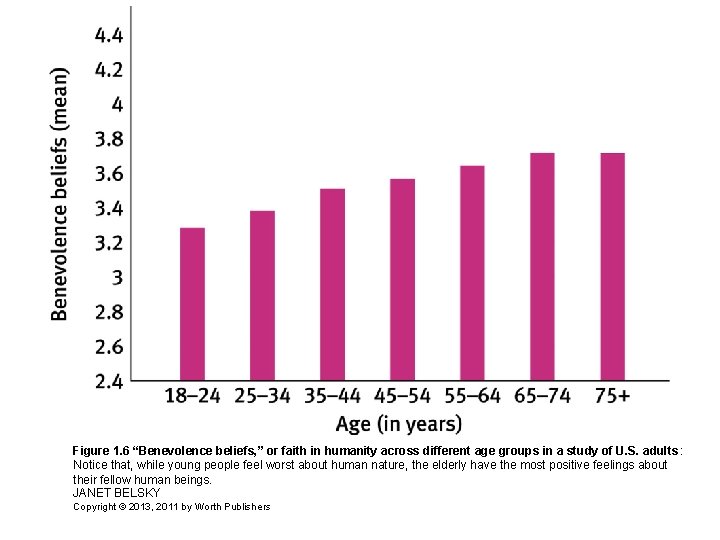
Figure 1. 6 “Benevolence beliefs, ” or faith in humanity across different age groups in a study of U. S. adults : Notice that, while young people feel worst about human nature, the elderly have the most positive feelings about their fellow human beings. JANET BELSKY Copyright © 2013, 2011 by Worth Publishers
- Slides: 11