
Jane Loevingers Theory Jane Loevinger 1918 2008 Went
- Slides: 14
Jane Loevinger’s Theory
Jane Loevinger ● 1918 -2008 ● Went to the University of Wisconsin and Berkeley, Washington ● Wrote 4 books ● Worked with Erikson ● Studied Ego Development ● Development Psychologist (ebscohost 2015)
Research ● Was interested in searching for understanding of one’s self ● Ego development- understanding of self ● Ego persons sense of self ● We grow and mature so does our ego ● Nine stages ● Stage 4 and 5 (adolescent) (ebscohost 2015)
Presocial stage (1) ● ● Earliest Infancy She said babies can’t differentiate itself from the world Believes they do not have a ego Begin to associate with objects(blankets, toys) (ebscohost 2015).
Impulsive Stage (2) ● ● ● Assert their growing sense of self “The child is preoccupied with bodily impulses” Child becomes enriched in the world and learns how things affect them Discipline is viewed by the child as restraints When someone meets their needs Good When someone doesn’t meet their needs bad impulsive action (running away) (ebscohost 2015).
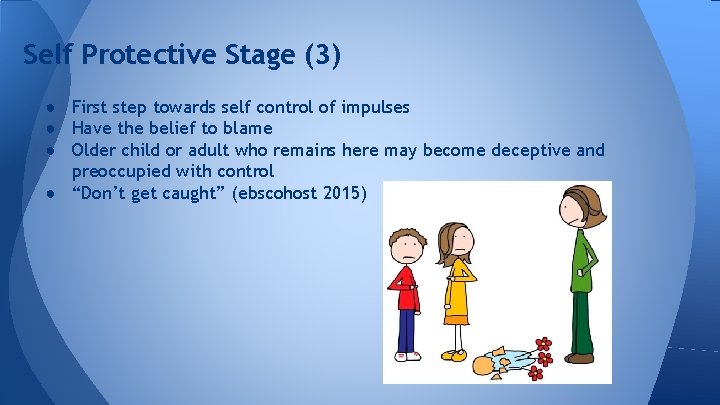
Self Protective Stage (3) ● First step towards self control of impulses ● Have the belief to blame ● Older child or adult who remains here may become deceptive and preoccupied with control ● “Don’t get caught” (ebscohost 2015)
Conformist Stage (4) ● Invested in belonging to and obtaining the approval of important peer groups ● Tend to view themselves and others in stereotypes ● Feelings tend to be simple and rule governed (ebsco 2015).
Self aware stage (5) ● ● ● Young adults Increased self aware ego Aware that others have unique feelings and motives Creates tension between the “real me “ and “expected me” Leads to conflict with family and peers (ebsco 2015).
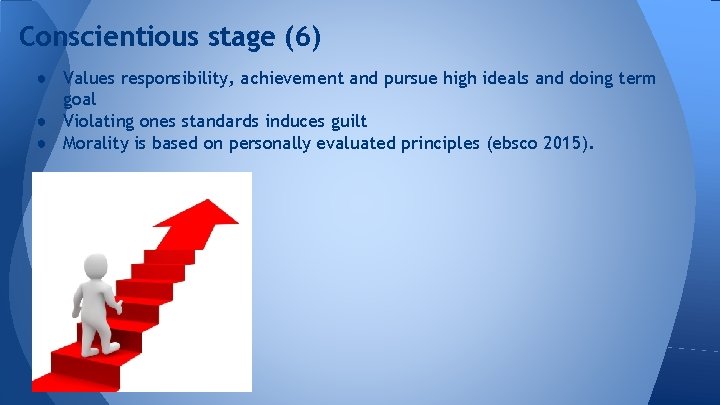
Conscientious stage (6) ● Values responsibility, achievement and pursue high ideals and doing term goal ● Violating ones standards induces guilt ● Morality is based on personally evaluated principles (ebsco 2015).
Individualistic stage (7) ● Has a heightened sense of individuality and concern for emotionally dependence ● Demonstrate both a respect for individuality and interpersonal ties ● Respectful to others and self (ebsco 2015).
Autonomous stage (8) ● Become synthesizers (thinking, judging, analyzing) ● Self fulfillment becomes a goal ● The difference between needs and duties are understood (ebsco 2015)
Integrated stage (9) ● Rare stage to accomplish ● This ego represents wisdom, broad empathy for yourself and others (ebsco 2015).
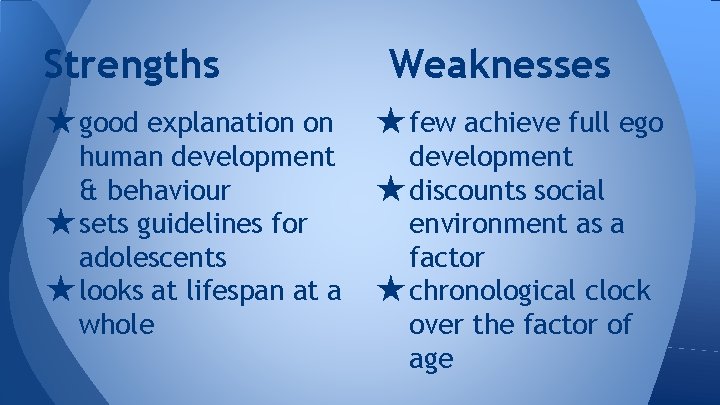
Strengths Weaknesses ★ good explanation on ★ few achieve full ego human development & behaviour ★ sets guidelines for adolescents ★ looks at lifespan at a whole development ★ discounts social environment as a factor ★ chronological clock over the factor of age
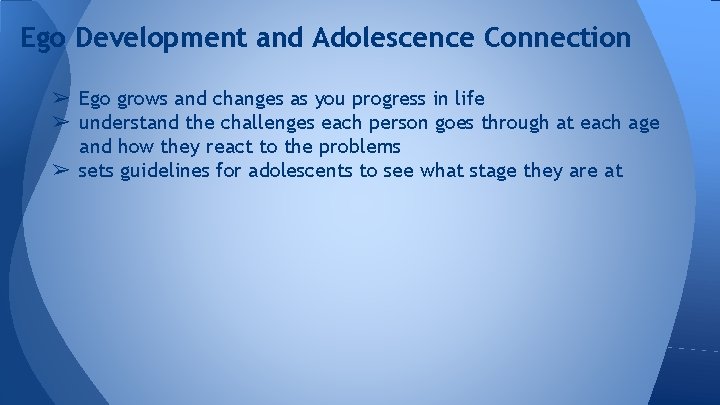
Ego Development and Adolescence Connection ➢ Ego grows and changes as you progress in life ➢ understand the challenges each person goes through at each age and how they react to the problems ➢ sets guidelines for adolescents to see what stage they are at