
James Oglethorpe Credited as the founder and first
- Slides: 21
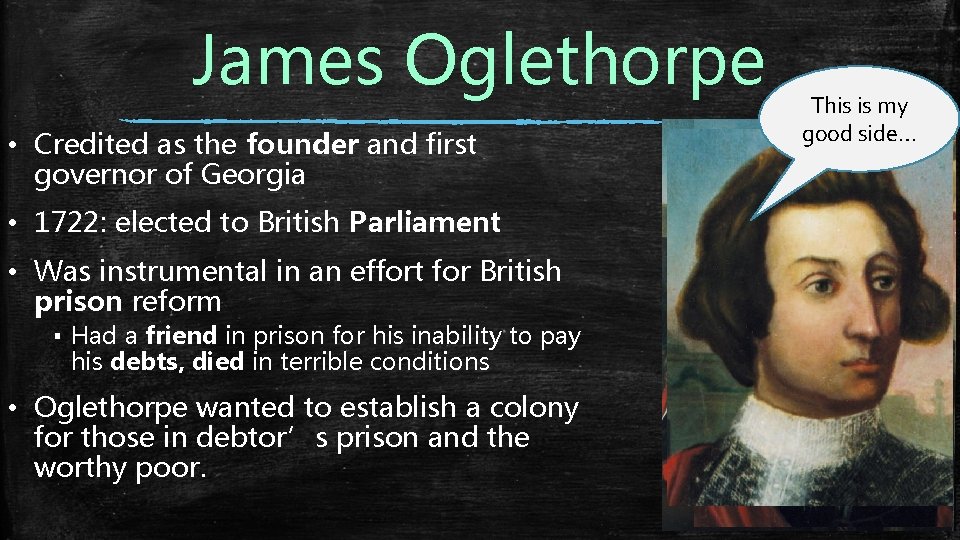
James Oglethorpe • Credited as the founder and first governor of Georgia • 1722: elected to British Parliament • Was instrumental in an effort for British prison reform ▪ Had a friend in prison for his inability to pay his debts, died in terrible conditions • Oglethorpe wanted to establish a colony for those in debtor’s prison and the worthy poor. This is my good side…
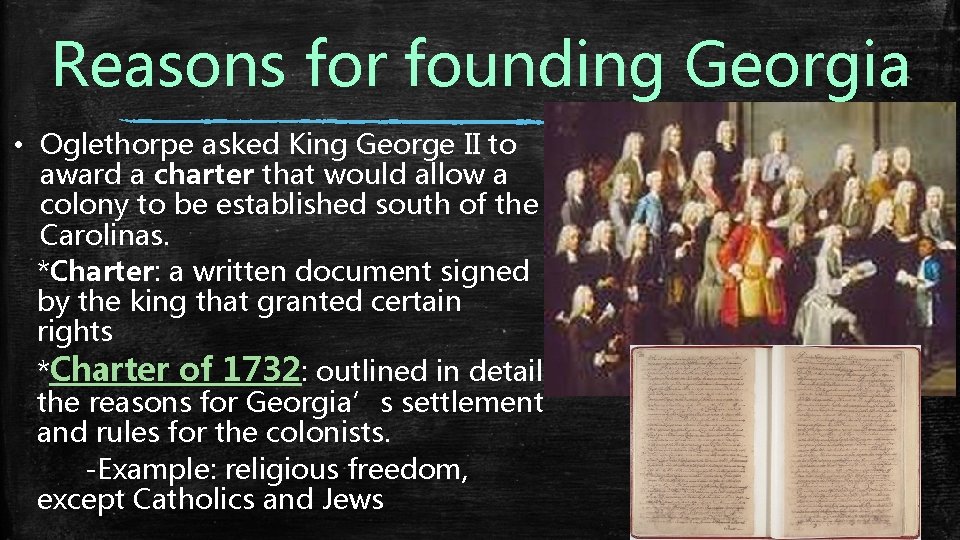
Reasons for founding Georgia • Oglethorpe asked King George II to award a charter that would allow a colony to be established south of the Carolinas. *Charter: a written document signed by the king that granted certain rights *Charter of 1732: outlined in detail the reasons for Georgia’s settlement and rules for the colonists. -Example: religious freedom, except Catholics and Jews
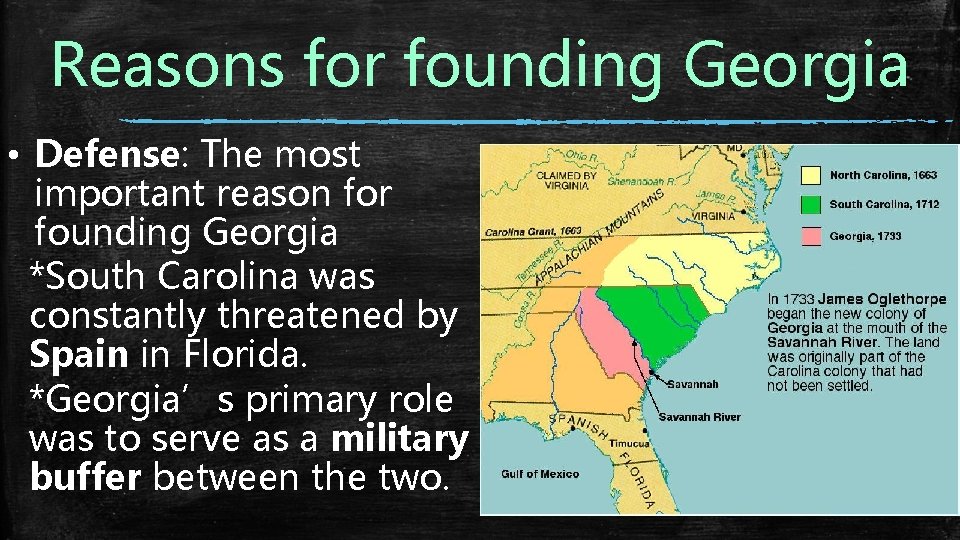
Reasons for founding Georgia • Defense: The most important reason for founding Georgia *South Carolina was constantly threatened by Spain in Florida. *Georgia’s primary role was to serve as a military buffer between the two.
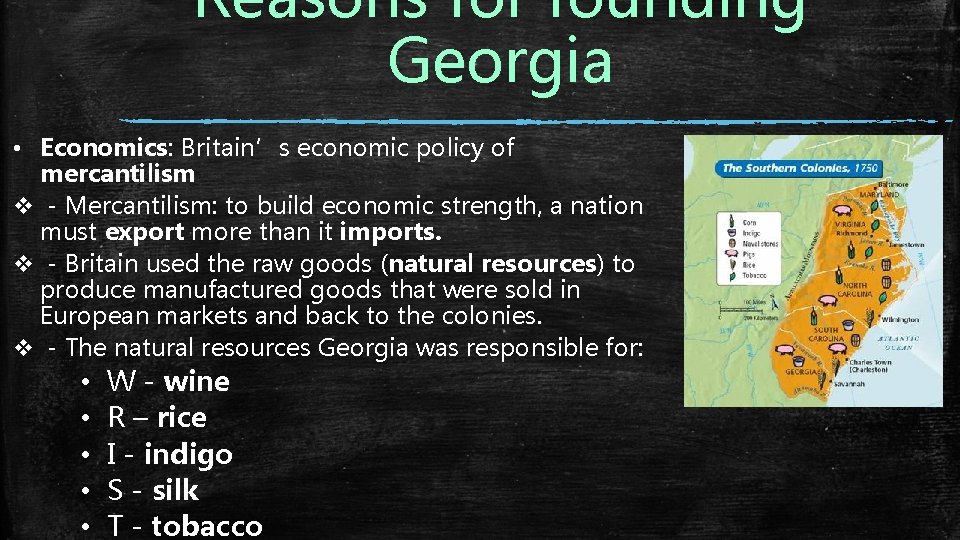
Reasons for founding Georgia • Economics: Britain’s economic policy of mercantilism v - Mercantilism: to build economic strength, a nation must export more than it imports. v - Britain used the raw goods (natural resources) to produce manufactured goods that were sold in European markets and back to the colonies. v - The natural resources Georgia was responsible for: • • • W - wine R – rice I - indigo S - silk T - tobacco
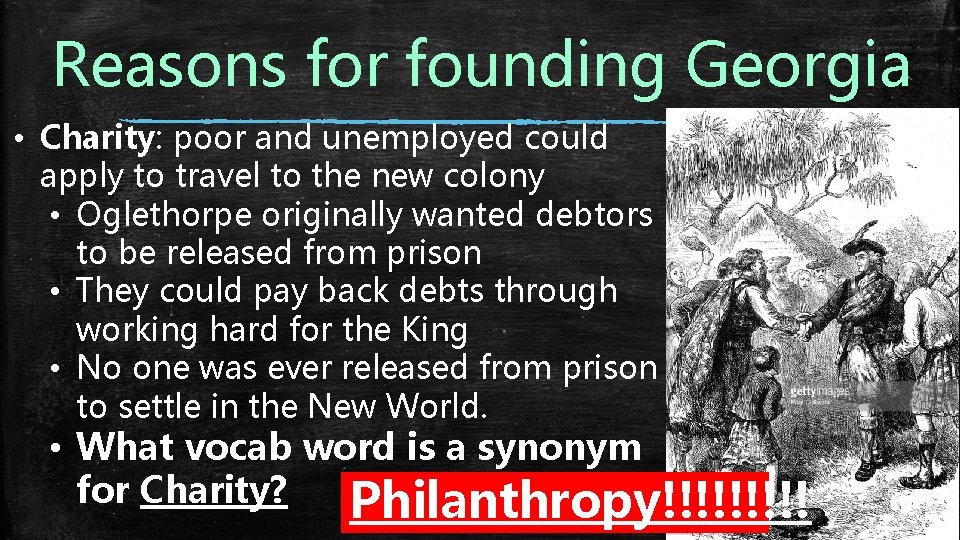
Reasons for founding Georgia • Charity: poor and unemployed could apply to travel to the new colony • Oglethorpe originally wanted debtors to be released from prison • They could pay back debts through working hard for the King • No one was ever released from prison to settle in the New World. • What vocab word is a synonym for Charity? Philanthropy!!!!!
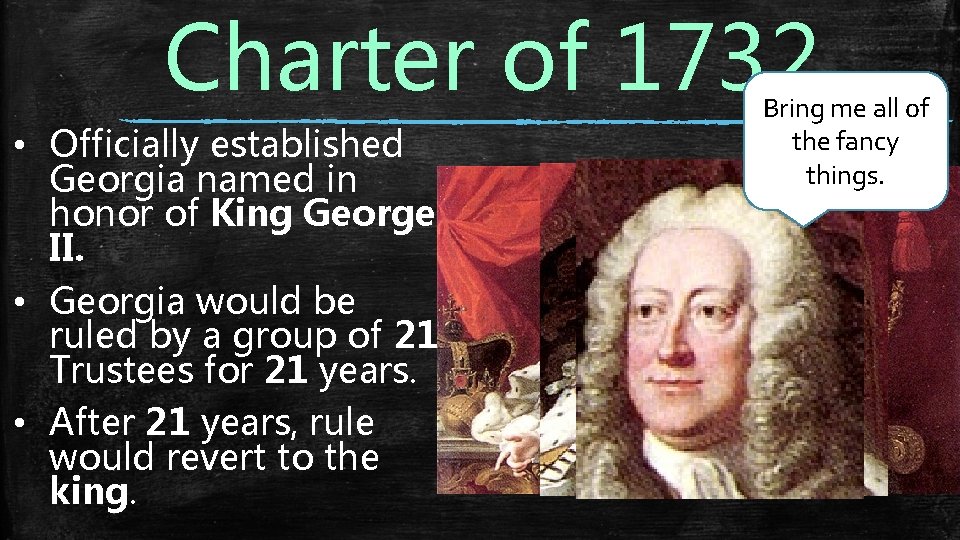
Charter of 1732 • Officially established Georgia named in honor of King George II. • Georgia would be ruled by a group of 21 Trustees for 21 years. • After 21 years, rule would revert to the king. Bring me all of the fancy things.
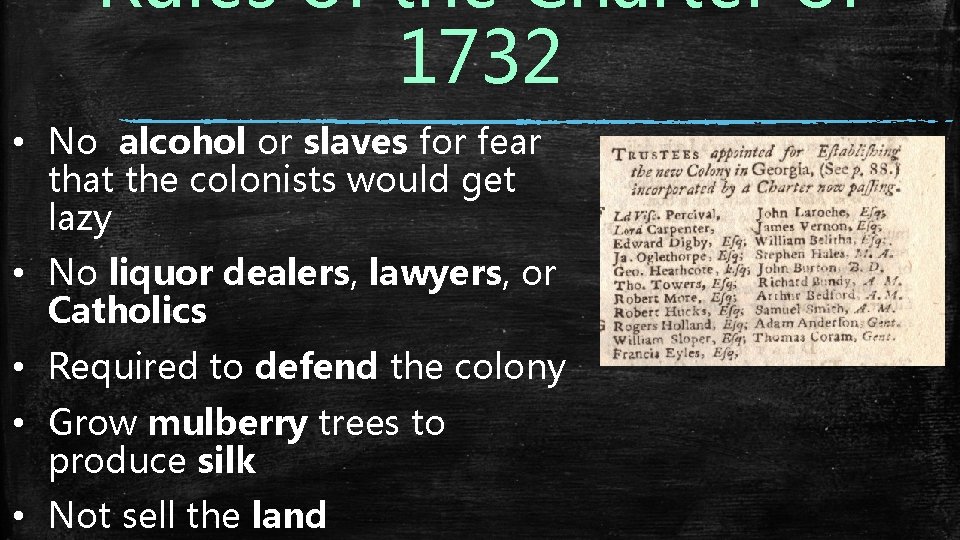
Rules of the Charter of 1732 • No alcohol or slaves for fear that the colonists would get lazy • No liquor dealers, lawyers, or Catholics • Required to defend the colony • Grow mulberry trees to produce silk • Not sell the land
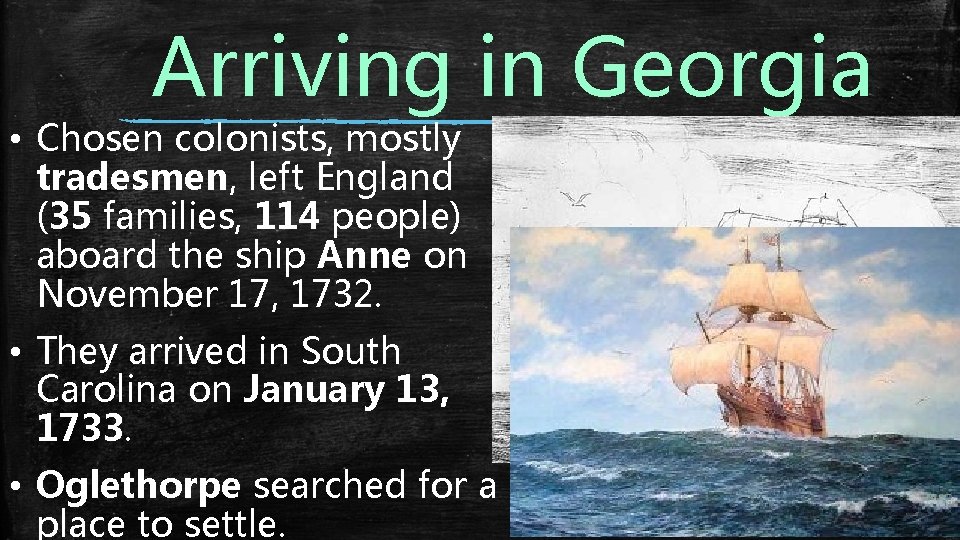
Arriving in Georgia • Chosen colonists, mostly tradesmen, left England (35 families, 114 people) aboard the ship Anne on November 17, 1732. • They arrived in South Carolina on January 13, 1733. • Oglethorpe searched for a place to settle.
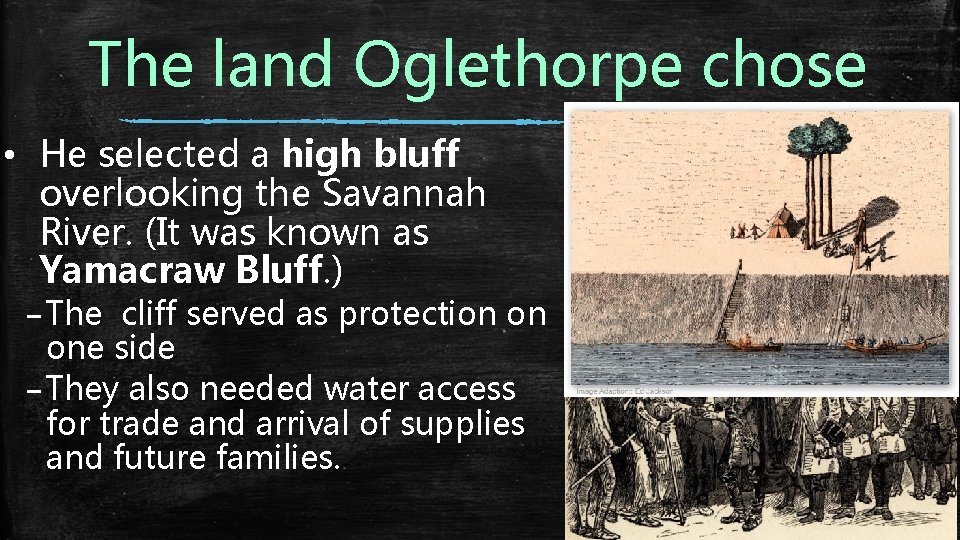
The land Oglethorpe chose • He selected a high bluff overlooking the Savannah River. (It was known as Yamacraw Bluff. ) – The cliff served as protection on one side – They also needed water access for trade and arrival of supplies and future families.
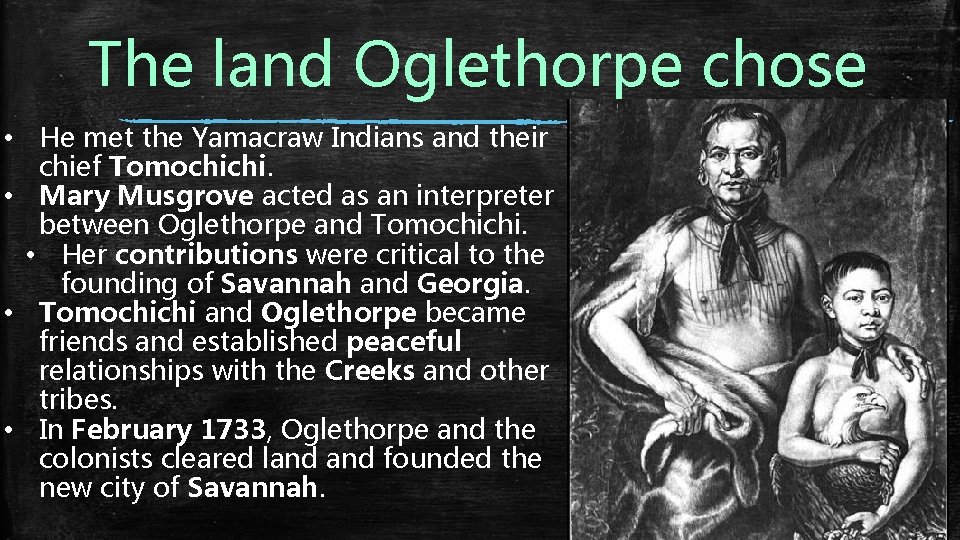
The land Oglethorpe chose • He met the Yamacraw Indians and their chief Tomochichi. • Mary Musgrove acted as an interpreter between Oglethorpe and Tomochichi. • Her contributions were critical to the founding of Savannah and Georgia. • Tomochichi and Oglethorpe became friends and established peaceful relationships with the Creeks and other tribes. • In February 1733, Oglethorpe and the colonists cleared land founded the new city of Savannah.
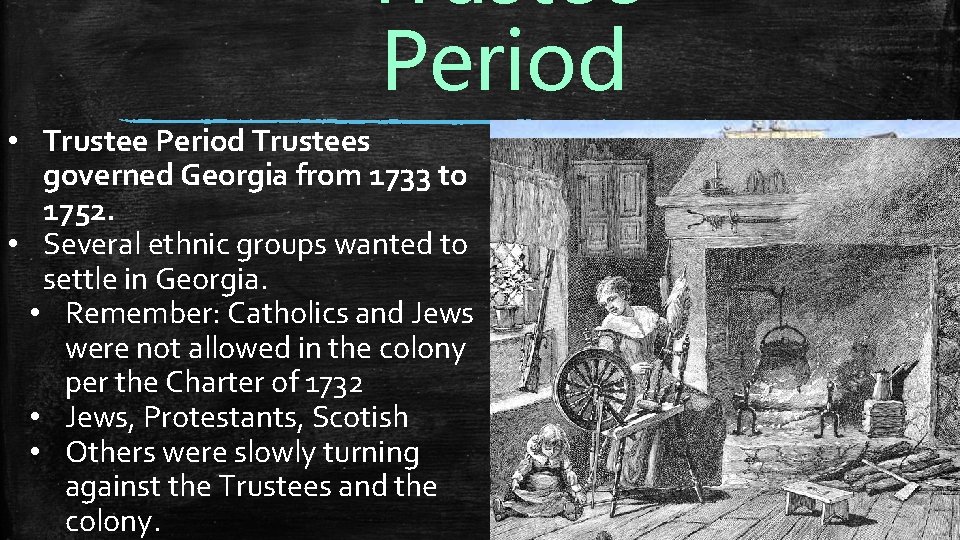
Trustee Period • Trustee Period Trustees governed Georgia from 1733 to 1752. • Several ethnic groups wanted to settle in Georgia. • Remember: Catholics and Jews were not allowed in the colony per the Charter of 1732 • Jews, Protestants, Scotish • Others were slowly turning against the Trustees and the colony.
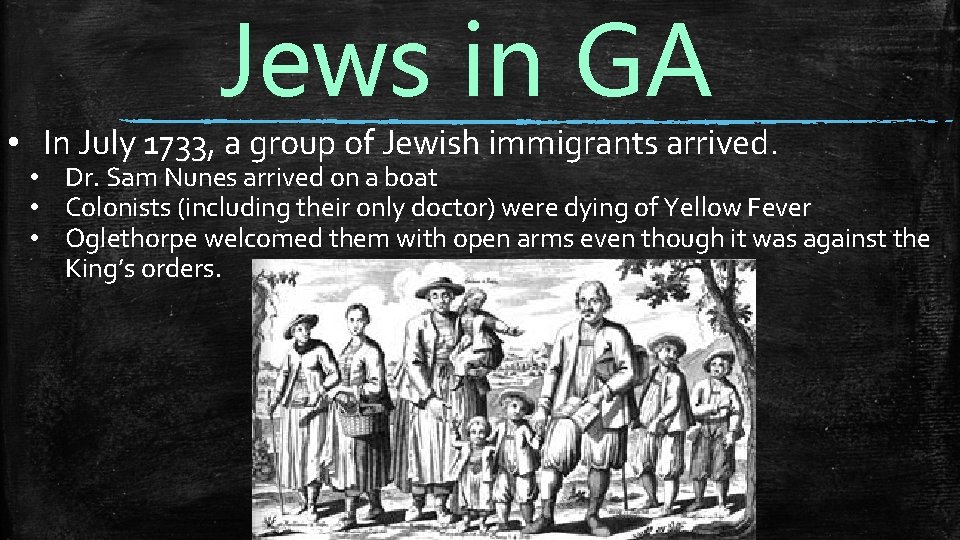
Jews in GA • In July 1733, a group of Jewish immigrants arrived. • Dr. Sam Nunes arrived on a boat • Colonists (including their only doctor) were dying of Yellow Fever • Oglethorpe welcomed them with open arms even though it was against the King’s orders.
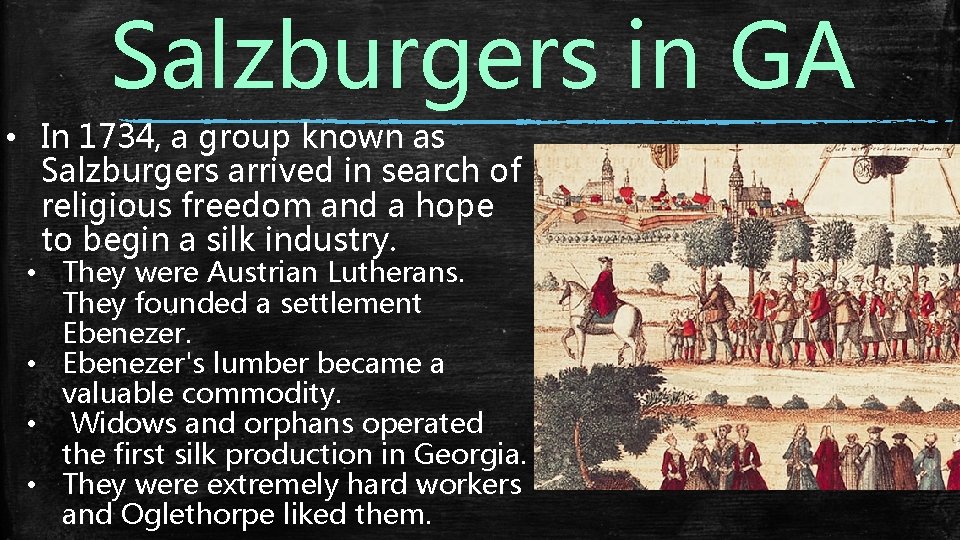
Salzburgers in GA • In 1734, a group known as Salzburgers arrived in search of religious freedom and a hope to begin a silk industry. • They were Austrian Lutherans. They founded a settlement Ebenezer. • Ebenezer's lumber became a valuable commodity. • Widows and orphans operated the first silk production in Georgia. • They were extremely hard workers and Oglethorpe liked them.
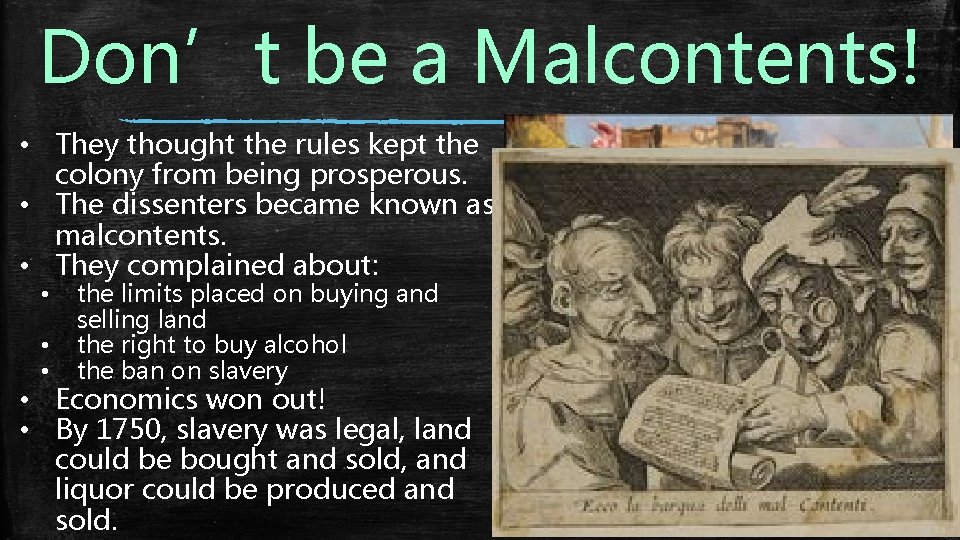
Don’t be a Malcontents! • They thought the rules kept the colony from being prosperous. • The dissenters became known as malcontents. • They complained about: • • • the limits placed on buying and selling land the right to buy alcohol the ban on slavery • Economics won out! • By 1750, slavery was legal, land could be bought and sold, and liquor could be produced and sold.
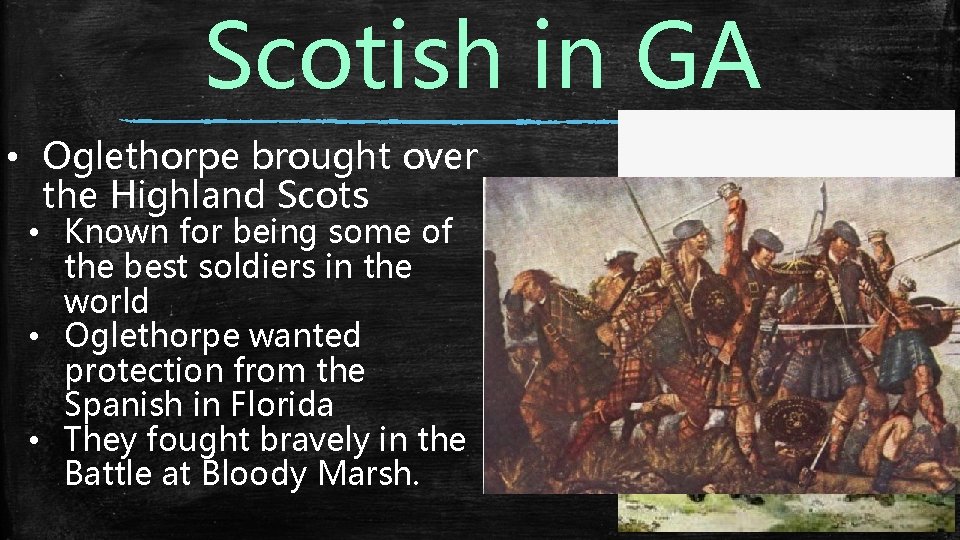
Scotish in GA • Oglethorpe brought over the Highland Scots • Known for being some of the best soldiers in the world • Oglethorpe wanted protection from the Spanish in Florida • They fought bravely in the Battle at Bloody Marsh.
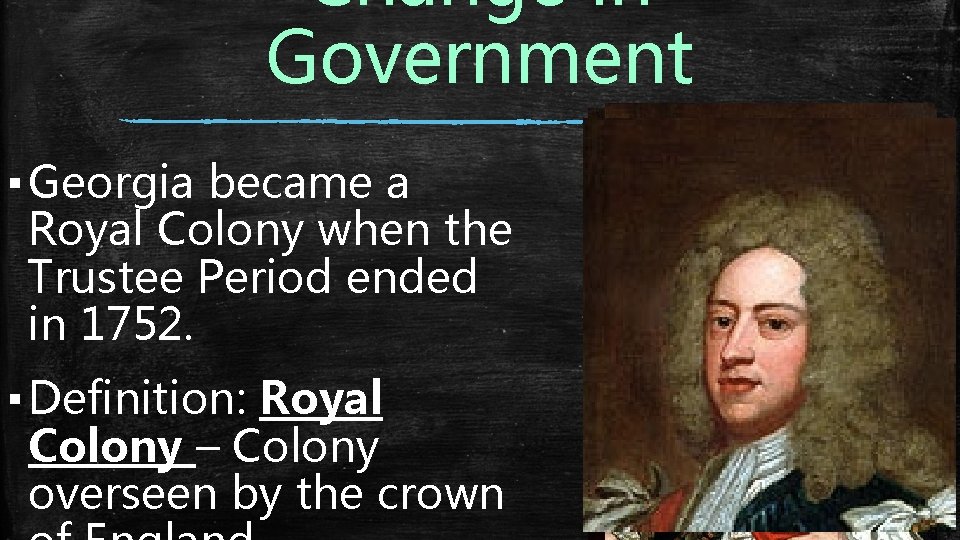
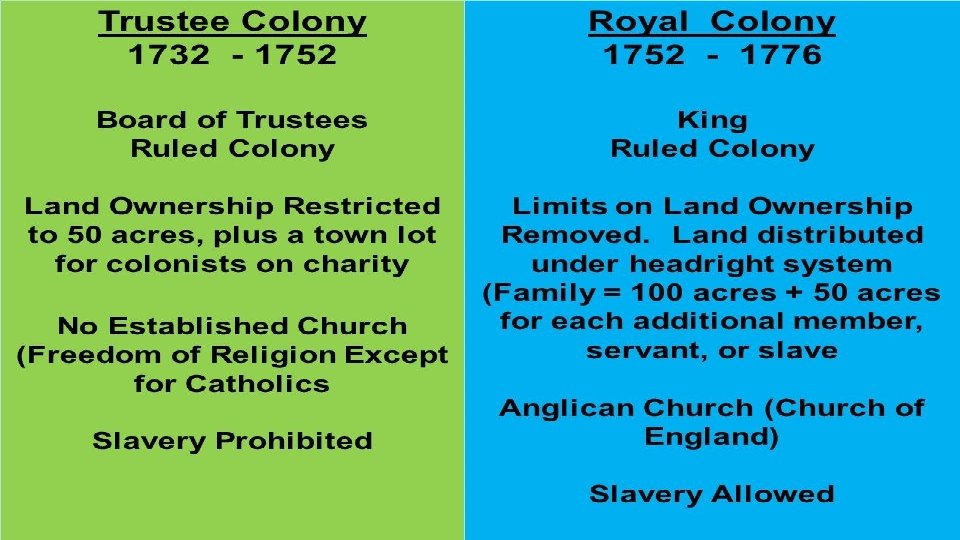
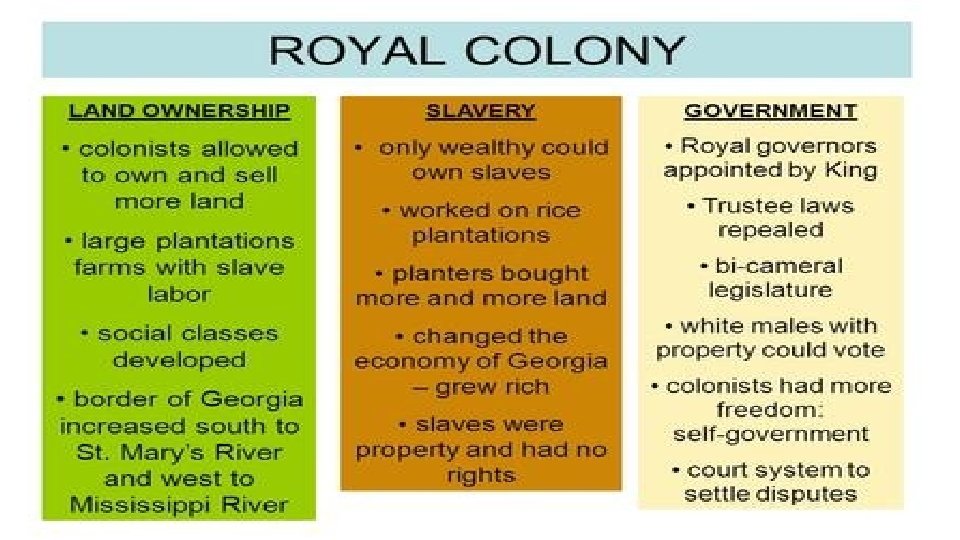
Change in Government ▪ Georgia became a Royal Colony when the Trustee Period ended in 1752. ▪ Definition: Royal Colony – Colony overseen by the crown
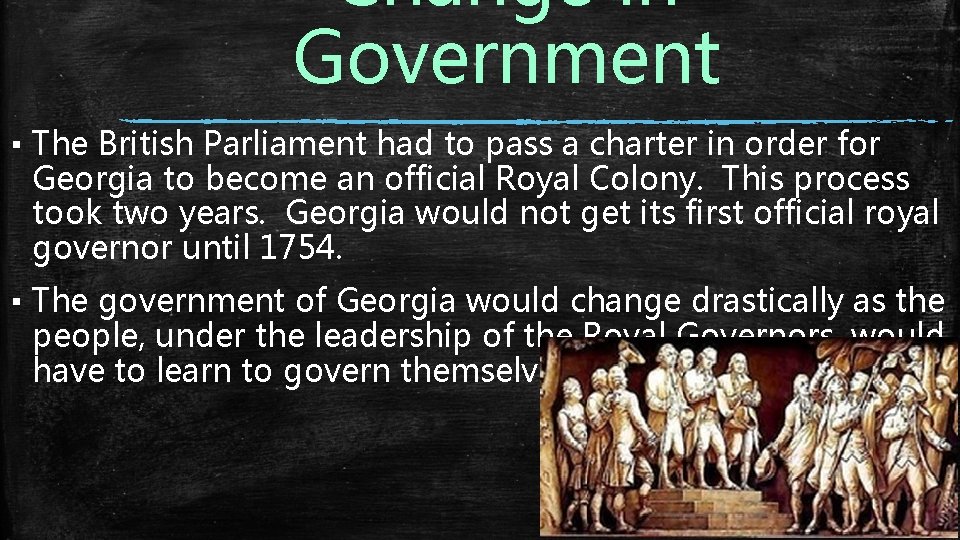
Change in Government ▪ The British Parliament had to pass a charter in order for Georgia to become an official Royal Colony. This process took two years. Georgia would not get its first official royal governor until 1754. ▪ The government of Georgia would change drastically as the people, under the leadership of the Royal Governors, would have to learn to govern themselves.
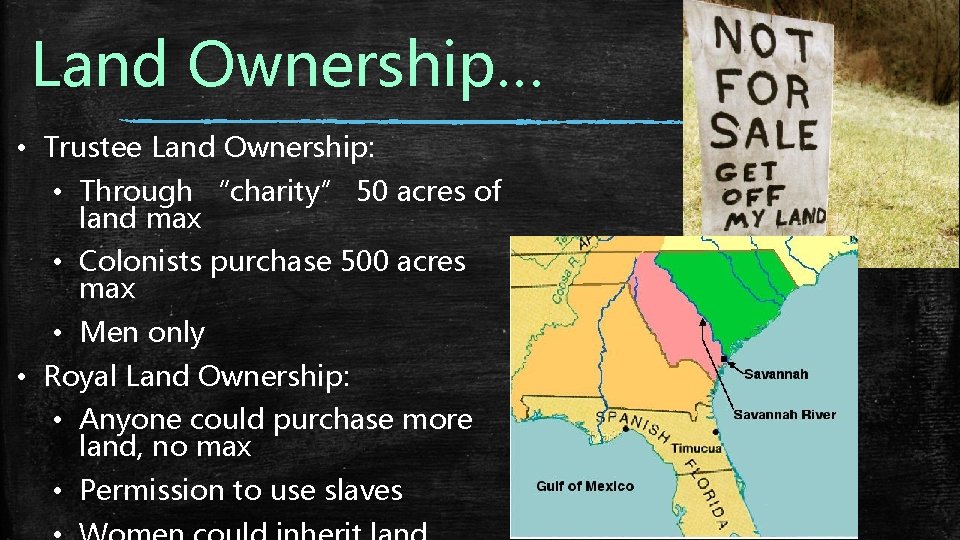
Land Ownership… • Trustee Land Ownership: • Through “charity” 50 acres of land max • Colonists purchase 500 acres max • Men only • Royal Land Ownership: • Anyone could purchase more land, no max • Permission to use slaves
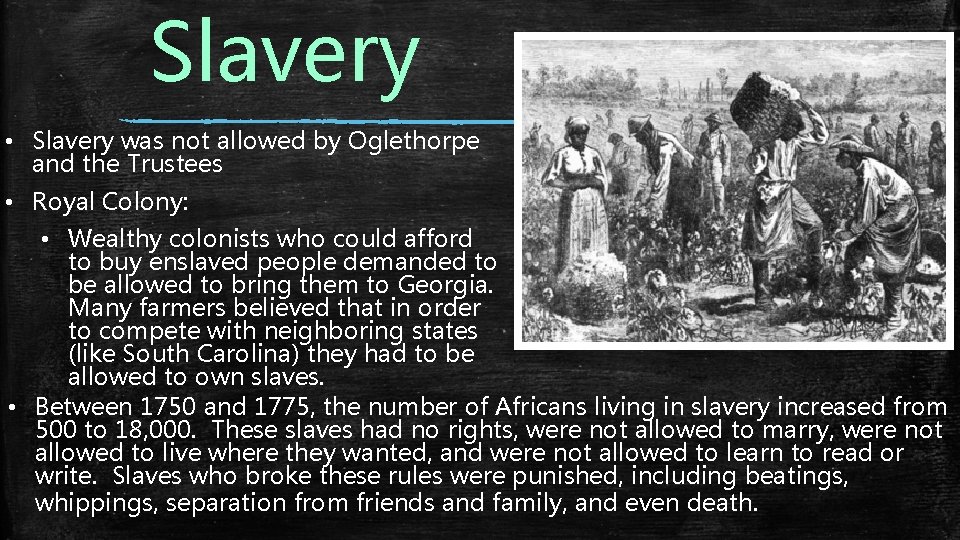
Slavery • Slavery was not allowed by Oglethorpe and the Trustees • Royal Colony: • Wealthy colonists who could afford to buy enslaved people demanded to be allowed to bring them to Georgia. Many farmers believed that in order to compete with neighboring states (like South Carolina) they had to be allowed to own slaves. • Between 1750 and 1775, the number of Africans living in slavery increased from 500 to 18, 000. These slaves had no rights, were not allowed to marry, were not allowed to live where they wanted, and were not allowed to learn to read or write. Slaves who broke these rules were punished, including beatings, whippings, separation from friends and family, and even death.