
James Hutton 1785 Theory of the Earth An

- Slides: 18
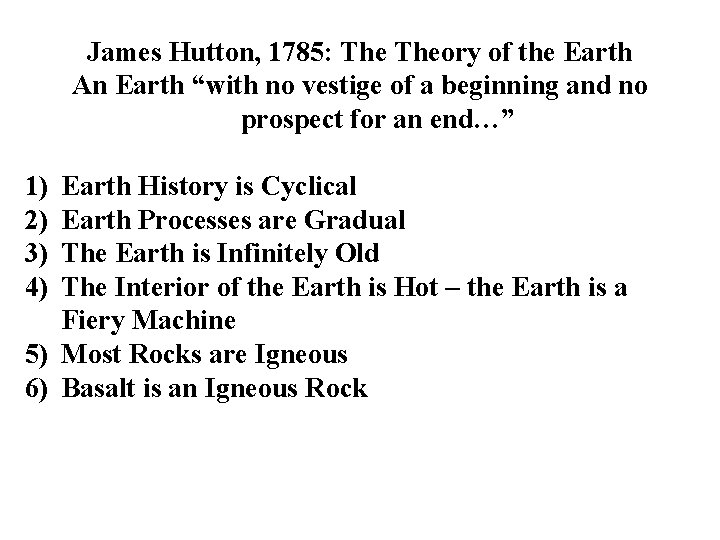
James Hutton, 1785: Theory of the Earth An Earth “with no vestige of a beginning and no prospect for an end…” 1) 2) 3) 4) Earth History is Cyclical Earth Processes are Gradual The Earth is Infinitely Old The Interior of the Earth is Hot – the Earth is a Fiery Machine 5) Most Rocks are Igneous 6) Basalt is an Igneous Rock
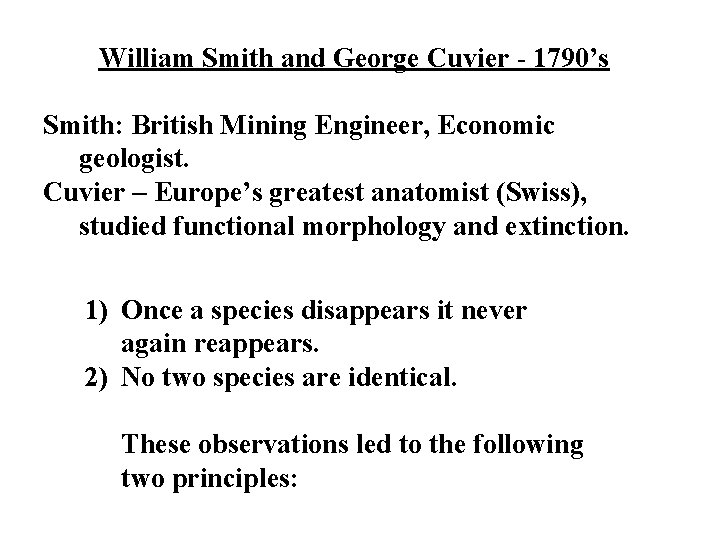
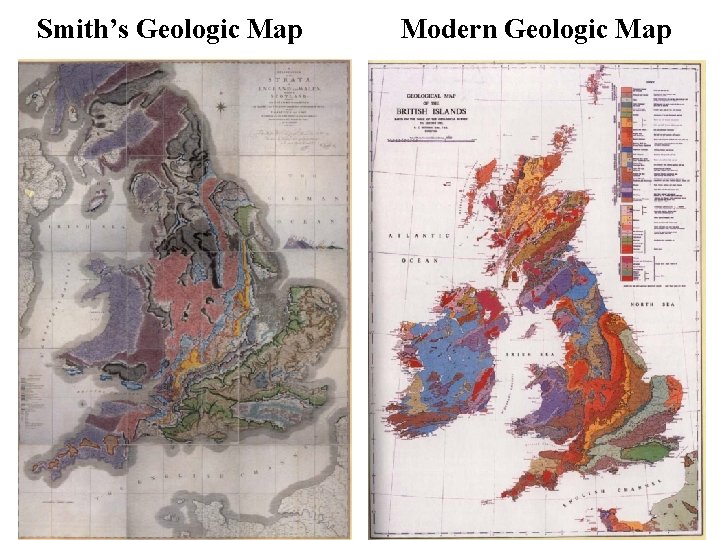
William Smith and George Cuvier - 1790’s Smith: British Mining Engineer, Economic geologist. Cuvier – Europe’s greatest anatomist (Swiss), studied functional morphology and extinction. 1) Once a species disappears it never again reappears. 2) No two species are identical. These observations led to the following two principles:
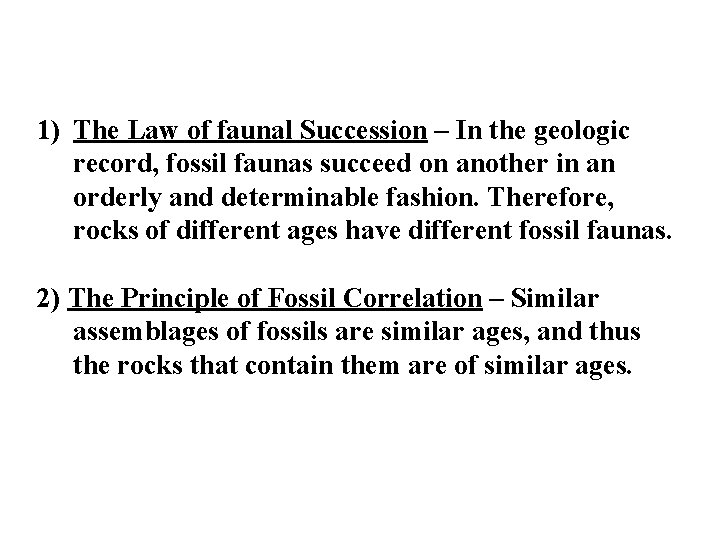
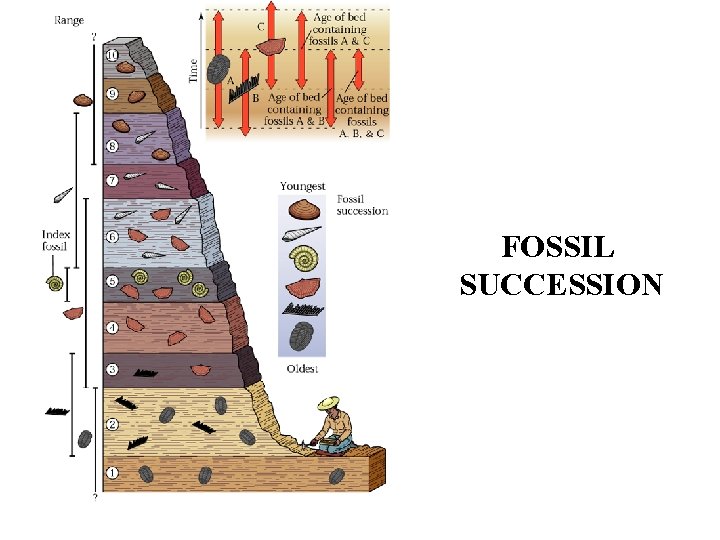
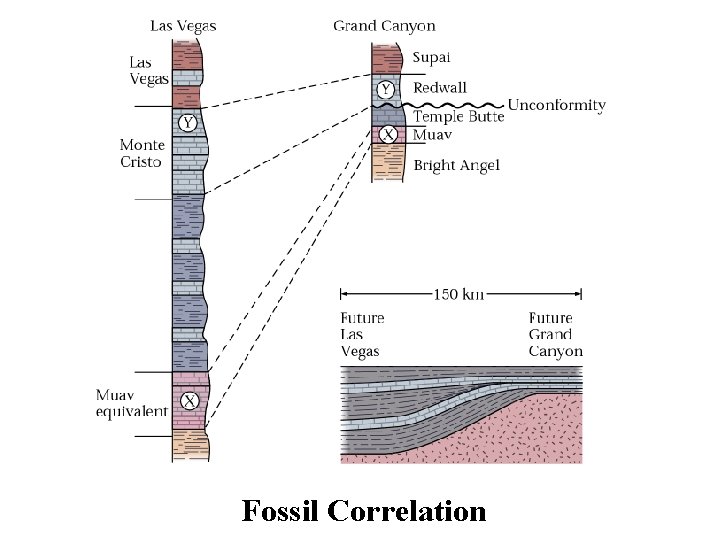
1) The Law of faunal Succession – In the geologic record, fossil faunas succeed on another in an orderly and determinable fashion. Therefore, rocks of different ages have different fossil faunas. 2) The Principle of Fossil Correlation – Similar assemblages of fossils are similar ages, and thus the rocks that contain them are of similar ages.
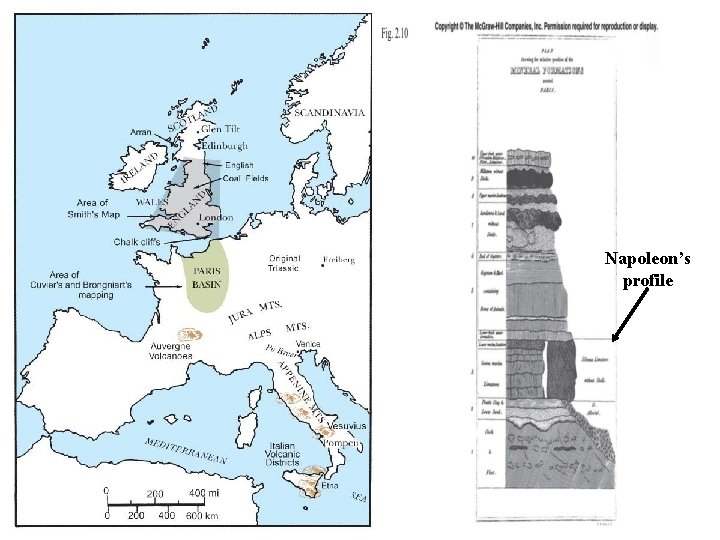
Napoleon’s profile
FOSSIL SUCCESSION
Fossil Correlation
Smith’s Geologic Map Modern Geologic Map
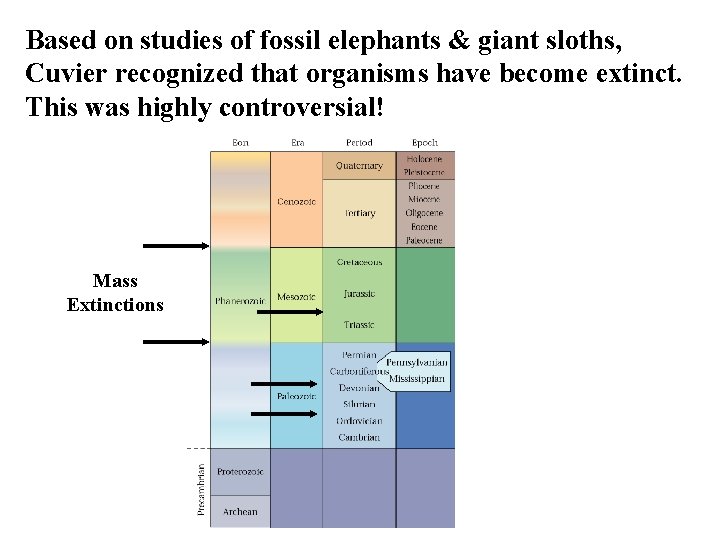
Based on studies of fossil elephants & giant sloths, Cuvier recognized that organisms have become extinct. This was highly controversial! Mass Extinctions
Cuvier noted that Earth upheavals (like mountain building events) were often accompanied by mass extinctions. Thus, the extinction of millions of organisms by violent Earth changes became known as Catastrophism. It was based on direct observation of the fossil record. • Earth history was beset by violent upheavals that periodically wiped out nearly all organisms. • God then created a new fauna to replace the extinct one. • All this happened within Buffon’s age of 75, 000 years. Buffon claimed, “ A year is to God as a thousand years is to man”.
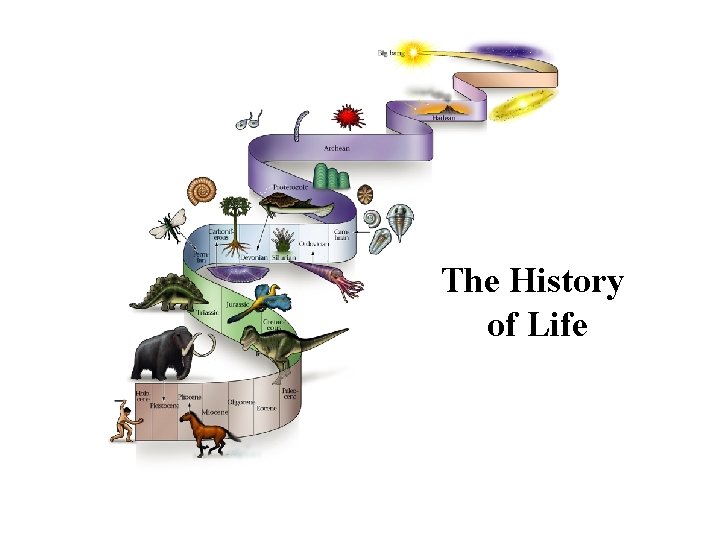
The History of Life
In the 1820’s London begins to replace Paris as the center of geological research. The response to Catastrophism came from another gentleman Scotsman named Charles Lyell
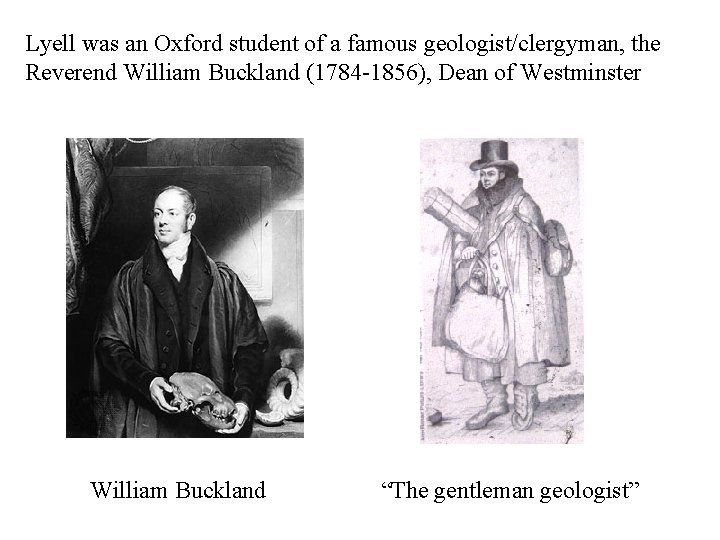
Lyell was an Oxford student of a famous geologist/clergyman, the Reverend William Buckland (1784 -1856), Dean of Westminster William Buckland “The gentleman geologist”
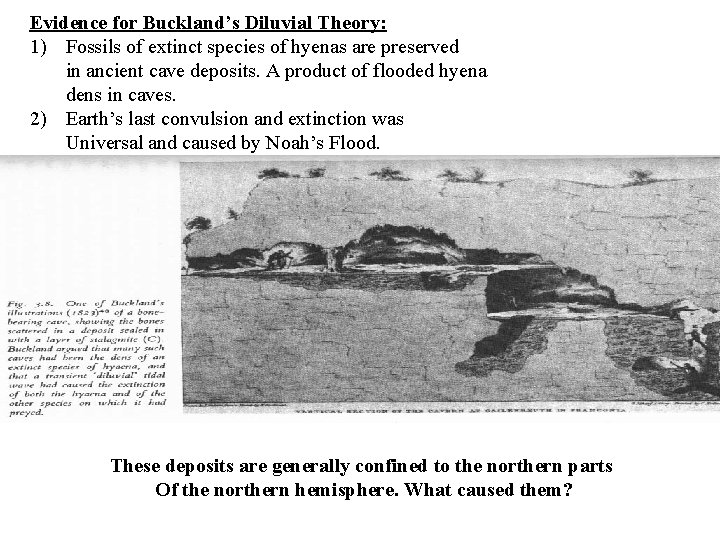
Evidence for Buckland’s Diluvial Theory: 1) Fossils of extinct species of hyenas are preserved in ancient cave deposits. A product of flooded hyena dens in caves. 2) Earth’s last convulsion and extinction was Universal and caused by Noah’s Flood. These deposits are generally confined to the northern parts Of the northern hemisphere. What caused them?
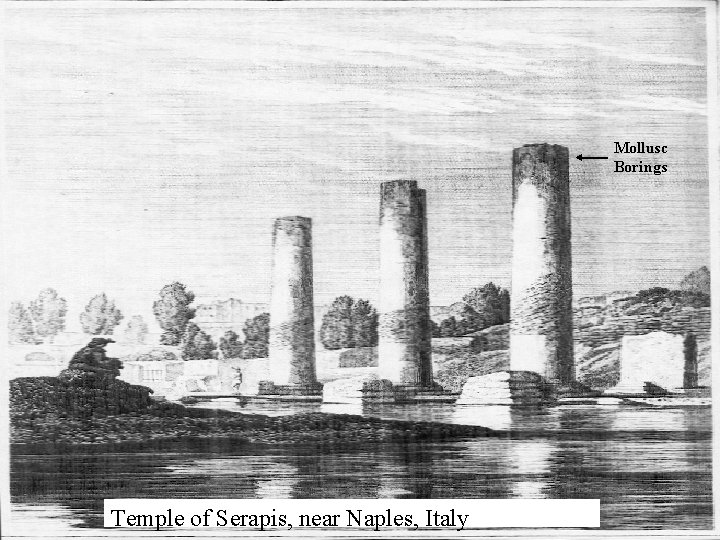
Mollusc Borings Temple of Serapis, near Naples, Italy
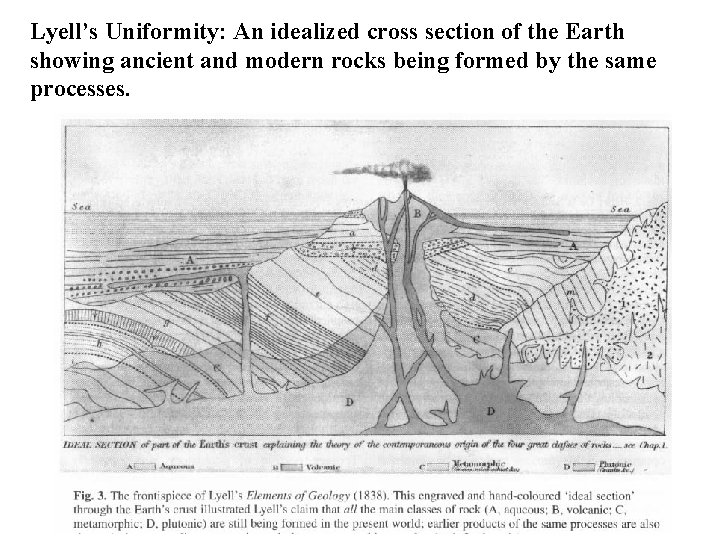
Lyell’s Uniformity: An idealized cross section of the Earth showing ancient and modern rocks being formed by the same processes.
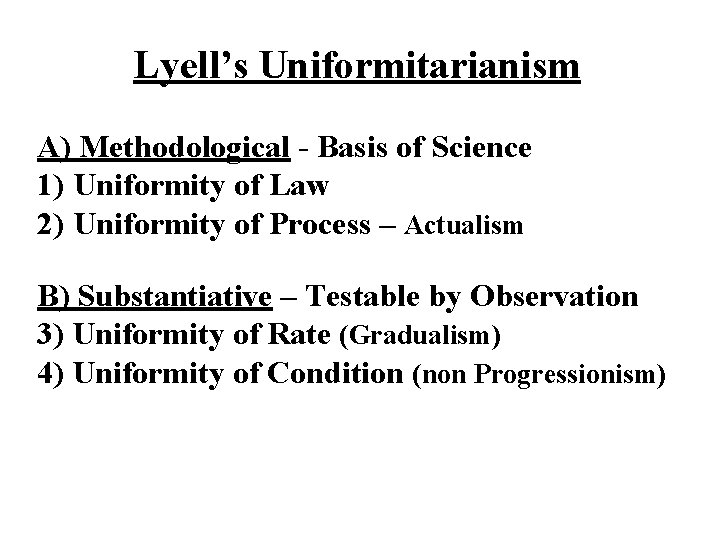
Lyell’s Uniformitarianism A) Methodological - Basis of Science 1) Uniformity of Law 2) Uniformity of Process – Actualism B) Substantiative – Testable by Observation 3) Uniformity of Rate (Gradualism) 4) Uniformity of Condition (non Progressionism)
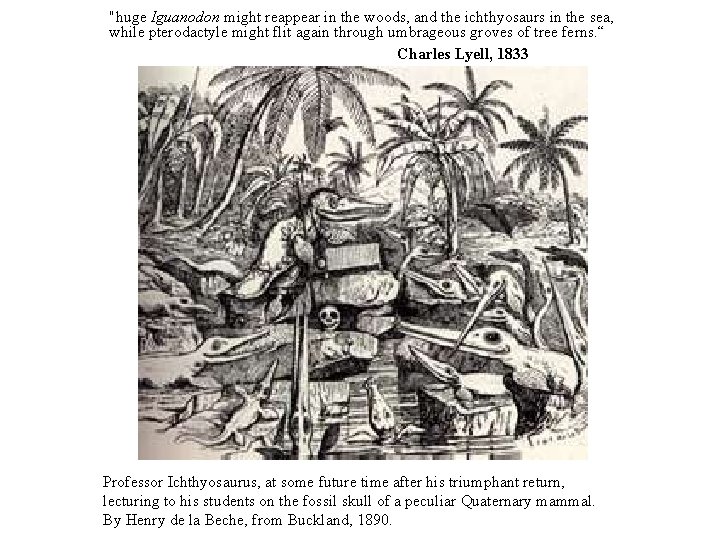
"huge Iguanodon might reappear in the woods, and the ichthyosaurs in the sea, while pterodactyle might flit again through umbrageous groves of tree ferns. “ Charles Lyell, 1833 Professor Ichthyosaurus, at some future time after his triumphant return, lecturing to his students on the fossil skull of a peculiar Quaternary mammal. By Henry de la Beche, from Buckland, 1890.
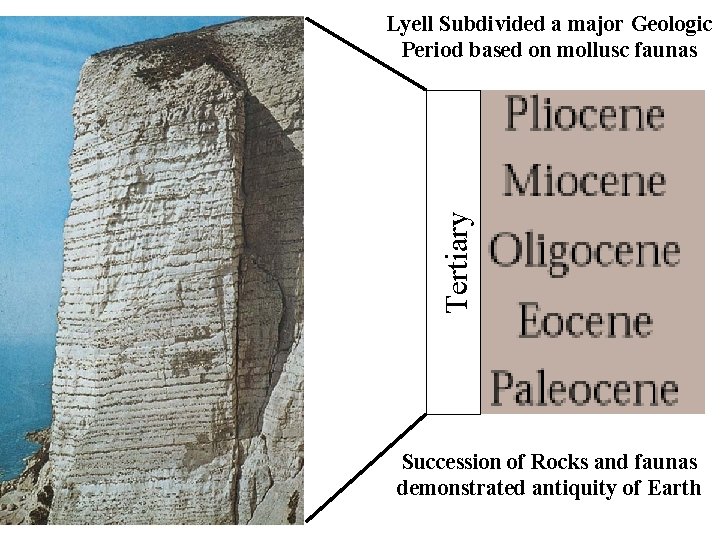
Tertiary Lyell Subdivided a major Geologic Period based on mollusc faunas Succession of Rocks and faunas demonstrated antiquity of Earth