
ivyanatomy com Cranial and Spinal Nerves ivyanatomy com

- Slides: 18
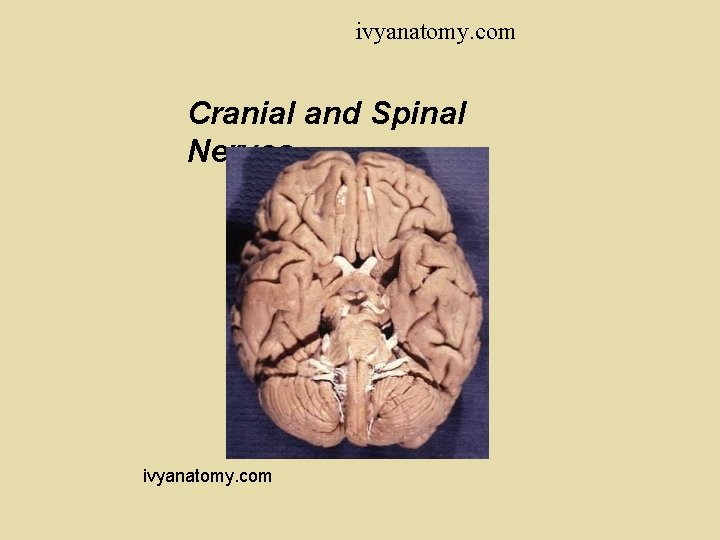
ivyanatomy. com Cranial and Spinal Nerves ivyanatomy. com
Peripheral Nervous System The PNS consists of 12 pairs of Cranial nerves arising from the brain 31 pairs of Spinal nerves arising from the spinal cord Sensory fibers relay information from receptors to CNS Somatic (voluntary) fibers connecting to the skin and skeletal muscles Autonomic fibers connecting to viscera (involuntary) 2
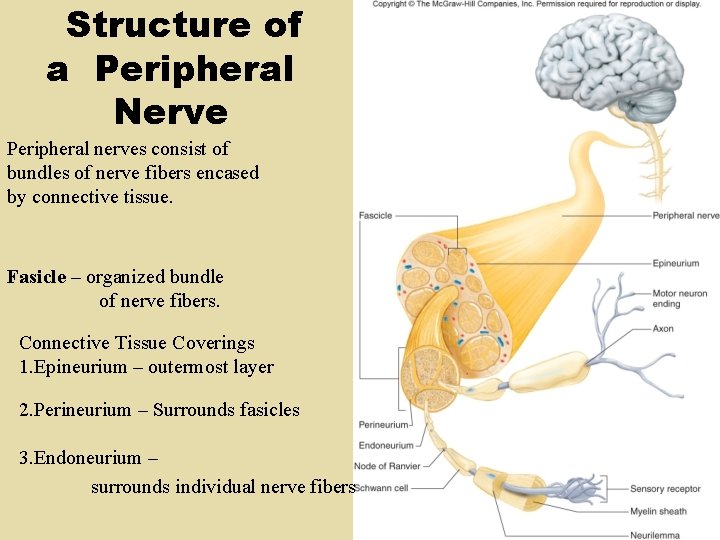
Structure of a Peripheral Nerve Peripheral nerves consist of bundles of nerve fibers encased by connective tissue. Fasicle – organized bundle of nerve fibers. Connective Tissue Coverings 1. Epineurium – outermost layer 2. Perineurium – Surrounds fasicles 3. Endoneurium – surrounds individual nerve fibers
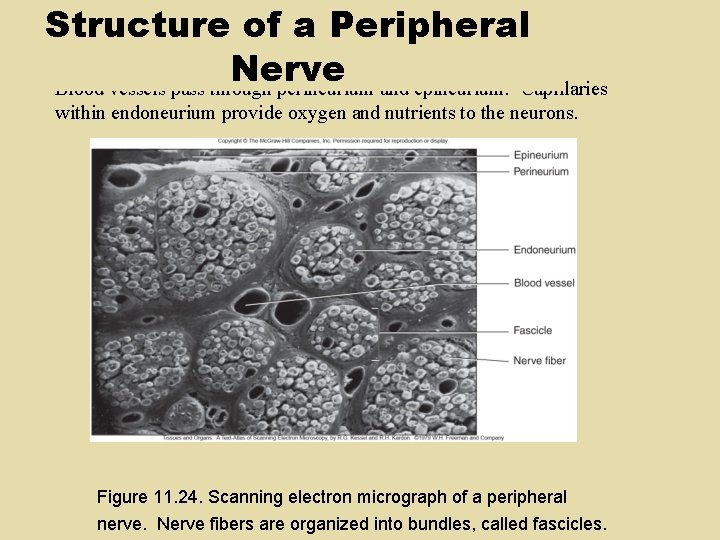
Structure of a Peripheral Nerve Blood vessels pass through perineurium and epineurium. Capillaries within endoneurium provide oxygen and nutrients to the neurons. Figure 11. 24. Scanning electron micrograph of a peripheral nerve. Nerve fibers are organized into bundles, called fascicles.
Nerve and Nerve Fiber Classification • Sensory nerves - conduct impulses into brain or spinal cord • Motor nerves - conduct impulses to muscles or glands • Mixed (both sensory and motor) nerves • Contain both sensory nerve fibers and motor nerve fibers • Most nerves are mixed nerves • ALL spinal nerves are mixed nerves (except the first pair) 5
Cranial Nerves (CN) I - IV Olfactory nerves (CN I) transmit impulses associated with smell Optic nerves (CN II) transmit impulses associated with vision Oculomotor nerve (CN III) Motor impulses to muscles that move the eyes, the eyelids, iris, and the lens Trochlear nerve (CN IV) Motor impulses to muscles that move the eyes (superior oblique) 6
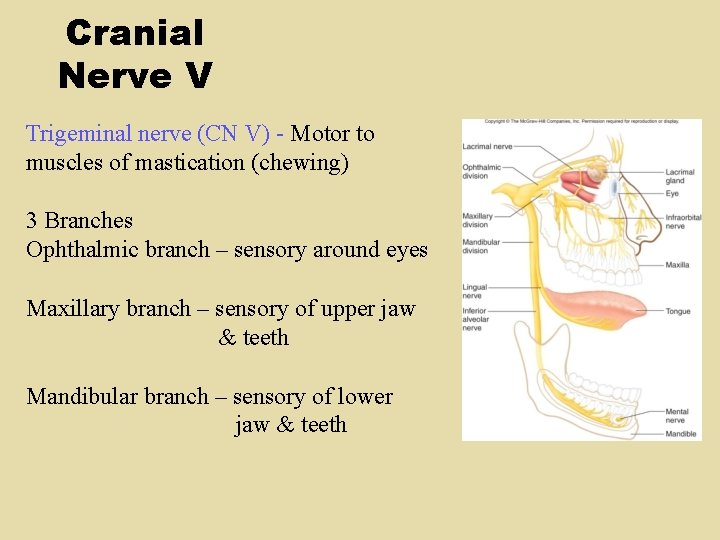
Cranial Nerve V Trigeminal nerve (CN V) - Motor to muscles of mastication (chewing) 3 Branches Ophthalmic branch – sensory around eyes Maxillary branch – sensory of upper jaw & teeth Mandibular branch – sensory of lower jaw & teeth
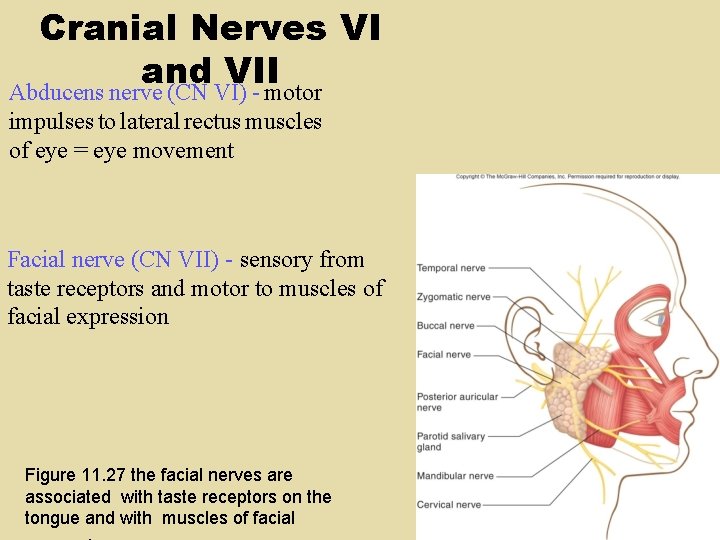
Cranial Nerves VI and VII Abducens nerve (CN VI) - motor impulses to lateral rectus muscles of eye = eye movement Facial nerve (CN VII) - sensory from taste receptors and motor to muscles of facial expression Figure 11. 27 the facial nerves are associated with taste receptors on the tongue and with muscles of facial
Cranial Nerves VIII Vestibulocochlear nerve IX (CN VIII) and Vestibular branch - Sensory from equilibrium receptors of ear Cochlear branch - Sensory from hearing receptors Glossopharyngeal nerve (CN IX) Sensory of tongue - taste Motor to salivary glands Motor to pharynx - swallowing 9
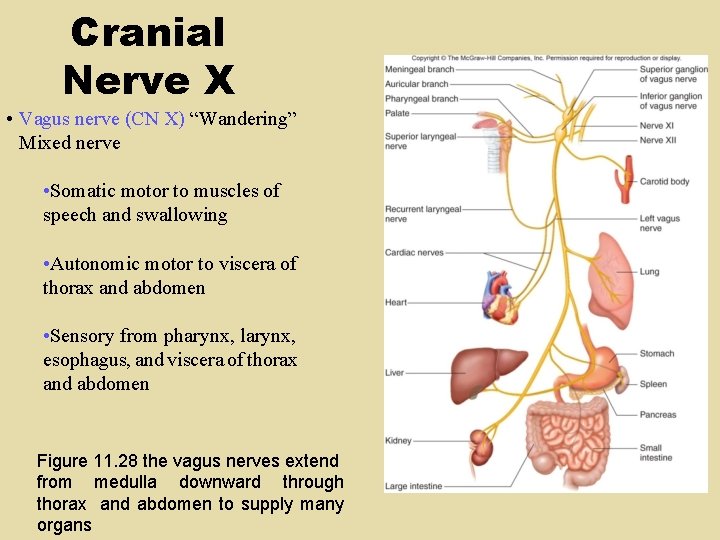
Cranial Nerve X • Vagus nerve (CN X) “Wandering” Mixed nerve • Somatic motor to muscles of speech and swallowing • Autonomic motor to viscera of thorax and abdomen • Sensory from pharynx, larynx, esophagus, and viscera of thorax and abdomen Figure 11. 28 the vagus nerves extend from medulla downward through thorax and abdomen to supply many organs Copyright © The Mc. Graw-Hill Companies, Inc. Permission required for reproduction or display.
Cranial Nerves XI and XII Accessory nerve (CN XI) • Motor to muscles of soft palate, pharynx and larynx • Motor to muscles of neck and back Hypoglossal nerve (CN XII) • Motor to muscles of the tongue 11
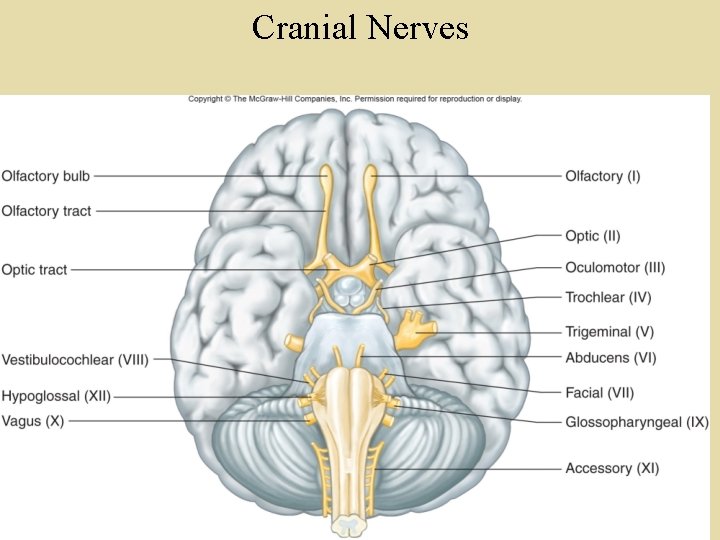
Cranial Nerves The 12 pairs of cranial nerves I. Olfactory II. Optic III. Oculomotar IV. Trochlear V. Trigeminal VI. Abducens VII. Facial VIII. Vestibulocochlear IX. Glossopharyngeal X. Vagus XI. Accessory XII. Hypoglossal Pneumonic Device for remembring the 12 pairs of cranial nerves I. Oh II. Once III. One IV. Takes V. The VI. Anatomy VII. Final VIII. Very IX. Good X. Vacations XI. Are XII. Heavenly
Cranial Nerves
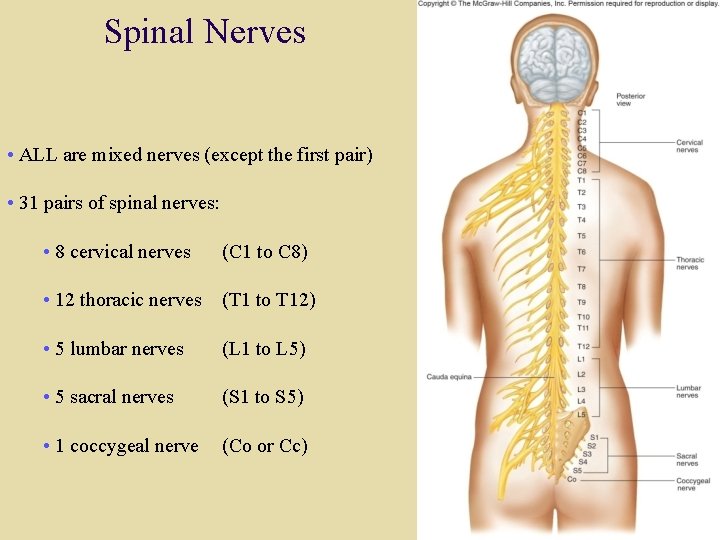
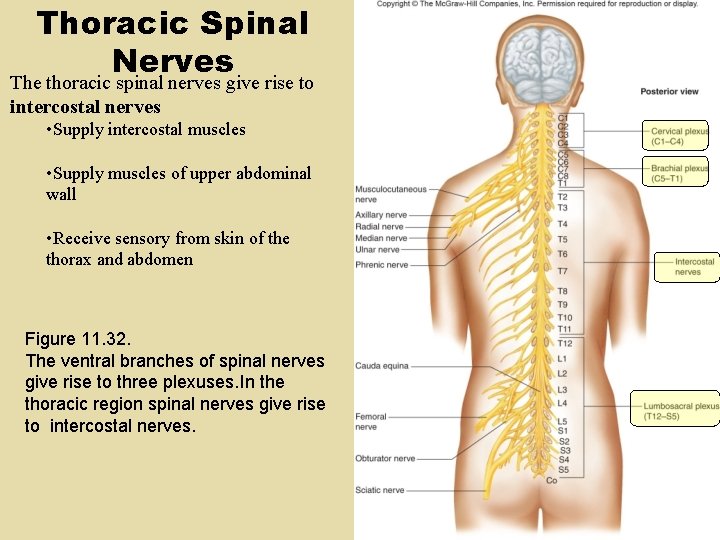
Spinal Nerves • ALL are mixed nerves (except the first pair) • 31 pairs of spinal nerves: • 8 cervical nerves (C 1 to C 8) • 12 thoracic nerves (T 1 to T 12) • 5 lumbar nerves (L 1 to L 5) • 5 sacral nerves (S 1 to S 5) • 1 coccygeal nerve (Co or Cc)
Nerve Plexuses A Nerve plexus is a complex network formed by anterior branches of spinal nerves • The fibers of various spinal nerves are sorted and recombined • There are three (3) nerve plexuses: Cervical plexus • Formed by anterior branches of C 1 -C 4 spinal nerves • Lies deep in the neck • Supply to muscles and skin of the neck • C 3 -C 4 -C 5 nerve roots contribute to phrenic nerves bilaterally Phrenic Nerves conduct motor impulses to the diaphragm (C 3, 4, and 5 keep the diaphragm alive)
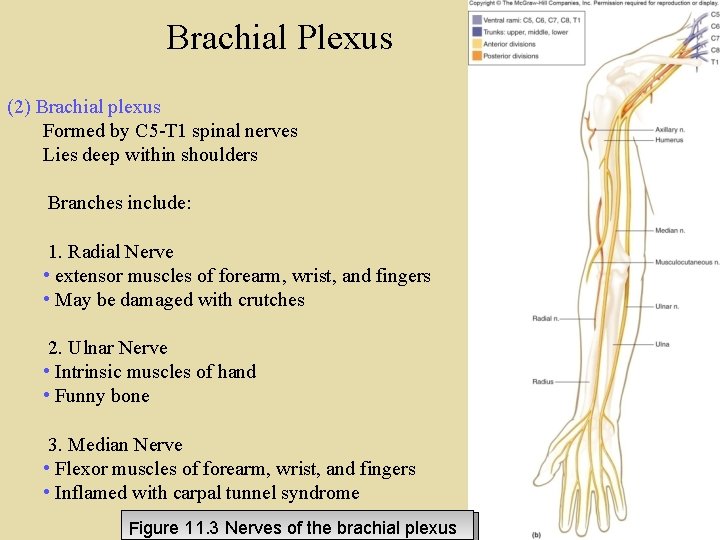
Brachial Plexus (2) Brachial plexus Formed by C 5 -T 1 spinal nerves Lies deep within shoulders Branches include: 1. Radial Nerve • extensor muscles of forearm, wrist, and fingers • May be damaged with crutches 2. Ulnar Nerve • Intrinsic muscles of hand • Funny bone 3. Median Nerve • Flexor muscles of forearm, wrist, and fingers • Inflamed with carpal tunnel syndrome Figure 11. 3 Nerves of the brachial plexus
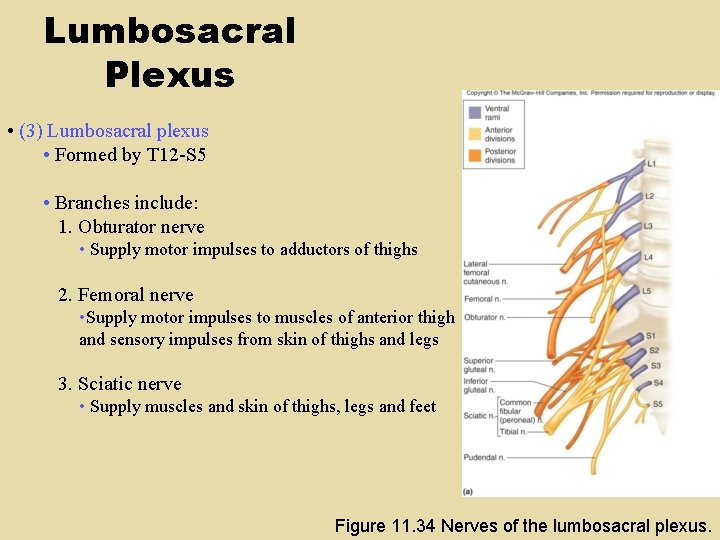
Lumbosacral Plexus • (3) Lumbosacral plexus • Formed by T 12 -S 5 • Branches include: 1. Obturator nerve • Supply motor impulses to adductors of thighs 2. Femoral nerve • Supply motor impulses to muscles of anterior thigh and sensory impulses from skin of thighs and legs 3. Sciatic nerve • Supply muscles and skin of thighs, legs and feet Figure 11. 34 Nerves of the lumbosacral plexus.
Thoracic Spinal Nerves The thoracic spinal nerves give rise to intercostal nerves • Supply intercostal muscles • Supply muscles of upper abdominal wall • Receive sensory from skin of the thorax and abdomen Figure 11. 32. The ventral branches of spinal nerves give rise to three plexuses. In the thoracic region spinal nerves give rise to intercostal nerves.